


Introduction
Global ski consolidation in Europe is entering a new structural phase.
In a recent Wall Street Journal interview, Rob Katz of Vail Resorts outlined the long-term logic behind scale: diversified geography, predictable pass revenue, and integrated destination networks under the Epic Pass model.
But Europe is not North America.
As consolidation expands through Epic, the Ikon Pass operated by Alterra Mountain Company, and the partnership-driven Indy Pass, the question is no longer whether integration is happening.
The question is whether Europe’s Alpine economic, governance and experiential model is being reshaped by it.
1. The Structure of Global Ski Consolidation in Europe
The global ski landscape is increasingly defined by three distinct approaches:
• Full acquisition and ownership (Vail Resorts)
• Strategic affiliation networks (Alterra / Ikon Pass)
• Independent coalition models (Indy Pass)
Each operates differently, yet all shift demand upstream through season-pass pre-commitment.
In North America, this model has materially altered resort economics over the past decade.
In Europe, where lift systems evolved through municipal participation, regional consortia and valley-level coordination, the structural implications are more complex.
2. Governance vs Scale
Many European Alpine resorts are:
• Municipality-linked
• Regionally financed
• Public-private hybrids
• Embedded in local economic ecosystems
They are not purely shareholder-driven leisure assets.
When global passes influence demand patterns, pricing cycles and marketing exposure, governance asymmetry can emerge.
Ownership may remain local.
Demand leverage may not.
That distinction matters.
3. Pricing Power and Revenue Structure
In North America, consolidation coincided with:
• Significant day-ticket price inflation
• Earlier season-pass purchasing cycles
• Revenue front-loading
• Yield optimisation strategies
Europe has historically maintained:
• Lower relative day pricing
• Strong regional pass ecosystems
• Cross-border flexibility
• Shorter booking horizons
If global passes capture increasing European market share, key structural questions arise:
• Does pricing power gradually centralise?
• Do local passes weaken over time?
• Does early-season commitment alter demand behaviour?
• Does capital concentration accelerate?
These shifts would likely be incremental — but structural transitions rarely announce themselves dramatically.
The broader trend of global ski consolidation in Europe is therefore not simply about ownership, but about demand leverage.
4. Capital Deployment and Infrastructure Discipline
Large operators argue that scale enables:
• Lift modernisation
• Snowmaking expansion
• Technology integration
• Marketing reach
These are legitimate advantages.
However, capital concentration also influences:
• Development priorities
• Environmental negotiation
• Investment distribution between regions
• Long-term infrastructure commitments
Europe’s Alpine valleys operate within stricter environmental, cultural and regulatory frameworks than many North American markets.
How global capital adapts to that framework will shape the next phase of integration.
5. The Experience Variable
This is the least quantifiable, yet most sensitive dimension.
European skiing has long been characterised by:
• Interlinked cross-border domains
• Village-scale authenticity
• Independent hospitality ecosystems
• Culinary and cultural depth
• Flexible ticketing traditions
Consolidation does not automatically erase those traits.
But scale-driven optimisation can subtly influence:
• Visitor mix
• Volume concentration
• Brand layering
• Marketing standardisation
• Yield management emphasis
The concern is not corporate presence.
The concern is whether scale gradually alters the texture of the Alpine experience.
6. An Inflection Point — Not a Verdict
Global ski consolidation is neither inherently destabilising nor universally beneficial.
It can stabilise revenue, expand visibility and support infrastructure investment.
It can also shift governance dynamics, pricing influence and experiential balance.
Europe’s Alpine model is resilient — but it is not static.
The coming decade will reveal whether integration produces:
• Hybrid adaptation
• Competitive coexistence
• Or structural transformation
This moment is not a rupture.
It is an inflection point.
Related Industry Analysis
• Global Pass Expansion in Europe (Part 1).
• Epic & Ikon Pass Pricing Trends
• How Sustainable Is Vail Resorts for the Future?
• Is Vail Resorts Ruining the Skiing Experience?
 Planning your next trip to the Italian Alps?
 Planning your next trip to the Italian Alps?
If you’re heading to the Aosta Valley, take a look at Il Cuore della Valdigne, our family-owned apartment in Morgex, available for rent when we’re not using it ourselves.
It’s an ideal base to:
- Ski in Courmayeur, La Thuile and Pila
- Enjoy the mountains in summer (hiking, biking, nature)
- Explore the Mont Blanc valley in a quieter, more authentic setting.
 Ski in Courmayeur,
 Enjoy the mountains in summer (hiking, biking, nature)
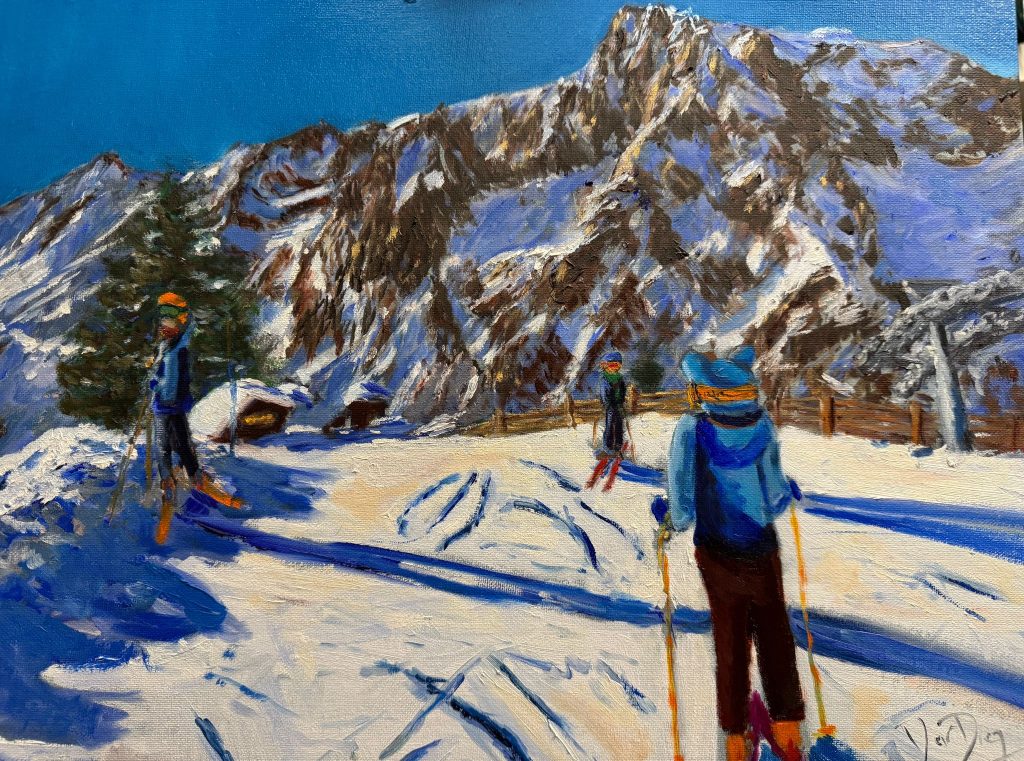
Check my Mountain Art on my Shop
You can go to my shop and see what have been inspiring me lately, lots mountain landscapes in soft pastels, and now in oils too. Go here to check my latest works!
Featured Image: Piste at Brides-les-Bains-Les-Trois-Vallées domain. Photo courtesy of Brides-les-Bains Tourism Office.


Discover more from The-Ski-Guru
Subscribe to get the latest posts sent to your email.
 Subscribe to The-Ski-Guru here.