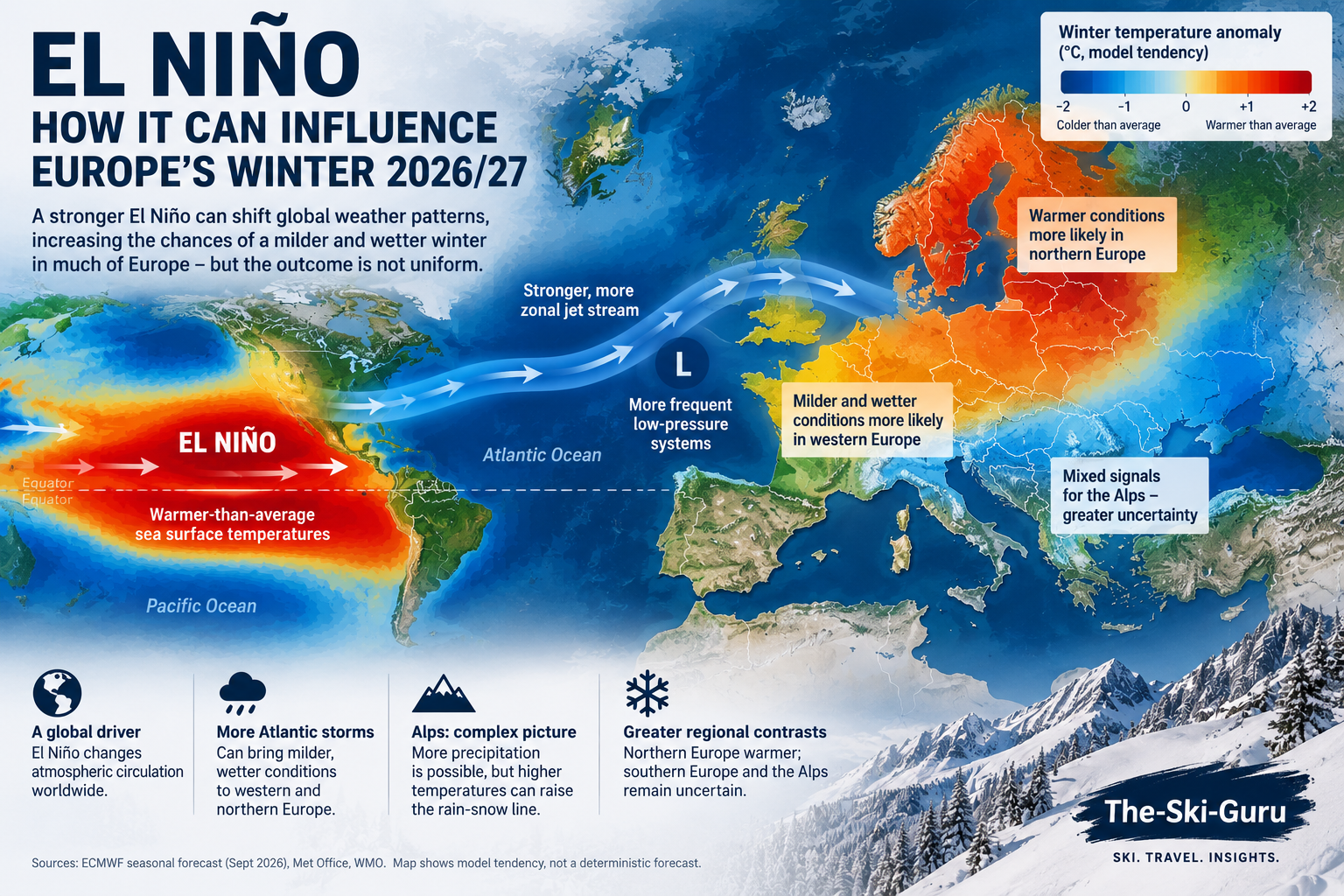
El Niño could influence Europe’s winter 2026/27. A record-breaking El Niño is building towards its winter peak, but despite dramatic headlines, it does not automatically mean a snowy — or snowless — winter for the Alps. Here is what the official forecasts actually tell us.
El Niño has officially entered record territory. When we first looked at what El Niño could mean for the 2026/27 ski season in August, the event was still developing. Since then, the signal has strengthened considerably.
On 22 September, the UK Met Office confirmed that sea-surface temperatures in the central equatorial Pacific have now surpassed those recorded during previous El Niño events, making the developing 2026 event the strongest in the observational record.
It is an extraordinary climate signal — and one arriving just as the Northern Hemisphere ski industry prepares for winter 2026/27.
But does a record El Niño mean a record ski season?
Activist investor Oasis Management has nominated four candidates — including Olympic champion Picabo Street and former Disney CEO Robert Chapek — to Vail Resorts’ nine-member board, turning months of speculation over the company’s future into a potential battle over its direction.
The pressure surrounding Vail Resorts has moved into a new phase.
Vail Resorts confirmed on September 11 that shareholder Oasis Management had submitted four candidates for election to the company’s Board of Directors: former Disney CEO Robert A. Chapek, financier M. Ashton Hudson, Utah venture capitalist Bryce Roberts and Olympic ski champion Picabo Street.
The nominations were submitted on September 9 and 10, immediately before the company’s nomination window closed.
A fifth candidate, Gregory Syvert Meyer, separately nominated himself.
The move is significant because Oasis is not a minor shareholder. According to KPCW, citing its latest regulatory filings, the investment firm owns approximately 6.5% of Vail Resorts.
More importantly, Oasis has a reputation as an activist investor — and reports that it was considering a proxy battle at Vail Resorts had already emerged earlier this summer.
Four candidates for a nine-member board
Vail Resorts currently has a nine-member board, making the nomination of four directors potentially significant.
In its statement, however, Vail Resorts did not characterize the nominations as a proxy fight.
The company said it “prioritizes consistent engagement with shareholders” and reiterated that it was already conducting a search for new independent directors as part of an ongoing board refreshment process.
Oasis has also not yet formally declared an activist campaign through a Schedule 13D filing.
Ikon is pushing deeper into Asia, Indy Pass has grown beyond 300 resorts and a new Snow Pass has entered the market. Meanwhile, Epic is shifting its focus from expansion to guest experience. But across the Atlantic, Europe’s own multi-resort passes show that there is more than one way to build a ski empire.
The ski pass wars are no longer simply a battle between Epic and Ikon.
Ikon Pass has expanded its Asian footprint again for winter 2026/27, adding Madarao Mountain Resort in Japan and Beidahu and Lake Songhua in China.
On its own, that might look like another incremental expansion of an already enormous ski pass.
Look at what is happening across the wider market, however, and something more significant is emerging.
Ikon continues to build a worldwide collection of destination resorts. Epic, after years of acquisitions and international partnerships, is openly talking about improving what it already has. Indy Pass has assembled more than 300 mostly independent ski areas. Snow Pass has arrived as another lower-cost alternative.
And in Europe, regional passes such as Magic Pass, Ski amadé, Dolomiti Superski, the Valle d’Aosta regional pass and Mont Blanc Unlimited demonstrate yet another model: destinations cooperating across resorts, regions and even national borders without necessarily being owned by the same company.
The mega-pass may have won.
The next battle is over what kind of mega-pass skiers actually want.
A summer experiment on the Tsanfleuron Glacier at Glacier 3000 suggests locally sourced sheep’s wool could perform as well as conventional synthetic geotextiles — without leaving plastic fibres behind.
For around two decades, sections of glaciers in Switzerland have been covered during summer with large white geotextile sheets. The technique can reduce local melting and is also used to preserve snow from one season to the next.
Now, researchers in Switzerland are testing whether those synthetic covers could be replaced with something considerably more traditional: sheep’s wool.
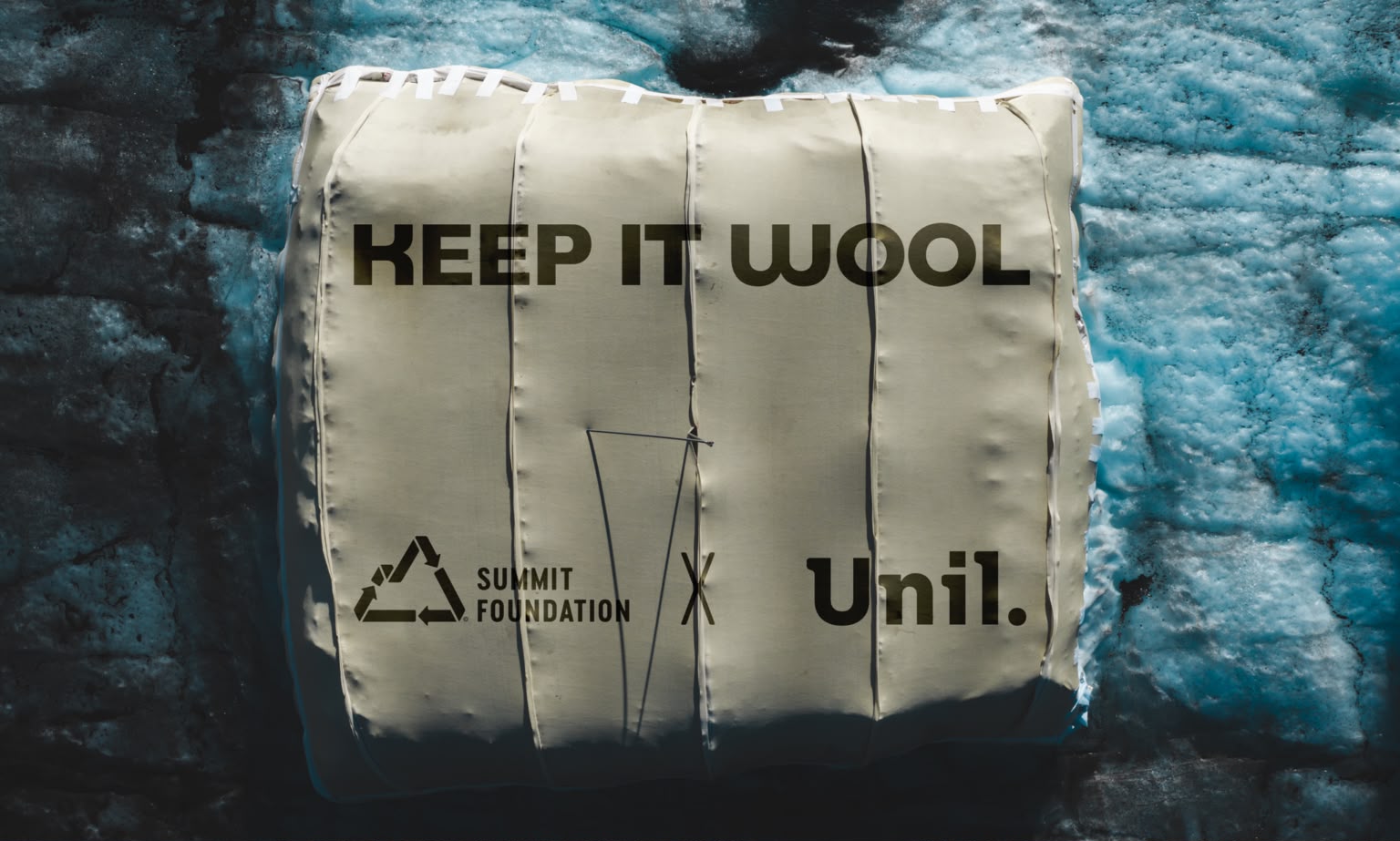
At the Tsanfleuron Glacier, part of the Glacier 3000 area above Les Diablerets, two prototype wool covers were installed this summer as part of the “Keep It Wool” project, developed by environmental organisation Summit Foundation in collaboration with the University of Lausanne’s Interdisciplinary Centre for Mountain Research (CIRM).
Ski tourism has spent decades looking for new source markets, younger skiers and ways to broaden participation. But sometimes growth may be less about discovering another destination or building another lift, and more about asking a simpler question: who was the traditional ski holiday designed for?
The UK-based Muslim Ski Club is beginning to provide one answer.
Founded by Burhan Ali in 2024, the organization was created to make skiing more accessible and relevant to Muslim travelers — from complete beginners who have never considered a ski vacation to experienced skiers looking for a community with which to travel.
The concept has now gained recognition beyond snowsports. The Muslim Ski Club recently won Gold in the Hospitality, Leisure and Tourism Business of the Year category at the 2026 Bedfordshire Chamber of Commerce SME Business Awards.
It is an interesting achievement for a relatively young organization — but perhaps even more interesting for the wider ski industry.
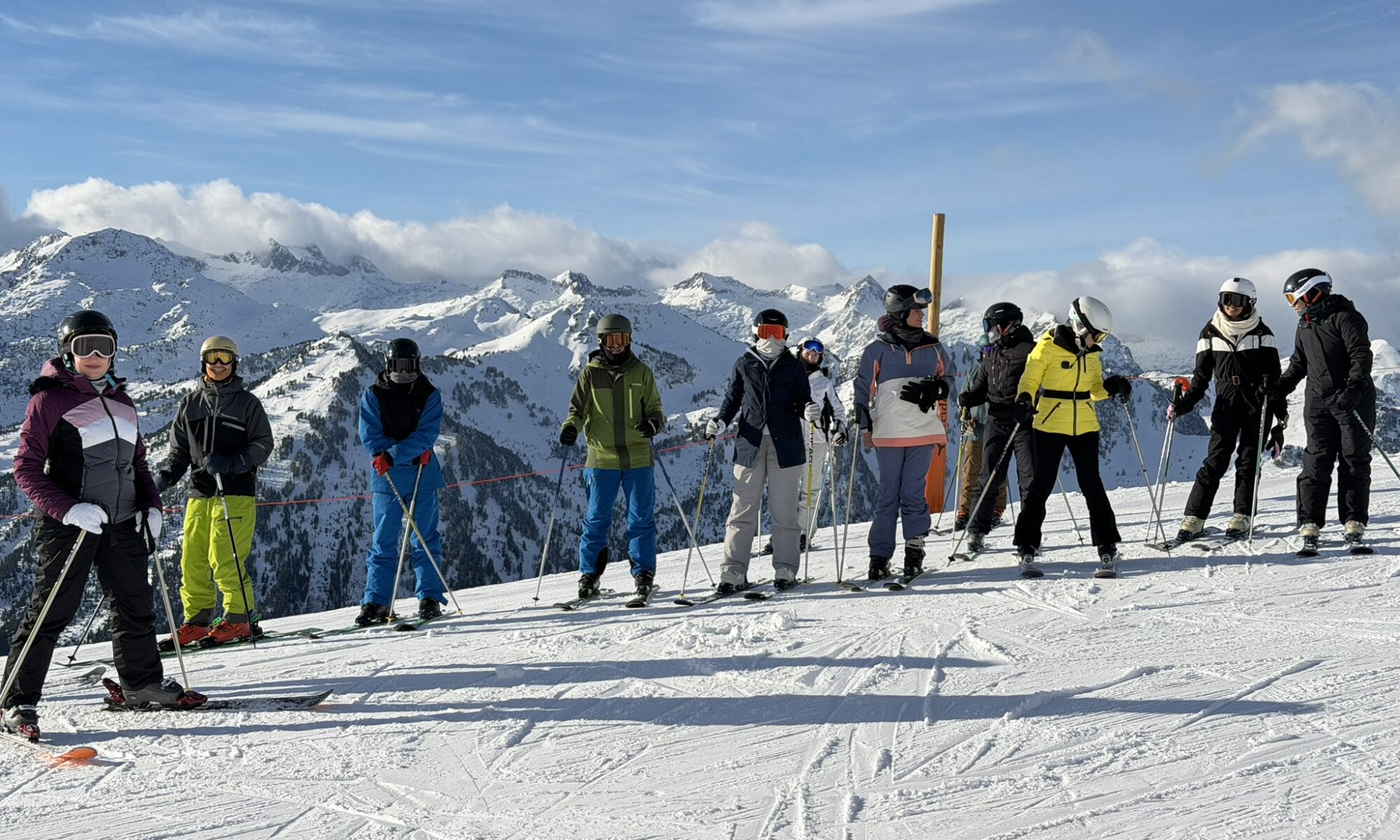
Learning the mountain together: Muslim Ski Club members navigate the slopes as part of the community-led ski experience. Photo: Muslim Ski Club
As climate change reshapes the Alps, ski resorts are beginning to discover that one of their most valuable investments may have a second life beyond winter.
In Switzerland, researchers are exploring whether snowmaking systems—traditionally used to guarantee ski conditions during increasingly unpredictable winters—could also help combat one of the mountains’ fastest-growing threats: forest fires.
The concept is surprisingly simple. The same network of reservoirs, pumping stations and high-pressure snow cannons that cover ski slopes with artificial snow during winter could potentially be used in summer to spray water onto vulnerable forest areas, helping firefighters slow or contain wildfires before they spread.
A New Role for Snowmaking Infrastructure
Swiss mountain resorts already possess extensive water management systems designed to support snowmaking operations. These include water reservoirs, underground pipelines, powerful pumps and strategically positioned snow cannons across the mountainside.
Rather than building entirely new firefighting infrastructure, researchers believe these existing systems could be adapted to provide rapid water distribution during wildfire emergencies.
The proposal is not intended to replace traditional firefighting methods or aerial water bombing. Instead, it could provide valuable support by creating wet buffer zones, protecting critical infrastructure, slowing the advance of flames and buying precious time until emergency services arrive.
Climate Change Is Changing the Alps
The idea reflects a broader reality facing mountain destinations.
Today, the conversation has expanded dramatically.
Longer periods of drought, rising temperatures and increasingly frequent heatwaves are creating conditions that make wildfires more likely even in regions traditionally associated with snow-covered landscapes.
Several Alpine countries have already experienced more frequent forest fires during recent summers, highlighting that mountain communities now face climate challenges throughout the entire year—not just during winter.
Year-Round Resorts Face Year-Round Risks
Modern ski resorts are no longer purely winter destinations.
Many now depend heavily on summer tourism, attracting hikers, mountain bikers, trail runners and nature lovers. Protecting forests, trails, lift infrastructure, hotels and surrounding communities has become essential for maintaining year-round operations.
Using existing snowmaking infrastructure for wildfire prevention could therefore offer an additional layer of resilience while maximising investments that were originally designed solely for winter operations.
A Smarter Use of Existing Resources
One of the most attractive aspects of the proposal is that it makes use of infrastructure already in place.
Many ski resorts have invested millions in sophisticated snowmaking systems over recent decades to adapt to changing winter conditions. Repurposing those networks during summer could provide added value without requiring entirely new water distribution systems.
Researchers still need to determine how effective snow cannons would be under real wildfire conditions, including factors such as wind, terrain, water pressure and accessibility. However, the concept represents an innovative example of climate adaptation using existing mountain infrastructure.
This Is Part of a Bigger Trend
Switzerland’s proposal is not an isolated idea. Around the world, mountain destinations are exploring new ways to use technology and existing infrastructure to reduce wildfire risk.
Earlier this year, The-Ski-Guru reported on how mountain communities in Colorado are testing AI-powered drones capable of detecting and attacking wildfires within minutes of ignition. While Colorado is looking to the skies with autonomous aircraft, Switzerland is focusing on the ground by repurposing snowmaking systems already installed across its ski resorts.
Together, these initiatives point to a new era in mountain management, where ski infrastructure is evolving beyond winter tourism to help protect forests, communities and alpine ecosystems throughout the year.
The Future of Mountain Tourism
As climate change continues to reshape alpine environments, ski resorts are increasingly being asked to perform multiple roles.
Beyond winter recreation, they are becoming year-round tourism destinations, environmental managers and, potentially, valuable partners in protecting mountain communities from natural hazards.
The Swiss proposal illustrates how infrastructure originally designed for skiing may become an important tool in adapting to a changing climate—demonstrating that the future of mountain tourism may depend as much on resilience as on recreation.
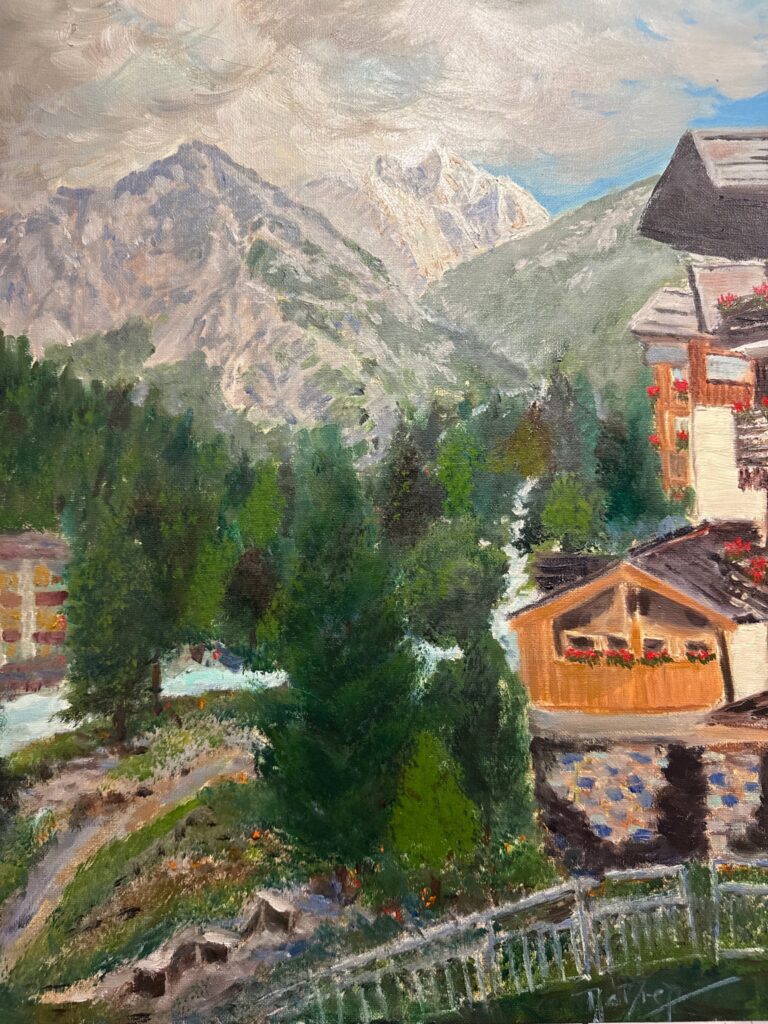
Madonna di Campiglio – after the storm. See the painting in my shop here.Changing seasons in Courmayeur. Oil on board. In my shop here.
Planning your next trip to the Italian Alps?
If you’re heading to the Aosta Valley, take a look at Il Cuore della Valdigne, our family-owned apartment in Morgex, available for rent when we’re not using it ourselves.
You can go to my shop and see what have been inspiring me lately, lots mountain landscapes in soft pastels, and now in oils too. Go here to check my latest works!
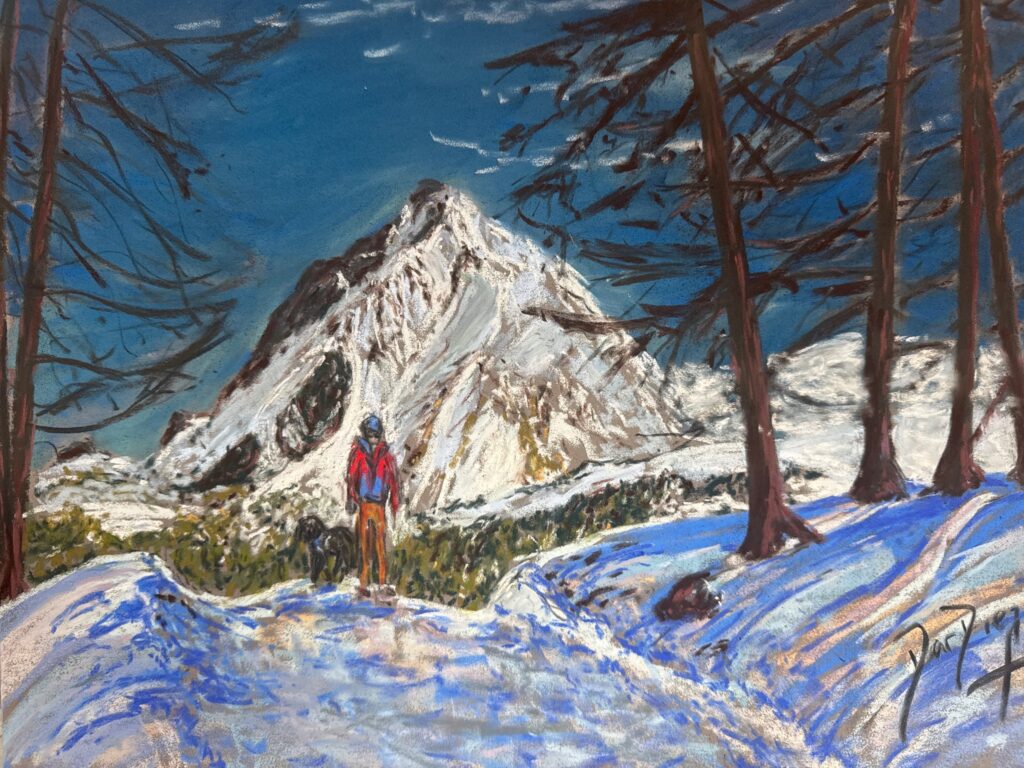
Becca di Nona in Pila, walking with the dog. Soft pastels in pastel paper. In my shop here.
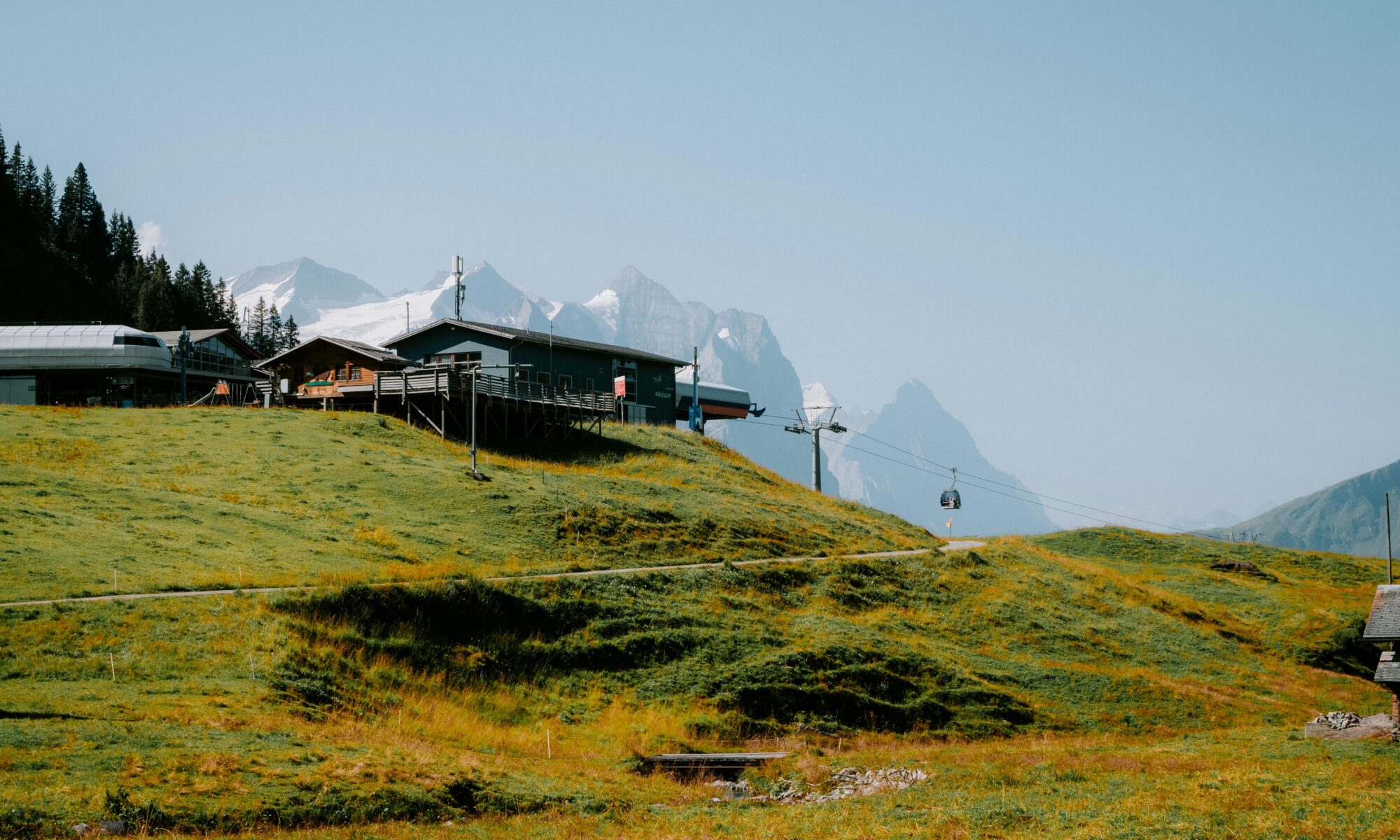
Featured Image: Hasliberg- Photo: Ben Grayland. Unsplash.
When Vialattea and Bardonecchia first announced they would work more closely together, many skiers wondered whether it was simply a marketing exercise. A year later, the picture is becoming much clearer.
The launch of the 2026/27 season pass campaign shows that the partnership is evolving into a genuine long-term strategy, offering more shared benefits while allowing each ski area to retain its own identity.
Season passes officially went on sale on 4 July, with the winter season scheduled to run from 5 December 2026 to 11 April 2027. However, the bigger story is not the dates themselves, but the continued development of the Vialattea // Bardo concept.
One of the Alps’ most iconic ski resorts has entered a new chapter.
On 1 June 2026, Tignes officially transferred management of its ski area from STGM, the local subsidiary of Compagnie des Alpes (CDA), to ALTTA, a new public company created by the municipality of Tignes together with neighbouring Sainte-Foy-Tarentaise.
The move ends almost 40 years of management by Compagnie des Alpes and raises interesting questions about how Alpine destinations may choose to govern, invest in and adapt their mountain economies in the decades ahead.
A Strategic Shift Rather Than a Criticism of CDA
The decision should not be viewed as a rejection of Compagnie des Alpes’ work in Tignes.
Swiss hotels are raising concerns about pricing control and the growing influence of online travel agencies (OTAs), highlighting a challenge that extends well beyond Switzerland and increasingly affects mountain destinations across Europe.
A recent survey by HotellerieSuisse found that around half of Swiss hotels have experienced some form of price undercutting on online booking platforms. Hotels report that rooms are sometimes offered online at lower rates than expected, often through complex distribution chains involving wholesalers, bed banks, affiliates and third-party resellers.
Across the Alps, a growing number of ski destinations are facing the same difficult question: can smaller mountain municipalities still afford to develop and modernise ski infrastructure on their own?
Two recent stories from northern Italy suggest the Alpine ski industry may be entering a new phase — one defined less by endless expansion and more by consolidation, selective investment and regional cooperation.
In Lombardy, the municipality of Valfurva recently abandoned plans for a new lift connection linking the valley more directly to Bormio’s ski area. The proposed project, intended to connect the S. Antonio/S. Nicolò area with the Bormio slopes, had already secured part of its public funding but ultimately failed to move forward because the remaining financing and permitting timelines proved too difficult to complete. Local officials described the decision as “painful, but inevitable.”
Enjoyed this post? Get my latest ski guides, weather insights, resort updates and travel tips directly in your inbox. Subscribe to The-Ski-Guru here.
Manage Cookie Consent
To provide the best experiences, we use technologies like cookies to store and/or access device information. Consenting to these technologies will allow us to process data such as browsing behavior or unique IDs on this site. Not consenting or withdrawing consent, may adversely affect certain features and functions.
Functional
Always active
The technical storage or access is strictly necessary for the legitimate purpose of enabling the use of a specific service explicitly requested by the subscriber or user, or for the sole purpose of carrying out the transmission of a communication over an electronic communications network.
Preferences
The technical storage or access is necessary for the legitimate purpose of storing preferences that are not requested by the subscriber or user.
Statistics
The technical storage or access that is used exclusively for statistical purposes.The technical storage or access that is used exclusively for anonymous statistical purposes. Without a subpoena, voluntary compliance on the part of your Internet Service Provider, or additional records from a third party, information stored or retrieved for this purpose alone cannot usually be used to identify you.
Marketing
The technical storage or access is required to create user profiles to send advertising, or to track the user on a website or across several websites for similar marketing purposes.





 Subscribe to The-Ski-Guru here.
You must be logged in to post a comment.