European Snow Report: Where to Ski Now in the Alps and Pyrenees

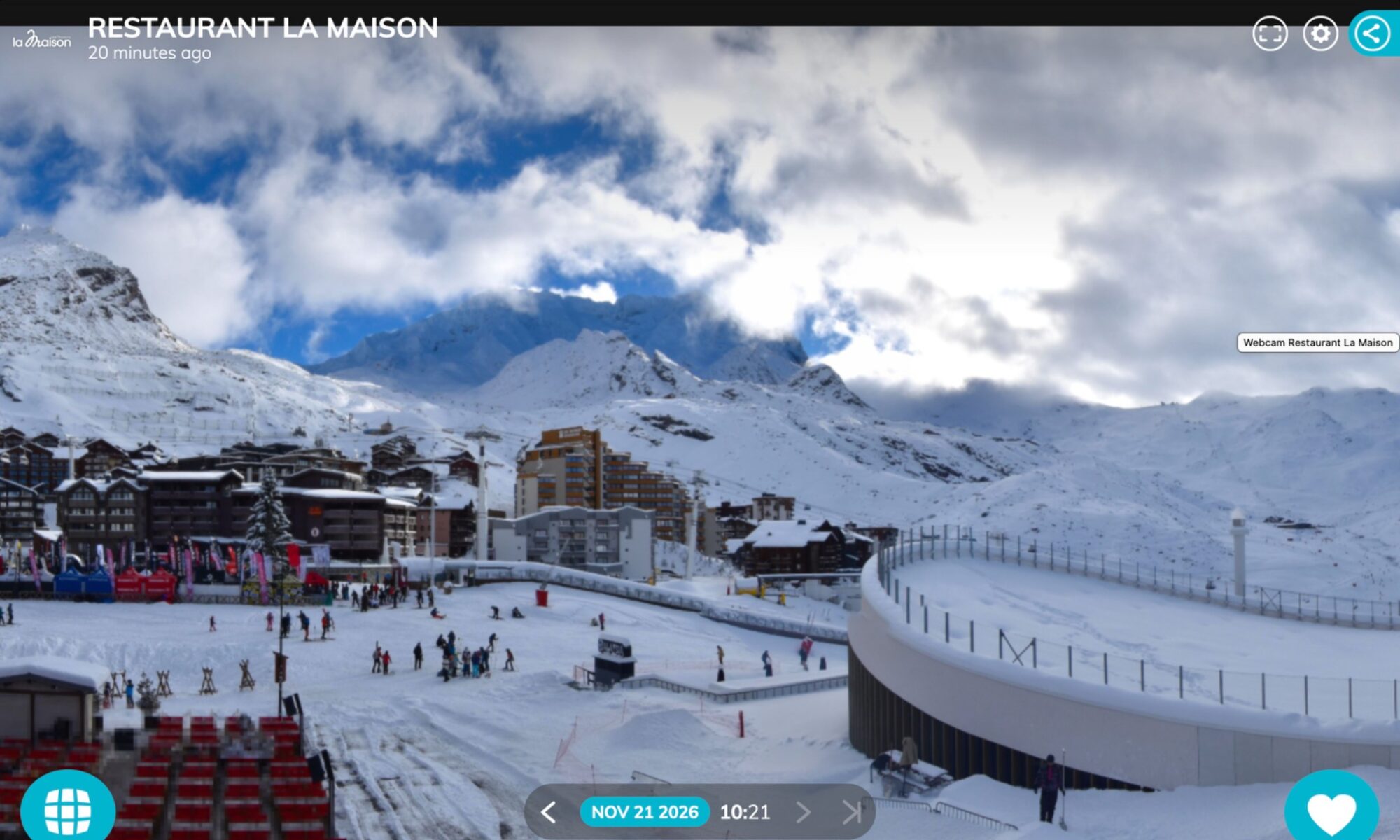
View from Restaurant La Maison in Val Thorens. Photo credit: Webcam valthorens.com

Saturday 21 November 2026

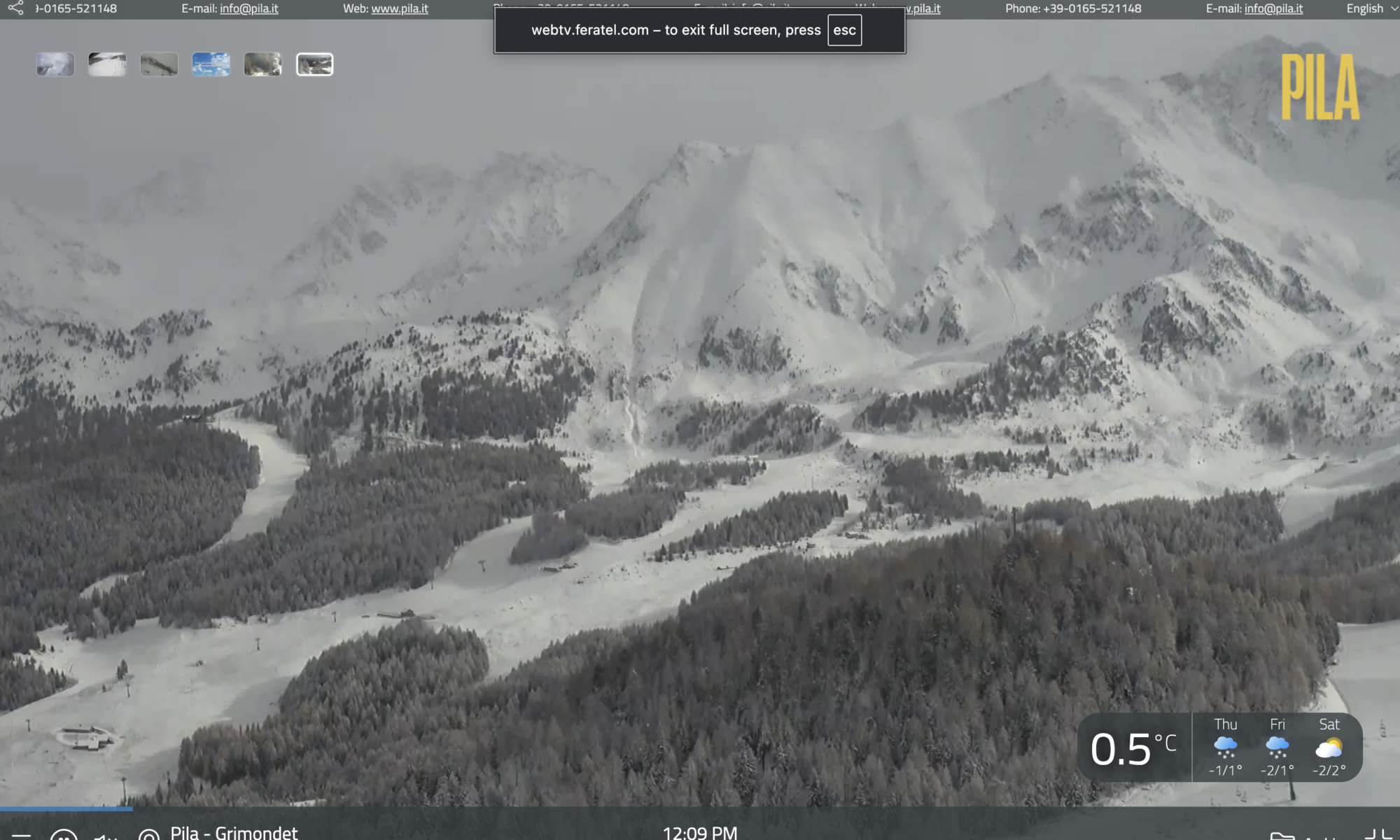
Val Thorens and Tignes are kicking off their ski seasons this weekend, and skiers were already out on the upper slopes of Cervinia on Saturday morning. Across the Aosta Valley, webcams show snow down to around 1,830 metres at Pila and 1,880 metres at Courmayeur, both due to open next Saturday. In the Pyrenees, the picture is more varied. Some French resorts are reporting substantial snow depths on their upper slopes, while Saturday’s webcams at Baqueira Beret, Formigal and across Andorra still show thin or patchy cover in the areas pictured. www.valthorens.com

French Alps — Val Thorens and Tignes start the season

Val Thorens–Orelle lists Saturday 21 November as the start of its season. The view from La Maison showed people out on the snow at resort level on Saturday morning, while cloud drifted across the Funitel Thorens webcam higher up. The wider Les 3 Vallées ski area is scheduled to open on 5 December. Check the resort’s live piste map for the lifts and runs operating on the day. Val Thorens live piste map. www.valthorens.com
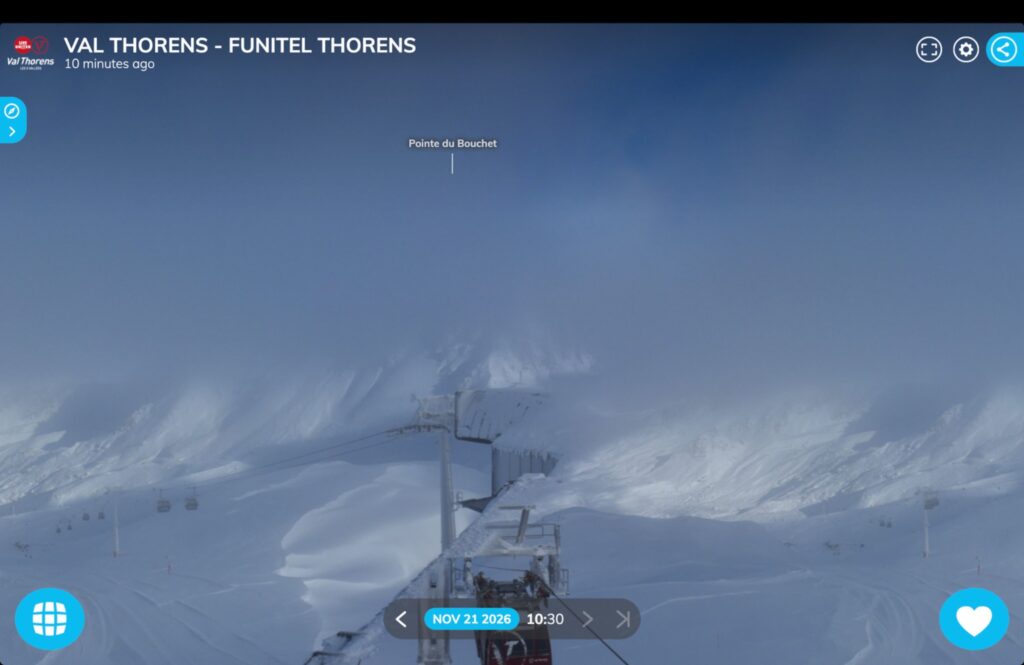
Webcam: Val Thorens ski resort. Funitel.


Continue reading “European Snow Report: Where to Ski Now in the Alps and Pyrenees”
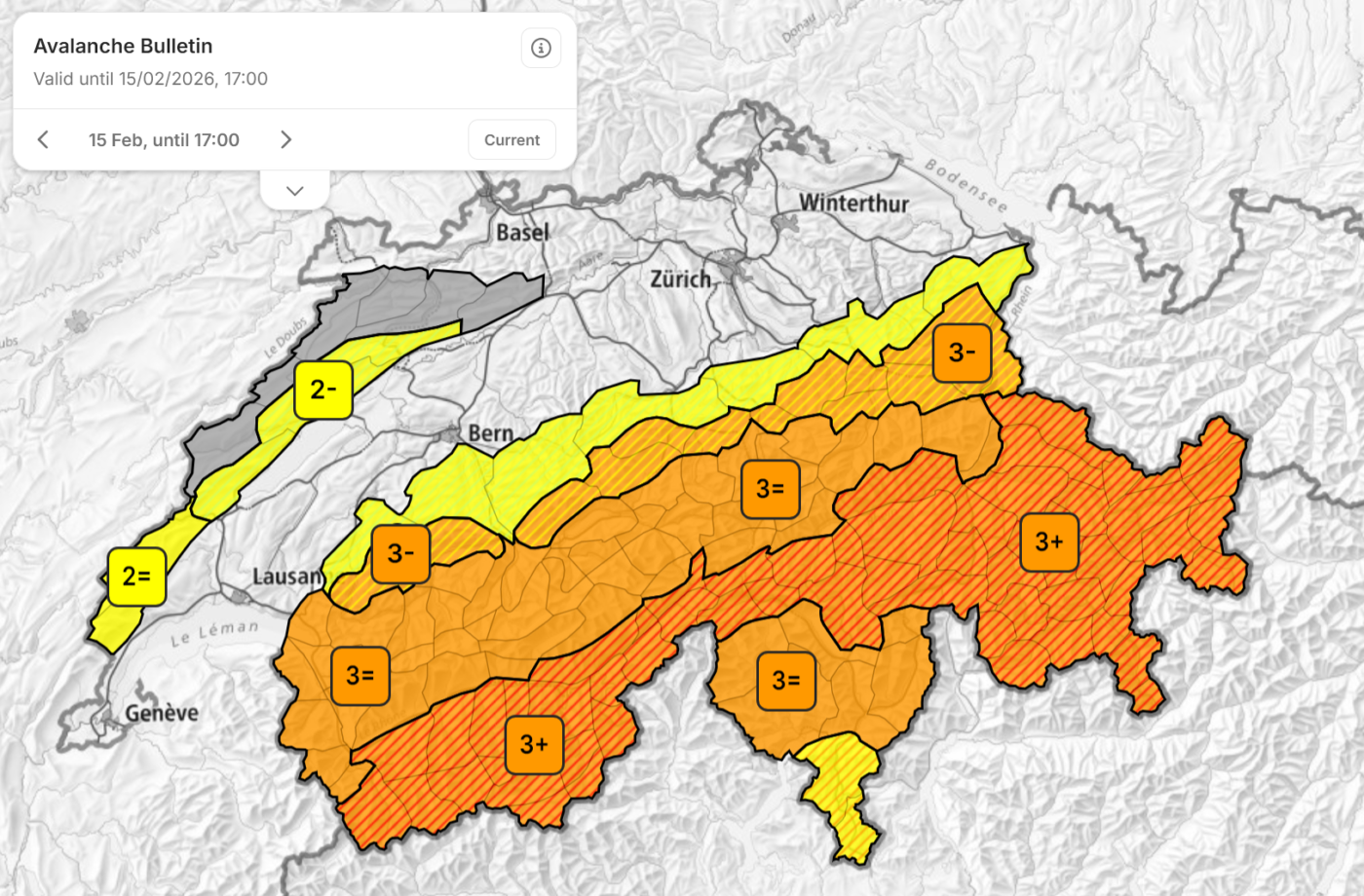
Switzerland’s New Avalanche Bulletin: What Changes for Skiers

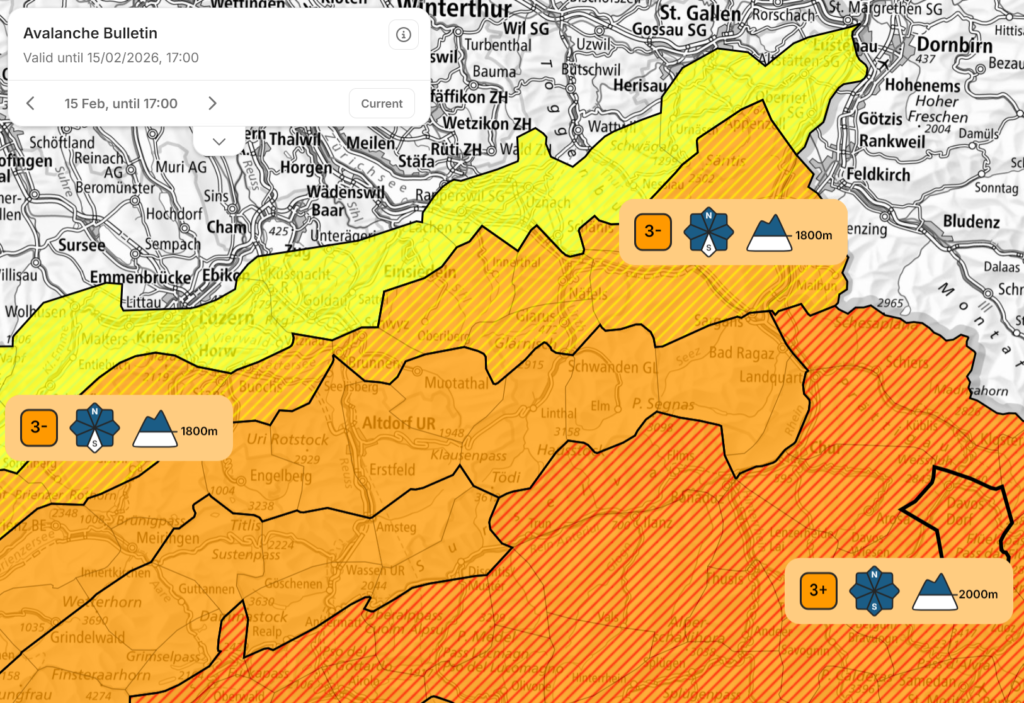
Map showing the redesigned Swiss avalanche bulletin and regional danger information.

Switzerland has redesigned its avalanche bulletin for winter 2026/27, giving skiers more detailed regional information and an outlook extending to the day after tomorrow.

Announced by the WSL Institute for Snow and Avalanche Research SLF on 19 November, the changes should make it easier for visiting skiers to find the information relevant to their planned mountain day.

Map showing the redesigned Swiss avalanche bulletin and regional danger information.
Map showing the redesigned Swiss avalanche bulletin and regional danger information. Credit: Kurt Winkler / SLF

More detail for your chosen region

The bulletin now brings together avalanche danger, snowpack descriptions and weather information individually for Switzerland’s 149 warning regions.

Previously, the snowpack description covered the country as a whole. The new approach allows readers to focus on the area they intend to visit, with map layers highlighting affected elevations, slope aspects and avalanche problems.

The additional outlook also helps with advance planning, although forecasts should always be checked again before heading out.

Continue reading “Switzerland’s New Avalanche Bulletin: What Changes for Skiers”

Cervino The One Cable Car Project Takes Another Step Forward

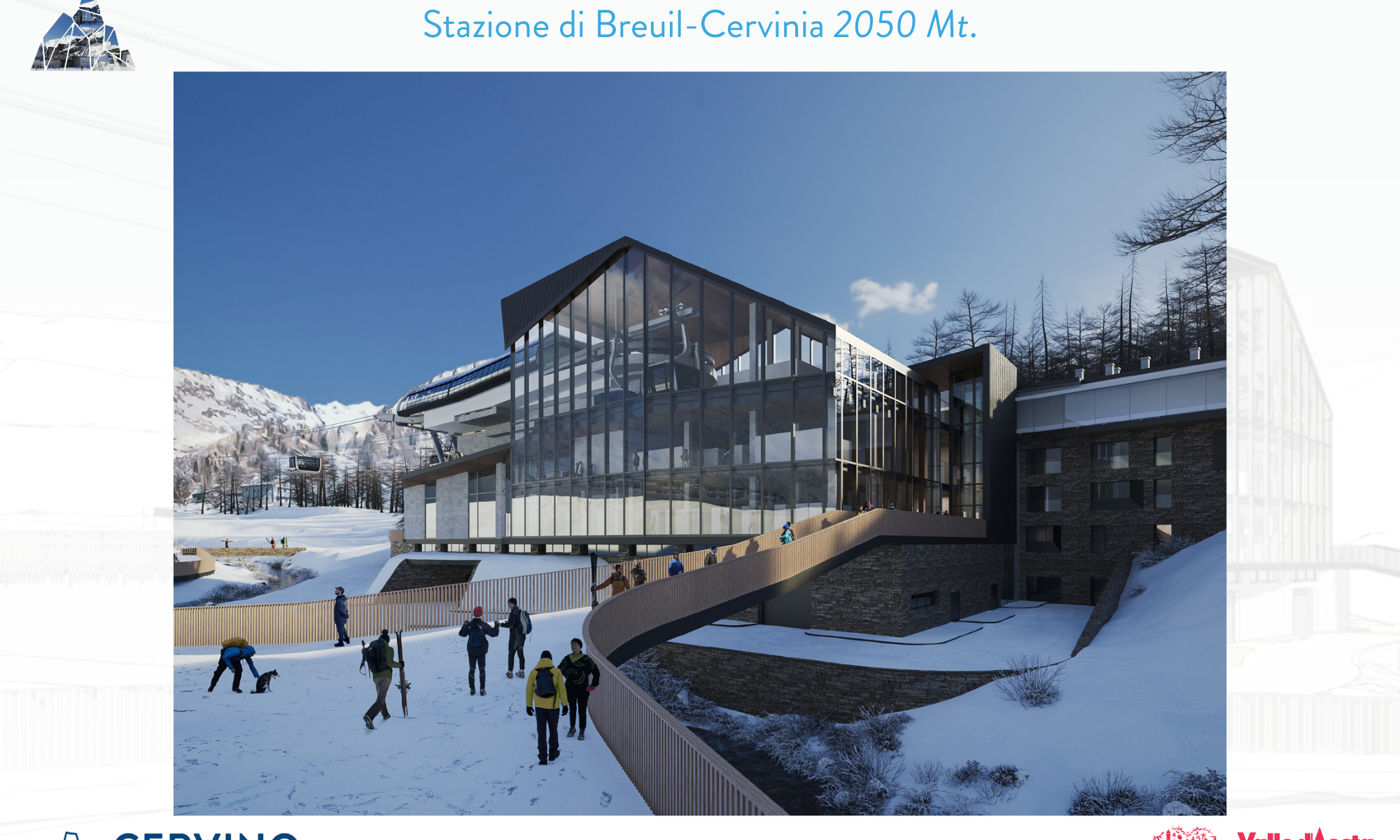
Rendering of the planned Cervino The One departure station in Breuil-Cervinia. New geological studies connected to the project have prompted a revision of the resort’s landslide and flood-risk maps. Credit: LEITNER/Cervino S.p.A.

Cervino The One, the planned cable car connection between Breuil-Cervinia, Plan Maison and Plateau Rosa, has passed another administrative milestone. Valtournenche’s municipal council has unanimously approved the text of an agreement covering the new lift system and protection works for the village.

The agreement brings together the Municipality of Valtournenche, the Aosta Valley regional government and Cervino SpA. Reported by local media on 17 November 2026, it sets out arrangements needed to deliver the project, including the use of municipal land.

For visitors, the announcement marks progress towards a future change in how they reach the upper mountain. The new system is currently expected to enter service in December 2029, barring unforeseen circumstances.

Continue reading “Cervino The One Cable Car Project Takes Another Step Forward”

Alps and Pyrenees Snow Forecast: Where the Snow Line Will Fall This Weekend

This morning snow in Pila. Photo credit: Pila.it webcam 18th November 2026

Published 18 November 2026 | Forecast for 19–22 November

Fresh snow is forecast across parts of the Alps ahead of the weekend of 21–22 November, with Tignes and Val Thorensdue to start their ski seasons on Saturday. In the northern French Alps, snow should reach progressively lower elevations as colder air arrives. The Pyrenees tell a more mixed story. In Andorra, the snow line is forecast to fall sharply overnight into Thursday, while in Aragón it could climb back towards 2,800 m during Saturday’s precipitation.

For skiers, the timing matters as much as the temperature. The freezing level is the altitude at which the air reaches 0°C. The snow line is the altitude at which precipitation falls mainly as snow, and it often sits several hundred metres below the freezing level. A lower snow line while a front is still coming through can bring snow to mid-mountain runs. If the colder air arrives after the precipitation eases, most of the fresh snow will already have fallen higher up.

Continue reading “Alps and Pyrenees Snow Forecast: Where the Snow Line Will Fall This Weekend”

Planpincieux Glacier: Seven Years After the Alarm, the Mont Blanc Glacier Is Retreating Fast

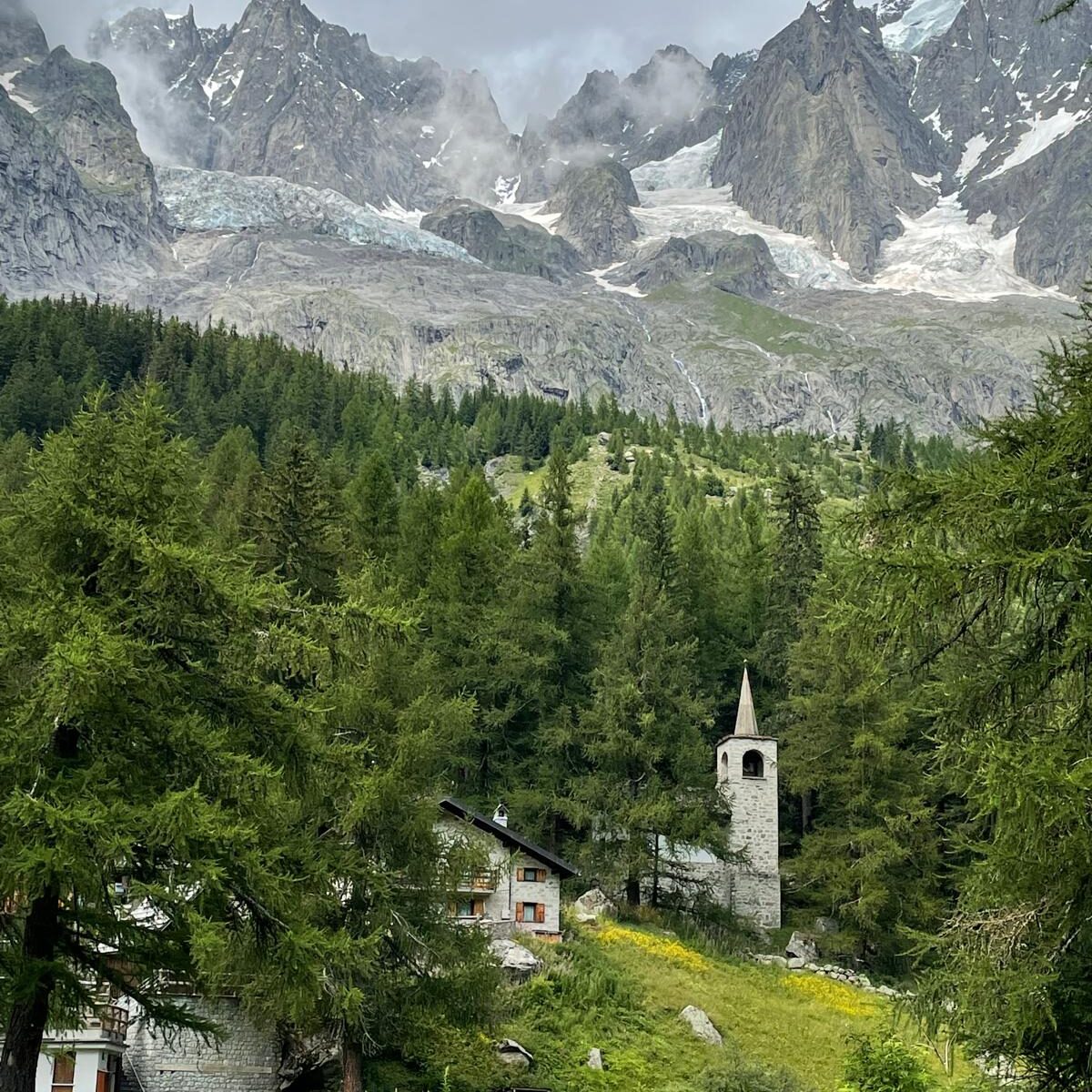
Planpincieux glacier and the church in the bottom. Photo: The-Ski-Guru.

The Planpincieux Glacier retreat is accelerating on the Italian side of Mont Blanc, seven years after the hanging glacier above Courmayeur first made international headlines over fears of a major collapse.

The hanging glacier, located above Val Ferret on the Italian side of the Mont Blanc massif, accelerated again during July 2026, reaching movement of around 80 centimetres per day. The figure was confirmed by the Valle d’Aosta regional authorities, which placed the glacier under continuous monitoring during the period of heightened activity.

The situation has since improved. Jean-Pierre Fosson of Fondazione Montagna Sicura said during the Valle d’Aosta stage of Legambiente’s Carovana dei Ghiacciai that Planpincieux has now fallen below the critical thresholds and that current conditions are considered favourable.

But the longer-term picture is far less reassuring.

Planpincieux Glacier retreat reaches 50 metres in three years

According to a report from Corriere della Sera, the front of Planpincieux has retreated by around 50 metres in just three years.

The glacier hangs at around 2,600 metres beneath the Grandes Jorasses, high above Val Ferret. Ice and debris continue periodically to break away from its front and descend towards the valley.

The glacier is particularly closely monitored because of its position above an inhabited and heavily visited valley.

During July’s acceleration, Courmayeur introduced Civil Protection restrictions in the areas potentially exposed to a collapse. Access restrictions were subsequently eased as conditions stabilised.


Read more: Nepal Glacier Disaster: Could It Happen in the Alps? — Following the catastrophic glacier-related disaster in Nepal, we look at whether similar high-mountain hazards could occur in the Alps, and how monitoring at Planpincieux, Blatten and elsewhere can provide crucial warning time.


Continue reading “Planpincieux Glacier: Seven Years After the Alarm, the Mont Blanc Glacier Is Retreating Fast”

Mont Blanc Faces Record Rockfall Year After Extreme Alpine Summer

The view from the top of the Skyway Monte Bianco - Punta Hellbronner- Amazing rotating gondola that takes you up to the highest point in Italy to see the Mont Blanc and all the surrounding mountains. Photo: The-Ski-Guru.

The Mont Blanc massif is facing a record rockfall year after an exceptionally hot Alpine summer destabilised high-altitude terrain — and scientists warn that some of the largest collapses may still be to come.

Around 450 significant rockfalls could be recorded in the Mont Blanc massif during 2026, according to geomorphologist Ludovic Ravanel, research director at France’s National Centre for Scientific Research (CNRS).

The figure would comfortably surpass the previous record of around 300 events in 2022, another year marked by intense heatwaves.

Just 10 or 20 years ago, only a few dozen such events would typically have been recorded.

Continue reading “Mont Blanc Faces Record Rockfall Year After Extreme Alpine Summer”

Who Pays for a Mountain Rescue in the Alps? Summer Hiking, Insurance and Rescue Costs Explained

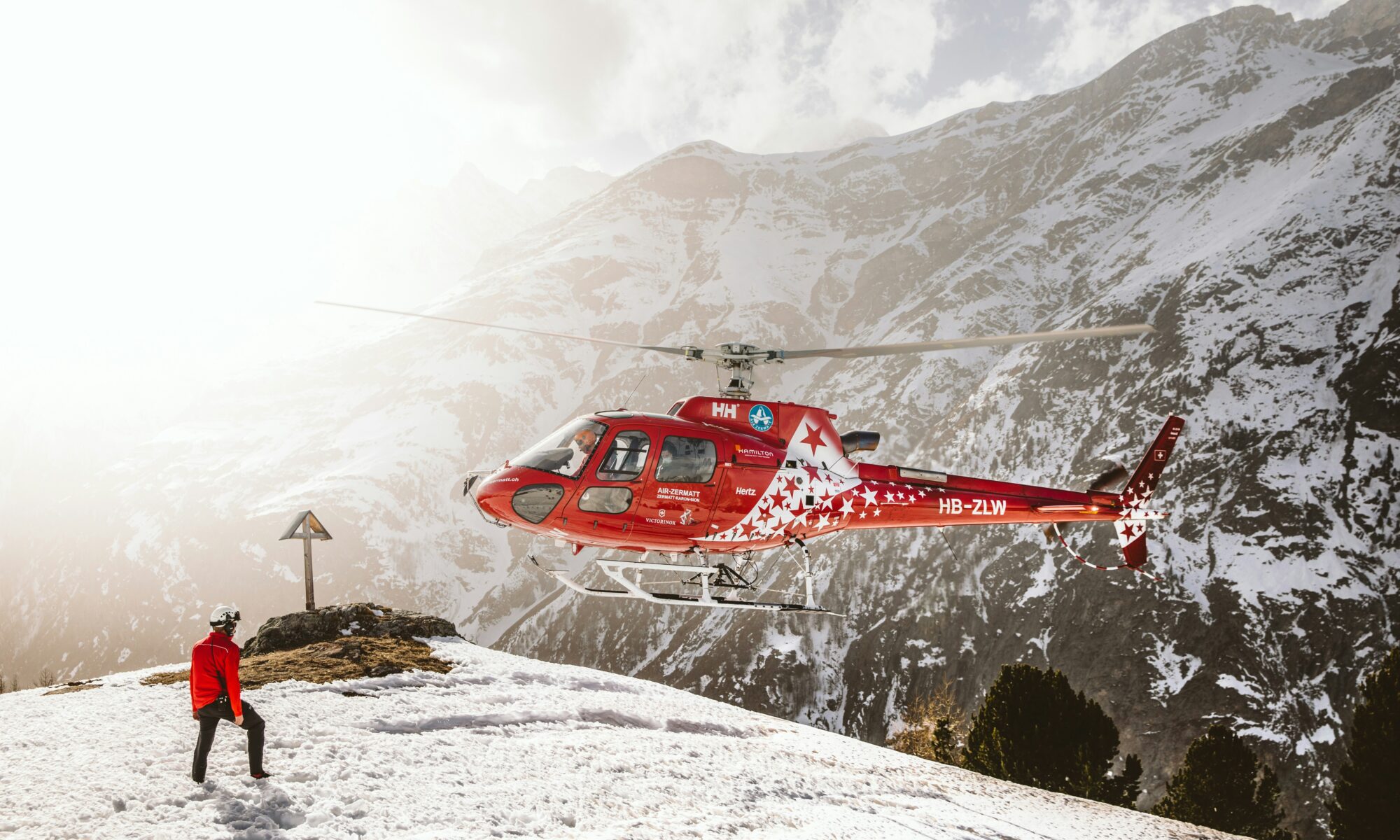
Photo: Kevin Schmid. Unsplash. Zermatt. Switzerland.

The rescue of 36 hikers, including babies in strollers, in Austria made headlines around the world. But beyond the unusual circumstances, it highlighted a question many visitors never think about until it’s too late:

Who pays if you need to be rescued in the Alps?

The answer depends on where you are. Rules vary significantly between Austria, France, Italy and Switzerland, and what applies to summer hiking or mountaineering is not necessarily the same as skiing in winter.

This guide focuses on summer mountain activities—including hiking, mountaineering, via ferratas and glacier trekking. Rescue rules on managed ski slopes during winter are often different and are covered by separate insurance systems.

Continue reading “Who Pays for a Mountain Rescue in the Alps? Summer Hiking, Insurance and Rescue Costs Explained”

Extreme Heat Pushes Alpine Glaciers Into Crisis After Matterhorn Rockfall

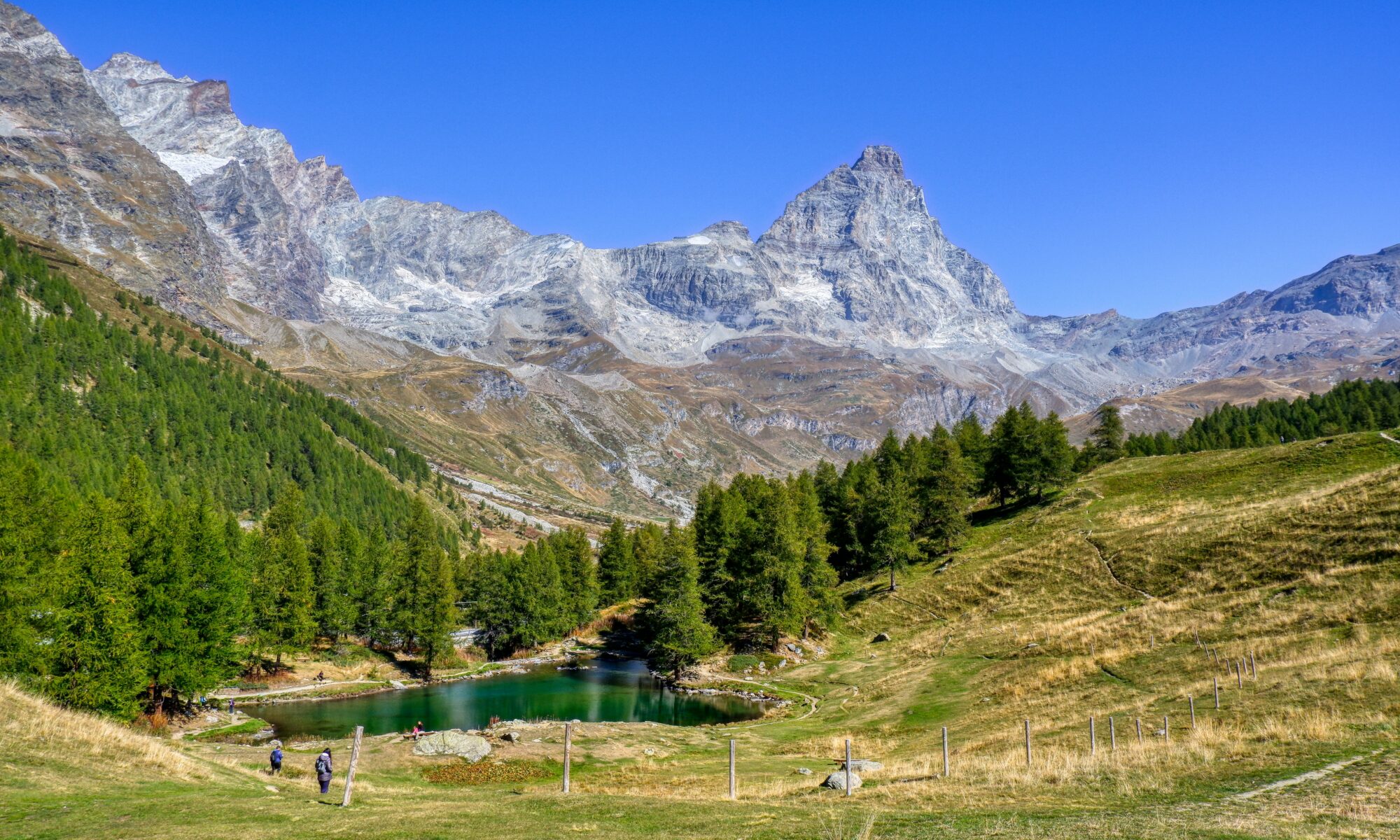
Lago Blu in Cervinia. Photo: Antonio Sessa. Unsplash.

Just one day after a large rockfall on the Matterhorn shocked the Alpine community, authorities and scientists across the Alps are warning that the exceptional heat gripping southern Europe is accelerating glacier melt and increasing instability in high mountain areas.

Italy remains under widespread red heat alerts, with meteorologists expecting the heatwave to continue through at least Ferragosto. While cities are enduring record temperatures, the impact is proving just as dramatic in the mountains, where glaciers are retreating at unprecedented rates and frozen rock is beginning to thaw.

One of the clearest indicators of the current conditions is the zero-degree isotherm. Normally found between 3,500 and 4,000 metres during summer, it remained between 5,500 and 5,800 metres for several days in July—around 1,400 metres higher than normal. This meant that even the highest Alpine peaks were experiencing temperatures above freezing, dramatically accelerating glacier melt while weakening the permafrost that helps hold mountain rock together.

Continue reading “Extreme Heat Pushes Alpine Glaciers Into Crisis After Matterhorn Rockfall”

Mont Blanc Tunnel to Remain Open This Autumn as 15-Week Closure is Cancelled

Coming out the Italian side of the Mont Blanc Tunnel. Photo: The-Ski-Guru

Good news for anyone planning to drive between France and Italy this autumn. Unlike the previous two years, the Mont Blanc Tunnel will not close for 15 weeks during the autumn of 2026.

The decision means travellers heading to the Aosta Valley, Courmayeur, Chamonix and many other Alpine destinations will once again be able to use one of the Alps’ most important road links throughout the autumn season.

Why Was the Tunnel Closed in Previous Years?

During the autumns of 2024 and 2025, the Mont Blanc Tunnel underwent major renovation works to replace sections of the tunnel vault. Those essential engineering projects required a complete closure lasting around fifteen weeks each year, forcing motorists to use alternative Alpine crossings.

Continue reading “Mont Blanc Tunnel to Remain Open This Autumn as 15-Week Closure is Cancelled”

Snowfall Update: Heavy Snow Continues Across the Alps and Valle d’Aosta

Photo: Dan Ottr. Unsplash. Snowfall Update: Heavy Snow Continues Across the Alps and Valle d’Aosta.

Following yesterday’s alert about severe winter conditions and difficult mountain travel, updated forecasts confirm that snowfall is continuing across large parts of the Alps, with further significant accumulations expected over the next 24–72 hours.

Meteorological services in France and Italy indicate repeated snow events, falling snow lines at times, and conditions that will remain challenging for travel and mountain activities — particularly at higher elevations.

This post provides a regional update, based on the latest forecasts from alpine and local meteorological sources.

Continue reading “Snowfall Update: Heavy Snow Continues Across the Alps and Valle d’Aosta”