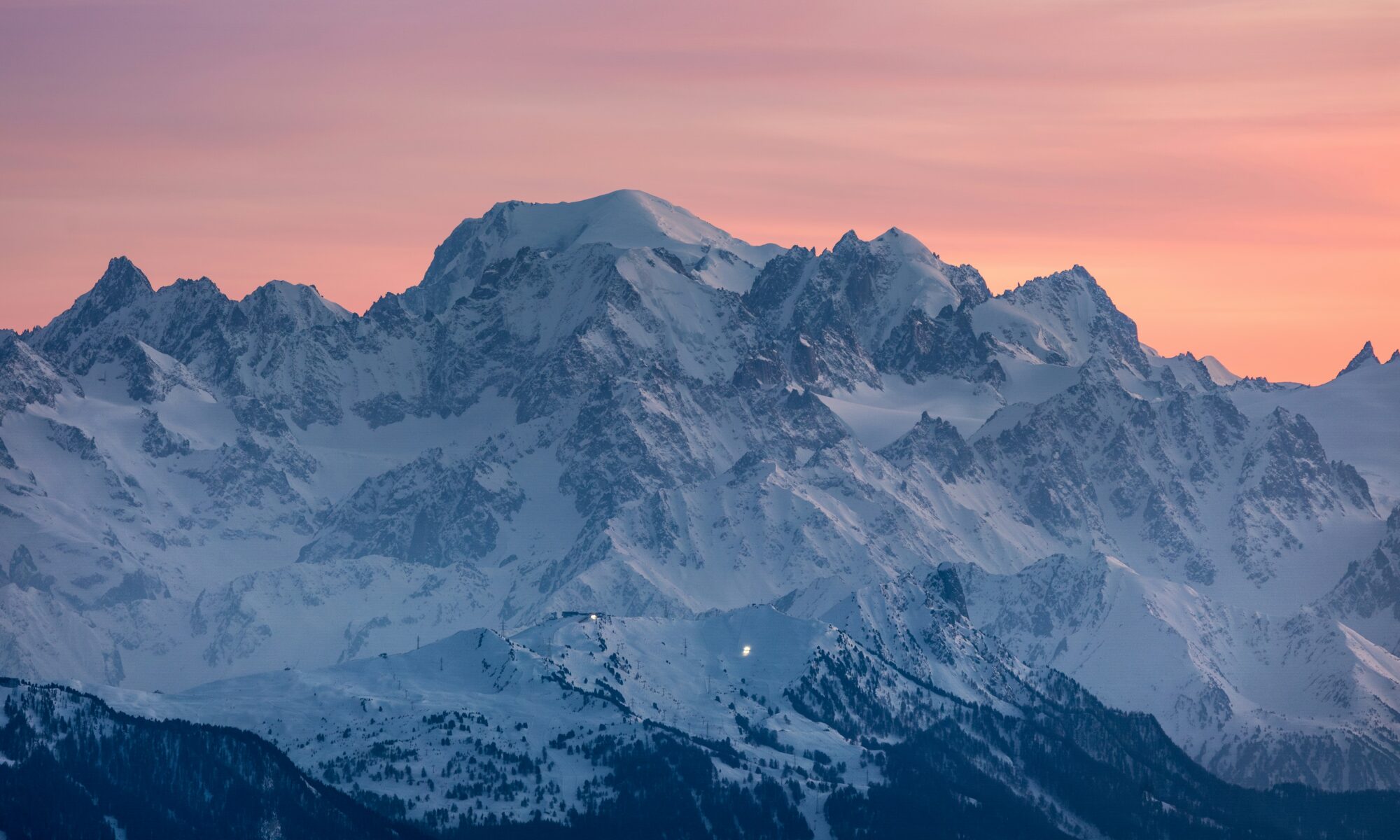
Mont Blanc Is Growing Again — But What Does Its New Height Really Tell Us?

Mont Blanc seen from the French side. Photo credit: Marek Piwnicki. Unsplash.

Europe’s highest Alpine summit has gained nearly two metres since 2023, but scientists warn that changes in its snowy peak should not be confused with the wider retreat of Alpine glaciers.

Mont Blanc, the highest mountain in the Alps and Western Europe, has a newly confirmed altitude: 4,807.47 metres above sea level.

The figure was officially announced on 14 October 2026 following a French scientific expedition to the summit in September.

The measurement represents an increase of 1.88 metres compared with 2023, when Mont Blanc stood at 4,805.59 metres.

However, there is an interesting twist: the mountain is actually 1.29 metres lower than it was in 2025.

So, is Mont Blanc growing or shrinking? And what does this tell us about climate change in the Alps?

Continue reading “Mont Blanc Is Growing Again — But What Does Its New Height Really Tell Us?”
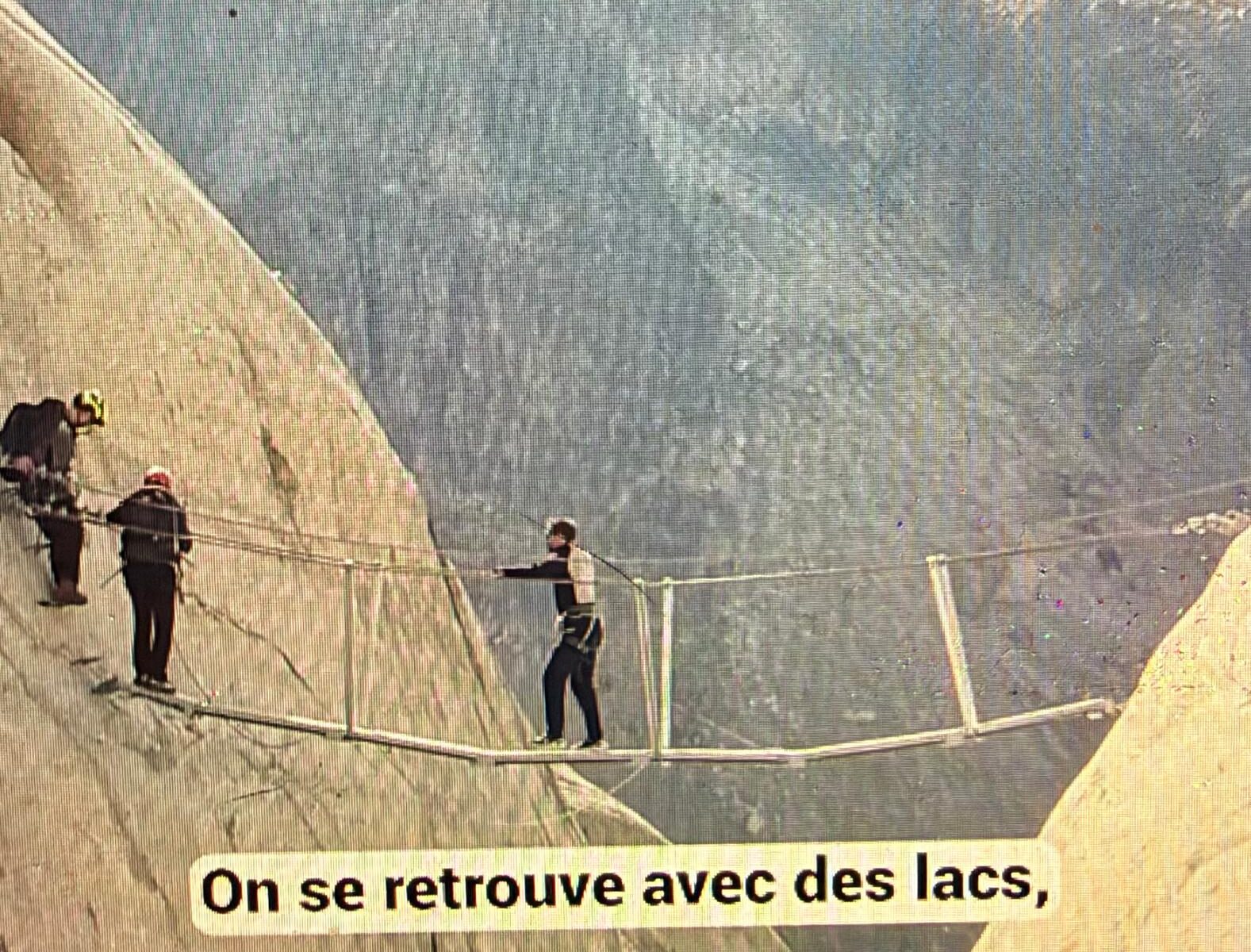
Where There Was Once Ice, Suspension Bridges Now Span the Gaps Above Chamonix’s Mer de Glace

Hanging Bridge in Chamonix's Mer de Glace. Screenshot of FB post of Le Dauphiné Libéré

Three Himalayan-style suspension bridges above the Mer de Glace highlight how glacier retreat is forcing Chamonix to rethink mountain access, hiking routes and the infrastructure needed to keep the high Alps accessible.

For generations, glaciers provided natural passages through the Alps. Today, in some places, their retreat is leaving behind steep rock faces, unstable terrain and deep gaps that require entirely new solutions.

Above Chamonix’s famous Mer de Glace, three suspension bridges now illustrate this transformation particularly vividly.

The structures, described as Himalayan-style footbridges, allow mountaineers and experienced hikers to cross sections of the Balcons de la Mer de Glace where the changing landscape has made traditional routes increasingly difficult.

French regional newspaper Le Dauphiné Libéré reported on the bridges on 13 October 2026, followed by a video report on 14 October showing local officials inspecting the installations.

Continue reading “Where There Was Once Ice, Suspension Bridges Now Span the Gaps Above Chamonix’s Mer de Glace”

New Capanna Carrel Officially Inaugurated on the Matterhorn at 3,830 Metres

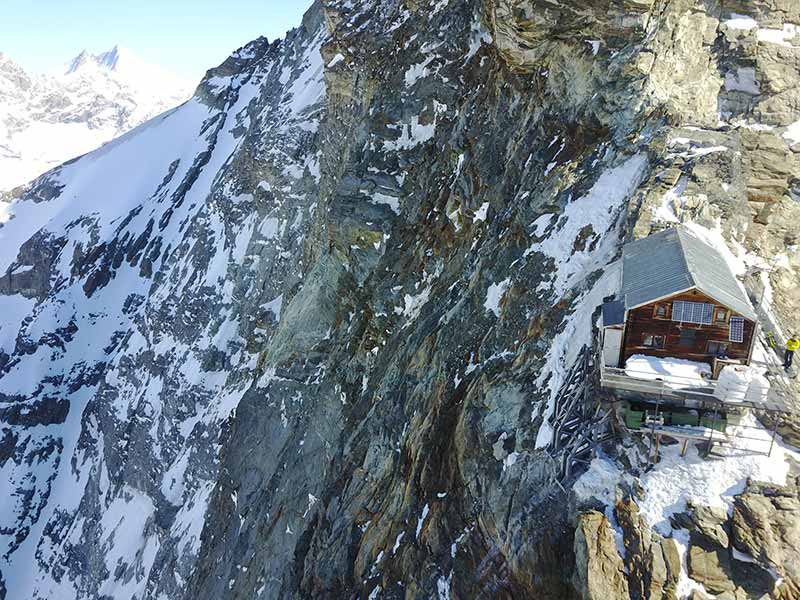
Capanna Carrel- Photo: GuidedelCervino.com

The new Capanna Carrel has been officially inaugurated on the Italian side of the Matterhorn, marking an important milestone for mountaineering safety and high-altitude infrastructure in the Aosta Valley.

The inauguration took place on 15 October 2026, at 3,830 metres above sea level, along the Lion Ridge (Cresta del Leone), the historic Italian normal route to the summit of the Matterhorn, known in Italy as the Cervino.

The ceremony brought together local and regional authorities, mountain guides, engineers and representatives of the mountaineering community.

The new mountain shelter replaces a historic structure increasingly exposed to rockfall and instability associated with the degradation of mountain permafrost.

As The-Ski-Guru reported in August 2026, the new Capanna Carrel had already been handed over to the Matterhorn mountain guides for use during the summer climbing season. The October ceremony now marks its official inauguration following the completion of the project.

Continue reading “New Capanna Carrel Officially Inaugurated on the Matterhorn at 3,830 Metres”

Pila Expands Snowmaking Reservoir as Water Debate Grows

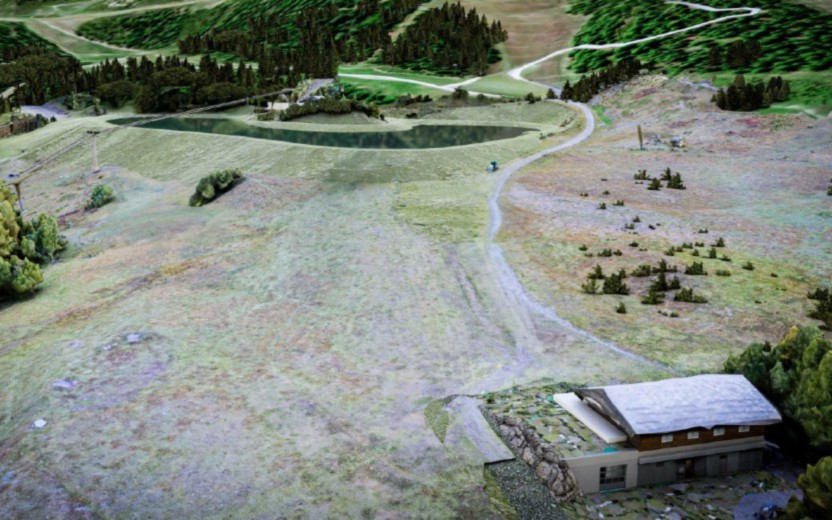
A rendering of Lake Leisse around 2,100 meters- Courtesy of Pila sPa.

Pila is almost quadrupling the capacity of its Leissé reservoir to strengthen snowmaking at the Aosta Valley ski resort. But the investment has also reopened a debate about water use, competing demands and the long-term response to climate change.

The reservoir’s capacity is increasing from 38,500 to approximately 152,700 cubic metres. The project aims to store more water when it is naturally available, ready for use when cold conditions allow snow production before the winter season.

Why Pila wants more water storage

Speaking to La Vallée Notizie in July, Pila’s general director Fabio Junod explained that the reservoir was sized principally for the first snowmaking campaign, which helps prepare much of the ski area for the Christmas holidays.

Continue reading “Pila Expands Snowmaking Reservoir as Water Debate Grows”

Valle Nevado Extends Ski Season into November

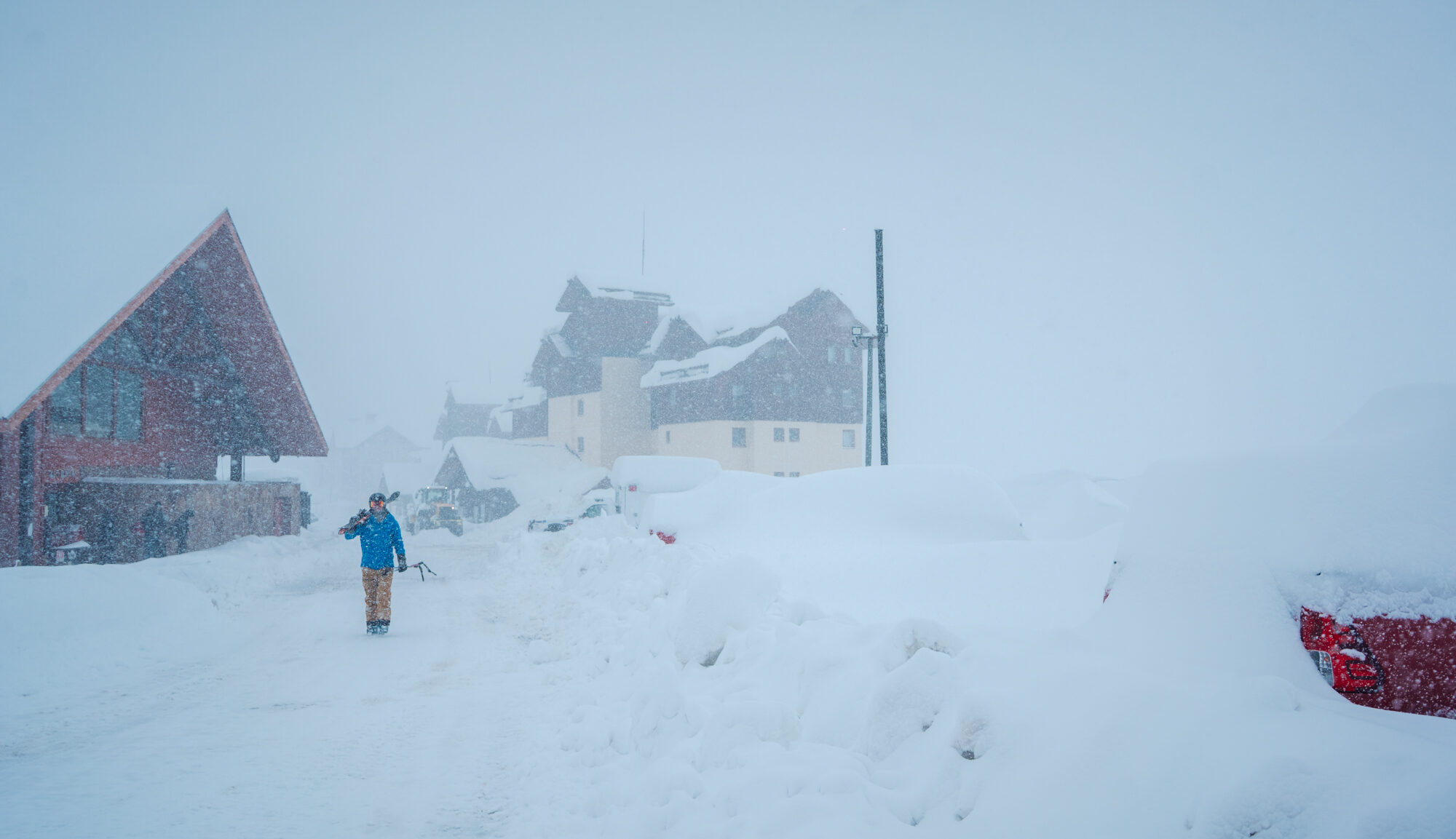
Skier walking in snow- Photo courtesy of Valle Nevado.

Valle Nevado will keep skiing and snowboarding open until 8 November 2026, its latest closing date in 38 years, after an October storm delivered approximately 108 cm of snow in just 48 hours.

According to the resort’s announcement, the extension will also make this its longest season: 143 days, from its 19 June opening through to November. The original closing date was 18 October.

The latest snowfall brings Valle Nevado’s reported seasonal total to approximately 690 cm, compared with its stated typical winter snowfall of around 584 cm. Its high elevation and south-facing terrain have helped preserve snow coverage into the Southern Hemisphere spring.

But a record season measured in operating days does not necessarily mean consistently good snow from beginning to end. The June opening date alone tells us little about how much terrain was available or the depth of snow early in the winter.

Continue reading “Valle Nevado Extends Ski Season into November”

Matterhorn Without Snow: Hervé Barmasse Warns of a Changing Mountain

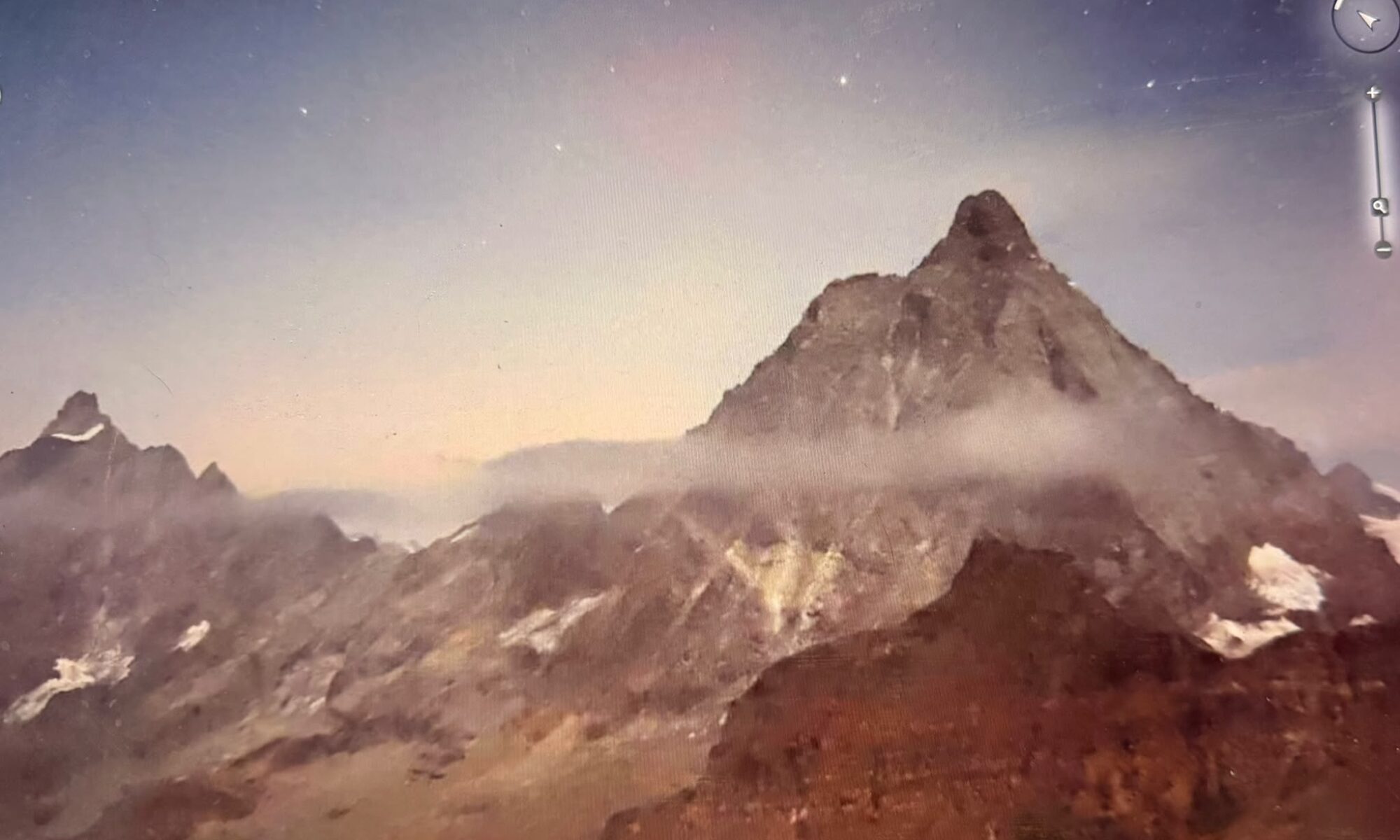
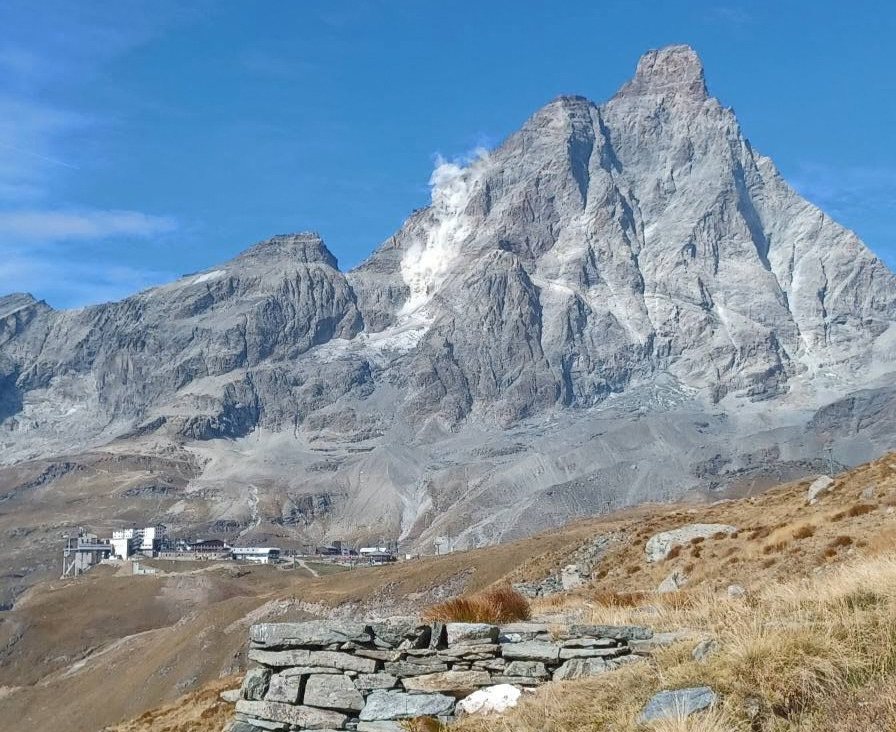
The Cervino, as seen on the early morning of 3rd October 2026. Photo: Webcam Cervino Ski Paradise.

The Matterhorn has appeared almost completely bare at the end of the 2026 summer season. For Italian alpinist and mountain guide Hervé Barmasse, who has spent his life beneath the mountain, the striking images are part of a much bigger change taking place at high altitude.

Only days after a new rockfall prompted the Cervino mountain guides to advise against climbing the Italian normal route, one of the mountain’s best-known alpinists has spoken about another striking feature of the Matterhorn in 2026: the lack of snow.

Hervé Barmasse, a fourth-generation mountain guide from Valtournenche, told Italian mountain publication L’AltraMontagna that he had never seen the Cervino — as the Matterhorn is known in Italy — quite so bare.

His comments are particularly significant because this is not a mountain he encounters occasionally.

Continue reading “Matterhorn Without Snow: Hervé Barmasse Warns of a Changing Mountain”

Matterhorn Italian Route Discouraged After New Rockfall — What About the Zermatt Side?

Il Cervino has been suffering many rockfalls this summer. Photo credit: Giorgio Schenone- Facebook- Gruppo Gente Innamorata di Breuil Cervinia.

Mountain guides in Cervinia are advising climbers against the Italian normal route after a new rockfall affected the Lenzuolo section. Across the mountain, the Swiss Hörnli Ridge had its own serious rockfall problems earlier this summer.

The Italian normal route up the Matterhorn (Cervino) is currently being discouraged by the Società Guide Alpine del Cervino following a new rockfall on 29 September.

According to the mountain guides, conditions on the Italian route have deteriorated further, particularly around the Lenzuolo section.

“The situation on the Matterhorn remains in continuous evolution and conditions can change rapidly,” the guides warned, urging climbers to check the latest information before attempting the mountain and to carefully assess whether an ascent is appropriate.

The warning does not amount to a legal closure of the mountain. Rather, the Cervinia guides are advising against climbing the Italian normal route under the present conditions. Rai News

What happened on the Italian side?

The latest rockfall occurred on 29 September, affecting the area around the Lenzuolo on the Italian normal route, which follows the Lion Ridge (Cresta del Leone) from the Breuil-Cervinia side of the mountain.

It is the latest in a series of instability events on the Matterhorn during an unusually difficult 2026 climbing season.

Continue reading “Matterhorn Italian Route Discouraged After New Rockfall — What About the Zermatt Side?”

Record-Breaking El Niño Is Here — What Could It Mean for Europe’s 2026/27 Ski Winter?

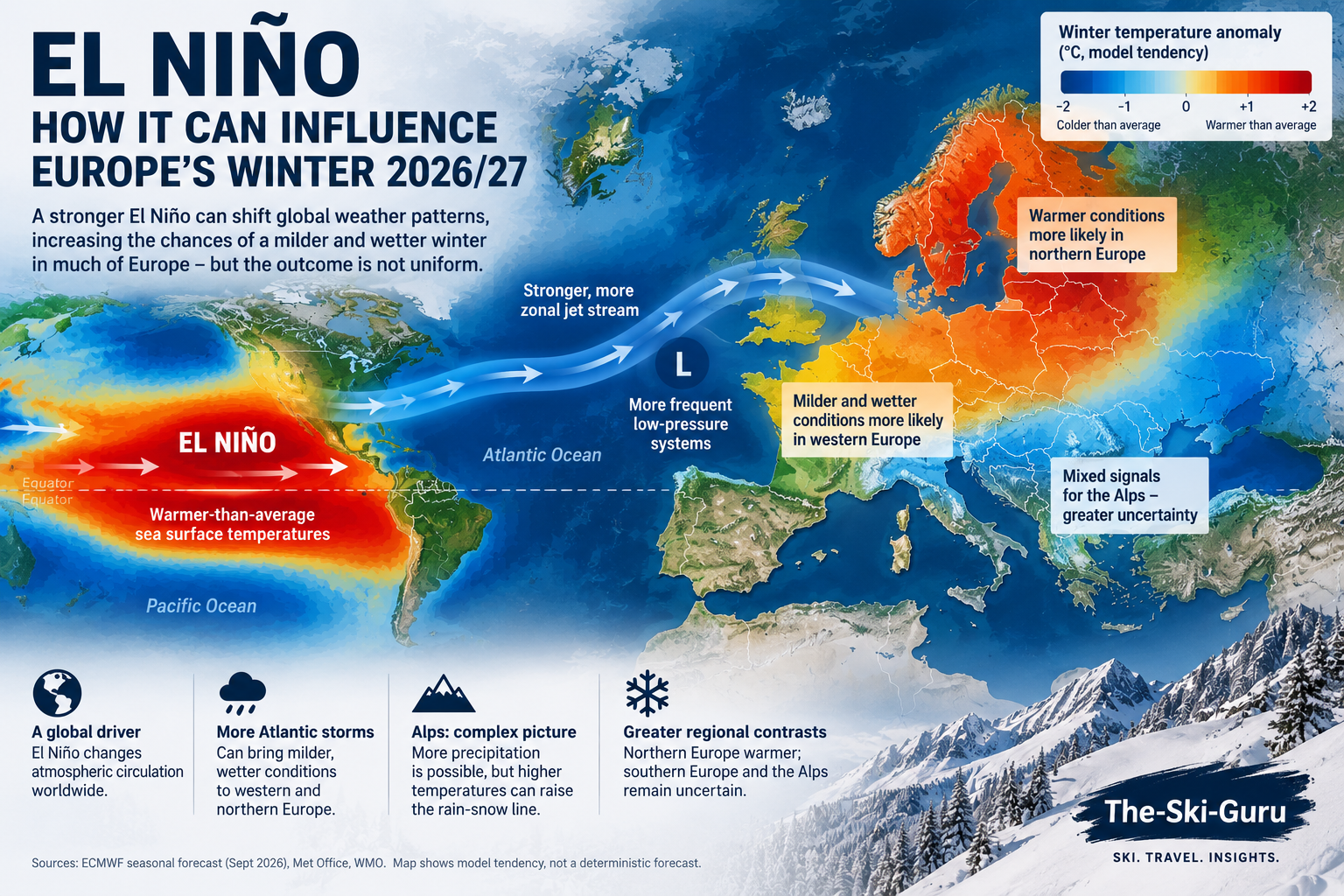
Illustration of how El Niño can influence European winter weather patterns. The impact on the Alps remains complex, with temperature, precipitation and storm tracks determining whether moisture falls as rain or snow. AI-generated illustration created for The-Ski-Guru. Not an official meteorological forecast map.

El Niño could influence Europe’s winter 2026/27. A record-breaking El Niño is building towards its winter peak, but despite dramatic headlines, it does not automatically mean a snowy — or snowless — winter for the Alps. Here is what the official forecasts actually tell us.

El Niño has officially entered record territory. When we first looked at what El Niño could mean for the 2026/27 ski season in August, the event was still developing. Since then, the signal has strengthened considerably.

On 22 September, the UK Met Office confirmed that sea-surface temperatures in the central equatorial Pacific have now surpassed those recorded during previous El Niño events, making the developing 2026 event the strongest in the observational record.

It is an extraordinary climate signal — and one arriving just as the Northern Hemisphere ski industry prepares for winter 2026/27.

But does a record El Niño mean a record ski season?

Not necessarily.

For Europe in particular, the relationship between El Niño and Alpine snowfall is considerably more complicated than some of the increasingly dramatic seasonal forecasts circulating online might suggest. Continue reading “Record-Breaking El Niño Is Here — What Could It Mean for Europe’s 2026/27 Ski Winter?”

Could Sheep’s Wool Replace Plastic Glacier Covers? Swiss Trial Shows Early Promise

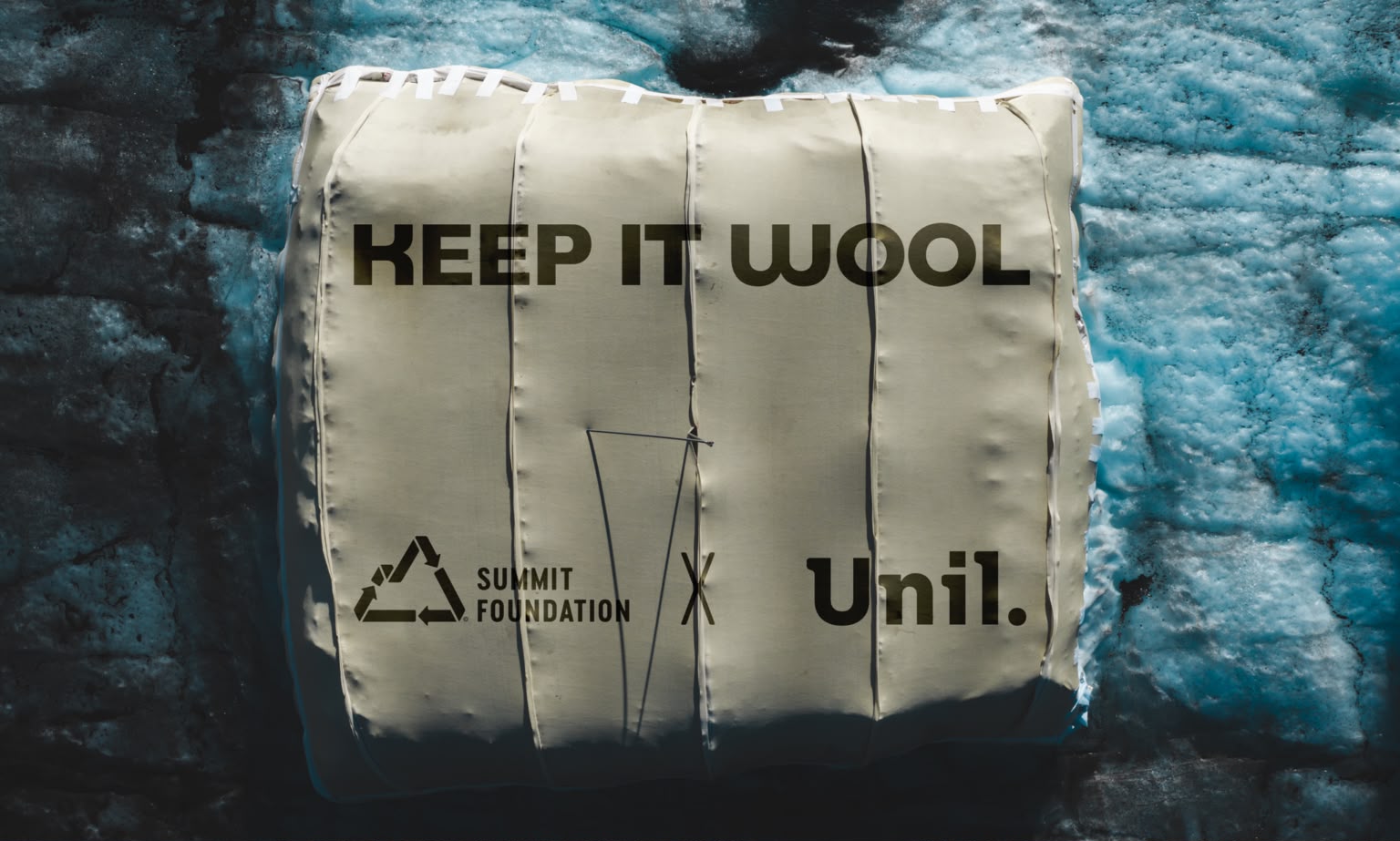
Keep it Wool. Summit Foundation.

A summer experiment on the Tsanfleuron Glacier at Glacier 3000 suggests locally sourced sheep’s wool could perform as well as conventional synthetic geotextiles — without leaving plastic fibres behind.

For around two decades, sections of glaciers in Switzerland have been covered during summer with large white geotextile sheets. The technique can reduce local melting and is also used to preserve snow from one season to the next.

Now, researchers in Switzerland are testing whether those synthetic covers could be replaced with something considerably more traditional: sheep’s wool.

At the Tsanfleuron Glacier, part of the Glacier 3000 area above Les Diablerets, two prototype wool covers were installed this summer as part of the “Keep It Wool” project, developed by environmental organisation Summit Foundation in collaboration with the University of Lausanne’s Interdisciplinary Centre for Mountain Research (CIRM).

And the first results are encouraging.

Continue reading “Could Sheep’s Wool Replace Plastic Glacier Covers? Swiss Trial Shows Early Promise”

Historic Rhône Glacier Ice Cave Faces Closure After Valais Rejects Appeal

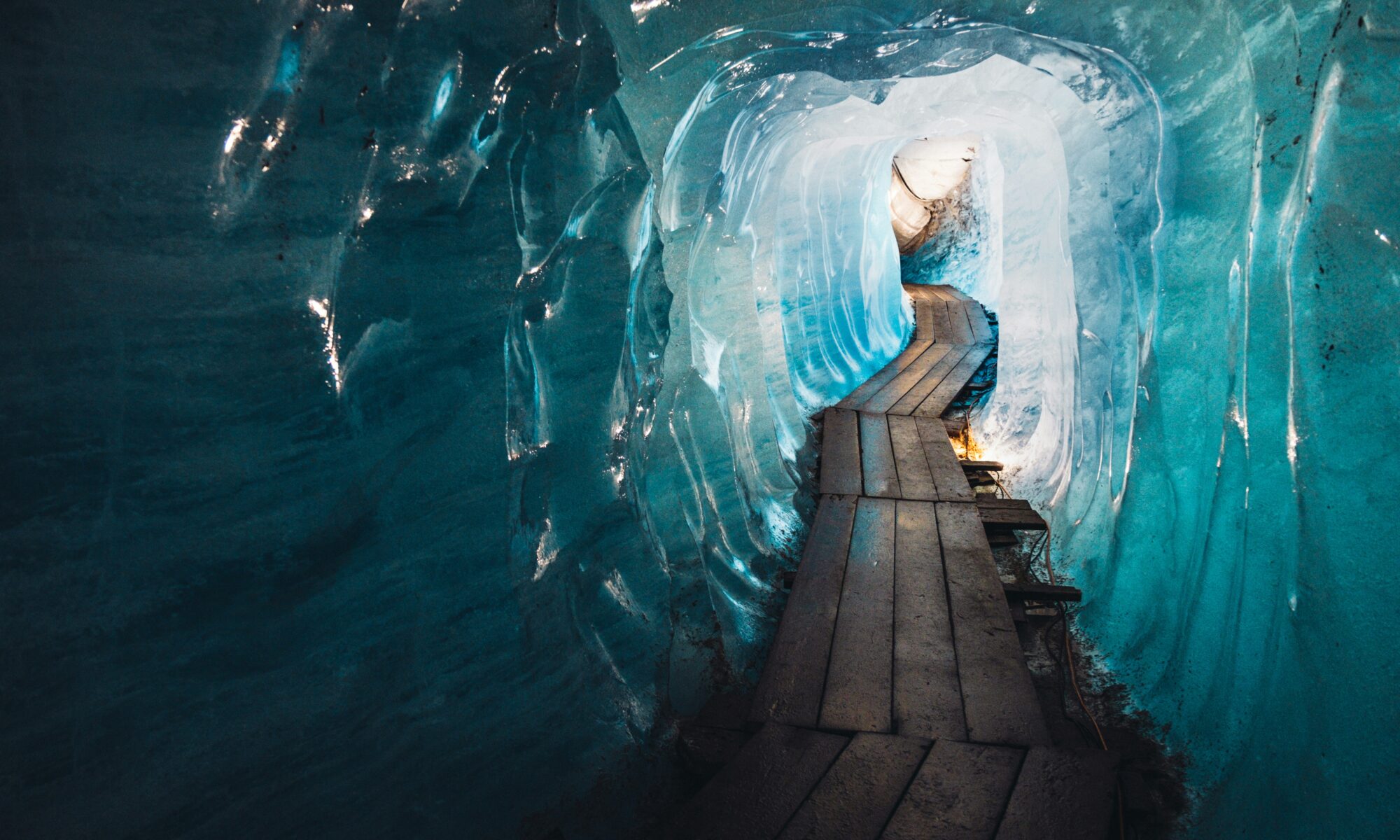
The tourist ice grotto on the Rhône Glacier has traditionally been covered with protective material to slow summer melting. Valais authorities have rejected the operator’s appeal against an order to close the attraction and restore the protected site. Photo credit: Patrick Robert Doyle. Unsplash.

Valais authorities have rejected an appeal by the operators of the historic Rhône Glacier ice cave, ordering an end to the tourist operation and the restoration of a nationally protected Alpine site. A further court appeal remains possible.

One of Switzerland’s best-known glacier attractions is facing closure after the Valais cantonal government rejected an appeal by its operators.

The decision concerns the ice grotto carved into the Rhône Glacier near the Furka Pass, an attraction reportedly visited by around 100,000 people each year.

The authorities have ordered the site to be restored and tourist operations to cease, concluding that both the excavated tunnel and the protective coverings placed over the ice should have received prior authorisation.

Continue reading “Historic Rhône Glacier Ice Cave Faces Closure After Valais Rejects Appeal”