Where There Was Once Ice, Suspension Bridges Now Span the Gaps Above Chamonix’s Mer de Glace

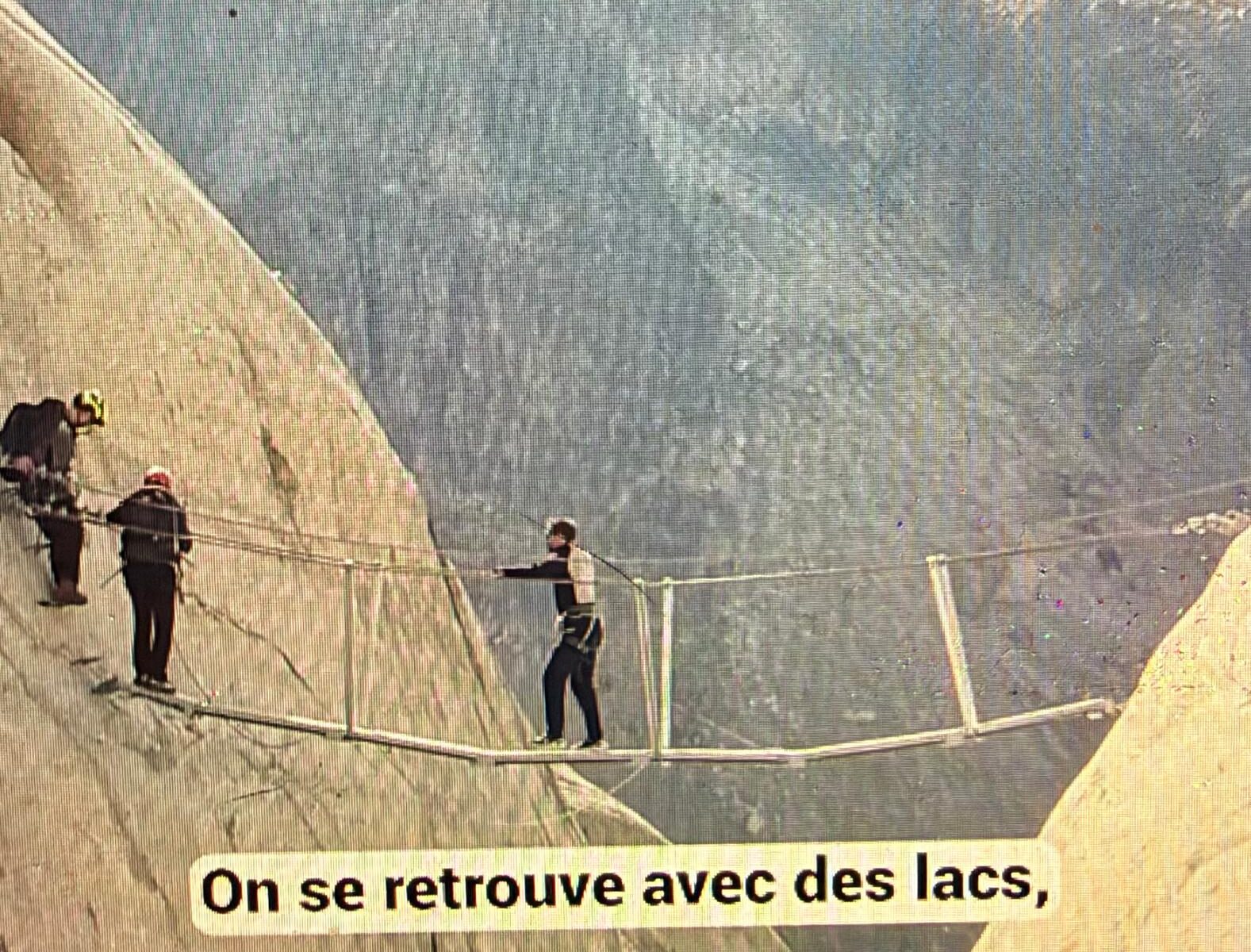
Hanging Bridge in Chamonix's Mer de Glace. Screenshot of FB post of Le Dauphiné Libéré

Three Himalayan-style suspension bridges above the Mer de Glace highlight how glacier retreat is forcing Chamonix to rethink mountain access, hiking routes and the infrastructure needed to keep the high Alps accessible.

For generations, glaciers provided natural passages through the Alps. Today, in some places, their retreat is leaving behind steep rock faces, unstable terrain and deep gaps that require entirely new solutions.

Above Chamonix’s famous Mer de Glace, three suspension bridges now illustrate this transformation particularly vividly.

The structures, described as Himalayan-style footbridges, allow mountaineers and experienced hikers to cross sections of the Balcons de la Mer de Glace where the changing landscape has made traditional routes increasingly difficult.

French regional newspaper Le Dauphiné Libéré reported on the bridges on 13 October 2026, followed by a video report on 14 October showing local officials inspecting the installations.

Continue reading “Where There Was Once Ice, Suspension Bridges Now Span the Gaps Above Chamonix’s Mer de Glace”

Pila–Cogne Cable Car: €150–190 Million Link Moves Closer to Political Decision

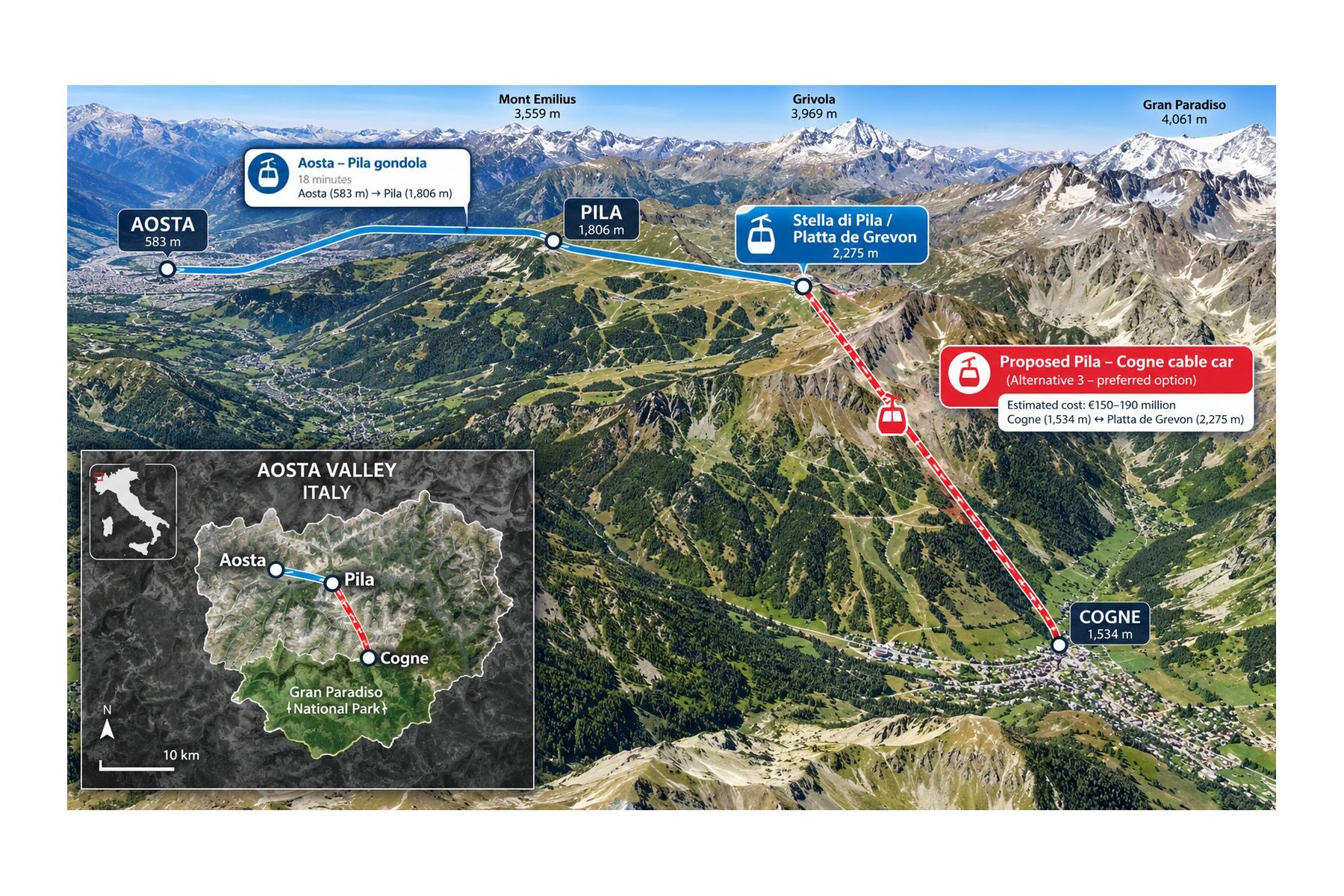
The proposed Pila–Cogne cable car would connect Cogne with Platta de Grevon/Stella di Pila, creating a potential lift-linked route through Pila to Aosta. Illustration: The-Ski-Guru.

A long-discussed cable-car connection between Pila and Cogne in Italy’s Aosta Valley has taken another step forward, with three possible routes now emerging from an initial nine alternatives — and one identified by the technical study as the preferred option.

If eventually built, the project could create something much bigger than a new ski lift. By connecting Cogne with Pila, which is already linked directly by gondola to the city of Aosta, it could effectively create an integrated Aosta–Pila–Cogne mountain destination, combining a regional capital, an alpine ski resort and one of the best-known gateways to the Gran Paradiso National Park.

But this is important: the cable car has not yet been approved for construction.

The latest step concerns the technical feasibility study, while the project is now entering a political and public consultation phase before decisions are made on whether to proceed.

Nine alternatives reduced to three

The project was examined by the Aosta Valley Regional Council’s Economic Development Commission on 1 October 2026.

The technical team initially considered nine different alternatives for connecting Cogne with the Pila ski area.

Three have now been identified as the most practicable solutions, all connecting Cogne with the area of Platta de Grevon, high above Pila.

Continue reading “Pila–Cogne Cable Car: €150–190 Million Link Moves Closer to Political Decision”

From Delayed Opening to October Skiing: Portillo Extends an Extraordinary 2026 Season

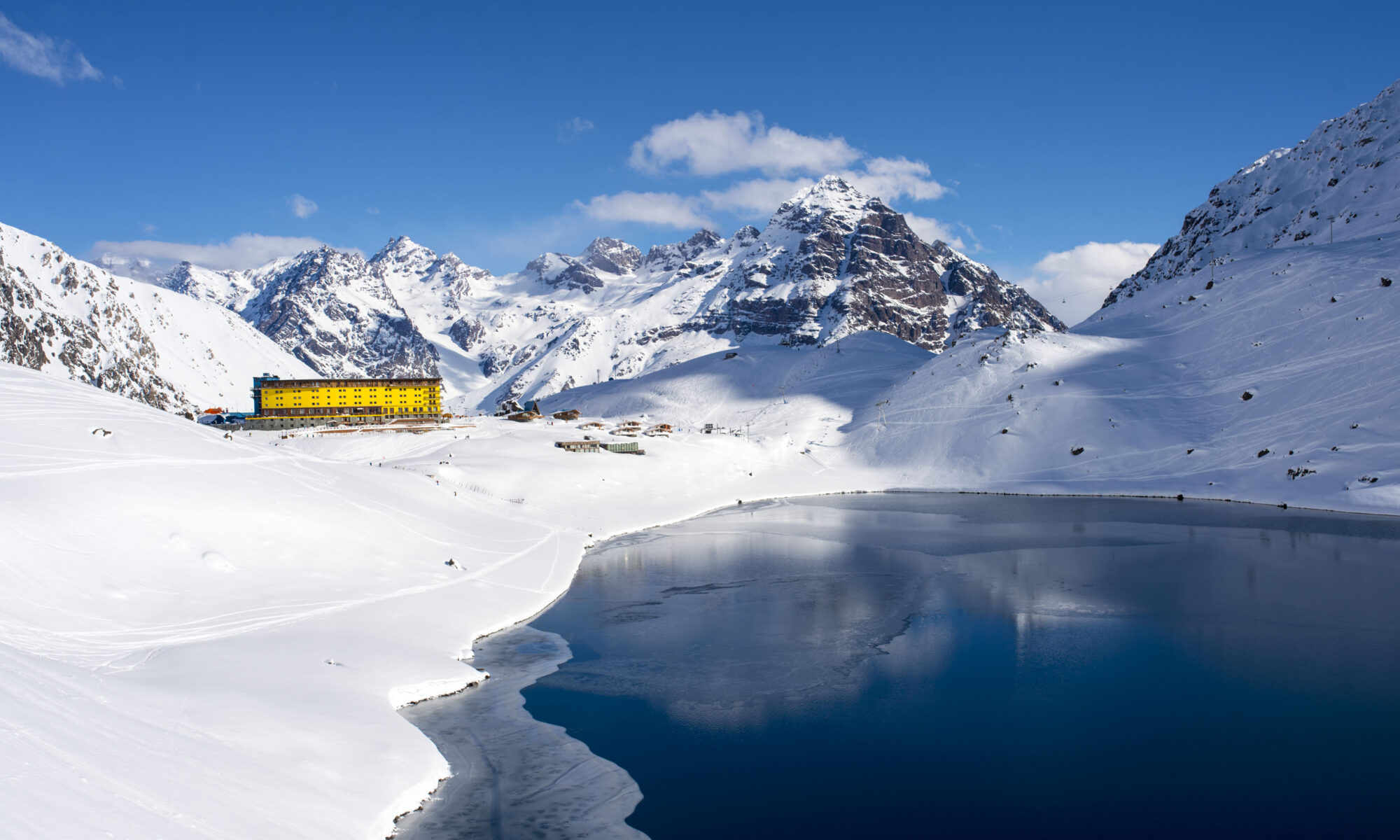
Aereal View of Portillo. Photo by Pia Vergara. Courtesy Ski Portillo.

After opening late because of insufficient snow and then losing almost one-third of its season to a prolonged road closure, Ski Portillo has accumulated more than seven metres and will now continue operating until 11 October.

Ski Portillo has extended its 2026 season by more than two weeks, completing an extraordinary turnaround in a winter that began with too little snow, delivered one of the largest storm cycles in recent years and then left the Chilean resort largely isolated during a crucial part of its short operating season.

The resort had originally planned to close on 26 September. It will now continue operating until Sunday 11th October, with a 20% discount available for stays between 30 September and the new closing date.

Portillo attributed the extension to the exceptional amount of snow received this winter. The resort announced more than seven metres of accumulated snowfall, while its official snow report was showing a seasonal total of 8.19 metres by 21 August.

However, the abundance of snow tells only part of the story.

A Season That Began With Too Little Snow

Portillo had initially planned to open on 20 June, in time for the beginning of the main South American winter holiday period.

Historically, the resort aims to open around the end of June. As with every ski area relying heavily on natural snowfall, this is always subject to conditions, but being operational by early July is particularly important. Families from Chile, Argentina, Brazil and other South American markets traditionally travel during their winter school holidays.

In 2026, the expected snowfall did not arrive in time. Although an early storm produced approximately 40 centimetres and the resort supplemented it with snowmaking, Portillo said it did not yet have the base required to open safely and provide an adequate skiing experience.

The planned 20 June opening was therefore postponed.

Portillo eventually began limited operations on 4 July, exclusively for hotel guests. Only three runs — Plateau, Las Lomas and Corralito — were initially available, and the resort was not yet accepting day skiers.

Then, just ten days after the delayed opening, the situation changed completely.

Continue reading “From Delayed Opening to October Skiing: Portillo Extends an Extraordinary 2026 Season”


Courmayeur’s €40 Million Lift Transformation Takes Shape

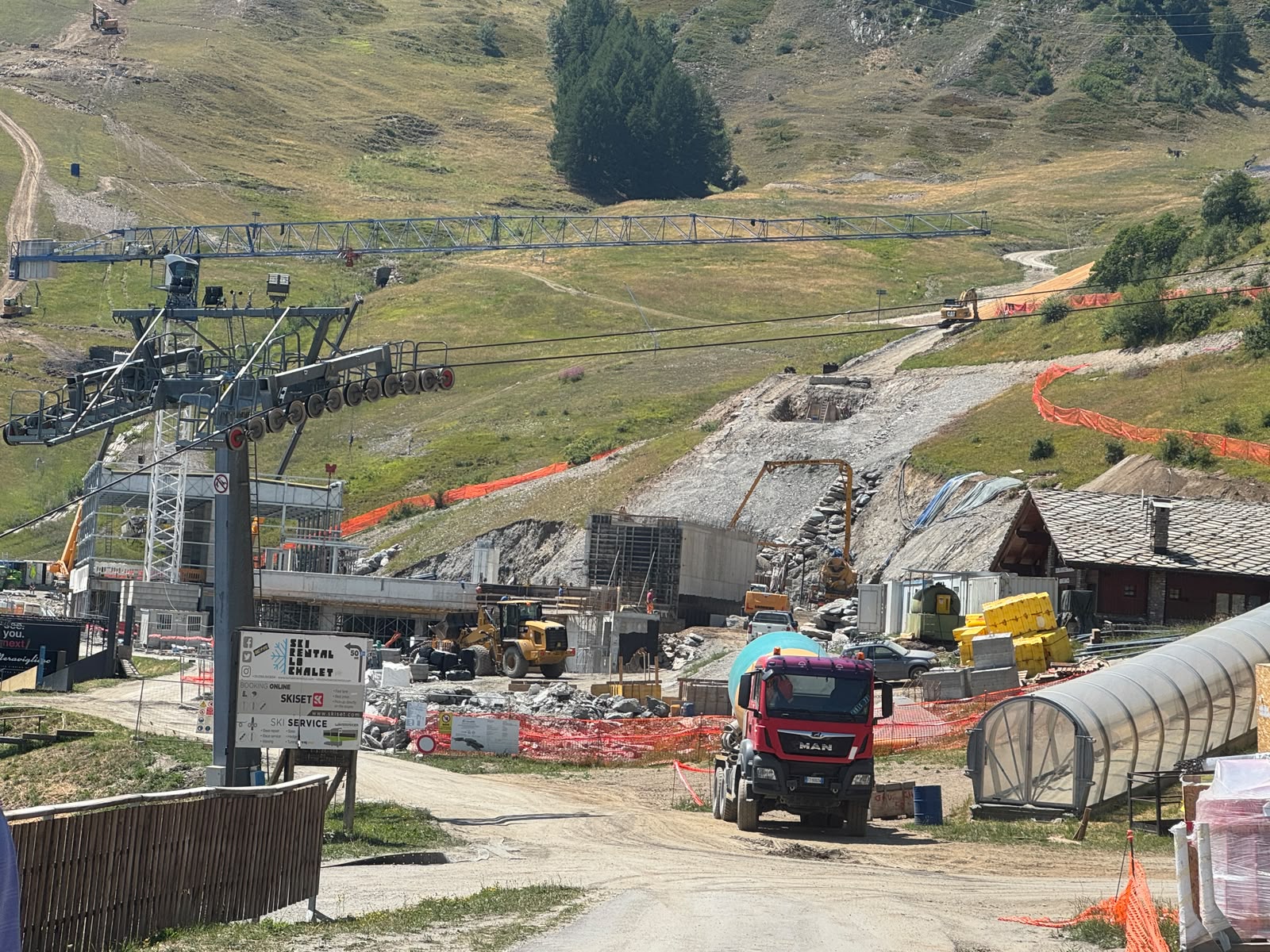
The new Plan Chécrouit lift hub under construction, where two new 10-passenger gondolas will begin operation for Winter 2026/27.

Exclusive photos reveal major progress on two new 10-passenger gondolas

Visitors arriving at Courmayeur this summer are being greeted by one of the largest infrastructure projects currently underway in the Alps.

Construction is progressing rapidly on the resort’s new lift hub at Plan Chécrouit, where two modern 10-passenger gondolas are rising from the foundations and will transform skier circulation for the 2026/27 winter season.

Continue reading “Courmayeur’s €40 Million Lift Transformation Takes Shape”

Schilthorn Completes Major Swiss Mountain Infrastructure Project as New Summit Facilities Open

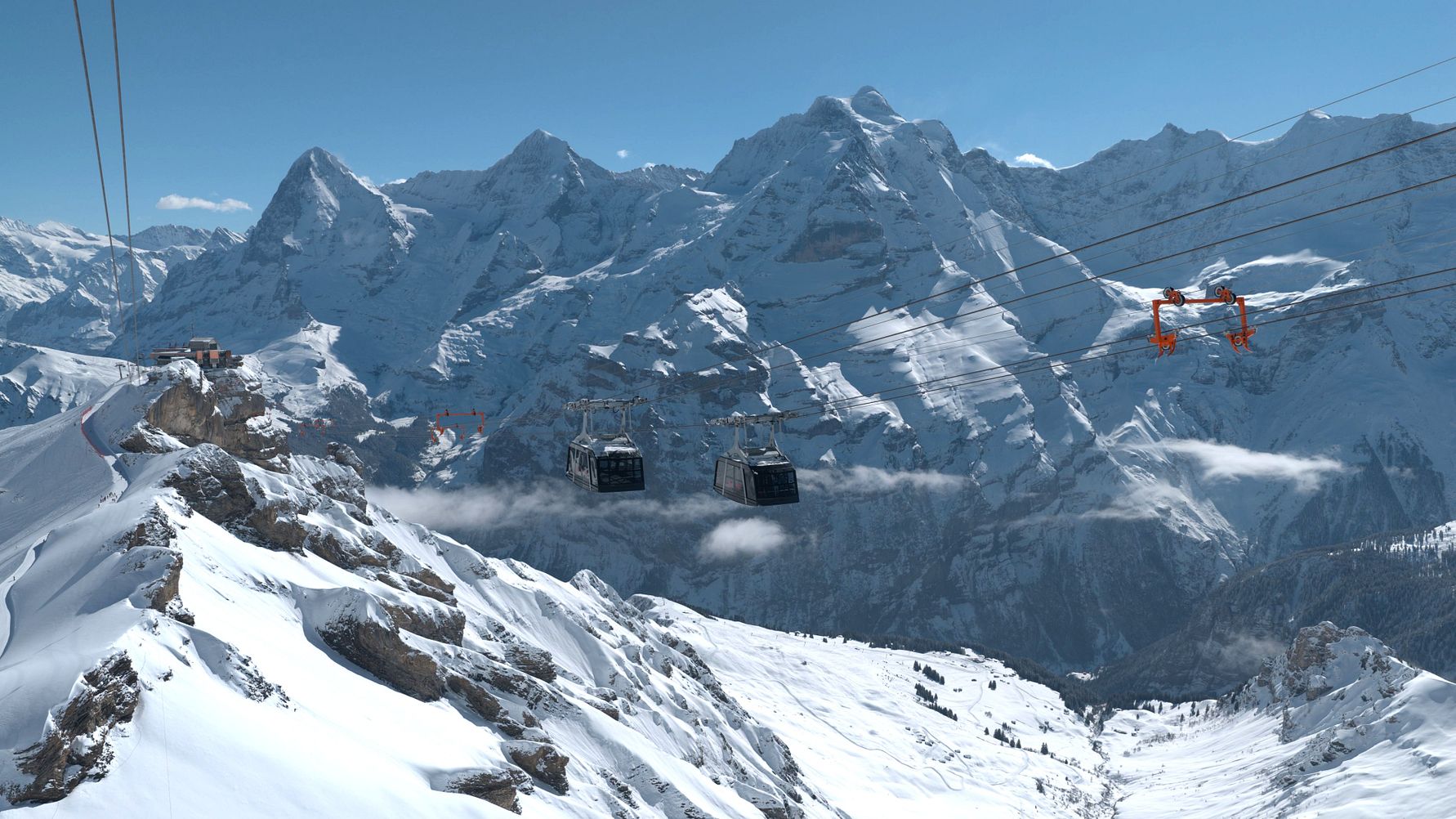
Funifor lifts in Schilthorn. Photo: Schilthorn Cableway Ltd.

One of the most ambitious lift infrastructure projects in the Swiss Alps has now reached completion, with the final section of the multi-year SCHILTHORNBAHN 20XX redevelopment entering service at the famous Schilthorn summit above Mürren.

The project has transformed access to the 2,970-metre peak overlooking the Bernese Oberland, with entirely new cable cars, stations and visitor facilities linking Stechelberg, Mürren, Birg and the summit. 

The redevelopment includes the reopening of the famous Piz Gloria summit complex, known worldwide as the James Bond filming location for On Her Majesty’s Secret Service, as well as new panoramic visitor areas, upgraded retail and hospitality facilities, and the completion of a modern Funifor cable car system designed to improve wind stability and year-round operations. 

Continue reading “Schilthorn Completes Major Swiss Mountain Infrastructure Project as New Summit Facilities Open”

Alpine Ski Resorts Are Covering Glaciers to Slow Melting — But Can It Last?

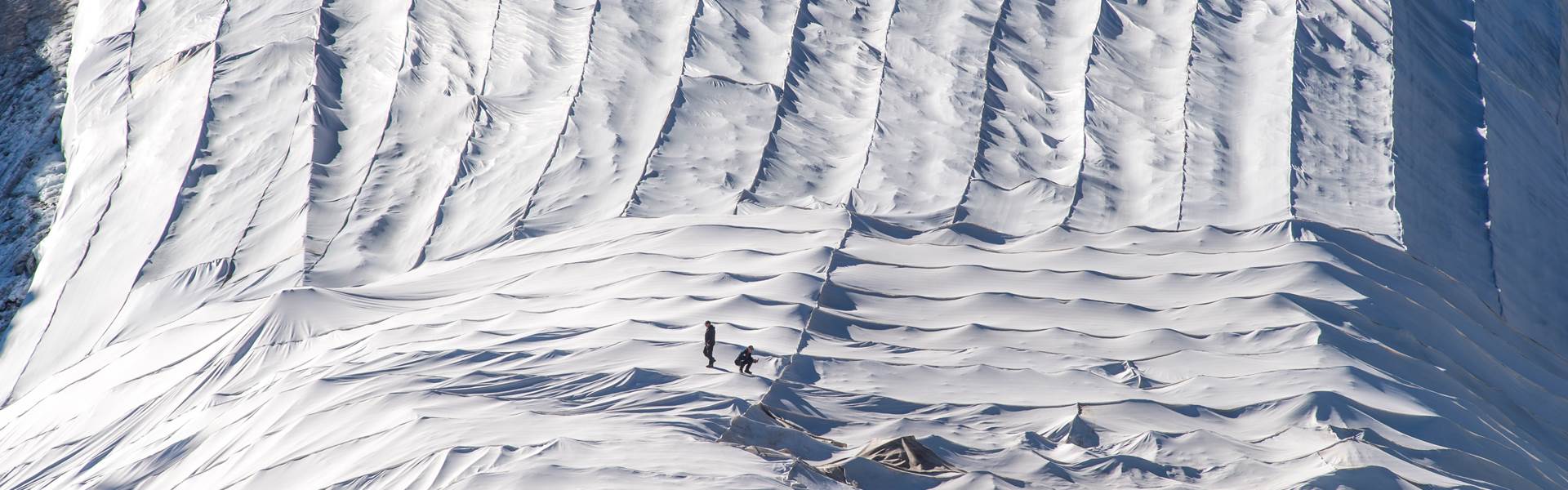
Photo credit: Pontedilegno Tonale- pontedilegnotonale.com

As glaciers across the Alps continue to shrink, some ski resorts are increasingly turning to reflective geotextile covers, snow farming, and other snow-preservation techniques in an attempt to protect glaciers, maintain ski operations, and preserve critical mountain infrastructure.

The images often go viral online as “ski resorts covering glaciers with plastic sheets,” but the reality is more complex. Most resorts use reflective geotextile fleece designed to reduce summer melting by insulating snow and ice from solar radiation.

The latest example attracting attention is the glacier area around Diavolezza in Switzerland’s Engadin region, where snow preservation and glacier management techniques have become part of long-term ski operations at altitude. Researchers note that the former glacier skiing area at Diavolezza now survives “solely thanks to snow farming and covering.”

Continue reading “Alpine Ski Resorts Are Covering Glaciers to Slow Melting — But Can It Last?”

Zermatt’s Lina Peak Skyscraper Plan: Radical Housing Solution or a Step Too Far for the Alps?

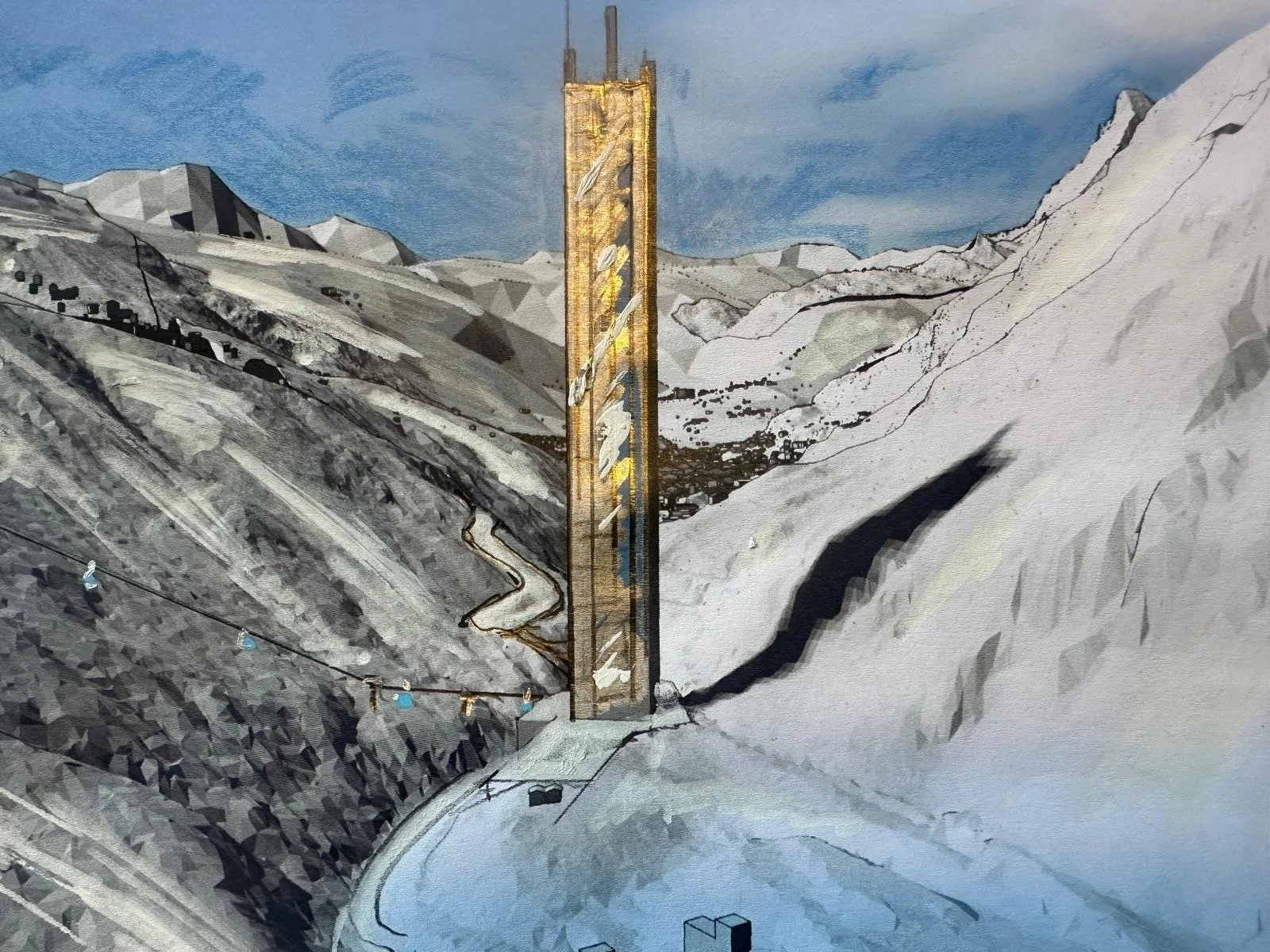
Lina Peak rendering. www.linapeak-zermatt.com

A proposed 260-metre residential tower near Zermatt has reopened one of the most difficult questions facing high-profile Alpine resorts: how do ski towns house the people who make tourism possible, when land is scarce, property prices are soaring and local workers are increasingly pushed out?

The project, called Lina Peak, is the idea of Zermatt-born artist, architect and hotelier Heinz Julen. It would be a striking departure from the image most visitors associate with Zermatt: not a low-rise chalet-style development, but a vertical “village” rising near one of the most famous mountain landscapes in the world. According to the project’s own website and Swiss media reports, the tower would stand around 260 metres high and include housing, public services, parking, leisure facilities and a potential link into the ski area. 

Continue reading “Zermatt’s Lina Peak Skyscraper Plan: Radical Housing Solution or a Step Too Far for the Alps?”

Zermatt’s Gornerli Dam Shows the Rising Cost of Climate Adaptation in the Alps

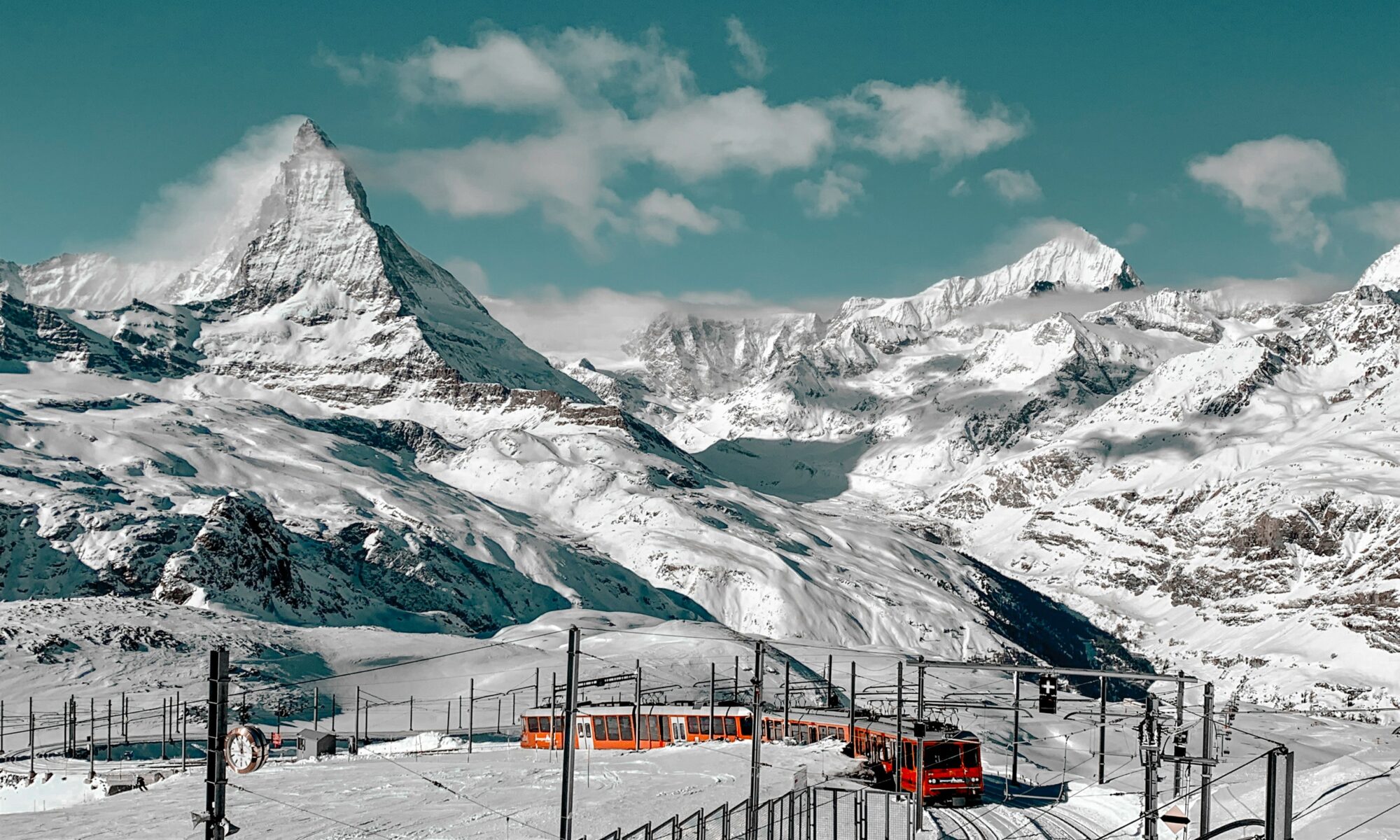
Zermatt. Photo: Victor He. Unsplash.

The planned Gornerli reservoir above Zermatt has become one of the clearest examples yet of how expensive climate adaptation in the Alps is becoming.

The project, designed as a major winter energy storage scheme for Switzerland, has been revised after new climate, hydrological, geological and logistical studies. According to Alpiq’s latest project update, the planned useful storage volume has been reduced from around 150 million cubic metres to 120 million cubic metres, while the estimated cost has risen sharply to around CHF 510 million. Earlier project material had placed the investment cost at around CHF 300 million.

That makes Gornerli more than a hydropower story. It is a mountain infrastructure story, a climate adaptation story and, for Zermatt and the Mattertal valley, a question of how Alpine communities prepare for a warmer and less predictable future.

Continue reading “Zermatt’s Gornerli Dam Shows the Rising Cost of Climate Adaptation in the Alps”

Cortina Olympic Cable Car Investigation Adds to Questions Over Mountain Infrastructure Delivery

News of Cortina d’Ampezzo for the 2021-22 ski season. Photo credit: Pietro Albarelli. Cortina Marketing.

Italian police have searched companies linked to the Apollonio–Socrepes cable car in Cortina d’Ampezzo, one of the most controversial infrastructure projects connected to the Milano-Cortina 2026 Winter Olympics.

According to Reuters, searches were carried out at Simico, the state-backed Olympic infrastructure agency, and Graffer, the company responsible for building the lift, as part of a bid-rigging investigation linked to the cable car contract. Prosecutors said searches also took place in several Italian cities, including Rome, Milan, Brescia, Naples and Cortina. Simico has said it is cooperating fully with prosecutors and is confident it acted correctly, while Graffer did not immediately respond to Reuters’ request for comment. 

Continue reading “Cortina Olympic Cable Car Investigation Adds to Questions Over Mountain Infrastructure Delivery”

Why Detachable Ski Lifts Are Often Emptied at the End of the Season

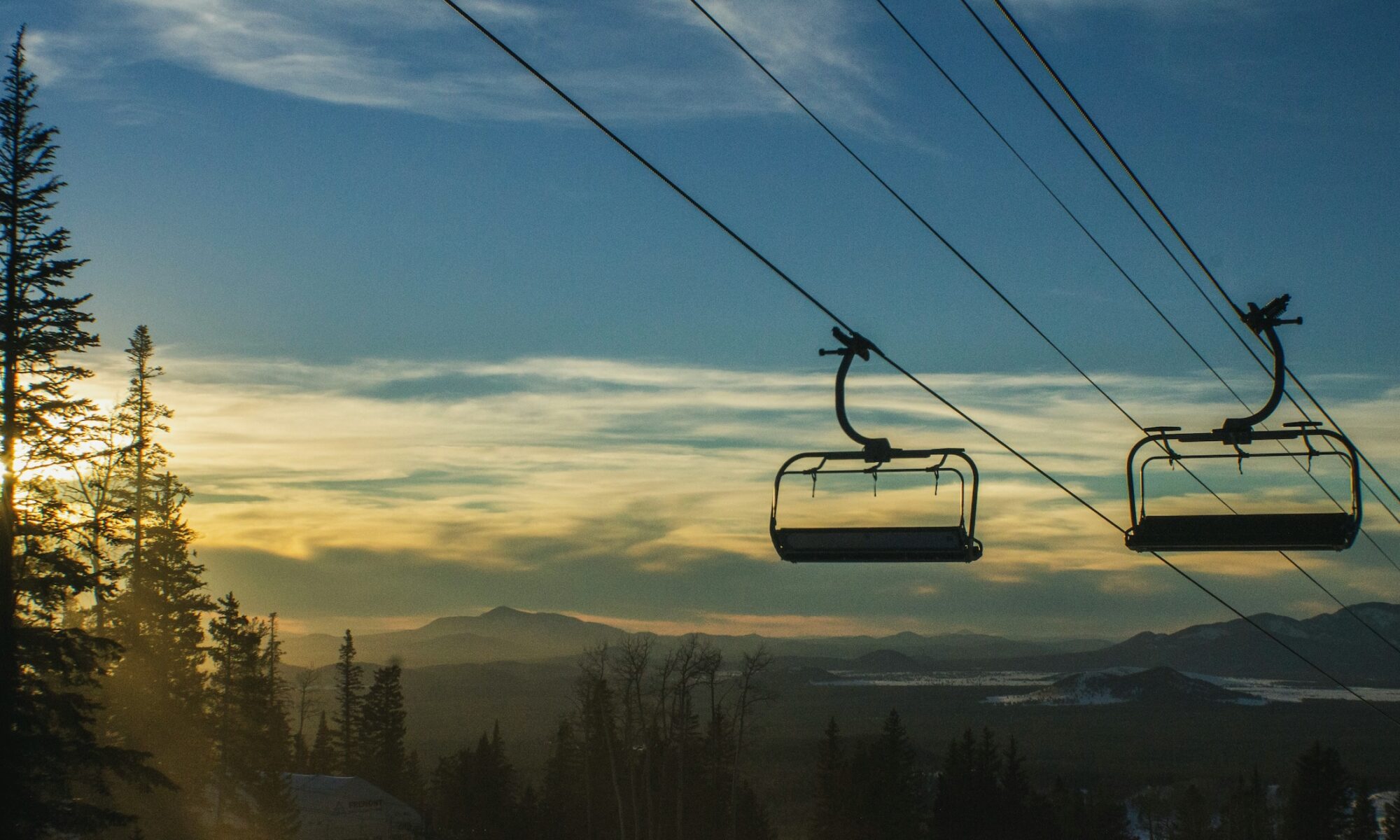
An empty chairlift. Arizona Snowbowl. Photo: Spencer James Lucas. Unsplash.

Why Detachable Ski Lifts Are Removed After Winter

At the end of the ski season, many mountain resorts remove the chairs, gondola cabins or bubbles from their high-speed detachable lifts and store them in a garage. Visitors often notice the empty cables in spring or summer and wonder why some lifts have no chairs on the line, while older chairlifts nearby still have all their chairs hanging.

The answer lies in the way the two types of lift are engineered, but it also connects to a wider question of mountain infrastructure risk in the Alps and how resorts protect expensive mechanical systems in harsh high-altitude environments.

On a high-speed detachable lift, the chair or cabin is attached to the main cable by a detachable grip. The main cable, known as the haul rope, moves continuously at high speed along the lift line. But when the chair or cabin enters the station, the grip opens and releases the haul rope.

This does not usually mean that there are two separate cables. The main cable continues moving through the station, but the chair or cabin is no longer being pulled by it. Instead, once detached, the carrier is moved through the station by a separate mechanical system, usually a series of tyres, wheels, rails, chains or a carousel-style mechanism. This system moves the chair or cabin much more slowly, giving passengers time to get off and on safely.

Continue reading “Why Detachable Ski Lifts Are Often Emptied at the End of the Season”