

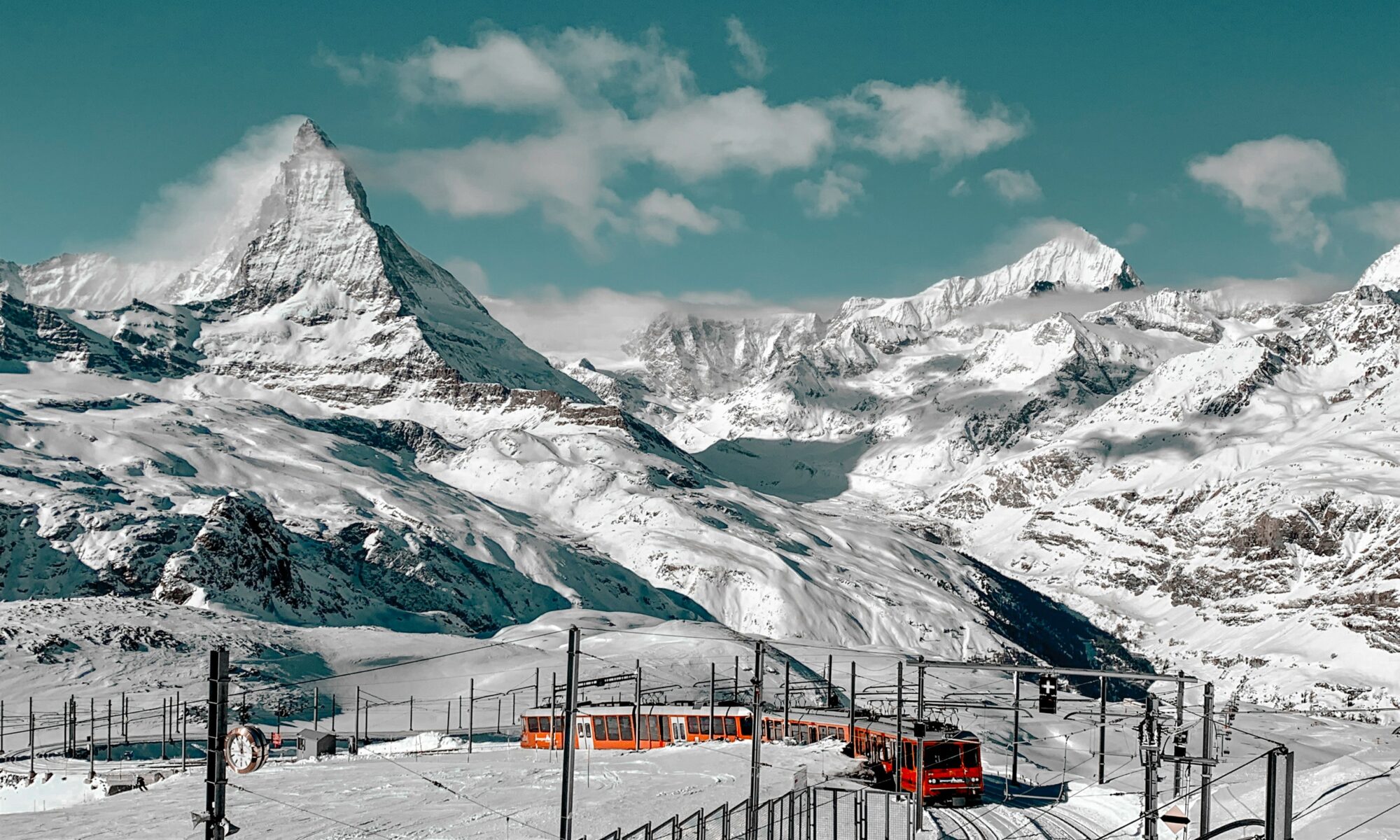
The planned Gornerli reservoir above Zermatt has become one of the clearest examples yet of how expensive climate adaptation in the Alps is becoming.
The project, designed as a major winter energy storage scheme for Switzerland, has been revised after new climate, hydrological, geological and logistical studies. According to Alpiq’s latest project update, the planned useful storage volume has been reduced from around 150 million cubic metres to 120 million cubic metres, while the estimated cost has risen sharply to around CHF 510 million. Earlier project material had placed the investment cost at around CHF 300 million.
That makes Gornerli more than a hydropower story. It is a mountain infrastructure story, a climate adaptation story and, for Zermatt and the Mattertal valley, a question of how Alpine communities prepare for a warmer and less predictable future.
The project is being developed by Grande Dixence AG above Zermatt, downstream of the Gorner Glacier. Its purpose is to store summer water flows and use them to produce electricity in winter, when Switzerland’s energy demand is higher. Grande Dixence describes Gornerli not as a new hydropower plant, but as an additional reservoir that would be connected to the existing Grande Dixence system. More detail is available in the official Gornerli project overview from Grande Dixence.
The timing is important. Across the Alps, glacier retreat is changing both the landscape and the way water moves through high mountain valleys. The Gornerli project is being presented as a way to use some of that meltwater more strategically: storing summer flows, improving winter electricity supply, reducing flood risk and securing water availability for agriculture, tourism and drinking water. Grande Dixence sets out these wider objectives in its explanation of the benefits of the Gornerli project.
For Zermatt, this is particularly relevant. The resort depends on high-altitude tourism, mountain transport, snow reliability, visitor infrastructure and year-round water and energy systems. Climate adaptation in such a place is no longer just about protecting ski slopes. It increasingly involves tunnels, reservoirs, pumping stations, dams, rail logistics, natural hazard studies and long-term water management.
The new cost estimate shows how complex this is becoming.
Grande Dixence says the increase is mainly linked to more detailed knowledge of geology, topography and construction logistics. The remote location above Zermatt also makes the work unusually complicated. The official project material says construction planning must minimise disruption to Zermatt and limit environmental impact, while relying heavily on existing railway facilities and a temporary cableway to move materials into the construction area.
That matters because many Alpine infrastructure projects now face the same problem. They are being planned in terrain that is changing because of glacier retreat, permafrost degradation, rock instability, changing precipitation patterns and increasing pressure on water resources. This fits directly with the wider issue of Mountain Infrastructure Risk in the Alps, where climate change, geology and tourism infrastructure are increasingly overlapping.
Gornerli is one of the 16 priority hydropower projects that emerged from Switzerland’s Hydropower Round Table, a process involving federal authorities, the energy sector and environmental organisations. Alpiq says the project remains the largest winter storage project among those 16 proposals. With the revised design, Gornerli alone is now expected to provide around 550 GWh of additional winter storage, rather than the earlier 650 GWh figure. Alpiq has previously described how Gornerli could significantly boost Switzerland’s security of supply.
To maintain the wider winter energy potential originally associated with the system, Grande Dixence is also studying the Dix+ project, which would raise the existing Grande Dixence dam by around five metres. That related project could add up to 100 GWh of additional winter energy storage.
This is where the story becomes wider than Zermatt.
In the Alps, winter is increasingly becoming a season of competing needs. Electricity demand rises. Ski resorts need energy for lifts, snowmaking and buildings. Mountain communities need protection from floods and extreme weather events. Agriculture needs water security. Tourism needs reliable infrastructure. At the same time, glaciers are retreating and the timing of water availability is changing.
The Gornerli reservoir is being promoted as a multi-purpose answer to several of these problems. But the revised figures show that adapting to climate change is not a simple matter of building one new piece of infrastructure. It means redesigning systems around new physical realities, and paying significantly more as those realities become clearer.
For ski tourism, the project is also a reminder that water will become one of the defining issues of the next phase of Alpine development. Snowmaking, drinking water, hotel capacity, agriculture, hydropower and flood protection are not separate questions. They are part of the same mountain system. This is closely connected to Snow Conditions in a Warming Alpine Climate, because snow reliability, water storage and resort operations are now part of the same adaptation challenge.
This is why Gornerli should be watched closely beyond Switzerland. It shows how high-altitude resorts and Alpine valleys may have to invest in larger, more complex and more expensive infrastructure to manage the consequences of a warming climate.
The Alps are not only adapting through new lifts, snowmaking systems or higher-altitude ski terrain. They are also adapting through reservoirs, hydropower upgrades, flood-control systems and water-security projects. In places such as Zermatt, the future of tourism, energy and climate resilience is increasingly tied together.
The rising cost of the Gornerli project is therefore not just a budget issue. It is a signal of what Alpine climate adaptation may really cost.
The story also fits into the wider Alpine climate picture covered in Why the Alps Did Not Have a Snow-Rich Winter, where changing snow patterns, high temperatures and inconsistent winter conditions are putting more pressure on resorts and mountain communities.
It also connects with Planpincieux Glacier Monitoring in Italy, another example of how Alpine destinations are having to watch, measure and manage changing high-altitude landscapes more closely as glaciers retreat and mountain hazards evolve.
Read More: Plan your holiday to Zermatt by reading first this Must-Read Guide to Zermatt.
 Planning your next trip to the Italian Alps?
 Planning your next trip to the Italian Alps?
If you’re heading to the Aosta Valley, take a look at Il Cuore della Valdigne, our family-owned apartment in Morgex, available for rent when we’re not using it ourselves.
It’s an ideal base to:
- Ski in Courmayeur, La Thuile and Pila
- Enjoy the mountains in summer (hiking, biking, nature)
- Explore the Mont Blanc valley in a quieter, more authentic setting.
 Ski in Courmayeur,
 Enjoy the mountains in summer (hiking, biking, nature)
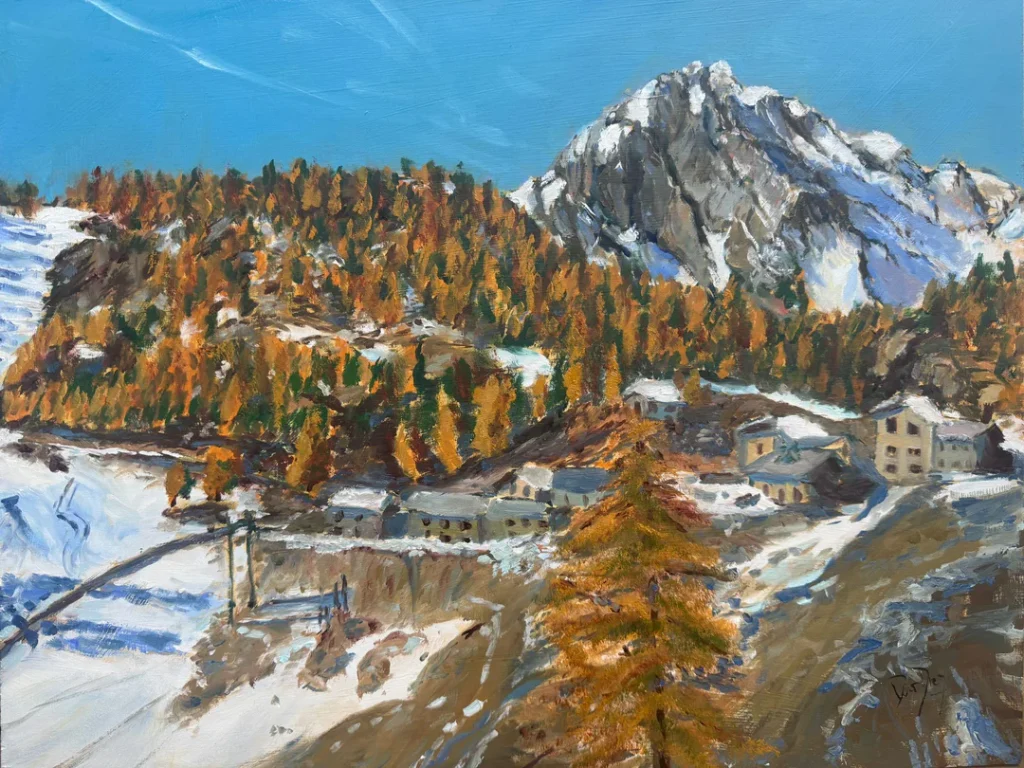
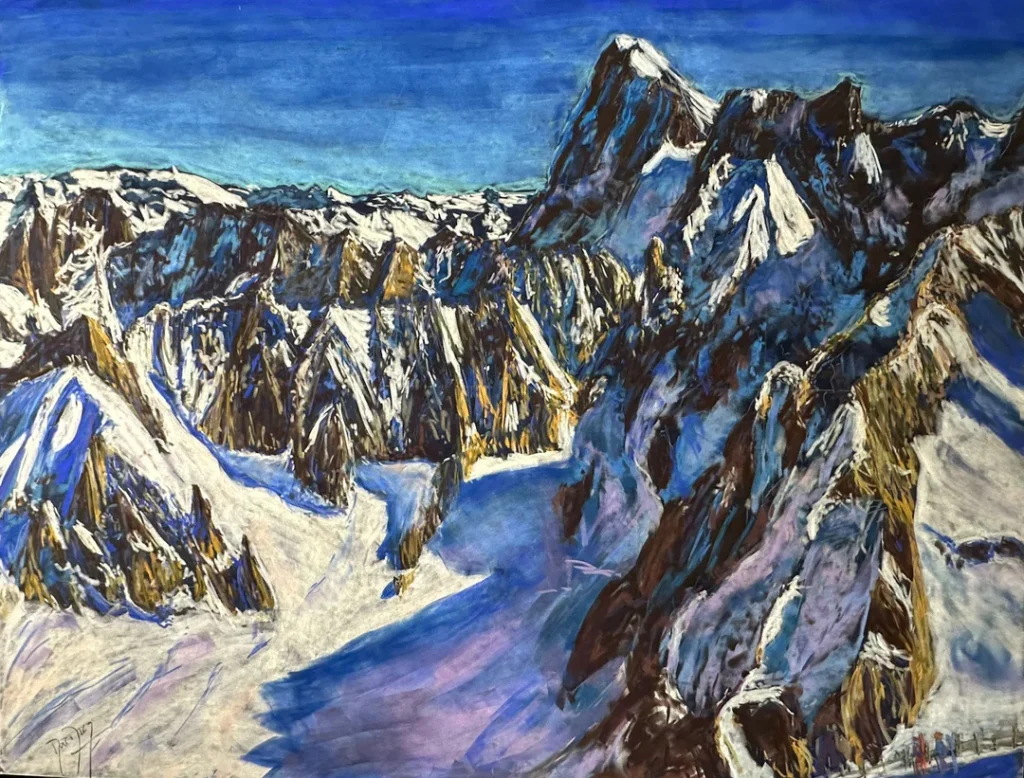
Check my Mountain Art on my Shop
You can go to my shop and see what have been inspiring me lately, lots mountain landscapes in soft pastels, and now in oils too. Go here to check my latest works!
Featured Image: Zermatt. Photo: Victor He. Unsplash.


Discover more from The-Ski-Guru
Subscribe to get the latest posts sent to your email.
 Subscribe to The-Ski-Guru here.