

What the 2026 Winter Season Is Showing
A Winter of Extremes
Snow conditions in a warming Alpine climate are becoming more variable, more intense and more dependent on artificial support.
Across the Alps, long-term climate warming is reshaping snowfall patterns, snowline altitude, avalanche behaviour and the economics of winter tourism. The 2026 winter season provides a recent example of these broader trends.
In recent weeks alone, the region has experienced:
- Intense multi-day storm cycles delivering 80–100 cm in short periods
- Rapid wind loading and unstable snowpack development
- Elevated avalanche danger levels across multiple massifs
- Simultaneous reliance on artificial snow at lower altitudes
Rather than a simple story of “less snow,” the pattern emerging is one of greater variability and concentration. This growing instability is not confined to the Alps. Recent extreme heat events shortening the ski season in North America show how quickly conditions can deteriorate, even in traditionally more snow-reliable regions.
Heavier Storms, Faster Loading
Several recent cycles across the Western Alps demonstrated how quickly snowpack instability can build.
Large accumulations over 24–48 hours — combined with wind transport — created fragile layers and widespread avalanche danger. In many regions, danger levels rose to Level 4 (Strong), and in parts of the French Alps even Level 5 (Very Strong).
This reflects a broader meteorological trend:
Warmer air masses can hold more moisture, potentially leading to more intense precipitation events when conditions align.
The result?
More snow falling in shorter windows — but not necessarily more stable winters overall.
Artificial Snow as Structural Support
At the same time, lower elevations have increasingly depended on artificial snow production to guarantee skiable terrain.
Snowmaking now plays a structural role in:
- Early season slope preparation
- Olympic venue planning
- Tourism reliability
- Snow base reinforcement after warm spells
The mechanics behind this are explored in detail in my guide on how fast ski resorts can make snow, which explains the temperature thresholds, water usage and timing required to build a reliable base across varied weather windows. It also ties into discussions around snowmaking technologies and gear, as covered in my post on the best snow lifts and snowmaking essentials.
However, artificial snow requires:
- Significant water storage
- Energy input
- Cold temperature windows
In a warming climate, those cold production windows are narrowing in some regions.
Altitude Matters More Than Ever
Elevation is becoming a defining factor in Alpine snow reliability.
Higher-altitude resorts have benefited from intense natural snow cycles this season. Lower-altitude areas have faced greater volatility — oscillating between snowfall, rain events and thaw periods.
This connection between climate drivers and ski resort economics resonates with broader discussions of four-season tourism strategies for ski resorts, as operators seek resilience against variable snow conditions.
This growing altitude divide has implications for:
- Resort investment
- Infrastructure planning
- Insurance risk
- Long-term tourism models
It also contributes to broader structural demand shifts within Alpine ski markets, as skiers increasingly prioritise snow reliability when choosing destinations.
It also feeds directly into the wider debate around the Milano Cortina 2026 environmental impact, particularly regarding snow reliability, artificial production and long-term Alpine sustainability.
As preparations continue, questions about infrastructure and artificial snow use are increasingly linked to broader climate reliability trends across the Alps.
Avalanche Risk in a Changing Climate
One consistent feature of Winter 2026 has been elevated avalanche activity following heavy loading periods.
Climate change does not eliminate avalanche risk — in some cases, it can increase instability through:
- Rain-on-snow events
- Rapid temperature shifts
- Stronger wind redistribution
- Wet snow cycles earlier in the season
The result is a snowpack that can swing quickly between stable and dangerous states.
Read more: Nepal Glacier Disaster: Could It Happen in the Alps? — A look at what the Nepal disaster can tell us about glacier retreat, permafrost degradation and the growing challenge of monitoring high-mountain hazards in a warming climate.
Long-Term Trends Shaping Alpine Snow
Rising average winter temperatures
Increasing rain-on-snow events
Higher snowlines at lower elevations
Shorter natural snow cover duration
Growing structural dependence on snowmaking
The Bigger Picture
Scientific projections suggest that by mid-century:
- Snowlines may rise
- Natural snow cover duration may shorten
- Extreme snowfall events may become more concentrated
- Artificial snow dependence will increase in many regions
Winter 2026 does not represent a single anomaly — but rather a pattern increasingly observed across European mountain systems.
FAQ
Is climate change reducing snowfall in the Alps?
Not uniformly. While overall snow cover duration is declining in many areas, intense snowfall events still occur — often concentrated over shorter periods.
Why are storm cycles becoming more intense?
Warmer air can hold more moisture, which may contribute to heavier precipitation when cold conditions align.
Will artificial snow replace natural snow?
Artificial snow supplements natural snowfall but depends on cold temperatures and significant water and energy resources.
Are higher resorts safer from climate change?
Higher elevations are currently more snow-reliable, but no region is immune to long-term warming trends.
Related Coverage on Alpine Snow & Climate
 Planning your next trip to the Italian Alps?
 Planning your next trip to the Italian Alps?
If you’re heading to the Aosta Valley, take a look at Il Cuore della Valdigne, our family-owned apartment in Morgex, available for rent when we’re not using it ourselves.
It’s an ideal base to:
 Ski in Courmayeur,
 Enjoy the mountains in summer (hiking, biking, nature)
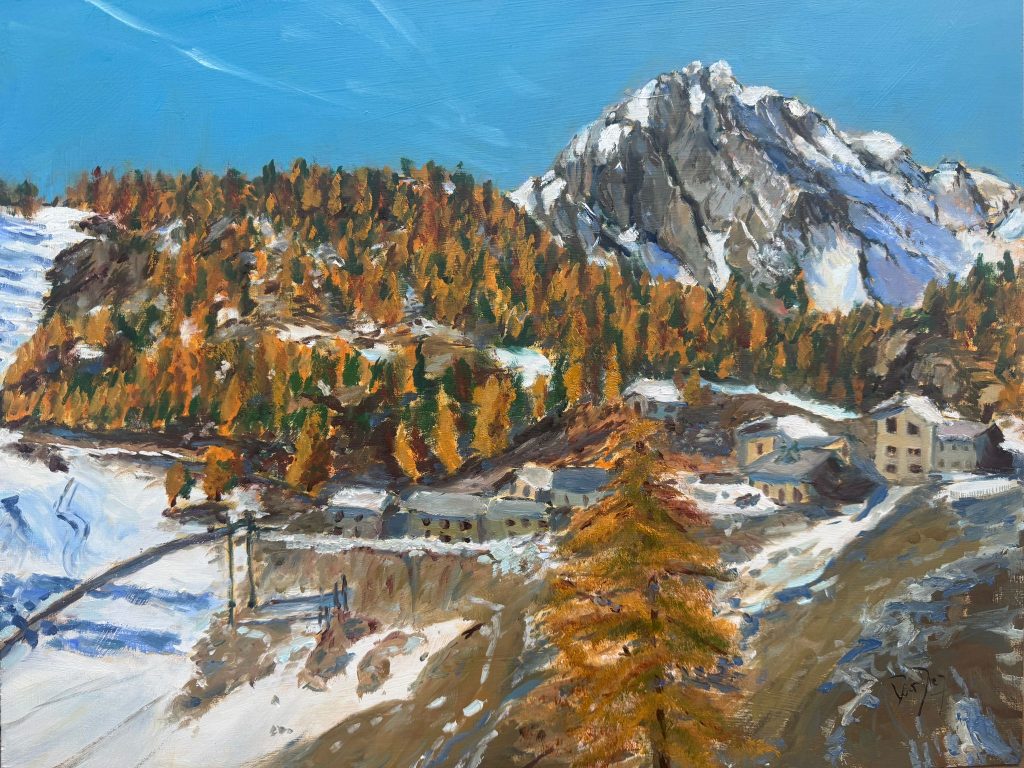
Check my Mountain Art on my Shop
You can go to my shop and see what have been inspiring me lately, lots mountain landscapes in soft pastels, and now in oils too. Go here to check my latest works!
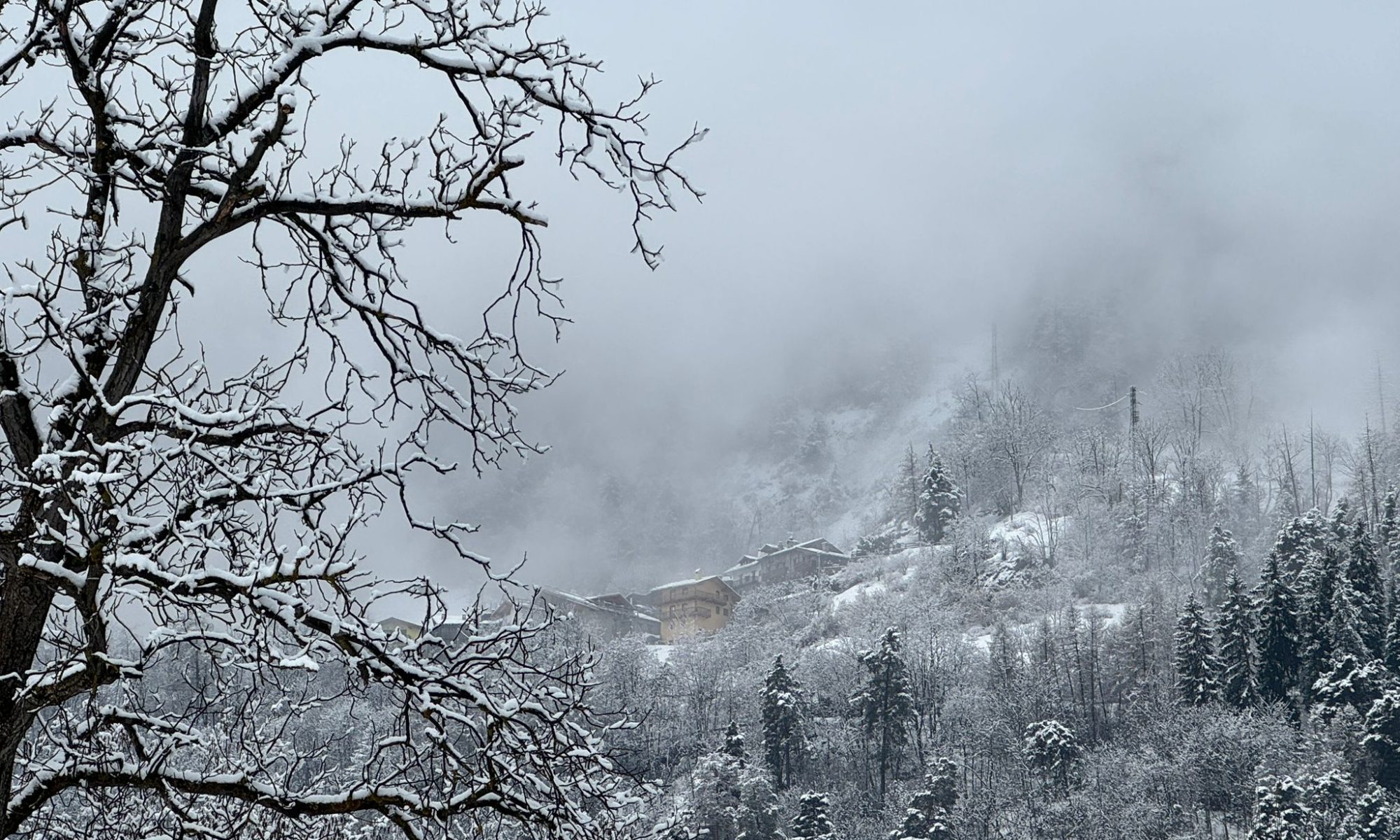
Featured Image: Winter in the Mountains- Photo: The-Ski-Guru. Morgex.


Discover more from The-Ski-Guru
Subscribe to get the latest posts sent to your email.
 Subscribe to The-Ski-Guru here.
You must be logged in to post a comment.