

A Growing International Conversation
Recent reporting from The Guardian, alongside coverage from Le Monde, Associated Press and Euronews, has placed the environmental footprint of the Milano Cortina 2026 Winter Olympics under renewed scrutiny.
The focus is not a single project, but the broader ecological implications of hosting a multi-venue Winter Games across sensitive Alpine regions.
For a broader climate perspective, see my full analysis of snow conditions in a warming Alpine climate.
Key Areas of Discussion
Infrastructure & Construction
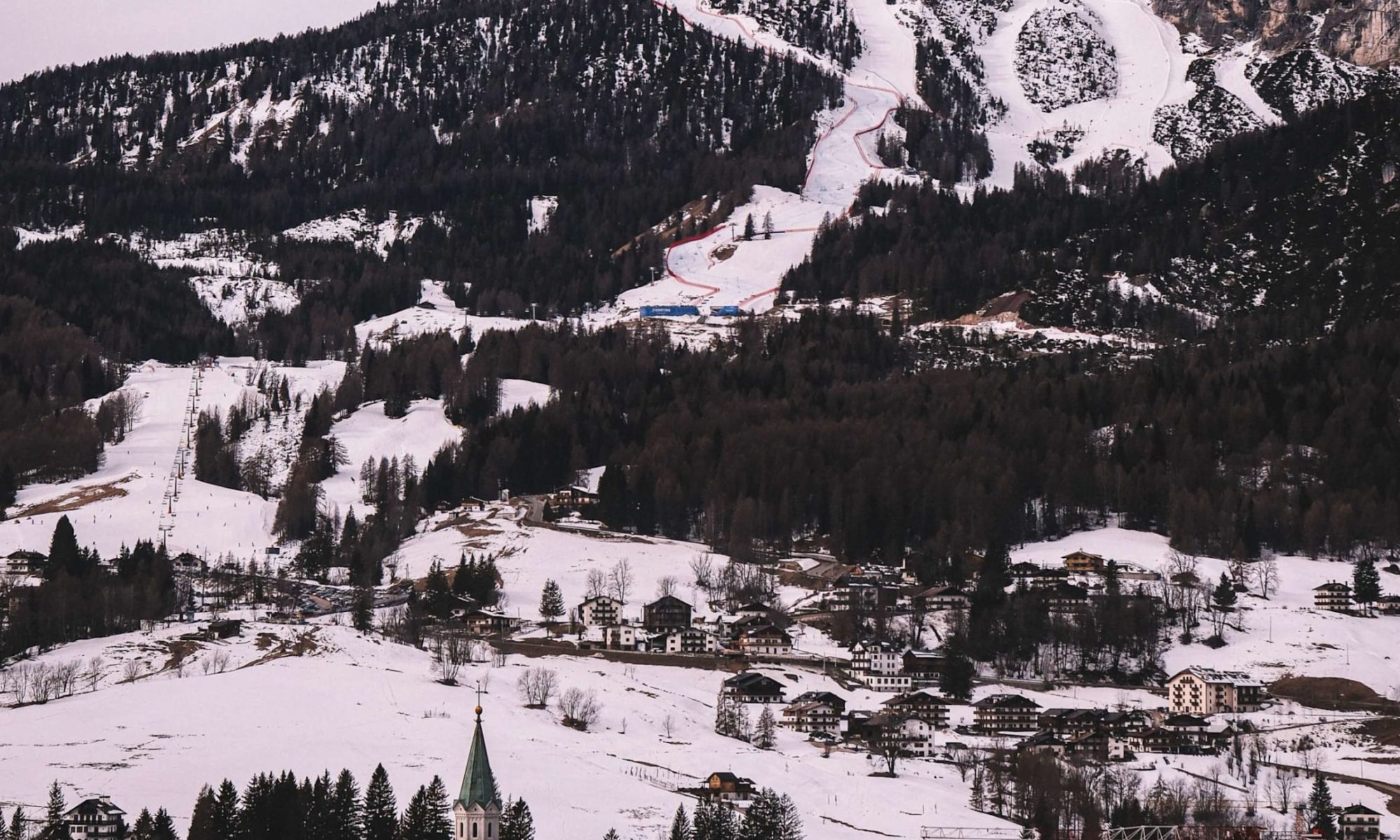
Particular attention has centred on works in Cortina d’Ampezzo, including sliding sports facilities and related upgrades.
Critics question whether forest clearance and construction activity align with sustainability messaging. Supporters argue that much of the Olympic model relies on upgrading existing venues rather than building entirely new complexes.
Artificial Snow & Water Resources
Like most modern Winter Games, Milano-Cortina 2026 will rely partly on artificial snow production to guarantee competition standards.
This involves:
- Snowmaking infrastructure
- Water storage systems
- Energy use at altitude
With Alpine winters becoming more variable, artificial snow has become central to debates about long-term mountain sustainability.
This ties into the broader issue of snow conditions in a warming Alpine climate, a trend that is reshaping both tourism strategy and major event planning across the region, as explored recently in my coverage of snow conditions in a warming Alpine climate, including extreme snowfall events such as Courmayeur’s 100 cm in 48 hours
Carbon Footprint & Mobility
Even where renewable electricity is used, overall emissions include:
- International travel
- Spectator transport
- Construction supply chains
- Logistics operations
Several outlets note that indirect emissions — particularly aviation — remain a structural challenge for all global sporting events.
For a practical breakdown of logistics across the host regions, see my guide on how to travel between Olympic venues, which outlines distances, transport realities and infrastructure connections across northern Italy.
Organisers’ Position
The organising committee for Milano Cortina 2026 Winter Olympics has repeatedly emphasised that the Games are designed around a “distributed model,” using many existing venues across northern Italy.
Organisers highlight:
- High reliance on renewable electricity
- Legacy-focused infrastructure upgrades
- Avoidance of large-scale new permanent venues where possible
They argue that the 2026 model represents a shift away from the mega-construction approach seen in some previous editions of the Winter Games.
A Broader Alpine Context
This debate reflects a wider reality facing mountain regions:
- Increasing climate variability
- Growing reliance on snowmaking
- Pressure on water resources
- Infrastructure adaptation to warming trends
The conversation surrounding Milano-Cortina 2026 therefore extends beyond a single event — it touches on the future model of Winter tourism and high-profile sporting events in a changing climate.
FAQ
Why is Milano-Cortina 2026 facing environmental scrutiny?
Media reports question the impact of infrastructure works, artificial snow use and the overall carbon footprint of the Games.
Was artificial snow be used in 2026?
Yes. Like most Winter Olympics, artificial snow has supplemented natural snowfall to ensure reliable competition conditions.
Have new venues being built?
Organisers state that many venues were existing facilities, though some upgrades and construction works took place.
Is the 2026 Games model considered more sustainable?
Organisers say yes, citing renewable electricity and legacy planning. Critics argue indirect emissions and ecological impacts remain significant.
 Planning your next trip to the Italian Alps?
 Planning your next trip to the Italian Alps?
If you’re heading to the Aosta Valley, take a look at Il Cuore della Valdigne, our family-owned apartment in Morgex, available for rent when we’re not using it ourselves.
It’s an ideal base to:
- Ski in Courmayeur, La Thuile and Pila
- Enjoy the mountains in summer (hiking, biking, nature)
- Explore the Mont Blanc valley in a quieter, more authentic setting
 Ski in Courmayeur,
 Enjoy the mountains in summer (hiking, biking, nature)
Check my Mountain Art on my Shop
You can go to my shop and see what have been inspiring me lately, lots mountain landscapes in soft pastels, and now in oils too. Go here to check my latest works!
Featured Image: Cortina- Photo credit: Olympics.com


Discover more from The-Ski-Guru
Subscribe to get the latest posts sent to your email.
 Subscribe to The-Ski-Guru here.
You must be logged in to post a comment.