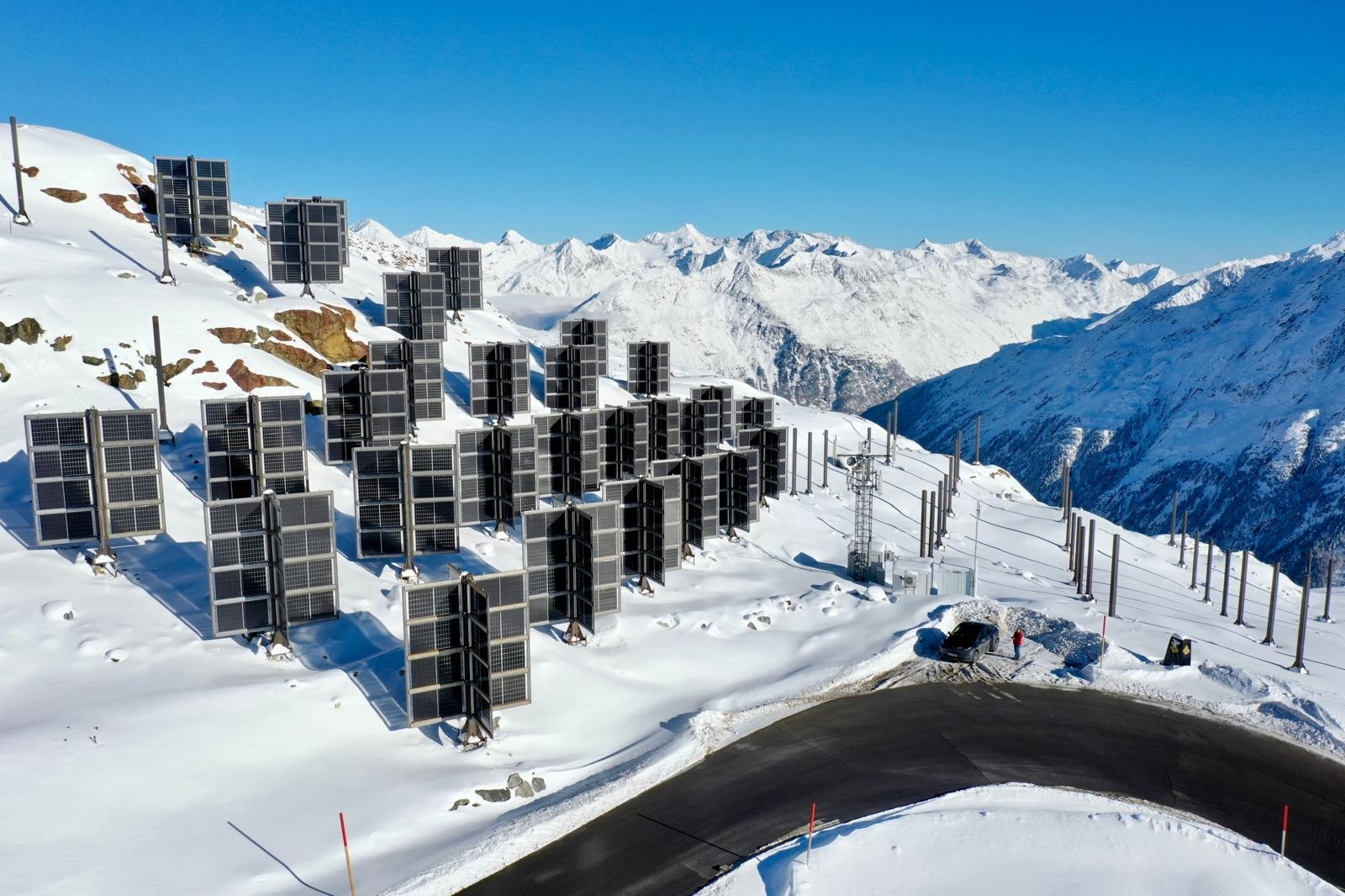
Unusual, tree-like solar structures in Sölden are part of a project designed to generate electricity where the Austrian ski resort uses it: high on the mountain.
The HELIOPLANT installation in the Tiefenbach Glacier area uses vertically mounted, cross-shaped solar arrays designed for snowy alpine conditions. Its expansion could supply a substantial share of Bergbahnen Sölden’s electricity needs, helping power the infrastructure behind a day on the slopes.
However, the project’s operating history and its forecasts need to be distinguished. Solar generation has already been demonstrated at the pilot installation, while the full development’s capacity and contribution to the resort’s electricity supply remain figures announced by the companies involved.
As climate change reshapes the Alps, ski resorts are beginning to discover that one of their most valuable investments may have a second life beyond winter.
In Switzerland, researchers are exploring whether snowmaking systems—traditionally used to guarantee ski conditions during increasingly unpredictable winters—could also help combat one of the mountains’ fastest-growing threats: forest fires.
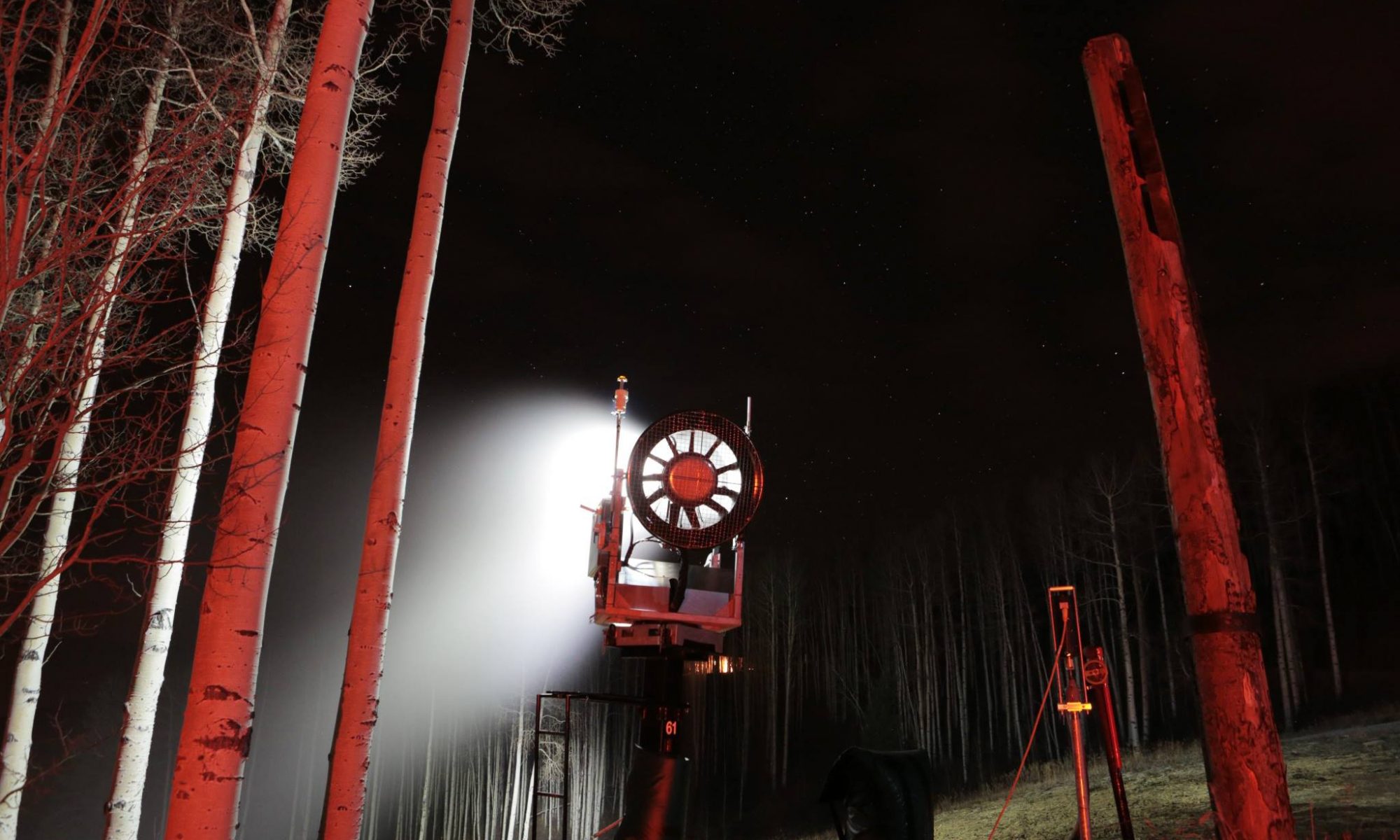
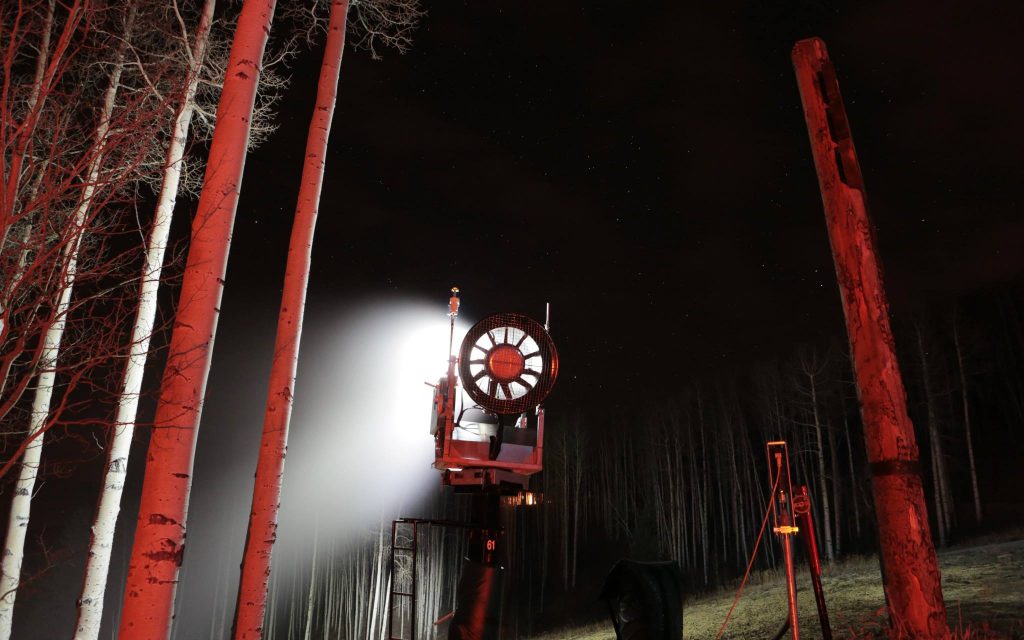
The concept is surprisingly simple. The same network of reservoirs, pumping stations and high-pressure snow cannons that cover ski slopes with artificial snow during winter could potentially be used in summer to spray water onto vulnerable forest areas, helping firefighters slow or contain wildfires before they spread.
A New Role for Snowmaking Infrastructure
Swiss mountain resorts already possess extensive water management systems designed to support snowmaking operations. These include water reservoirs, underground pipelines, powerful pumps and strategically positioned snow cannons across the mountainside.
Rather than building entirely new firefighting infrastructure, researchers believe these existing systems could be adapted to provide rapid water distribution during wildfire emergencies.
The proposal is not intended to replace traditional firefighting methods or aerial water bombing. Instead, it could provide valuable support by creating wet buffer zones, protecting critical infrastructure, slowing the advance of flames and buying precious time until emergency services arrive.
Climate Change Is Changing the Alps
The idea reflects a broader reality facing mountain destinations.
Today, the conversation has expanded dramatically.
Longer periods of drought, rising temperatures and increasingly frequent heatwaves are creating conditions that make wildfires more likely even in regions traditionally associated with snow-covered landscapes.
Several Alpine countries have already experienced more frequent forest fires during recent summers, highlighting that mountain communities now face climate challenges throughout the entire year—not just during winter.
Year-Round Resorts Face Year-Round Risks
Modern ski resorts are no longer purely winter destinations.
Many now depend heavily on summer tourism, attracting hikers, mountain bikers, trail runners and nature lovers. Protecting forests, trails, lift infrastructure, hotels and surrounding communities has become essential for maintaining year-round operations.
Using existing snowmaking infrastructure for wildfire prevention could therefore offer an additional layer of resilience while maximising investments that were originally designed solely for winter operations.
A Smarter Use of Existing Resources
One of the most attractive aspects of the proposal is that it makes use of infrastructure already in place.
Many ski resorts have invested millions in sophisticated snowmaking systems over recent decades to adapt to changing winter conditions. Repurposing those networks during summer could provide added value without requiring entirely new water distribution systems.
Researchers still need to determine how effective snow cannons would be under real wildfire conditions, including factors such as wind, terrain, water pressure and accessibility. However, the concept represents an innovative example of climate adaptation using existing mountain infrastructure.
This Is Part of a Bigger Trend
Switzerland’s proposal is not an isolated idea. Around the world, mountain destinations are exploring new ways to use technology and existing infrastructure to reduce wildfire risk.
Earlier this year, The-Ski-Guru reported on how mountain communities in Colorado are testing AI-powered drones capable of detecting and attacking wildfires within minutes of ignition. While Colorado is looking to the skies with autonomous aircraft, Switzerland is focusing on the ground by repurposing snowmaking systems already installed across its ski resorts.
Together, these initiatives point to a new era in mountain management, where ski infrastructure is evolving beyond winter tourism to help protect forests, communities and alpine ecosystems throughout the year.
The Future of Mountain Tourism
As climate change continues to reshape alpine environments, ski resorts are increasingly being asked to perform multiple roles.
Beyond winter recreation, they are becoming year-round tourism destinations, environmental managers and, potentially, valuable partners in protecting mountain communities from natural hazards.
The Swiss proposal illustrates how infrastructure originally designed for skiing may become an important tool in adapting to a changing climate—demonstrating that the future of mountain tourism may depend as much on resilience as on recreation.
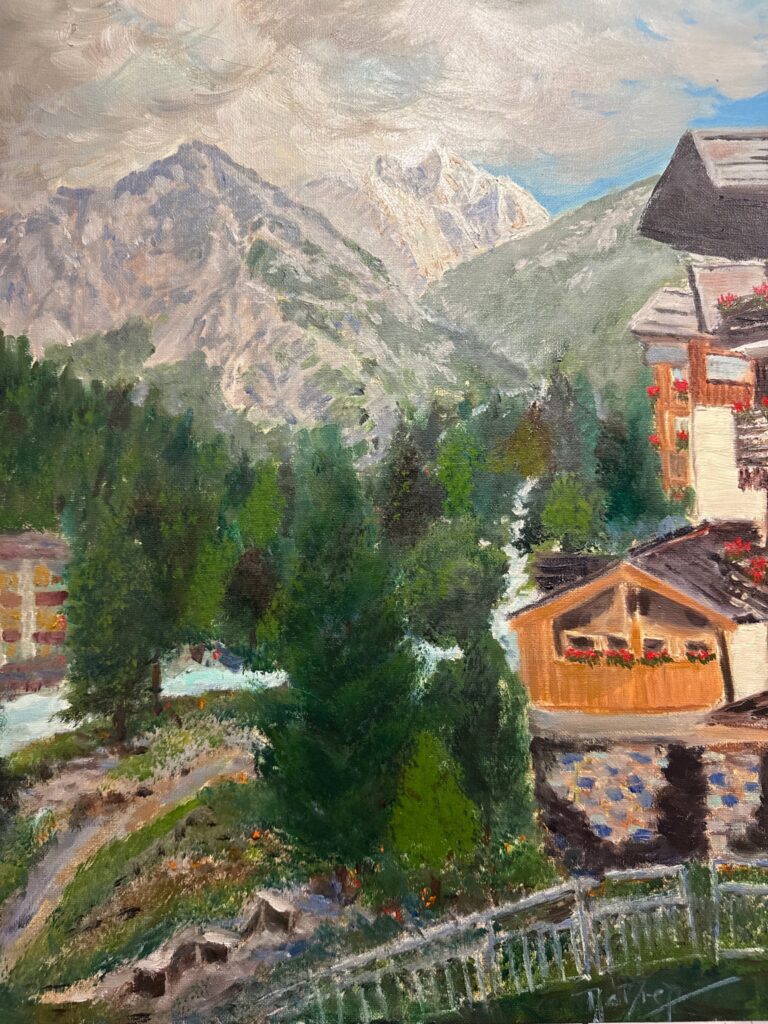
Madonna di Campiglio – after the storm. See the painting in my shop here.Changing seasons in Courmayeur. Oil on board. In my shop here.
Planning your next trip to the Italian Alps?
If you’re heading to the Aosta Valley, take a look at Il Cuore della Valdigne, our family-owned apartment in Morgex, available for rent when we’re not using it ourselves.
You can go to my shop and see what have been inspiring me lately, lots mountain landscapes in soft pastels, and now in oils too. Go here to check my latest works!
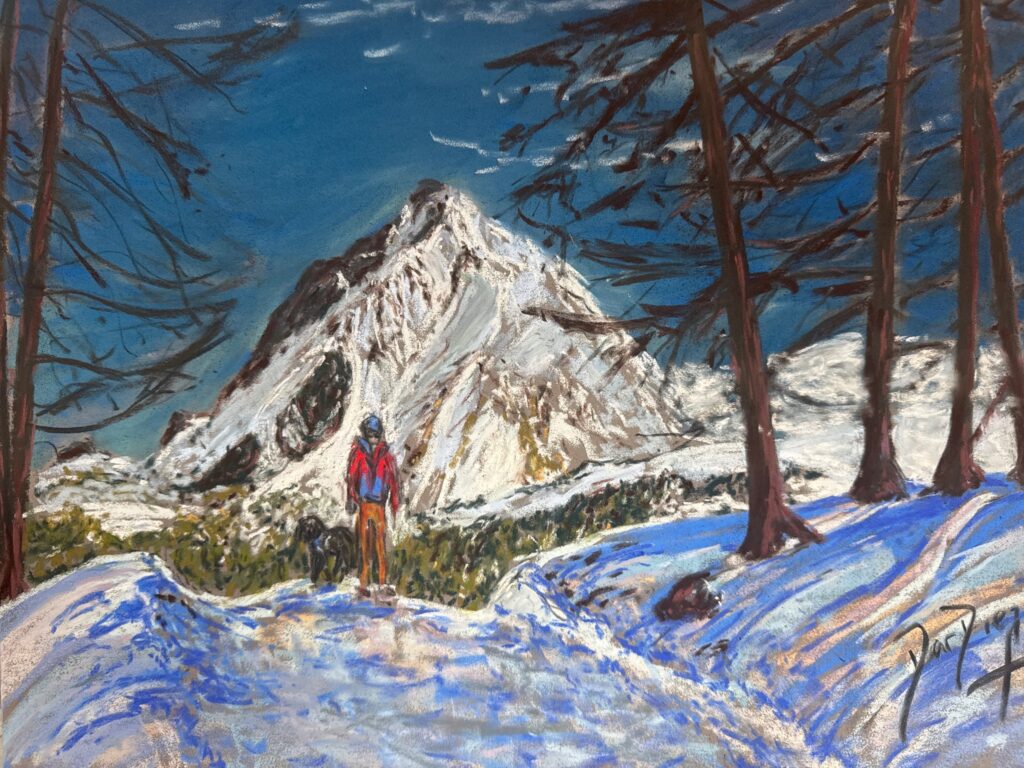
Becca di Nona in Pila, walking with the dog. Soft pastels in pastel paper. In my shop here.
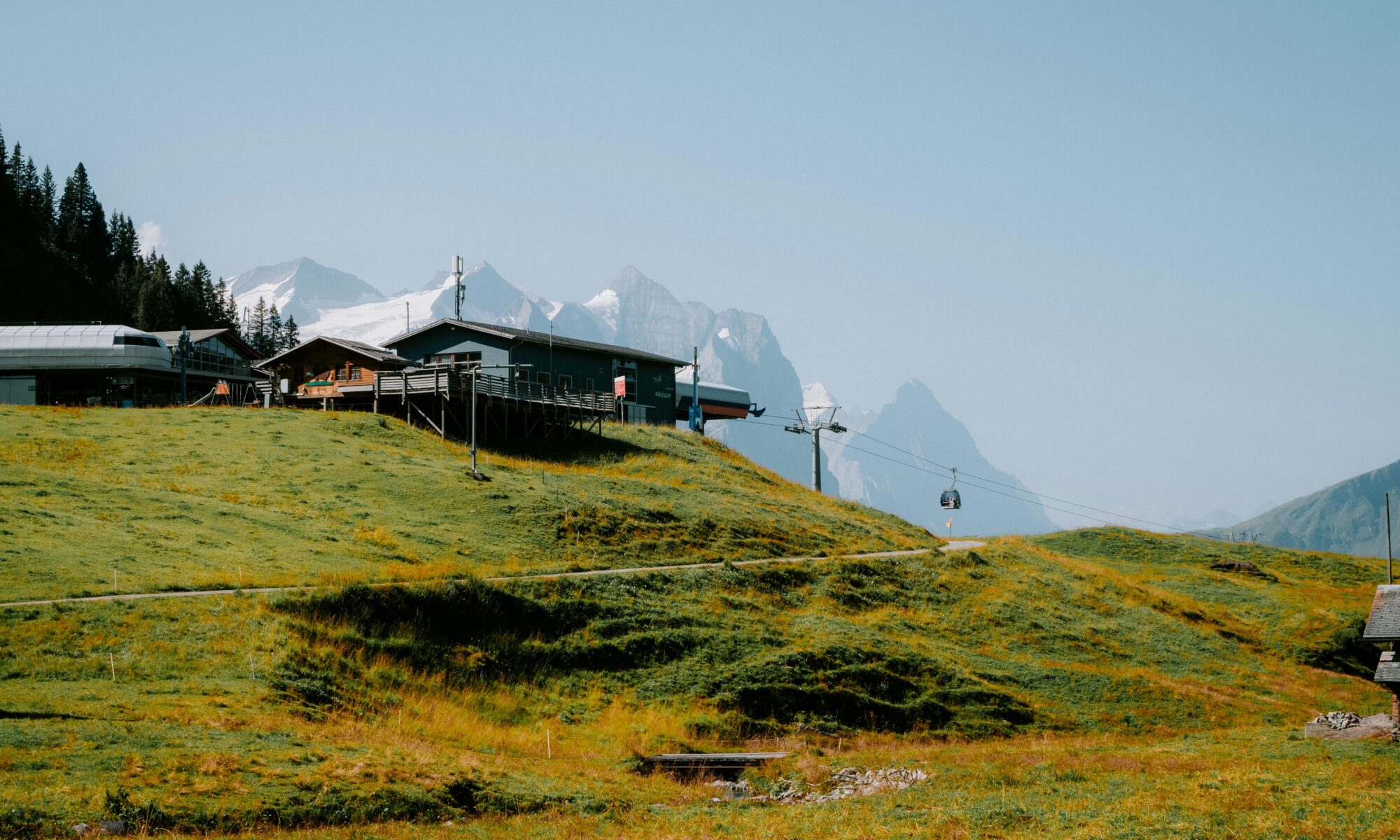
Featured Image: Hasliberg- Photo: Ben Grayland. Unsplash.
Colorado’s 2025/26 ski season will undoubtedly be remembered as one of the most challenging in recent history. Low snowfall, unusually warm temperatures and an early snowmelt created difficult conditions across much of the state, prompting renewed debate about the future of skiing in a warming climate.
A recent investigation by The Denver Post examines how climate change contributed to one of Colorado’s poorest snow seasons on record and explores what this could mean for the ski industry going forward.
The findings are certainly thought-provoking, but they should also be viewed in context.
Recent reporting from The Guardian, alongside coverage from Le Monde, Associated Press and Euronews, has placed the environmental footprint of the Milano Cortina 2026 Winter Olympics under renewed scrutiny.
The focus is not a single project, but the broader ecological implications of hosting a multi-venue Winter Games across sensitive Alpine regions.
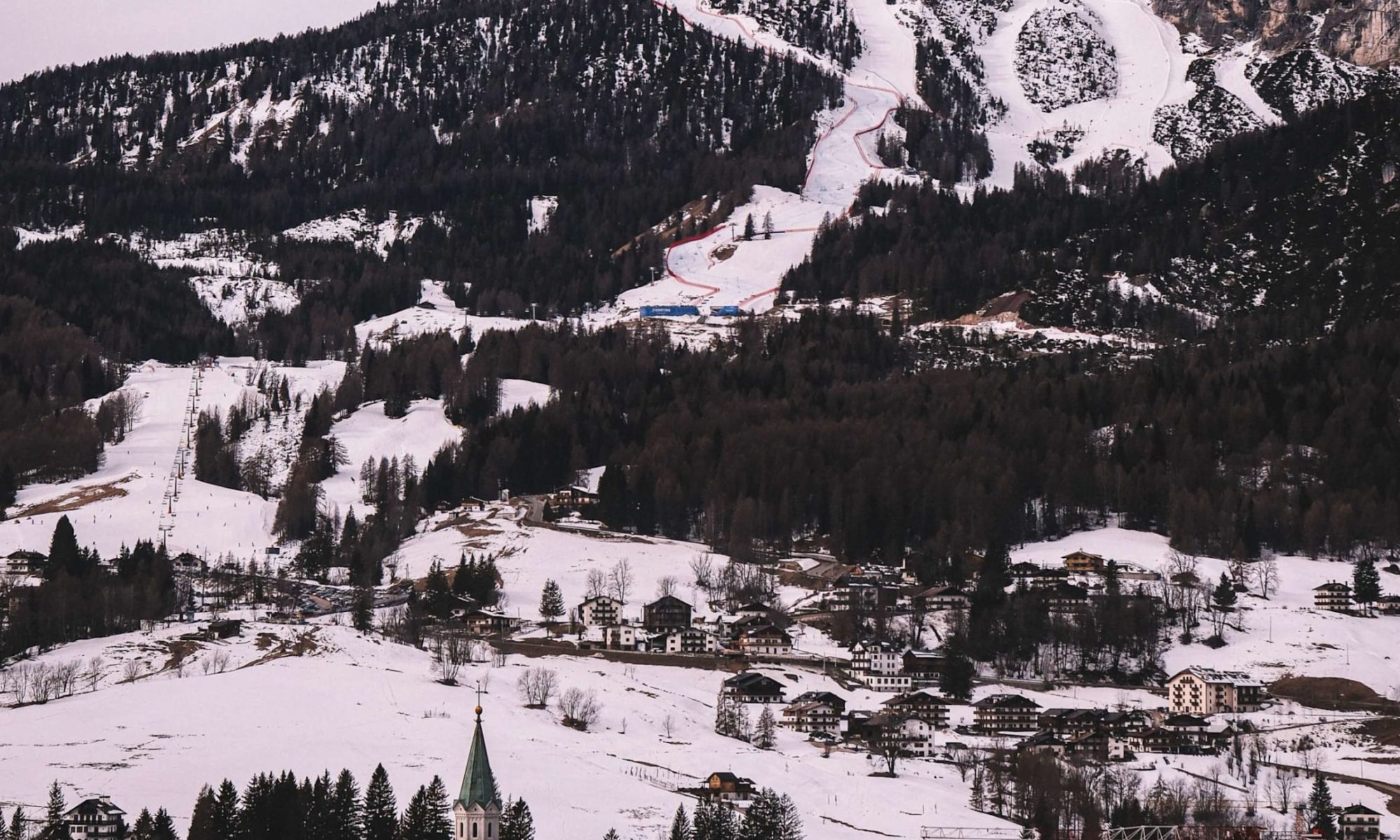
Particular attention has centred on works in Cortina d’Ampezzo, including sliding sports facilities and related upgrades.
Critics question whether forest clearance and construction activity align with sustainability messaging. Supporters argue that much of the Olympic model relies on upgrading existing venues rather than building entirely new complexes.
Artificial Snow & Water Resources
Like most modern Winter Games, Milano-Cortina 2026 will rely partly on artificial snow production to guarantee competition standards.
Why Ski Resorts Are Turning to Four-Season Tourism
For decades, mountain resorts lived by the rhythm of winter — snow, skiing, après-ski, repeat. That rhythm is changing. Climate variability, shifting travel habits, and a growing love for outdoor experiences are pushing ski areas to think beyond the slopes. Across the Alps and the Rockies, destinations are embracing a four-season model, turning themselves into year-round playgrounds for adventure, wellness, and culture.
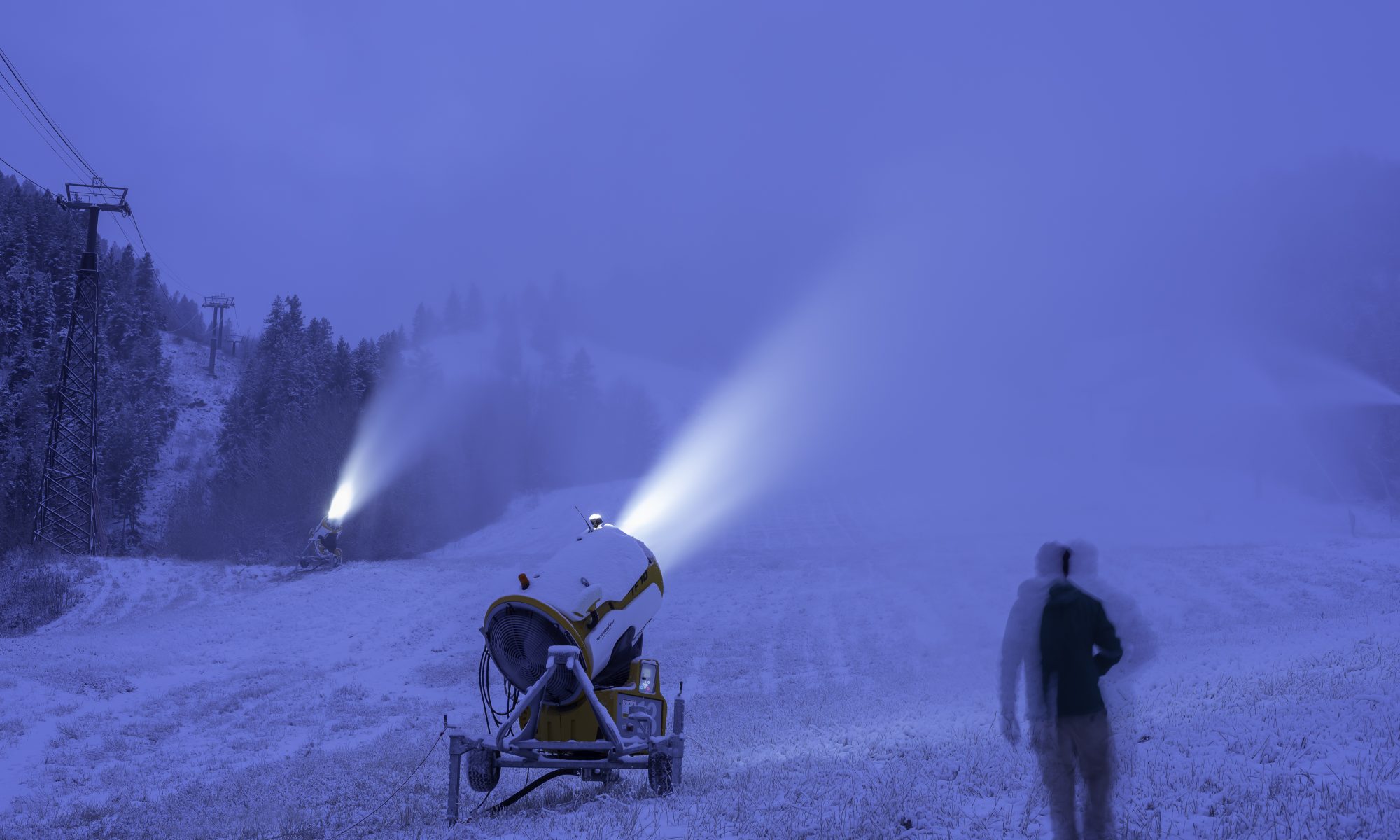
Beaver Creek Gold Dust Trail Snowmaking- Photo: Vail Resorts.
❄️ The Challenge: Unpredictable Winters
Winters aren’t what they used to be. National climate scenarios for Alpine countries (as the report I’ve just written about that was for Switzerland) show a steady rise in temperatures, more frequent warm spells, heavier rainfalls, and a snowline that keeps creeping uphill. Lower resorts can no longer rely on consistent snowfall. Even higher ones are investing heavily in snowmaking — which adds pressure on energy, water, and budgets if not managed smartly.
Switzerland Braces for a Hotter, Wilder Future — What It Means for the Alps
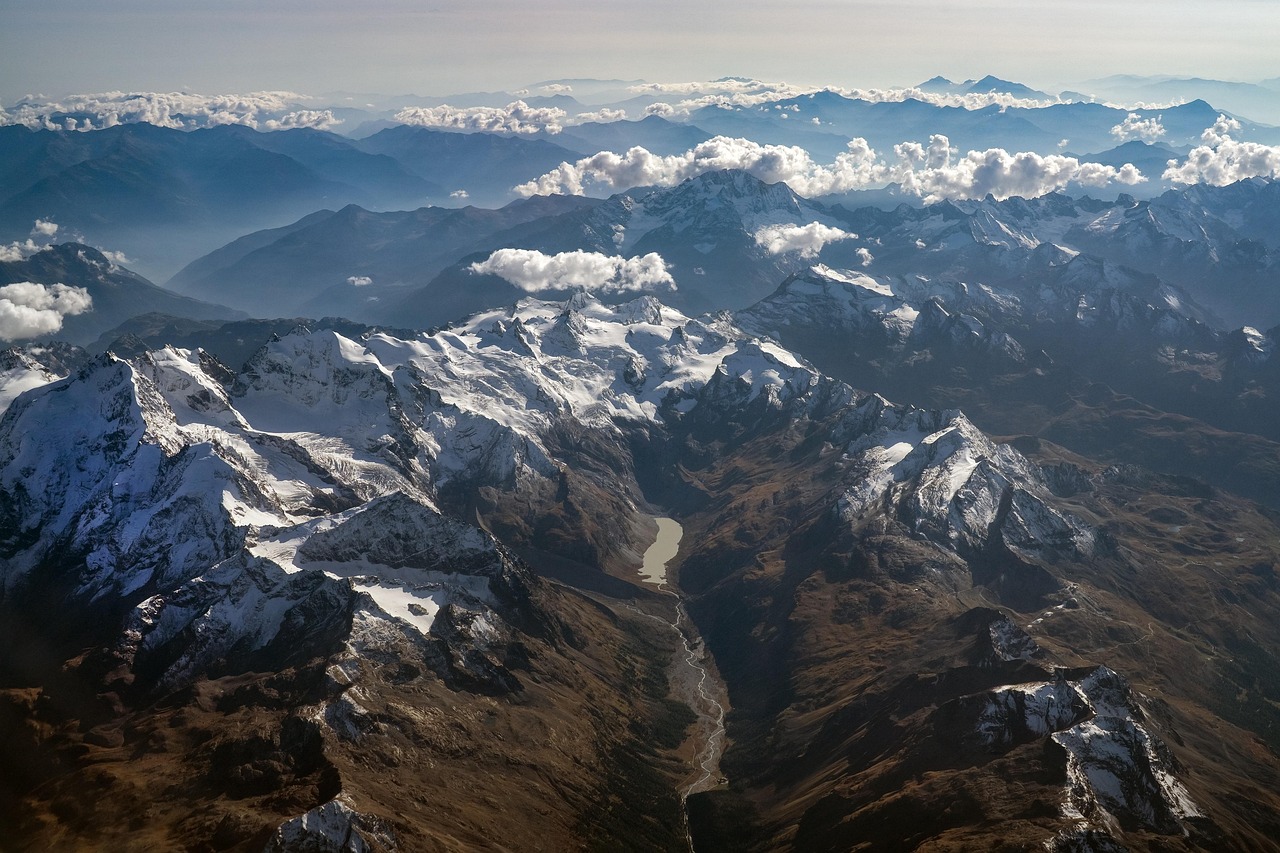
Switzerland’s Alps are heating up nearly twice as fast as the global average. The new CH2025 Climate Report by MeteoSwiss and ETH Zurich reveals what this means for our mountains — and for those who love them.
🇨🇭 A Country Warming Twice as Fast
Switzerland — famous for its snow-covered peaks and pristine valleys — has already warmed by 2.9°C since pre-industrial times, compared with around 1.3°C globally. According to the CH2025 Climate Report, the country faces a future of hotter summers, heavier storms, and rising snowlines that could reshape mountain life and tourism.
☀️ More Heatwaves — Even in the Mountains
Extreme heat events have become far more common in the past 25 years, and this trend is accelerating. The report warns that a day as hot as those that used to occur once every 50 years could now happen every three years or more. Cities like Zurich, Geneva, Basel and Lugano are expected to see far more “tropical nights,” when temperatures never drop below 20°C. Even Alpine valleys will experience unprecedented heat stress.
Lower elevations in Switzerland are destined to not have more snowy winters. Photo: Josef Farago. Pixabay. Switzerland’s Alps Face a Hotter, Wilder Future
🌾 Drier Summers Ahead
Summers are projected to become significantly drier due to increased evaporation and reduced rainfall. A drought that once happened once a decade could strike three times as often and with 44% greater intensity. Forest fire risk is rising sharply, particularly in Valais, Ticino, and parts of Graubünden.
Aspen Snowmass works closely with local purveyors to ensure that food at on-mountain restaurants is fresh, local and sustainably sourced. All hot-dogs, hamburgers and chili meat are sourced from local, grass-fed beef and on-mountain chicken products, including chicken fingers, come from Boulder Natural Meats. In addition, Aspen Snowmass works with other local sources such as Crystal River Meats, Mountain Primal Meats, Erin’s Acres Farm, Wild Mountain Seeds, Louis Swiss Pastry, Rock Bottom Ranch, Shining Mountains Farm, Colorado Pastured Pork and more.
Photo: Aspen Snowmass. 2018/19 Mountain Dining News and Events at Aspen Snowmass
Kid’s Cooler On-Mountain Lunches
This season, Aspen Snowmass is updating the Kid’s Cooler on-mountain lunches to include healthier options. Selections now include hummus, carrots, edamame, fresh fruit, yogurt and applesauce. Kid’s Cooler lunches are available at the Cliffhouse, Bumps, Elk Camp, Merry-Go-Round and Ullrhof.
A Commitment to Composting
On-mountain dining restaurants at Aspen Snowmass are committed to composting. Composting reduces dependence on fossil fuels and improves soil health which greatly decreases the need for chemical fertilizers. It also lessens waste sent to the Pitkin County Landfill, extending the landfill’s life. Aspen Snowmass has embraced composting at on-mountain restaurants, children’s ski school locations and hotels. Bumps, the Cliffhouse, Two Creeks, Elk Camp and Sam’s Smokehouse compost both the front and back of house and Lynn Britt Cabin, Ullrhof, Up 4 Pizza and the Sundeck all compost in the back of house. Within children’s ski school facilities, both the Treehouse Kids’ Adventure Center and the Hideout have implemented composting programs. The Little Nell, Limelight Hotel Aspen, and the Limelight Hotel Snowmass compost as well. By the end of the 2018/19 winter season, the vast majority of Aspen Snowmass’ waste will be composted.
Enjoyed this post? Get my latest ski guides, weather insights, resort updates and travel tips directly in your inbox. Subscribe to The-Ski-Guru here.
Manage Cookie Consent
To provide the best experiences, we use technologies like cookies to store and/or access device information. Consenting to these technologies will allow us to process data such as browsing behavior or unique IDs on this site. Not consenting or withdrawing consent, may adversely affect certain features and functions.
Functional
Always active
The technical storage or access is strictly necessary for the legitimate purpose of enabling the use of a specific service explicitly requested by the subscriber or user, or for the sole purpose of carrying out the transmission of a communication over an electronic communications network.
Preferences
The technical storage or access is necessary for the legitimate purpose of storing preferences that are not requested by the subscriber or user.
Statistics
The technical storage or access that is used exclusively for statistical purposes.The technical storage or access that is used exclusively for anonymous statistical purposes. Without a subpoena, voluntary compliance on the part of your Internet Service Provider, or additional records from a third party, information stored or retrieved for this purpose alone cannot usually be used to identify you.
Marketing
The technical storage or access is required to create user profiles to send advertising, or to track the user on a website or across several websites for similar marketing purposes.




 Subscribe to The-Ski-Guru here.
You must be logged in to post a comment.