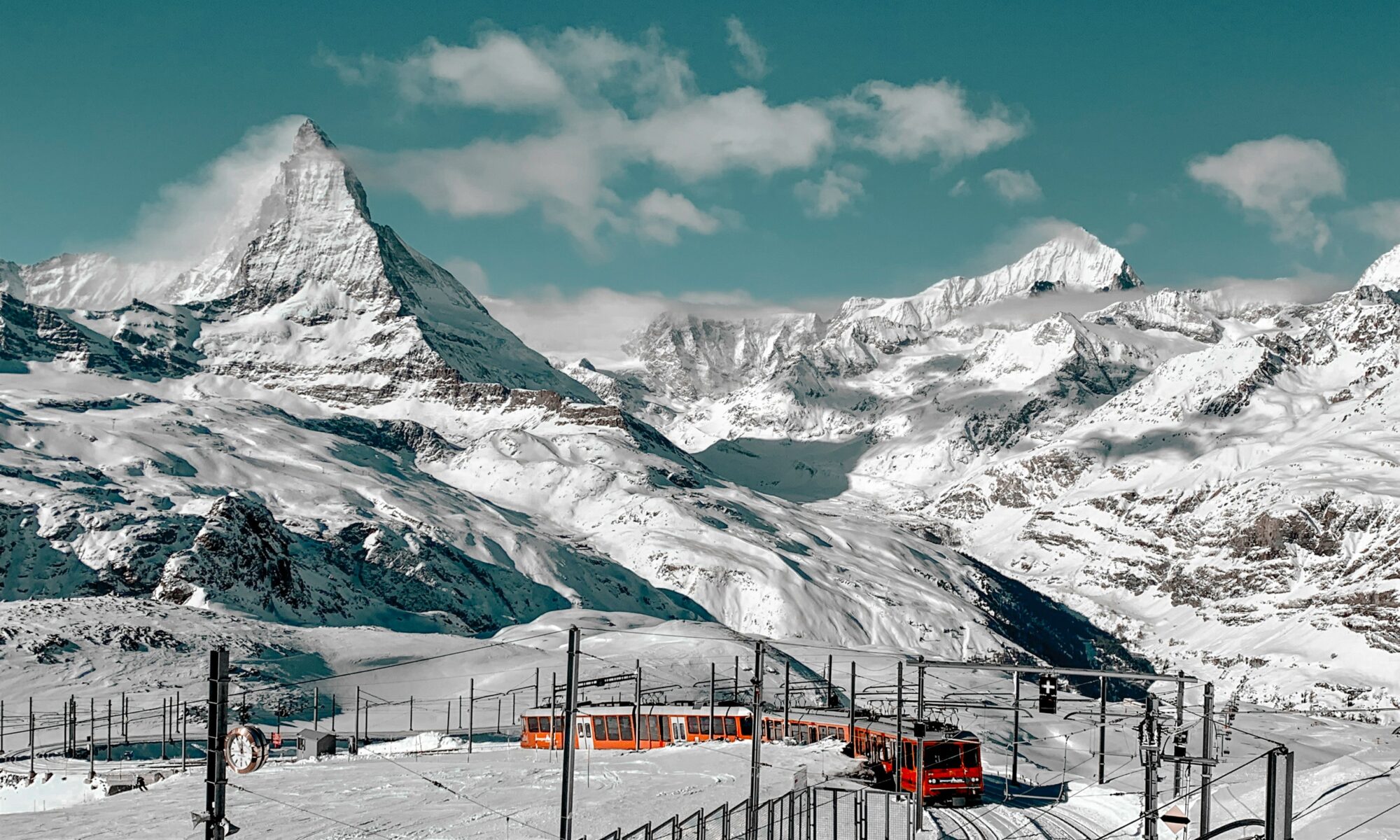
La Thuile Replaces Two Ageing Chairlifts with Major Gondola Upgrade for 2026/27

Pista 3, Franco Berthod, a renown super steep black run in La Thuile. Photo: Tourism Office La Thuile.

Italian resort La Thuile is preparing one of its biggest lift infrastructure upgrades in recent years, with a new 10-seater gondola set to replace two of the ski area’s older chairlifts ahead of the 2026/27 winter season.

The project will replace the ageing La Combe and Chaz Dura fixed-grip chairlifts on the front side of the mountain, one of the main circulation areas linking the Italian resort with the wider Espace San Bernardo ski domain shared with La Rosière in France.

According to local and regional reporting, the new gondola — officially referred to as the Les Suches–Chaz Dura telecabina — is designed to significantly improve uphill transport capacity, skier flow, and beginner access on one of the resort’s busiest sectors.


Update — October 2026: La Thuile’s new gondola will be called Vedette, with opening planned for December 2026. Its design draws inspiration from historic Alpine fortifications, while a panoramic restaurant is expected to follow in December 2027. Read our latest update on the Vedette gondola, its name and the story behind its architecture.


Continue reading “La Thuile Replaces Two Ageing Chairlifts with Major Gondola Upgrade for 2026/27”
Alpine Ski Resorts Are Covering Glaciers to Slow Melting — But Can It Last?

Photo credit: Pontedilegno Tonale- pontedilegnotonale.com

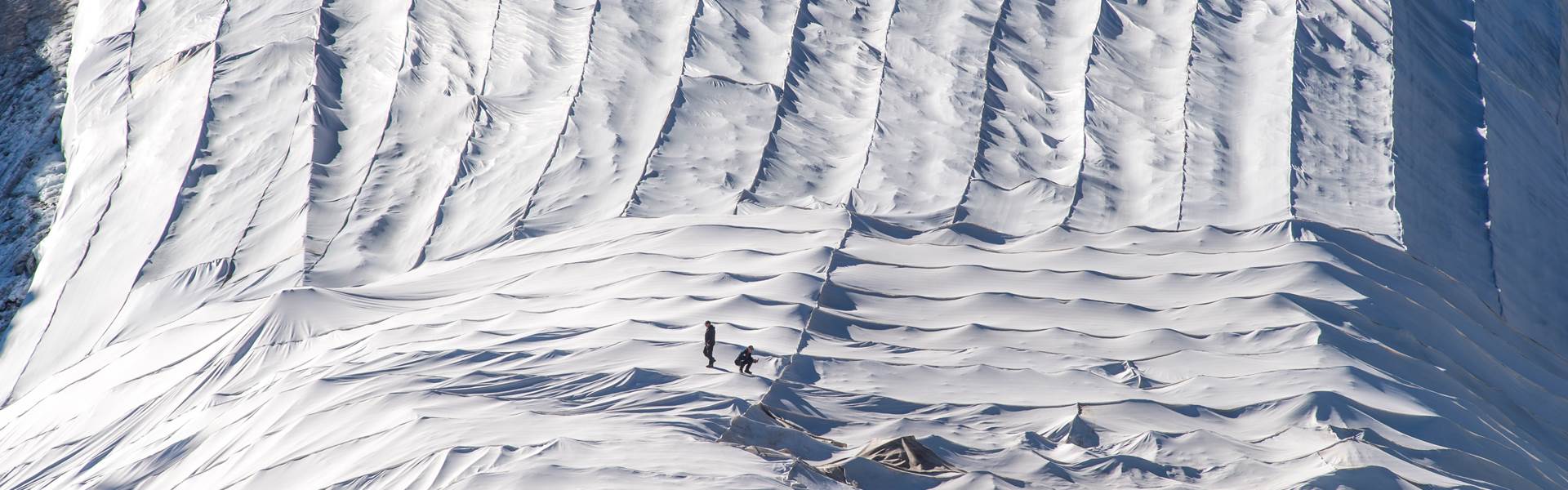
As glaciers across the Alps continue to shrink, some ski resorts are increasingly turning to reflective geotextile covers, snow farming, and other snow-preservation techniques in an attempt to protect glaciers, maintain ski operations, and preserve critical mountain infrastructure.

The images often go viral online as “ski resorts covering glaciers with plastic sheets,” but the reality is more complex. Most resorts use reflective geotextile fleece designed to reduce summer melting by insulating snow and ice from solar radiation.

The latest example attracting attention is the glacier area around Diavolezza in Switzerland’s Engadin region, where snow preservation and glacier management techniques have become part of long-term ski operations at altitude. Researchers note that the former glacier skiing area at Diavolezza now survives “solely thanks to snow farming and covering.”

Continue reading “Alpine Ski Resorts Are Covering Glaciers to Slow Melting — But Can It Last?”

Zermatt’s Lina Peak Skyscraper Plan: Radical Housing Solution or a Step Too Far for the Alps?

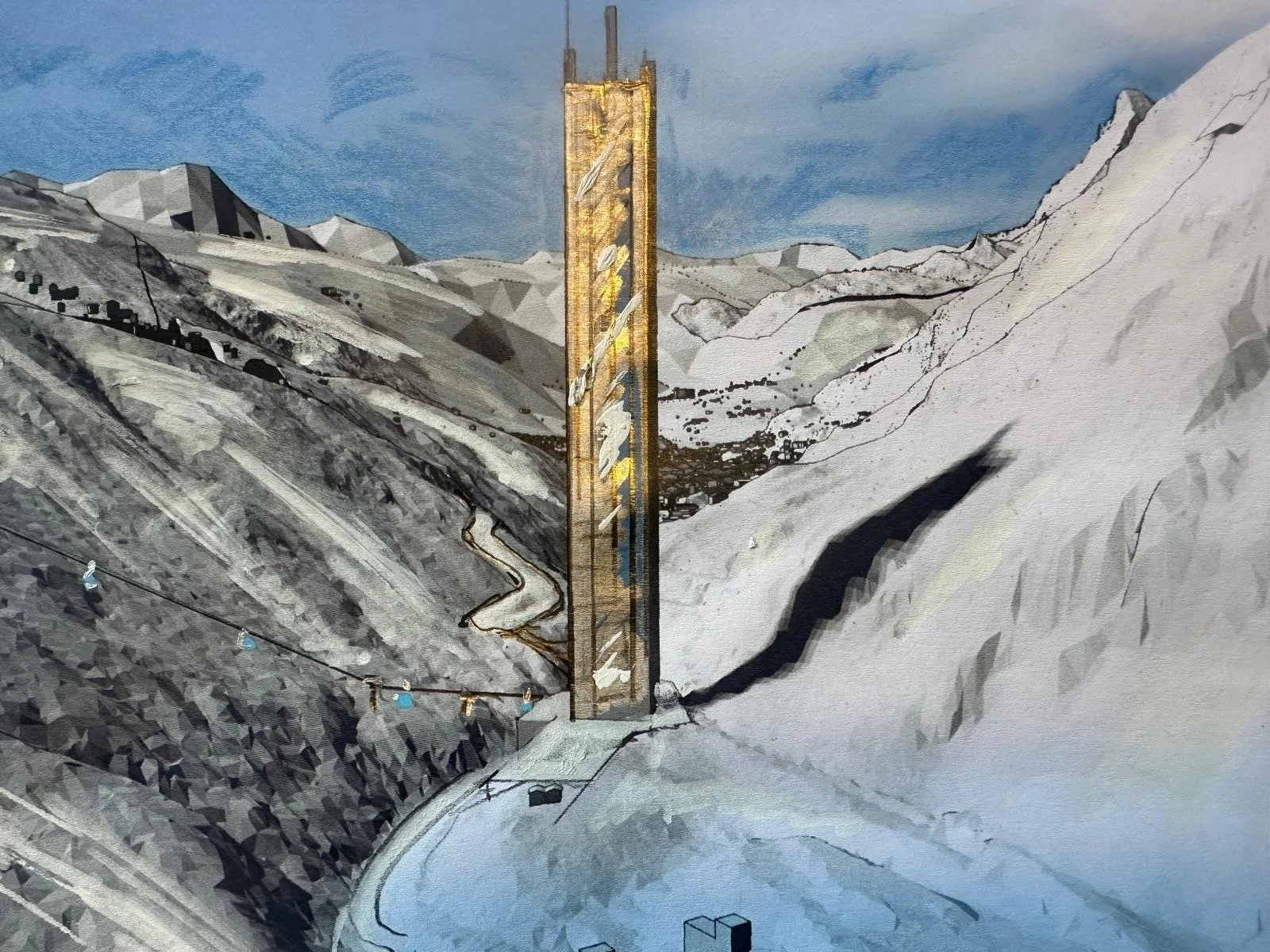
Lina Peak rendering. www.linapeak-zermatt.com

A proposed 260-metre residential tower near Zermatt has reopened one of the most difficult questions facing high-profile Alpine resorts: how do ski towns house the people who make tourism possible, when land is scarce, property prices are soaring and local workers are increasingly pushed out?

The project, called Lina Peak, is the idea of Zermatt-born artist, architect and hotelier Heinz Julen. It would be a striking departure from the image most visitors associate with Zermatt: not a low-rise chalet-style development, but a vertical “village” rising near one of the most famous mountain landscapes in the world. According to the project’s own website and Swiss media reports, the tower would stand around 260 metres high and include housing, public services, parking, leisure facilities and a potential link into the ski area. 

Continue reading “Zermatt’s Lina Peak Skyscraper Plan: Radical Housing Solution or a Step Too Far for the Alps?”

Zermatt’s Gornerli Dam Shows the Rising Cost of Climate Adaptation in the Alps

Zermatt. Photo: Victor He. Unsplash.

The planned Gornerli reservoir above Zermatt has become one of the clearest examples yet of how expensive climate adaptation in the Alps is becoming.

The project, designed as a major winter energy storage scheme for Switzerland, has been revised after new climate, hydrological, geological and logistical studies. According to Alpiq’s latest project update, the planned useful storage volume has been reduced from around 150 million cubic metres to 120 million cubic metres, while the estimated cost has risen sharply to around CHF 510 million. Earlier project material had placed the investment cost at around CHF 300 million.

That makes Gornerli more than a hydropower story. It is a mountain infrastructure story, a climate adaptation story and, for Zermatt and the Mattertal valley, a question of how Alpine communities prepare for a warmer and less predictable future.

Continue reading “Zermatt’s Gornerli Dam Shows the Rising Cost of Climate Adaptation in the Alps”

Cortina Olympic Cable Car Investigation Adds to Questions Over Mountain Infrastructure Delivery

News of Cortina d’Ampezzo for the 2021-22 ski season. Photo credit: Pietro Albarelli. Cortina Marketing.

Italian police have searched companies linked to the Apollonio–Socrepes cable car in Cortina d’Ampezzo, one of the most controversial infrastructure projects connected to the Milano-Cortina 2026 Winter Olympics.

According to Reuters, searches were carried out at Simico, the state-backed Olympic infrastructure agency, and Graffer, the company responsible for building the lift, as part of a bid-rigging investigation linked to the cable car contract. Prosecutors said searches also took place in several Italian cities, including Rome, Milan, Brescia, Naples and Cortina. Simico has said it is cooperating fully with prosecutors and is confident it acted correctly, while Graffer did not immediately respond to Reuters’ request for comment. 

Continue reading “Cortina Olympic Cable Car Investigation Adds to Questions Over Mountain Infrastructure Delivery”

How Ski Resorts Measure Kilometres of Pistes — And Why the Numbers Can Be Misleading

Les Trois Vallées, an amazing expanse of pistes and off-pistes to challenge any type of skier. Photo: Les Trois Vallées.How Ski Resorts Measure Kilometres of Pistes — And Why the Numbers Can Be Misleading

Every skier has seen it: “120 km of pistes!”, “Biggest linked ski area in the world — 600 km!”, “Over 400 km of slopes!”
These numbers sound impressive — and they’re meant to. But how accurate are they?

After watching the video referenced in Unofficial Networks’ recent article “A Skier’s Guide to Ski Resort Statistics”, I went down the rabbit hole again of how ski areas calculate their “kilometres of pistes.” The video explains a simple but powerful truth: ski-resort statistics aren’t always as straightforward as they look, and—especially in Europe—studies have shown that many resorts “stretch” their totals through creative measurement.

Below is a guide to understanding what these numbers really mean, what several European investigations have uncovered, and how you can interpret piste statistics more intelligently—whether you’re choosing your next ski holiday, packaging a product as a tour operator, or simply love understanding the truth behind resort marketing.


Three skiers enjoying the snow and views of Banff Sunshine Village. Photo: Banff Sunshine Village Resort. Unsplash. How Ski Resorts Measure Kilometres of Pistes — And Why the Numbers Can Be Misleading.

Continue reading “How Ski Resorts Measure Kilometres of Pistes — And Why the Numbers Can Be Misleading”