Switzerland Won’t Run Out of Water When Its Glaciers Disappear — But Summer Is Another Story

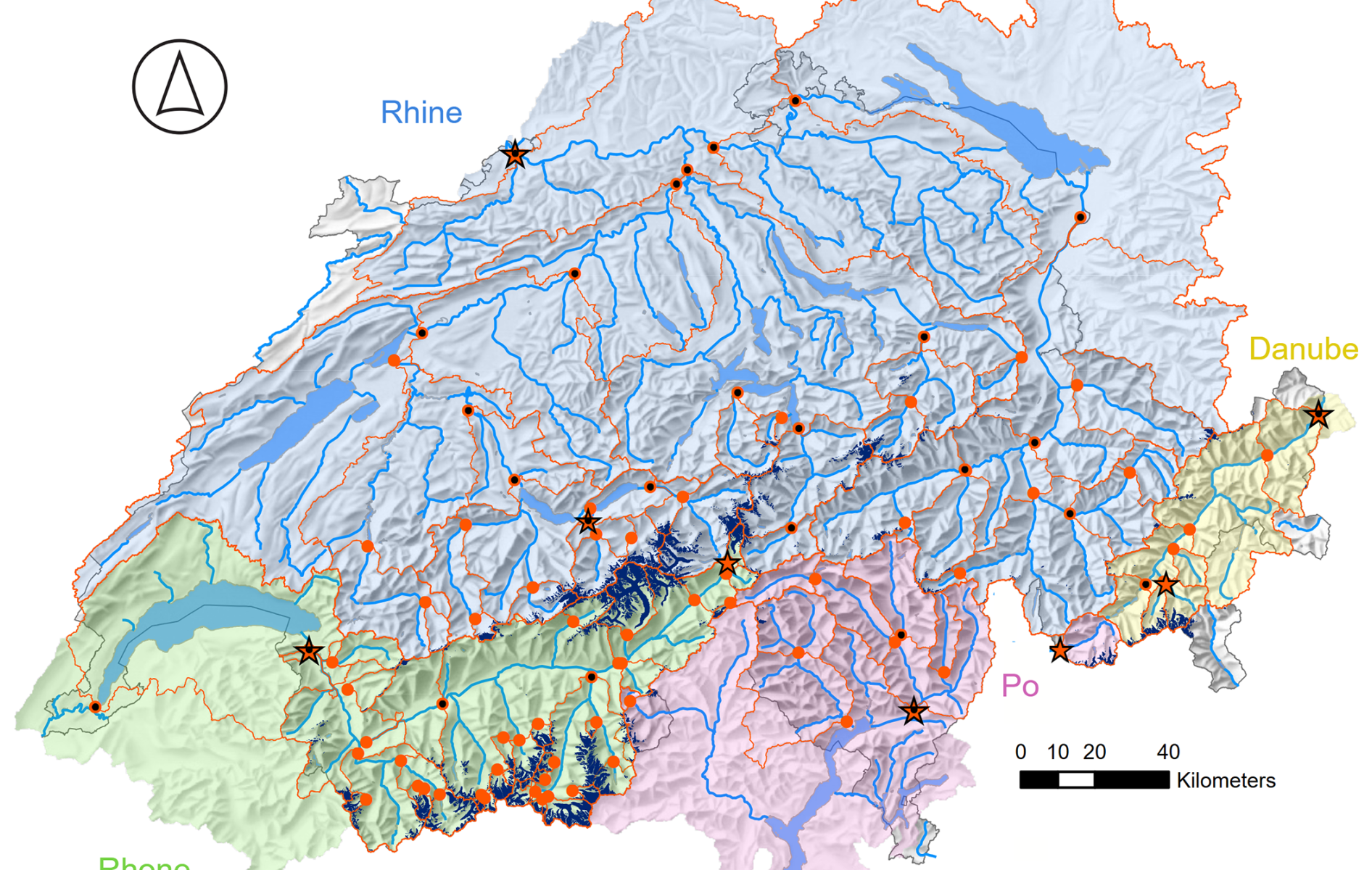
Map of hydrological Switzerland. Credit: Hess Copernicus.

Switzerland’s glaciers are shrinking rapidly, but their disappearance does not mean the country will simply run out of water. The bigger problem is when that water will be available — particularly during increasingly hot and dry Alpine summers.

Switzerland is often described as the “water tower of Europe”, while its rapidly retreating glaciers have become one of the most visible symbols of climate change in the Alps.

It is therefore easy to make a seemingly obvious connection: if the glaciers disappear, Switzerland will lose a major source of its water.

The reality is more complicated.

Swiss hydrologist Bettina Schaefli, professor at the University of Bern, recently challenged that assumption in an opinion piece published by Le Temps, arguing that Switzerland does not owe its abundant water resources primarily to its glaciers.

She is right — at least when looking at the country’s overall annual water balance.

Switzerland’s real hydrological advantage is the Alps themselves. The mountain barrier forces moist air upwards, producing substantial precipitation as rain and snow.

But that does not mean disappearing glaciers are irrelevant to Switzerland’s water supply.

Far from it.

What Switzerland is gradually losing is something particularly valuable: a natural water reserve capable of releasing water precisely when rainfall and snowmelt are no longer providing enough of it.

And during a drought, that distinction becomes crucial.
Continue reading “Switzerland Won’t Run Out of Water When Its Glaciers Disappear — But Summer Is Another Story”

Aosta Valley Begins to Recover, but Record Glacier Loss Highlights Growing Climate Crisis

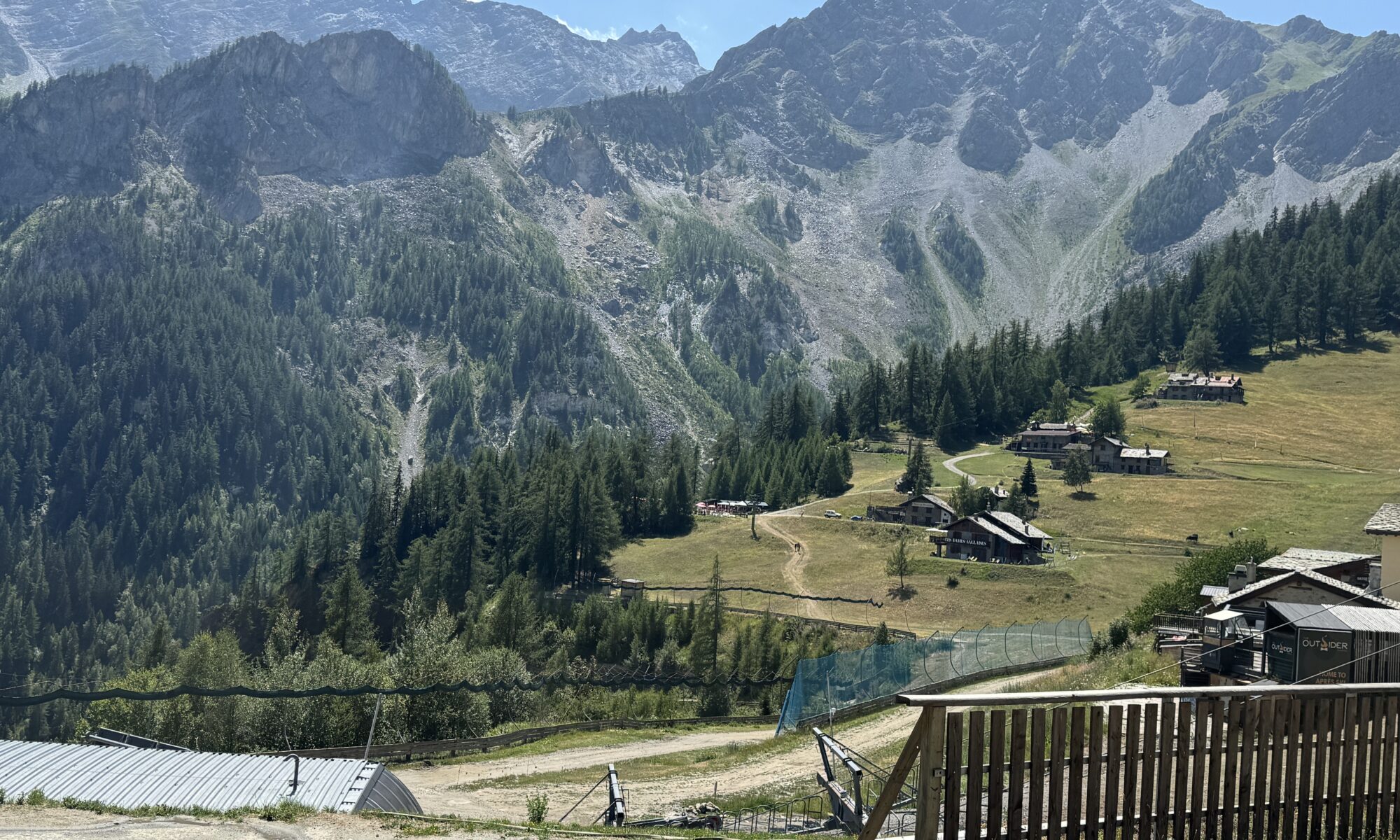
The view from Plan Chècrouit towards the Piscina Alpina in Courmayeur. Photo: The-Ski-Guru.

The Aosta Valley is beginning to recover after a week marked by intense storms, flooding and rockfalls, but scientists warn that the longer-term picture remains deeply concerning. While tourist facilities are reopening and emergency conditions are easing, 2026 has already become the worst year on record for glacier loss in Italy’s smallest Alpine region, underlining the accelerating impact of climate change. 

One of the clearest signs of recovery has come from Breuil-Cervinia, where the local golf course has partially reopened following the severe thunderstorms that hit the resort earlier this week. Although only a temporary nine-hole course is currently available while repairs continue, the reopening is an important step for the resort’s summer tourism industry after heavy rain and mudflows disrupted the area. 

Continue reading “Aosta Valley Begins to Recover, but Record Glacier Loss Highlights Growing Climate Crisis”

The Alps Did Not Have a Snow-Rich Winter: Why 2026 Resembles 2022 for Glaciers

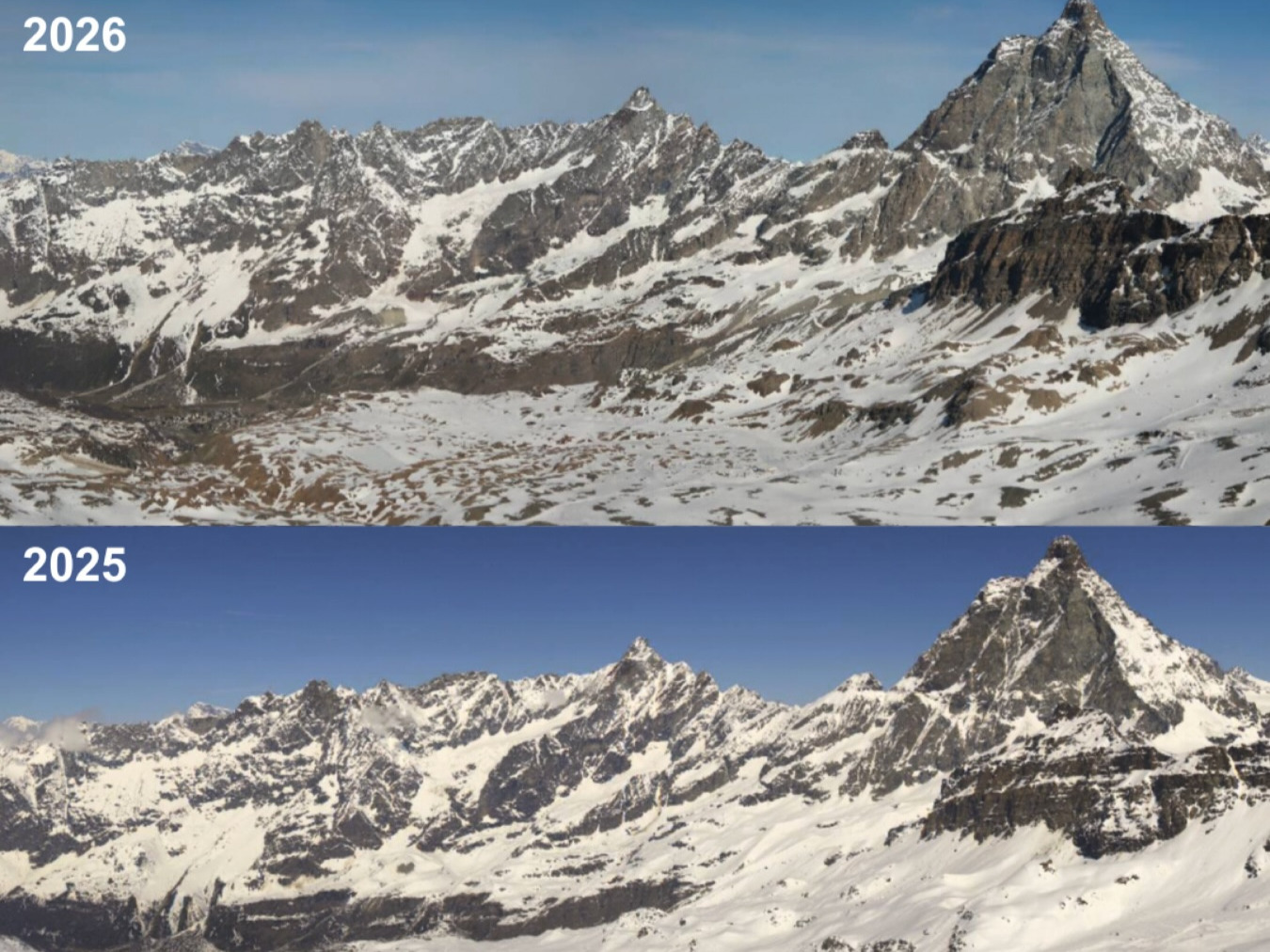
Snow comparisons Plateau Rosa 2025-26. Photo: Meteo Valle d'Aosta.

The idea that winter 2025/26 was “a good snow year” in the Alps does not hold up under closer analysis. While some regions experienced notable snowfall events, particularly in December, these were highly localised and have led to a broader misperception about conditions across the entire Alpine arc.

Data and observations from Meteo Valle d’Aosta highlight the issue clearly. Heavy early-season snowfall was largely confined to the Maritime and Ligurian Alps, a relatively small portion of the range. Outside these areas, including much of the north-western Alps and Valle d’Aosta, snowfall remained closer to average or slightly below through much of the early winter.

Crucially, what followed mattered more than what fell.

Continue reading “The Alps Did Not Have a Snow-Rich Winter: Why 2026 Resembles 2022 for Glaciers”

Record Skier Visits vs. Snow Deficit: What 2025 Reveals About the Future of Alpine Skiing

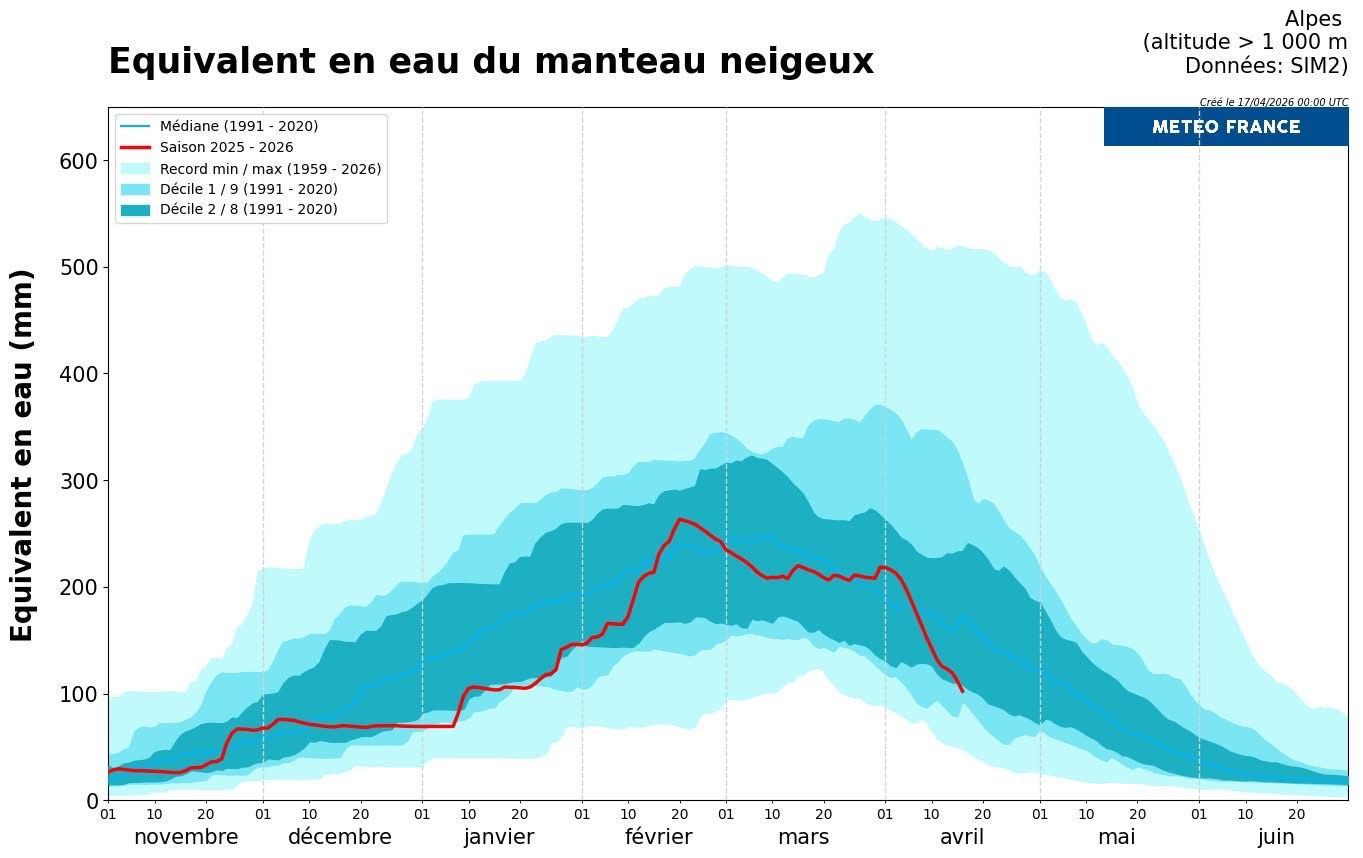
Méteo-France: Equivalent Eau Manteau Neigeux.

The global ski industry has just recorded its strongest season ever, with 399 million skier visits in 2024–25 according to Laurent Vanat. At the same time, snow conditions across large parts of the Alps are showing a very different reality.

As April progresses, data from national weather and avalanche agencies including Météo-France, AINEVA and MeteoSwiss points to a growing snow deficit, particularly across the Southern Alps, where snowpack is now significantly below seasonal norms.

The contrast between record demand and weakening snow reliability is becoming one of the defining features of modern Alpine skiing.

Continue reading “Record Skier Visits vs. Snow Deficit: What 2025 Reveals About the Future of Alpine Skiing”

Snow Conditions in a Warming Alpine Climate

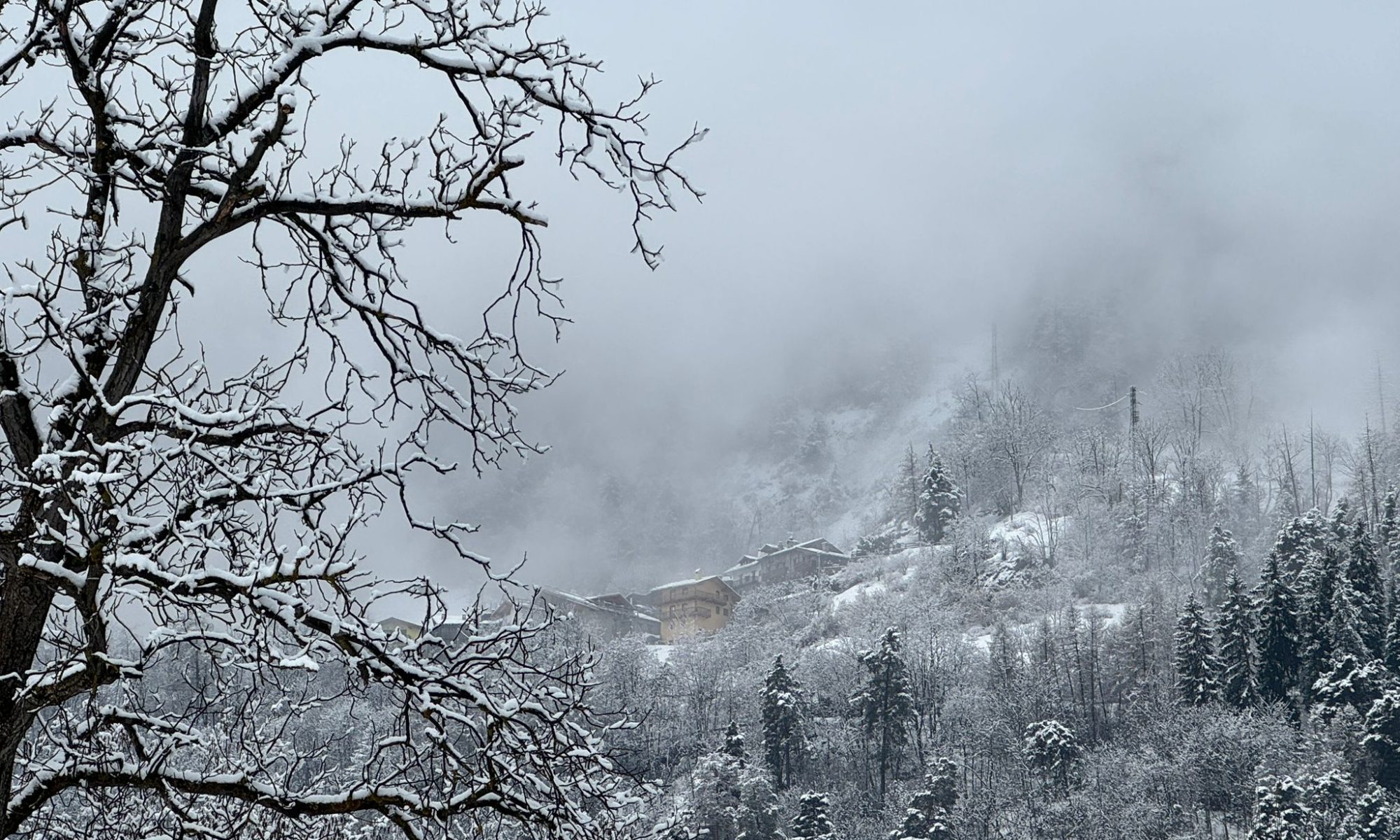
Winter in the Mountains- Photo: The-Ski-Guru. Morgex.

What the 2026 Winter Season Is Showing

A Winter of Extremes

Snow conditions in a warming Alpine climate are becoming more variable, more intense and more dependent on artificial support.

Across the Alps, long-term climate warming is reshaping snowfall patterns, snowline altitude, avalanche behaviour and the economics of winter tourism. The 2026 winter season provides a recent example of these broader trends.

In recent weeks alone, the region has experienced:

  • Intense multi-day storm cycles delivering 80–100 cm in short periods
  • Rapid wind loading and unstable snowpack development
  • Elevated avalanche danger levels across multiple massifs
  • Simultaneous reliance on artificial snow at lower altitudes

Rather than a simple story of “less snow,” the pattern emerging is one of greater variability and concentration. This growing instability is not confined to the Alps. Recent extreme heat events shortening the ski season in North America show how quickly conditions can deteriorate, even in traditionally more snow-reliable regions.


Heavier Storms, Faster Loading

Several recent cycles across the Western Alps demonstrated how quickly snowpack instability can build.

Large accumulations over 24–48 hours — combined with wind transport — created fragile layers and widespread avalanche danger. In many regions, danger levels rose to Level 4 (Strong), and in parts of the French Alps even Level 5 (Very Strong).

Continue reading “Snow Conditions in a Warming Alpine Climate”