


Avalanche danger in the Alps is reported using the European Avalanche Danger Scale, a five-level system used by national avalanche forecasting services across countries including France, Italy, Switzerland, Austria and Germany.
The scale helps skiers, mountaineers and backcountry travellers understand how stable or unstable the snowpack is and how likely avalanches are to occur.
It is important to understand that the scale does not simply measure the size of avalanches. Instead, it reflects a combination of factors including snowpack stability, the likelihood of triggering avalanches and the expected distribution of unstable slopes.
Understanding these levels is essential for anyone travelling in avalanche terrain, whether skiing off-piste, touring, snowshoeing or mountaineering.
Level 1 – Low Avalanche Danger
At Level 1 (Low) the snowpack is generally stable.
Avalanches are unlikely except on a few extremely steep slopes. Natural avalanches are very rare, and human-triggered avalanches are unlikely in most situations.
However, “low” does not mean zero risk. Small avalanches can still occur, particularly on very steep slopes or where isolated weak layers exist.
Typical characteristics:
- Snowpack mostly well bonded
- Avalanche triggering unlikely except in isolated extreme terrain
- Natural avalanches very unlikely
For most skiers this represents the safest conditions of the scale, although caution is always required in steep terrain.
Level 2 – Moderate Avalanche Danger
At Level 2 (Moderate) the snowpack is generally stable but some slopes may contain weak layers.
Human-triggered avalanches are possible, especially on steep slopes where wind-transported snow or buried weak layers exist.
Natural avalanches are unlikely but small ones may occur in certain situations.
Typical characteristics:
- Isolated unstable areas
- Human triggering possible on steep slopes
- Natural avalanches unlikely
Many accidents happen during Level 2 conditions because the risk may appear limited, yet unstable slopes can still exist.
Level 3 – Considerable Avalanche Danger
At Level 3 (Considerable) avalanche danger becomes significant.
The snowpack is moderately to poorly bonded on many steep slopes. Human-triggered avalanches are likely, even with a single skier or snowboarder.
Natural avalanches are possible, particularly during or after storms, strong winds or rapid warming.
Typical characteristics:
- Weak layers present across multiple slopes
- Human-triggered avalanches likely
- Natural avalanches possible
This level is responsible for a large proportion of avalanche accidents in the Alps because the risk can be widespread while conditions may still appear attractive for skiing.
➡ Read more: Avalanche Danger Level 3 – What It Means for Skiers
Level 4 – High Avalanche Danger
At Level 4 (High) the snowpack is unstable across many slopes.
Natural avalanches are likely, and large avalanches may occur even without human triggers. Human-triggered avalanches are very likely on many steep slopes.
These conditions usually occur after heavy snowfall, strong wind transport or rapid warming events.
Typical characteristics:
- Widespread instability
- Natural avalanches likely
- Large avalanches possible
Backcountry travel is generally not recommended under these conditions.
➡ Read more: Avalanche Danger Level 4 – High
Level 5 – Very High Avalanche Danger
Level 5 (Very High) is the most extreme level of the scale and is rarely issued.
The snowpack is extremely unstable, and numerous large natural avalanches are expected, including very large events that may reach valley floors.
Transport routes, villages and infrastructure can be affected during Level 5 avalanche cycles.
Typical characteristics:
- Widespread natural avalanches
- Very large avalanches possible
- Severe disruption to mountain areas
These conditions are typically associated with major storm cycles and exceptional snowfall events.
➡ Read more: Avalanche Danger Level 5 – Very High
Why Avalanche Danger Changes Quickly
Avalanche danger levels can change rapidly depending on weather and snow conditions. A good recent example was the February 2026 avalanche cycle across the Alps, when repeated storm systems pushed avalanche danger to Level 4 and even Level 5 in several regions.
Common triggers for rising avalanche danger include:
- Heavy snowfall
- Strong winds transporting snow
- Rapid warming or rain on snow
- Persistent weak layers buried in the snowpack
These factors can combine to create unstable snow structures capable of producing avalanches.
Where to Check Official Avalanche Forecasts
Before heading into the mountains it is essential to consult official avalanche bulletins issued by national forecasting services.
Examples include:
- AINEVA (Italy)
- Météo‑France avalanche bulletins
- SLF WSL Institute for Snow and Avalanche Research (Switzerland)
- Lawinenwarndienst Tirol (Austria)
These services publish daily avalanche forecasts during the winter season.
Understanding avalanche risk today also means understanding the role of extreme weather in the Alps, which is driving more unstable snow conditions.
Avalanche Safety Basics
Anyone travelling in avalanche terrain should carry essential safety equipment:
- Avalanche transceiver
- Probe
- Shovel
Training and experience are also critical. Understanding terrain, snowpack evolution and weather patterns plays a major role in avalanche safety.
Even experienced skiers and mountaineers can be caught in avalanches, which is why checking avalanche forecasts and adapting plans is always essential.
 Planning your next trip to the Italian Alps?
 Planning your next trip to the Italian Alps?
If you’re heading to the Aosta Valley, take a look at Il Cuore della Valdigne, our family-owned apartment in Morgex, available for rent when we’re not using it ourselves.
It’s an ideal base to:
- Ski in Courmayeur, La Thuile and Pila
- Enjoy the mountains in summer (hiking, biking, nature)
- Explore the Mont Blanc valley in a quieter, more authentic setting.
 Ski in Courmayeur,
 Enjoy the mountains in summer (hiking, biking, nature)
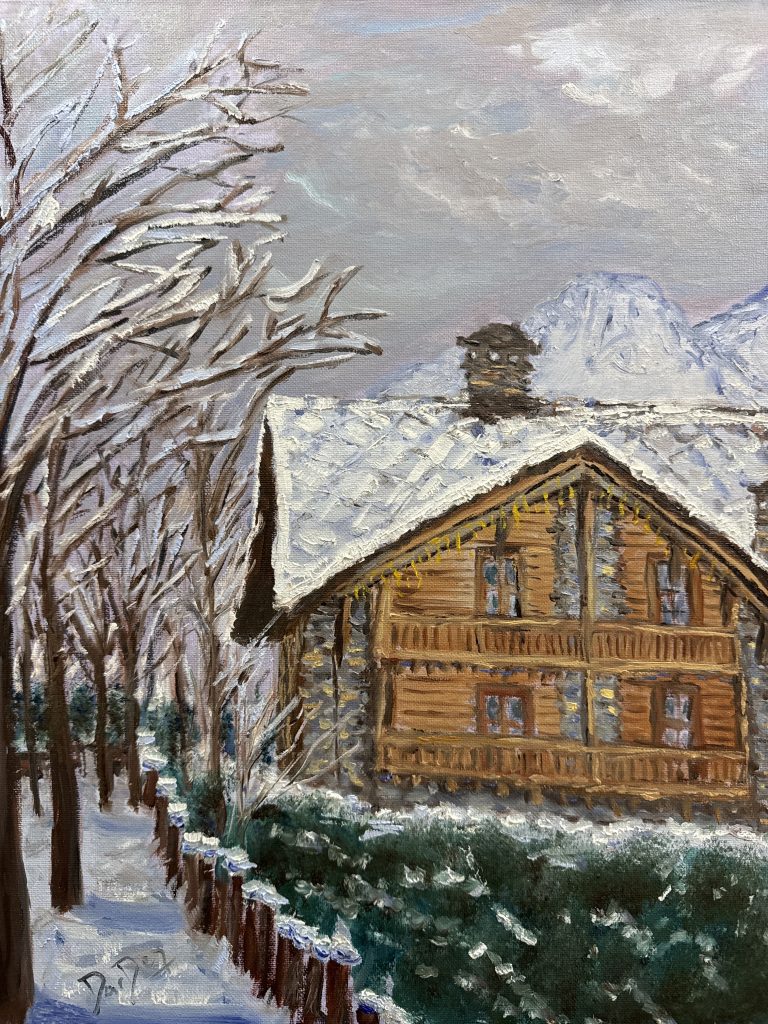
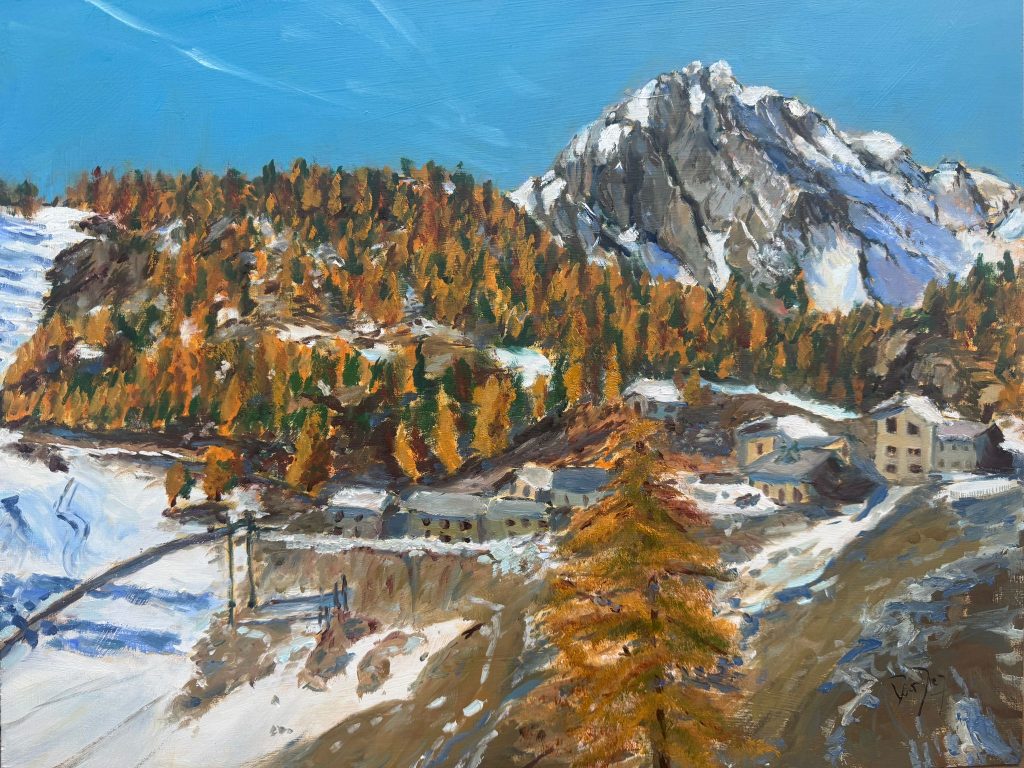
Check my Mountain Art on my Shop
You can go to my shop and see what have been inspiring me lately, lots mountain landscapes in soft pastels, and now in oils too. Go here to check my latest works!
Featured Image: Windslab avalanche. Photo: Colorado Avalanche Information Center. Why Wind Is One of the Most Dangerous Avalanche Triggers.


Discover more from The-Ski-Guru
Subscribe to get the latest posts sent to your email.
 Subscribe to The-Ski-Guru here.