

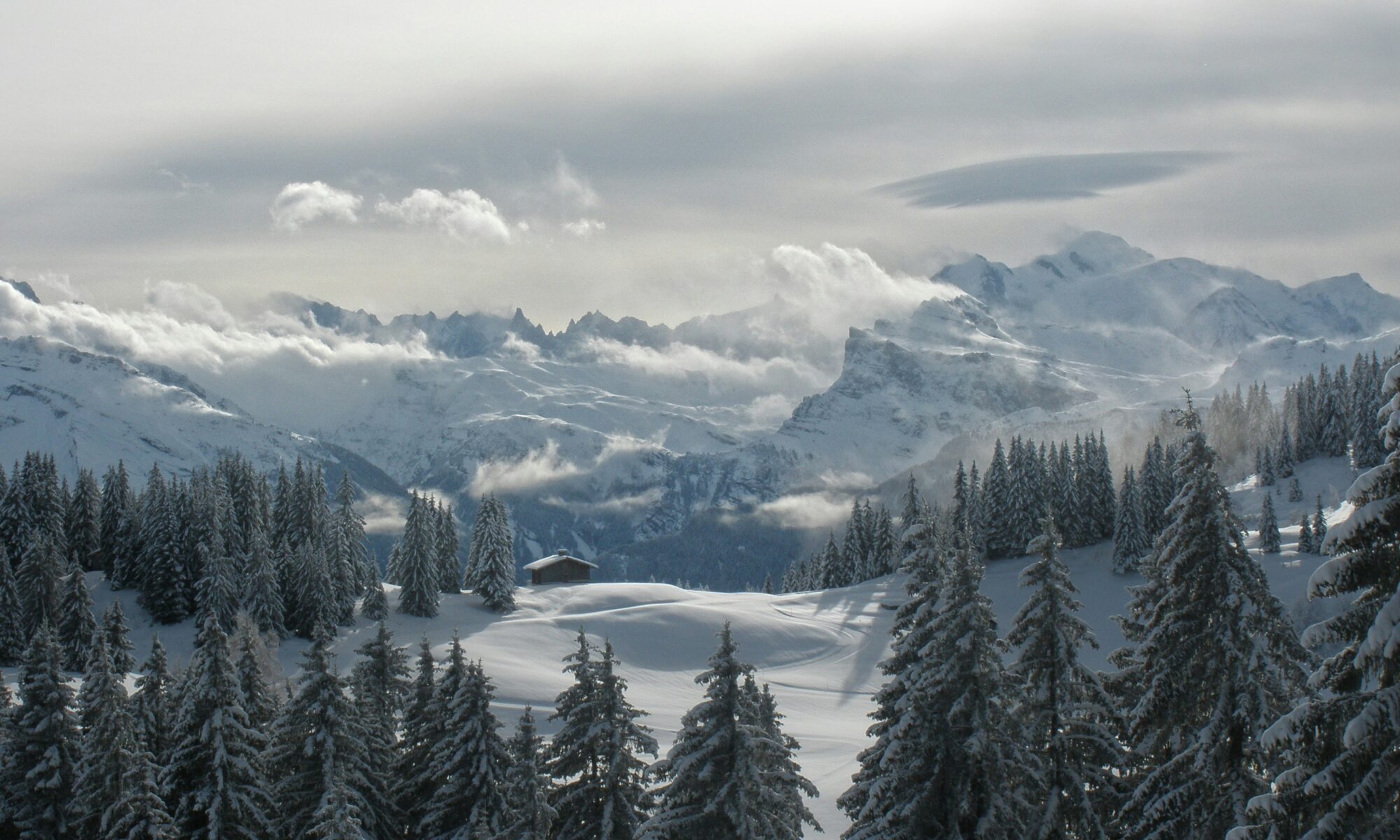
The Europe winter 2026/27 snow forecast is beginning to take shape, with official seasonal outlooks offering early clues for skiers planning their holidays. Warmer-than-average conditions are favoured across much of the continent, with increased precipitation possible in several regions—but how much will fall as snow?
By Martina Diez-Routh | The Ski Guru
28 October 2026
Will Europe have a snowy winter? As skiers start planning their holidays, the first seasonal outlooks offer some clues about the months ahead.
The latest official guidance favours warmer-than-average conditions across much of Europe, alongside increased precipitation in several regions. But the relationship between a wet winter and a good ski season depends heavily on temperature, elevation and the weather accompanying each storm.
Resorts are also preparing their snowmaking systems. New equipment can improve production close to the temperature limit, while larger pumping networks and automated controls help operators achieve more during a brief cold spell.
Together, these developments tell a more useful story than a prediction of which country will receive the most snow.
Europe’s seasonal outlook: a warmer backdrop, with important regional differences
The Copernicus Climate Change Service’s update of 10 October favours above-average seasonal temperatures and precipitation across much of Europe. The signals are weaker over the Scandinavian Peninsula and, for precipitation, across southern regions.
Copernicus also anticipates possible changes in atmospheric circulation as winter progresses. The outlook therefore does not suggest that one weather pattern will necessarily dominate the whole season.
Seasonal forecasts describe probabilities for average conditions over large areas. They cannot establish the dates of individual snowstorms, the snowline during a particular weather system or conditions at a resort during a specific holiday week.
The periods covered also matter. An October–December outlook includes two autumn months and only the first month of meteorological winter. It should not be presented as a forecast for the entire ski season.
France: distinguish the northern Alps, southern Alps and Pyrenees
Météo-France’s outlook published on 5 October favours a warmer-than-average October–December across mainland France and Corsica. Wetter conditions are more likely across much of the country, while regions close to the Mediterranean have no preferred precipitation scenario.
The accompanying bulletin assigns a 60% probability to the warmer-than-average temperature category for France. For precipitation, the wetter category has a 50% probability in the favoured area, while the Mediterranean exception has approximately equal probabilities for wet, near-average and dry conditions.
That Mediterranean qualification should not automatically be extended to all the French Alps. The bulletin does not justify treating Savoie and Haute-Savoie as though they share the same precipitation outlook as Mediterranean-facing areas farther south.
It also offers no resort-level snowfall forecast. A broad wetter signal cannot establish how much snow will fall in an individual Alpine valley.
The French Pyrenees deserve separate consideration from the Spanish side of the range. Météo-France’s national guidance is relevant to the French side, but its broad categories do not provide a detailed snowfall outlook for the western, central and eastern Pyrenees.
Spain and Andorra: different territories, different evidence
AEMET’s October–December outlook gives a very high probability of temperatures falling in the warmest third of the 1991–2020 reference distribution across Spain, with a somewhat lower probability in the southwest.
For precipitation, it favours wetter conditions in parts of northwestern and central Spain and Extremadura. Elsewhere, including the Spanish Pyrenees, it does not identify a dominant precipitation category.
This leaves considerable uncertainty about snowfall at individual Pyrenean resorts. The temperature signal is clearer than the precipitation signal.
Andorra should not simply inherit either Spain’s or France’s national outlook. We could not verify a dedicated official forecast for the full 2026/27 winter from Andorra’s meteorological service. Its published seasonal climate bulletins include retrospective reports, which should not be confused with predictions.
There is, however, documented investment in Andorra’s ability to produce snow. TechnoAlpin’s account of its 2023 Soldeu–El Tarter project describes 23 TL8 snowmaking lances, approximately 2.7 kilometres of pipework and expanded pumping capacity. The project illustrates why reservoirs, pumps and distribution networks matter alongside the snow guns themselves.
Austria: El Niño does not determine an Alpine winter
GeoSphere Austria offers an important qualification to headlines linking El Niño directly to European snowfall.
In an explanation published in June, climate researcher Marc Olefs emphasised that El Niño’s influence on Austria and the Alpine region is indirect and less reliable than in many other parts of the world. Atlantic-European circulation, regional weather patterns and long-term warming are generally more important influences.
That explanation is not an updated winter snowfall forecast, but it helps put the global climate signal into perspective.
Austrian resorts are also strengthening their infrastructure. Sölden’s published 2026 snowmaking project includes a 3.9-kilometre pipeline network, 11 tower-mounted snow guns and 38 flexible connection points for approximately ten hectares of slopes on Gaislachkogl.
The operator describes a pumping station at 2,511 metres that will move water uphill through more than 500 metres of elevation. Other parts of the ski area are also receiving targeted upgrades. These are concrete infrastructure measures, rather than predictions of the coming winter’s natural snowfall.
Switzerland, Slovenia, Slovakia and Bulgaria: avoid filling the gaps with certainty
Switzerland’s federal drought platform acknowledges that seasonal forecast quality for the country remains limited. It consequently displays forecasts only for the following four weeks. That is a useful reminder of the uncertainty involved in translating continental signals into mountain conditions.
For Slovenia’s Alpine resorts, Slovakia’s Tatra resorts and Bulgaria’s mountain destinations, we could not verify current official national bulletins that support a specific snowfall verdict for the entire 2026/27 season.
The Slovak Hydrometeorological Institute publishes monthly guidance, but the bulletin retrieved for this article covered September to early October and cannot support a winter forecast. Bulgaria’s National Institute of Meteorology and Hydrology publishes a synthesis of seasonal forecasts, but the accessible pages still displayed summer guidance.
Those gaps do not indicate a poor or favourable winter. They mean that assigning a confident national snowfall forecast would go beyond the evidence available.
Scandinavia and Scotland: no simple “snowy north” conclusion
Copernicus identifies weaker seasonal signals over the Scandinavian Peninsula. That makes a confident verdict on the region’s ski season difficult at this stage.
For the UK, the Met Office explains that El Niño can increase the likelihood of wetter, stormier and generally milder conditions during late autumn and early winter. Later developments may increase the potential for cold weather, but El Niño alone does not determine the outcome.
Neither signal provides a reliable prediction of snowfall at Scotland’s ski areas months in advance.
Can resorts now make snow at higher temperatures?
Conventional snowmaking is becoming more effective close to its operational temperature limit. Understanding that improvement requires distinguishing normal air temperature from wet-bulb temperature.
Wet-bulb temperature reflects both air temperature and humidity. Drier air allows greater evaporative cooling, which can make snow production possible even when a normal thermometer reads slightly above freezing.
TechnoAlpin, headquartered in Bolzano, gives approximately −2.5°C wet bulb as a starting threshold on its public calculator. That is a threshold for beginning production, rather than a guarantee of high output.
Research on snowmaking in Austria also distinguishes between the threshold at which production becomes possible and colder conditions that allow a greater flow of water while maintaining snow quality. Actual output depends on the equipment and operating conditions.
The improvements are therefore most accurately described as better performance in marginal conditions and greater production during suitable cold windows.
TechnoAlpin: colder water and improved components
TechnoAlpin identifies cooling towers, improved nozzles and nucleators, and compressed-air heat exchangers as important developments.
According to the manufacturer, reducing water temperature by 4°C provides approximately the same production margin as a 1°C reduction in wet-bulb temperature. Its newer fan guns, beginning with the TR10, also incorporate a heat exchanger that cools compressed air using the cold snowmaking water.
These measures can help equipment operate more effectively near the temperature limit. They do not establish one universal air temperature at which every installation can produce large quantities efficiently.
Carezza: covering slopes quickly still requires cold conditions
Carezza provides a useful example of how equipment, infrastructure and planning work together.
The resort acknowledges the contribution of TechnoAlpin founder Georg Eisath to the development and optimisation of its snowmaking and piste-preparation systems. It says production is concentrated during sufficiently cold periods to use water and energy efficiently.
In an interview published by the Val d’Ega tourist organisation, Eisath explains that modern infrastructure can allow snowmaking to be completed in as little as 60 hours. He identifies temperatures of at least −5°C, and preferably −7°C, as desirable conditions.
The interview does not specify whether those figures refer to air or wet-bulb temperature, so they should not be directly compared with a snow gun’s technical starting threshold.
Eisath also describes the importance of larger reservoirs, pumps and pipes, together with automation. Carezza worked with TechnoAlpin on a management system that uses production data to determine how much snow is needed at different points.
This is the practical value of a powerful installation: producing the required snow quickly when favourable conditions arrive.
DEMACLENKO: another approach to improving marginal-temperature performance
A second manufacturer with documented European installations is DEMACLENKO, headquartered in Vipiteno/Sterzing in Italy’s province of Bolzano. Part of the HTI group, it lists the Stubai Glacier among its snowmaking projects.
Its EOS 4.0 DUO lance illustrates several technical developments. DEMACLENKO describes improved nozzles and nucleators, together with a discharge angle that gives droplets more time to freeze before reaching the ground.
The manufacturer advertises output of up to 80 cubic metres per hour for this model. However, that maximum should not be interpreted as production at the warmest operating threshold: the product page does not provide a temperature–output curve establishing that relationship.
Its Snowvisual control system also coordinates water, air and energy use. Before activating equipment, it checks available water and adjusts the number of operating snow guns to pumping capacity. Production records include wet-bulb temperature, water temperature and snow quantity, helping operators assess performance.
These developments address the whole production system, rather than relying on improvements to an individual machine.
Refrigerated snowmaking: production above freezing, with a different scale
Refrigerated systems can produce snow when outside temperatures are above freezing by creating the necessary cold conditions inside the machinery.
TechnoAlpin advertises SnowFactory installations producing up to 1,000 cubic metres per day, while describing them as a complement to conventional snowmaking. DEMACLENKO offers refrigerated systems with advertised maximum daily outputs of up to 400 cubic metres, and identifies Hochfilzen as a user of its SNOW4EVER 200 technology.
These systems have applications beyond small indoor spaces. Nevertheless, covering a large ski area requires substantial volumes.
For illustration, a piste one kilometre long and 40 metres wide would require 12,000 cubic metres for a uniform 30-centimetre layer. At a nominal output of 1,000 cubic metres daily, that volume would take 12 days to produce, before accounting for compaction, losses or melting.
Refrigerated production can therefore add flexibility at selected locations, while conventional networks remain important for covering extensive terrain quickly during cold weather.
What skiers should watch next
The official forecasts currently favour a warmer seasonal backdrop across much of Europe, with wetter conditions possible in several regions. They leave considerable uncertainty about how much of that precipitation will fall as snow at individual resorts.
Snowmaking technology gives operators more scope to use marginal conditions and short cold spells. Improvements to nozzles, water cooling, automation and pumping capacity can all contribute.
As winter approaches, the most useful information will become more local: the evolution of official forecasts, the snowline during incoming storms and the cold windows available for establishing pistes. Resorts can prepare their systems now; the weather will determine when they can make the most of them.
Read More
Sources
Official weather and climate services
Copernicus Climate Change Service — seasonal forecasts: European outlook updated on 10 October 2026.
Météo-France — October–December 2026 seasonal bulletin: temperature and precipitation probabilities, including the Mediterranean qualification.
AEMET — seasonal prediction: Spain’s October–December 2026 outlook.
GeoSphere Austria — El Niño and its influence on Austria: background explanation published on 10 June 2026.
Met Office — El Niño and winter weather headlines: explanation published on 5 October 2026.
Swiss federal drought platform — long-term forecasts: limitations of seasonal forecasting in Switzerland.
Andorra’s National Meteorological Service — climate bulletins.
Bulgaria’s National Institute of Meteorology and Hydrology — seasonal forecasts.
Snowmaking research and operational examples
Changes in Snow Depth, Snow Cover Duration, and Potential Snowmaking Conditions in Austria, 1961–2020: research explaining wet-bulb thresholds and snowmaking potential.
Val d’Ega Magazine — interview discussing Carezza’s snowmaking system.
Manufacturer documentation
Forecast information checked on 28 October 2026. Linked forecast pages may subsequently update. Equipment capacities and performance claims are attributed to the manufacturers; advertised maximum outputs should not be interpreted as production rates at marginal temperatures.

Planning your next trip to the Italian Alps?
If you’re heading to the Aosta Valley, take a look at Il Cuore della Valdigne, our family-owned apartment in Morgex, available for rent when we’re not using it ourselves.
It’s an ideal base to:
- Ski in Courmayeur, La Thuile and Pila
- Enjoy the mountains in summer (hiking, biking, nature)
- Explore the Mont Blanc valley in a quieter, more authentic setting.
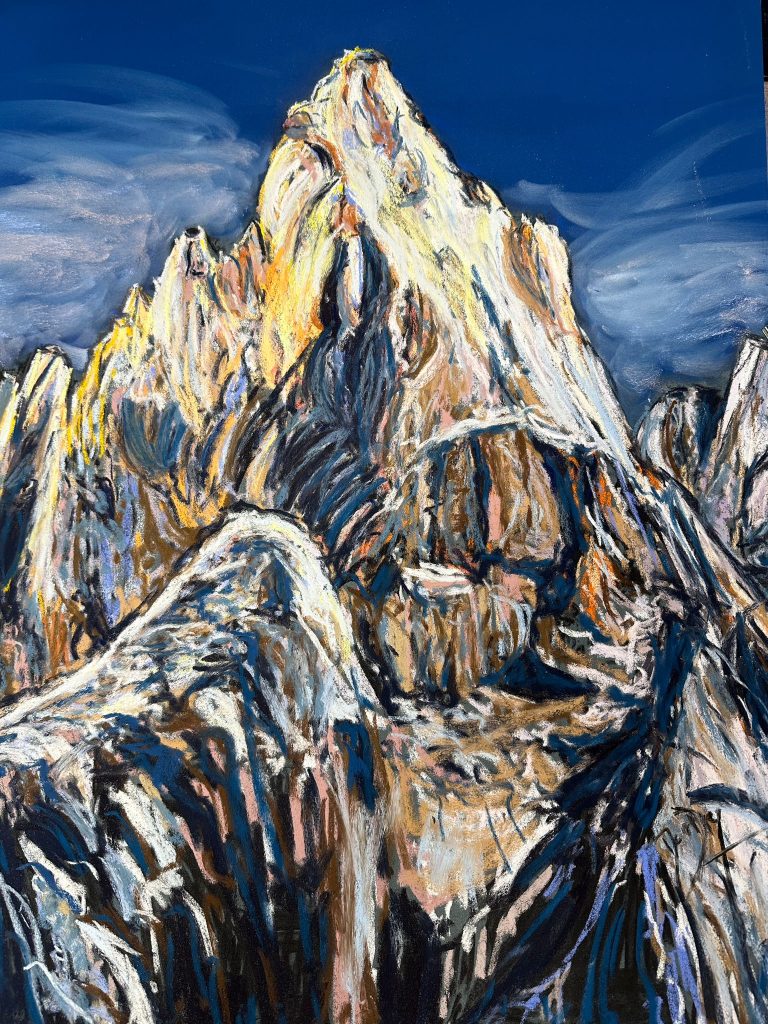
Check my Mountain Art on my Shop
You can go to my shop and see what have been inspiring me lately, lots mountain landscapes in soft pastels, and now in oils too. Go here to check my latest works!
Featured Image: Les Gets- Photo: Alan Turner. Unsplash.


Discover more from The-Ski-Guru
Subscribe to get the latest posts sent to your email.
 Subscribe to The-Ski-Guru here.
You must be logged in to post a comment.