Future Mobility in Andorra: Why Grandvalira’s Next Big Challenge May Be Transport, Not Lifts

The prospective Tramvalira trail. Google Maps: DigitalAndorra.com

Andorra’s ski economy has long been built around access by road. Visitors arrive by car, coach or private transfer. Workers commute along narrow valley corridors. Skiers move between hotels, villages and lift bases by bus, taxi, shuttle or rental car. For years, that model has more or less worked because Andorra’s geography left few alternatives.

But the pressure is becoming harder to ignore.

After looking at why employee housing has become a global challenge for ski resorts, Andorra offers the next part of the same story: what happens when ski resorts, workers and visitors increasingly depend on mobility systems that were not designed for today’s scale of tourism?

The most visible sign of that shift is Tramvalira, the proposed tram-train connection between La Seu d’Urgell and Andorra. In February 2026, the Andorran and Catalan governments held the first pilot meeting for the project, which would study a public transport link between La Seu d’Urgell and Sant Julià de Lòria, connecting with Andorra’s planned internal tram system. The project has received €329,841.56 in European POCTEFA funding, covering around 45% of its current study phase. 

Continue reading “Future Mobility in Andorra: Why Grandvalira’s Next Big Challenge May Be Transport, Not Lifts”

Why Ski Resorts Close Terrain After Heavy Snowfall — And Why That’s a Safety Decision

Avalanche control methods graphic. Copyright: The-Ski-Guru. Why Ski Resorts Close Terrain After Heavy Snowfall — And Why That’s a Safety Decision.

Why Ski Resorts Close Terrain After Heavy Snowfall

Introduction

Ski resorts often close terrain after heavy snowfall because fresh snow can increase avalanche risk, reduce visibility, overload lifts and make rescue access harder. Closures are not usually a sign that the resort is disorganised; they are a safety decision made while ski patrol, lift teams and avalanche-control crews work to reopen terrain safely.

After major snowstorms, skiers and snowboarders often arrive expecting perfect powder conditions — only to find lifts closed, terrain restricted, or entire sectors shut down. Frustration is common, especially during short holidays or peak winter weeks.

But more snow does not automatically mean safer skiing. In fact, the period immediately after heavy snowfall is often when avalanche risk is highest. Terrain closures following big storms are not a failure to open — they are a deliberate risk-management decision designed to protect lives.


Heavy snowfall doesn’t automatically mean safe skiing

Large snowfalls can dramatically increase instability in the snowpack. Factors that contribute to heightened risk include:

  • rapid accumulation of fresh snow
  • wind loading on leeward slopes
  • weak layers buried beneath new snow
  • limited visibility preventing safe assessment

In many cases, the first 24 to 72 hours after a storm are critical. During this window, ski patrol teams need time to evaluate conditions, access terrain safely, and reduce risk before opening slopes to the public.


Why resorts keep terrain closed after big snowfalls

When ski resorts close terrain after heavy snow, it is usually because avalanche control work is underway or still incomplete.

Stella di Pilla today- Notice the Gasex further down on the slope. Photo: Webcam Pila.it. Why Ski Resorts Close Terrain After Heavy Snowfall — And Why That’s a Safety Decision.

Common reasons for keeping slopes closed include:

Continue reading “Why Ski Resorts Close Terrain After Heavy Snowfall — And Why That’s a Safety Decision”

Andorra Is Fully Open: Deep Snow, Events and One of the Best Winters in Years

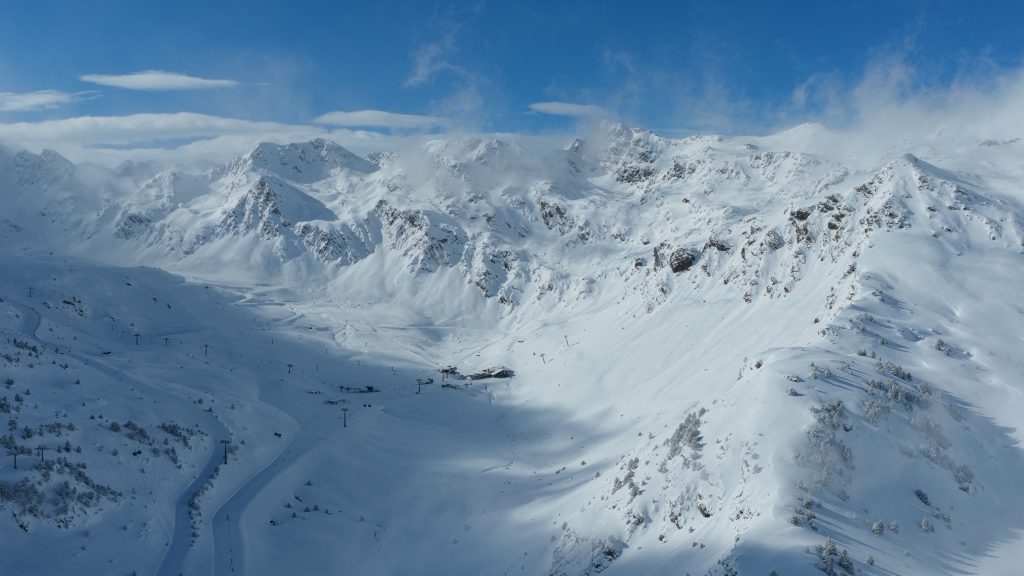
Snow conditions in Grandvalira are excellent at the moment, it is the time to go. Photo: Grandvalira Resorts. Andorra Is Fully Open: Deep Snow, Events and One of the Best Winters in Years.

Skiing in Andorra: Deep Snow, Events and One of the Best Winters in Years

🎿 100% of Slopes Open Across Andorra

If you were waiting for the right moment for skiing in Andorra, this is it. 

All resorts are now fully operational, thanks to consistent snowfall over the past week. The result is one of the strongest mid-winter set-ups seen in the Pyrenees in recent seasons, with every major sector open and excellent skiing across the board.

  • Grandvalira Resorts: 215 km open
  • Pal Arinsal: 100% of slopes and lifts running
  • Ordino Arcalís: deepest snowpack in the country

Snow depths range from over one metre at lower elevations to 200 cm on upper slopes, creating ideal conditions for piste skiing, freeride and touring.


📌 Current Snow Conditions in Andorra (January 2026)

All Andorran ski resorts are now 100% open, offering a total of 308 km of slopes.
Recent snowfall has delivered up to 200 cm of snow at higher elevations, with excellent coverage across Grandvalira, Pal Arinsal and Ordino Arcalís.

👉 Read the full Andorra Snow Update here

Conditions in all resorts of Grandvalira Resorts are exceptional. Photo: Ordino Arcalis/Grandvalira Resorts. Andorra Is Fully Open: Deep Snow, Events and One of the Best Winters in Years.

🎶 Après-Ski, Music and Atmosphere on the Slopes

Beyond the snow, Andorra delivers its usual lively winter atmosphere. Grandvalira’s terraces host DJ sets and live performances throughout the week, while L’Abarset continues to be one of the Pyrenees’ most energetic après-ski venues, with international DJs and late-night sessions.

Continue reading “Andorra Is Fully Open: Deep Snow, Events and One of the Best Winters in Years”