

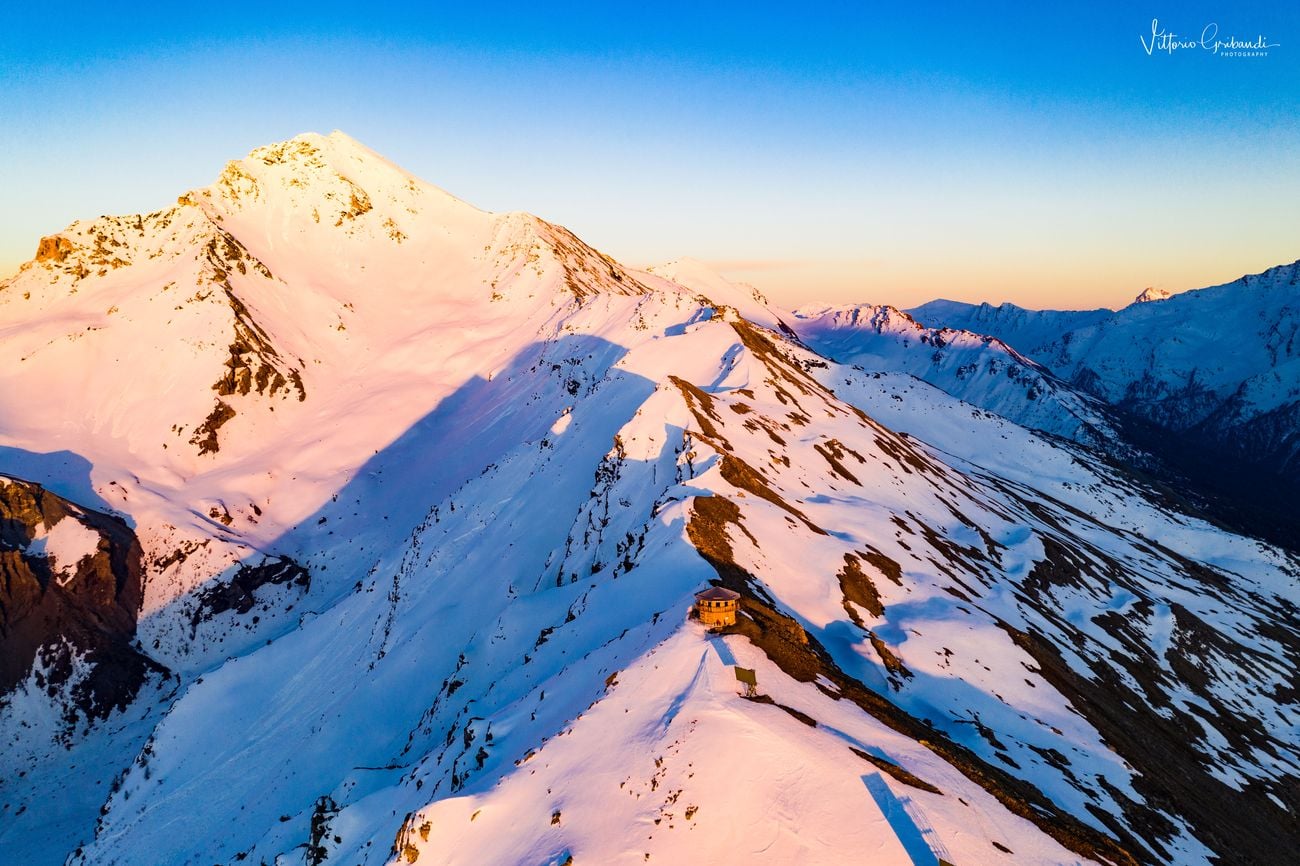
At 2,658 metres above Sestriere, a restored 1931 belvedere tells a much larger story: how an isolated Alpine plateau was transformed into one of Europe’s earliest purpose-built ski destinations.
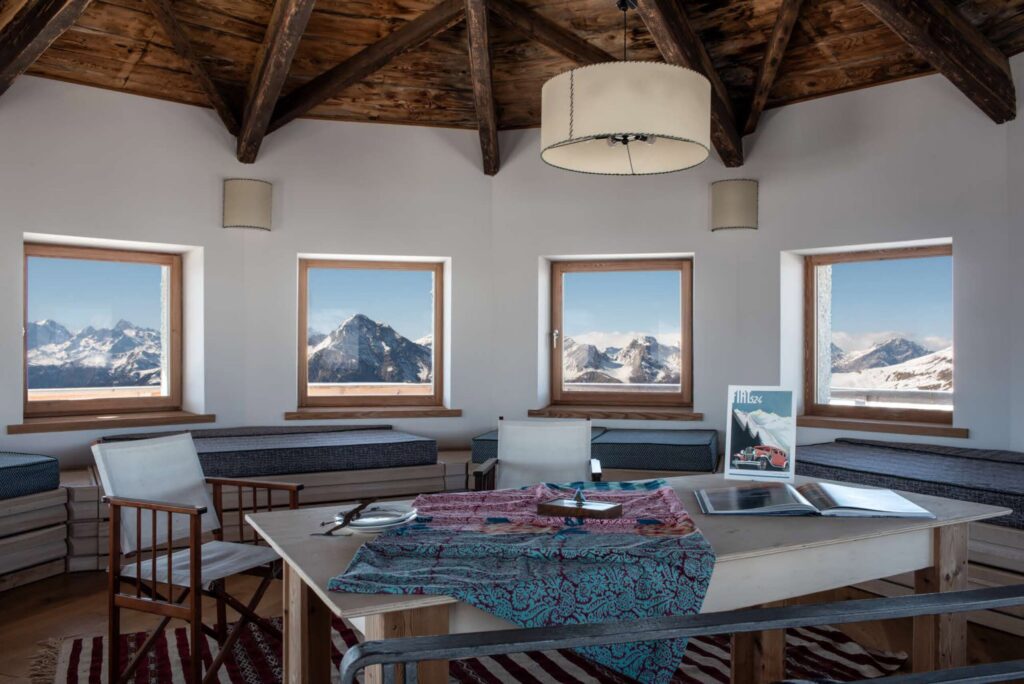
High above Sestriere, on the summit of Monte Sises, stands a tiny concrete building surrounded by twelve square windows and an apparently limitless Alpine horizon.
From inside, the view extends across the Rognosa di Sestriere and Monte Chaberton towards Monviso and the Écrins massif. Yet the building was never intended to be a hotel, restaurant or conventional mountain hut.
It was constructed simply as a place from which to look at the mountains.
Known as the Belvedere, the two-storey, twelve-sided structure dates from 1931 and survives from the earliest chapter in Sestriere’s development as a modern ski resort. After decades of abandonment, it has been carefully restored as a small private, largely self-sufficient mountain home.
Its story is about more than an extraordinary house. It is also a surviving fragment of the period when ski resorts, lifts lifts and purpose-built mountain architecture began to reshape the Alps.
 Subscribe to The-Ski-Guru here.
You must be logged in to post a comment.