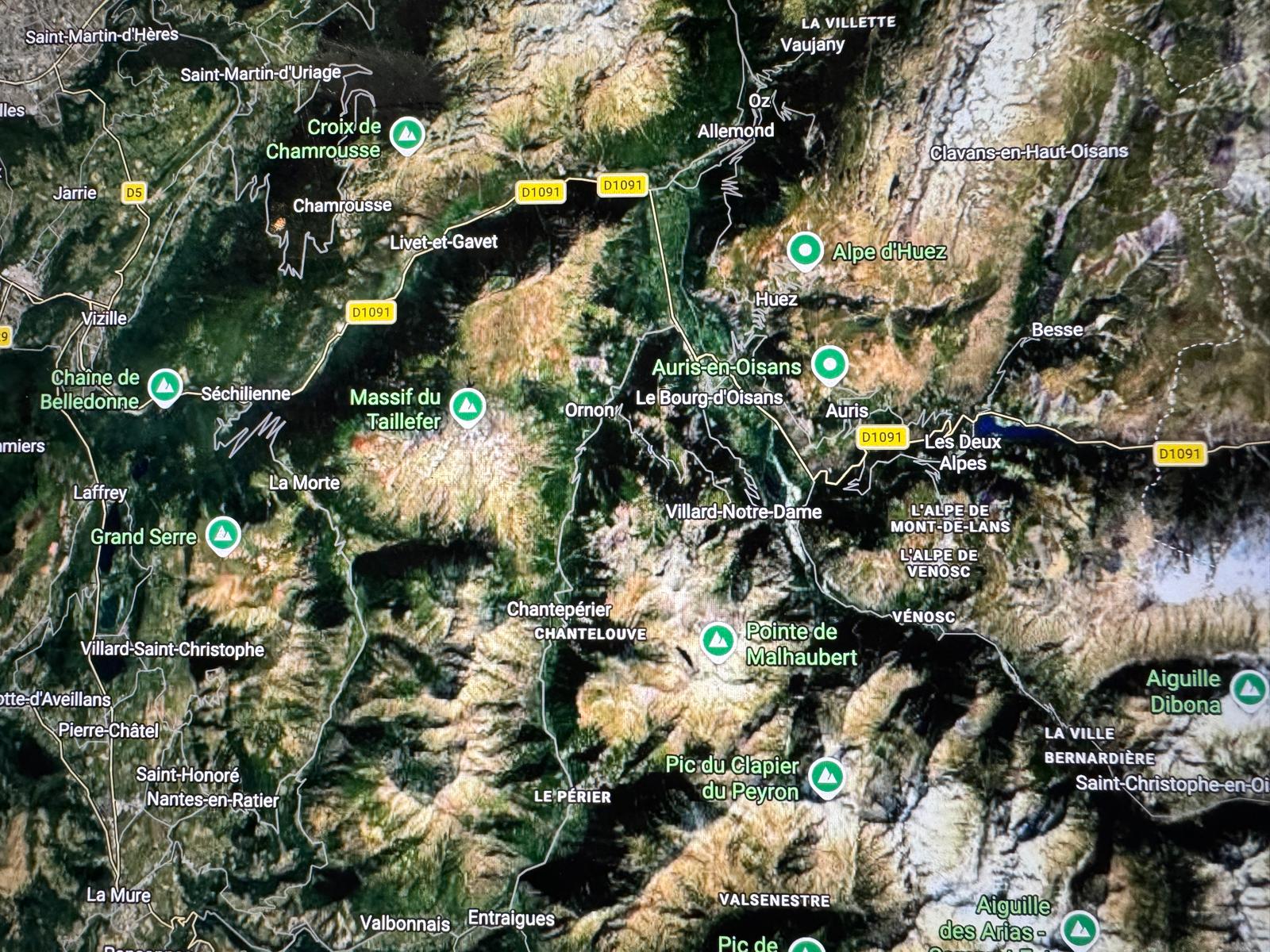
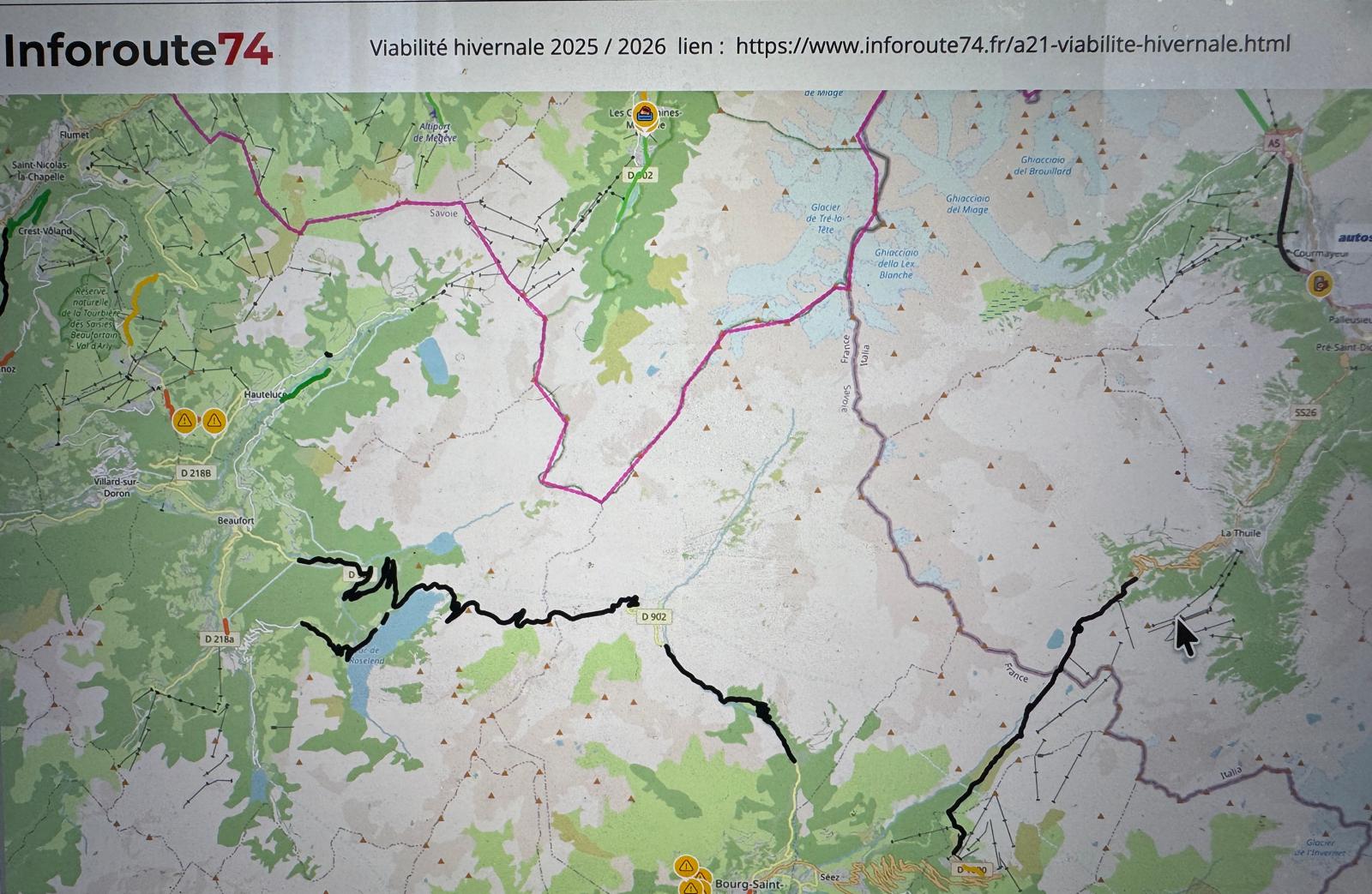
A powerful landslide has completely blocked the main RD1091 road in the Oisans region of the French Alps on Sunday, 22 February 2026, cutting vehicular traffic between the barrage du Chambon and La Grave.
The rockfall occurred on the RD1091 route — the principal road linking key Alpine towns and serving as a heavily trafficked corridor for residents and tourists alike.
What happened
According to reports from TG+, large rocks and debris fell onto the road surface, prompting authorities to close the route in both directions on Sunday evening. No vehicles were struck by falling rocks at the time of the incident, and no injuries have been reported so far.
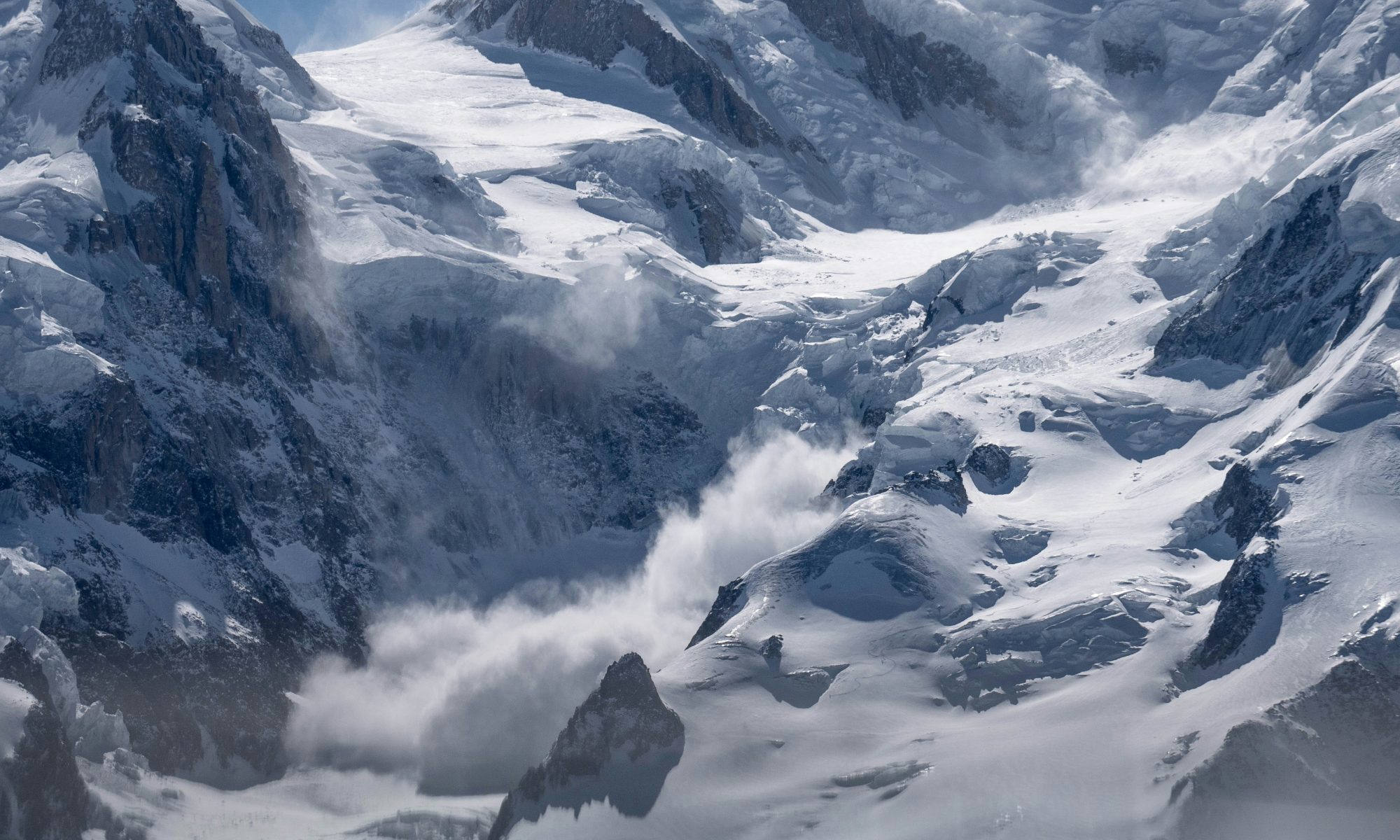
Level 5 avalanche danger is classified as “Very High” on the European Avalanche Danger Scale. It represents the most extreme level of avalanche risk and is issued only in rare and severe conditions.
When authorities declare Level 5, widespread natural avalanches are expected — including large, destructive slides that can reach valley floors and infrastructure.
Many accidents occur during periods shaped by extreme weather in the Alps, particularly when conditions change rapidly.
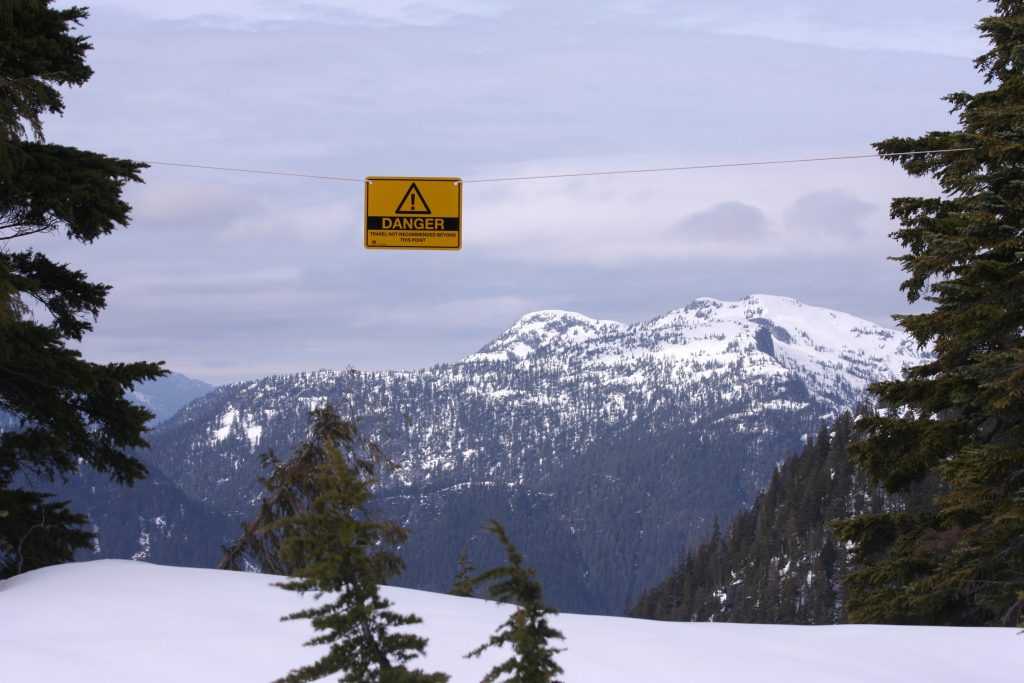
The European Avalanche Danger Scale (1–5)
Avalanche danger in Europe is rated from 1 to 5:
1 – Low 2 – Moderate 3 – Considerable 4 – High 5 – Very High
Level 5 is the highest and rarest classification.
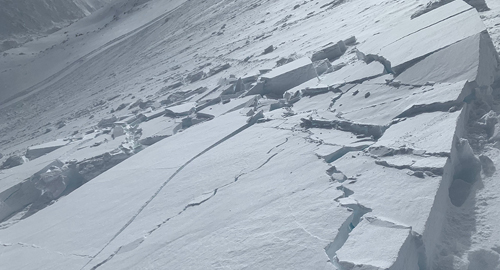
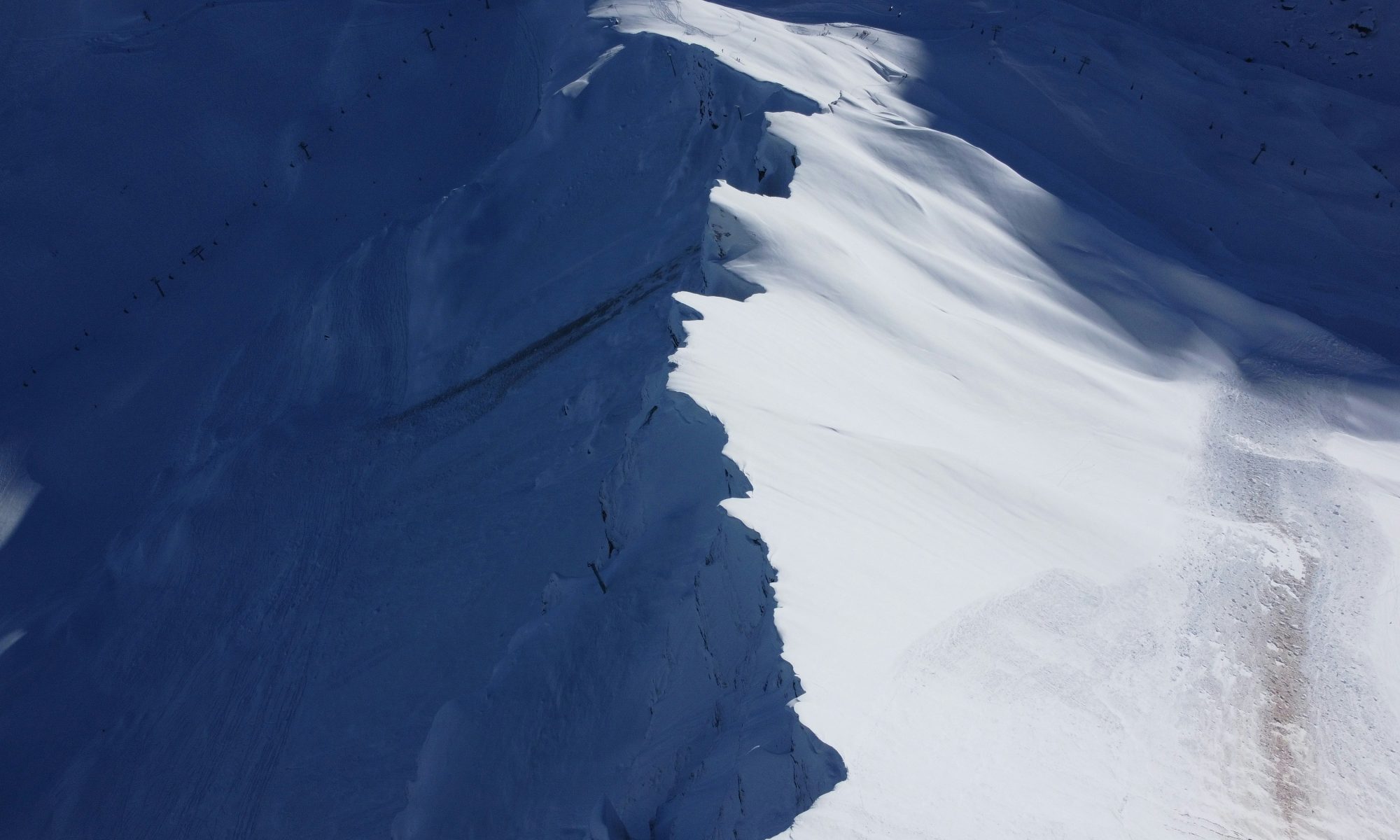
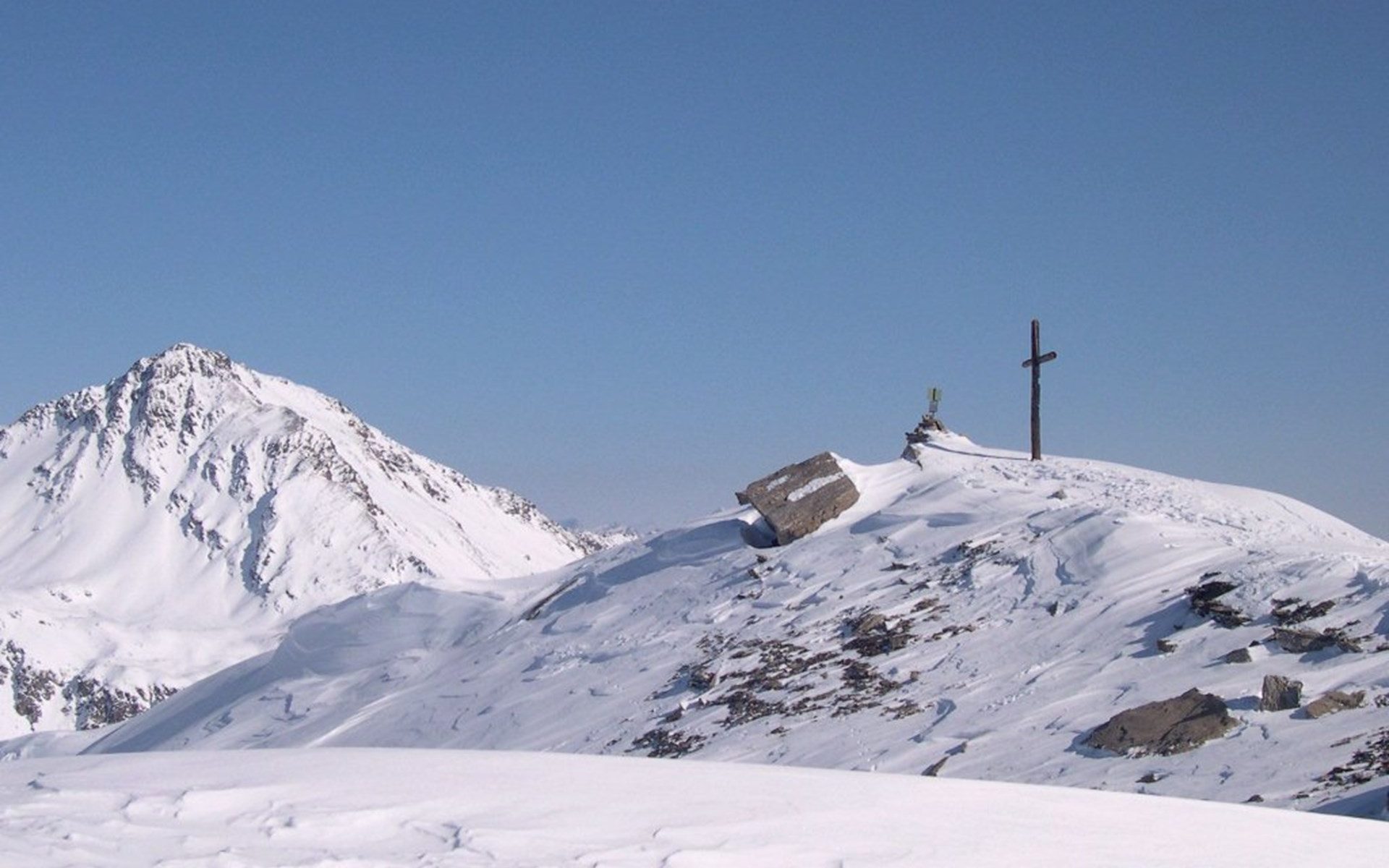
Wind slab. Scottish Avalanche Information Service. Sais.gov.
What Happens at Level 5?
Under Level 5 conditions:
Numerous natural avalanches are expected
Very large and destructive avalanches are likely
Avalanches may reach roads, forests, ski runs and buildings
Travel in alpine terrain becomes extremely dangerous
Even low-angle slopes may be unstable
Unlike Level 4, where human-triggered avalanches are very likely, Level 5 means the snowpack is so unstable that avalanches occur naturally and widely without human involvement.
What Level 5 Means for Skiers and Visitors
At Level 5:
✔ Off-piste travel should be avoided entirely ✔ Backcountry touring is strongly discouraged ✔ Some ski resorts may close terrain or entire sectors ✔ Roads and mountain passes may shut due to avalanche risk ✔ Controlled blasting and mitigation efforts intensify
Authorities may issue emergency alerts during Level 5 situations.
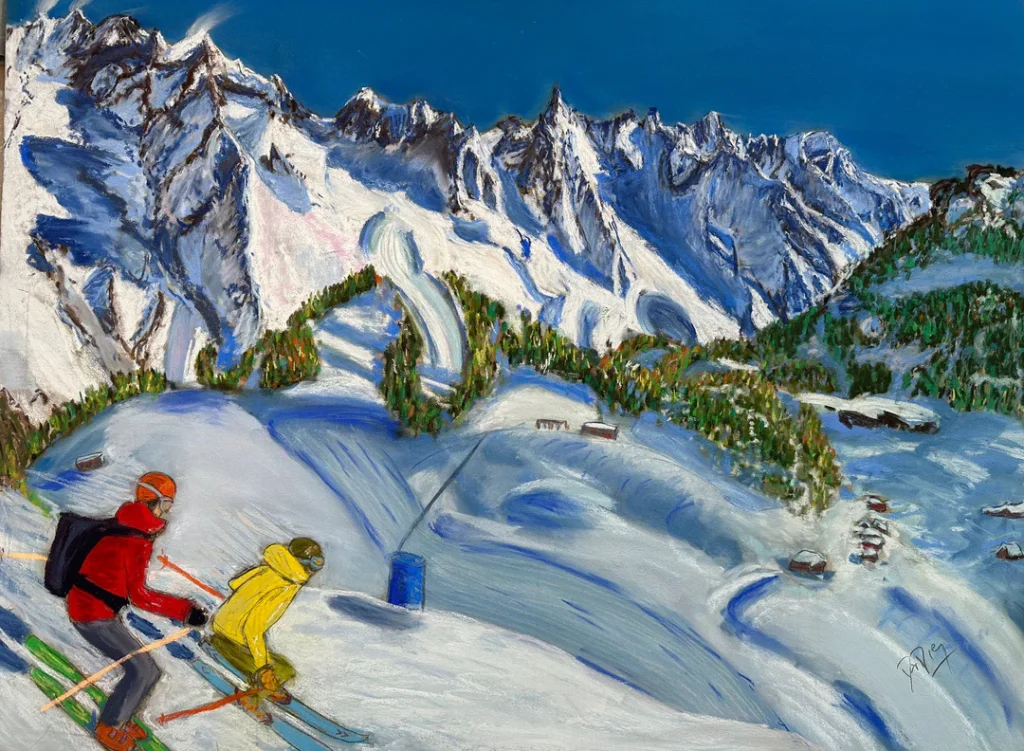
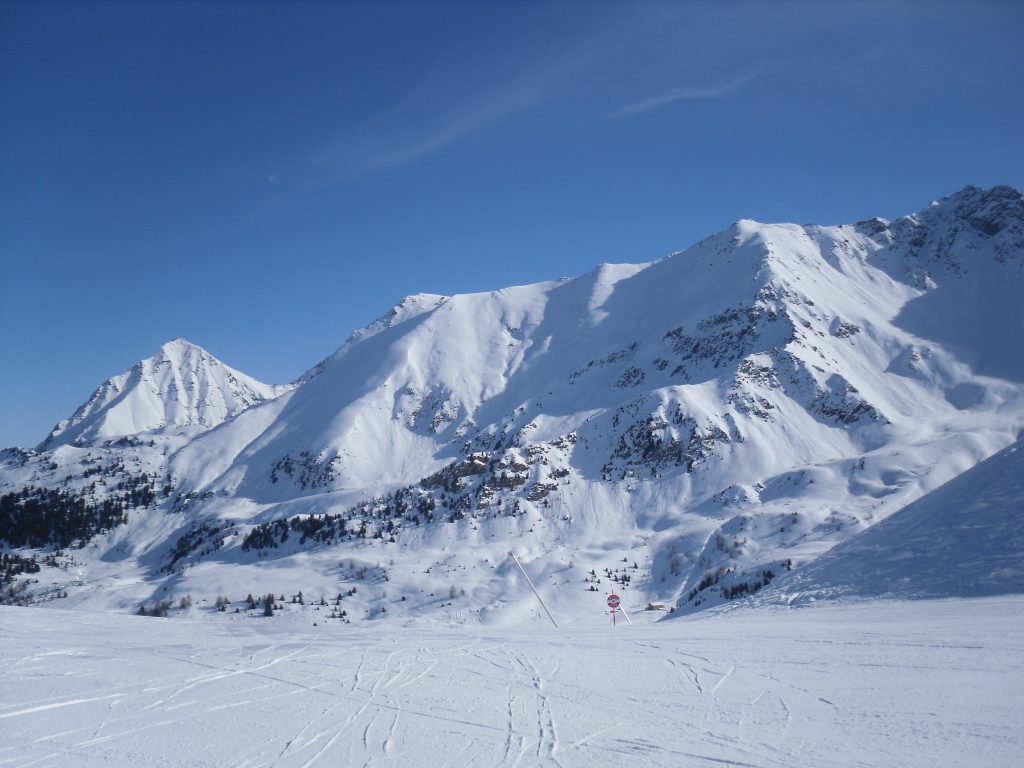
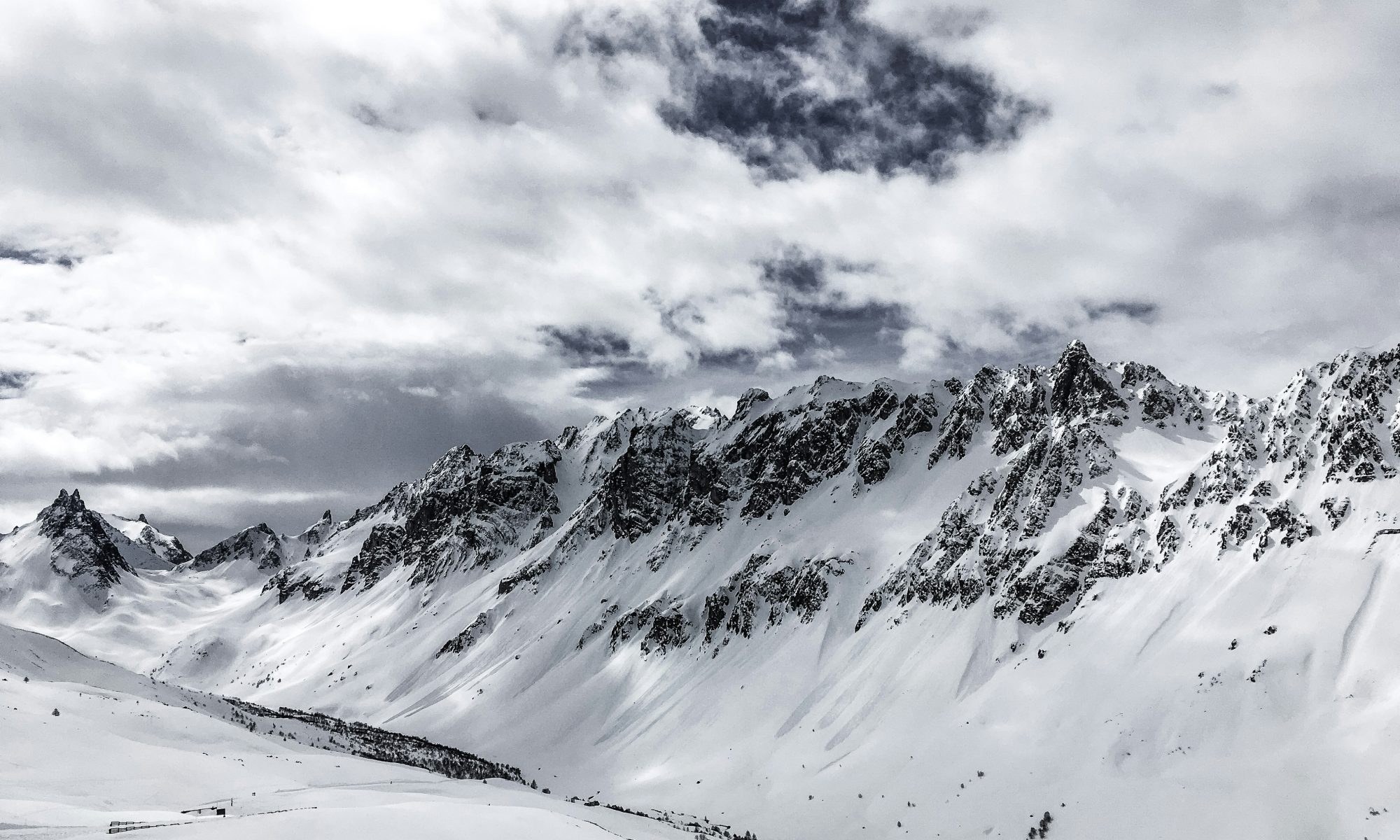
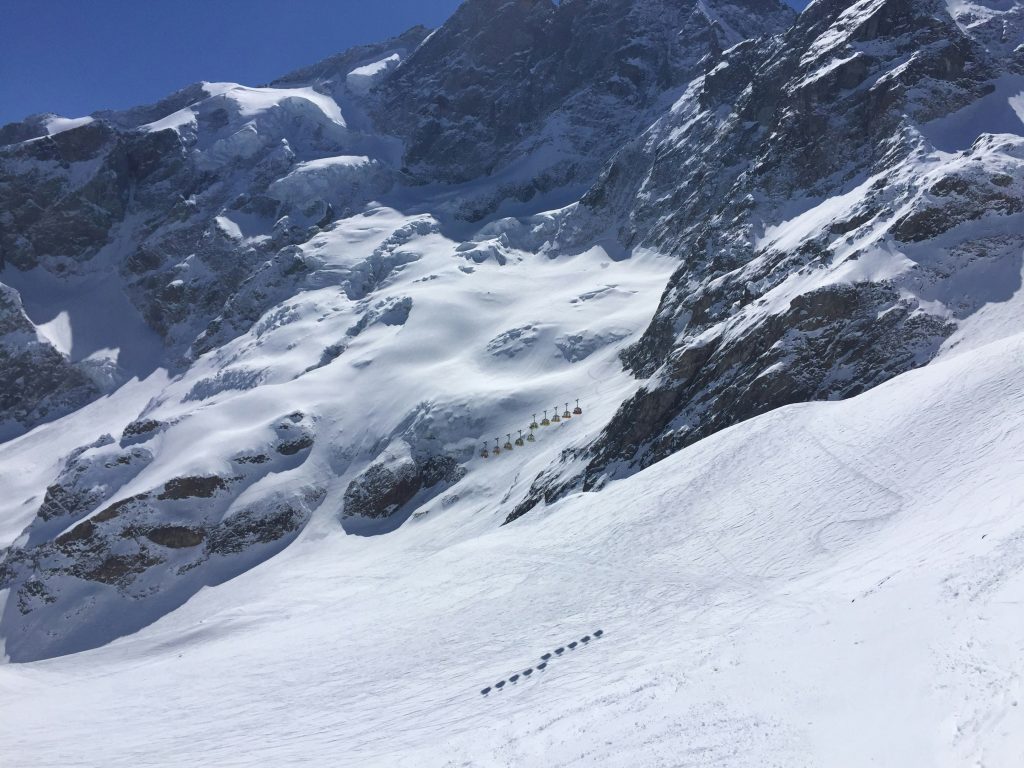
Skiing in Courmayeur. Aretu Wall. In my shop here.
Level 4 avalanche danger is classified as “High” on the European Avalanche Danger Scale. It indicates a very unstable snowpack and a significant probability of both natural and human-triggered avalanches.
Tyrol remains under Level 4 (High) avalanche danger following a deadly avalanche near St. Anton am Arlberg that claimed three lives, as authorities continue to warn against off-piste activity across western Austria.
The avalanche struck on 20 February 2026 in open terrain above the resort in the Landeck district. Five people were caught.
This event is part of a wider pattern of extreme weather in the Alps, where increasingly unstable conditions are affecting snowpack and safety.
Two victims were declared dead at the scene. A third person, initially resuscitated and transported to hospital, died overnight. Two others remain under medical observation.
Rescue operations involved Austrian Alpine Police, mountain rescue teams, avalanche dog units and helicopters operating in severe weather conditions.
Source:Associated Press reporting on avalanche incidents in western Austria.
Current Situation: Level 4 (High) Still in Place
As of today, several regions of Tyrol remain at Level 4 (High) on the European avalanche danger scale.
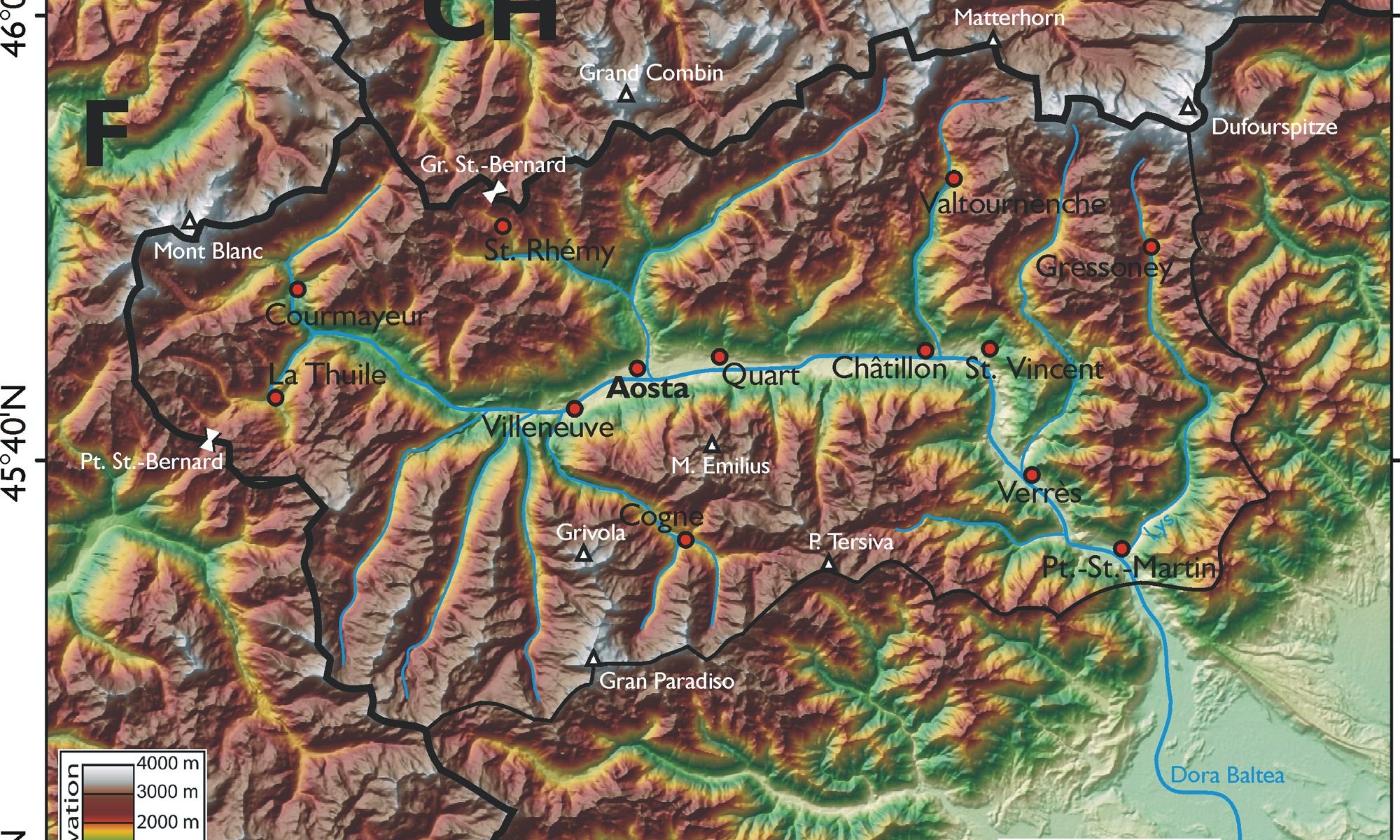
An avalanche occurred today at Punta Valletta, above the resort of Pila in the Aosta Valley, involving two ski mountaineers.
According to local reports, the avalanche was triggered shortly after 14:15. Both skiers were caught and temporarily buried.
They were rescued by the Soccorso Alpino Valdostano and transported by helicopter to the Ospedale Parini in Aosta. Fortunately, neither sustained serious injuries and they were expected to be discharged.
Punta Valletta is a well-known ski touring objective above Pila, frequently accessed by experienced ski mountaineers seeking terrain beyond the marked ski area boundaries.
While full technical details of the snowpack at the exact release point have not yet been officially published, the incident once again highlights how unstable layers and wind-loaded slopes can persist even when conditions appear manageable.
February 2026 has been an exceptionally active and dangerous month for avalanche incidents across the Alps, and particularly in Italy’s Aosta Valley. A combination of heavy snowfall, strong winds and unstable snowpacks has led to multiple incidents involving backcountry skiers and mountain travellers.
This post tracks reported avalanche incidents in the Aosta Valley during February 2026. It is updated with the latest events as of 24 Feb 2026, including multiple avalanches on Punta Valletta (Pila) and the fatal slide on Becca di Nana (Val d’Ayas).
A ski tourer has died after being caught in an avalanche yesterday (Thursday, February 19) at Punta Leysser, above Saint-Pierre, in Italy’s Aosta Valley.
The avalanche released at around 13:30 at 2,550 metres, involving a group of five ski mountaineers.
According to reporting by AostaSera, the group immediately raised the alarm and began searching for those buried. Five ski tourers were caught in the slide.
One man was transported to Parini Hospital in Aosta, where he later died from his injuries.
A major avalanche cycle continues across the French Alps following heavy snowfall and strong winds, with a confirmed fatality in Valloire and multiple large natural releases affecting roads, hamlets and ski infrastructure.
Authorities had issued Level 5 (maximum) avalanche danger in parts of Savoie at the time of the incident.
Fatal Avalanche in Valloire (Savoie) – 17 February 2026
According to Le Dauphiné Libéré, TF1 Info, and Reuters, a very large natural avalanche struck near the hamlet of La Rivine in Valloire around midday on 17 February.
The avalanche descended from natural slopes above the hamlet, crossed a road and pedestrian path, and swept through an area below the slope.
One person walking along the path was killed. Three others were injured, including two reported to be in critical condition. Rescue operations involved mountain police (PGHM), firefighters, search dogs and medical teams. Two hamlets — La Rivine and La Borgé — were evacuated as a precaution.
French media described the avalanche as “de grande ampleur” (of great magnitude). The incident occurred during a Level 5 avalanche danger period, the highest rating on the European avalanche scale.
The current Swiss Alps travel disruption follows heavy snowfall and sustained avalanche danger in Valais.
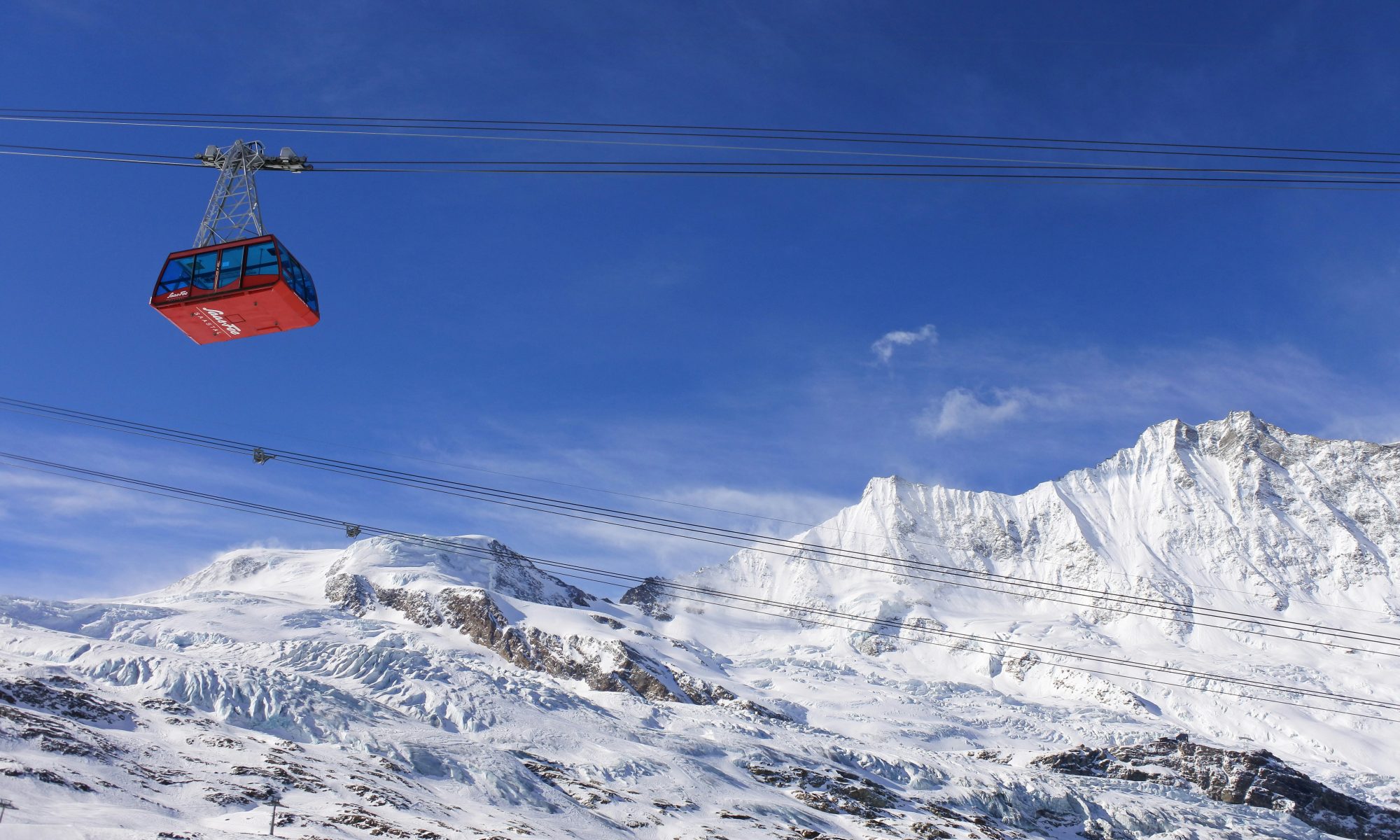
Heavy snowfall and sustained avalanche danger continue to disrupt transport across the Swiss Alps, with major impacts in the canton of Valais — including access to both Zermatt and Saas-Fee.
According to Swissinfo and regional Swiss media, multiple alpine roads remain closed due to unstable snowpack and ongoing avalanche risk following recent winter storms.
🚧 Saas Valley Road Closures
Access to the Saas Valley (Saastal) — home to Saas-Fee, Saas-Grund and Saas-Almagell — was temporarily closed due to avalanche danger.
The cantonal road between Saas-Balen and Stalden was shut as a precaution, isolating upper valley resorts for periods during the storm cycle.
The Saas Valley is one of Switzerland’s best-known high-altitude ski regions, and closures here significantly affect both tourism and local residents.
A Regional Instability Pattern Across the French Alps
A significant Western Alps avalanche cycle developed on 16–17 February 2026, affecting multiple French Alpine massifs following heavy snowfall and strong winds.
Reports from the Écrins, Vanoise, Beaufortain, Haute Maurienne, Lauzière, Queyras and Matheysine sectors indicate widespread natural releases, control-triggered avalanches (PIDA), and impacts to infrastructure.
This activity reflects a broad instability phase rather than isolated local incidents.
Enjoyed this post? Get my latest ski guides, weather insights, resort updates and travel tips directly in your inbox. Subscribe to The-Ski-Guru here.
Manage Cookie Consent
To provide the best experiences, we use technologies like cookies to store and/or access device information. Consenting to these technologies will allow us to process data such as browsing behavior or unique IDs on this site. Not consenting or withdrawing consent, may adversely affect certain features and functions.
Functional
Always active
The technical storage or access is strictly necessary for the legitimate purpose of enabling the use of a specific service explicitly requested by the subscriber or user, or for the sole purpose of carrying out the transmission of a communication over an electronic communications network.
Preferences
The technical storage or access is necessary for the legitimate purpose of storing preferences that are not requested by the subscriber or user.
Statistics
The technical storage or access that is used exclusively for statistical purposes.The technical storage or access that is used exclusively for anonymous statistical purposes. Without a subpoena, voluntary compliance on the part of your Internet Service Provider, or additional records from a third party, information stored or retrieved for this purpose alone cannot usually be used to identify you.
Marketing
The technical storage or access is required to create user profiles to send advertising, or to track the user on a website or across several websites for similar marketing purposes.



 Subscribe to The-Ski-Guru here.
You must be logged in to post a comment.