

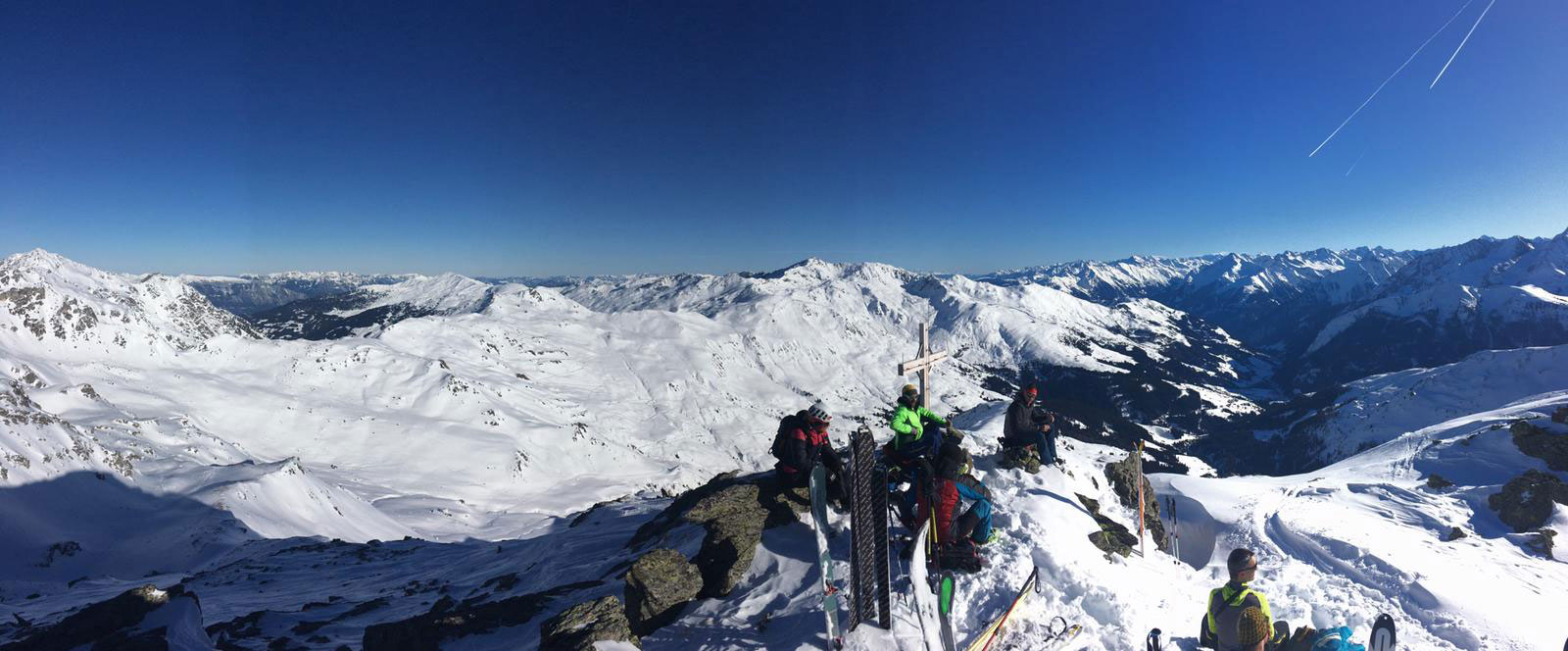
Repeated avalanche fatalities across the Alps in late February 2026 continue to underline the structural instability affecting multiple regions this winter. The latest tragedy occurred on Tamlspitze, in the municipality of Tux, within the Austrian state of Tyrol, where two ski mountaineers aged 44 and 47 were found dead beneath avalanche debris after failing to return from a summit tour.
This incident forms part of the broader February 2026 Avalanche Cycle Across the Alps, which has seen fatalities and repeated Level 4 warnings across France, Italy, Austria and Switzerland.
What Happened on Tamlspitze
According to Austrian local media reports and police information, the two men set out on 28 February for what was intended to be a standard ski mountaineering ascent of Tamlspitze in the Tux Valley.
When they did not return, they were reported missing later that day. Alpine Rescue teams initiated search operations immediately. However, persistent avalanche danger in the region forced temporary suspension of operations for safety reasons.
The following day, during brief weather windows, a police helicopter identified several avalanche accumulations in the Tamlspitze area. Rescue teams were guided by signals emitted from the victims’ avalanche transceivers (ARVA devices).
First one signal was located, then a second in close proximity. Both men were buried beneath the snow. Medical teams arriving on scene could only confirm their deaths.
Authorities have not yet published a detailed technical avalanche report regarding the precise trigger mechanism or snowpack structure involved.
Snowpack Context: Eastern Alps and February 2026
While official technical findings specific to this release have not been released, regional avalanche bulletins in Tyrol during late February indicated elevated danger levels in high alpine terrain.
According to the Tyrol Avalanche Warning Service (Lawinenwarndienst Tirol), parts of the region experienced persistent weak layer problems in combination with fresh snowfall and wind loading in recent weeks.
Just days earlier, authorities had issued a Level 4 (High) avalanche warning in Tyrol following a deadly slide near St. Anton.
Across the Eastern Alps this winter, several bulletins have referenced:
- Persistent weak layers within the snowpack
- Faceted crystals formed during earlier cold periods
- Wind-drifted snow creating slab overlays
- Triggering possible in steep, high-altitude terrain
Persistent slab problems are widely recognised in avalanche science as capable of producing deep and wide-propagating fractures when additional load is applied.
By contrast, during the same February cycle, bulletins in the Northern French Alps — including reports from Météo-France Avalanche Service — have frequently highlighted:
- Rapid warming phases following heavy snowfall
- High freezing levels above 3000 metres
- Wet snow instability at lower and mid elevations
- Wind-loaded lee slopes at higher altitude
Although numerical danger ratings (Level 3 – Considerable or Level 4 – High) may appear similar across regions, the underlying snowpack structure can differ significantly. The nature of the weak layer — whether persistent, wind-driven, or wet-snow related — influences release behaviour and spatial propagation.
Without an official incident-specific snow profile, no definitive conclusion can be drawn regarding the exact failure layer in the Tamlspitze avalanche. However, the broader regional pattern during this period across the Eastern Alps included structural instability at higher elevations.
For broader cross-border analysis, see the consolidated report:
February 2026 Avalanche Cycle Across the Alps
Avalanche Risk and Decision-Making
Consulting official avalanche bulletins, travelling with partners, and carrying self-rescue equipment — ARVA, shovel and probe — remain fundamental components of risk management in winter alpine terrain.
However, equipment alone does not eliminate danger. Elevated avalanche danger levels require conservative terrain selection, disciplined spacing, and continuous reassessment of slope angle, aspect and wind exposure.
Persistent slab problems in particular can remain reactive over extended periods and may release under isolated triggers.
This winter has demonstrated once again that structural instability combined with new load remains one of the most serious configurations in alpine snowpacks.
A Mountain Community in Mourning
The mountain community in Tyrol and beyond is once again confronted with the fragility of winter alpine travel. Thoughts are with the families, friends and rescue teams affected by this tragedy.
This event will now be documented as part of the evolving February 2026 avalanche cycle across the Alps.
 Planning your next trip to the Italian Alps?
 Planning your next trip to the Italian Alps?
If you’re heading to the Aosta Valley, take a look at Il Cuore della Valdigne, our family-owned apartment in Morgex, available for rent when we’re not using it ourselves.
It’s an ideal base to:
- Ski in Courmayeur, La Thuile and Pila
- Enjoy the mountains in summer (hiking, biking, nature)
- Explore the Mont Blanc valley in a quieter, more authentic setting.
 Ski in Courmayeur,
 Enjoy the mountains in summer (hiking, biking, nature)
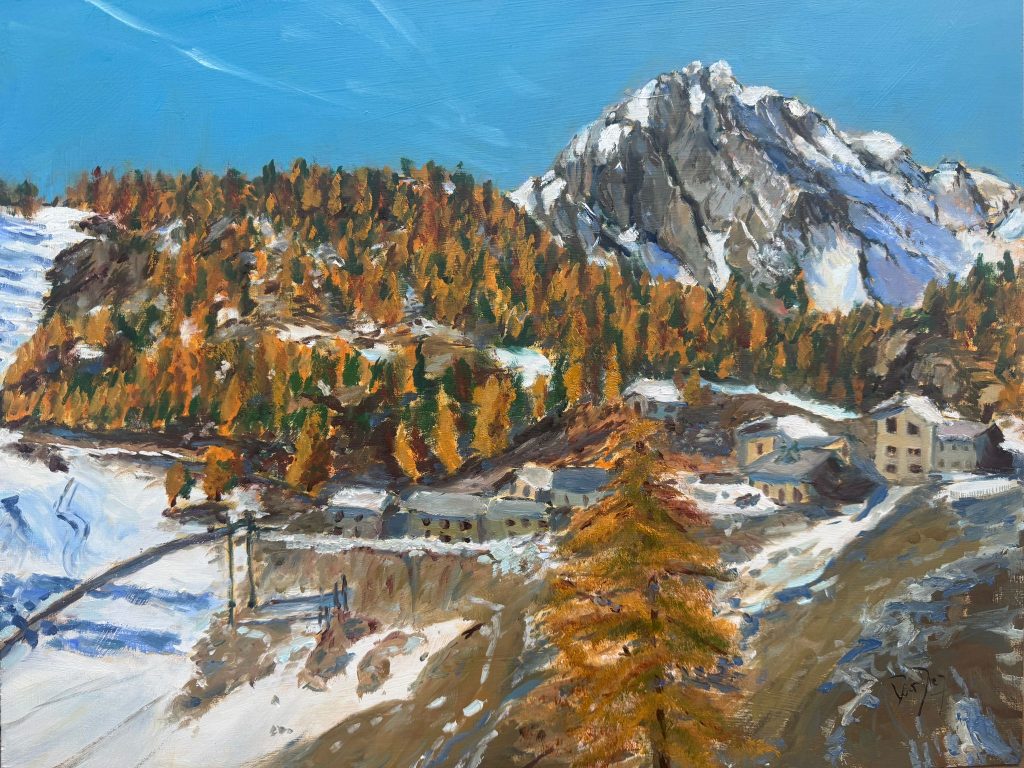
Check my Mountain Art on my Shop
You can go to my shop and see what have been inspiring me lately, lots mountain landscapes in soft pastels, and now in oils too. Go here to check my latest works!
Featured Image: Tamlspitze Schitour. Photo: alpin-welt.at


Discover more from The-Ski-Guru
Subscribe to get the latest posts sent to your email.
 Subscribe to The-Ski-Guru here.