


Vail Resorts has reported lower third-quarter results and weaker early pass sales for the 2026/27 North American ski season, after what the company described as one of the most challenging winters in history across the western United States.
The figures are important not only for Vail Resorts, but for the wider ski industry. The Epic Pass model has helped reshape ski travel over the past two decades, encouraging skiers and snowboarders to commit before the season starts. That gives resort operators valuable early revenue and helps reduce the financial impact of poor snow conditions once winter is underway.
But after a very difficult 2025/26 season in the western US, the latest numbers suggest that even the advance-purchase pass model can be tested when snow conditions disappoint.
Vail Resorts Says 2026/27 Pass Sales Are Down
In its latest financial update, Vail Resorts said pass product unit sales for the upcoming 2026/27 North American ski season were down approximately 10% through May 26, 2026, compared with the same period last year. Pass product sales dollars were down approximately 5%, helped partly by higher pass prices.
The company said the weakness was most pronounced in weather-impacted destination markets, including Colorado, Utah and Lake Tahoe, as well as among destination guests who typically travel to the Rockies.
Vail Resorts CEO Rob Katz said the company believes part of the decline may reflect delayed purchase decisions rather than a permanent drop in intent to ski next winter. In other words, some skiers may not be saying they will not ski next season. They may simply be less willing to commit early after a winter with poor snow.
That distinction matters. The Epic Pass business model depends heavily on early commitment. If skiers wait longer before buying, buy fewer days, or move to cheaper pass products, it can affect how resorts forecast demand and revenue for the following season.
A Difficult Winter for the Western US
The poor pass sales update follows a very weak 2025/26 ski season across much of the western US. Vail Resorts had already reported that season-to-date skier visits at its North American resorts were down 14.9% through April 19, 2026, compared with the prior year period.
The company said the largest impact was in the Rockies, where visitation declined 25%. It pointed to record-low snowfall and historically warm temperatures that affected both destination and local guests.
Colorado was one of the hardest-hit markets. The Colorado Sun reported that skier visits in the state fell sharply in 2025/26, dropping to their lowest level in decades after an exceptionally poor snow year.
This is why the Vail Resorts update is more than a company earnings story. It is also a climate and snow reliability story. When a major ski market has a poor winter, the impact does not stop when the lifts close. It can affect customer confidence, booking behaviour and advance pass sales for the next season.
The Epic Pass Model Still Protected Revenue
One of the most interesting parts of the story is that Vail Resorts’ pass model appears to have done what it was designed to do during the bad season itself.
While skier visits fell sharply, lift revenue did not fall by the same proportion. Vail Resorts reported in April that season-to-date skier visits were down 14.9%, but lift revenue, including the allocated portion of season pass revenue, was down 5.6%.
That shows the strength of the advance-commitment model. Resorts receive much of the pass revenue before they know whether the season will be snowy, average or poor. For the company, that reduces the financial exposure to a bad winter.
For skiers, however, the experience is different. A passholder who bought early and then had a poor local or destination season may think twice before committing as quickly the next time. That does not mean they will stop skiing. But it can change when they buy, what they buy, and how much value they feel they received.
This is the delicate balance in the pass model. It gives resorts more predictable revenue, but it also depends on customers continuing to believe that committing early is worth it.
Vail Resorts Points to Weather, Not a Structural Change
Vail Resorts does not appear to be presenting the decline as a fundamental change in skier demand. According to Vail Daily, executives said the weakness was most evident in the areas most affected by poor snow, while eastern US markets and Whistler saw stronger relative performance.
That supports the company’s argument that the current slowdown is linked mainly to conditions rather than a broader rejection of the Epic Pass model.
Katz also pointed to past weak winters, including drought-affected years in Lake Tahoe, where visitation recovered once more normal conditions returned. The company’s view is that if next season brings better snow, demand may recover as well.
That may prove correct. Skiers often respond quickly to snow. A strong early season can change booking behaviour, revive enthusiasm and bring people back to the mountains.
But the risk is that poor winters are not isolated events in the minds of consumers. If skiers experience repeated weak seasons, unreliable snow, limited terrain or expensive trips with disappointing conditions, they may become more cautious about when and how they commit.
Why This Matters for the Ski Industry
The Epic Pass changed the economics of skiing. It helped move the industry away from a model based mainly on day-ticket sales and towards one based on early commitment, multi-resort access and loyalty.
That has been very successful for Vail Resorts and has influenced the wider industry, including competing multi-resort passes and advance-purchase products around the world.
But the latest results show one of the key challenges for the model. Weather risk does not disappear. It is redistributed.
For resort operators, early pass sales reduce exposure to bad snow during the season. For skiers, the risk is that they pay in advance and then receive fewer good ski days than expected. If that happens once, many may accept it as part of skiing. If it happens repeatedly, they may delay buying, choose a cheaper pass, ski fewer days, or wait to see how winter develops.
That could become especially important in regions where snow reliability is becoming more variable. Lower-elevation areas, destination resorts dependent on long-haul travel, and regions with high trip costs may all be more exposed to this type of consumer hesitation.
The Bigger Question
The question is not whether Vail Resorts can recover from one poor snow season. It probably can, especially if the 2026/27 winter brings better conditions.
The bigger question is whether the ski industry’s advance-commitment model remains as powerful in a future of more volatile snow seasons.
For now, Vail Resorts’ latest results suggest a mixed answer. The Epic Pass model still protected revenue during a very difficult winter. But weaker early pass sales show that skiers and snowboarders may be responding to the experience of that winter before committing to the next one.
That makes this a story to watch well beyond Vail Resorts. It is about snow reliability, consumer confidence and the changing economics of skiing.
For more on how snow reliability and changing mountain conditions are affecting the ski industry, read Climate & Snow Conditions, Ski Industry News, and Why Ski Resorts Close Terrain After Heavy Snowfall — And Why That’s a Safety Decision on The-Ski-Guru.com.
Sources:
Vail Resorts – Third Quarter Fiscal 2026 Results
https://investors.vailresorts.com/news-releases/news-release-details/vail-resorts-reports-third-quarter-fiscal-2026-results-provides
Vail Resorts – Season Metrics Through April 19, 2026
https://investors.vailresorts.com/news-releases/news-release-details/vail-resorts-reports-certain-ski-season-metrics-season-date-31
SAM Magazine – Vail Resorts Reports Declines in Q3, 2026-27 Pass Sales
https://www.saminfo.com/news/sam-headline-news/vail-resorts-reports-declines-in-q3-2026-27-pass-sales
Vail Daily – How Will the Weak Snow Year Affect Vail Resorts Pass Sales Next Season?
https://www.vaildaily.com/news/how-will-the-weak-snow-year-affect-vail-resorts-pass-sales-next-season/
The Colorado Sun – Colorado Ski Resorts Log Steepest Decline in Visitation in Decades
https://coloradosun.com/2026/06/04/colorado-skier-visits-collapse-2025-26/
Powder – Vail Resorts Says Next Season’s Pass Sales Are Down After Challenging Year Out West
https://www.powder.com/news/vail-resorts-season-pass-sales-drop
Planning your next trip to the Italian Alps?
If you’re heading to the Aosta Valley, take a look at Il Cuore della Valdigne, our family-owned apartment in Morgex, available for rent when we’re not using it ourselves.
It’s an ideal base to:
- Ski in Courmayeur, La Thuile and Pila
- Enjoy the mountains in summer (hiking, biking, nature)
- Explore the Mont Blanc valley in a quieter, more authentic setting.
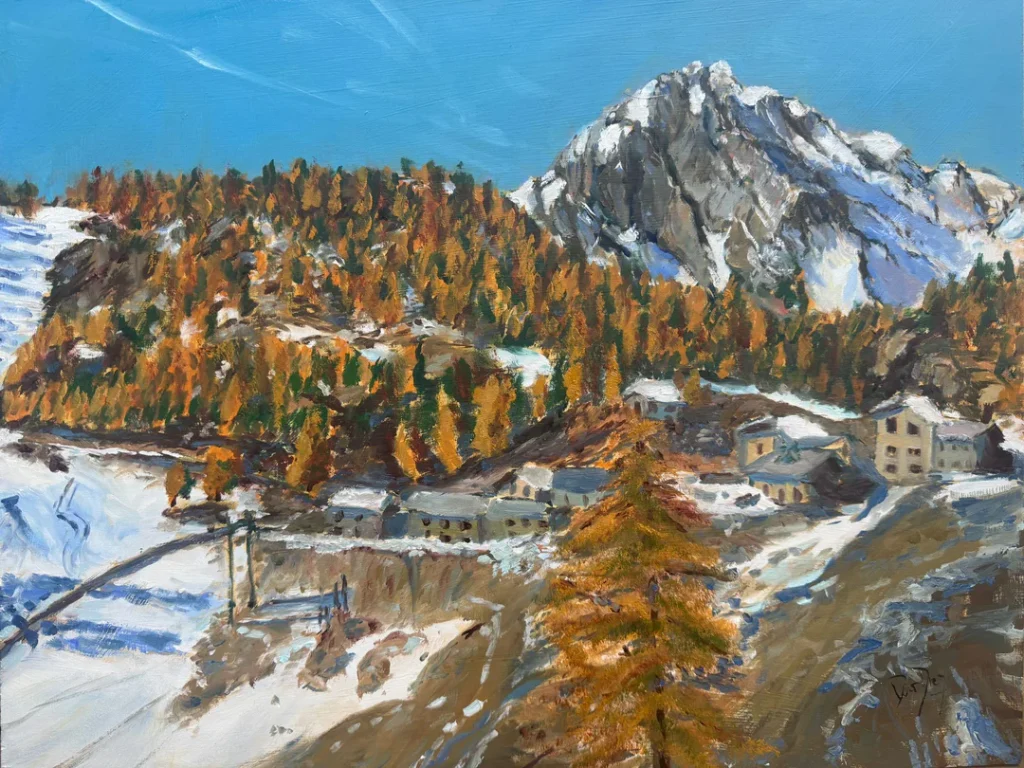
Check my Mountain Art on my Shop
You can go to my shop and see what have been inspiring me lately, lots mountain landscapes in soft pastels, and now in oils too. Go here to check my latest works!

Featured Image: Vail Village. Photo credit: Zach Mahone. Vail Resorts.


Discover more from The-Ski-Guru
Subscribe to get the latest posts sent to your email.
 Subscribe to The-Ski-Guru here.