

Around 300 people took part in the sixth edition of “Una Salita per il Vallone” on Saturday, 1 August, walking through the Val d’Ayas to demonstrate their opposition to the proposed cable-car connection between the Cervinia and Monterosa ski areas.
The wider project and the different routes previously examined were covered in our earlier report on the proposed Cervinia–Monterosa ski link through Cime Bianche.
The annual event brought participants from Saint-Jacques, above Champoluc, to Alpe Vardaz, at the entrance to the Vallone delle Cime Bianche. Organisers described this year’s turnout as extraordinary, with attendance increasing from approximately 250 people in 2025.
The march has been held every summer since 2021 and is organised by groups campaigning for the conservation of one of the last large undeveloped valleys in the area.
However, the debate is far from over. The proposed connection remains part of the Valle d’Aosta regional government’s infrastructure plans, making this year’s demonstration more than a symbolic walk through the mountains.
An undeveloped valley between two major ski areas
The Vallone delle Cime Bianche lies in the upper Val d’Ayas, between the Monterosa massif and the existing Cervinia ski domain. It is considered the last extensive area of Val d’Ayas without ski slopes, lift infrastructure, roads or other major permanent development.
The valley contains mountain streams, lakes, springs, wetlands and high-altitude habitats, as well as geological formations and archaeological traces connected to the historic extraction and processing of soapstone.
Its name comes from the three pale-coloured summits overlooking the valley: Gran Sometta, Bec Carré and Pointe Sud. Their distinctive rock formations are remnants of coral islands formed in an ancient tropical sea before the collision of the African and European tectonic plates created the Alps.
Part of the valley falls within the Natura 2000 protected area known as “Ambienti Glaciali del Gruppo del Monte Rosa”, identified by the code IT1204220.
Cime Bianche has also gained wider public recognition through the FAI “I Luoghi del Cuore” campaign. It received 5,191 votes in the 2024 census, placing it 101st nationally.
The proposed Cervinia–Monterosa connection
Plans to connect the Cervinia and Monterosa ski areas through Cime Bianche have been discussed in various forms for more than a decade.
The strategic objective is to create a link between two of the largest ski domains in the Aosta Valley. Monterosa Ski currently connects Champoluc-Frachey, Gressoney-La-Trinité and Alagna, while Cervino Ski Paradise links Cervinia and Valtournenche with Zermatt in Switzerland.
A connection between them would create an exceptionally large international mountain domain extending from Alagna and the Val d’Ayas to Cervinia and Zermatt.
Supporters see the link as an opportunity to strengthen the region’s international competitiveness, encourage visitors to move between its valleys and create a mountain transport system that could potentially operate beyond the winter season.
Opponents argue that the infrastructure required to cross Cime Bianche would permanently alter one of the area’s last relatively untouched high-altitude landscapes. Their concerns include the construction of lift stations, pylons and associated infrastructure within or close to protected habitats.
A feasibility study delivered to the Region in 2023 examined five possible cable-car alternatives. None has yet progressed into an approved construction project.
Project remains a regional priority
Despite the continuing opposition, the connection has not disappeared from the regional government’s agenda.
The Valle d’Aosta government programme for 2025–2030 explicitly refers to beginning procedures for the construction of a cable-car connection through Cime Bianche. The government presents the project as a way to enhance the natural area between the Matterhorn and Monte Rosa while developing lift infrastructure with uses extending beyond skiing.
The regional Economic and Financial Document for 2026–2028, known as the DEFR, also lists the start of the technical-economic feasibility authorisation procedure for the Cime Bianche inter-valley connection among the sector’s priority strategic investments.
This does not mean that the project has received final environmental or construction approval. There is currently no confirmed building schedule, final route or announcement that work is about to begin.
It does, however, confirm that the Region intends to continue assessing the project and begin the procedures needed to determine whether it can be authorised.
The protected status of parts of the valley is likely to make the environmental assessment particularly complex. Campaigners maintain that regional and European conservation rules should prevent the construction of ski lifts and pistes within the protected area. Any formal proposal would need to address those restrictions and demonstrate its compatibility with Natura 2000 requirements.
Growing opposition to the plans
The “Una Salita per il Vallone” event is part of a wider campaign involving environmental organisations, photographers, local residents and mountain enthusiasts.
The Insieme per Cime Bianche committee has also supported fundraising for specialist legal assistance and a petition opposing the development has collected more than 20,000 signatures.
For organisers, the gathering of around 300 people demonstrates that opposition has continued even though the project has spent years in studies and preliminary planning.
The campaign is not only about stopping a new ski connection. Its supporters argue that Cime Bianche represents a wider choice facing the Alps: whether remaining undeveloped landscapes should be integrated into larger tourism systems or conserved as natural destinations in their own right.
For the regional government and the project’s supporters, the debate concerns connectivity, economic development and the future competitiveness of the Aosta Valley’s ski industry.
No final decision has yet been made. But with the project included in both the 2025–2030 government programme and the DEFR 2026–2028, the future of the Vallone delle Cime Bianche is likely to remain one of the most contentious mountain-development issues in the Aosta Valley.
Sources
ANSA Valle d’Aosta – In 300 in marcia per “salvare” il Vallone di Cime Bianche
Regione Autonoma Valle d’Aosta – Government Programme 2025–2030
Regione Autonoma Valle d’Aosta – DEFR 2026–2028

Planning your next trip to the Italian Alps?
If you’re heading to the Aosta Valley, take a look at Il Cuore della Valdigne, our family-owned apartment in Morgex, available for rent when we’re not using it ourselves.
It’s an ideal base to:
- Ski in Courmayeur, La Thuile and Pila
- Enjoy the mountains in summer (hiking, biking, nature)
- Explore the Mont Blanc valley in a quieter, more authentic setting.
Check my Mountain Art on my Shop
You can go to my shop and see what have been inspiring me lately, lots mountain landscapes in soft pastels, and now in oils too. Go here to check my latest works!

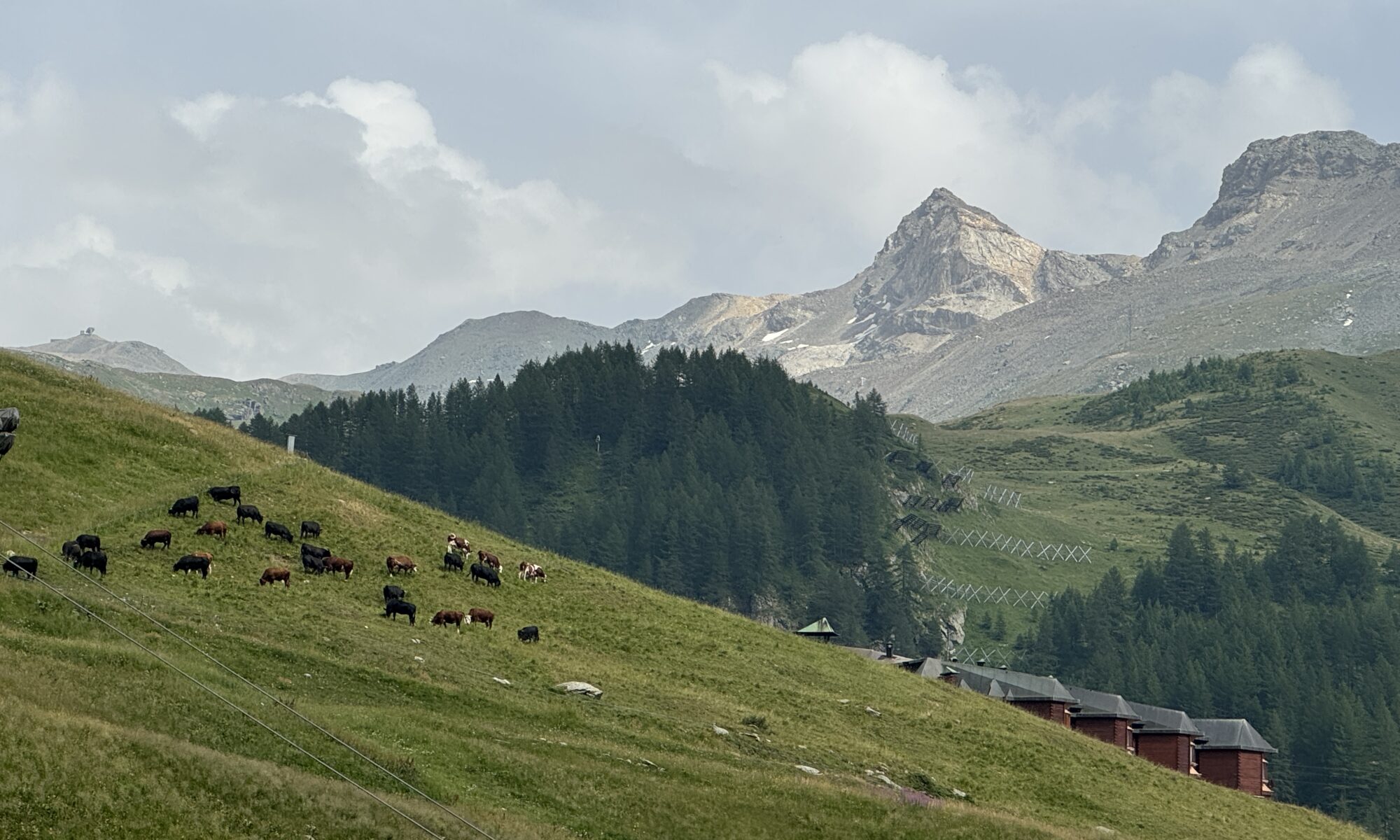
Featured Image: Cime Bianche, from where the link from Monterosa would come towards Cervinia, that for now it remains in the political agenda. Photo: The-Ski-Guru.


Discover more from The-Ski-Guru
Subscribe to get the latest posts sent to your email.
 Subscribe to The-Ski-Guru here.