

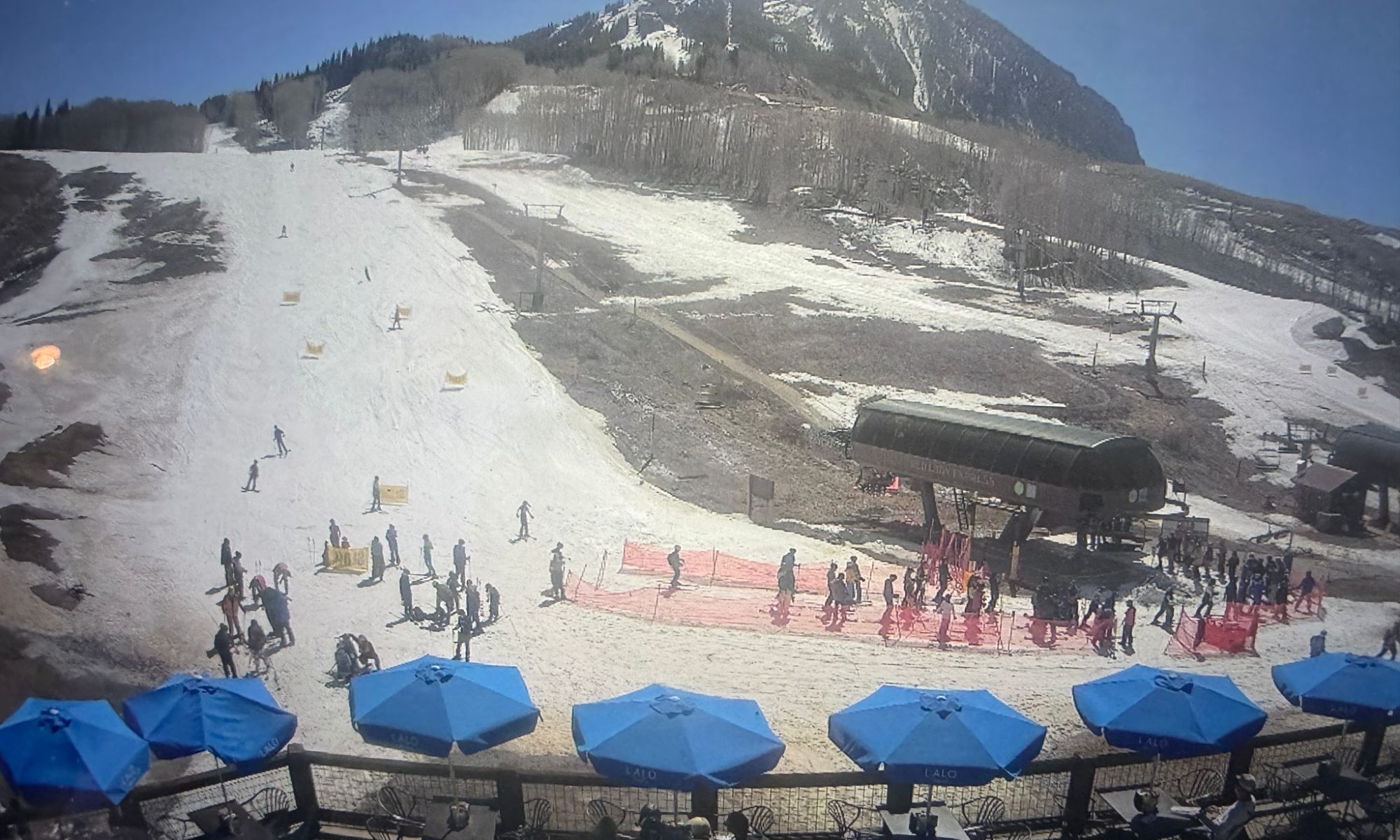
An unusually warm March across the western United States is forcing early ski resort closures in Colorado and Utah, as rapidly melting snowpack and thinning coverage reduce terrain and raise safety concerns — a dynamic increasingly familiar across Alpine regions, where mid-season warm spells are also reshaping snow conditions.
Several resorts have already shut, while others are now expected to close earlier than planned. What would normally be a gradual late-season transition has instead become a rapid shift from winter to spring.
👉 Snow Conditions in a Warming Alpine Climate
Colorado Ski Resorts Facing Early Closure After March Heatwave
Across Colorado, the 2025–2026 ski season is ending earlier than expected following a sustained period of above-average temperatures combined with a relatively weak snowpack.
A number of smaller resorts have already closed after losing base depth during the March heat. At Aspen Snowmass, the Buttermilk mountain has already shut after unusually high temperatures rapidly degraded the snowpack, leaving exposed ground in places.
Elsewhere, resorts such as Crested Butte are now moving toward early April closure timelines, with the possibility of further adjustments if warm conditions persist. What would normally be a gradual seasonal slowdown has instead compressed into a much shorter operating window.
Shrinking Terrain and Rapid Snow Loss
The issue is not limited to closing dates. Even where resorts remain open, the amount and quality of skiable terrain are declining quickly.
Snow cover has become increasingly patchy, particularly at lower elevations and on sun-exposed slopes. As the base weakens, underlying ground begins to appear, forcing resorts to reduce open areas and concentrate skiers onto fewer runs.
This creates a visibly different landscape from mid-winter conditions, with narrower pistes, variable surfaces and a much faster deterioration cycle once temperatures rise.
Utah Resorts Under Pressure
In Utah, similar dynamics are unfolding. Resorts including Deer Valley Resort are now closing earlier than planned as snow depth drops and piste conditions deteriorate.
Here too, the challenge is not only how much snow has fallen, but how quickly it is being lost. Warm temperatures are accelerating the transition to spring conditions, particularly on lower and south-facing terrain, reducing both ski quality and operational viability.
Changing Safety Conditions on the Slopes
Alongside operational pressures, changing snow conditions are also affecting safety.
Thin coverage and repeated freeze-thaw cycles tend to produce harder, more compact surfaces, particularly where artificial snow is dominant. As terrain shrinks, skier traffic becomes more concentrated, often increasing speed on limited open runs.
At the same time, reduced snow depth can expose obstacles such as rocks and vegetation that would normally remain buried during the core winter months. The result is a risk profile more typical of late April than late March.
👉 Avalanche Control on Ski Slopes: The System Behind “Safe In-Bounds Skiing”
A Structural Shift in Ski Seasons
What is unfolding this season points to a broader structural trend rather than a one-off anomaly.
👉 February 2026 Avalanche Cycle Across the Alps
In parts of the western United States, the ski season is increasingly characterised by compression, with later starts, earlier endings and greater variability in between. Even when snowfall totals appear adequate, warm spells can rapidly erode the base and shorten the effective operating window.
Lower-elevation resorts are particularly exposed to these dynamics, while higher-altitude areas are becoming more reliant on snowmaking and careful terrain management to maintain consistent conditions.
The Bigger Picture: A Pattern Also Seen in the Alps
The developments in Colorado and Utah mirror patterns increasingly observed across the Alps — particularly in lower ranges such as the Jura and pre-Alpine areas.
Greater variability within the season, more frequent warm events and faster transitions between winter and spring conditions are becoming defining features of modern ski operations.
In practical terms, this translates into shorter periods of reliable skiing, increased pressure on infrastructure and changing on-mountain conditions that both operators and skiers must adapt to.
A Wider Pattern: From the U.S. Midwest to the Jura
The pressure on lower-elevation ski resorts is not limited to Colorado or Utah. It is also visible in other parts of North America and across Europe, particularly in regions where altitude has always been marginal for reliable snow.
In the central United States, many ski areas operate at relatively low elevations and rely heavily on artificial snow. Resorts in states such as Wisconsin, Michigan or even parts of Pennsylvania have long functioned on shorter seasons, but increasingly face winters where operating windows are highly variable and dependent on brief cold periods.
A similar pattern can be observed in Europe. In eastern France, particularly in the Jura mountains, many smaller ski areas struggle to open consistently. Travelling along secondary roads between Poligny and the Swiss border, it is increasingly common to see ski lifts standing idle during winters that would once have supported regular operations.
Across the border in Switzerland, lower-altitude resorts face comparable challenges. While major high-altitude destinations remain relatively resilient, smaller areas at lower elevations are increasingly dependent on short-lived cold spells and artificial snow production.
In Spain, parts of the Pyrenees have also experienced growing variability in snow conditions, particularly at lower elevations. In Italy, similar trends are visible in smaller pre-Alpine resorts, where inconsistent snowfall and warmer temperatures are shortening seasons and reducing reliability.
What emerges is a consistent pattern across regions: lower-elevation ski areas are becoming more exposed to climate variability, regardless of geography. While local conditions differ, the underlying constraint remains the same — temperature.
Sources
- Deer Valley suddenly ends its ski season early due to record heat
- Colorado ski resorts are limping toward the season’s end (closing dates & snowpack)
- Colorado ski resorts closing early amid heatwave
- Relentlessly warm winter forces Deer Valley to close early
- Crested Butte News (local reporting on terrain reductions and early closures)
 Planning your next trip to the Italian Alps?
 Planning your next trip to the Italian Alps?
If you’re heading to the Aosta Valley, take a look at Il Cuore della Valdigne, our family-owned apartment in Morgex, available for rent when we’re not using it ourselves.
It’s an ideal base to:
- Ski in Courmayeur, La Thuile and Pila
- Enjoy the mountains in summer (hiking, biking, nature)
- Explore the Mont Blanc valley in a quieter, more authentic setting.
 Ski in Courmayeur,
 Enjoy the mountains in summer (hiking, biking, nature)
Check my Mountain Art on my Shop
You can go to my shop and see what have been inspiring me lately, lots mountain landscapes in soft pastels, and now in oils too. Go here to check my latest works!
Featured Image: Base of Mt Crested Butte on 27th March, 2026 webcam. Crested Butte is one of the resorts that is having shrinking terrain to offer due to an extremely hot spring.


Discover more from The-Ski-Guru
Subscribe to get the latest posts sent to your email.
 Subscribe to The-Ski-Guru here.