

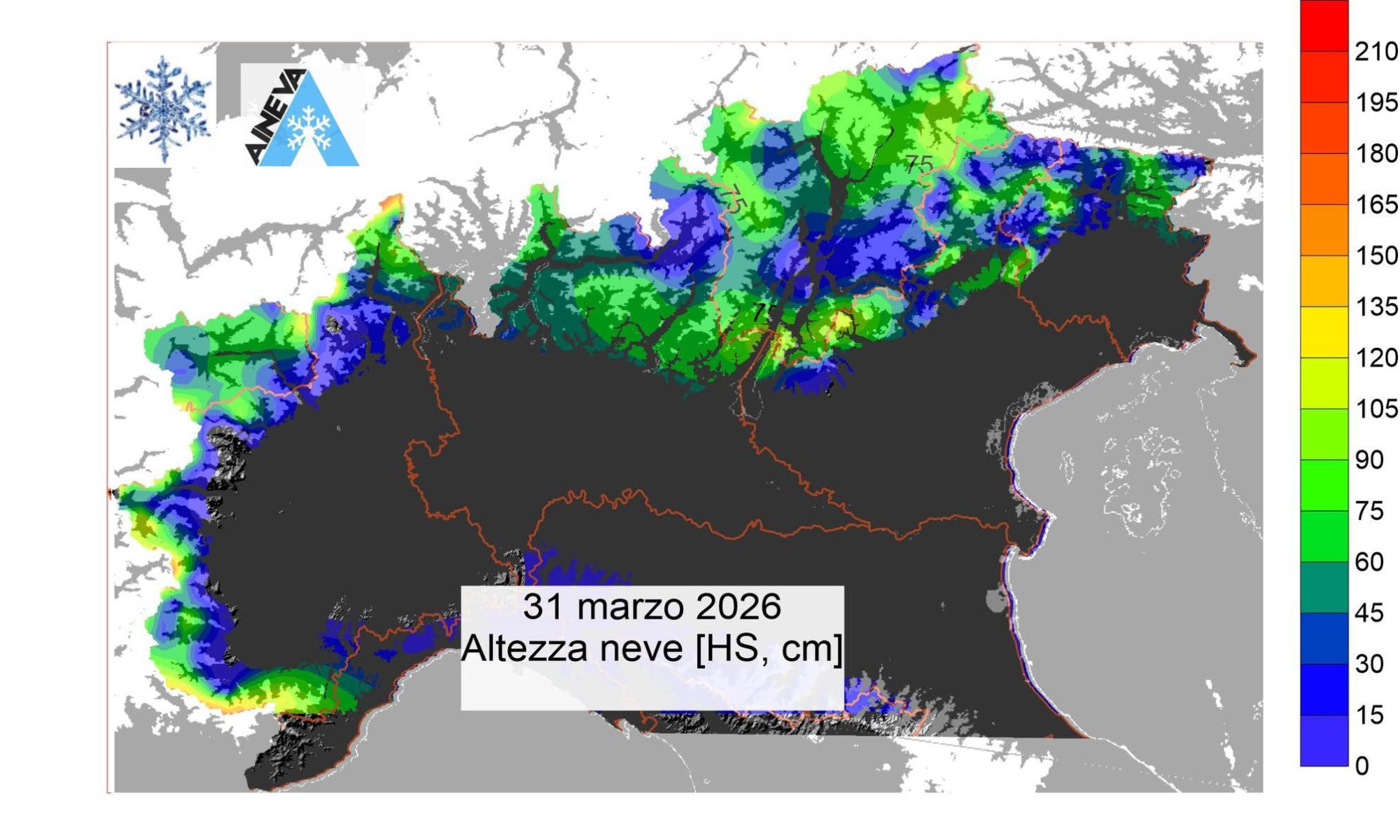
At the end of March 2026, the snowpack across the Italian Alps presents a mixed and nuanced picture.
According to data from AINEVA, recent snowfall has helped restore snow depth to near-normal levels in many areas. However, a key underlying indicator — the snow water equivalent (SWE) — remains below average, pointing to a weaker overall water reserve within the snowpack.
👉 For broader context on how warming trends are reshaping Alpine snow conditions, see Snow Conditions in a Warming Alpine Climate.
February Peak Still Defines the Season
The current winter season continues to be shaped by a distinct peak in mid-February.
Maximum snow depth across the Italian Alps was reached during mid to late February, when a series of snowfall events significantly increased accumulation.
This period also coincided with a wider pattern of instability across the Alps.
👉 You can read more in February 2026 Avalanche Cycle Across the Alps.
March Melt Driven by Mild Temperatures
Following this peak, persistently mild temperatures led to a rapid reduction in snow depth.
By the end of the first decade of March, snowpack levels had fallen below seasonal norms across many areas.
A second snowfall phase in mid-March temporarily reversed this trend, bringing snow depth back toward average values.
Late March Cooling Slows — But Does Not Reverse — the Trend
In recent days, lower temperatures have slowed the rate of snowmelt.
However, this does not represent a full recovery. Instead, it marks a temporary stabilisation, with the snowpack entering a more gradual late-season transition.
The Critical Detail: Snow Water Equivalent (SWE)
While snow depth has recovered, snow quality tells a different story.
The snow water equivalent (SWE) — which measures how much water is stored in the snowpack — remains below average for the time of year.
This is largely due to lower-than-average snow density, meaning:
- There is less water stored per centimetre of snow
- The snowpack may melt more quickly under sustained warmth
- The overall hydrological contribution from snowmelt is reduced
This distinction between visible snow cover and actual water content is crucial — and often overlooked.
Western vs Eastern Alps: Large-Scale Differences
AINEVA’s large-scale snow depth index (HSimed) also highlights differences between the Western and Eastern Italian Alps.
While the index provides a broad overview rather than local detail, it confirms that regional variability remains significant, with local conditions potentially diverging from the overall trend.
What This Means for the Late Season
This late-March snapshot points to several key implications:
- Spring skiing conditions may remain good in the short term where coverage persists
- A shift toward wet snow avalanche conditions becomes more likely as temperatures rise
- Water availability from snowmelt may be lower than expected despite normal-looking coverage
👉 Understanding how snow stability evolves remains essential — see Understanding the European Avalanche Danger Scale: Levels 1–5 Explained.
A Snowpack That Looks Normal — But Isn’t
At first glance, the Italian Alps appear to have recovered from early March losses.
But the underlying data tells a more complex story:
- Snow depth: near normal
- Water content (SWE): below normal
This divergence highlights a broader pattern increasingly observed in recent seasons — where surface conditions can mask deeper structural changes in the Alpine snowpack.
Sources
- AINEVA – Seasonal snowpack analysis (Italian Alps, March 2026)
- AINEVA publications and snow monitoring data (HSimed, SWE indicators)

 Planning your next trip to the Italian Alps?
 Planning your next trip to the Italian Alps?
If you’re heading to the Aosta Valley, take a look at Il Cuore della Valdigne, our family-owned apartment in Morgex, available for rent when we’re not using it ourselves.
It’s an ideal base to:
- Ski in Courmayeur, La Thuile and Pila
- Enjoy the mountains in summer (hiking, biking, nature)
- Explore the Mont Blanc valley in a quieter, more authentic setting.
 Ski in Courmayeur,
 Enjoy the mountains in summer (hiking, biking, nature)
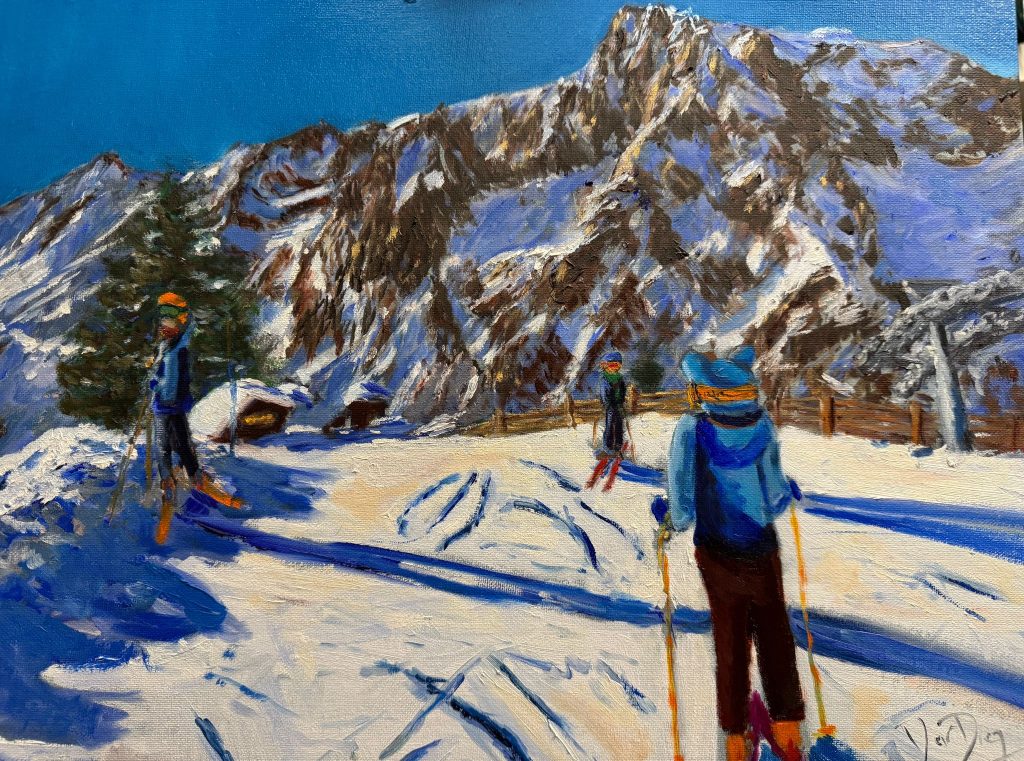
Check my Mountain Art on my Shop
You can go to my shop and see what have been inspiring me lately, lots mountain landscapes in soft pastels, and now in oils too. Go here to check my latest works!
Featured Image: Snow Altitude Italian Alps 31st March 2026. Aineva.


Discover more from The-Ski-Guru
Subscribe to get the latest posts sent to your email.
 Subscribe to The-Ski-Guru here.