

Introduction
At the end of March 2026, new snow data from AINEVA offers a revealing snapshot of conditions across the Italian Alps. The picture is not one of simple snow shortage, but of increasing variability and instability, particularly at lower elevations. Across parts of the Alps, and in mountain ranges such as the Jura and Vosges, the 2025/26 winter is highlighting a pattern that has become increasingly evident in recent years: snowpack is becoming more volatile, even within a single season.
A Season of Swings: February Peak, March Melt
According to AINEVA, the maximum snow depth, measured through the HSimed index, was reached during the second half of February. What followed was not a gradual seasonal transition, but a sequence of sharp changes. Mild temperatures in early March led to a significant reduction in snow depth, pushing levels below seasonal norms. Snowfall in mid-March temporarily restored conditions closer to average, while a later drop in temperatures slowed the rate of melt. However, this cooling did not reverse the broader pattern. The result has been a highly dynamic snowpack, shaped by rapid fluctuations rather than a stable seasonal base.
West vs East Alps: A Divided Pattern
The data also highlights a distinction between the Western and Eastern Alps, with the former more exposed to temperature swings and rain-on-snow events, while the latter has remained relatively more stable, although still affected by changes in snow density and repeated melt cycles. What emerges is not simply a question of how much snow falls, but how long it persists and in what condition it remains usable.
The Pressure on Lower Elevations
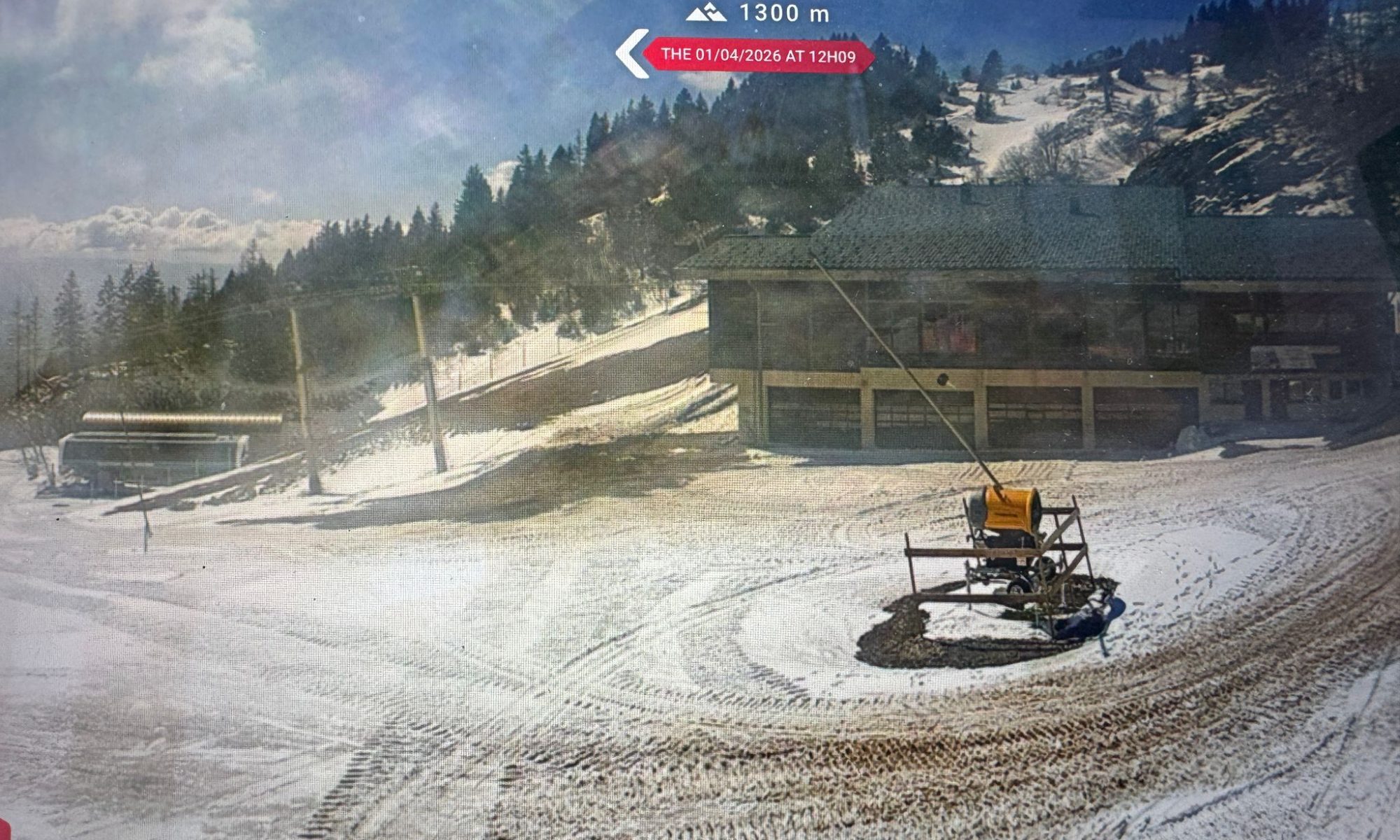
This variability is most visible at lower altitudes, roughly between 1,200 and 1,800 metres, where snow cover has become increasingly fragile. In the Jura, the Vosges, and across many lower Alpine resorts, conditions have been intermittent and highly dependent on short cold periods. A brief rise in temperature can quickly undo recent snowfall, meaning that slopes can shift from skiable to marginal within a matter of days. This kind of instability is becoming a defining feature of these elevations.
Not Just Less Snow — But Less Predictability
This winter reinforces a shift already explored in your analysis of snow conditions in a warming Alpine climate. The issue is no longer simply declining snowfall totals, but the shortening of stability windows and the increasing frequency of freeze–thaw cycles. Snowpack density is also changing, affecting how snow behaves on the ground. Even when snowfall returns, it does not necessarily restore consistent skiing conditions.
A Pattern Seen Beyond Europe
Similar dynamics have been observed in North America, where recent seasons have combined strong mid-winter snowfall with rapid melt episodes later in the season. This has led to increasing operational uncertainty, as seen in early closures across parts of Colorado and Utah. The parallels suggest that this is not a localised Alpine issue, but part of a broader shift affecting mountain regions.
What This Means for Ski Resorts
For lower-altitude destinations, these patterns create growing challenges. Seasons become harder to predict, operational planning becomes more complex, and reliance on artificial snow increases. For tour operators and destination planners, reliability becomes a more important metric than absolute snow depth. The ability to guarantee consistent conditions is now central to how resorts are perceived and sold.
The Bigger Question
If natural snow at lower elevations is becoming less stable, the question becomes whether snowmaking can compensate for this trend. This is no longer a technical issue, but a structural one for the future of many Alpine resorts.
➡️ Read next: Snowmaking in the Alps: Solution, Illusion, or Escalating Cost?

 Planning your next trip to the Italian Alps?
 Planning your next trip to the Italian Alps?
If you’re heading to the Aosta Valley, take a look at Il Cuore della Valdigne, our family-owned apartment in Morgex, available for rent when we’re not using it ourselves.
It’s an ideal base to:
- Ski in Courmayeur, La Thuile and Pila
- Enjoy the mountains in summer (hiking, biking, nature)
- Explore the Mont Blanc valley in a quieter, more authentic setting.
 Ski in Courmayeur,
 Enjoy the mountains in summer (hiking, biking, nature)
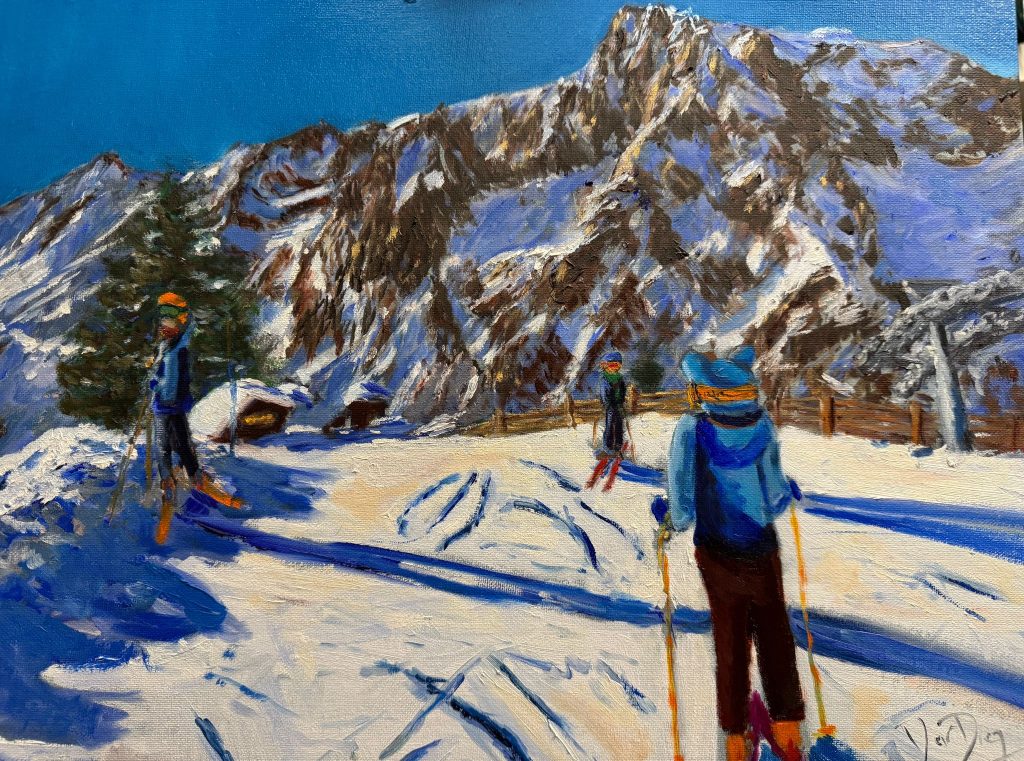
Check my Mountain Art on my Shop
You can go to my shop and see what have been inspiring me lately, lots mountain landscapes in soft pastels, and now in oils too. Go here to check my latest works!
Featured Image: Télécabine de Crozet- Monts Jura webcam. 1st April 2026


Discover more from The-Ski-Guru
Subscribe to get the latest posts sent to your email.
 Subscribe to The-Ski-Guru here.