


South American skiing has one of the most distinctive propositions in the world. It offers Southern Hemisphere winter, high Andean scenery, a different culture, a different calendar and the chance for skiers from the Northern Hemisphere to extend their season when the Alps and North America are in summer.
But Chile and Argentina should not be treated in exactly the same way.
Chile already has a stronger track record in North America. Resorts such as Portillo and Valle Nevado have marketed to the United States for many years, and the Chilean ski product is relatively easy for international tour operators to understand because much of the visitor journey can be coordinated through the resort or specialist partners. Argentina, by contrast, has powerful ski destinations and a natural opportunity in the United States and Europe, but the product can feel more fragmented from outside the market.
That is the dichotomy. Chile is already better established internationally, especially in the US and Brazil, while Argentina has enormous potential but needs clearer packaging, stronger trade education and a simpler story for new markets.
For Argentina, the US opportunity is particularly interesting. For East Coast travellers, the time-zone difference with Buenos Aires is minimal. For the Argentine ski season, New York is one hour behind Buenos Aires, which means US East Coast passengers can travel south with very little meaningful jet lag compared with many long-haul ski trips.
That should be a strong selling point. A skier from New York, Boston, Washington or Miami can travel to Argentina or Chile for August skiing without the same body-clock disruption they might experience on a trip to Europe or Japan. For a Southern Hemisphere winter product, that matters.
The question is not whether South American skiing can sell internationally. It already does. Chile works well in the United States and Brazil, and Argentina has long attracted Brazilian skiers. The bigger question is why the Andes are still not more visible in some international ski programmes, especially in Europe and in parts of the US market where Argentina could grow.
Chile gives the clearest example of how South American skiing can be made easier to buy.
Portillo is a highly packaged ski product. Its ski weeks include lodging, lift access, four daily meals — breakfast, lunch, afternoon tea and dinner — plus access to resort amenities. That makes it relatively simple for a tour operator or travel advisor to explain: the client is not just buying a hotel room and a lift pass, but a full ski-week experience in the Andes.
Portillo also strengthens the wider Chilean story through Portillo Tours & Travel, with add-on experiences around Santiago, Valparaíso, wine regions and other parts of Chile. That helps turn the ski trip into a broader Andean, wine and culture journey, which is especially useful for long-haul clients who may want to justify the distance with more than skiing alone.
Valle Nevado also has a strong packaged logic. Rather than selling only lift tickets, it offers a resort-based hotel product through Hotel Valle Nevado, Puerta del Sol and Tres Puntas. Puerta del Sol and Tres Puntas currently list half board — meaning breakfast and dinner — plus lift tickets valid until the day before check-out, ski storage, swimming pool, WiFi and other services.
Valle Nevado also promotes ski and snowboard school, heli-skiing, restaurants, bars, wine experiences and transport information from Santiago. Its food and beverage offer now includes the Bar Puerta del Sol / Zuki Nikkei concept, while the wider Valle Nevado site lists several restaurants and bars across the resort.
The product is also changing through ownership and integration. Mountain Capital Partners became majority owner of Valle Nevado in 2023, and later moved to acquire neighbouring La Parva, with the stated aim of combining Valle Nevado and La Parva into one of the largest connected ski areas in the Southern Hemisphere.
That matters for international selling because the more integrated the product becomes, the easier it is for the trade to explain. A European or US operator does not want uncertainty. They need to know where the client flies, how they transfer, where they stay, what meals are included, what skiing is included, what can be added, and how the experience compares with other long-haul ski trips.
Chile has done more of that work. Portillo and Valle Nevado can both be sold as complete Andean ski experiences, and the wider Chile story — Santiago, wine valleys, Valparaíso, gastronomy and mountain scenery — gives tour operators a strong pre- or post-ski angle.
Argentina has a different challenge. It has a richer and more varied destination-style product, but that variety can also make it harder to sell from outside the market.
Las Leñas is a good example. It has a strong international reputation, especially among advanced skiers and freeriders, but the logistics are not always simple. Today, Las Leñas is often sold mainly as a land package, with overnight buses from Buenos Aires still used by some operators and clients. For travellers who want to fly, the options are not ideal. San Rafael is the nearest practical airport option, around 200 km away, but the regularity and timing of flights can be an issue. Mendoza usually has more flight availability and earlier arrivals, but it is around 400 km from Las Leñas, making the road transfer much longer.
For some clients, this may be part of the adventure. But for a European or US tour operator trying to sell a clear, high-value ski holiday, it needs careful explanation.
This does not mean Las Leñas cannot be sold. In fact, specialist operators can make the process much easier. OTE Travel positions itself as a wholesale ski operator with a portfolio including Las Leñas, Bariloche, Chapelco, Portillo, Chillán, Valle Nevado, the United States and Canada. That kind of operator can centralise arrangements and help international partners understand how to sell not only Las Leñas but also other ski destinations across Argentina, Chile and the wider Americas.
For trade enquiries, OTE Travel lists its website as www.otetravel.com.ar. The trade contact details are info@otetravel.com.ar and WhatsApp +54 9 11 3288 7886.
The wider Las Leñas market also appears to depend heavily on local ski specialists and incoming operators, including Ski Leñas, All Travel, OTE Travel, Prodigy and others, with different companies often linked to specific hotels, apartments, condominiums or service combinations. That can work well for people who know the Argentine or Brazilian market, but it can feel harder for a new European or US operator to understand where to start.
Bariloche and Cerro Catedral are different again. The destination has huge appeal because it combines skiing with lakes, scenery, chocolate, restaurants, hotels, cabins, boutique lodges and the wider identity of Patagonia. But that also means there are many ways to build the trip: staying in Bariloche, staying closer to Cerro Catedral, using local operators, combining skiing with excursions, or adding other parts of Patagonia.
That variety is a strength, but for the international trade it needs interpretation. A tour operator needs to know which hotel area works for which type of client, whether the holiday is ski-first or Patagonia-first, how transfers operate, and how to package the mountain with the lakes, food, culture and excursions.
The same is true around Chapelco and San Martín de los Andes. Chapelco benefits from one of Argentina’s most attractive mountain towns, with lodging in hotels, cabins and apartments, plus access to the lakes and forests of northern Patagonia. But again, it is a destination-style product rather than a single resort-controlled package, so the trade needs to understand which local partners, accommodation styles and transfer options work best for different clients.
Cerro Castor, near Ushuaia, is another interesting case because it has a very different positioning. It is the southernmost ski resort in the world, located near a city with year-round international appeal and strong links to Patagonia and Antarctic cruise itineraries. Cerro Castor is the southernmost ski resort in the world, around 26 km from Ushuaia.
At the base of the ski area, Castor Ski Lodge is a complex of 15 cabins, while most of the wider accommodation offer sits in Ushuaia itself. Several specialist sources describe the lodge as the only lodging option at the base, with the rest of the accommodation in the city.
That makes Cerro Castor potentially easier to position as part of a broader adventure itinerary. A client could combine alpine skiing at Cerro Castor with cross-country skiing in the Cerro Castor valley, dog sledding, snow activities, 4×4 trips to Lago Escondido and Lago Fagnano, Beagle Channel navigation and other Tierra del Fuego experiences. Cerro Castor itself lists cross-country skiing trails, while local adventure operators promote Tierra Mayor winter activities and 4×4 routes to Escondido and Fagnano lakes.
The cross-country-skiing point should still be checked each season, especially which trails are groomed and which centres are operating, but the broader adventure appeal of Ushuaia is clear. Unlike a pure ski resort, Ushuaia already has year-round international visibility through Patagonia, nature tourism, Beagle Channel excursions and Antarctic cruise departures. That gives Cerro Castor a very different type of selling opportunity.
There are also smaller or more boutique Argentine ski destinations, such as Caviahue, Cerro Bayo near Villa La Angostura and Cerro Perito Moreno near E Bolsón. These can be attractive for specific clients, especially those looking for scenery, atmosphere or a less conventional trip, but they are less obvious as first-time South America ski products for Europe or the United States unless they are packaged as part of a wider itinerary.
This is not a weakness in the Argentine product. In fact, Argentina’s variety is one of its strengths. The challenge is that variety needs interpretation. An international operator needs to understand which destination works for which client, how to get there, where to stay, which local partner to use, what is included, and how to combine the skiing with Patagonia, wine, Buenos Aires, Ushuaia or other parts of the country.
Without that clarity, the product can feel harder to sell than it really is.
This is where the wider adventure-travel trend becomes relevant. As explored in Adventure Travel in 2026: Why Mountain Destinations Need Food, Culture and Human Connection, mountain destinations increasingly need to sell more than activity. They need to sell food, culture, identity, people, landscape and a sense of place.
That message fits South America perfectly.
The Andes should not be sold only as snow and slopes. They should be sold as nature, culture, food, wine, landscape and mountain experience. Chile has already made that easier to understand in some markets, especially North America. Argentina has the same ingredients, and in some cases an even wider destination story, but it needs clearer packaging for operators who do not already know the market.
For Chile, the message is: the product is established, the US market is already important, and the opportunity is to keep expanding the story into Europe and wider long-haul markets through the combination of skiing, Santiago, wine, food and the Andes.
For Argentina, the message is slightly different: the product is strong, the time zone works very well for the US East Coast, Brazil is already important, and the country has huge appeal through Patagonia, Buenos Aires, wine, culture and landscapes. But the ski product needs to be easier to understand, easier to package and easier for international operators to explain.
That could mean clearer trade toolkits, more regular training for ski tour operators and travel advisors, stronger sample itineraries, better explanation of transfers and inclusions, more combined ski-and-wine, ski-and-city or ski-and-Patagonia programmes, and more visible product updates in English.
It could also mean showing how each destination works for different client types. Portillo may suit clients looking for a classic all-inclusive ski week in the Andes. Valle Nevado may suit those wanting a resort-based hotel product near Santiago with restaurants, ski services and access to the wider Tres Valles area. Las Leñas may appeal to strong skiers and freeriders who understand that access is part of the planning. Bariloche may suit clients who want Patagonia, lakes and a broader travel experience. Chapelco may suit those who want skiing with a charming mountain town. Cerro Castor may suit travellers who want skiing at the end of the world, combined with Ushuaia and Tierra del Fuego adventures.
South American skiing does not need to prove that it can sell internationally. It already does in several markets. But if it wants to grow further in Europe and in under-developed parts of the US market, the story needs to be clearer.
The opportunity is not just to sell Chile or Argentina as places to ski in August. It is to sell the Andes as a complete mountain journey: snow, food, wine, culture, cities, landscapes, people and adventure.
For international tour operators, that is the difference between a destination that sounds interesting and a product they can confidently sell.
Sources
Ski Portillo – Ski Weeks at Portillo
https://skiportillo.com/en/packages-promotions/ski-weeks-portillo-resort-chile/
Ski Portillo – Ski Vacation Packages & Promotions
https://skiportillo.com/en/ski-vacation-packages-promotions/
Ski Portillo – Explore Chile with Portillo Tours & Travel
https://skiportillo.com/en/packages-promotions/explore-chile-with-portillo-tours-and-travel/
Valle Nevado – Hotel Puerta del Sol
https://www.vallenevado.com/en/hotel/hotel-puerta-del-sol/
Valle Nevado – Hotel Tres Puntas
https://www.vallenevado.com/en/hotel/hotel-tres-puntas/
Valle Nevado – Restaurants
https://www.vallenevado.com/en/service/restaurants/
Valle Nevado – Bar Puerta del Sol / Zuki Nikkei
https://www.vallenevado.com/en/restaurant/bar-puerta-del-sol/
Mountain Capital Partners – Valle Nevado announcement
https://www.brianhead.com/wp-content/uploads/sites/7/2023/01/Valle-Nevado-Announcement-1.pdf
Mountain Capital Partners – La Parva purchase announcement
https://www.purgatory.ski/wp-content/uploads/sites/2/2024/05/Mountain-Capital-Partners-to-Purchase-La-Parva-Ski-Resort.pdf
OTE Travel
https://www.otetravel.com.ar/
Castor Ski Lodge
https://www.castorskilodge.com/es_ar/home.html
Cerro Castor – Cross-Country Skiing
https://www.cerrocastor.com/en/cross-country-skiing.html
Valle Frío Ushuaia – Activities
https://vallefrioushuaia.com/actividades-en.html
The-Ski-Guru – Adventure Travel in 2026: Why Mountain Destinations Need Food, Culture and Human Connection
https://www.the-ski-guru.com/2026/06/03/adventure-travel-2026-mountain-destinations-food-culture/
 Planning your next trip to the Italian Alps?
 Planning your next trip to the Italian Alps?
If you’re heading to the Aosta Valley, take a look at Il Cuore della Valdigne, our family-owned apartment in Morgex, available for rent when we’re not using it ourselves.
It’s an ideal base to:
- Ski in Courmayeur, La Thuile and Pila
- Enjoy the mountains in summer (hiking, biking, nature)
- Explore the Mont Blanc valley in a quieter, more authentic setting.
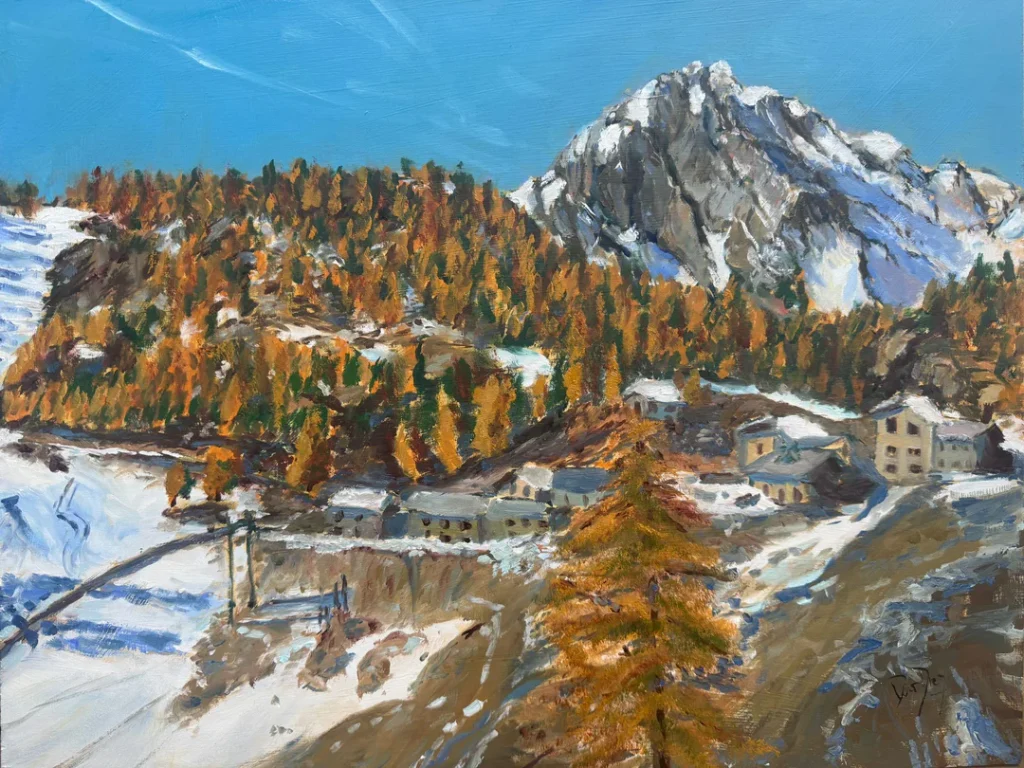
Check my Mountain Art on my Shop
You can go to my shop and see what have been inspiring me lately, lots mountain landscapes in soft pastels, and now in oils too. Go here to check my latest works!

Featured Image: Las Leñas peak in the background, that triangle shape on the right hand side of the picture – the expanse of Las Leñas is incredible! – Photo by Las Leñas ski resort.


Discover more from The-Ski-Guru
Subscribe to get the latest posts sent to your email.
 Subscribe to The-Ski-Guru here.