

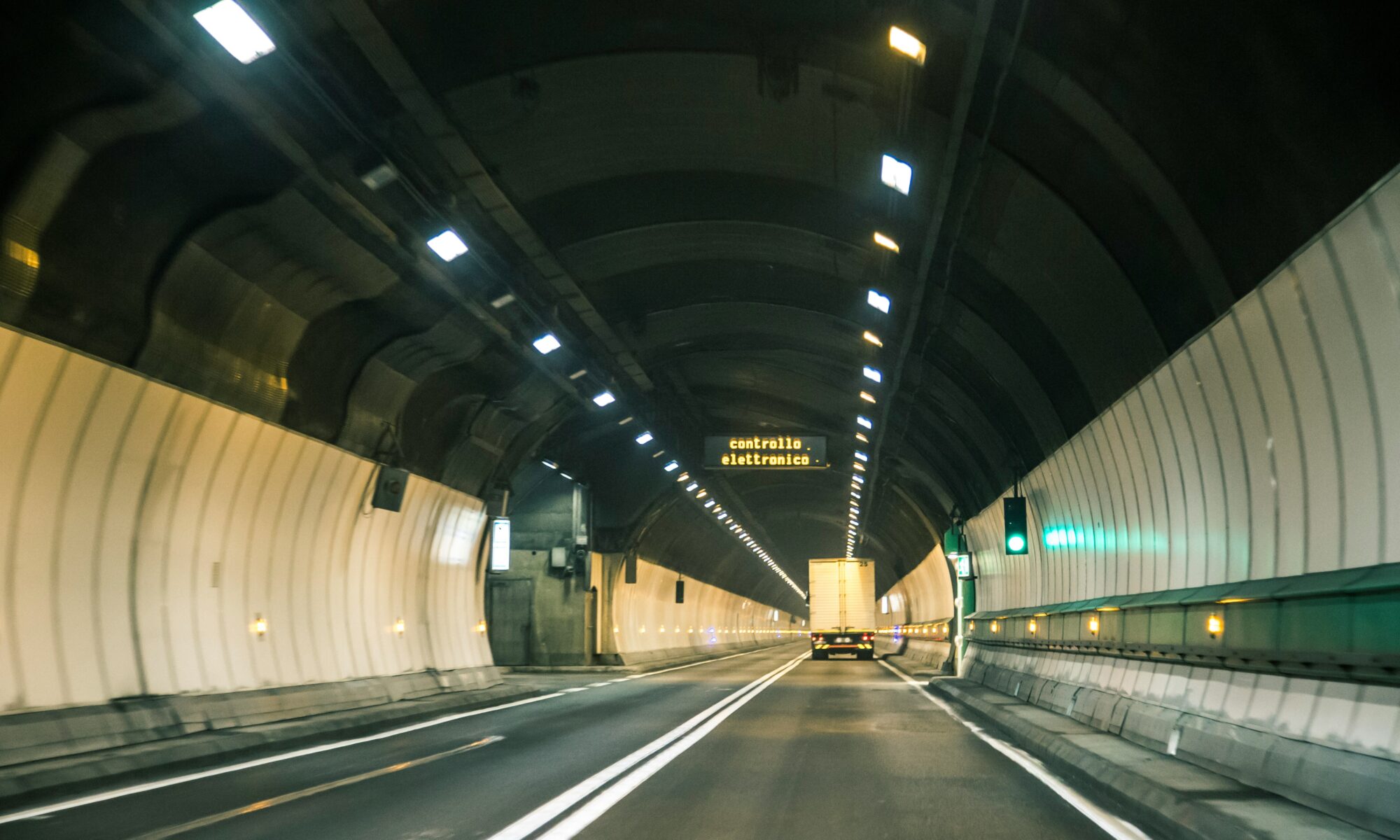
The future of one of the Alps’ most important transport corridors is back on the political agenda.
Key Facts
- Tunnel length: 11.6 km between Courmayeur (Italy) and Chamonix (France)
- Traffic volume: Around 1.7 million vehicles use the tunnel annually
- 2026 maintenance closures: Ongoing structural renovation works are causing periods of full closure, night-time closures and alternating one-way traffic during parts of 2026
- Second tube proposal: No agreement has been reached; the idea remains under discussion between Italy and France and would require extensive studies and approvals before any construction could proceed
On 4 June 2026, Italian Foreign Minister Antonio Tajani and French Foreign Minister Jean-Noël Barrot are due to meet in the Aosta Valley as part of the Italy-France Cross-Border Cooperation Committee. Ahead of the meeting at Forte di Bard, Tajani is scheduled to visit the Mont Blanc Tunnel site, with mobility and transalpine connections expected to be among the key topics under discussion.
While no formal decision is expected, the meeting has once again brought attention to a question that has divided Italy and France for years: should the Mont Blanc Tunnel eventually be expanded with a second tube?
For skiers, mountain communities and businesses on both sides of the Alps, the debate goes far beyond engineering. It touches on tourism, safety, environmental concerns and the long-term reliability of Alpine travel.
Update – June 7, 2026
The Mont Blanc Tunnel second-tube debate remains politically open, but far from settled.
After the Italy–France cross-border meeting in Valle d’Aosta, Italian Foreign Minister Antonio Tajani has tried to keep the discussion alive by proposing further impact studies on a possible second tube under Mont Blanc. According to Italian press reports, the idea now being discussed is a double assessment: one carried out on the Italian side, potentially by Bocconi, and another by a French institute, looking at both the economic and environmental impact of the project.
That does not mean France has accepted the proposal. Italian media continue to report strong French resistance, with Tajani presenting the study route as a way to avoid a purely political “no” and to reopen the technical debate.
For mountain regions, this is the key point: the argument is no longer only about whether a second tube would reduce future closure disruption. It is also about whether the economic cost of repeated tunnel works can be balanced against the environmental and traffic concerns on the French side of Mont Blanc.
For now, the project remains only a proposal. But the discussion has clearly moved from local pressure in Valle d’Aosta to a formal Italy–France diplomatic table.
Why the Mont Blanc Tunnel Is Critical for Alpine Transport
The Mont Blanc Tunnel remains one of the most important road links between Italy and France.
For travellers heading to Courmayeur, the Aosta Valley and north-west Italy, it provides one of the most direct connections from France, the UK and the Benelux countries. It is also a vital route for freight traffic moving between southern and northern Europe.
However, the tunnel is now undergoing a long-term programme of structural renovation and maintenance. Throughout 2026, drivers are facing a combination of full closures, night closures and alternating one-way traffic as work continues on the ageing infrastructure. readers planning a journey through the Alps can also consult our guide to Alpine Tunnel Tolls 2026 for the latest information on the Mont Blanc, Fréjus and Grand St Bernard crossings.
The disruption has reignited questions about whether a single road tube is sufficient for such an important Alpine crossing.
Mont Blanc Tunnel Second Tube Proposal: Reliability Versus Capacity
Supporters of a second tube argue that the issue is not simply increasing capacity.
Instead, they say the real challenge is reliability.
Every closure of the Mont Blanc Tunnel places additional pressure on alternative Alpine crossings such as the Fréjus Tunnel and other mountain routes. Recent years have shown how vulnerable Alpine transport can become when landslides, maintenance works or weather-related events affect multiple corridors at the same time, a trend explored in our coverage of Mountain Infrastructure Risk in the Alps.
Business groups in north-west Italy have long argued that a second tube could improve operational flexibility, allow maintenance to be carried out more efficiently and strengthen one of Europe’s most strategic transport links.
Environmental Concerns Around the Mont Blanc Tunnel Expansion
The proposal remains highly controversial on the French side of the border.
Much of the opposition comes from concerns about air quality in the Chamonix Valley and the wider Arve Valley, which has long struggled with pollution episodes due to its geography and traffic levels. We examined these challenges in our article on Air Pollution in Chamonix Valley.
Critics fear that any increase in tunnel capacity could encourage additional freight traffic and worsen environmental pressures in an already sensitive Alpine environment.
Yet the debate is not entirely black and white.
On the Italian side, significant investment has been made over recent decades to reduce the impact of traffic on local communities. Along the A5 motorway through the Aosta Valley, long tunnels and bypass infrastructure were specifically designed to move traffic away from villages and minimise local environmental impacts.
This raises a broader question: can modern transport infrastructure improve both mobility and environmental outcomes, or does greater capacity inevitably generate more traffic?
It is a question that remains at the heart of the Mont Blanc debate.
What the Second Tube Debate Means for Skiers and Alpine Travel
For winter travellers, the importance of the discussion is clear.
The Mont Blanc Tunnel is a critical gateway to destinations such as Courmayeur and the wider Aosta Valley. Reliable access is increasingly important as maintenance work continues and Alpine infrastructure ages. Visitors considering the region may also be interested in Courmayeur’s New Gondolas.
Every closure also highlights the importance of alternative routes through the Alps. Travellers comparing different crossings can consult our guide to Alpine Tunnel Tolls 2026 and our overview of Swiss Alpine Passes Reopening in 2026.
A second tube, if ever approved, would not be built for many years. Any project would require extensive technical studies, environmental assessments and political agreement between France and Italy.
However, the fact that the issue continues to feature at the highest political levels suggests that the long-term future of the tunnel remains far from settled.
Forte di Bard and the Future of Alpine Transport Cooperation
The choice of Forte di Bard for the meeting is also significant.
Located at the historic gateway to the Aosta Valley, the fortress has become a symbol of cross-border cooperation and Alpine sustainability initiatives. It provides a fitting backdrop for discussions that seek to balance economic development, tourism, environmental protection and the future of transalpine mobility.
For now, no agreement on a second tube has been reached.
But as maintenance work continues and pressure grows on Alpine transport networks, the question is unlikely to disappear. The debate over the Mont Blanc Tunnel increasingly reflects a wider challenge facing mountain regions across Europe: how to keep the Alps accessible while preserving the environment that makes them so valuable in the first place.
Update: The Fréjus Tunnel now has its second tube open
Since August 2025, drivers between France and Italy have had an upgraded alternative to the Mont Blanc Tunnel. The second tube of the Fréjus Tunnel, between Modane in France and Bardonecchia in Italy, was inaugurated on 28 July 2025 and opened to traffic on 1 August 2025.
The Fréjus route is one of the main Alpine road links between France and Italy. It is around 12.9 km long and carries more than two million vehicles a year, including around one million heavy goods vehicles. The new tube does not make the Mont Blanc Tunnel redundant, but it strengthens the wider cross-Alpine road network and gives drivers and freight operators a more resilient alternative when the Mont Blanc Tunnel is affected by maintenance closures or heavy traffic.
For travellers heading to the Aosta Valley, Courmayeur, Chamonix or the northern Italian lakes, the Mont Blanc Tunnel is still usually the most direct option. But for trips further south, towards Turin, Bardonecchia, Sestriere or parts of the French Alps, the Fréjus Tunnel can be a more relevant alternative.
There is no long Mont Blanc Tunnel closure planned for 2026
After the major vault renovation closures in 2024 and 2025, ATMB says there will be no long-duration closure in 2026for the Mont Blanc Tunnel vault works. The pause is intended to allow the French and Italian authorities to assess the results of the two test work phases before deciding how to renovate the remaining five kilometres of vault. Regular night closures for maintenance still continue, so drivers should check the official calendar before travelling.
Sources
- Corriere Torino, Vertice Italia-Francia, c’è l’intesa per il Monte Bianco
https://torino.corriere.it/notizie/economia/26_giugno_04/vertice-italia-francia-c-e-l-intesa-per-il-monte-bianco-3059bced-c809-4b4a-b1c1-fd73a4dd6xlk.shtml - Italian Ministry of Foreign Affairs, Minister Tajani in Aosta Valley for the Italy–France Cross-Border Committee and visit to the Mont Blanc Tunnel site
Italian Ministry of Foreign Affairs – Mont Blanc Tunnel Visit and Italy-France Committee - Italian Ministry of Foreign Affairs, Third Meeting of the Italian–French Cross-Border Cooperation Committee, Forte di Bard
Italy-France Cross-Border Cooperation Committee – Forte di Bard - Official Mont Blanc Tunnel Operator, traffic and maintenance programme 2026
Mont Blanc Tunnel Official Website - New Mobility, Will There Be a Second Tube for the Mont Blanc Tunnel?
New Mobility – Second Tube Proposal Explained - Confindustria, The Impact of the Closure of the Mont Blanc Tunnel on the Economy of Valle d’Aosta
Confindustria Study on Mont Blanc Tunnel Economic Impact Corriere Torino – No della Francia al Bianco bis: Tajani tenta di riaprire il tavolo
https://torino.corriere.it/notizie/economia/26_giugno_05/no-della-francia-al-bianco-bis-tajani-tenta-di-riaprire-il-tavolo-doppio-studio-sull-impatto-ed14c6b8-2f0c-4d92-bb31-4c9a20fc2xlk.shtmlAostaSera – Monte Bianco, Tajani vede uno spiraglio francese sulla seconda canna
https://aostasera.it/notizie/politica/monte-bianco-tajani-vede-uno-spiraglio-francese-sulla-seconda-canna/ANSA Valle d’Aosta – Tajani sul traforo del Monte Bianco: “C’è un’apertura della Francia”
https://www.ansa.it/valledaosta/notizie/2026/06/04/tajani-sul-traforo-del-monte-bianco-ce-unapertura-della-francia_3c823be2-26da-4e63-a77a-725e813f673e.htmlItalian Ministry of Foreign Affairs – Tajani in Valle d’Aosta for the Italy–France Cross-Border Cooperation Committee
https://www.esteri.it/en/sala_stampa/archivionotizie/comunicati/2026/06/il-ministro-tajani-domani-in-valle-daosta-per-il-comitato-frontaliero-italia-francia-e-visita-al-traforo-del-monte-bianco/SFTRF – Opening of the second tube of the Fréjus Tunnel
ASTM Group – Inauguration of the second tube of the Fréjus Tunnel
SYSTRA – A new link between France and Italy with the second tube of the Fréjus Tunnel
Savoie Préfecture – Inauguration du second tube du tunnel du Fréjus, un chantier binational achevé
Mont Blanc Tunnel – Important projects and works
ATMB – Travaux de rénovation de la voûte du Tunnel du Mont-Blanc
Trans.info – Fréjus Tunnel’s second bore to open as Mont Blanc closes
 Planning your next trip to the Italian Alps?
 Planning your next trip to the Italian Alps?
If you’re heading to the Aosta Valley, take a look at Il Cuore della Valdigne, our family-owned apartment in Morgex, available for rent when we’re not using it ourselves.
It’s an ideal base to:
- Ski in Courmayeur, La Thuile and Pila
- Enjoy the mountains in summer (hiking, biking, nature)
- Explore the Mont Blanc valley in a quieter, more authentic setting.
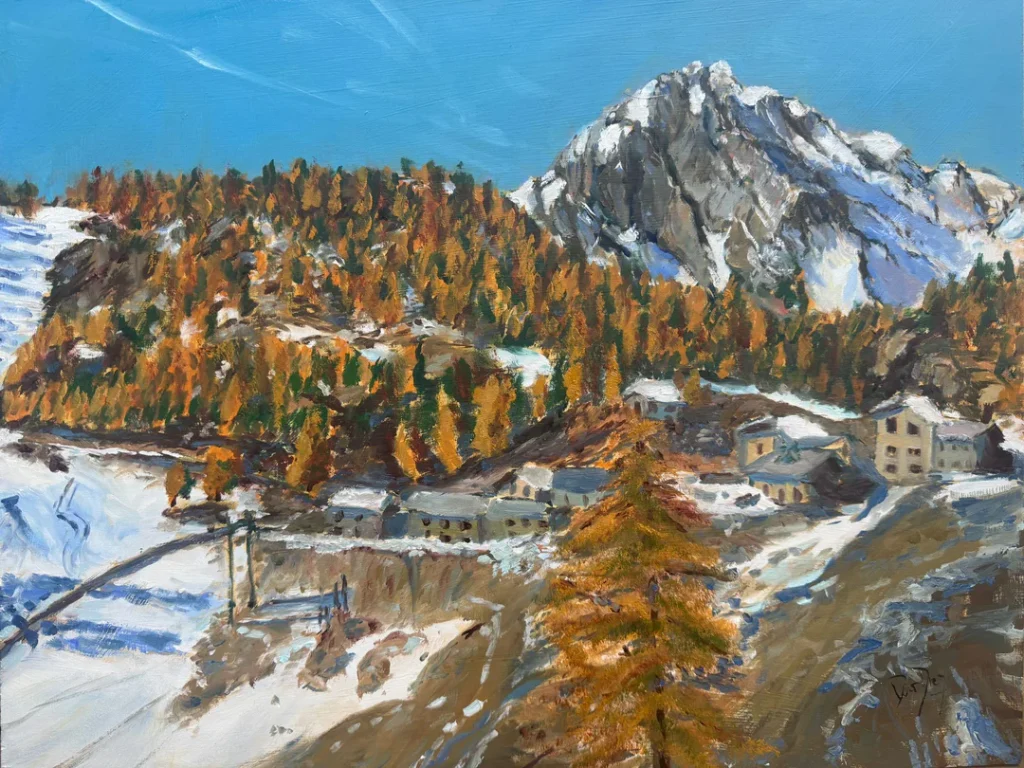
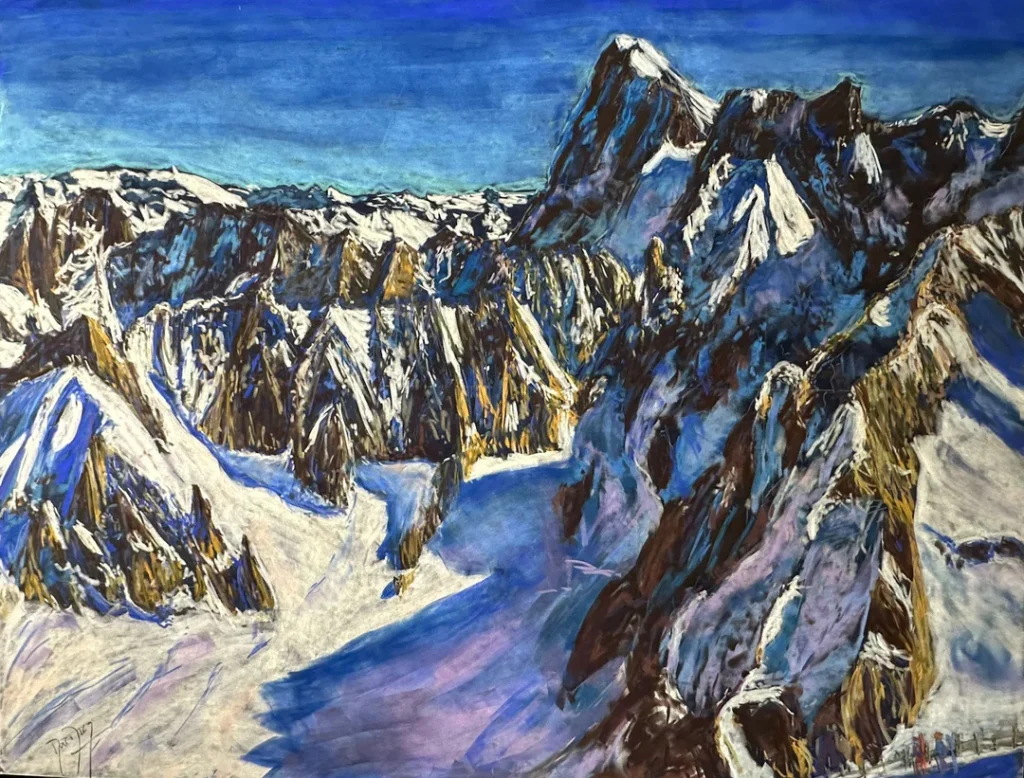
Check my Mountain Art on my Shop
You can go to my shop and see what have been inspiring me lately, lots mountain landscapes in soft pastels, and now in oils too. Go here to check my latest works!
Featured Image: Mont Blanc Tunnel. Photo: Milada Vigerova. Unsplash.


Discover more from The-Ski-Guru
Subscribe to get the latest posts sent to your email.
 Subscribe to The-Ski-Guru here.