

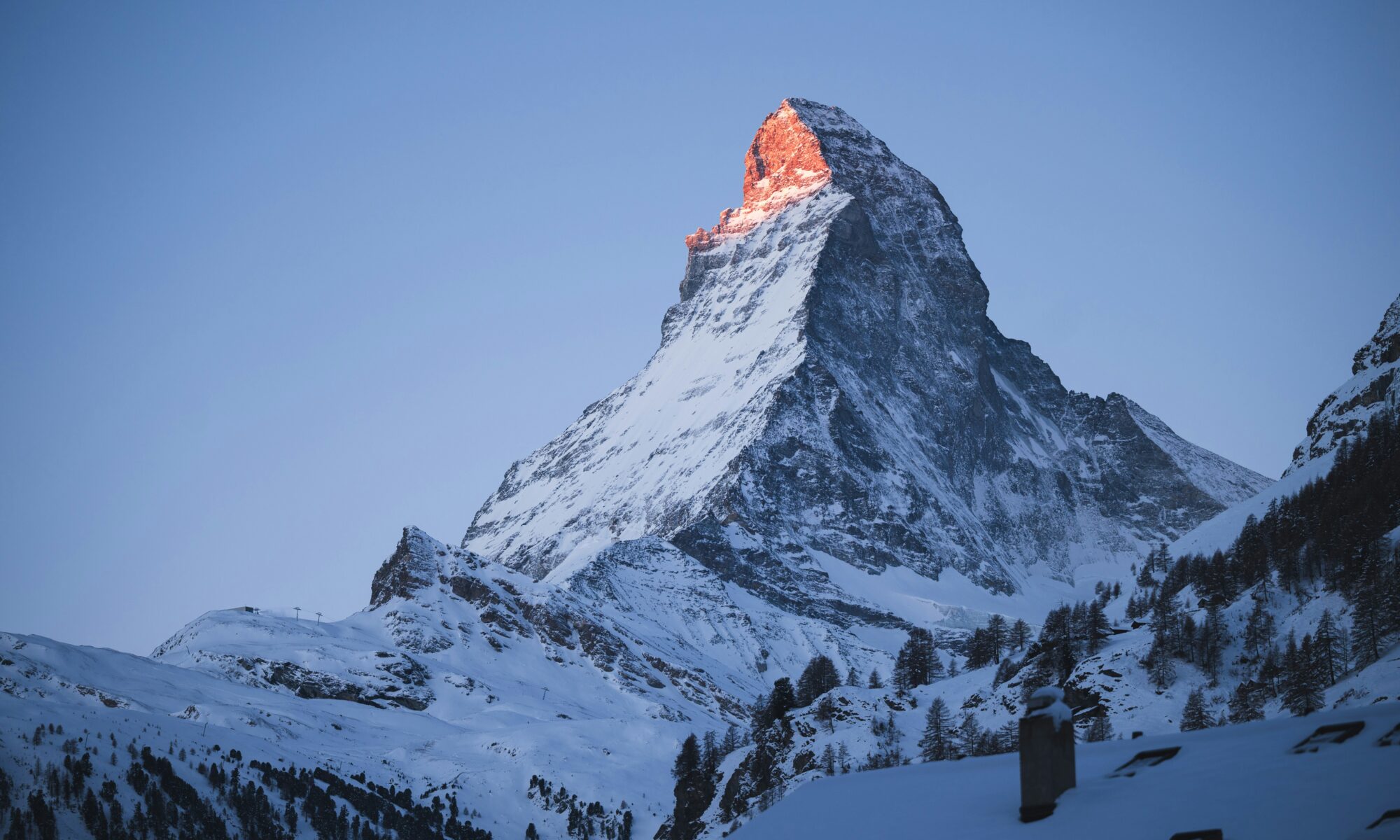
The peak above Zermatt and Cervinia has been recognised for the rocks that tell the story of the Alps and the glaciers that carved its silhouette. Argentina’s Aconcagua joins the list in the same round.
The Matterhorn looks quite different depending on which side of the border you’re on. From Zermatt, it rises in a sharp pyramid. From Breuil-Cervinia, where it’s known as Monte Cervino, its broad Italian face dominates the valley. Both views tell the same geological story. Rocks that once lay hundreds of kilometres apart ended up in one mountain, and glaciers carved the peak we recognise today.
On 6 November 2026, the International Union of Geological Sciences (IUGS) announced 100 additions to its register of Geological Heritage Sites, bringing the worldwide total to 300. The Matterhorn is listed under both its Swiss and Italian names. The designation recognises sites for their scientific importance. IUGS announcement and new sites iugs-geoheritage.org
Continue reading “Matterhorn Joins Global Geological Heritage List”


 Subscribe to The-Ski-Guru here.
You must be logged in to post a comment.