

Fresh Snow, Wind Slabs and Spring Avalanche Risk Return to the Écrins

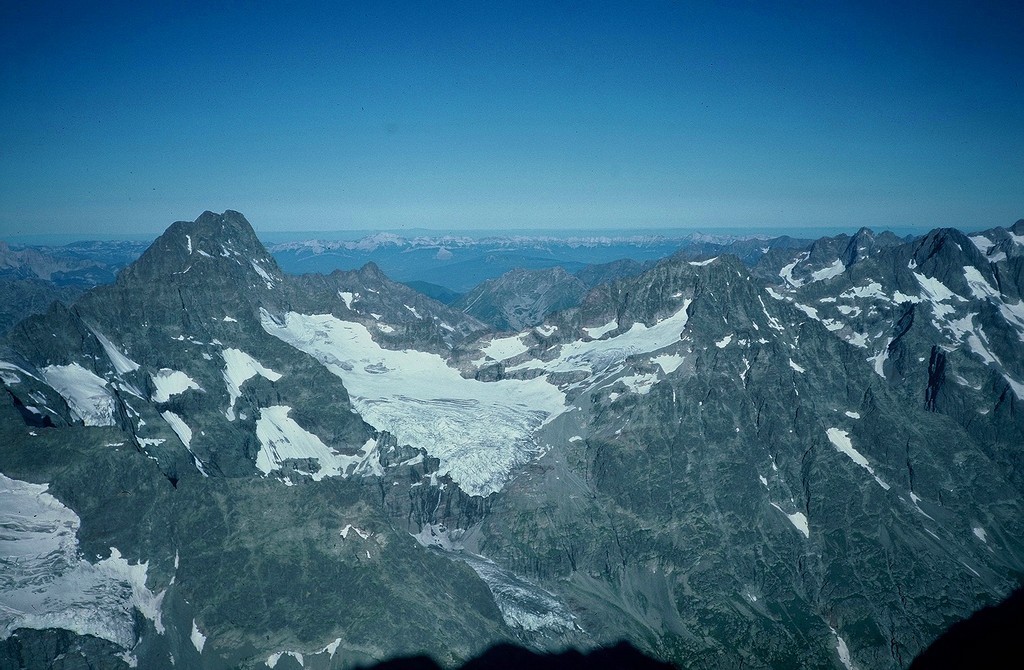
Aiguille de Olan- Photo: Alain Bellon. Altituderando.com

Nearly One Metre of Snow in Five Days: Renewed Avalanche Instability in the French Alps

A fatal avalanche accident in the Écrins massif and multiple recent avalanche observations across the French Alps are highlighting how rapidly spring mountain conditions can deteriorate following late-season snowfall and wind transport.

On Friday morning, a Savoyard high mountain guide died after being swept away by a wind slab avalanche near the summit of the north face of the Aiguille de l’Olan in the Oisans massif. According to early reports, the guide and a companion were close to the summit and had reportedly intended to ski the descent when a wind slab suddenly released, carrying one of the climbers approximately 400 metres down the face.

A second fatal avalanche accident was reported the following day in the Mont Blanc massif, where a young French skier died on Saturday 9 May after being swept away on the north face of the Aiguille du Plan above Chamonix. According to Le Dauphiné Libéré, three skiers aged around 20 to 25 were descending the face when they triggered a fresh-snow avalanche shortly after midday. One skier was carried away and later found dead by PGHM Chamonix rescuers, while his two companions were evacuated from the route. The accident adds further weight to warnings about late-spring instability following recent snowfall across the northern French Alps.

Continue reading “Fresh Snow, Wind Slabs and Spring Avalanche Risk Return to the Écrins”
The Alps Did Not Have a Snow-Rich Winter: Why 2026 Resembles 2022 for Glaciers

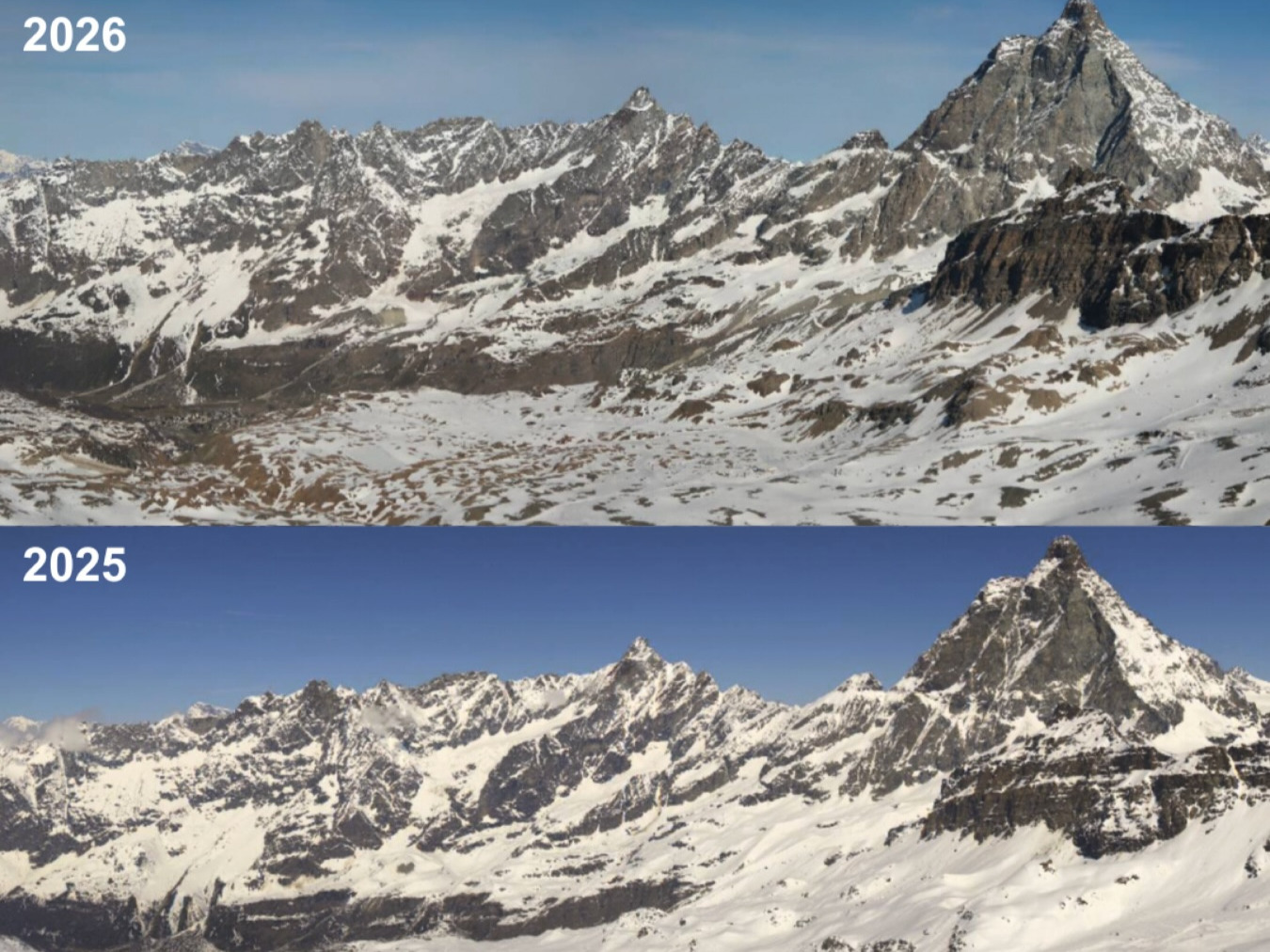
Snow comparisons Plateau Rosa 2025-26. Photo: Meteo Valle d'Aosta.

The idea that winter 2025/26 was “a good snow year” in the Alps does not hold up under closer analysis. While some regions experienced notable snowfall events, particularly in December, these were highly localised and have led to a broader misperception about conditions across the entire Alpine arc.

Data and observations from Meteo Valle d’Aosta highlight the issue clearly. Heavy early-season snowfall was largely confined to the Maritime and Ligurian Alps, a relatively small portion of the range. Outside these areas, including much of the north-western Alps and Valle d’Aosta, snowfall remained closer to average or slightly below through much of the early winter.

Crucially, what followed mattered more than what fell.

Continue reading “The Alps Did Not Have a Snow-Rich Winter: Why 2026 Resembles 2022 for Glaciers”

February 2026 Avalanche Cycle Across the Alps: Fatalities, Level 4 & Level 5 Alerts

Avalanche in Lavancher- Morgex, Aosta Valley. Photo: The-Ski-Guru.

February 2026 Avalanche Cycle Across the Alps

Fatalities, Level 4 & Level 5 Alerts Across France, Italy and Switzerland

Updated: 25 February 2026

Repeated Level 4 (Strong) and, in some regions, Level 5 (Very Strong) avalanche danger ratings were issued across multiple Alpine regions during the second half of February 2026 according to the European avalanche danger scale, following intense snowfall, wind loading and rapid temperature fluctuations.

Fatal incidents have now been reported in France, Italy (including Aosta Valley and Lombardy), Austria and Switzerland during a period of widespread structural instability in the snowpack.

This cycle reflects broader shifts linked to extreme weather in the Alps, with more volatile snowfall and rapid warming phases.

Similar patterns are being reported beyond Europe, including recent fatal avalanches in northern British Columbia under Considerable danger ratings.

And now, another is re-emerging, as shown in recent wind slab avalanche activity across the French Alps following a new storm cycle.

This page consolidates confirmed events, official warnings and the broader cross-border pattern observed during this cycle.


Overview of the February 2026 Avalanche Cycle

The instability phase developed following:

• Multi-day snowfall events (locally 80–100 cm)
• Strong wind transport forming slab layers
• Persistent weak layers buried earlier in the season
• Rapid warming periods reducing stability

Between 20–25 February, several Alpine regions simultaneously recorded elevated danger ratings and fatal incidents.

Continue reading “February 2026 Avalanche Cycle Across the Alps: Fatalities, Level 4 & Level 5 Alerts”