Could Sheep’s Wool Replace Plastic Glacier Covers? Swiss Trial Shows Early Promise

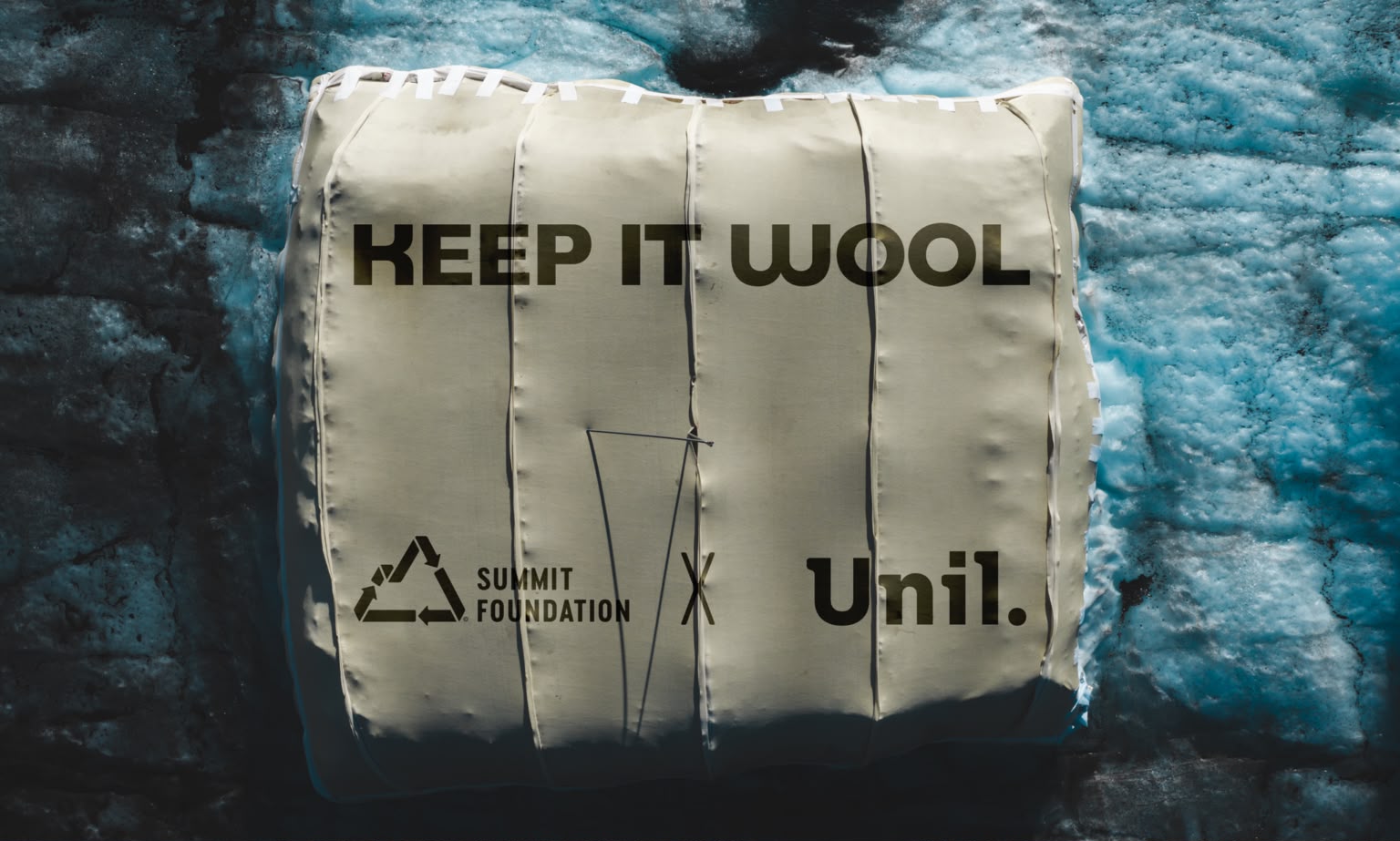
Keep it Wool. Summit Foundation.

A summer experiment on the Tsanfleuron Glacier at Glacier 3000 suggests locally sourced sheep’s wool could perform as well as conventional synthetic geotextiles — without leaving plastic fibres behind.

For around two decades, sections of glaciers in Switzerland have been covered during summer with large white geotextile sheets. The technique can reduce local melting and is also used to preserve snow from one season to the next.

Now, researchers in Switzerland are testing whether those synthetic covers could be replaced with something considerably more traditional: sheep’s wool.

At the Tsanfleuron Glacier, part of the Glacier 3000 area above Les Diablerets, two prototype wool covers were installed this summer as part of the “Keep It Wool” project, developed by environmental organisation Summit Foundation in collaboration with the University of Lausanne’s Interdisciplinary Centre for Mountain Research (CIRM).

And the first results are encouraging.
Continue reading “Could Sheep’s Wool Replace Plastic Glacier Covers? Swiss Trial Shows Early Promise”

Switzerland Won’t Run Out of Water When Its Glaciers Disappear — But Summer Is Another Story

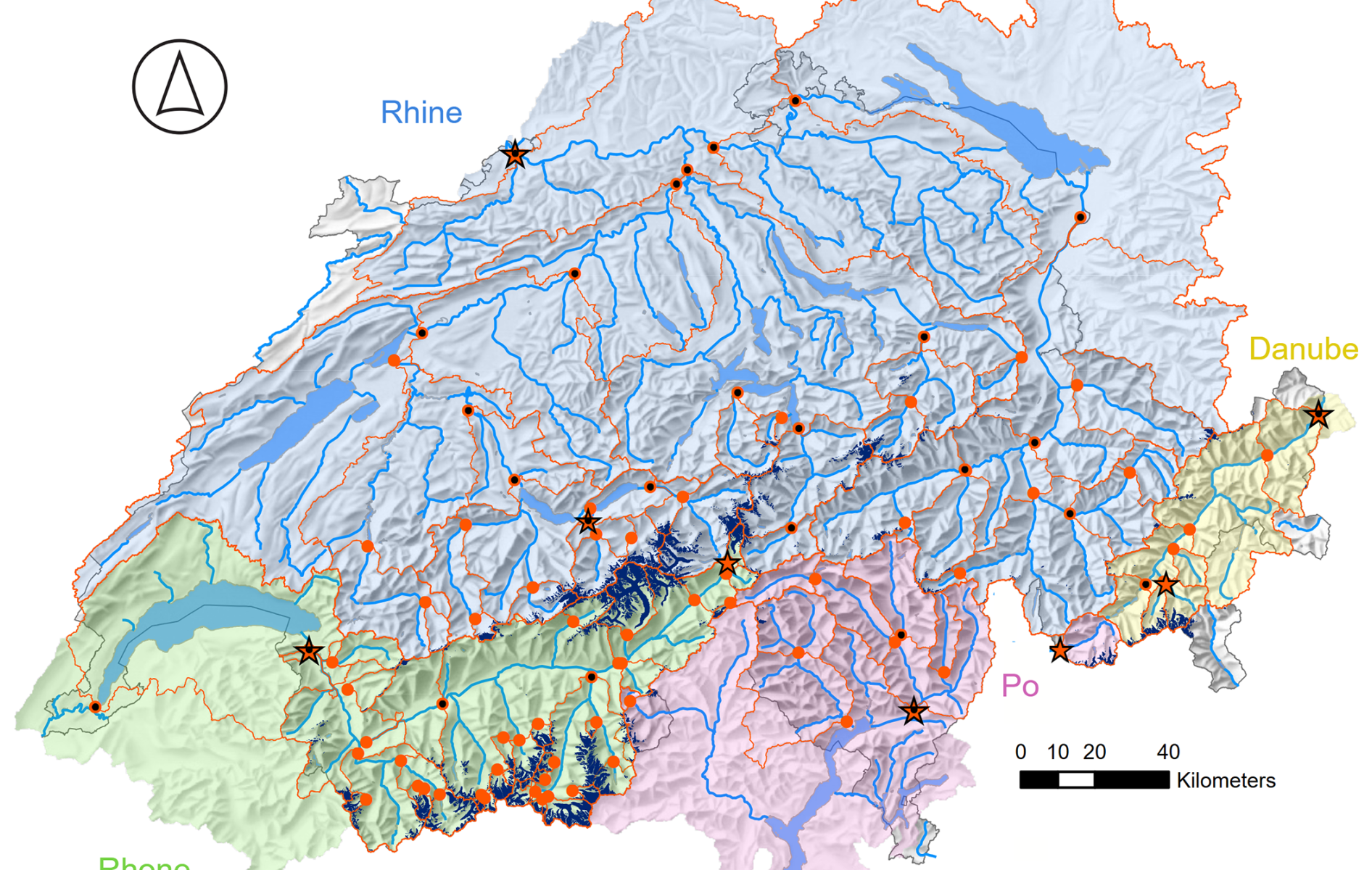
Map of hydrological Switzerland. Credit: Hess Copernicus.

Switzerland’s glaciers are shrinking rapidly, but their disappearance does not mean the country will simply run out of water. The bigger problem is when that water will be available — particularly during increasingly hot and dry Alpine summers.

Switzerland is often described as the “water tower of Europe”, while its rapidly retreating glaciers have become one of the most visible symbols of climate change in the Alps.

It is therefore easy to make a seemingly obvious connection: if the glaciers disappear, Switzerland will lose a major source of its water.

The reality is more complicated.

Swiss hydrologist Bettina Schaefli, professor at the University of Bern, recently challenged that assumption in an opinion piece published by Le Temps, arguing that Switzerland does not owe its abundant water resources primarily to its glaciers.

She is right — at least when looking at the country’s overall annual water balance.

Switzerland’s real hydrological advantage is the Alps themselves. The mountain barrier forces moist air upwards, producing substantial precipitation as rain and snow.

But that does not mean disappearing glaciers are irrelevant to Switzerland’s water supply.

Far from it.

What Switzerland is gradually losing is something particularly valuable: a natural water reserve capable of releasing water precisely when rainfall and snowmelt are no longer providing enough of it.

And during a drought, that distinction becomes crucial.

Continue reading “Switzerland Won’t Run Out of Water When Its Glaciers Disappear — But Summer Is Another Story”

Summer Skiing Disappears Across the Alps as Extreme Heat Forces Final Glacier Closure

Passo dello Stelvio today 16th August. Webcam Passo dello Stelvio.

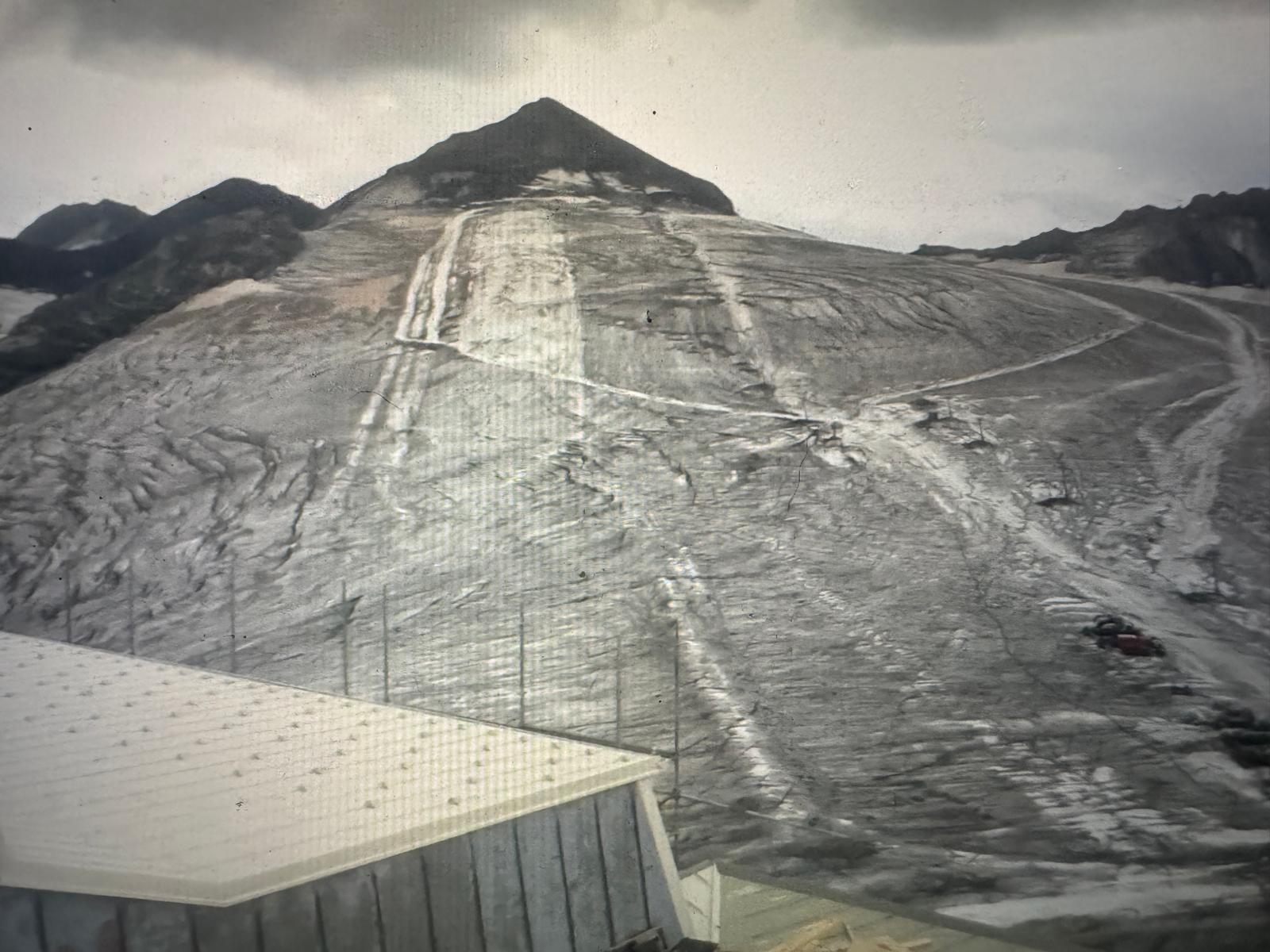
Summer glacier skiing has effectively disappeared from the Alps in mid-August after persistent extreme heat forced Passo Stelvio, the last Alpine glacier still offering lift-served summer skiing, to suspend operations.

Skiing on Italy’s Stelvio Glacier was suspended from 15 August until further notice, following weeks of unusually warm conditions at high altitude.

The closure completes a remarkable sequence across the Alps. Zermatt-Cervinia suspended public summer skiing at the beginning of August, while Saas-Fee followed on 10 August. In France, the summer skiing period at Les 2 Alpes had already ended in early July.

For an activity that was once a familiar part of the Alpine summer, the situation in August 2026 is striking: there is currently nowhere left in the Alps offering conventional lift-served summer glacier skiing.


Continue reading “Summer Skiing Disappears Across the Alps as Extreme Heat Forces Final Glacier Closure”

Aosta Valley Begins to Recover, but Record Glacier Loss Highlights Growing Climate Crisis

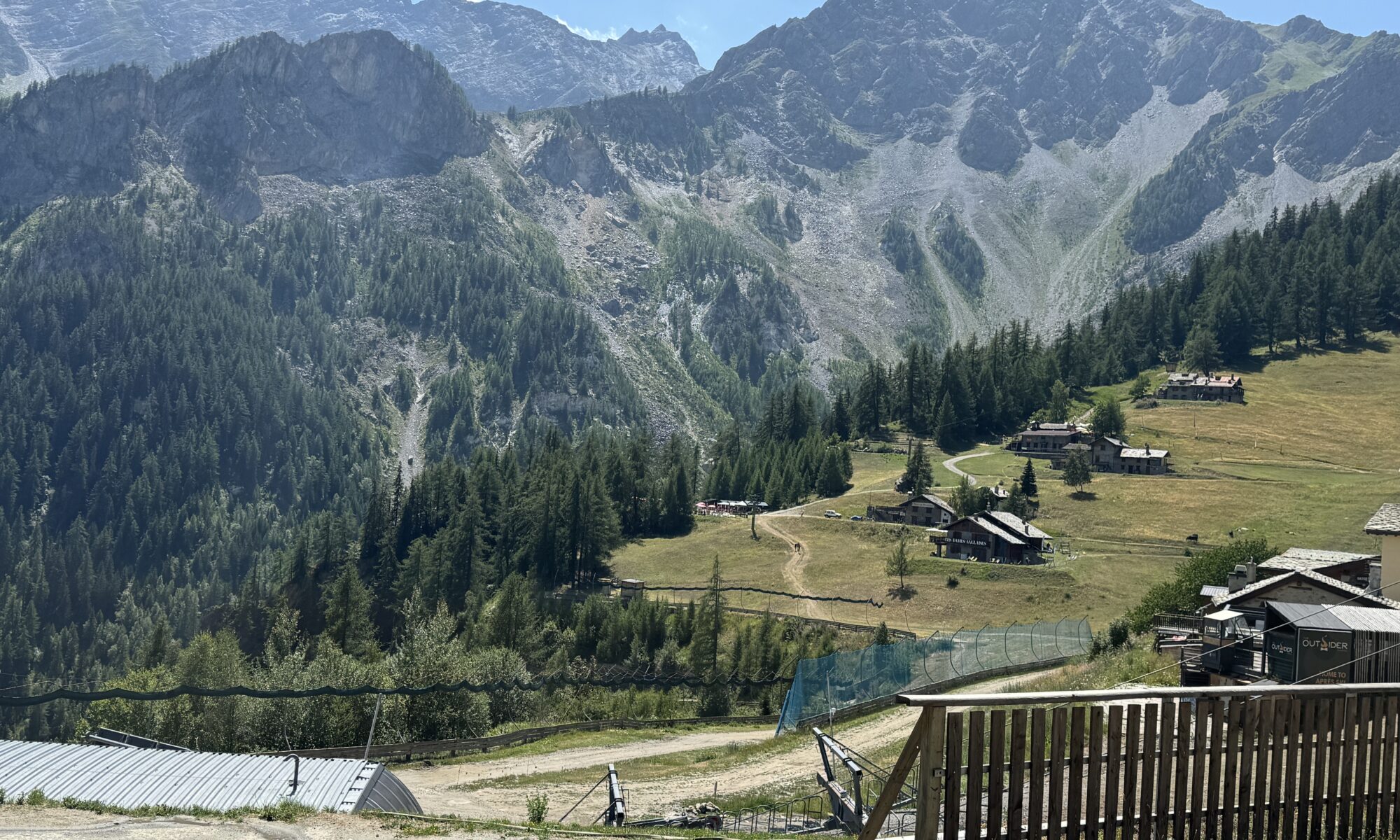
The view from Plan Chècrouit towards the Piscina Alpina in Courmayeur. Photo: The-Ski-Guru.

The Aosta Valley is beginning to recover after a week marked by intense storms, flooding and rockfalls, but scientists warn that the longer-term picture remains deeply concerning. While tourist facilities are reopening and emergency conditions are easing, 2026 has already become the worst year on record for glacier loss in Italy’s smallest Alpine region, underlining the accelerating impact of climate change. 

One of the clearest signs of recovery has come from Breuil-Cervinia, where the local golf course has partially reopened following the severe thunderstorms that hit the resort earlier this week. Although only a temporary nine-hole course is currently available while repairs continue, the reopening is an important step for the resort’s summer tourism industry after heavy rain and mudflows disrupted the area. 

Continue reading “Aosta Valley Begins to Recover, but Record Glacier Loss Highlights Growing Climate Crisis”

Extreme Heat Pushes Alpine Glaciers Into Crisis After Matterhorn Rockfall

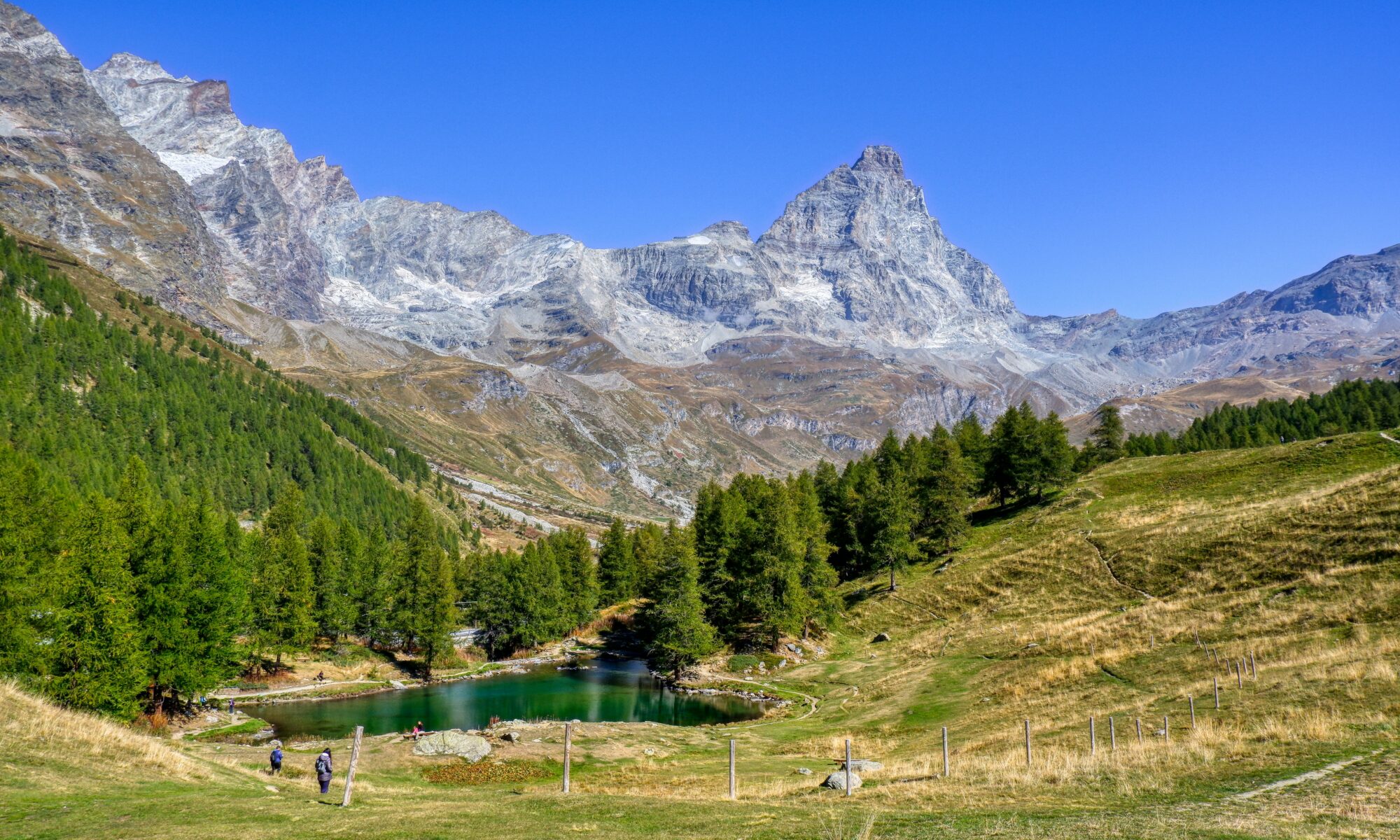
Lago Blu in Cervinia. Photo: Antonio Sessa. Unsplash.

Just one day after a large rockfall on the Matterhorn shocked the Alpine community, authorities and scientists across the Alps are warning that the exceptional heat gripping southern Europe is accelerating glacier melt and increasing instability in high mountain areas.

Italy remains under widespread red heat alerts, with meteorologists expecting the heatwave to continue through at least Ferragosto. While cities are enduring record temperatures, the impact is proving just as dramatic in the mountains, where glaciers are retreating at unprecedented rates and frozen rock is beginning to thaw.

One of the clearest indicators of the current conditions is the zero-degree isotherm. Normally found between 3,500 and 4,000 metres during summer, it remained between 5,500 and 5,800 metres for several days in July—around 1,400 metres higher than normal. This meant that even the highest Alpine peaks were experiencing temperatures above freezing, dramatically accelerating glacier melt while weakening the permafrost that helps hold mountain rock together.

Continue reading “Extreme Heat Pushes Alpine Glaciers Into Crisis After Matterhorn Rockfall”