

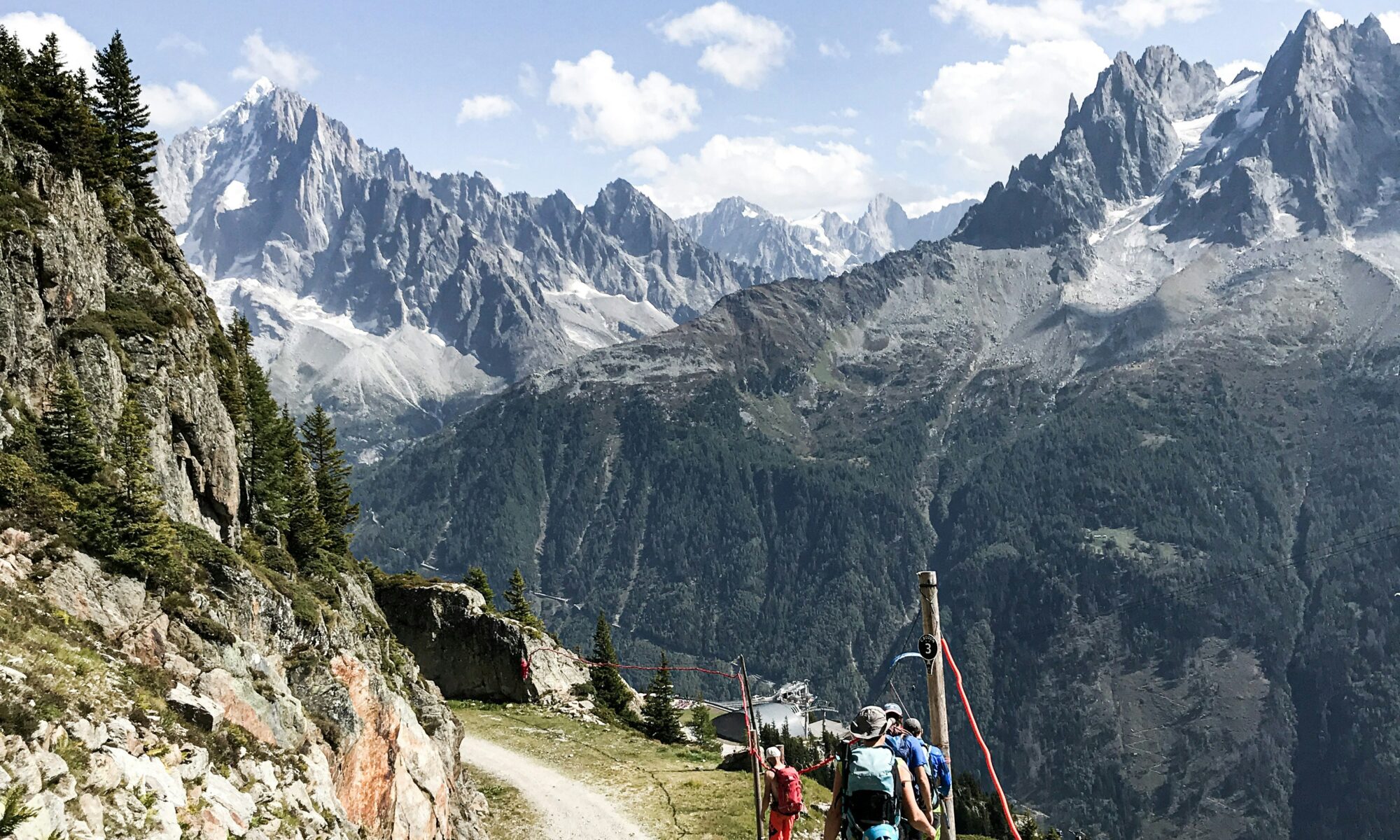
One of the Alps’ most famous long-distance hiking routes could face tighter controls from 2027, as local authorities and mountain professionals seek to curb wild camping, environmental damage and increasingly crowded trails.
The days of treating the Tour du Mont Blanc as an unrestricted hiking route may be coming to an end.
Local authorities and mountain professionals on the French side of the Mont Blanc massif have agreed on the principle of a new charter aimed at better managing one of Europe’s most popular long-distance treks, following another summer of exceptionally heavy use.
The Tour du Mont Blanc — generally known simply as the TMB — covers around 170 kilometres and approximately 10,000 metres of elevation gain as it circles the Mont Blanc massif through France, Italy and Switzerland.
The rapid increase is now raising concerns about erosion, biodiversity, sanitation, safety and the overall experience of walking one of the Alps’ classic routes.
“The open-bar approach is over”
Representatives of the seven French municipalities crossed by the TMB met in September alongside refuge and campsite operators, mountain guides, transport companies, environmental organisations and French state services.
Among the proposals being developed are the systematic reservation of recognised accommodation during the summer season and stronger restrictions on wild camping.
Jean-Marc Peillex, mayor of Saint-Gervais-les-Bains and president of the Communauté de Communes Pays du Mont-Blanc, told AFP that the aim was not to prohibit access to the mountains, but to organise it.
His description of the change was considerably more colourful: the “open-bar” approach, he said, was over.
Other measures being considered include improving authorised bivouac areas with basic facilities, limiting the size and weight of luggage transported between stages, reducing the movement of large suitcases by taxi and potentially establishing a “green brigade” to help enforce local regulations.
Quotas, however, are not currently part of the proposals.
Not all the new rules are decided yet
The direction is clear, but exactly how the system will work is still being negotiated.
The charter is being finalised, and there are differences among local authorities and tourism professionals over how far regulation should go.
One of the most significant ideas is that, from 2027, hikers completing the TMB could be required to have accommodation booked in advance.
But this should not yet be interpreted as a finalised three-country permit system for the entire Tour du Mont Blanc.
The route crosses France, Italy and Switzerland, making coordinated regulation significantly more complicated. Any comprehensive system would ultimately need to account for rules and authorities on all three sides of the massif.
Wild camping is already restricted in several areas
The changes would also build on restrictions that already exist.
Wild camping and bivouacking are not freely permitted everywhere along the Tour du Mont Blanc.
In parts of the French side, including protected areas of the Aiguilles Rouges massif, hikers must already reserve designated bivouac spaces. Vallorcine also prohibits wild camping across its municipal territory outside the specific rules governing nature reserves.
The proposed charter would therefore move towards a more consistent approach rather than introducing regulation from scratch.
A route struggling with its own success
The debate reflects a wider challenge facing the Alps.
Mountain destinations have spent decades encouraging summer tourism as a way of reducing their dependence on skiing and building a stronger year-round economy.
The success of routes such as the Tour du Mont Blanc shows how effective that strategy can be — but also where its limits may lie.
Heavy concentrations of hikers can damage vegetation, accelerate trail erosion and put pressure on water, sanitation and waste infrastructure. Local officials have also complained about inappropriate behaviour, including illegal camping and hikers leaving human waste in the landscape.
At the same time, the TMB has become an important source of summer income for refuges, hotels, restaurants, guides and communities along the route.
That makes the challenge less about keeping visitors away than deciding how many people fragile mountain environments can accommodate — and how those visitors should move through them.
Planning the Tour du Mont Blanc in 2027
For hikers already considering the Tour du Mont Blanc next summer, advance planning will become increasingly important regardless of what final form the new charter takes.
The official Tour du Mont Blanc accommodation platform says reservations for summer 2027 will open on 15 October 2026.
It already strongly recommends booking refuges ahead, warning that the most popular properties can fill several months in advance.
The final rules for 2027 are still taking shape.
But after a summer in which more than 90,000 people reportedly circled the Mont Blanc massif, the message from local authorities is becoming increasingly difficult to miss: one of the Alps’ most famous trails can no longer be managed as though its capacity were unlimited.
Read More
- Overtourism at Roccaraso after 10 thousand Neapolitan “skiers” descended on the ski resort
- Must-Read Guide to Chamonix Mont-Blanc
- Courmayeur Must-Read Resort Guide
Sources
- Tour du Mont Blanc – Official Website: Bivouac Regulations
- Tour du Mont Blanc – Official Website: Frequently Asked Questions
- Les Amis de l’UTMB – Environment Commission
- Libération – “Le Tour du Mont-Blanc en open bar, c’est terminé”
- Le Monde – Le Tour du Mont-Blanc confronté à une augmentation exponentielle de sa fréquentation




 Subscribe to The-Ski-Guru here.
You must be logged in to post a comment.