

The Alps Did Not Have a Snow-Rich Winter: Why 2026 Resembles 2022 for Glaciers

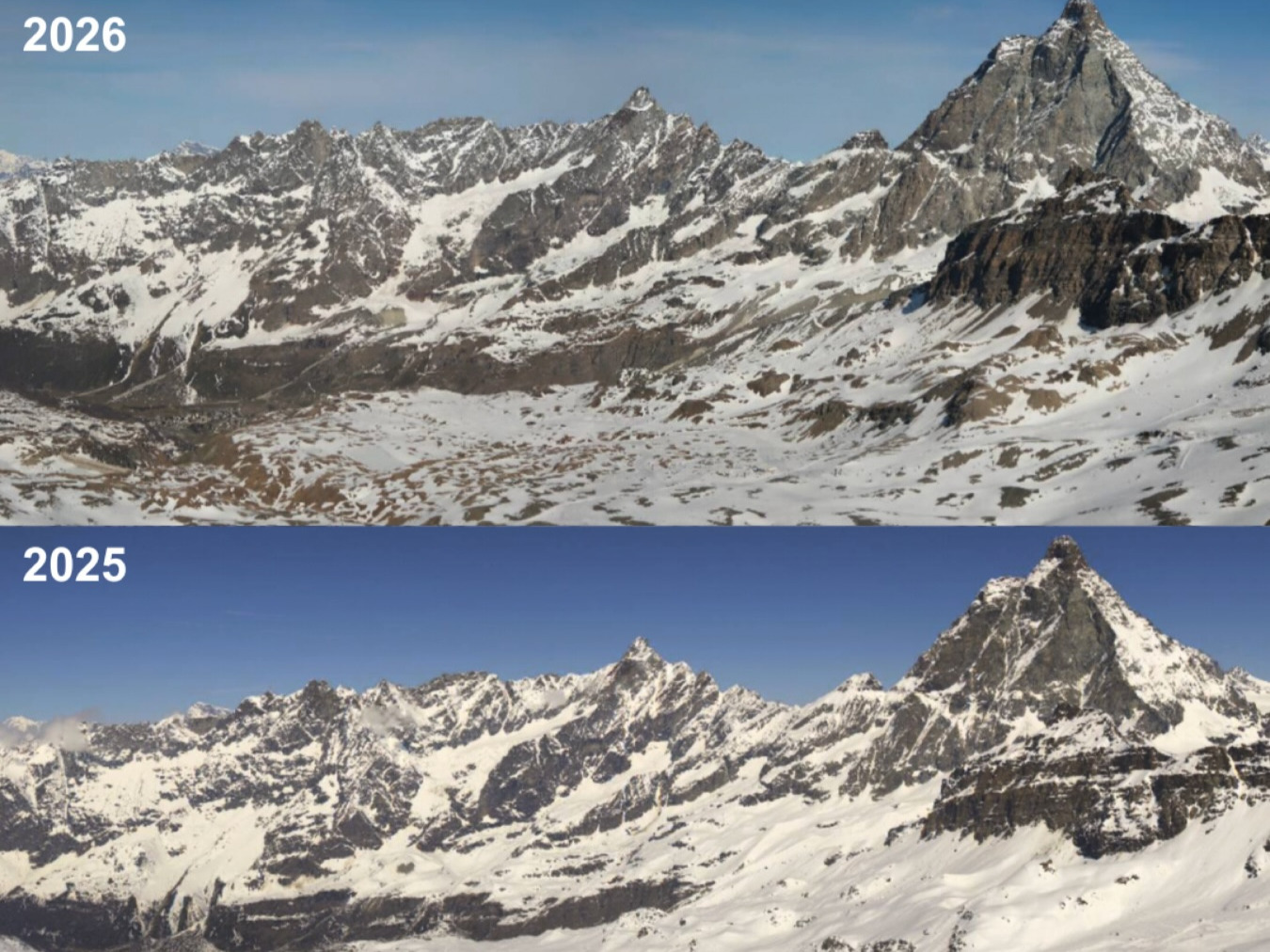
Snow comparisons Plateau Rosa 2025-26. Photo: Meteo Valle d'Aosta.

The idea that winter 2025/26 was “a good snow year” in the Alps does not hold up under closer analysis. While some regions experienced notable snowfall events, particularly in December, these were highly localised and have led to a broader misperception about conditions across the entire Alpine arc.

Data and observations from Meteo Valle d’Aosta highlight the issue clearly. Heavy early-season snowfall was largely confined to the Maritime and Ligurian Alps, a relatively small portion of the range. Outside these areas, including much of the north-western Alps and Valle d’Aosta, snowfall remained closer to average or slightly below through much of the early winter.

Crucially, what followed mattered more than what fell.

Continue reading “The Alps Did Not Have a Snow-Rich Winter: Why 2026 Resembles 2022 for Glaciers”
Record Skier Visits vs. Snow Deficit: What 2025 Reveals About the Future of Alpine Skiing

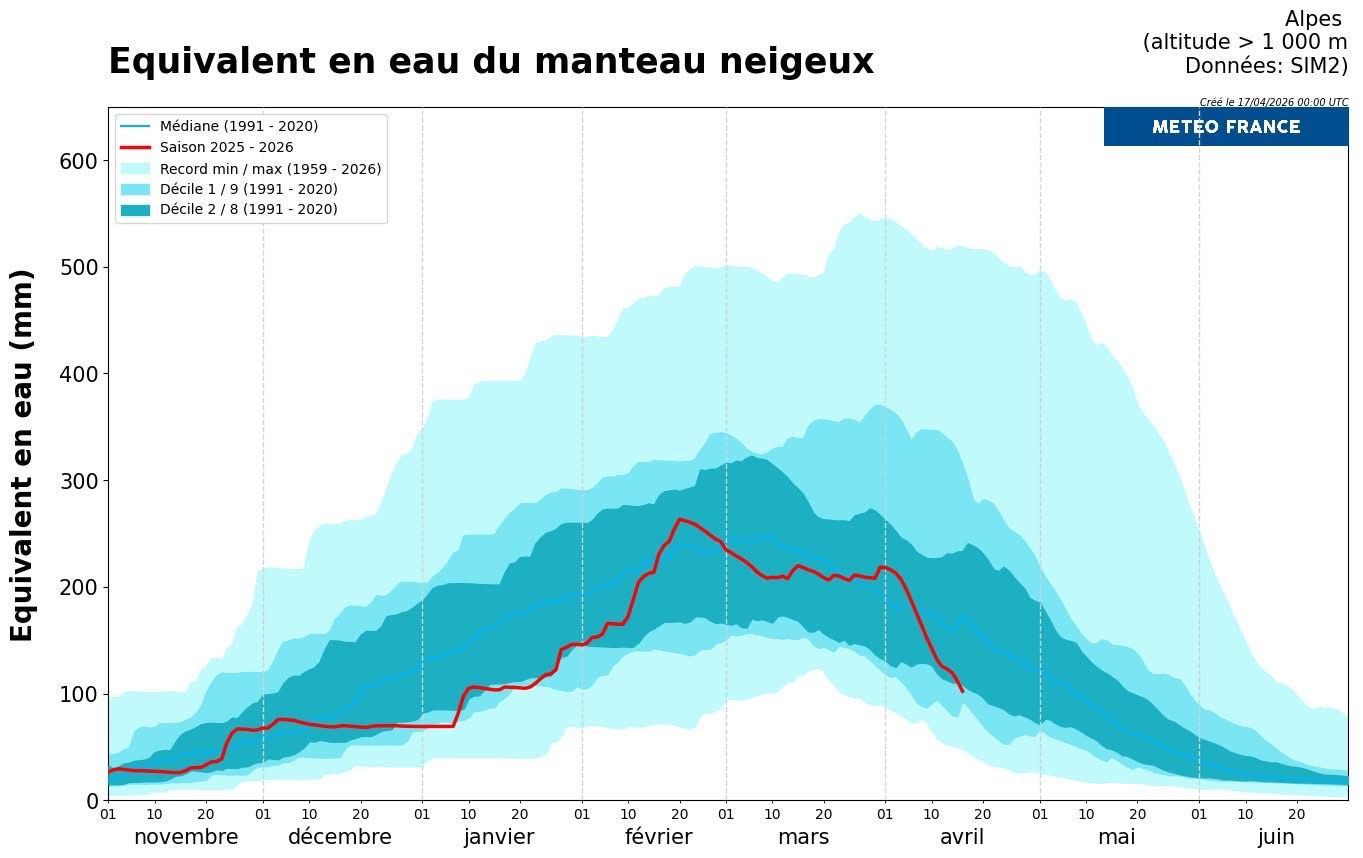
Méteo-France: Equivalent Eau Manteau Neigeux.

The global ski industry has just recorded its strongest season ever, with 399 million skier visits in 2024–25 according to Laurent Vanat. At the same time, snow conditions across large parts of the Alps are showing a very different reality.

As April progresses, data from national weather and avalanche agencies including Météo-France, AINEVA and MeteoSwiss points to a growing snow deficit, particularly across the Southern Alps, where snowpack is now significantly below seasonal norms.

The contrast between record demand and weakening snow reliability is becoming one of the defining features of modern Alpine skiing.

Continue reading “Record Skier Visits vs. Snow Deficit: What 2025 Reveals About the Future of Alpine Skiing”