


Planning a ski holiday is about much more than choosing a destination with plenty of snow. The hotel you book will shape almost every part of your trip—from how easily you reach the slopes each morning to how relaxed you feel after skiing, where you eat dinner and even how much you enjoy the resort itself.
Many travellers naturally focus on the number of stars, the size of the rooms or whether breakfast is included. While those details matter, experienced skiers know that the best ski hotel is not always the most luxurious or the most expensive. It’s the one that suits the type of holiday you want.
Whether you’re travelling as a family, planning your first ski trip, organising a luxury escape or simply looking to maximise your time on the mountain, choosing the right hotel can make the difference between a good holiday and an unforgettable one.
Here’s what to consider before making your reservation.
1. Location Is More Than Ski-in/Ski-out
One of the first things many travellers search for is a ski-in/ski-out hotel.
It sounds like the ultimate luxury: stepping outside, clicking into your skis and skiing straight to the lift.
Sometimes, it really is.
But not always.
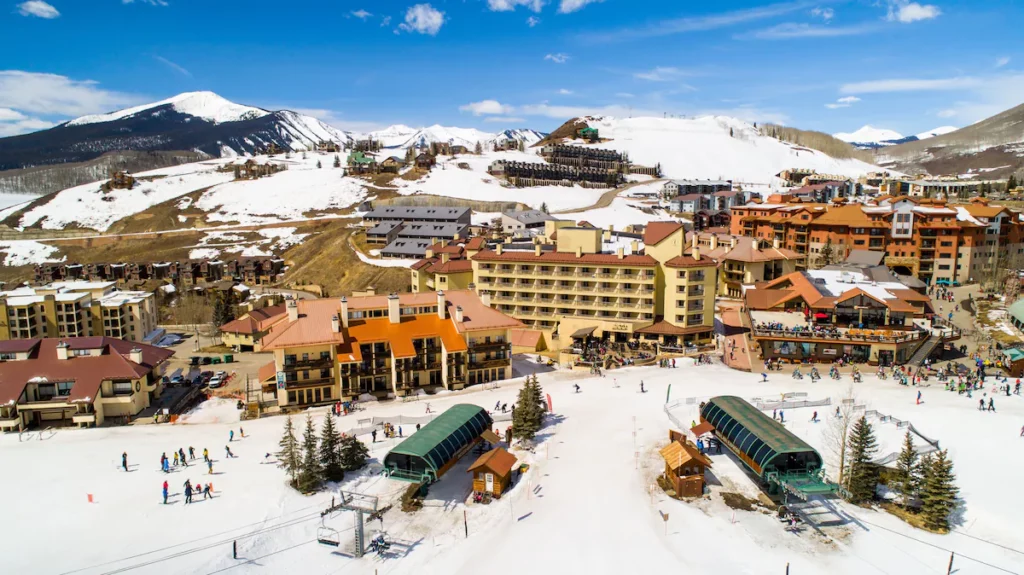
The reality is that “ski-in/ski-out” can mean very different things depending on the resort. Some hotels offer direct access to the main ski area. Others are connected only to a secondary piste or a quieter chairlift that still requires additional lifts before reaching the heart of the mountain.
A hotel that’s just a short walk from the main gondola can sometimes offer a better overall experience than one located beside a secondary slope.
Rather than asking only whether a hotel is ski-in/ski-out, ask yourself:
- Which lift does it connect to?
- How quickly can I reach the main ski area?
- Can I return easily at the end of the day?
- Is the location convenient both on and off the slopes?
The answer to those questions is often far more important than the label itself.
2. Match the Hotel to Your Ability
Not every skier has the same priorities.
An experienced skier who wants to be on the first lift every morning will probably value direct slope access above almost everything else.
A first-time skier has completely different needs.
If you’re still learning, you’ll spend much of your time in beginner areas and at the ski school. Being close to those facilities often matters far more than being able to ski back to your hotel.
Choosing accommodation should always begin with one simple question:
What kind of ski holiday am I planning?
The answer will influence almost every other decision.
3. Families Should Prioritise the Ski School
This is probably the most overlooked aspect of booking a ski holiday.
Many families automatically search for ski-in/ski-out accommodation because it sounds convenient.
However, if your children—or even one adult in your group—is taking ski lessons, the location of the ski school may be far more important.
Most ski schools meet at the main base area of the resort, close to the beginner slopes, rental shops and the principal lifts.
Some ski-in/ski-out hotels are located higher on the mountain or beside secondary lifts. While this is ideal for confident skiers, beginners may still have to travel down to the meeting point every morning.
Carrying equipment, organising children and trying to arrive on time for lessons quickly becomes much easier when your hotel is close to the ski school.
For many families, this creates a much more relaxed holiday than simply choosing accommodation because it offers direct slope access.
4. Choose the Right Lift—Not Just the Closest One
Not all lifts serve the same purpose.
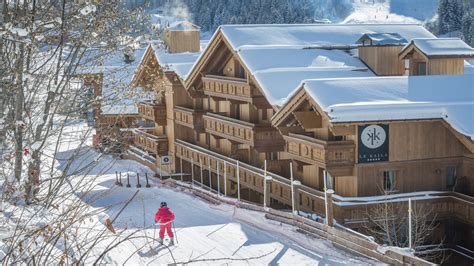
Some provide quick access to the heart of the ski area, while others mainly serve a handful of local runs. A hotel may advertise itself as being “next to the slopes”, but if those slopes only lead to a secondary chairlift, you could spend valuable time every morning making connections before reaching the best terrain.
Before booking, take a few minutes to study the resort’s piste map.
Ask yourself:
- Which lift is closest to the hotel?
- Is it the main access point to the ski area?
- Will you need several lifts before reaching the mountain’s best terrain?
- Can you easily ski back at the end of the day?
Sometimes a hotel that’s a short walk from the main gondola offers a far better skiing experience than one located directly beside a quieter lift.
5. Don’t Underestimate a Good Ski Room
It may not be the first thing you think about when booking a ski holiday, but you’ll appreciate it every single day.
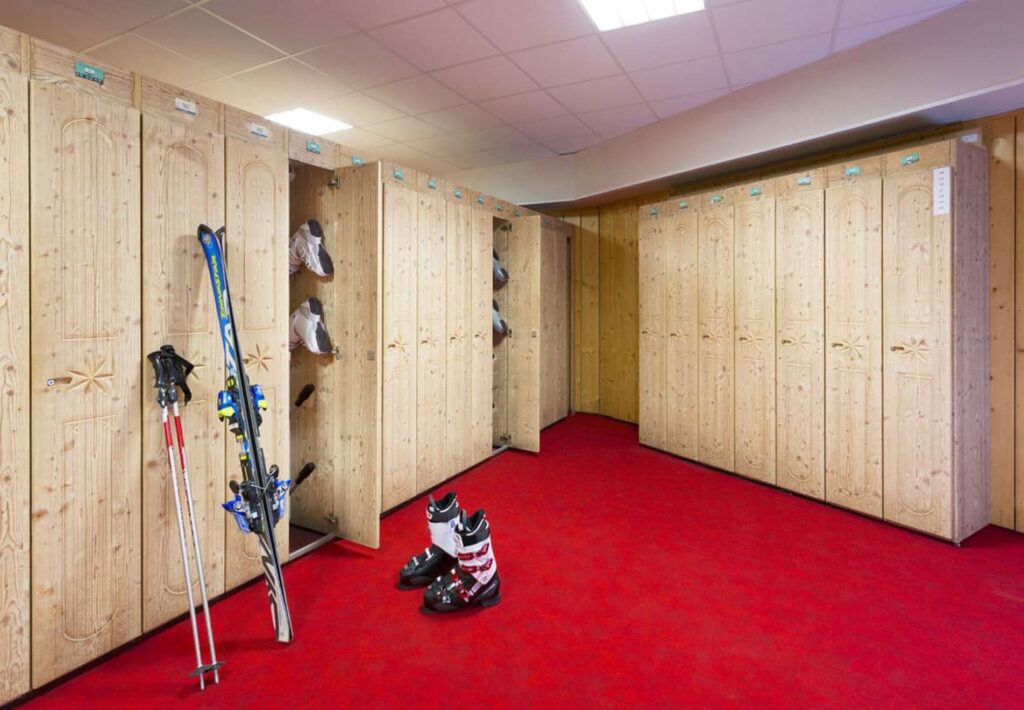
A well-designed ski room should include:
- Heated boot dryers.
- Secure lockers.
- Plenty of space to change comfortably.
- Easy access to the slopes or the hotel entrance.
Putting on warm, dry boots every morning is one of those small luxuries that quickly becomes essential.
If you’re travelling with children or carrying several pairs of skis, a spacious ski room can make life significantly easier.
6. Village Atmosphere or Maximum Ski Time?
Some travellers spend every possible minute skiing.
Others enjoy wandering through the village after the lifts close, discovering local restaurants, cafés and independent shops.
Neither approach is better—it simply depends on the holiday you’re looking for.
Hotels located right beside the slopes often provide unbeatable skiing convenience, while those in the village centre may offer a livelier atmosphere and a wider choice of dining and evening entertainment.
Think about how you’ll spend your evenings before deciding where to stay.
7. Spa and Wellness: One of the Best Investments You’ll Make
A ski holiday is physically demanding.
Even strong skiers appreciate the chance to relax after a full day on the mountain.
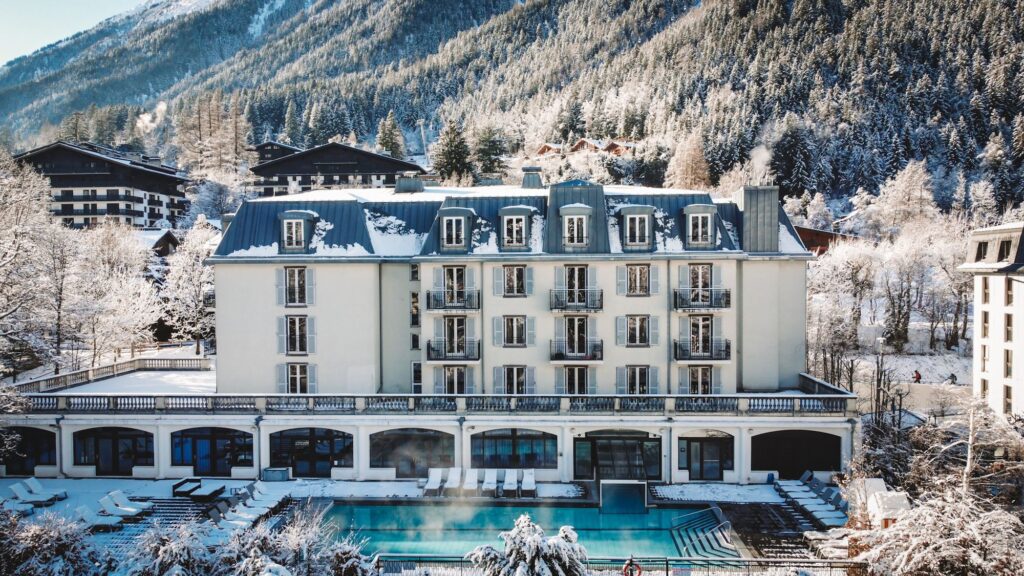
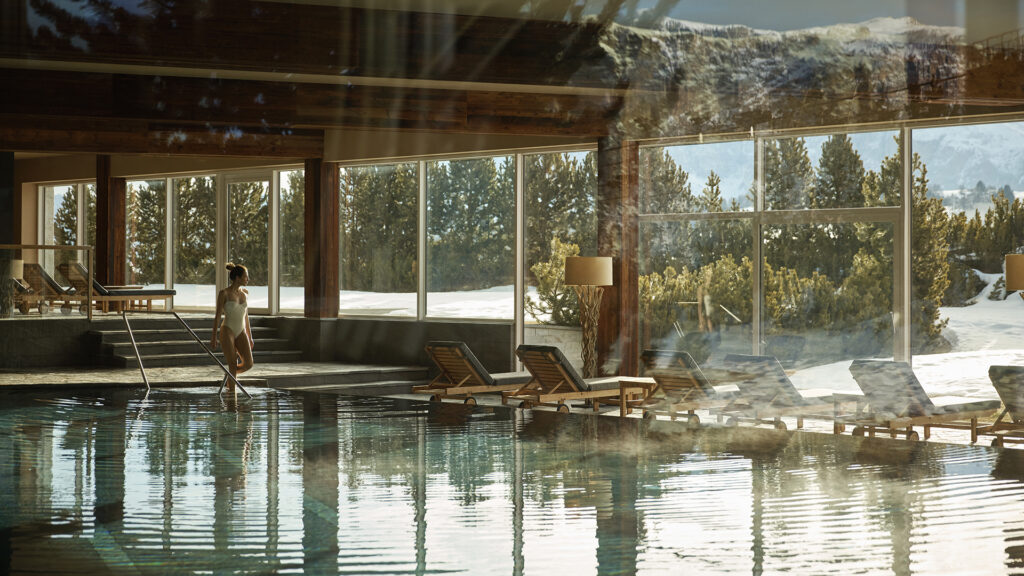
Today’s best mountain hotels often offer:
- Indoor swimming pools.
- Outdoor heated pools.
- Saunas and steam rooms.
- Hot tubs.
- Massage treatments.
- Relaxation areas with mountain views.
For many travellers, these facilities become just as memorable as the skiing itself.
If you’re travelling as a couple or planning a luxury mountain escape, wellness facilities may be worth prioritising.
8. Think About Food Before You Book
Mountain holidays are about much more than skiing.
Some destinations have outstanding restaurant scenes where you’ll want to eat somewhere different every evening. Others have more limited dining options, making half board an excellent choice.
Ask yourself:
- Do I enjoy trying local restaurants?
- Would I rather return to the hotel each evening?
- Are restaurants within walking distance?
- Is booking half board better value?
Choosing the right dining option can make your evenings every bit as enjoyable as your days on the slopes.
9. Snow Conditions: Look Beyond the Resort’s Altitude
Many people assume that choosing the highest resort automatically guarantees the best skiing.
In reality, snow conditions depend on much more than elevation alone.
When comparing resorts, consider:
- Historical snowfall.
- Snowmaking infrastructure.
- The direction the slopes face (north-facing slopes usually retain snow better).
- The time of year you’re travelling.
- The weather patterns for that particular season.
A high-altitude resort generally offers better snow reliability, especially early and late in the season. However, even famous high-elevation destinations can experience difficult winters if snowfall is limited.
Likewise, a slightly lower resort with excellent snowmaking, favourable terrain and colder north-facing slopes may offer surprisingly good conditions.
The best approach is to look at the complete picture rather than relying on altitude alone.
** Note: North-facing slopes keep the snow fresher in the Northern Hemisphere resorts, whilst south-facing slopes are the best for Southern Hemisphere ski areas.
10. Snowmaking Is an Advantage—But It Isn’t Magic
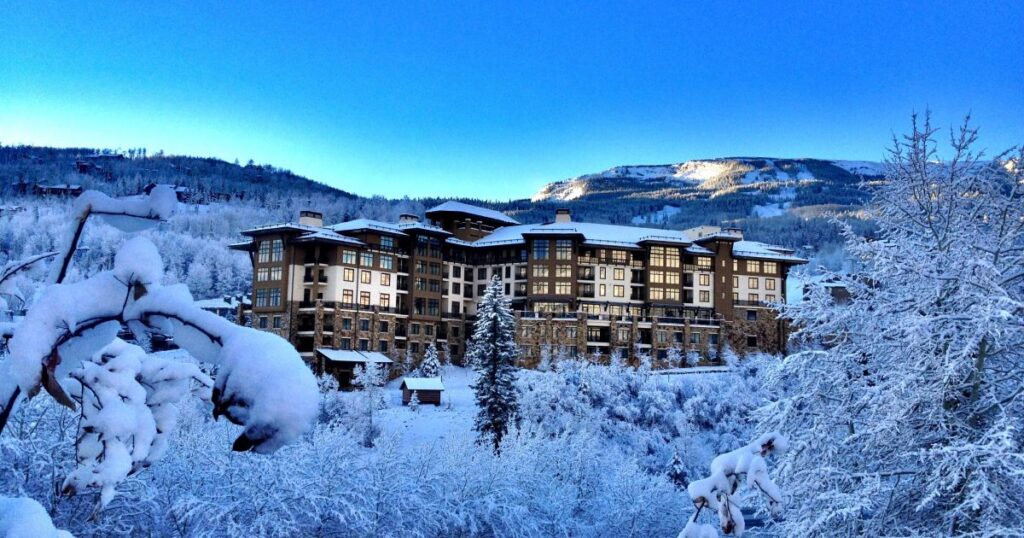
Snowmaking has transformed modern skiing and has become one of the most important investments for mountain resorts.
However, many travellers assume that snowmaking completely replaces natural snowfall.
It doesn’t.
Traditional snowmaking systems still require suitable weather conditions to produce high-quality snow efficiently. During prolonged warm periods, even resorts with extensive snowmaking may be unable to cover every run.
While newer technologies can operate in marginally warmer temperatures, they remain expensive and are still limited by the weather.
That’s why it’s always worth looking beyond the phrase “100% snowmaking coverage.”
A resort’s overall snow reliability depends on a combination of natural snowfall, altitude, slope orientation, temperatures and snowmaking—not on a single factor.

11. Consider Altitude—But Don’t Let It Worry You
Altitude is one of the most misunderstood aspects of planning a ski holiday.
In general, higher resorts enjoy colder temperatures and often offer more reliable snow, particularly at the beginning and end of the season. That’s one of the reasons why high-altitude destinations remain so popular.
However, altitude can also affect how your body feels—especially if you’re flying from sea level and heading straight to a resort above 2,000–2,500 metres (6,500–8,200 ft).
Most visitors experience no significant problems at all. Others may notice mild symptoms such as headaches, fatigue, disturbed sleep or feeling short of breath during the first day or two.
One important thing to remember is that altitude affects everyone differently—and even the same person can have a completely different experience from one trip to the next.
If you’re travelling to a particularly high destination, especially in the Rocky Mountains, it may be worth spending your first night at a lower elevation before continuing into the resort. Staying well hydrated, avoiding excessive alcohol on arrival and taking things a little easier on your first day can all help your body acclimatise.
For most travellers, however, altitude is simply another factor to be aware of rather than something to worry about.

12. How Easy Is It to Get There?
The holiday doesn’t begin when you reach the hotel—it begins when you leave home.
Some resorts are less than an hour from the airport, while others require several hours of driving, mountain roads or multiple transfers.
Before booking, consider:
- How long is the transfer?
- Will you need to hire a car?
- Are there regular shuttle services?
- Can you travel by train?
- Is the journey realistic with young children?
Sometimes saving an hour or two on travel time makes a much bigger difference to your holiday than upgrading to a larger room.
13. Think Beyond Winter
Many mountain hotels are no longer just winter destinations.
Across Europe and North America, more properties are investing in hiking, cycling, wellness, gastronomy and outdoor activities throughout the year.
If you enjoy returning to destinations in different seasons, it’s worth considering whether your hotel offers a great experience beyond skiing.
You may discover that the same place you love in winter becomes a favourite summer escape too.
14. Questions to Ask Before You Book
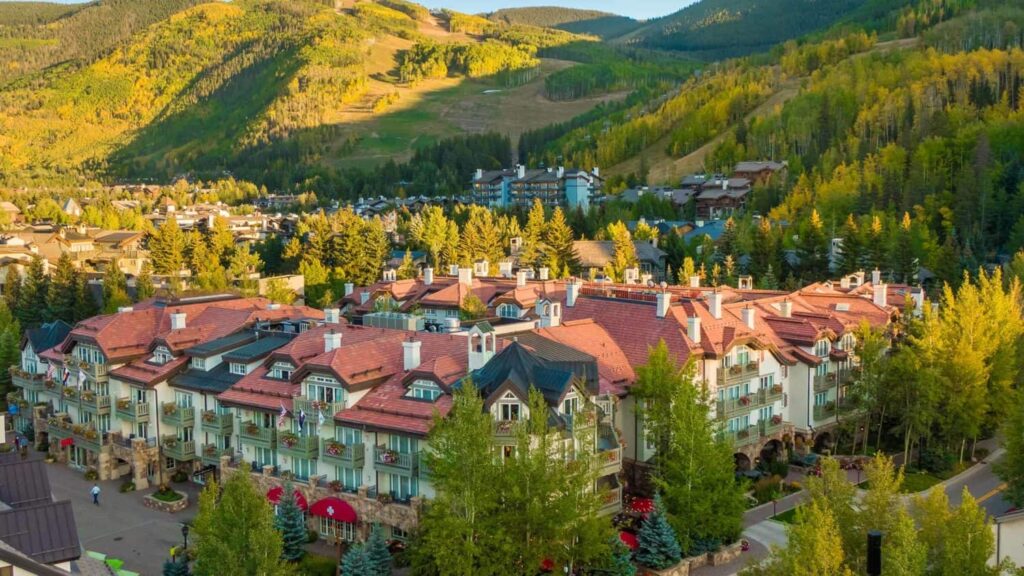
Before confirming your reservation, ask yourself a few practical questions.
Location
- Which lift is closest?
- Is it the main gondola or a secondary lift?
- How long does it take to reach the slopes?
If You’re Travelling with Beginners
- Where does the ski school meet?
- How easy is it to reach the beginner area?
- Can children walk safely to their lessons?
Facilities
- Does the hotel have a proper ski room?
- Are boots dried overnight?
- Is there a spa?
- Is equipment rental nearby?
Dining
- Is breakfast served early enough for the first lifts?
- Is half board worth considering?
- Can you walk to restaurants in the evening?
Practical Details
- Parking.
- Airport transfers.
- Shuttle services.
- Late check-in.
- Family rooms.
- Connecting rooms.
The answers to these questions often reveal much more than glossy marketing photos.
The Ski Guru’s Insider Tips
After nearly four decades working in international mountain tourism, I’ve learned that choosing the right ski hotel is rarely about finding the most luxurious property or the highest star rating.
Instead, think about how you’ll actually spend your holiday.
If you’re travelling with young children, staying close to the ski school may be far more valuable than true ski-in/ski-out access.
If you’re an experienced skier planning long days on the mountain, direct slope access could become your highest priority.
If food and atmosphere are important, being able to stroll into the village each evening may outweigh shaving a few minutes off your journey to the lifts.
And if you’re travelling to a high-altitude destination, don’t underestimate the importance of giving yourself time to acclimatise. Most people adapt without difficulty, but arriving well rested and taking things a little easier on your first day can make the start of your holiday much more enjoyable.
The best hotel isn’t the one with the biggest spa, the highest price or the best marketing photographs.
It’s the one that suits your holiday.
Final Thoughts
Finding the perfect ski hotel is about balancing convenience, comfort and the type of experience you want from your time in the mountains.
While it’s easy to focus on star ratings, room categories or whether a hotel is ski-in/ski-out, the best choice often comes down to much smaller details: where the ski school meets, which lift you’ll use every morning, whether you prefer village life or quiet surroundings, and how you like to spend your evenings after skiing.
Take the time to research the resort, study the piste map and think honestly about what matters most to you and your travel companions.
A little extra planning before you book can transform your ski holiday—and leave you free to enjoy what really matters: unforgettable days in the mountains.
The 5 Questions to Ask Before Booking Any Ski Hotel
✅ Where does the ski school meet?
✅ Which lift is closest?
✅ Is the hotel better for beginners or experienced skiers?
✅ What’s included besides the room (spa, ski room, dining)?
✅ How easy is it to reach from the airport?
Read More
- Best Mountain Restaurants in Courmayeur
- Complete Guide to Aosta
- Complete Guide to Pila
- South America Ski Season 26
Planning your next trip to the Italian Alps?
If you’re heading to the Aosta Valley, take a look at Il Cuore della Valdigne, our family-owned apartment in Morgex, available for rent when we’re not using it ourselves.
It’s an ideal base to:
- Ski in Courmayeur, La Thuile and Pila
- Enjoy the mountains in summer (hiking, biking, nature)
- Explore the Mont Blanc valley in a quieter, more authentic setting.
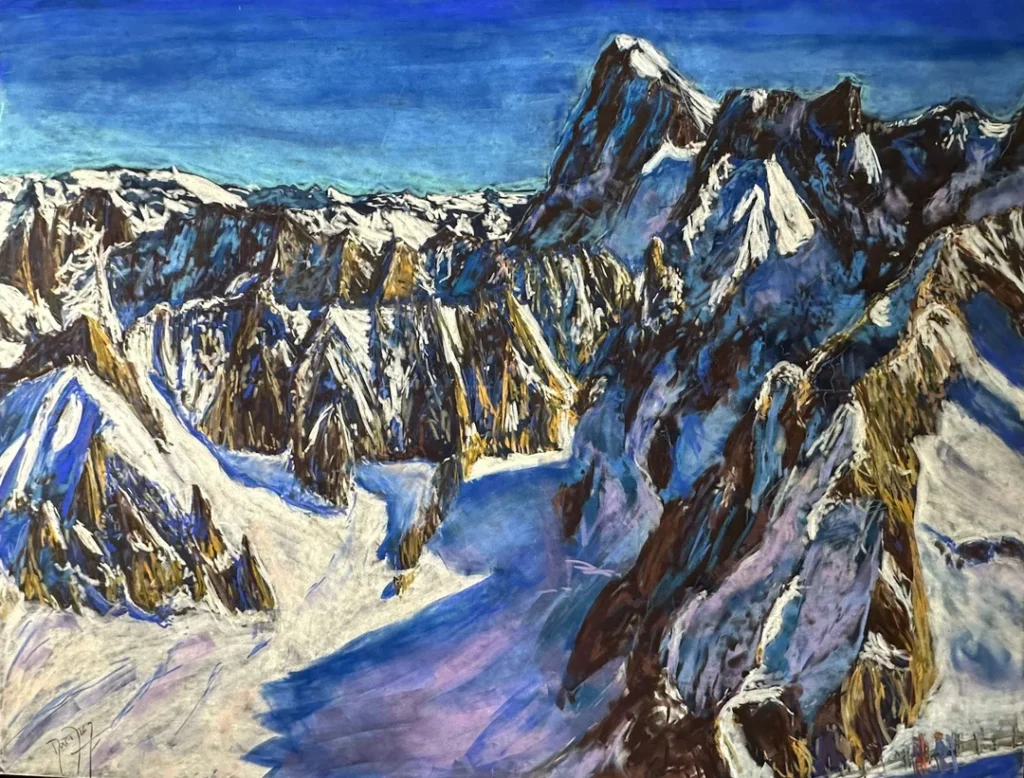
Check my Mountain Art on my Shop
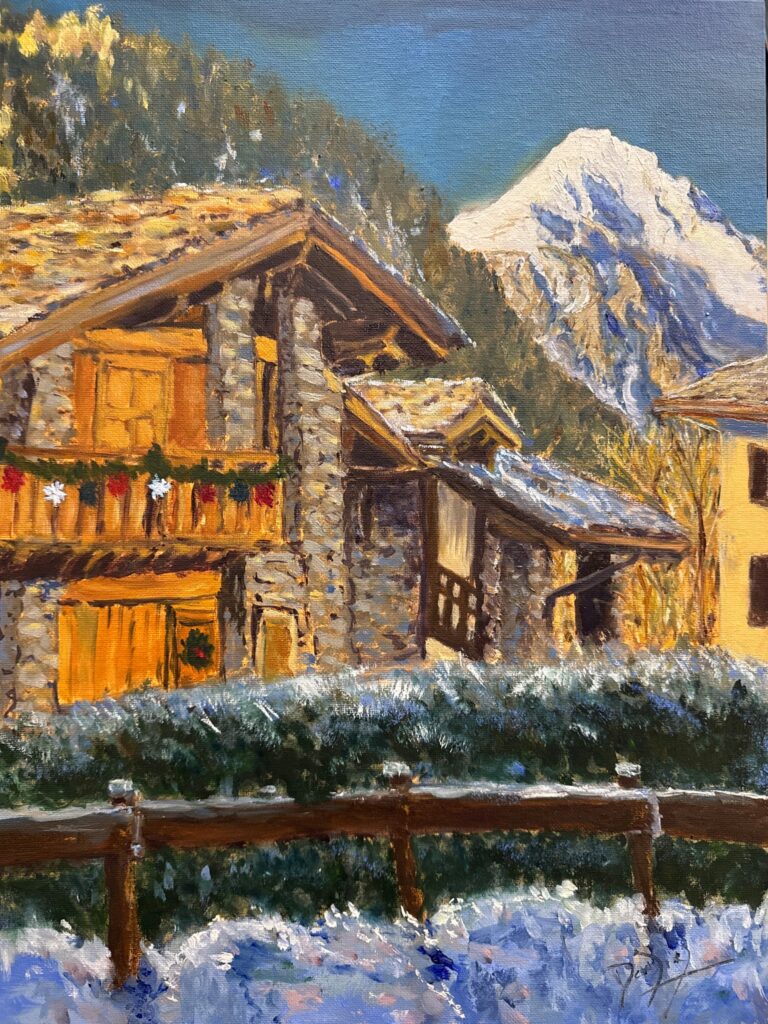
You can go to my shop and see what have been inspiring me lately, lots mountain landscapes in soft pastels, and now in oils too. Go here to check my latest works!
Featured Image: Hotel La Perla in Corvara, right next to the lifts, a fabulous 5 stars hotel to stay, if you can. Photo: Hotel La Perla.


Discover more from The-Ski-Guru
Subscribe to get the latest posts sent to your email.
 Subscribe to The-Ski-Guru here.
You must be logged in to post a comment.