

This article may contain affiliate/compensated links. For full information, please see our disclaimer here. Some links on my website may not function properly if ad blocker is enabled.
Many visitors pass through Aosta on their way to Courmayeur, Cervinia or Pila without ever stopping to explore the city itself.
That is a mistake.
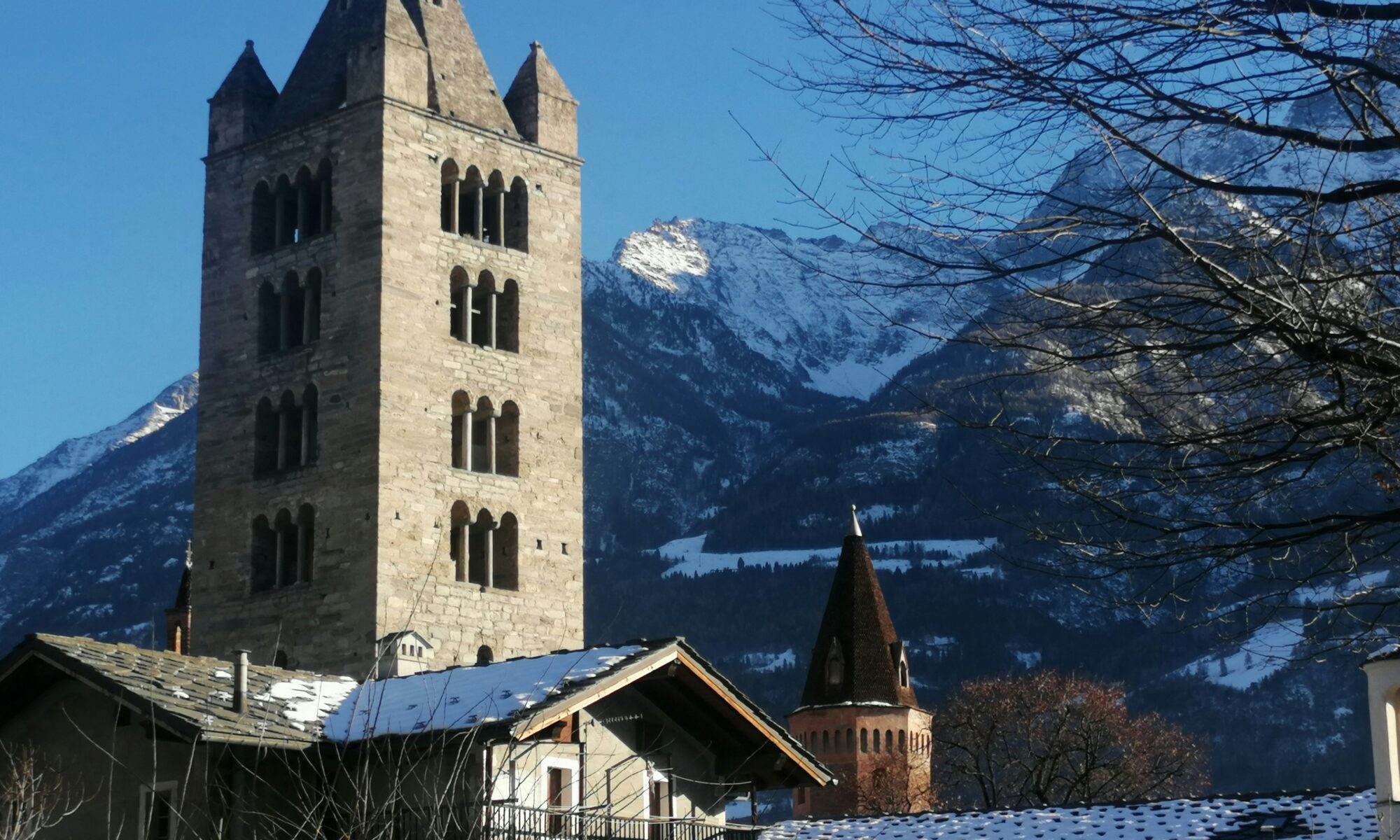
Known as the “Rome of the Alps”, Aosta combines remarkably preserved Roman monuments, medieval churches, mountain scenery, excellent restaurants and easy access to some of the most famous destinations in the Alps.
More importantly, Aosta may be the best base in the entire Aosta Valley. From here you can ski in Pila, visit Courmayeur beneath Mont Blanc, explore Gran Paradiso National Park, discover medieval castles, cross into Switzerland via the Great St Bernard Pass or even spend a day in Chamonix.
Unlike many mountain resorts, Aosta is a real city that functions year-round. Visitors benefit from a wide range of restaurants, shops, supermarkets, sports facilities and services while remaining within easy reach of the mountains.
Table Of Contents
- Why Visit Aosta?
- Where Is Aosta?
- Map of Aosta and the Surrounding Valleys
- How to Get to Aosta
- Why is Aosta Bilingual?
- A Brief History of Aosta
- How Many Days Do You Need in Aosta?
- Best Time to Visit Aosta
- What to See in Aosta
- A Walking Tour of the Historic Centre
- Where to Stay in Aosta
- Where to Eat in Aosta
- Aperitivo in Aosta
- Gelato and Sweet Treats
- Aosta with Kids
- Shopping in Aosta
- Gros Cidac: More Than a Supermarket
- Markets in Aosta
- The Most Famous Events in Aosta
- Wine Experiences Near Aosta
- Parking in Aosta
- Best Views Over Aosta
- Day Trips from Aosta
- Skyway Monte Bianco, Punta Helbronner and Chamonix
- Castles of the Aosta Valley
- Camping Near Aosta
Why Visit Aosta?
Aosta is often overlooked by visitors rushing to Courmayeur, Cervinia or the ski slopes of Pila. Yet it may be one of the most rewarding destinations in the Alps.
Unlike many mountain resorts, Aosta is a real city that functions year-round. It combines Roman ruins, medieval churches, lively pedestrian streets, excellent restaurants, local markets and easy access to some of the most spectacular mountain scenery in Europe.
Visitors can spend the morning exploring Roman monuments, enjoy lunch in a traditional Valdostan restaurant, take the gondola to Pila for mountain views in the afternoon and return to the city for aperitivo and dinner.
Aosta is also one of the most practical bases in the Alps. Within an hour’s drive visitors can reach Courmayeur, Cervinia, La Thuile, Cogne, Gran Paradiso National Park, the Great St Bernard Pass and numerous castles, wineries and hiking trails.
For travellers looking for a combination of culture, history, mountains and authentic local life, Aosta offers far more than many better-known Alpine destinations.
Where Is Aosta?
Aosta is the capital of the Aosta Valley, Italy’s smallest region, located between France and Switzerland in north-western Italy.
The city sits at approximately 583 metres above sea level and is surrounded by mountains including Becca di Nona, Monte Emilius and Pointe de Chaligne.
Distances from Aosta include:
- Courmayeur: 35 km
- Chamonix: approximately 60 km
- Turin: 115 km
- Geneva: 150 km
- Milan: 180 km
The city occupies a strategic location at the crossroads of the Great St Bernard Pass leading towards Switzerland and the Little St Bernard Pass leading towards France.
Map Of Aosta and the Surrounding Valleys
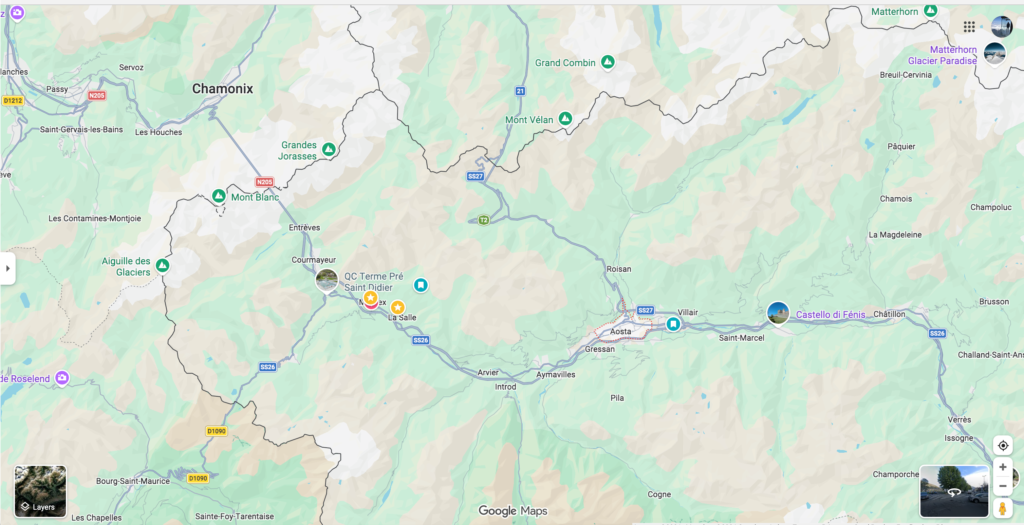
Aosta sits at the heart of the Aosta Valley, making it an ideal base for exploring Courmayeur, Mont Blanc, Pila, Cervinia, Gran Paradiso National Park, the Great St Bernard Pass and many of the region’s historic castles. Google Maps.
How to Get to Aosta
Despite its Alpine location, Aosta is surprisingly easy to reach from Italy, France and Switzerland.
By Car
Most visitors arrive by car via the A5 motorway, which runs through the centre of the Aosta Valley.
From Turin
Take the A5 motorway north-west towards Aosta.
Approximate driving time:
1 hour 15 minutes.
From Milan
Take the A4 motorway towards Turin and then connect with the A5 towards Aosta.
Approximate driving time:
2 hours.
From France
Visitors travelling from Chamonix can reach Aosta via the Mont Blanc Tunnel and then follow the A5 motorway towards the city.
Approximate driving time:
1 hour 15–30 minutes, depending on tunnel traffic.
From Switzerland
Visitors coming from Switzerland can reach Aosta via the Great St Bernard Tunnel or, during summer, via the Great St Bernard Pass.
The route descends directly into the Aosta Valley and provides some spectacular Alpine scenery.
By Train
Aosta railway station is located within walking distance of the historic centre.
Visitors travelling by train should check the latest schedules on the official Trenitalia website, as services between Ivrea and Aosta are currently affected by railway modernisation works. Current plans indicate that direct rail services are expected to resume from 1 January 2027.
Check the latest train schedules at Trenitalia:
Official Trenitalia Timetable and Tickets
Trenitalia Infomobilità
Trenitalia Service Updates
By Air
The nearest international airports are:
Turin Airport (TRN)
Approximately 115 km from Aosta.
Driving time:
Around 1 hour 15 minutes.
Geneva Airport (GVA)
Approximately 150 km from Aosta.
Driving time:
Around 2.5–3 hours, depending on traffic and border conditions.
Milan Malpensa Airport (MXP)
Approximately 180 km from Aosta.
Driving time:
Around 2 hours.
For many international visitors, Geneva and Milan Malpensa offer the greatest choice of flights, while Turin provides the shortest transfer time.
By Bus
Long-distance coach services also connect Aosta with Turin, Milan and major airports.
During rail engineering works, buses often provide the most direct public transport option from Ivrea to Aosta.
Why Is Everything Written in Both Italian and French?
One of the first things visitors notice is that road signs, official buildings and place names often appear in both Italian and French.
The reason lies in the region’s history.
For centuries, the Aosta Valley formed part of the territories controlled by the House of Savoy. Long before modern Italy existed, the valley occupied a strategic position controlling access to the Great and Little St Bernard passes, important trade routes linking Italy with Switzerland and France.
The local population developed its own culture and language traditions. Alongside Italian and French, many residents still speak Valdôtain patois, a Franco-Provençal language that has been used in the region for centuries.
Following the Second World War, the Aosta Valley was granted special autonomous status within Italy. Today both Italian and French remain official languages, helping preserve the region’s unique cultural identity.
A Brief History of Aosta
The city was founded by the Romans in 25 BC as Augusta Praetoria Salassorum following the defeat of the Salassi tribe.
Because of its strategic position controlling the Alpine routes, Aosta became one of the most important Roman settlements in the Alps. Anyone travelling between northern Europe and the Italian Peninsula often passed through the valley, making it both a military and commercial crossroads.
The city was built on a strict Roman grid pattern and much of that original layout survives today.
Standing near the Arch of Augustus requires a little imagination. In Roman times, visitors entering Augusta Praetoria would have enjoyed long, uninterrupted views along the city’s principal streets. The main east-west axis stretched through the settlement in a remarkably straight line. Over the centuries, medieval and later buildings gradually altered those sightlines, but the Roman urban plan remains clearly visible beneath the modern city.
During the Middle Ages, Aosta became an important stop along the Via Francigena pilgrimage route connecting northern Europe with Rome.
The region later became part of the territories controlled by the House of Savoy. Thanks to its position between Italy, France and Switzerland, Aosta played a key role in monitoring trade and collecting taxes from travellers crossing the Great and Little St Bernard passes.
This long connection with Savoy explains why French remains an official language in the region alongside Italian. Many local residents also continue to speak Valdôtain patois, a traditional Franco-Provençal dialect unique to the Aosta Valley.
Today Aosta remains one of the best-preserved Roman cities in northern Italy while retaining a distinct cultural identity shaped by centuries of French, Italian and Alpine influences.
How Many Days do you Need in Aosta?
1 Day
Enough time to explore the Roman monuments, stroll through the pedestrian centre, enjoy lunch and experience the atmosphere of the city.
2 Days
Ideal for most visitors.
Two days allows time to explore the historic centre at a relaxed pace, visit museums, enjoy local restaurants and experience the city’s cafés and shops.
3–4 Days
A good option if you want to combine Aosta with excursions to Pila, Courmayeur, Skyway Monte Bianco, Cogne or one of the valley’s castles.
5–7 Days
Aosta becomes an excellent base for a longer holiday.
Visitors can explore different valleys each day, visit wineries, discover castles, hike in Gran Paradiso National Park or ski at several different resorts during winter.
Best Time to Visit Aosta
Aosta is a true four-season destination.
Spring
Spring brings quieter streets, blooming alpine meadows and pleasant temperatures. It is also an excellent time to explore castles and historic sites before the summer crowds arrive.
Summer
Summer offers access to hiking, mountain biking, Skyway Monte Bianco and the high mountain resorts.
Temperatures in Aosta can occasionally exceed 30°C during heatwaves, although conditions are generally cooler than many Italian cities and coastal destinations.
Autumn
Many locals consider autumn the most beautiful season in the valley.
The forests around Aosta, Cogne, Courmayeur and La Thuile display spectacular colours, while vineyards begin the grape harvest.
Winter
Winter transforms the valley into one of Europe’s leading ski destinations.
Aosta itself often receives less snow than the surrounding mountains, meaning roads and city streets remain accessible while nearby resorts enjoy excellent skiing conditions.
What To See in Aosta
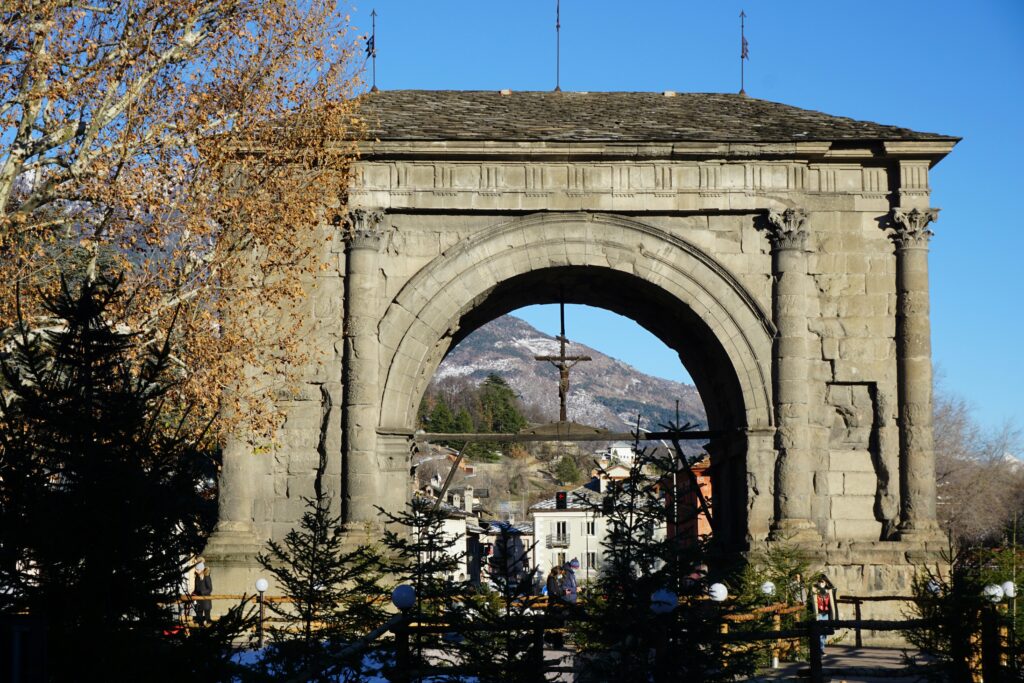
Arch Of Augustus
Built shortly after the city’s foundation, the Arch of Augustus commemorates Rome’s victory over the Salassi and remains one of Aosta’s most recognisable landmarks.
Porta Praetoria
One of the best-preserved Roman city gates anywhere in Europe, Porta Praetoria once served as the principal entrance to Augusta Praetoria.
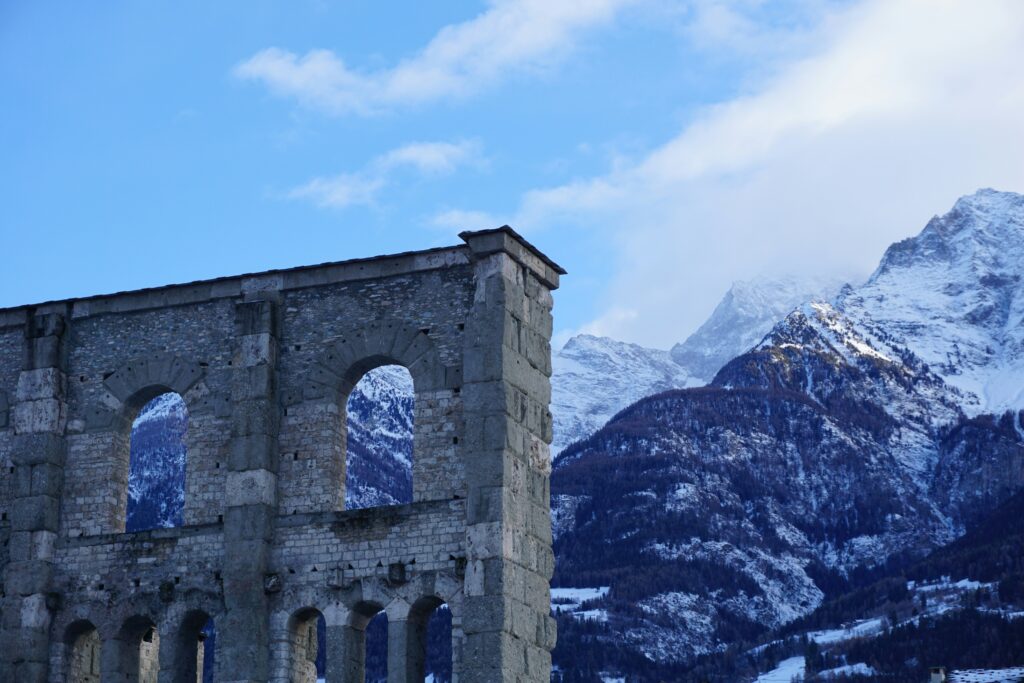
Roman Theatre
The Roman Theatre is Aosta’s most photographed monument. Its surviving façade remains one of the most impressive Roman structures in northern Italy.
Roman Walls
Large sections of the original Roman walls still survive and can be explored on foot.
Cryptoporticus
One of Aosta’s hidden treasures, the Cryptoporticus is a mysterious underground Roman structure beneath the cathedral area.
Aosta Cathedral
A fascinating blend of Roman, Romanesque and Renaissance architecture.
Sant’Orso
Many locals consider Sant’Orso the most beautiful religious complex in the city. Highlights include its Romanesque cloister and medieval frescoes.
Regional Archaeological Museum
Ideal for understanding the history of Roman Aosta and the wider valley.
Megalithic Area of Saint-Martin-de-Corléans
One of Europe’s most important prehistoric archaeological sites and well worth visiting.
A Walking Tour of the Historic Centre
The best way to discover Aosta is on foot.
Suggested route:
Arch of Augustus → Porta Praetoria → Roman Theatre → Cathedral → Cryptoporticus → Piazza Chanoux → Sant’Orso.
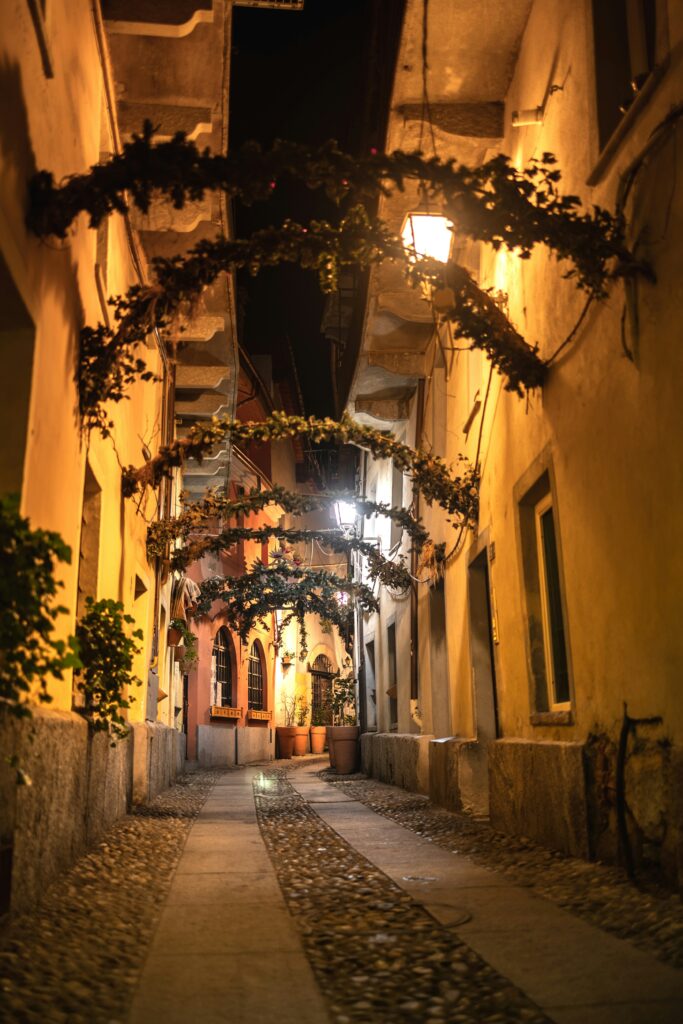
Most of the historic centre is pedestrianised and can easily be explored in half a day.
Once you have visited the major monuments, simply wandering through the streets between Piazza Chanoux, Via Porta Praetoria and Via Édouard Aubert is one of the pleasures of visiting Aosta.
PART 2 – WHERE TO STAY, WHERE TO EAT, APERITIVO, GELATO, FAMILIES, SHOPPING & MARKETS
Where To Stay in Aosta
One of Aosta’s strengths is the variety of accommodation available. Visitors can choose between city-centre hotels, mountain-view properties, apartment stays and family-friendly hotels close to the Aosta-Pila gondola.
Best For a Historic Centre Stay
Hotel Duca D’Aosta
One of the most central upscale hotels in Aosta, located a short walk from Piazza Chanoux and the city’s Roman monuments.
The hotel underwent a complete renovation and is home to the Brasserie Café d’Europe, making it an excellent choice for visitors wanting restaurants, shopping and sightseeing on their doorstep.
Booking:
https://www.booking.com/hotel/it/duca-d-39-aosta.html
Omama Hotel
A modern lifestyle hotel within walking distance of the historic centre.
Popular with couples and travellers looking for contemporary design and a younger atmosphere.
Booking:
https://www.booking.com/searchresults.html?ss=Omama+Hotel+Aosta
HB Aosta Hotel & Balcony Spa
Located close to Piazza Chanoux, HB offers one of the best central locations in the city together with wellness facilities and a spa.
Booking:
https://www.booking.com/searchresults.html?ss=HB+Aosta+Hotel+Aosta
Vecchio Mulino Guest House
A smaller and more intimate property offering comfortable accommodation within easy reach of the city centre.
Booking:
https://www.booking.com/searchresults.html?ss=Vecchio+Mulino+Guest+House+Aosta
Best For Views and Alpine Atmosphere
Hotel Milleluci
One of the classic hotels of Aosta, perched above the city with some of the best views in the valley.
Family-run and full of Alpine character, it feels more like a mountain retreat than a city hotel.
Booking:
https://www.booking.com/searchresults.html?ss=Hotel+Milleluci+Aosta
Best For Families and Wellness
Hostellerie Du Cheval Blanc
One of the most complete hotel experiences in Aosta.
Facilities include indoor and outdoor swimming pools, wellness areas, restaurant, bar and fitness facilities.
The hotel is located outside the historic centre but benefits from bus connections and easy access to the Aosta-Pila gondola area.
Booking:
https://www.booking.com/searchresults.html?ss=Hostellerie+du+Cheval+Blanc+Aosta
Best For Skiers Using the Aosta-Pila Gondola
Hotel Miage
Located in Pont Suaz close to the departure station of the Aosta-Pila gondola.
A practical choice for visitors arriving by car and planning to spend time in Pila.
Booking:
https://www.booking.com/searchresults.html?ss=Hotel+Miage+Aosta
La Vigne de Papagran
One of the most interesting recent additions to the accommodation offering near Aosta.
Located in Charvensod, the property occupies a beautifully restored stone building that once formed part of a winery estate. The former agricultural buildings have been transformed into stylish apartments ideal for families and longer stays.
Booking:
https://www.booking.com/searchresults.html?ss=La+Vigne+de+Papagran+Charvensod
Where To Eat in Aosta
Traditional Valdostan Cuisine
Bataclan
Located close to the Arch of Augustus, Bataclan combines restaurant, pizzeria and bar and has long been a popular meeting place for locals and visitors.
Ristorante La Chaumiere
Located in Signayes above Aosta on the road towards Roisan and Valpelline.
An excellent place to experience traditional Valdostan cuisine including fondue, raclette and grilled meats.
Trattoria Di Campagna
Located on the road towards Courmayeur, this restaurant is a good option for visitors looking for traditional local cuisine outside the city centre.
Locanda Dei Sognatori
Located near Saint-Pierre, this restaurant is well known among locals and visitors looking for regional dishes.
Restaurants In the Historic Centre
Belle Hélène
Located on Via Édouard Aubert, Aosta’s main pedestrian street.
A popular choice for lunch or dinner while exploring the historic centre.
La Grenette
Located beside Porta Praetoria, La Grenette enjoys one of the most attractive settings in the city.
Website:
https://www.la-grenette.it/
aRoma
One of the most original dining experiences in Aosta.
Guests can enjoy dinner or apericena while viewing Roman archaeological remains beneath glass floors.
Website:
https://www.ristorantearoma.it/
Japanese Cuisine
Oishi Sushi Aosta
Located at the beginning of Via Édouard Aubert.
Popular for its fixed sushi menus and good value.
Donburi
Via Porta Praetoria 36
A popular choice for ramen and Japanese cuisine near the Roman monuments.
Fine Dining
Vecchio Ristoro
For visitors seeking a higher-end dining experience, Vecchio Ristoro holds a Michelin star and is considered one of the leading restaurants in the Aosta Valley.
Website:
https://vecchioristoro.com/
Aperitivo In Aosta
One of the pleasures of visiting Aosta is that you rarely need to search for the “best” aperitivo.
Many cafés and bars throughout the pedestrian centre serve generous aperitivo spreads alongside drinks.
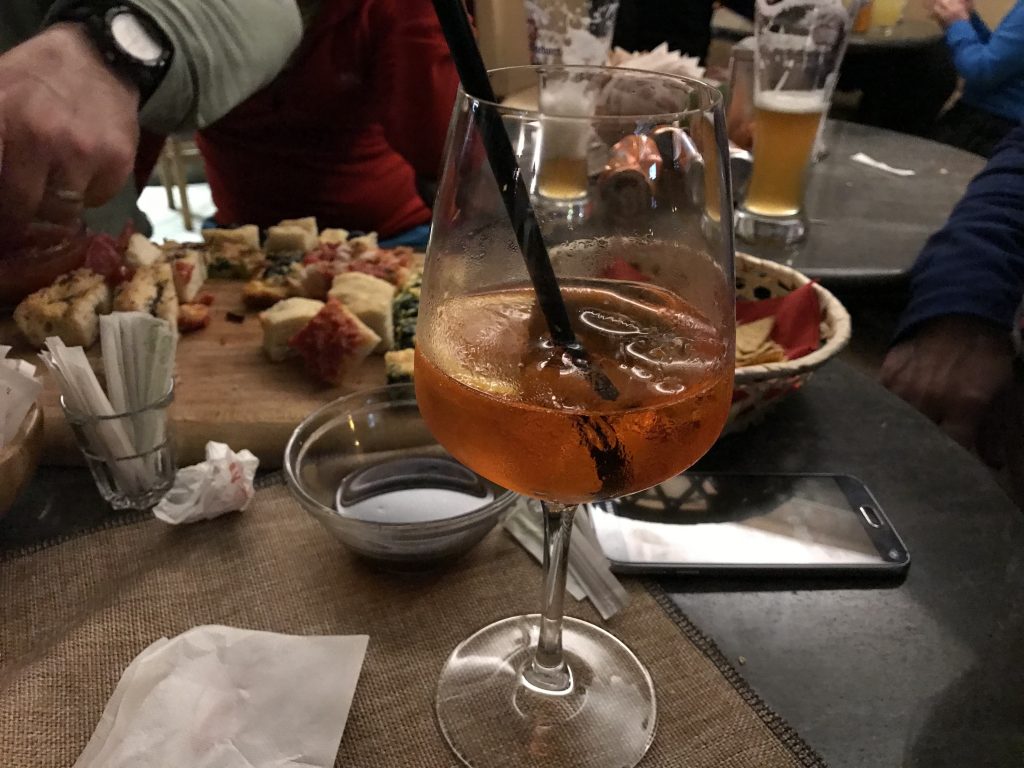
The best areas include:
- Piazza Chanoux
- Via Édouard Aubert
- Via Porta Praetoria
- Streets surrounding the Roman Theatre
Depending on the venue and time of day, your drink may be accompanied by local cheeses, cured meats, focaccia, pizza and other appetisers.
For visitors from outside Italy, aperitivo in Aosta often represents excellent value and is one of the best ways to experience local life.
Gelato And Sweet Treats
Mondogelato
Located on Via Édouard Aubert beside the Belle Hélène restaurant.
One of the city’s best-known gelaterias and a favourite stop while exploring the pedestrian centre.
Address:
Via Édouard Aubert, Aosta
Nadia E Nando Pasticceria Gelateria
Located near the Piazza della Repubblica parking area.
While the flavour selection may be smaller than some competitors, quality is consistently excellent.
Verde Pistacchio
Located close to Piazza Émile Chanoux on the route towards the Arch of Augustus.
A favourite for artisanal gelato, particularly pistachio flavours.
Hot Chocolate with Whipped Cream
During winter, many cafés serve hot chocolate topped with whipped cream.
In the Aosta Valley this is often a thick chocolate dessert rather than a simple drink and is especially popular with children.

Aosta With Kids
Aosta is surprisingly family-friendly.
The pedestrianised centre makes it easy to explore with children, and many attractions are located within walking distance of one another.
Family-Friendly Food
Pizza al taglio is widely available throughout the historic centre and makes an easy lunch option.
Millennium in Pont Suaz remains popular with families thanks to its indoor children’s play area.
Following a change of management in 2023, the restaurant now focuses mainly on pizzas while retaining the playground.
Sports And Swimming
One of Aosta’s hidden strengths is its excellent sports infrastructure.
The city’s facilities are managed by:
Consorzio Valregis Gestione Impianti Sportivi
Piazza Tzamberlet 7
11100 Aosta (AO)
Tel: +39 0165 33220
Facilities include:
- Athletics tracks
- Football pitches
- Tennis courts
- Green spaces
- Outdoor summer swimming pools
- Indoor year-round swimming pools
Visitors should note that swimming caps are required but can usually be purchased on site.
Easy Access to Pila
One of the biggest advantages of staying in Aosta with children is the direct gondola connection to Pila.
In less than twenty minutes families can move from the city centre to hiking trails, mountain biking routes, ski slopes or mountain restaurants.
Shopping In Aosta
Aosta offers some of the best shopping in the region for outdoor enthusiasts and food lovers.
Mountain Sports Stores
Meinardi Sports
A long-established local specialist in mountain sports equipment and clothing.
Vertical
Located near Aosta Airport, Vertical offers a large selection of mountain sports gear, outdoor clothing and equipment.
The surrounding commercial area also contains supermarkets, restaurants and a bowling centre popular with local families.
Local Food Shopping
Nicoletta
Via Porta Praetoria 3
11100 Aosta
Tel: +39 353 3682393
A good stop for local cheeses, cured meats and regional specialities.
Le Coin Gourmand
Via Sant’Anselmo 33
11100 Aosta
Another excellent choice for visitors wanting to take home regional products.
Gros Cidac: More Than a Supermarket
Located next to the Aosta-Pila gondola station, Gros Cidac is one of the most useful stops for visitors staying anywhere in the Aosta Valley.
The hypermarket offers an enormous selection of:
- Local cheeses
- Wines
- Cured meats
- Dairy products
- Fresh fish
- Butcher counters
- Prepared foods
- Clothing
- Household goods
There is also an inexpensive café-bar inside where locals stop for coffee, pastries, lunch, aperitivo or a quick snack.
Gros Cidac sits beside the parking area for the Aosta-Pila gondola. From here visitors can walk to Piazza della Repubblica and the beginning of Aosta’s pedestrian centre in around ten minutes via the pedestrian route beneath the nearby road viaduct.
Markets In Aosta
Marché Du Terroir
Held in Piazza Chanoux on Tuesdays and Saturdays.
A good place to discover local products and regional specialities.
Mercato Di Aosta
One of the largest weekly street markets in the Alps. Held around Corso Battaglione Aosta on Tuesdays.
The market includes food products, clothing, flowers, household goods and a wide variety of everyday items.
Flea Market
An antiques and flea market takes place on the first Sunday of each month in Piazza Plouves.
The Most Famous Events in Aosta
Fiera Di Sant’Orso
Held every year on 30 and 31 January, the Fiera di Sant’Orso is one of the oldest and most important artisan fairs in the Alps.
Often simply called “La Saint Ours”, the event attracts thousands of visitors from across Italy, France and Switzerland.
For two days, the streets of Aosta fill with artisans displaying traditional wood carvings, furniture, sculptures, leather goods, textiles and handcrafted products.
The fair has roots stretching back more than 1,000 years and remains one of the defining cultural events of the Aosta Valley.
A smaller summer version, known as the Foire d’Été, is also held in Aosta and showcases many of the same traditional crafts.
Marché Vert Noël
If you visit Aosta during the Christmas season, the Marché Vert Noël is one of the highlights.
The market stretches from Piazza Chanoux towards the Roman Forum area, creating one of the most atmospheric Christmas markets in the Alps.
Wooden chalets sell local food, artisan products, decorations, wines, cheeses and gifts, while festive lights transform the historic centre.
For many visitors, this is one of the best times of year to experience Aosta.
Parking can become more difficult during the market period, so arriving early is recommended.
PART 3 – WINERIES, PARKING, VIEWS, DAY TRIPS, CASTLES, CAMPING & CONCLUSION
Wine Experiences Near Aosta
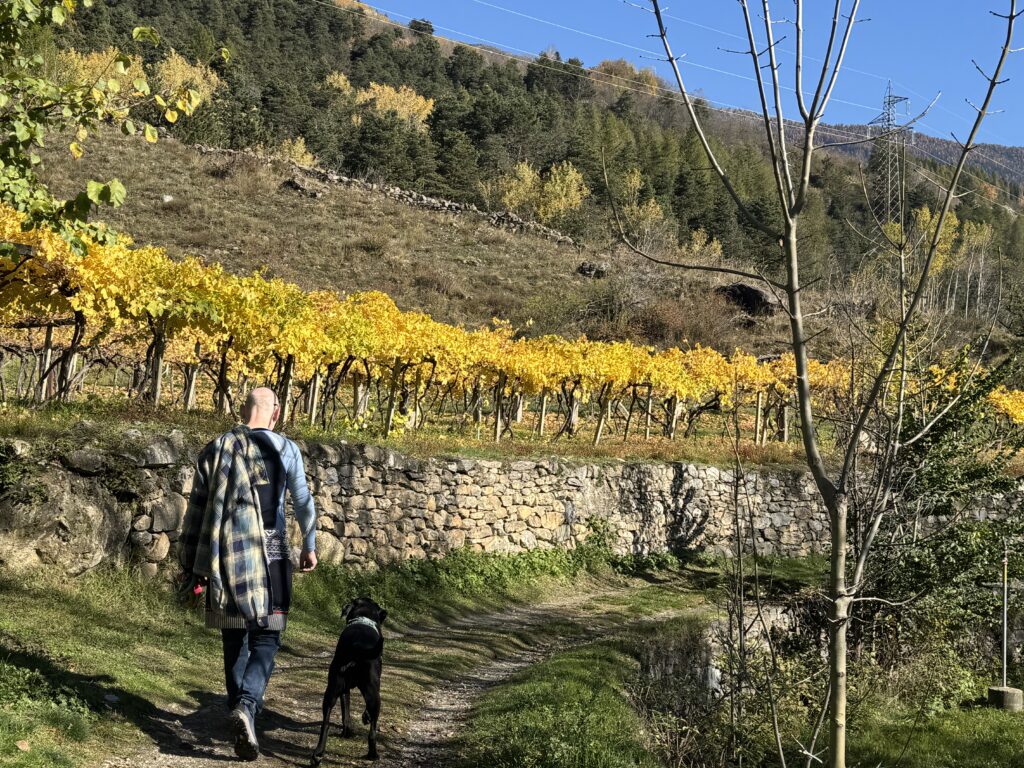
The Aosta Valley may be one of Italy’s smallest wine regions, but it produces some of Italy’s most distinctive mountain wines. Harvest generally takes place between September and October depending on altitude and seasonal conditions.
Cave du Mont Blanc
Located in Morgex in the Valdigne of Monte Bianco, Cave du Mont Blanc is one of the region’s best-known wineries.
The cooperative produces the famous Blanc de Morgex et de La Salle wines from some of Europe’s highest vineyards, as well as Metodo Classico sparkling wines.
Many local growers own small vineyard plots and bring their grapes to the cooperative, where the wines are produced collectively under the Cave du Mont Blanc label.
Visitors can purchase wines directly from the winery shop and arrange guided visits.
Cave du Mont Blanc de Morgex et La Salle Soc. Coop.
Strada des Iles, 31
11017 La Ruine – Morgex (AO), Italy
Tel: +39 0165 800331
Website:
www.cavemontblanc.com
Wine Shop Opening Hours
Monday to Saturday
10:00–12:00
15:30–18:00
Closed Wednesday afternoons, Sundays and public holidays.

Ermes Pavese
Located in La Ruine near Morgex, Ermes Pavese specialises in wines made from the Prié Blanc grape variety.
Visitors can book tastings accompanied by local salumi and regional products. The winery is also known for serving its own house-made potato crisps alongside the wines.
Website:
https://www.ermespavese.it/it/degustazioni
Both wineries can easily be combined with a visit to Courmayeur, Skyway Monte Bianco or the western part of the Aosta Valley.
Parking in Aosta
Despite its historic centre, parking in Aosta is generally easier than in many Italian cities.
Piazza Della Repubblica
One of the most convenient options and a short walk from the pedestrian centre.
Roman Walls Area
Another useful option close to the historic centre.
Aosta-Pila Gondola Parking
A practical choice for visitors planning to combine a visit to Aosta with a trip to Pila.
Gros Cidac Parking
Located next to the gondola station and convenient for visitors wishing to shop before or after exploring the city.
Bus Station Underground Car Park
Located beneath the bus station in central Aosta.
Very convenient, although larger vehicles may find some spaces relatively tight.
During major events such as the Fiera di Sant’Orso and Marché Vert Noël, arriving early is recommended.
Best Views Over Aosta
Many visitors never leave the city centre and miss some of the finest viewpoints in the valley.
Les Fleurs
One of the easiest viewpoints can be reached via the Aosta-Pila gondola.
Simply ride to the first station, Les Fleurs, and enjoy beautiful views across Aosta and the valley stretching towards Switzerland.
Residence Les Fleurs
Located just steps from the Les Fleurs gondola station.
One of the advantages is that visitors do not need a car. Simply take the Aosta-Pila gondola and step off at the first station.
The restaurant terrace enjoys superb views over Aosta, Monte Emilius and Becca di Nona.
Telephone:
+39 (0)165 592003
As the restaurant is relatively small, it is worth calling ahead to check availability and whether non-residents can dine there.
Saletta Monterosa At Hotel Tivet
A private room you can rent if you are in a group, located above the Les Fleurs gondola station.
Visitors arriving via gondola should note that the hotel is approximately 22 minutes on foot from the station via a paved road with around 100 metres of elevation gain.
Those travelling with older relatives or carrying equipment may prefer to arrive by car.
Telephone:
+39 (0)165 364095
The views across Aosta towards Monte Emilius and Becca di Nona are excellent.
Day Trips from Aosta
Aosta as a Base for Exploring the Valley
One of the greatest advantages of staying in Aosta is that you only unpack once. From a single base you can easily explore Courmayeur, Pila, Cogne, Cervinia, La Thuile, the Great St Bernard Pass and many of the valley’s castles.
Pila
One of the easiest mountain escapes in the Alps, Pila can be reached directly from Aosta via the Aosta-Pila gondola.
In summer, visitors can continue to the upper mountain area around Stella di Pila. Here you will find panoramic terraces, hiking trails, mountain restaurants and one of Italy’s best-known bike parks.
On clear days the views extend towards Mont Blanc, Monte Rosa, the Matterhorn and Gran Paradiso.
Read more:
Pila Summer 2026: Bike Park, Hiking & Stella di Pila
https://www.the-ski-guru.com/2026/06/10/pila-summer-2026-bike-park-hiking-stella-di-pila/
In winter, Pila becomes one of the most convenient ski destinations in the region thanks to its direct connection with Aosta.
Read more:
Must-Read Guide To Pila
https://www.the-ski-guru.com/2024/06/14/must-read-guide-to-pila-aosta-valley/
Aosta’s direct gondola connection to Pila could eventually extend much further into the mountains. Plans are progressing for a proposed Pila–Cogne cable car, potentially creating a lift-linked Aosta–Pila–Cogne mountain corridor. Read the latest Pila–Cogne cable car project update.
Courmayeur
Located at the foot of Mont Blanc, Courmayeur is one of the most attractive mountain towns in the Alps.
The setting is extraordinary. The town sits beneath Mont Blanc, the Grandes Jorasses and the Dent du Géant.
Courmayeur is also known for excellent restaurants, stylish shops and a more upscale atmosphere than many other destinations in the Aosta Valley.
Courmayeur is also the gateway to Skyway Monte Bianco, one of the most spectacular lift systems in the Alps. The departure station is located at Entrèves, just outside town on the road towards the Mont Blanc Tunnel.
Read more:
Courmayeur Resort Guide
https://www.the-ski-guru.com/resorts-year-round/courmayeur-resort-guide/
Cervinia
Cervinia offers some of the highest lift-served terrain in Europe and spectacular views of the Matterhorn.
Visitors with larger budgets may wish to cross into Switzerland using the Matterhorn Alpine Crossing, linking Cervinia and Zermatt.
More information:
La Thuile
Located near the French border, La Thuile feels noticeably more remote than many Alpine resorts.
For many visitors, that sense of being removed from the outside world is one of its greatest attractions.
The resort offers excellent hiking, mountain biking and skiing while maintaining a quieter atmosphere than some of the region’s larger destinations.
Nature & National Parks
Cogne And Gran Paradiso National Park
Often considered one of the most beautiful valleys in the region.
Cogne provides access to Gran Paradiso National Park, Italy’s oldest national park, famous for wildlife, waterfalls, hiking and cross-country skiing.
Gran San Bernardo
One of Europe’s oldest Alpine crossings.
During summer visitors can explore the historic hospice founded by Saint Bernard of Menthon, visit the museum, see the famous Saint Bernard dogs and enjoy walks around the alpine lake that straddles the Swiss border.
Valpelline And Roisan
Less visited than the famous resorts, these valleys offer a more authentic glimpse of mountain life and excellent opportunities for hiking and local food experiences.
Skyway Monte Bianco, Punta Helbronner and Chamonix
One of the most spectacular excursions from Aosta is a visit to Punta Helbronner via Skyway Monte Bianco.
Getting To Skyway Monte Bianco
Skyway Monte Bianco is located at Entrèves, just outside Courmayeur and immediately before the entrance to the Mont Blanc Tunnel.
For visitors staying in Aosta, the journey typically takes around 30–40 minutes by car.
The location makes it easy to combine a visit to Courmayeur with a trip to Punta Helbronner, as both attractions can comfortably be enjoyed on the same day.
Visitors should note that Skyway Monte Bianco operates with timed tickets. Even if you arrive early, you may not be able to board immediately if your scheduled departure time is later.
During busy weekends and holiday periods, advance booking is strongly recommended.
Parking is available at the Skyway Monte Bianco station. If the main car park is full, an alternative option is the parking area opposite the departure station of the Val Veny chairlift, located nearby in Entrèves.
Punta Helbronner
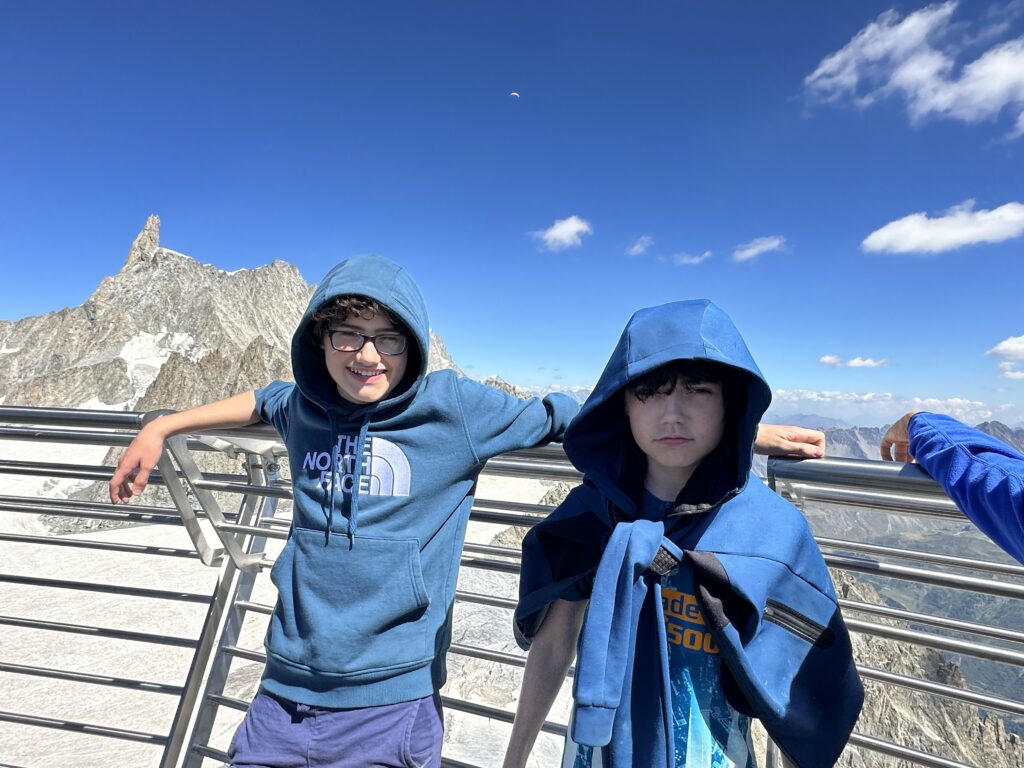
At 3,466 metres above sea level, Punta Helbronner offers extraordinary views of the Mont Blanc massif.
The modern glass-and-steel station appears suspended among the mountains and provides close-up views of Mont Blanc, the Dent du Géant, the Grandes Jorasses and surrounding glaciers.
On clear days it is also possible to identify distant peaks including Monte Rosa and the Matterhorn.
Many visitors find Punta Helbronner visually more dramatic than Aiguille du Midi thanks to its close proximity to the highest peaks of the massif.
Pavillon Du Mont Fréty
Consider breaking the journey at the intermediate station.
Highlights include:
- Saussurea Alpine Botanical Garden
- Alpine lake
- Rope-pulled raft popular with children
- Cave du Mont Blanc high-altitude wine experience
More information:
Aiguille Du Midi
Aiguille du Midi offers a different perspective.
While the facilities are older than those at Punta Helbronner, the views towards the Mer de Glace, the entrance to the Vallée Blanche and the north faces of the Grandes Jorasses are exceptional.
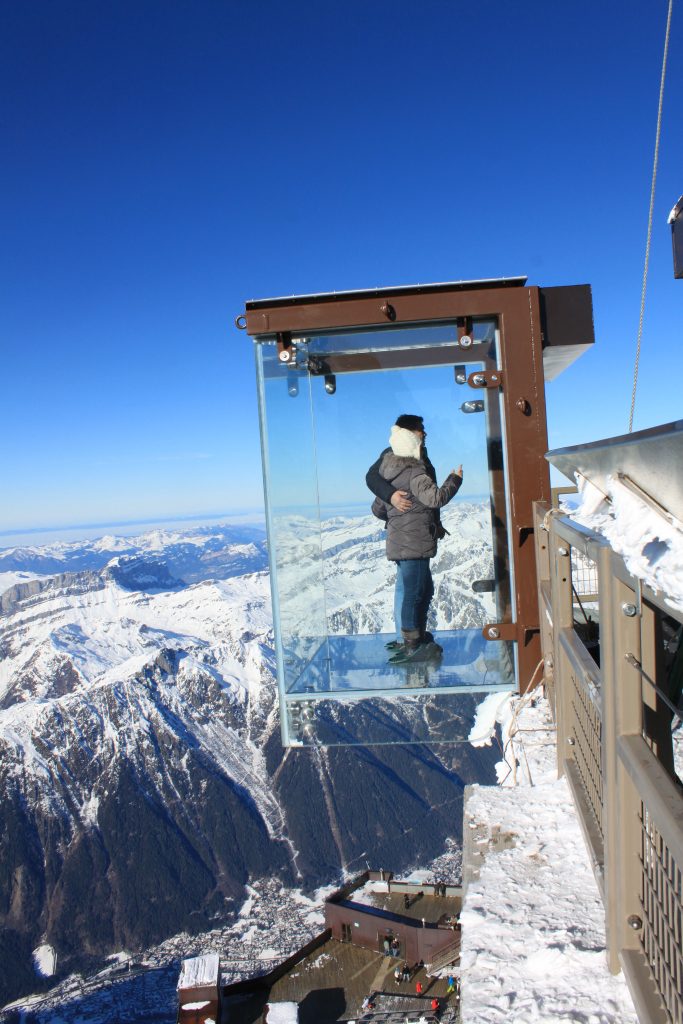
One of the most popular attractions is Step Into The Void, a glass box suspended above the mountainside that allows visitors to stand seemingly above a sheer drop.
The experience has become one of the most photographed attractions in the Alps. Queues can be substantial during busy periods, particularly in summer.
Whether the wait is worthwhile depends largely on how much you value the photo opportunity.
Altitude Considerations
Visitors should remember the dramatic altitude gain involved.
Aosta sits at approximately 583 metres above sea level.
Punta Helbronner reaches 3,466 metres.
Some people may notice mild light-headedness or shortness of breath when ascending rapidly.
Crossing To Chamonix
In summer it is possible to continue from Punta Helbronner via the Panoramic Mont Blanc gondola and descend into Chamonix via the Aiguille du Midi cable car.
Many visitors consider this one of the greatest lift journeys in the Alps.
Read more:
Aiguille du Midi vs Punta Helbronner
https://www.the-ski-guru.com/2020/05/22/aiguille-du-midi-vs-punta-helbronner-which-one-you-should-do/
Returning From Chamonix
If you plan to cross from Italy to France via the Panoramic Mont Blanc gondola, always check operating schedules, weather conditions and the timing of the last crossings before starting your journey.
High winds, storms or changing mountain conditions can occasionally affect operations at high altitude.
If the Panoramic Mont Blanc crossing or connecting lifts close unexpectedly, visitors can still return to Italy using the regular bus services that operate through the Mont Blanc Tunnel between Chamonix and Courmayeur.
While most visitors complete the round trip entirely by lift, it is reassuring to know that a practical alternative exists should weather conditions change during the day.
Castles Of The Aosta Valley
The Aosta Valley contains one of the highest concentrations of castles in Europe, many of which are open to visitors.
Castello di Fénis
Perhaps the most famous castle in the region, Fénis is known for its towers, battlements and beautifully preserved courtyard frescoes.
Website:
https://www.lovevda.it/en/database/8/castles-and-towers/fenis/fenis-castle/979
Castello Reale di Sarre
Formerly used by the Italian Royal Family, the castle contains royal apartments and hunting trophies.
Website:
https://www.lovevda.it/en/database/8/castles-and-towers/sarre/sarre-royal-castle/1131
Castello di Aymavilles
Recently restored, Aymavilles stands out thanks to its distinctive towers and elegant appearance.
Website:
https://www.lovevda.it/it/banca-dati/8/castelli-e-torri/aymavilles/castello-di-aymavilles/851
Castello di Introd
One of the valley’s most unusual castles thanks to its polygonal shape.
Website:
https://www.lovevda.it/it/banca-dati/8/castelli-e-torri/introd/castello-di-introd/895
Castello Sarriod de La Tour
A medieval castle famous for its historic interiors and carved wooden ceilings.
Website:
https://www.lovevda.it/it/banca-dati/8/castelli-e-torri/saint-pierre/castello-sarriod-de-la-tour/901
Castel Savoia
Located near Gressoney-Saint-Jean beneath Monte Rosa, this fairytale castle was built for Queen Margherita of Savoy.
Website:
https://www.lovevda.it/it/banca-dati/8/castelli-e-torri/gressoney-saint-jean/castel-savoia/873
Forte di Bard
Perhaps the most spectacular fortress in the valley.
Perched above the narrow entrance to the Aosta Valley, the fortress now houses museums, exhibitions and cultural events.
Even visitors who do not enter the museums often enjoy exploring the village and fortress itself.
Website:
https://www.fortedibard.it
Camping Near Aosta
Visitors travelling by motorhome, caravan or tent will find several camping options near Aosta.
Camping Monte Bianco
Website:
http://www.campingmontebianco.it/
Camping International Touring
Website:
http://www.campingtouring.com/
Both provide convenient access to Aosta and the wider valley.
Final Thoughts
Many visitors see Aosta simply as a gateway to Courmayeur, Cervinia or Pila.
In reality, it may be one of the most underrated destinations in the Alps.
Few places combine Roman history, medieval architecture, mountain scenery, excellent food and such easy access to world-class hiking, skiing and sightseeing.
Whether you are spending a single day exploring Roman ruins or using the city as a base for a week-long holiday, Aosta rewards visitors who take the time to look beyond the famous resorts and discover the heart of the Aosta Valley.
If you only choose one base for exploring the Aosta Valley, Aosta may be the best choice of all.
Planning your next trip to the Italian Alps?
If you’re heading to the Aosta Valley, take a look at Il Cuore della Valdigne, our family-owned apartment in Morgex, available for rent when we’re not using it ourselves.
It’s an ideal base to:
- Ski in Courmayeur, La Thuile and Pila
- Enjoy the mountains in summer (hiking, biking, nature)
- Explore the Mont Blanc valley in a quieter, more authentic setting.
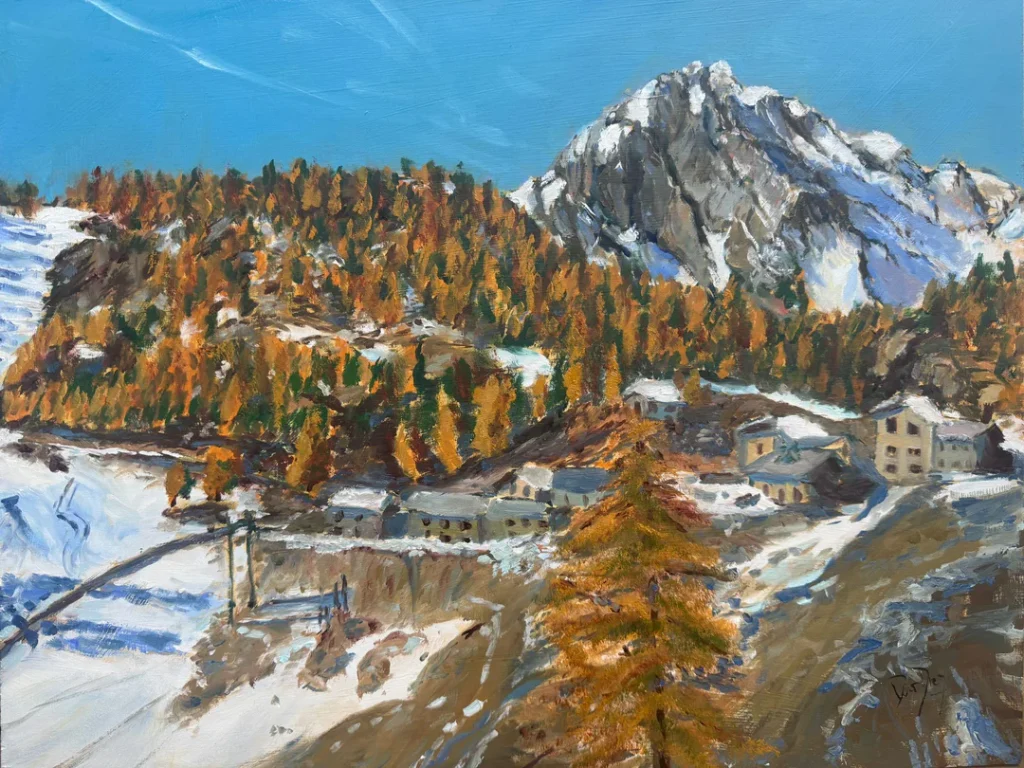
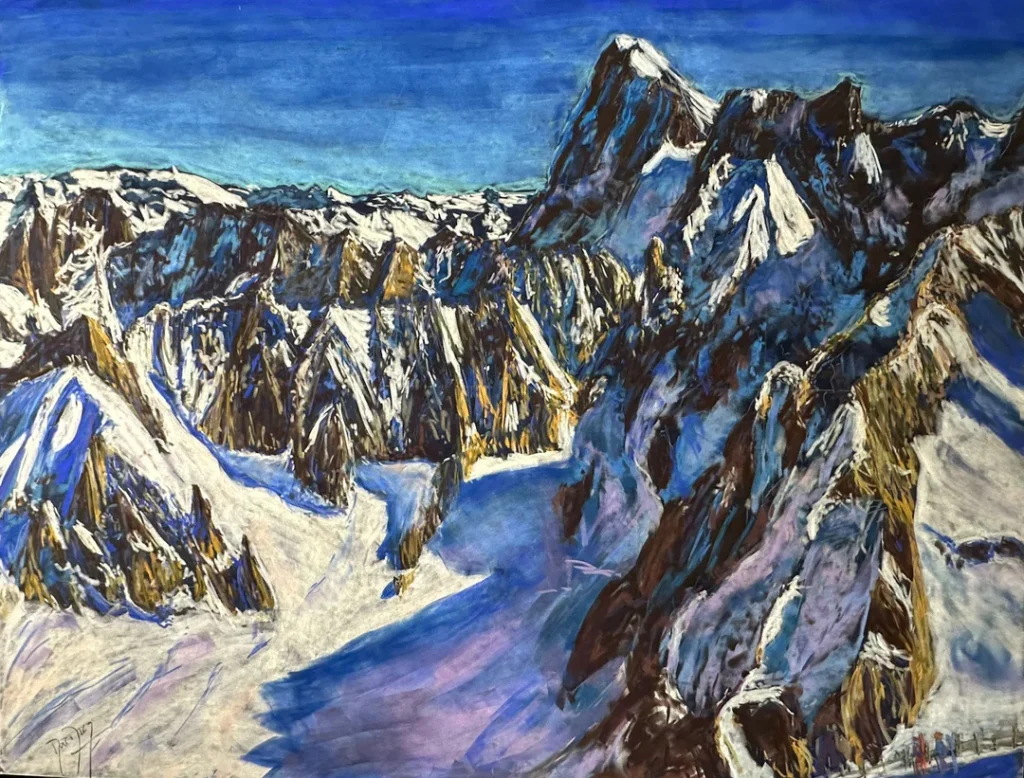
Check my Mountain Art on my Shop
You can go to my shop and see what have been inspiring me lately, lots mountain landscapes in soft pastels, and now in oils too. Go here to check my latest works!
Featured Image: Aosta. Photo Credit: GP. Unsplash.


Discover more from The-Ski-Guru
Subscribe to get the latest posts sent to your email.
 Subscribe to The-Ski-Guru here.
You must be logged in to post a comment.