
For decades, the ski industry has moved steadily towards larger resort groups, multi-resort passes and integrated mountain networks. Now, regulators on three continents are beginning to ask whether that growing concentration is reducing competition.
On 7 August, Italy’s competition authority closed its investigation into Dolomiti Superski after accepting commitments that include €30 million in compensation for skiers and, perhaps more significantly for the industry, changes to the way individual ski areas within the network coordinate prices and distribution.
The Italian decision comes just weeks after a proposed acquisition involving some of Chile’s largest ski resorts was abandoned following competition concerns, and only a day after another antitrust lawsuit was filed against several of the biggest ski operators in the United States.
Taken individually, the cases are very different. Together, however, they raise a broader question for the ski industry: as resorts increasingly consolidate into larger networks and multi-resort passes become the norm, how much competition remains between individual ski areas?
For skiers, the issue is simple: as lift ticket prices continue to climb, regulators want to know whether rising costs are being driven solely by inflation and investment—or whether reduced competition is also playing a role.
Dolomiti Superski Agrees €30 Million Package
Italy’s Autorità Garante della Concorrenza e del Mercato, or AGCM, began investigating Federconsorzio Dolomiti Superski and its 12 participating valley consortia in July 2025.
The investigation examined provisions that the authority believed could restrict competition in two areas: the setting of prices for individual valley ski passes within the Dolomiti Superski system and restrictions affecting the ability of the valley consortia to sell their own passes through third parties.
Under the commitments accepted on 7 August, Dolomiti Superski and the valley consortia will remove future coordination of pricing and distribution policies for the individual valley passes.
The agreement also includes a substantial compensation package. Skiers who purchased eligible daily or multi-day valley passes during the 2022/23, 2023/24 and 2024/25 seasons will be able to choose between a voucher worth 30% of their previous expenditure or a direct refund worth 20%.
The total package is valued at €30 million, comprising €18 million in vouchers and €12 million in refunds.
A further commitment will maintain certain existing promotions and concessions on the Dolomiti Superski pass for five winter seasons, with the AGCM valuing those benefits at approximately another €20 million.
The case does not mean that a common ski pass connecting different resorts is itself anti-competitive. What concerned the Italian authority was the potential coordination between businesses that should retain independence over the pricing and distribution of their individual products.
That distinction may become increasingly relevant elsewhere.
Chile Blocks the Creation of a Near-Monopoly Around Santiago
A particularly interesting comparison comes from Chile.
Mountain Capital Partners entered the Chilean market with Valle Nevado in 2023 and subsequently acquired La Parva in 2024. It then sought to acquire decisive influence over Andacor, whose operations include El Colorado and Farellones, as well as Pillán and Volcán Osorno.
Had the deal gone ahead, Valle Nevado, La Parva and El Colorado—the three major ski areas serving Santiago—would all have come under the influence of the same group.
Chile’s Fiscalía Nacional Económica, or FNE, took the transaction into an extended Phase II investigation after identifying the risk of what it described as a potential “quasi-monopolization” of the local ski lift ticket market.
The regulator said the transaction could result in higher prices, reduced quality and weaker competitive pressure, while noting that barriers to new competitors entering the market could exist.
By June, the FNE’s investigation had concluded that acquiring El Colorado would concentrate virtually the entire relevant supply under Mountain Capital Partners and give the resulting group both the ability and incentive to increase ski ticket prices.
It also raised concerns that reduced competition could weaken incentives to invest and maintain or improve service quality.
The parties proposed behavioural remedies, but the FNE concluded that these would not adequately solve what it considered permanent structural competition risks.
Mountain Capital Partners and the seller subsequently decided not to proceed with the deal, notifying the authority in July. The FNE announced the withdrawal later that month.
The Chilean example is particularly significant because the acquisition did not need to result in proven price fixing for regulators to intervene. The concern was that eliminating competition between neighbouring ski resorts could itself give one operator too much pricing power.
Another Antitrust Challenge Hits the US Ski Industry
Competition concerns are also intensifying in the United States.
The-Ski-Guru reported earlier this year on a lawsuit against Vail Resorts and Alterra Mountain Company challenging the way the Epic and Ikon multi-resort passes interact with increasingly expensive single-day tickets.
Just one day before the Italian decision, another competition dispute emerged in the United States.
On 6 August, Vail Resorts, Alterra Mountain Company, Boyne USA and Powdr were sued in federal court in Colorado over allegations that they shared confidential commercial information in a way that helped coordinate pricing.
The proposed class action also names research company RRC Associates and the National Ski Areas Association.
According to the complaint, confidential revenue and cost information was shared through industry reports and used to guide business strategy and pricing. The lawsuit alleges that peak daily lift-ticket prices at flagship US destination resorts have risen by more than 55% since 2020.
The plaintiffs also point to the use of the Aspenware dynamic-pricing platform by Alterra, Boyne and Powdr as part of their allegation of coordinated pricing.
These remain allegations, not findings by a competition authority, and the defendants had not responded to the new complaint when Reuters reported the case.
The distinction matters. Italy’s Dolomiti case has concluded with formally accepted commitments. Chile involved a proposed acquisition abandoned following regulatory objections. The US cases remain litigation in which the allegations still have to be tested.
Multi-Resort Passes Have Transformed Skiing
For skiers, consolidation has brought obvious benefits. A single pass can provide access to multiple destinations, more terrain, greater flexibility and, for many, better value than purchasing individual lift tickets.
For resorts, larger networks increase marketing reach, generate revenue well before the season begins and help build customer loyalty by encouraging repeat visits across multiple destinations.
None of the recent cases suggests that multi-resort passes or large ski networks are inherently anti-competitive. On the contrary, they have transformed the way millions of people plan their ski holidays and have become one of the defining trends in the modern ski industry.
The legal questions arise when regulators believe competition between independent operators may be reduced through coordination, market concentration or acquisitions that significantly reduce consumer choice.
The competitive issue is therefore not whether multi-resort passes are good or bad. It is whether competition between independent operators continues to function effectively as the industry becomes increasingly concentrated.
The Italian authorities focused on coordination between individual valley operators. Chilean regulators were concerned that a single company could gain excessive market power by controlling nearly all the major ski areas around Santiago. In the United States, the latest lawsuit challenges the pricing practices of some of the industry’s largest operators.
These are three different legal situations, but they all point to the same broader question: as the ski industry continues to consolidate, how can consumers continue to benefit from both larger networks and healthy competition?
As Ski Prices Rise, Competition Comes Under Greater Scrutiny. Why Ski Resort Antitrust Matters
The debate is particularly sensitive because skiing has become increasingly expensive.
According to Italian consumer organisation Assoutenti, the price of a Dolomiti Superski day pass increased by 28.4% between 2021 and 2025. In the United States, plaintiffs in the latest antitrust lawsuit claim that peak daily lift-ticket prices at leading destination resorts have risen by more than 55% since 2020.
Higher prices alone do not prove anti-competitive behaviour. Ski resorts also face rising costs for labour, energy, infrastructure and snowmaking, while many continue to invest heavily in lifts, technology and guest facilities.
Nor does consolidation necessarily work against skiers. Larger resort networks and multi-resort passes can provide access to more terrain, greater flexibility and better value than individual mountain products.
The question regulators are increasingly asking is whether those benefits can continue while competition between independent operators is preserved.
Whether the recent cases in Italy, Chile and the United States ultimately reshape the industry remains to be seen. They involve different legal systems, different markets and different competition issues.
What they do have in common is a clear signal that regulators are paying closer attention to how the ski industry is evolving. As resort groups grow larger, ski passes cover more destinations and ownership becomes increasingly concentrated, questions about competition are no longer limited to economists and lawyers.
They are becoming part of the future of skiing itself.
Read More:
- Must-Read Guide to Valle Nevado
- Mountain Capital Partners Plans USD 17.5 Million Investment to Modernise Chile’s Valle Nevado and La Parva.
- Vail and Alterra Lawsuit: Ski Pass Pricing Under Antitrust Scrutiny
- How Mega-Passes like Epic, Ikon and Dolomiti Superski Influence Ski Pass Prices: Are they Driving Ski Holiday Inflation?
- Ultimate Guide to Ski Resorts in Italy 2025-26: The Italian Alps and Apennines Explained Properly.
Sources
- Italian Competition Authority (AGCM) – Decision accepting the commitments offered by Federconsorzio Dolomiti Superski: https://en.agcm.it/en/media/press-releases/2026/8/I877-I877B
- Dolomiti Superski – Official statement on the AGCM decision: https://www.dolomitisuperski.com/en/dolomiti-superski-world/news/news-AGCM
- Reuters – Italy ski pass operators to pay €30 million compensation to skiers after antitrust probe: https://www.reuters.com/legal/litigation/italy-ski-pass-operators-pay-30-mln-compensation-skiers-after-antitrust-probe-2026-08-07/
- Fiscalía Nacional Económica (Chile) – Phase II investigation into the acquisition of El Colorado and Farellones: https://www.fne.gob.cl/en/fne-extiende-a-fase-2-investigacion-sobre-adquisicion-de-control-de-los-centros-de-esqui-el-colorado-y-farellones-por-parte-del-controlador-de-valle-nevado-y-la-parva/
- Fiscalía Nacional Económica (Chile) – Mountain Capital Partners abandons the proposed acquisition: https://www.fne.gob.cl/en/grupo-mcp-desiste-de-operacion-que-habria-concentrado-en-un-unico-operador-valle-nevado-la-parva-y-el-colorado-principales-centros-de-esqui-de-la-region-metropolitana/
- Reuters – Ski giants sued over alleged price fixing: https://www.reuters.com/legal/government/ski-giants-vail-alterra-others-sued-over-alleged-price-fixing-2026-08-06/
Planning your next trip to the Italian Alps?
If you’re heading to the Aosta Valley, take a look at Il Cuore della Valdigne, our family-owned apartment in Morgex, available for rent when we’re not using it ourselves.
It’s an ideal base to:
- Ski in Courmayeur, La Thuile and Pila
- Enjoy the mountains in summer (hiking, biking, nature)
- Explore the Mont Blanc valley in a quieter, more authentic setting.
Check my Mountain Art on my Shop
You can go to my shop and see what have been inspiring me lately, lots mountain landscapes in soft pastels, and now in oils too. Go here to check my latest works!

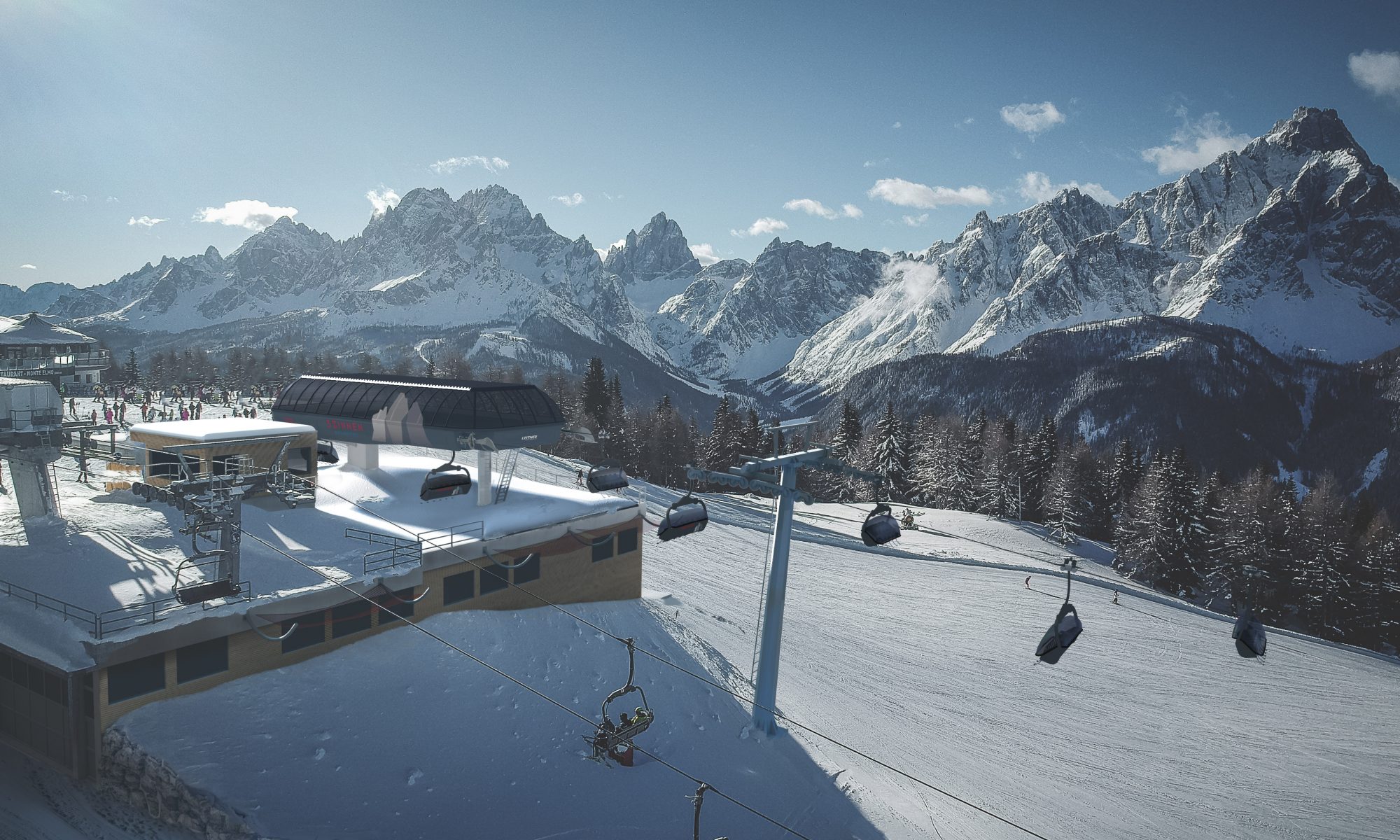
Featured Image: Dolomiti Superski- 3 Zinnen Dolomiten- New Chairlift Mittelstation-Helm. Photo credit: Dolomiti Superski. Dolomiti Superski ski lifts as ski resort antitrust debate grows worldwide.


Discover more from The-Ski-Guru
Subscribe to get the latest posts sent to your email.
 Subscribe to The-Ski-Guru here.