

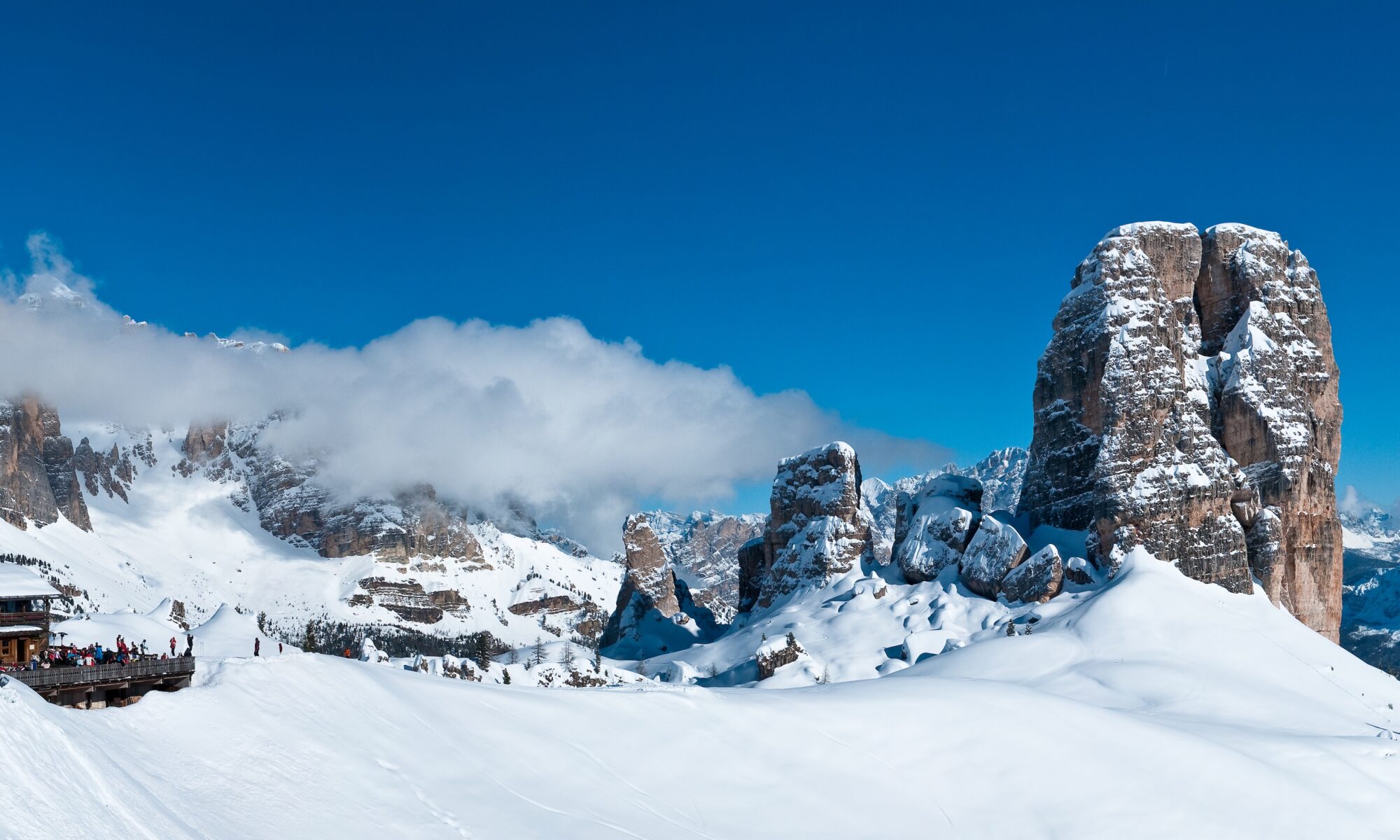
This Cortina d’Ampezzo guide brings together skiing, mountain walks, refuge lunches, art, shopping and spa time in one of the Dolomites’ best-known towns. I visited in October, between the main seasons, inspecting hotels and spending time at Cinque Torri. Here, I share those impressions alongside practical advice on where to stay, eat and ski, and how to explore Cortina and its mountains throughout the year.
This article may contain affiliate/compensated links. For full information, please see our disclaimer here. Some links on my website may not function properly if ad blocker is enabled.
Where is Cortina d’Ampezzo?
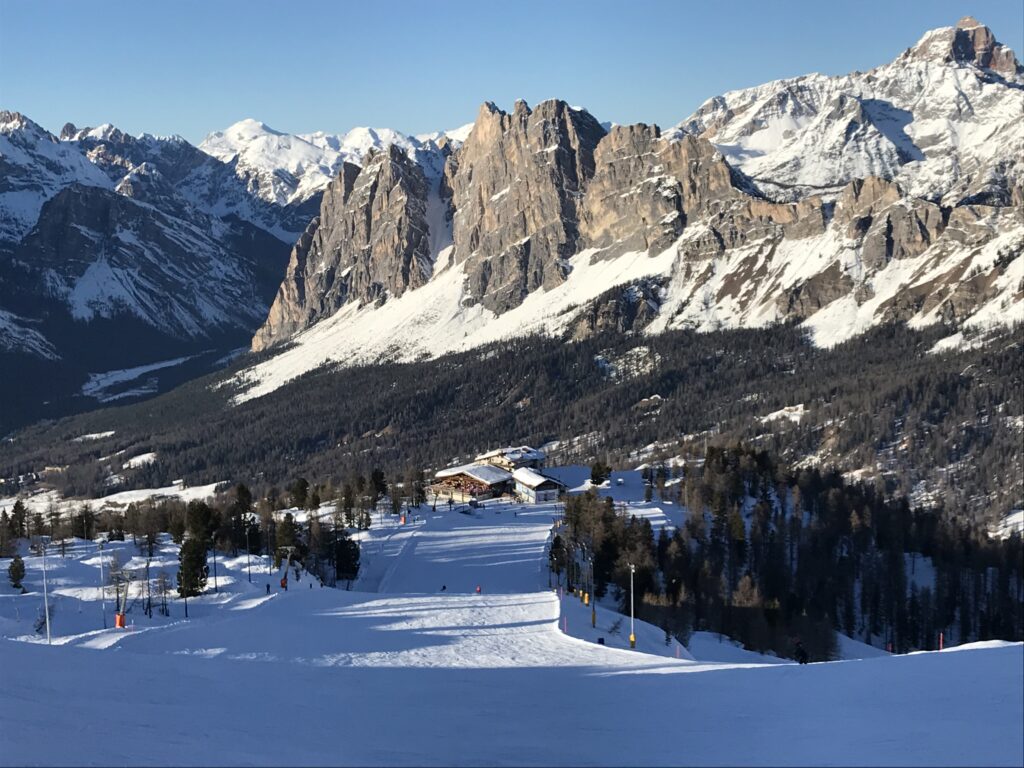
Cortina d’Ampezzo lies in the Dolomites of north-eastern Italy, in the province of Belluno, Veneto. The town occupies the Ampezzo valley, surrounded by mountains that give each side of the landscape a different character: the Tofane, Cristallo, Sorapis and the mountains towards Croda da Lago and Cinque Torri.
For visitors, the geography matters. Your holiday can include time in town, skiing in different mountain sectors and excursions beyond the valley. Choosing where to stay therefore involves more than finding a room with a view: proximity to the centre, access to the lifts and the transport provided by your hotel can all shape the trip.
How to get to Cortina d’Ampezzo
By air
Venice Marco Polo is a practical starting point for an international trip to Cortina, with direct coach connections that allow you to continue into the mountains without hiring a car.
Treviso, Innsbruck and Verona are other airports worth comparing, depending on your departure city. Before booking, look at the complete journey: a convenient flight arrival time and a straightforward onward connection can be more useful than a cheaper airfare followed by a lengthy transfer.
If you choose an airport other than Venice Marco Polo, check the onward arrangements carefully. Transfer options and seasonal services differ, and a direct coach should not be assumed.
By train
Cortina does not have an operating passenger railway station. The final part of a rail journey is therefore by road.
Venezia Mestre is a useful gateway for visitors arriving on Italy’s mainline rail network. From there, direct coaches continue to Cortina; Cortina Express describes a journey of approximately two hours and thirty minutes.
Two closer railway gateways are Calalzo di Cadore, approximately 35 kilometres from Cortina, and Dobbiaco, also known as Toblach, approximately 31 kilometres away. Both have onward bus connections. The better option depends on where you are travelling from and how the train and bus timetables fit together.
Compare the full itinerary before choosing your railway station, including the waiting time for the onward bus.
By bus and coach
Cortina Express and ATVO provide connections between Cortina, Venice Marco Polo Airport and Venezia Mestre. Check the operator’s timetable for your travel date and leave enough time between landing, collecting luggage and boarding the coach.
On my October visit, I travelled with Cortina Express from Venice Marco Polo Airport. My booked journey to Cortina was two hours and ten minutes, while the return journey to Venezia Mestre was two hours and thirty minutes. It was a useful way to combine the mountain visit with travel through Venice without needing a car.
When booking, check the luggage allowance and arrangements for skis, snowboards or bicycles. Also confirm the exact arrival stop in Cortina and how you will reach your accommodation from there, particularly if you are staying outside the centre.
By car
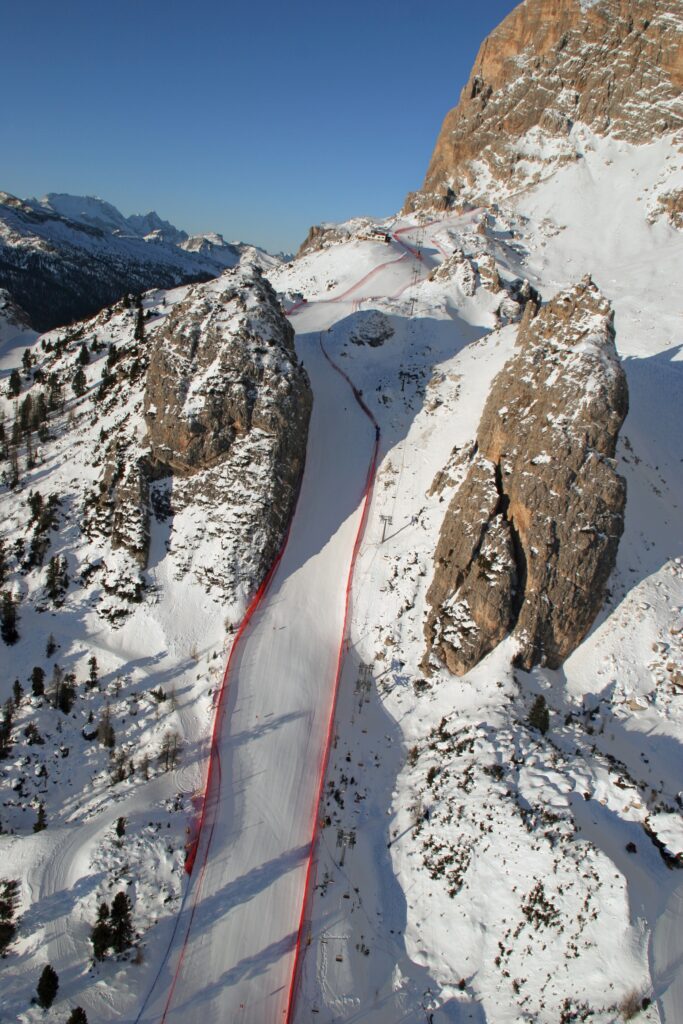
Cortina is reached by the SS51 Alemagna road, which runs through the valley from south to north. From the Venice direction, the approach follows the A27 towards Belluno and then the SS51 through Cadore. From the north, the route approaches through Dobbiaco.
Driving gives you flexibility for excursions and accommodation outside the centre. Before booking a hotel, ask whether parking is available, whether it needs reserving and whether it carries an additional charge.
Allow extra time during busy holiday periods and after snowfall. For winter journeys, check current road conditions and the equipment required for your route. If your navigation suggests a mountain-pass shortcut, confirm that the road is open and suitable for the conditions.
Private transfers
A pre-booked transfer can be convenient for families, groups and travellers arriving with substantial luggage or ski equipment. Confirm the total price, passenger capacity, equipment space and arrangements if your flight is delayed.
For your return journey, allow for mountain traffic as well as airport check-in. Your accommodation or transfer operator can advise on a suitable departure time for the date of travel.
History: Ampezzo’s Ladin roots and Olympic legacy
A mountain community with a Ladin identity
Long before its luxury hotels and Olympic pistes, Cortina was a mountain community whose livelihood depended on the forests, meadows and high pastures of the Ampezzo valley. Its Ladin identity remains an essential part of the town, expressed through its language, traditional dress, food and local celebrations.
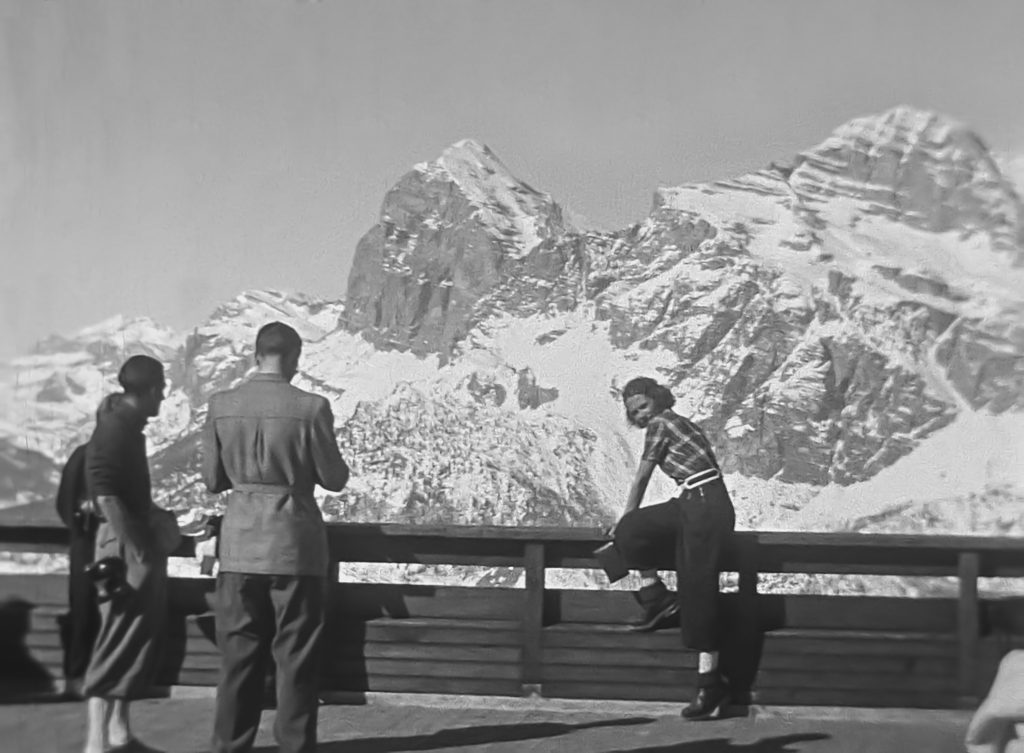
Known locally as Anpezo, the valley belongs to the wider Ladin cultural landscape of the Dolomites. Its history helps explain why a visit to Cortina brings together Italian, Ladin and Tyrolean influences.
One of its most distinctive institutions is the Regole d’Ampezzo, through which descendants of the valley’s original families collectively manage ancestral woodland and pasture. Written regulations, known as Laudi, survive from the Middle Ages. The Regole remain active today and have managed the Natural Park of the Ampezzo Dolomites since its creation in 1990.
From Venice to Tyrol and Italy
After a period under the Republic of Venice, Ampezzo came under Habsburg rule in 1511 and became part of Tyrol. With interruptions during the Napoleonic period, its connection with the Austrian world continued until the First World War.
Ampezzo subsequently became part of Italy, with annexation formalised in 1919. In 1923, it was transferred to the province of Belluno. These political changes reshaped its borders and administration, while the valley retained its distinctive Ladin identity.

Mountaineering and the arrival of visitors
Cortina’s tourism story began before skiing became its principal winter attraction. During the nineteenth century, the Dolomites drew scientists, geologists and mountaineers from across Europe.
Austrian climber Paul Grohmann helped introduce the mountains around Cortina to a wider audience through his ascents and writing. Local guides played an essential role in helping visiting climbers explore the peaks.
Hotels developed towards the end of the nineteenth century, supported by improving transport connections. The Puster Valley railway opened in 1871, followed by the Great Dolomites Road in 1909. According to the Regole d’Ampezzo’s ethnographic museum, the first pair of skis arrived in Cortina in 1894.
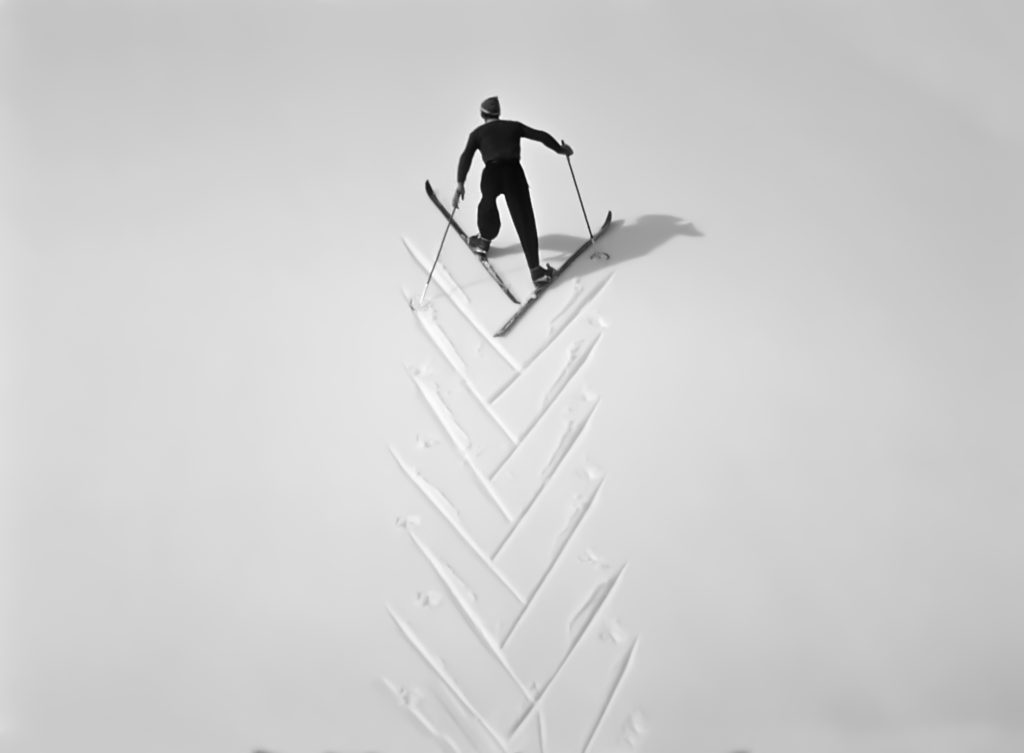
The First World War in the mountains
During the First World War, the mountains surrounding Cortina became a battlefield between Italian and Austro-Hungarian forces. Soldiers occupied positions among the peaks, building trenches, tunnels and fortifications in exceptionally difficult conditions.
Today, Cinque Torri and Lagazuoi offer opportunities to explore restored wartime sites. They add historical depth to a mountain outing: landscapes now associated with skiing, walking and refuge lunches also preserve evidence of life on the front line.
The 1956 Winter Olympics
Cortina hosted Italy’s first Winter Olympics in 1956. These were also the first Winter Games broadcast live to a multinational television audience, bringing the town and its mountains into homes across Europe.
The Olympic Ice Stadium hosted the opening ceremony, while Austrian skier Toni Sailer became one of the stars of the Games by winning all three men’s Alpine events.
The Olympics strengthened Cortina’s international reputation. In the following decades, its sporting appeal developed alongside fashionable hotels, restaurants, shopping and a lively social scene. Films such as the 1983 Italian comedy Vacanze di Natale reinforced its image as a celebrated winter meeting place.
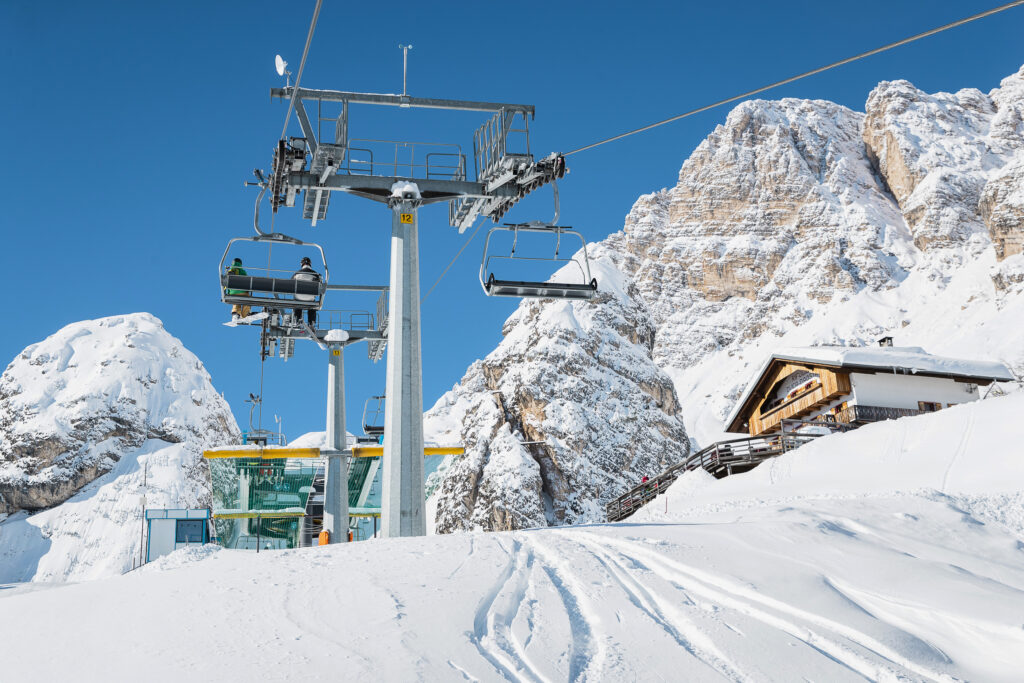
Returning to the Olympic stage in 2026
Seventy years later, Cortina returned as a host destination for Milano Cortina 2026, staging women’s Alpine skiing, curling, bobsleigh, skeleton and luge.
The historic Olympic Ice Stadium hosted curling, the Tofane slopes welcomed Alpine competition, and the new sliding centre continued the valley’s association with sliding sports.
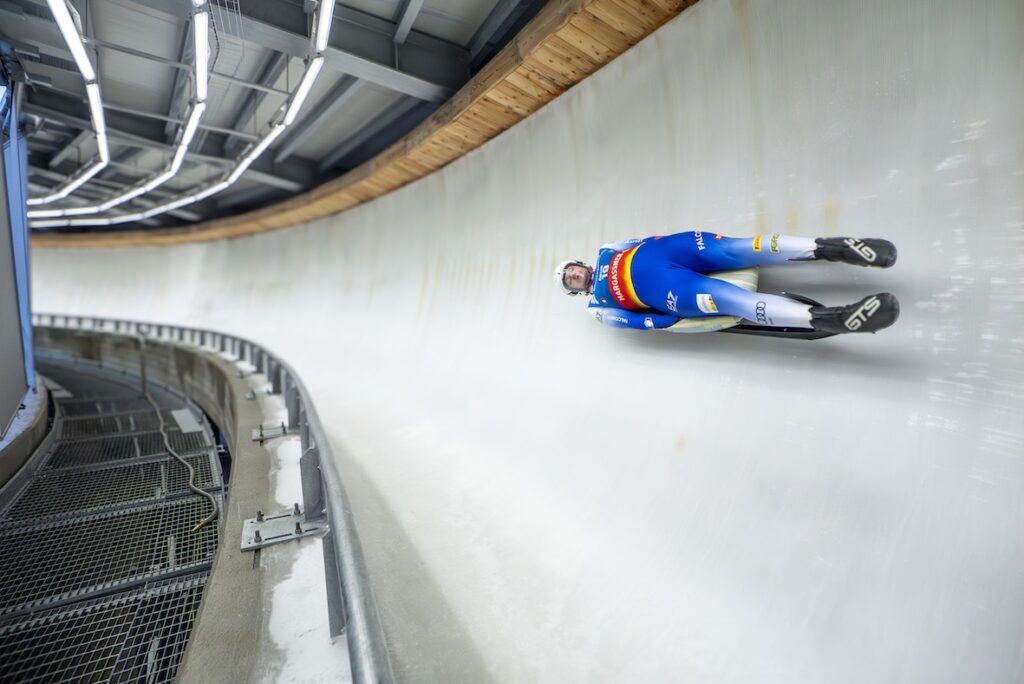
These two Olympic chapters are part of a longer history that visitors can discover through the town’s Ladin traditions, mountain guides, museums and surrounding landscapes.
Where to stay in Cortina d’Ampezzo
Cortina’s accommodation ranges from five-star spa resorts to contemporary boutique hotels and traditional family-run properties. Location deserves as much attention as the room itself: staying centrally makes restaurants and evening strolls convenient, while a property outside town may offer mountain views, more space or direct access to skiing.
During my October visit, I inspected Eight Cortina, Rosapetra Spa Resort, Faloria Mountain Spa Resort, HOTEL de LEN and Hotel Tofana Cortina. The observations below draw on those visits, alongside hotel information. I’ve stayed at the Hotel des Alpes, a family hotel managed by the Ghedina- De Justina family since 1870.
Five-star hotels
Eight Cortina: central luxury with a substantial spa
Eight Cortina combines a position on Corso Italia with a substantial wellness offering. It suits visitors who want to spend time in the town’s shops, cafés and restaurants while also enjoying the facilities of a luxury hotel.
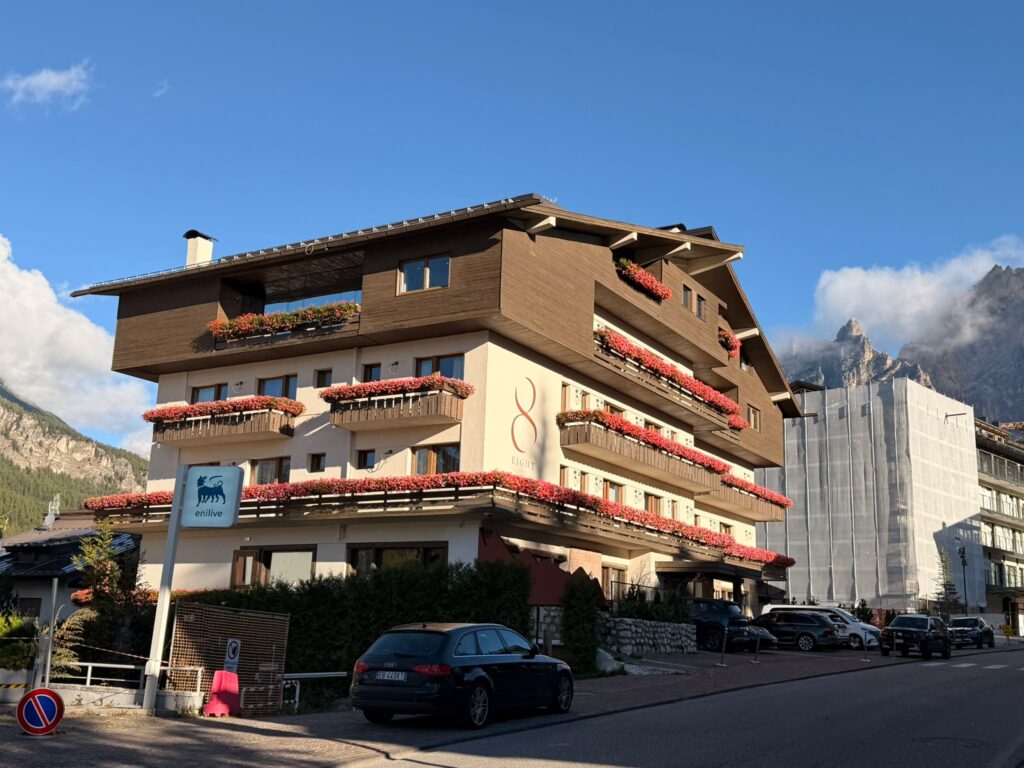
During my visit, the combination of its central location and spa stood out. Wellness facilities include an indoor pool, sauna, Turkish bath and treatment areas, complemented by hotel dining and bar spaces.
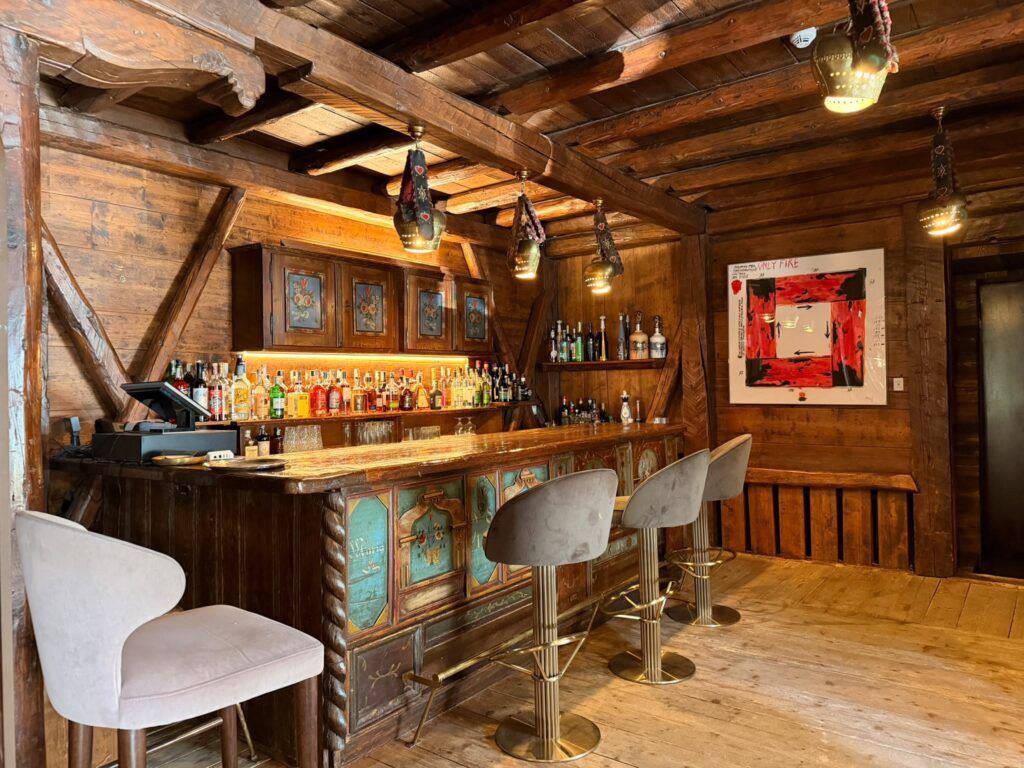
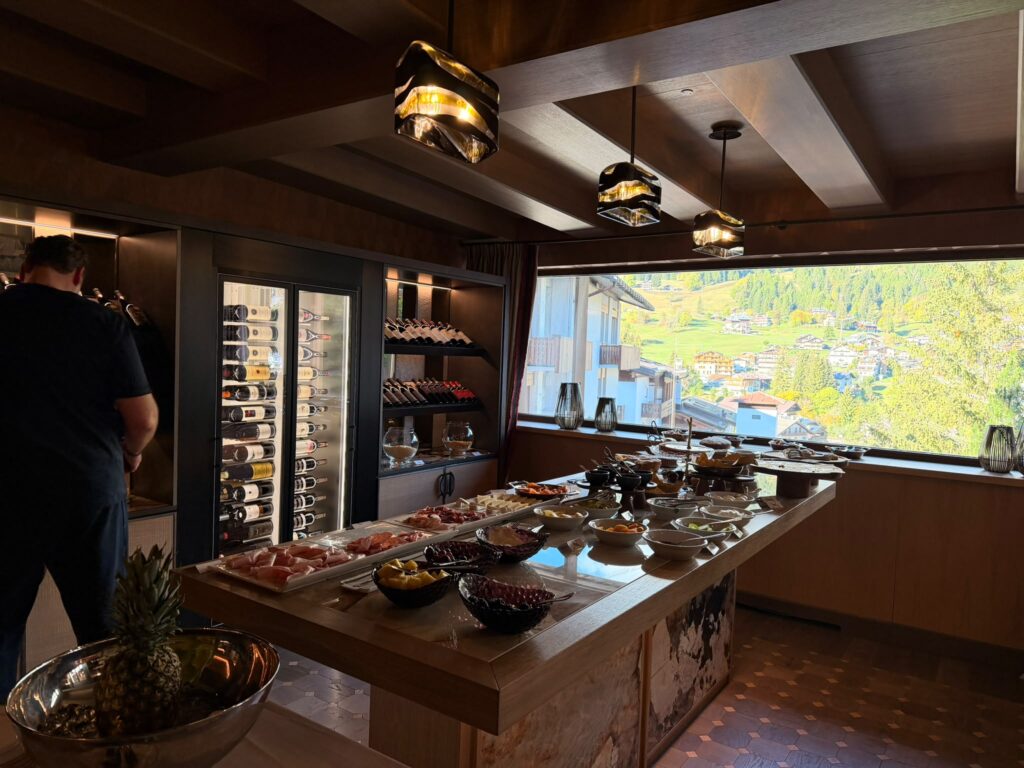
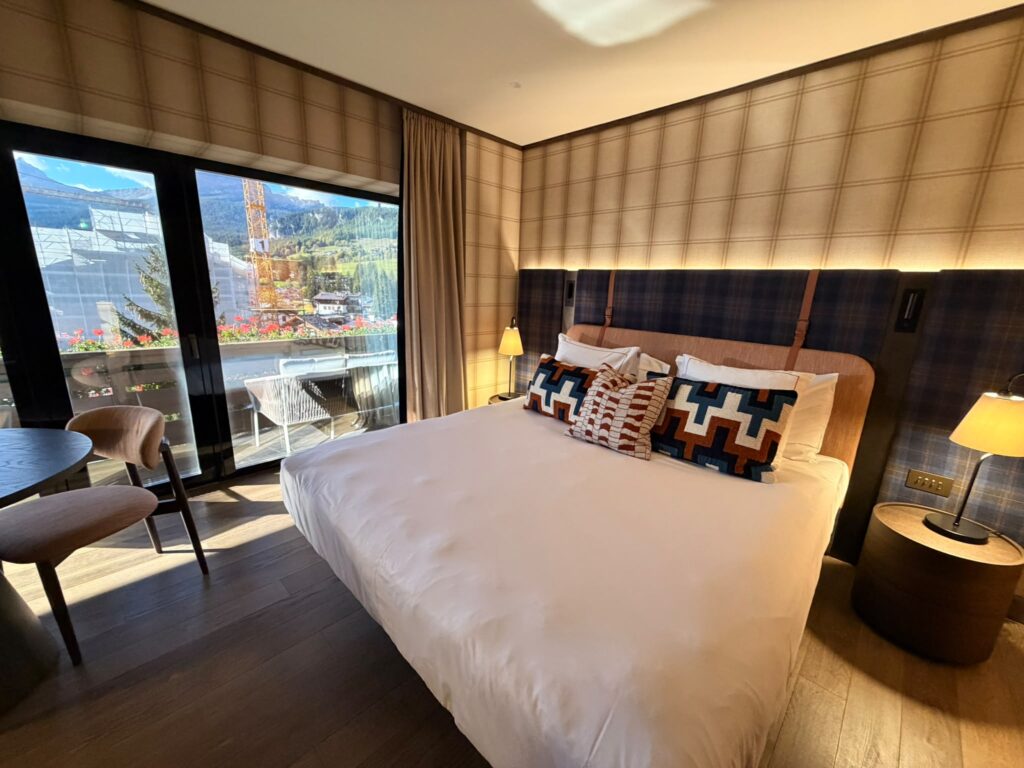
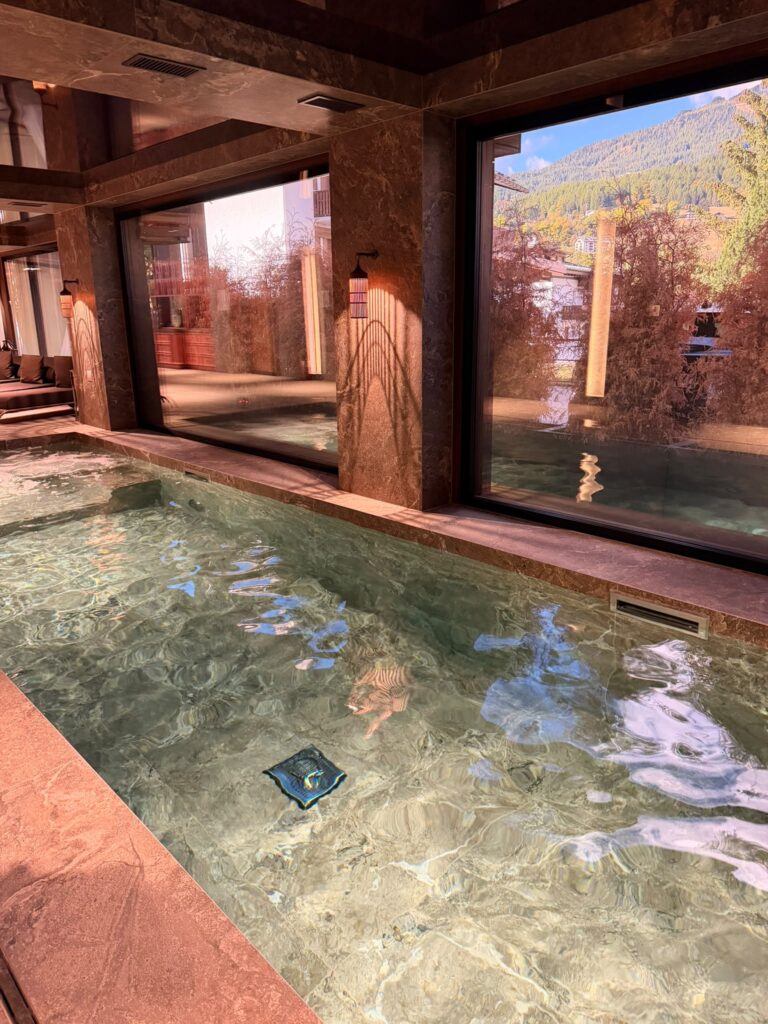
Best suited to: couples and travellers looking for central luxury, spa time and convenient evenings in town.
Rosapetra Spa Resort: mountain atmosphere and wellbeing
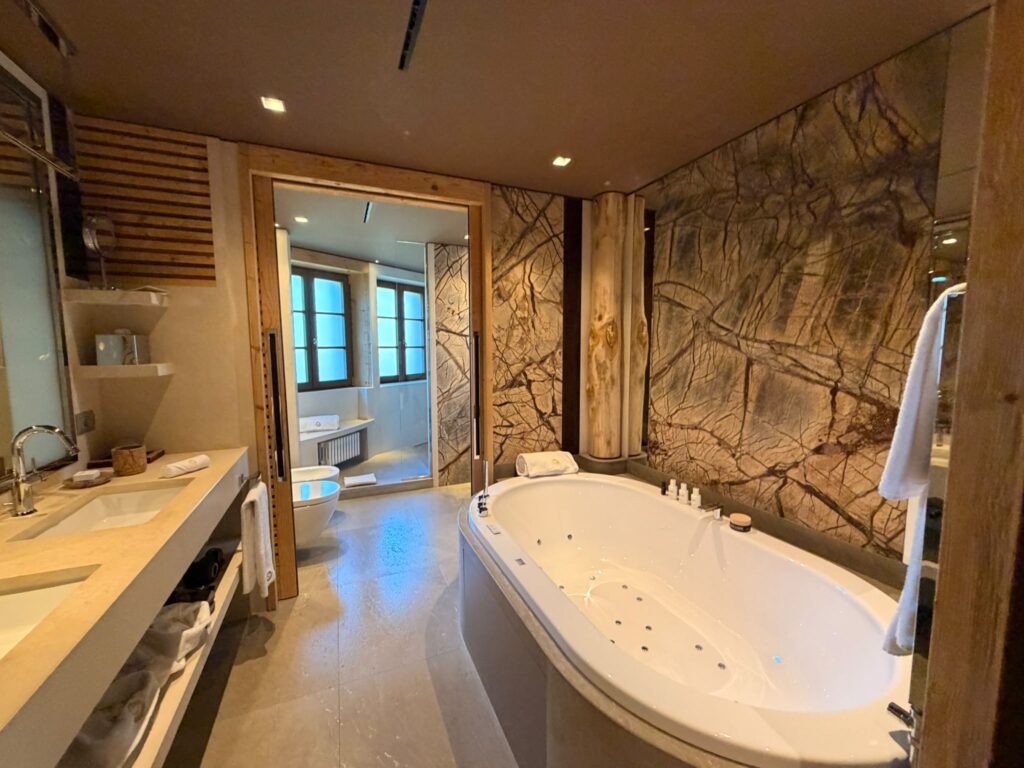
Rosapetra’s wood and stone interiors create a warm mountain atmosphere. During my inspection, I saw several accommodation types, including options for guests wanting additional space.
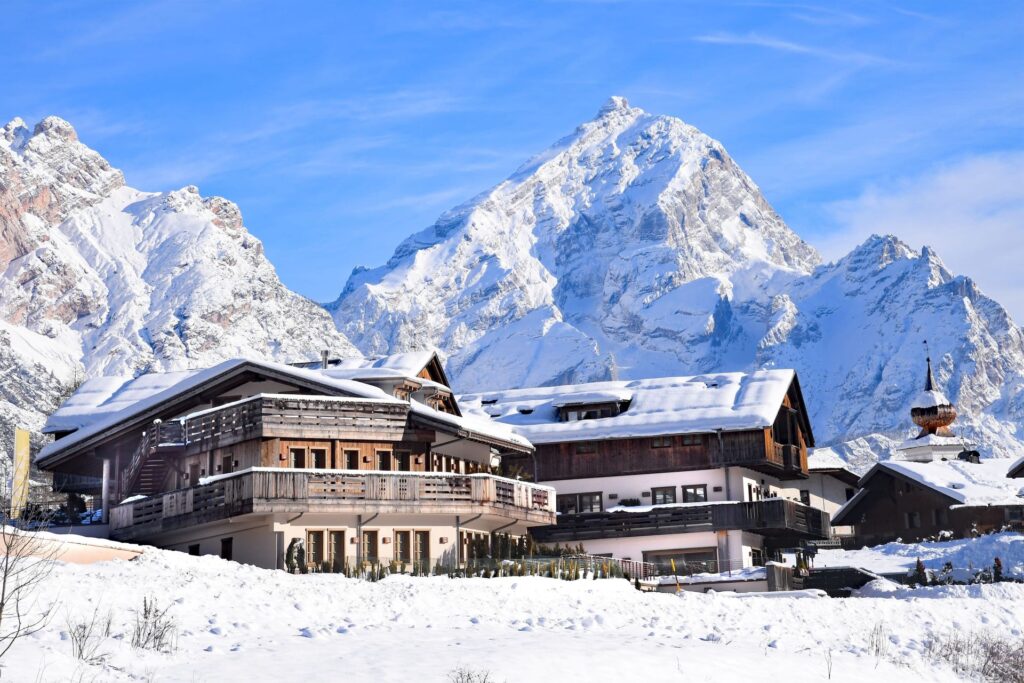
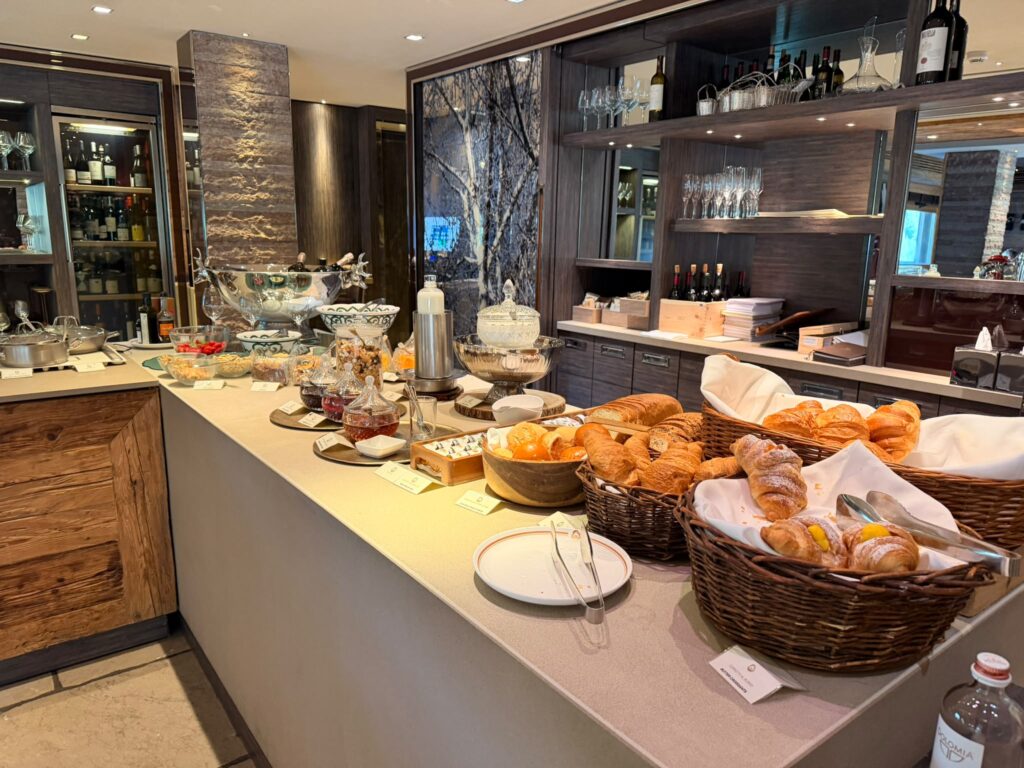
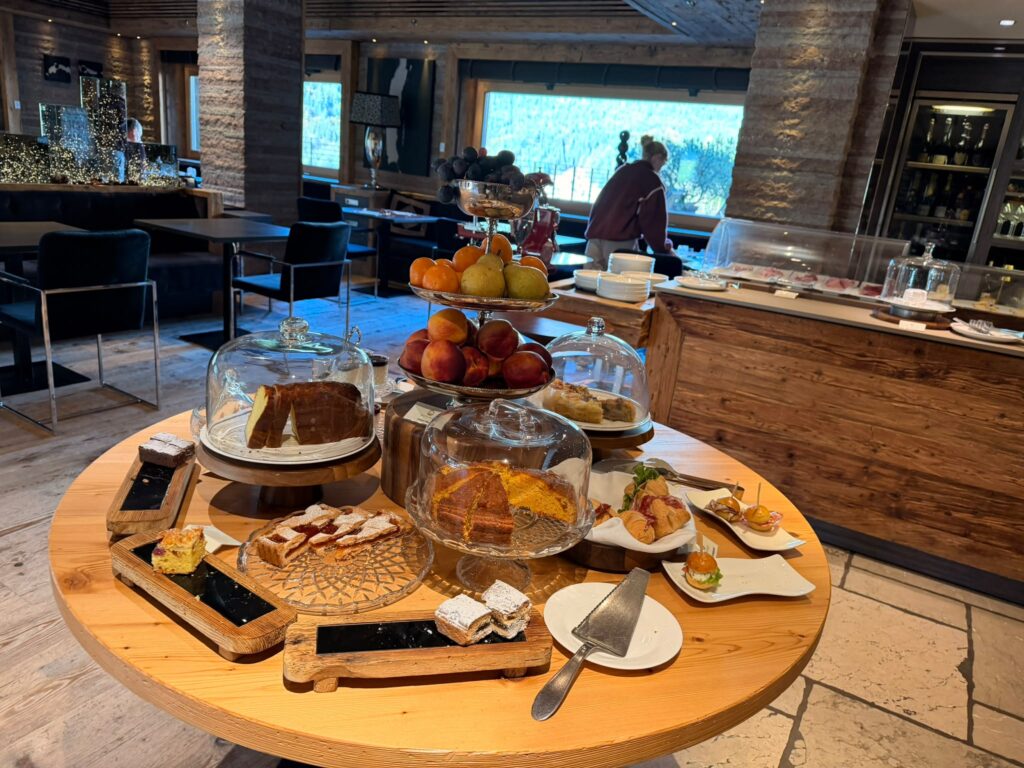
Its indoor pool, saunas, treatments, fitness facilities and dining make it appealing for a holiday that includes time relaxing at the hotel. Its position outside the centre makes transport part of the daily routine.
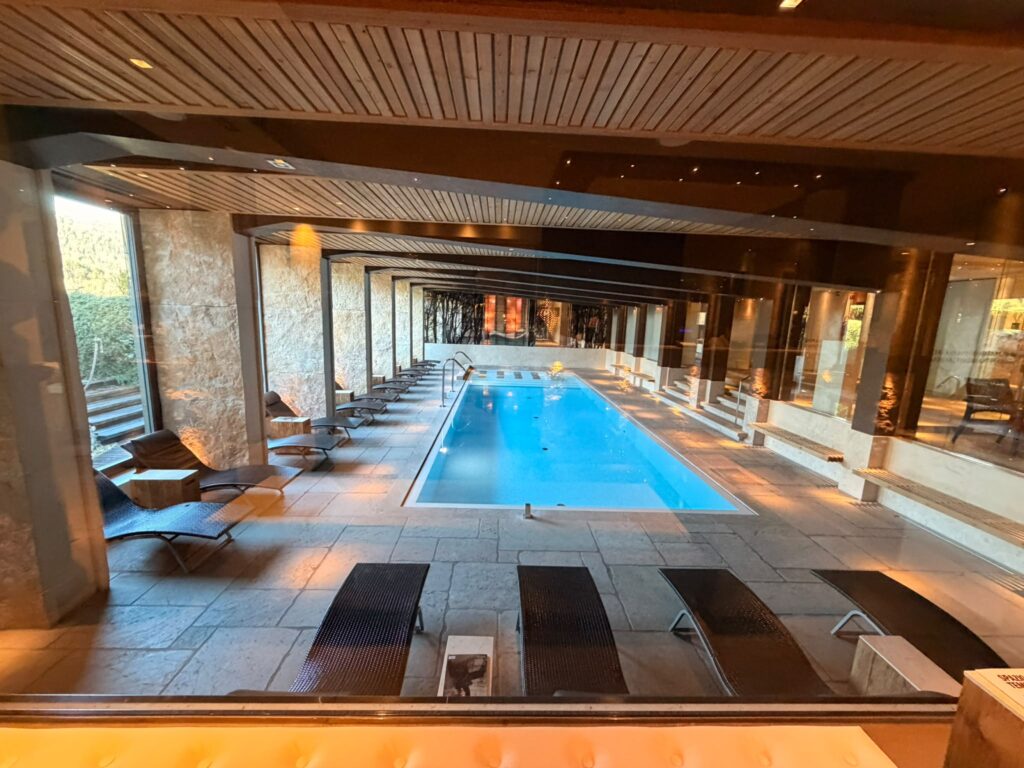
The hotel confirmed that its complimentary shuttle operates on request from 08:00 to 20:00, serving central Cortina, the Faloria cable car and Freccia nel Cielo. It quoted approximately 10–12 minutes to those ski access points in normal traffic and weather. Other lift destinations require separate arrangements.
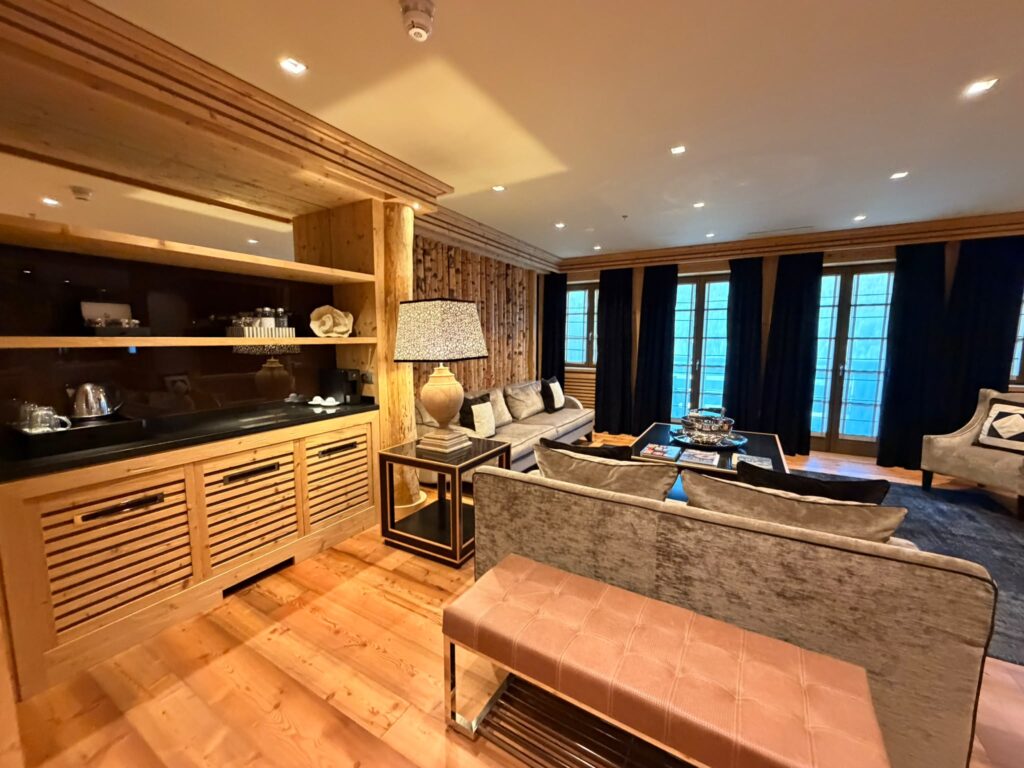
Best suited to: couples, spa enthusiasts and travellers who enjoy a quieter base with hotel transport into town and to selected lifts.
Faloria Mountain Spa Resort: distinctive design outside the centre
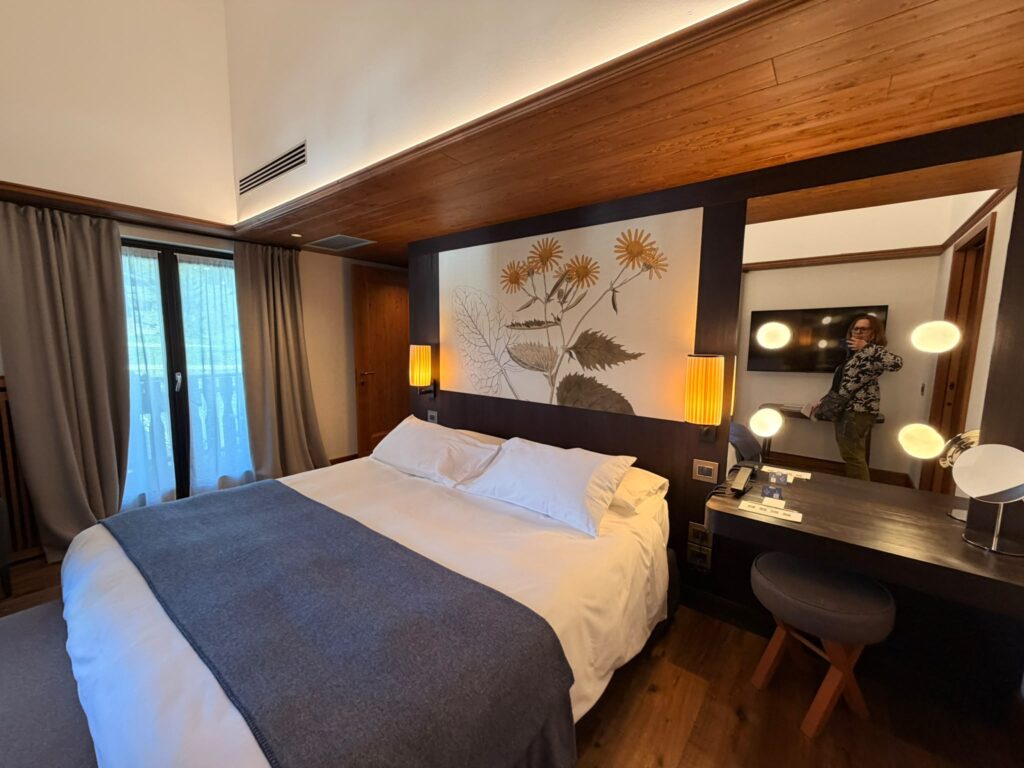
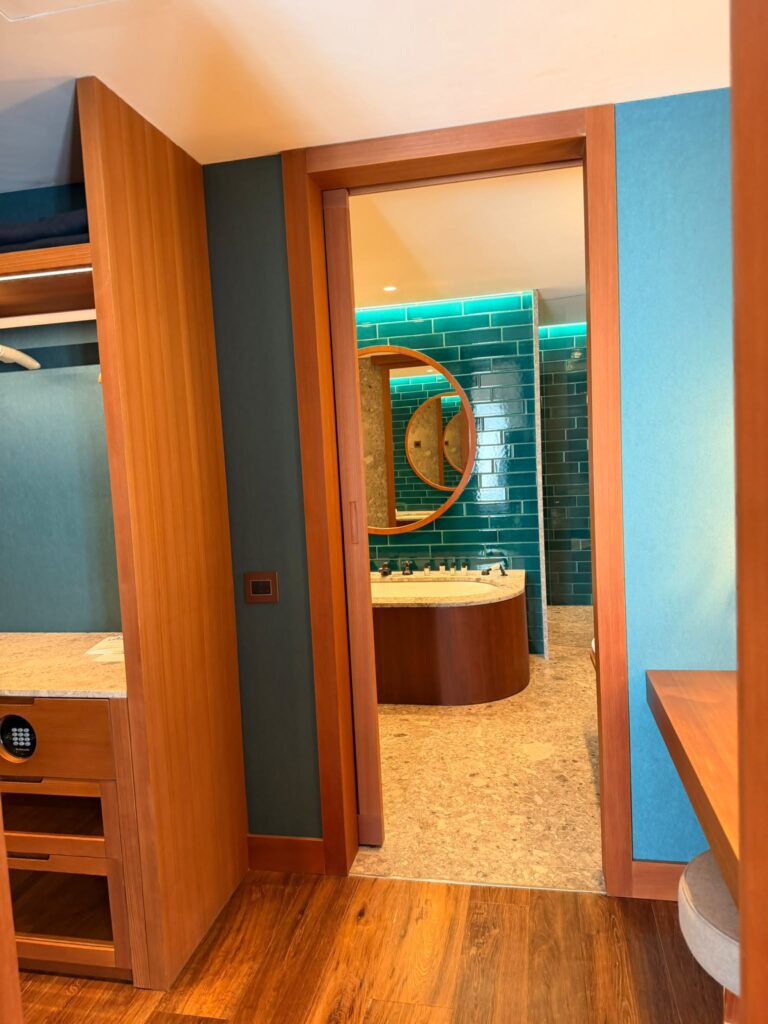
Faloria Mountain Spa Resort has a distinctive decorative character. During my visit, its furniture and turquoise and teal tiles were particularly memorable.
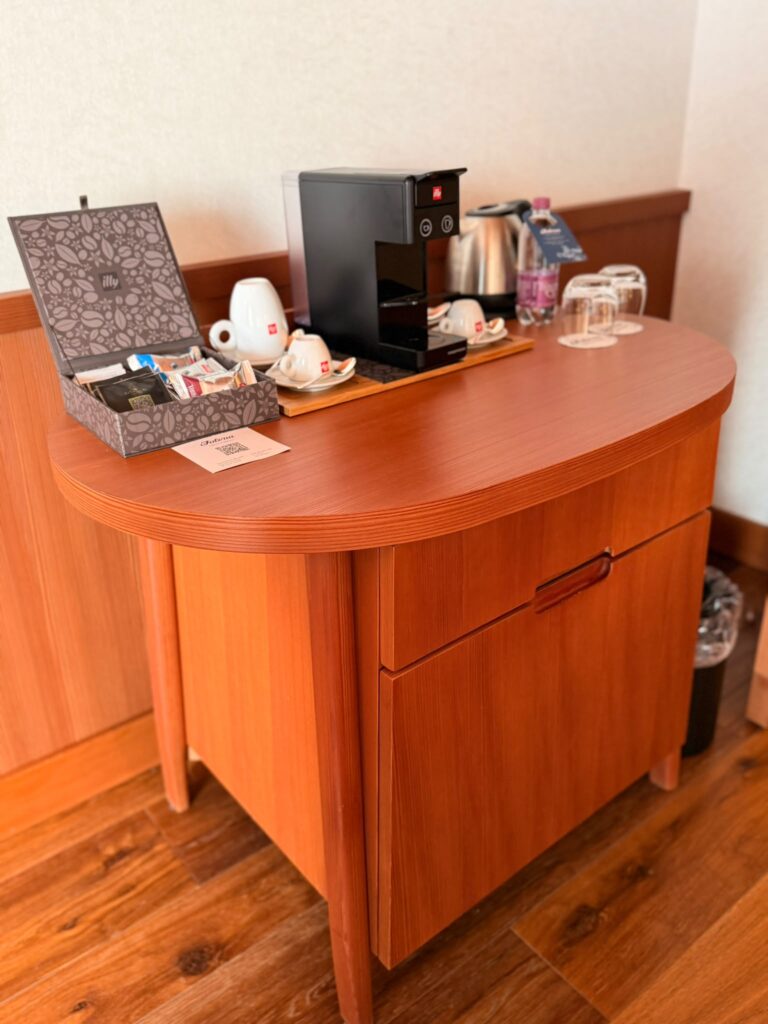
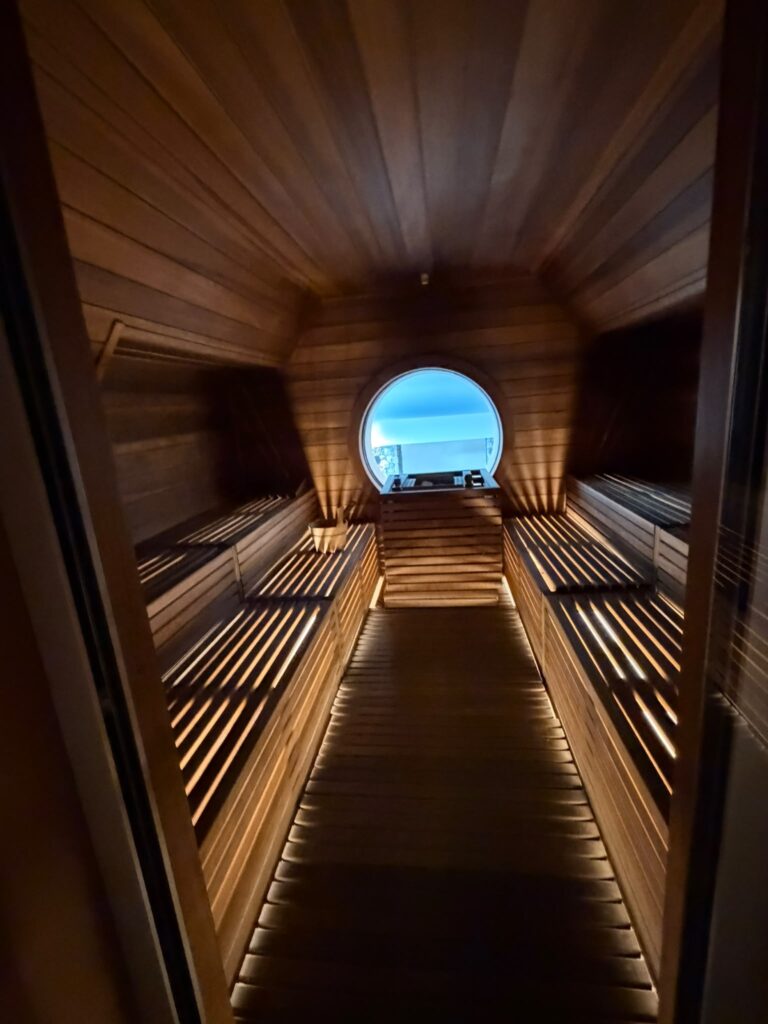
I inspected suite accommodation and learned about the wider room offering. This is a property to consider if you value the hotel experience itself, including time devoted to wellness, and are comfortable using transport for skiing and visits to town.
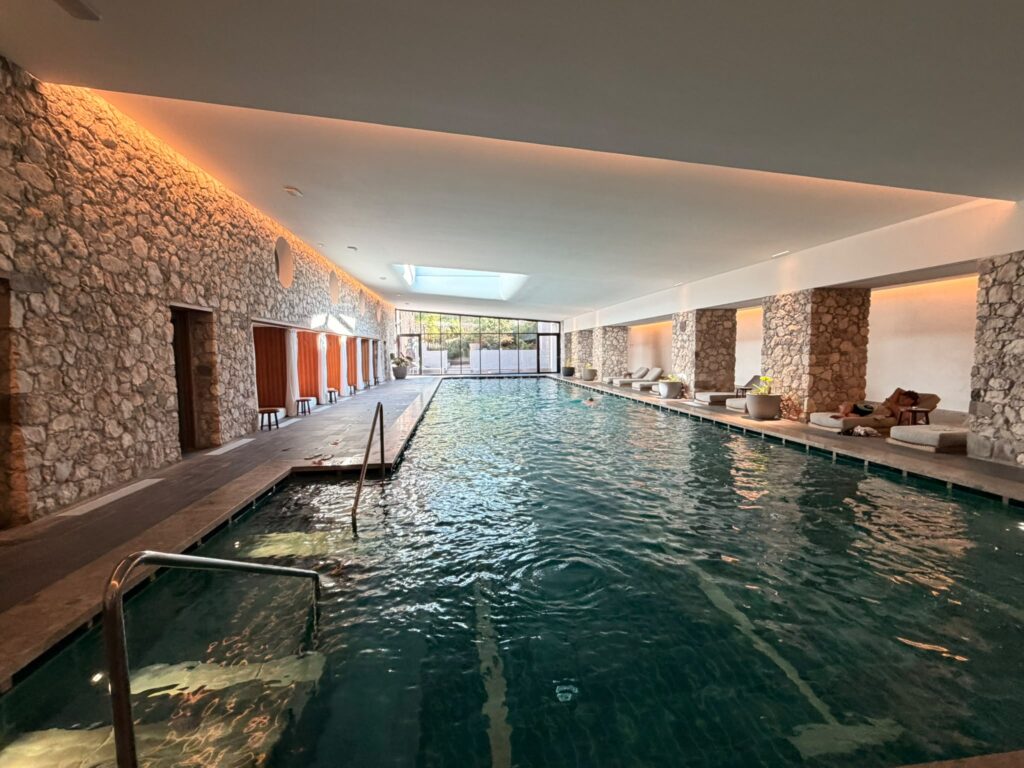
Before booking, confirm which ski access points its shuttle serves and when the service operates.
Best suited to: couples and travellers seeking a design-conscious spa stay outside central Cortina.
Hotel Tofana Cortina: a slopeside option for families
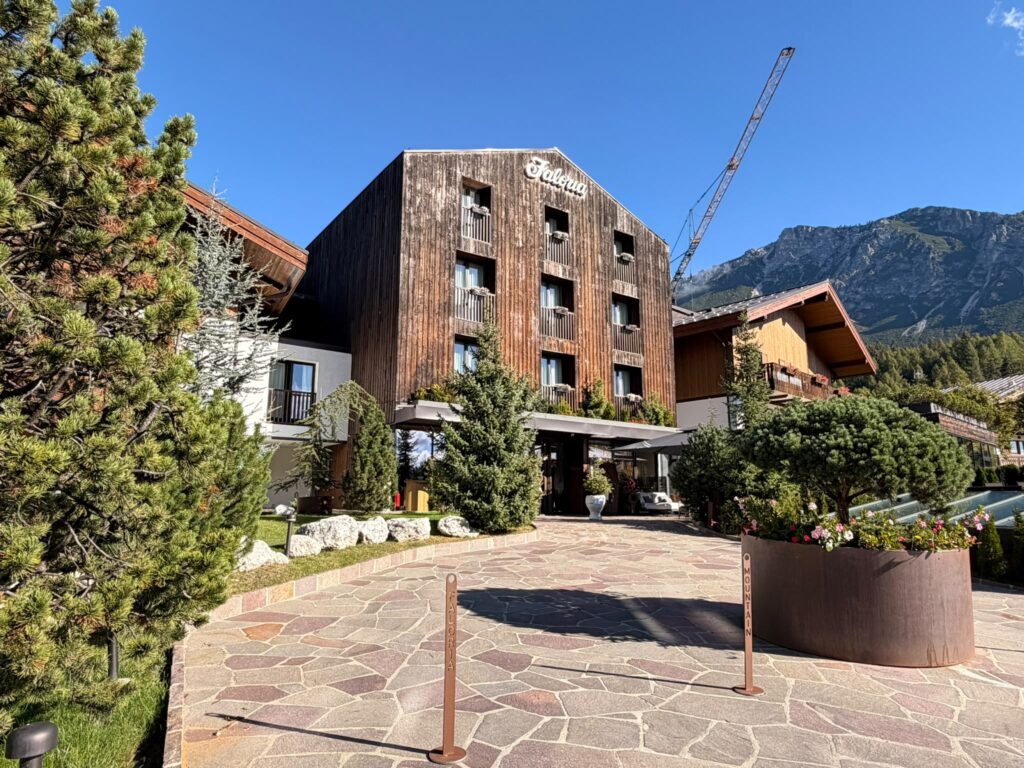
Hotel Tofana Cortina is a five-star property at Pocol, directly on the Rosà piste in the Tofane sector. Its location makes it particularly appealing to guests who prioritise access to skiing.
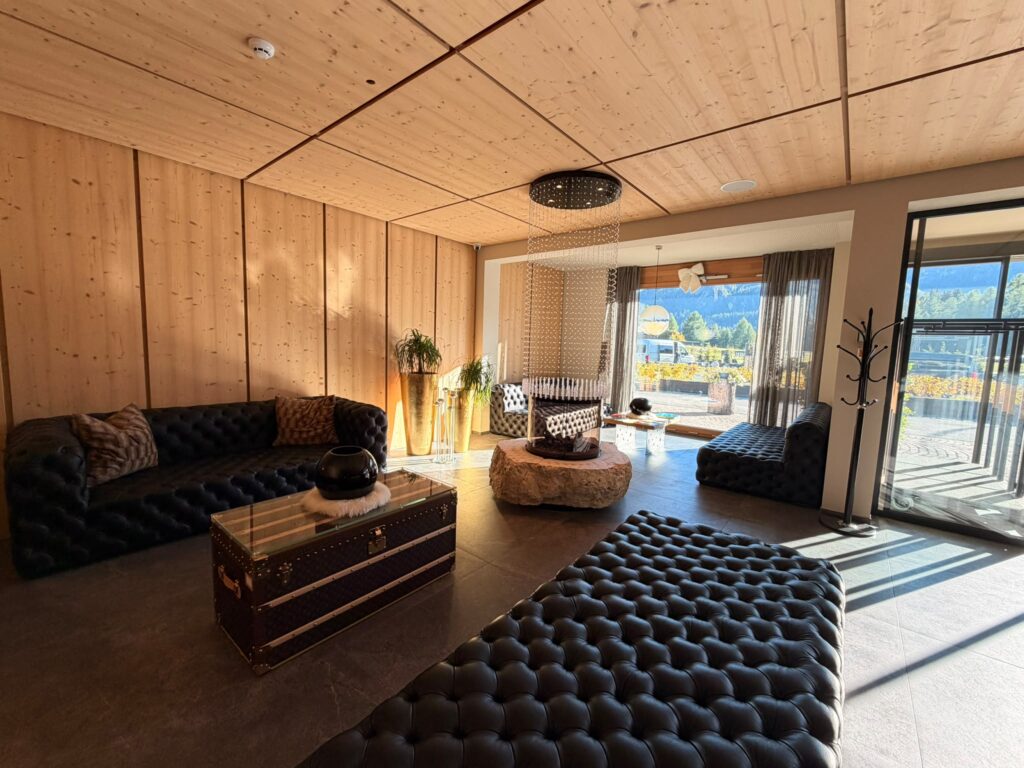
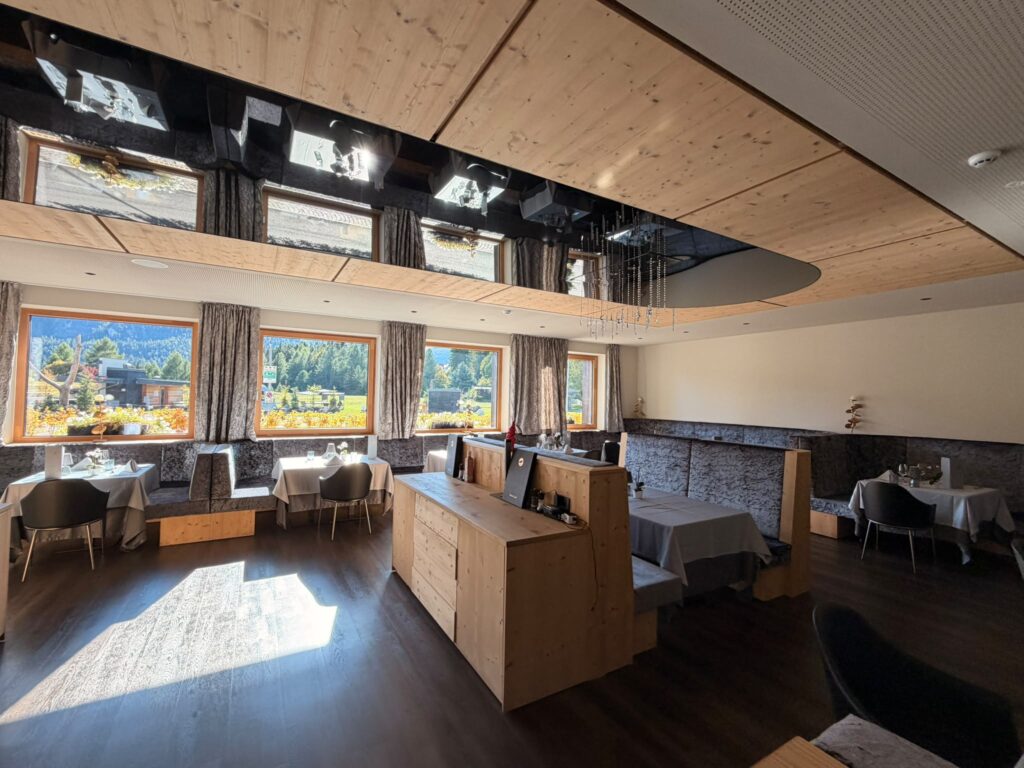
During my inspection, the spacious rooms and mountain views stood out. The hotel also has a kids’ club, restaurant and bar, making it worth considering for a family holiday.
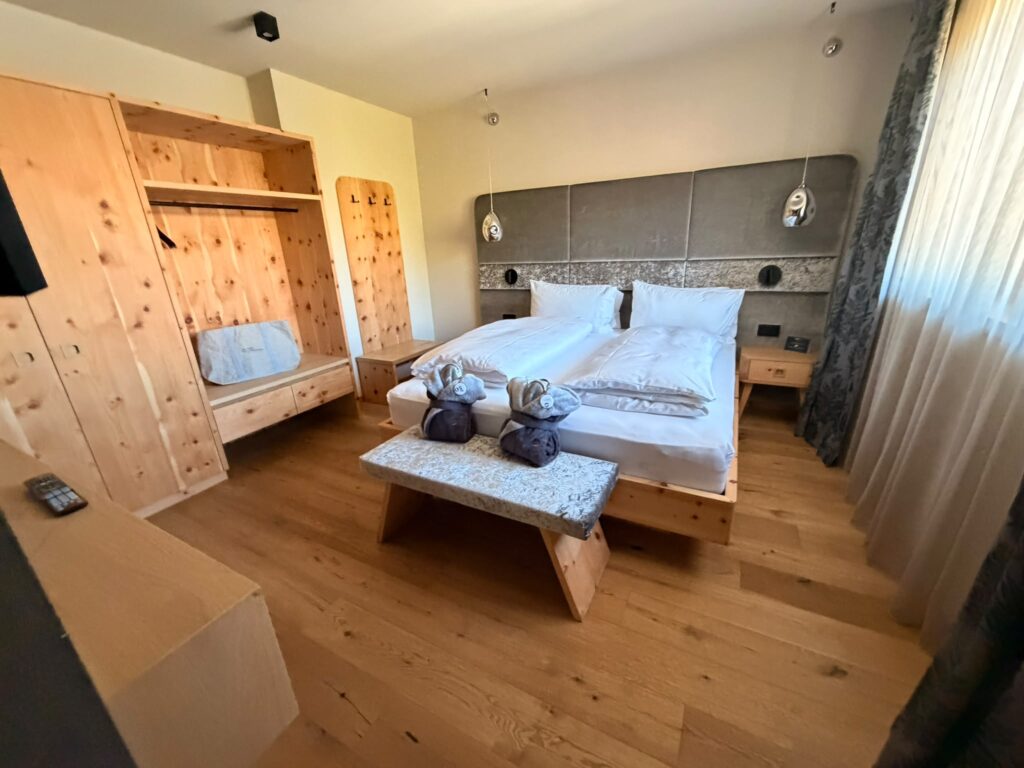
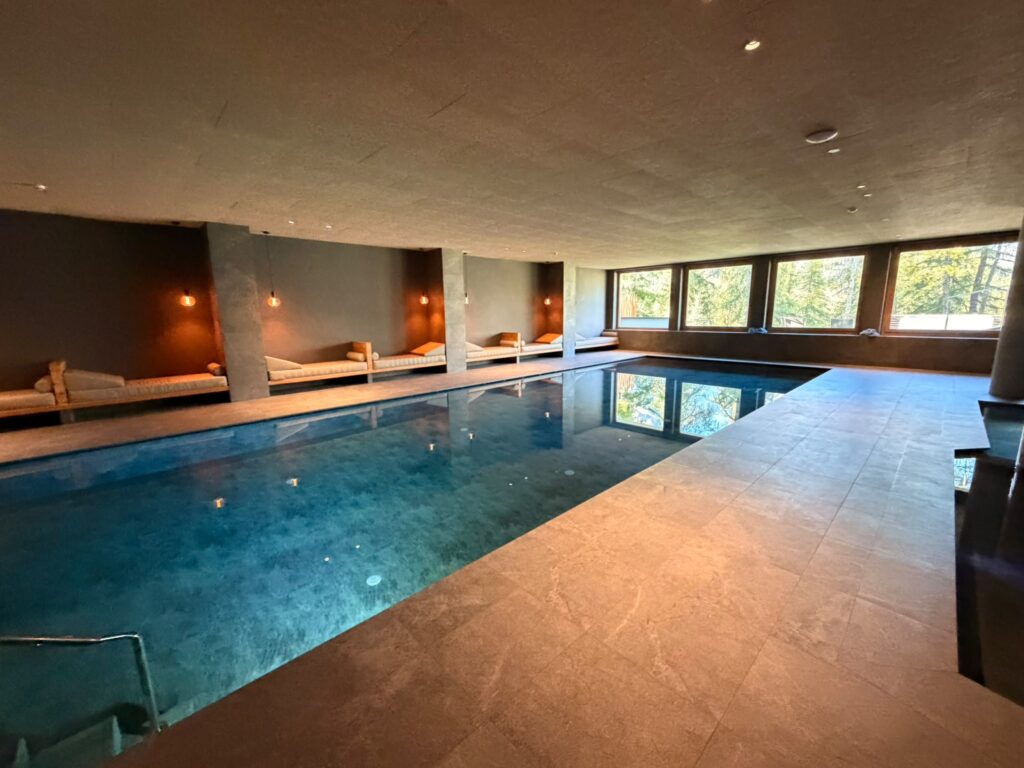
Its mountain setting means that evenings in central Cortina require transport. Confirm the kids’ club ages, operating times and any charges when booking.
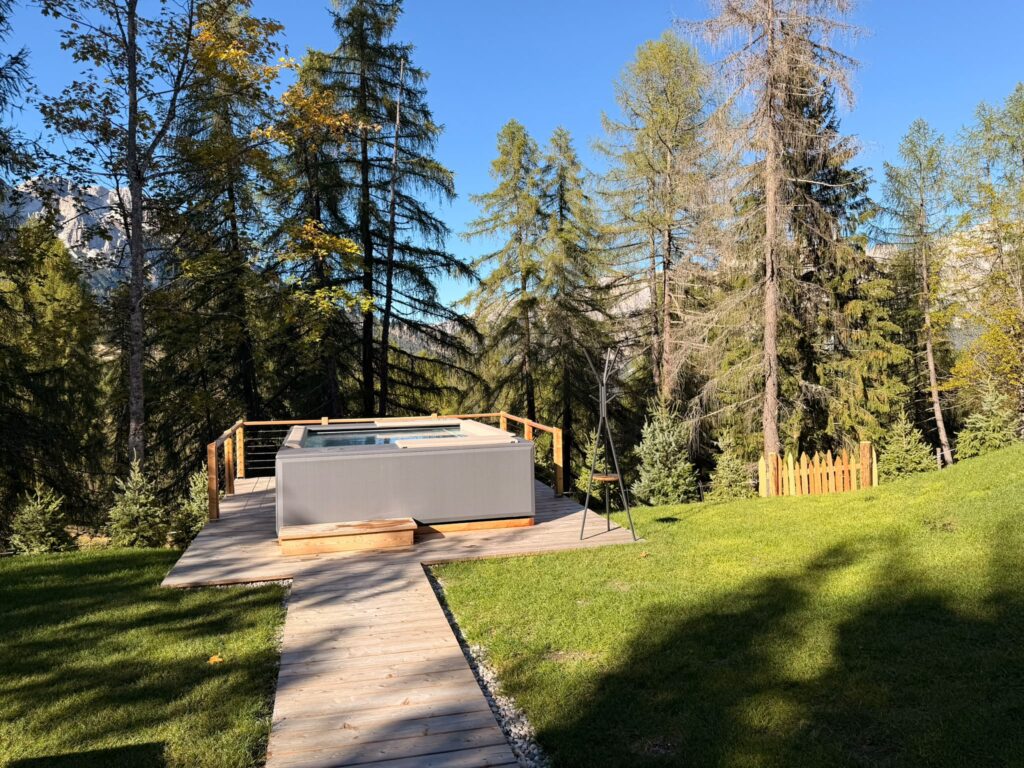
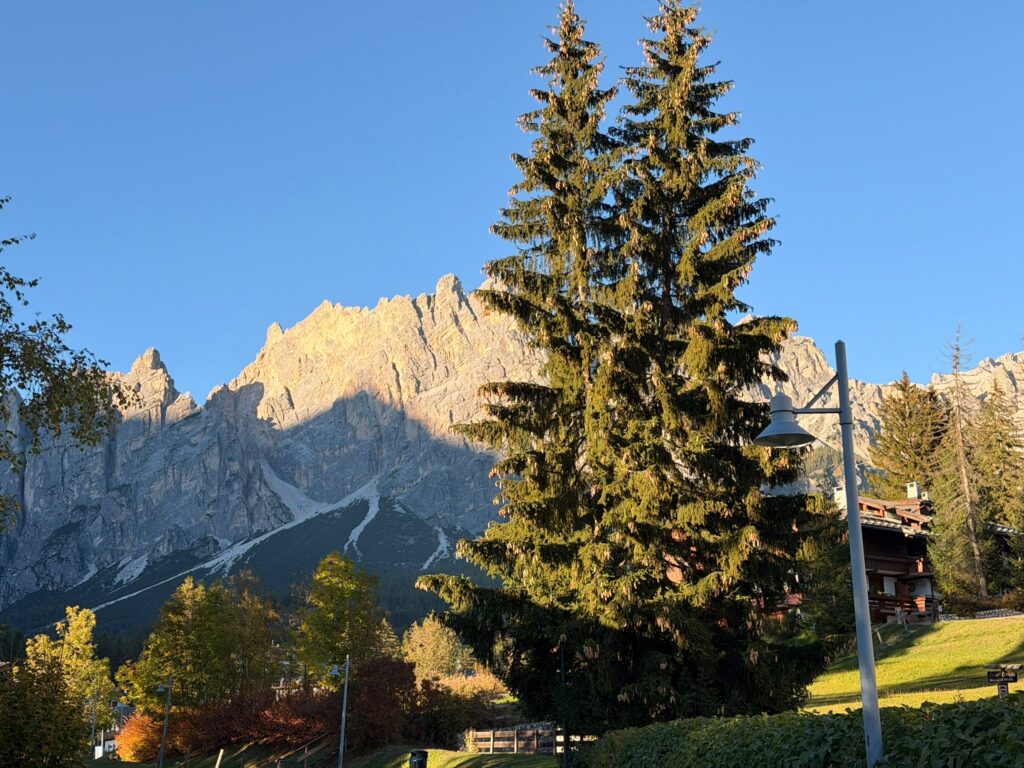
Best suited to: families seeking a luxury slopeside stay and skiers who want to base themselves in the Tofane area.
More five-star options
Grand Hotel Savoia Cortina d’Ampezzo, a Radisson Collection Hotel: grand-hotel style and wellness
Grand Hotel Savoia adds a historic grand-hotel option to Cortina’s luxury accommodation. Its refurbished rooms and suites combine mountain-inspired interiors with a choice of spaces for dining, drinks and relaxation.
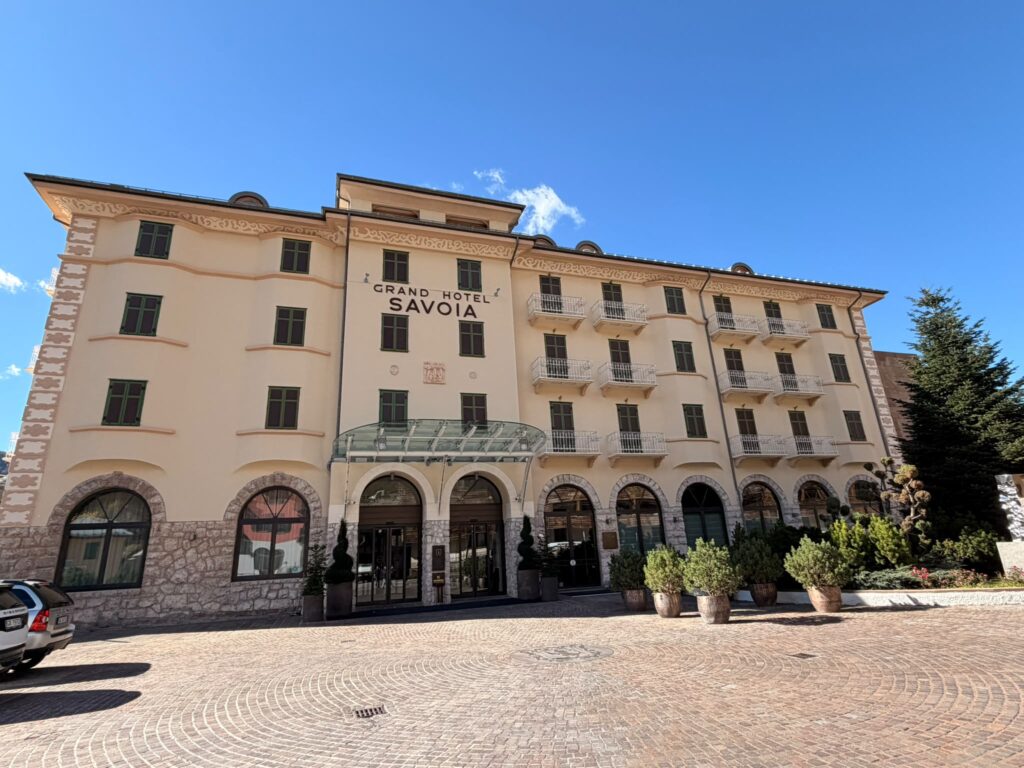
The hotel includes the Savoy restaurant, the 1224 lounge and terrace, and the Savoia Spa. It is worth considering for travellers who enjoy having several elements of their holiday within the hotel, alongside access to the town.
Best suited to: couples and families seeking a full-service luxury hotel with dining and wellness facilities.
Grand Hotel Ampezzo: central luxury with rooms and suites
Grand Hotel Ampezzo offers another five-star option close to Corso Italia and the Faloria cable car. Its accommodation ranges from rooms to larger suites, with natural wood, marble and fabrics inspired by the surrounding mountains.
The hotel has a restaurant, café and The Longevity Spa, whose facilities include a swimming pool, saunas and hammam.
Its central position makes it worth comparing for a holiday combining skiing, time in town and relaxation at the hotel.
Best suited to: couples and travellers looking for central luxury, suite accommodation and a substantial wellness offering.
Four-star hotels
HOTEL de LEN: boutique design close to the centre
HOTEL de LEN occupies the transformed former Hotel Impero. Its name means “of wood” in Ladin, and timber is a defining feature of its contemporary interiors.
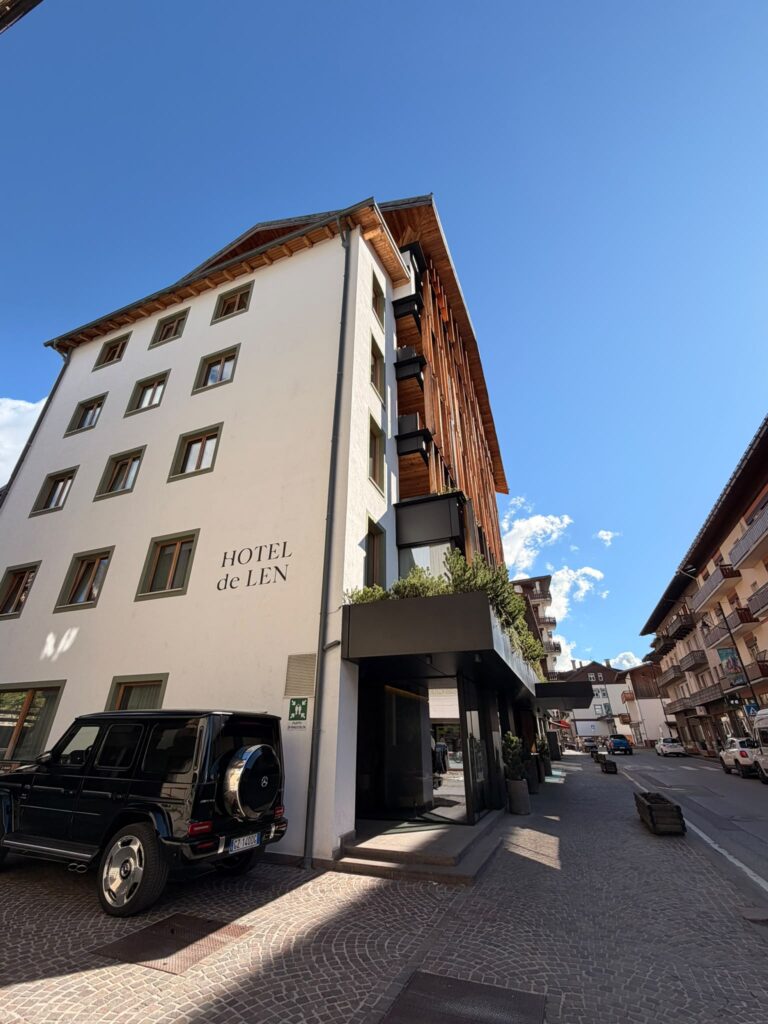
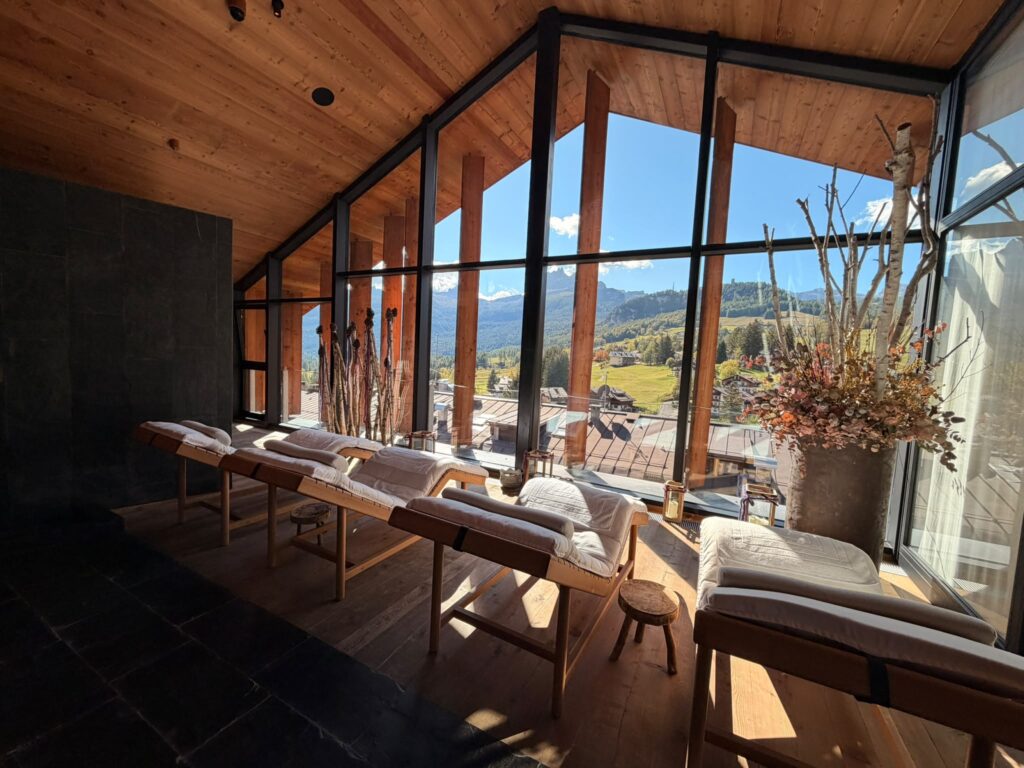
During my visit, the design and top-floor spa were particular highlights. The hotel sits on a street parallel to the pedestrian shopping area, giving guests convenient access to central Cortina. The street immediately outside carries traffic.
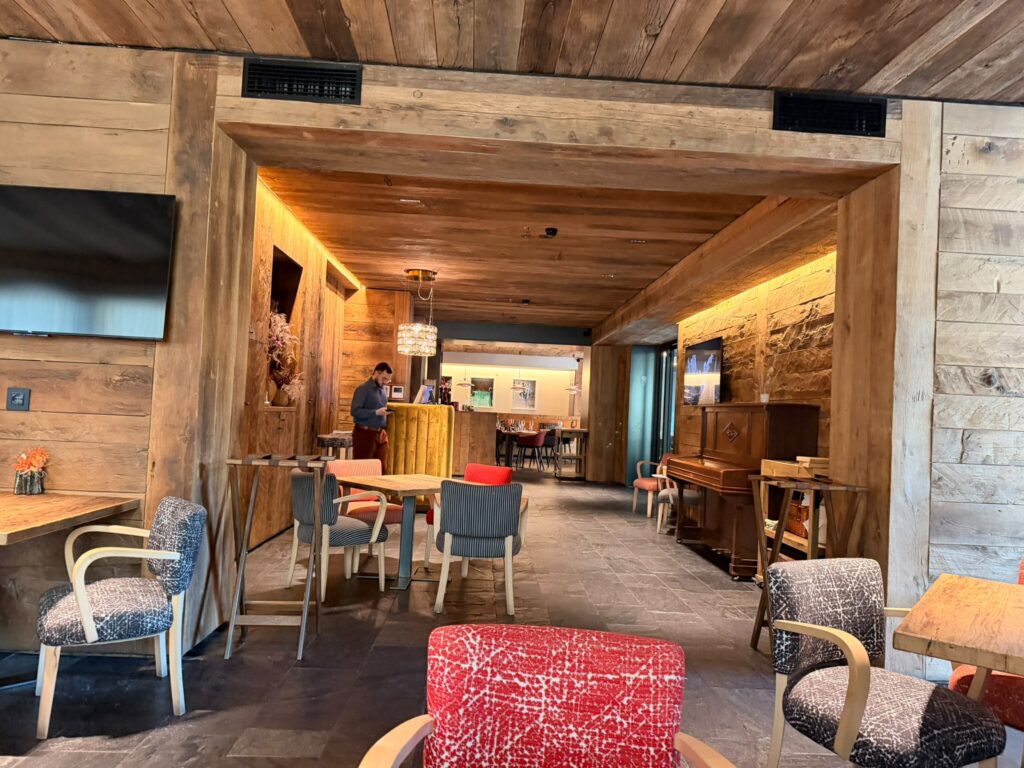
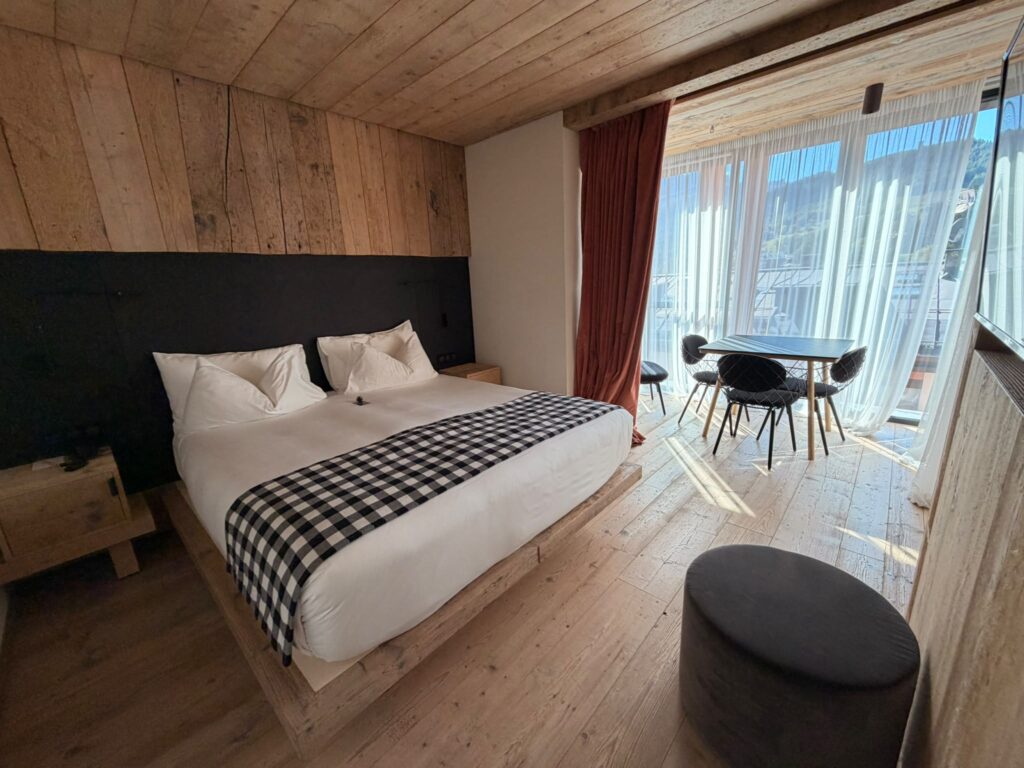
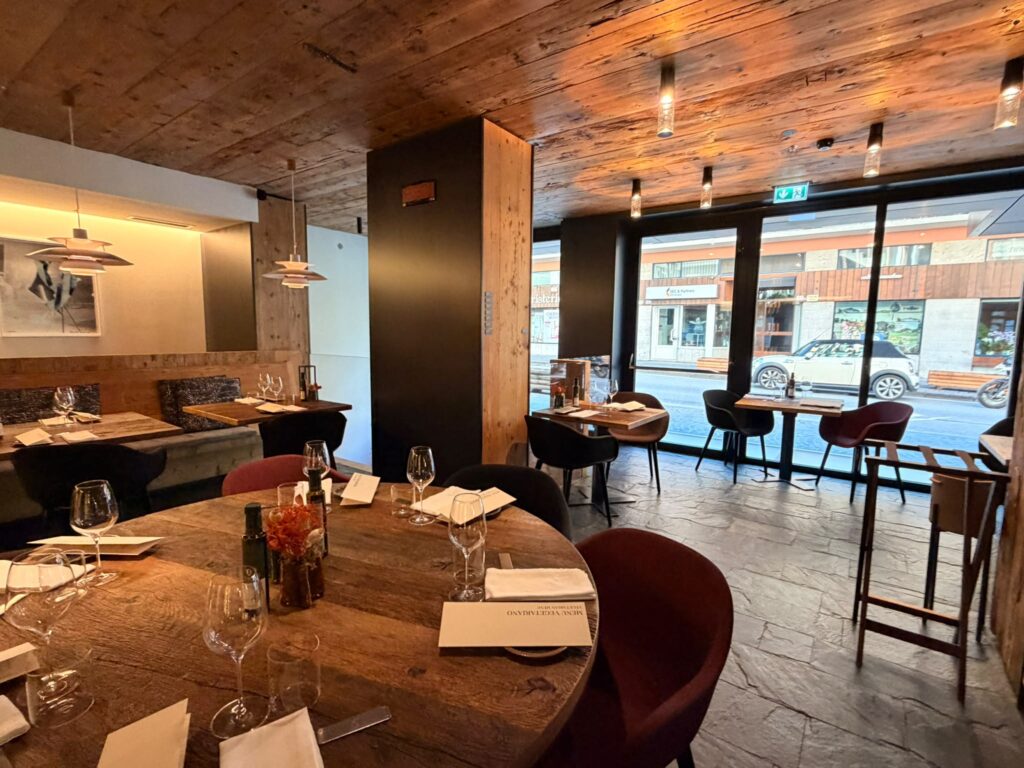
It is a strong option for visitors who want a boutique atmosphere and easy access to town. Confirm arrangements for reaching your chosen ski area before booking.
Best suited to: couples and design enthusiasts looking for a central boutique hotel.
Hotel Lajadira & Spa: rooms, suites and a wellness-focused stay
Hotel Lajadira & Spa offers rooms and suites at La Riva, outside the pedestrian centre. Its wellness facilities include a heated pool, Finnish sauna, Turkish bath and treatment options.
La Taverna restaurant adds the possibility of dining at the hotel, including half-board arrangements. The property also advertises parking and a shuttle to the centre and ski lifts.
It is worth comparing if you want a four-star stay with wellness facilities and are comfortable using transport for outings. Confirm shuttle destinations and hours for your dates.
Best suited to: couples and families seeking a spa hotel with room and suite options.
Three-star hotels
Hotel des Alpes: traditional hospitality and a more economical option
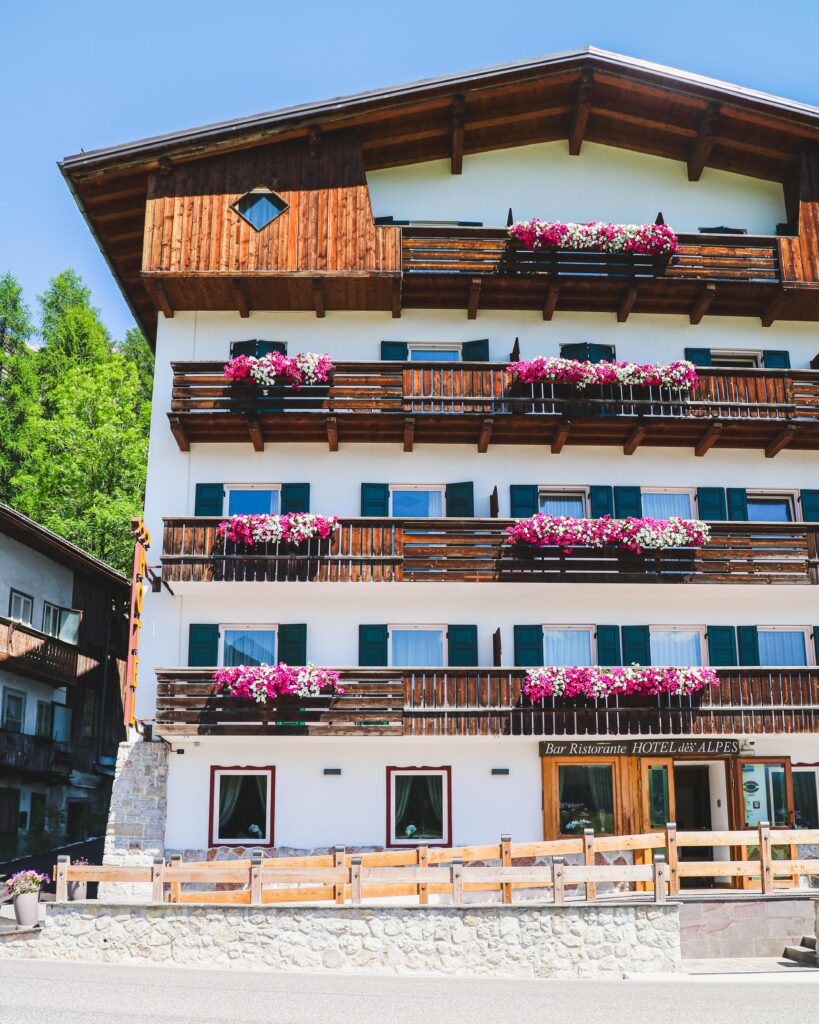
Hotel des Alpes is a three-star, family-run hotel managed by the Ghedina–De Justina family since 1870. It offers a more traditional Alpine setting, with Economy, Standard and Comfort rooms, many with balconies.
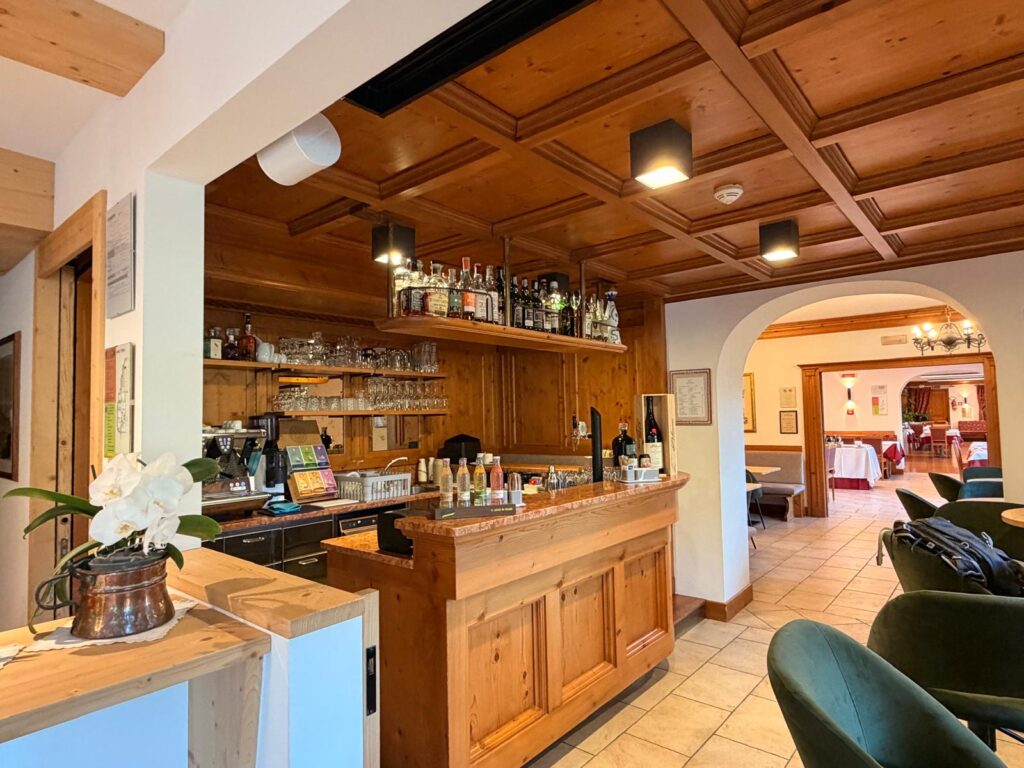
The hotel has a restaurant and wellness facilities. Triple rooms and some quadruple rooms are available on request, making it worth comparing for families as well as couples.
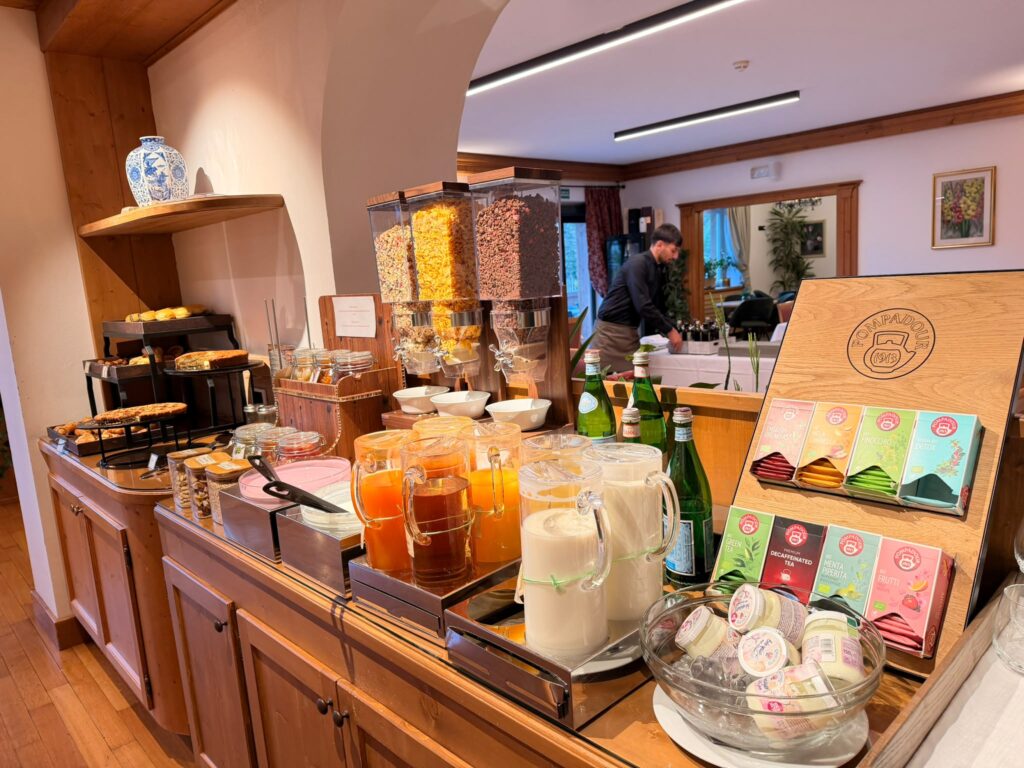
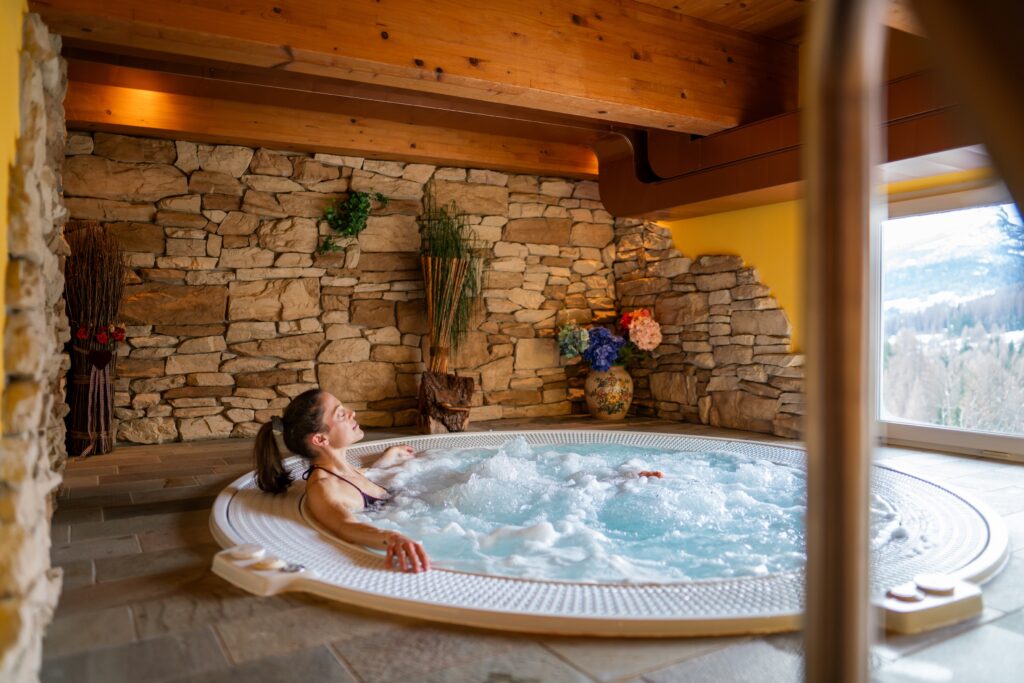
For travellers watching their spending, compare room categories, included meals and the total cost of eating out. Meal plans vary by offer, so check exactly what your chosen rate includes. Affordability depends on dates, room occupancy and availability.
Hotel des Alpes is approximately two kilometres from the centre. Factor transport into plans for skiing and evenings in town, and ask about the services available during your stay.
Best suited to: travellers seeking family-run hospitality and families comparing more economical accommodation options.
Apartments and self-catering stays
Radisson Residences Savoia Palace Cortina d’Ampezzo: apartment flexibility close to the centre
Savoia Palace offers self-catering accommodation with kitchenettes, combining a central location with the flexibility to prepare some meals yourself.
The Alpine-style interiors use natural wood and warm colours. Different layouts accommodate couples, families and groups of friends, with selected accommodation suitable for up to six people. Choose the specific apartment by its bedroom arrangement and sleeping capacity, rather than relying on the property’s maximum occupancy.
Some associated facilities—including the spa and dining venues—are located across the road at Grand Hotel Savoia. Check which services are included in your apartment rate and which require an additional payment or reservation.
Best suited to: families, friends travelling together and visitors who want self-catering flexibility near central Cortina.
Choosing an apartment for a ski holiday
An apartment can make breakfast, children’s meals and quieter evenings easier to organise. Compare the total accommodation cost, including cleaning, parking and any additional service charges.
Check whether everyone has a separate bed or whether the advertised capacity includes a sofa bed. For winter stays, ask about equipment storage and transport to your preferred ski access point.
A central apartment suits independent evenings in town; one farther out may offer more space but require additional transport.
Choosing the right base
For central luxury, consider Eight Cortina; for a central boutique stay, HOTEL de LEN. Rosapetra and Faloria suit travellers who want spa facilities and are happy to use transport, while Hotel Tofana is particularly attractive for families prioritising a slopeside location. Hotel des Alpes adds a traditional three-star option for those comparing costs.
Before reserving, ask about the room configuration, meal plan, spa access and transport to the lifts you intend to use. A hotel shuttle’s destinations and hours can make a substantial difference to your holiday.
The mountain: where to ski in Cortina
Cortina’s skiing is spread across distinct mountain sectors, each with its own character. Tofana offers the broadest choice for mixed abilities; Faloria–Cristallo particularly suits confident piste skiers; and Cinque Torri–Lagazuoi combines panoramic skiing with memorable mountain journeys.
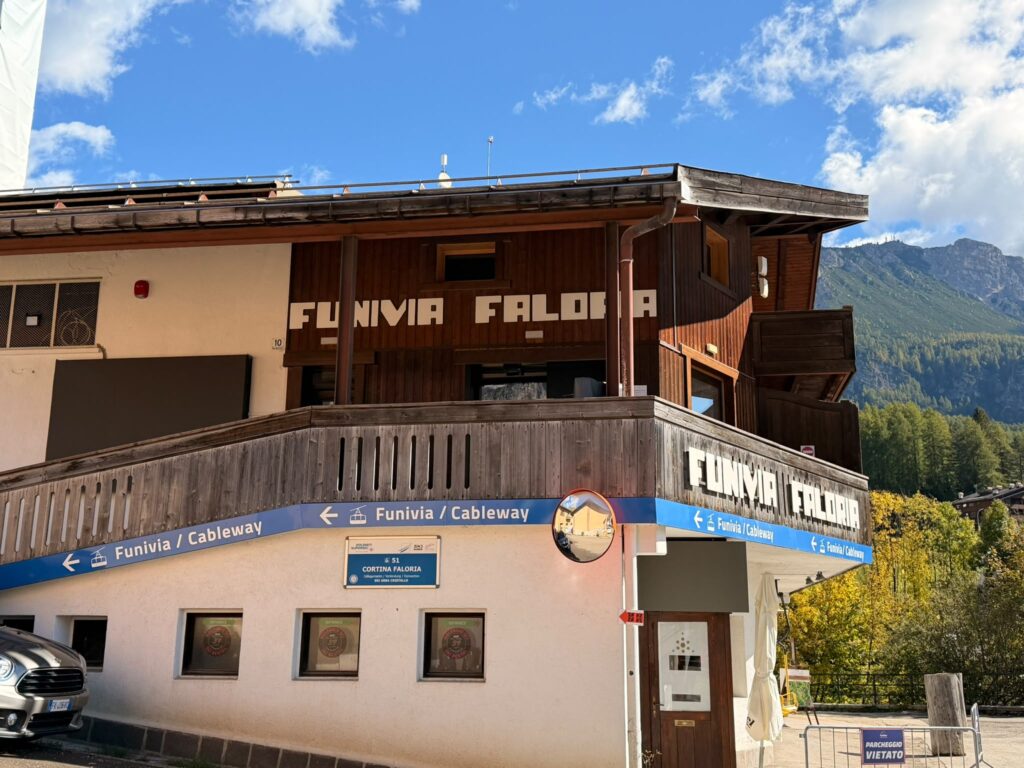
The important distinction is between areas that share a ski pass and areas connected by lifts and pistes. You can move between some sectors on the mountain, while other journeys require a ski bus, hotel shuttle or taxi.
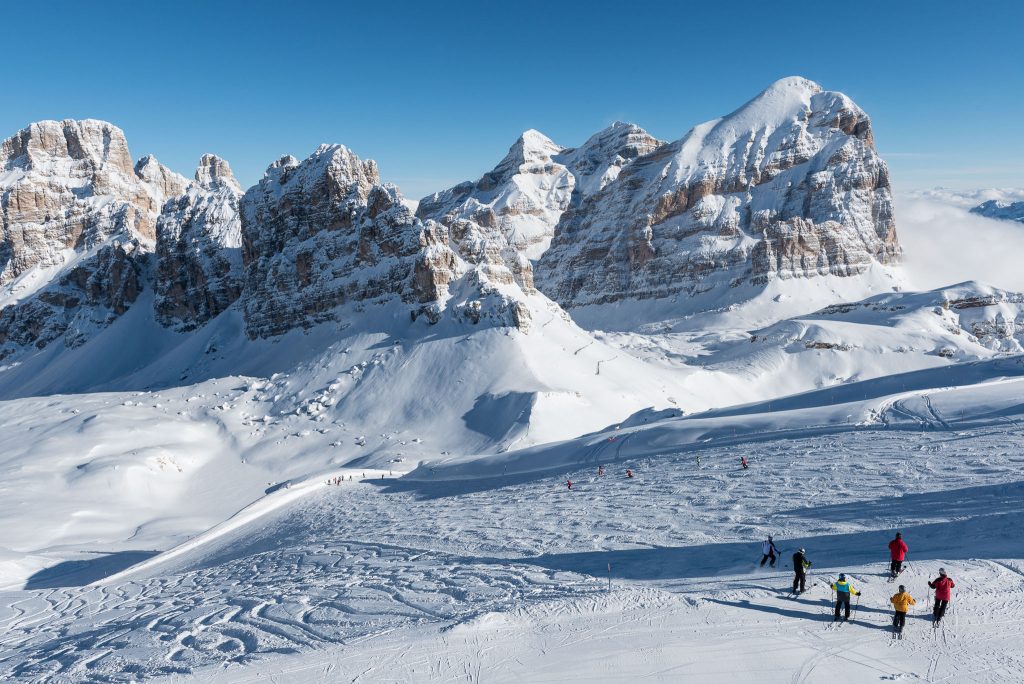
Tofana: from first turns to demanding descents
The Tofana side, west of town, offers Cortina’s widest progression from nursery slopes to challenging upper-mountain skiing.
Socrepes is the natural starting point for beginners, with dedicated learning terrain and access to ski schools. The gentler slopes around Socrepes and Pocol make this side particularly useful for families learning together, or groups whose members need different levels of terrain.
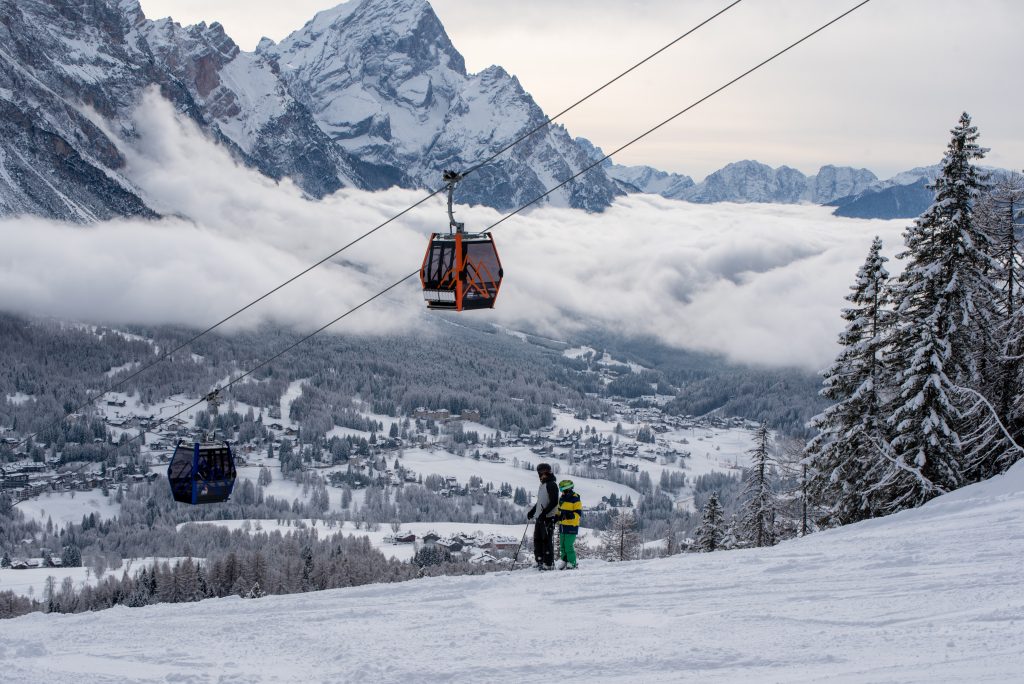
As confidence grows, intermediates can explore towards Rumerlo, Duca d’Aosta and Pomedes. Higher up, Ra Valles provides a more dramatic mountain setting, while experienced skiers can seek out demanding pistes such as Forcella Rossa. The celebrated Olympia delle Tofane race terrain adds another dimension, although its steeper sections require confidence and sound technique.
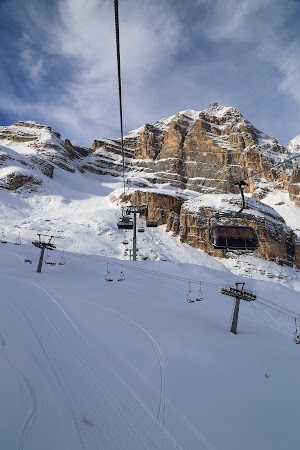
A family can therefore base its day in this sector without everyone needing to ski the same runs. Agree meeting places carefully: “Tofana” covers a substantial mountain area, rather than one compact collection of slopes.
Sun and snow on Tofana
Many of the front-side slopes face broadly east or south-east, making morning sunshine an attraction. Lower slopes can soften earlier during warm spring weather, while higher terrain around Ra Valles has a different exposure and can retain firmer snow.
Treat this as a general pattern rather than a fixed timetable. Surrounding cliffs cast substantial shadows, and the best time to ski a particular piste depends on temperature, recent weather and grooming.
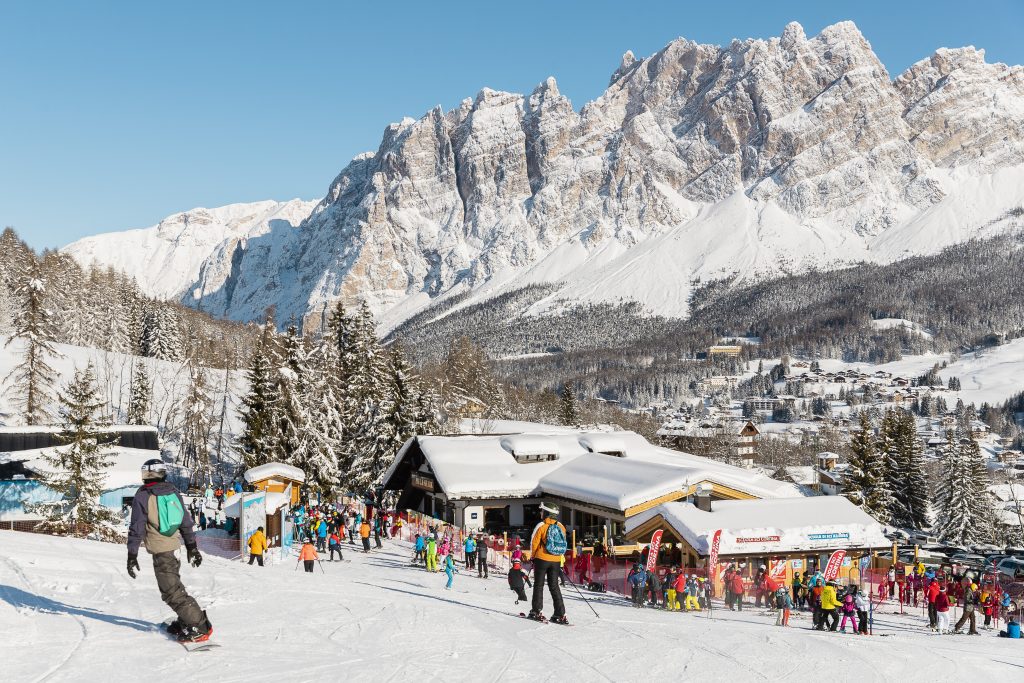
Best for: beginners at Socrepes, families, mixed-ability groups and experienced skiers seeking more demanding terrain higher up.
Faloria–Cristallo: red and black pistes with contrasting exposures
Faloria lies east of Cortina and can be reached by cable car from near the town centre. Another access point is Rio Gere, on the road towards Passo Tre Croci and Misurina.
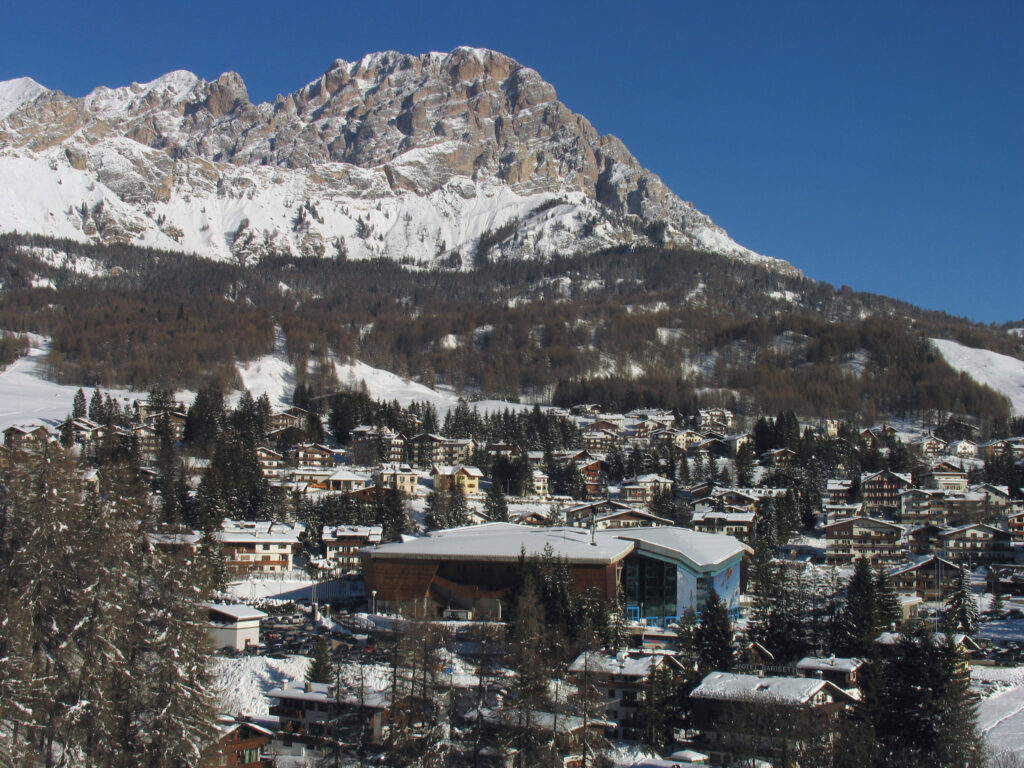
The skiing here is particularly attractive to confident intermediates and advanced skiers. Faloria has a strong selection of red and black pistes, with open upper-mountain terrain and views across the valley towards the Tofane.
This is less suitable as a first-day learning area than Socrepes. Families with children already comfortable on red pistes, however, can enjoy a rewarding day here.
The Cristallo side is reached via Rio Gere and the lift towards Son Forca. Moving between Faloria and Cristallo involves the road-level connection at Rio Gere; it is worth identifying that crossing on the piste map before setting off.
Sun and snow on Faloria–Cristallo
Although these mountains stand on the eastern side of the valley, that does not mean all their pistes face east. Much of Faloria’s skiing has a northerly exposure and is relatively shaded, helping preserve snow during warmer periods.
Cristallo’s main skiing towards Rio Gere has a sunnier, broadly southerly exposure. The contrast can be useful when choosing where to spend the day: shaded Faloria may appeal when temperatures rise, while Cristallo offers a sunnier alternative.
For the return to central Cortina from Faloria, plan to descend by cable car rather than expecting a groomed piste all the way into town.
Best for: confident intermediates, advanced piste skiers and families whose children already ski comfortably beyond beginner terrain.
Cinque Torri–Lagazuoi: panoramic skiing and a mountain journey
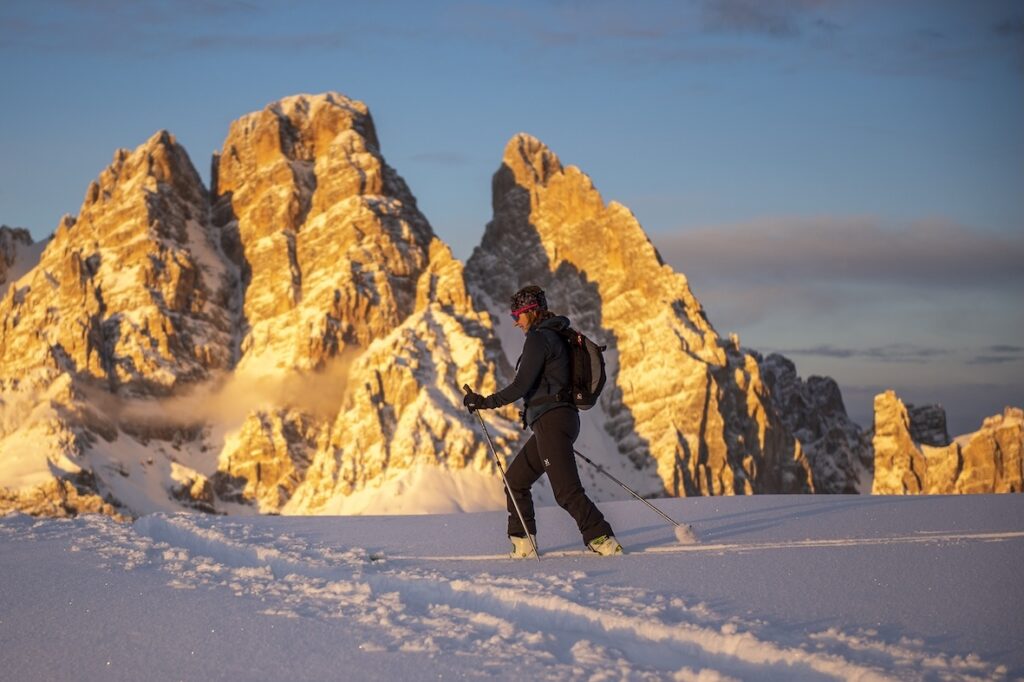
Cinque Torri offers a different rhythm: skiing beneath distinctive rock towers, long views across the Dolomites and the opportunity to build a day around a mountain lunch.
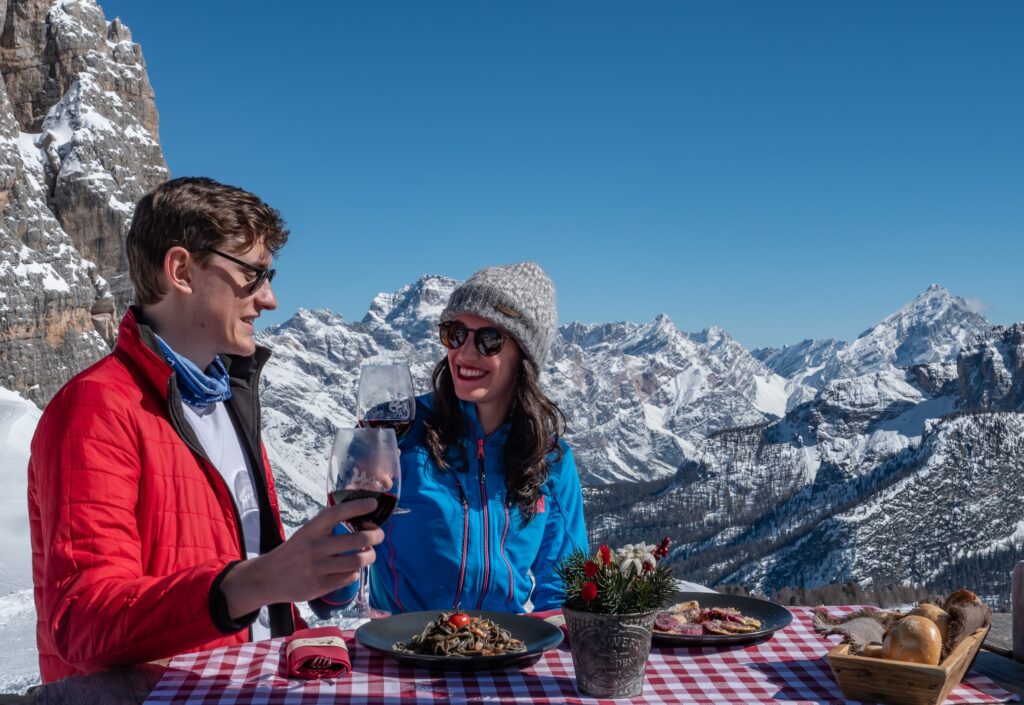
The wider area includes Cinque Torri, Averau, Col Gallina and Falzarego–Lagazuoi. It is especially appealing to intermediates who enjoy exploring, although individual pistes and connections still need checking against the group’s ability.
Col Gallina provides gentler terrain, while the linked routes around Cinque Torri and Averau make a satisfying excursion for families already skiing confidently. A first-time skier is better served by a dedicated learning area than by attempting a full tour through these sectors.
Lagazuoi adds high-mountain scenery and the celebrated Armentarola descent, often called the Hidden Valley. This leads towards Alta Badia, rather than returning you automatically to Cortina. Include its onward transport and return arrangements in your plan.
The horse tow towards Armentarola is a separate service, subject to snow and operating conditions. It should not be assumed to be included in your lift pass.

Sun and snow around Cinque Torri–Lagazuoi
Exposure varies considerably across this area. Some pistes around Cinque Torri have a northerly aspect, while other slopes and refuge terraces receive more sunshine. High rock walls also create shaded sections along the longer descents.
Choose the day for visibility as well as snow conditions: much of the appeal is the surrounding landscape.
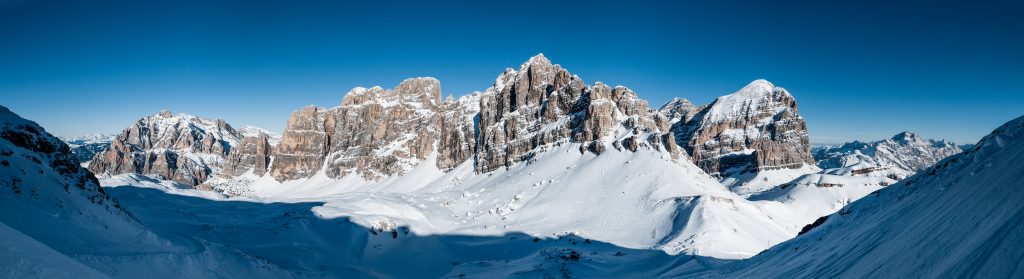
Best for: intermediates, confident skiing families, scenic excursions and skiers who enjoy combining pistes with a refuge lunch.
How the mountain sectors connect
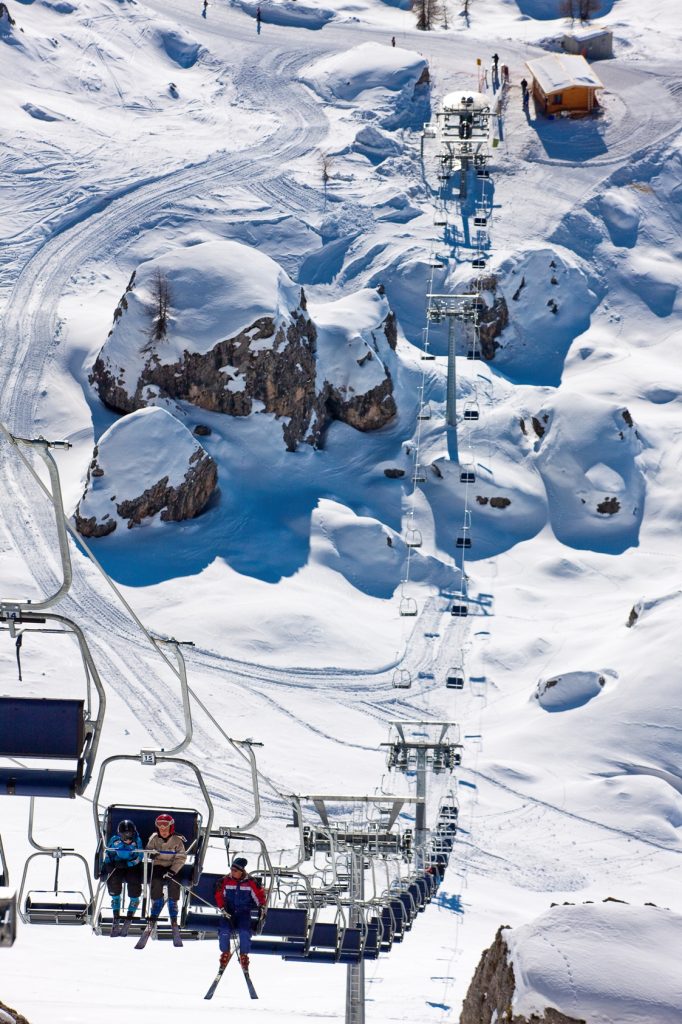
Cortina Skyline links the Tofana side with Cinque Torri. The gondola runs in both directions between Son dei Prade, near Pocol, and Bai de Dones, the access point for Cinque Torri.
From the Tofana network, you can reach Skyline using the appropriate lifts and pistes, then continue towards Cinque Torri and the wider Falzarego area. Allow time for those connections and check the final return lifts: this is a mountain excursion rather than a quick hop between adjacent pistes.
Faloria–Cristallo remains separate from Tofana. Travelling between these sides requires road transport.
Getting around Cortina—and avoiding long walks in ski boots
Central Cortina is enjoyable to explore on foot in normal footwear. Moving between ski access points with equipment is a different matter.
The Faloria cable car and Freccia nel Cielo departure points are at different ends of town. For most visitors, a ski bus or shuttle is more practical than carrying skis between them in rigid boots.
Socrepes is approximately two kilometres from the centre, on the road towards Passo Falzarego. Rio Gere lies farther out, on a separate road approach. Use transport for these journeys rather than treating them as walks from town.
Dolomiti Bus operates ski-bus connections serving the main access points. Check the timetable, ticket conditions and last service for your actual dates; routes used during the 2026 Olympics should not be assumed to apply to a normal winter holiday.
Hotel shuttles can be particularly useful, but ask exactly where they stop. A transfer to Faloria or Freccia nel Cielo does not necessarily include Socrepes, Rio Gere or Skyline.
For a relaxed first morning, choose your ski area—or confirm your lesson meeting point—before arranging transport.
Ski passes: Cortina or Dolomiti Superski?
Cortina is part of Dolomiti Superski, but visitors can choose between a local area pass and the wider Dolomiti Superski ticket.
The local pass already covers Cortina’s principal sectors. You do not need the full Dolomiti Superski pass simply to move between Tofana, Faloria–Cristallo and Cinque Torri–Lagazuoi.
| Pass | Coverage | Who should consider it? |
| Cortina area pass | Cortina’s main sectors, including Skyline and Lagazuoi, plus the participating areas of San Vito di Cadore, Auronzo and Misurina | Visitors planning to ski within the local area |
| Dolomiti Superski pass | Cortina plus the wider participating Dolomiti Superski ski regions | Skiers planning the Sellaronda or days in other regions, such as Alta Badia |
The wider pass expands where you can ski, but it does not turn the Dolomites into one continuously linked ski area. Road transfers are still necessary between some destinations.
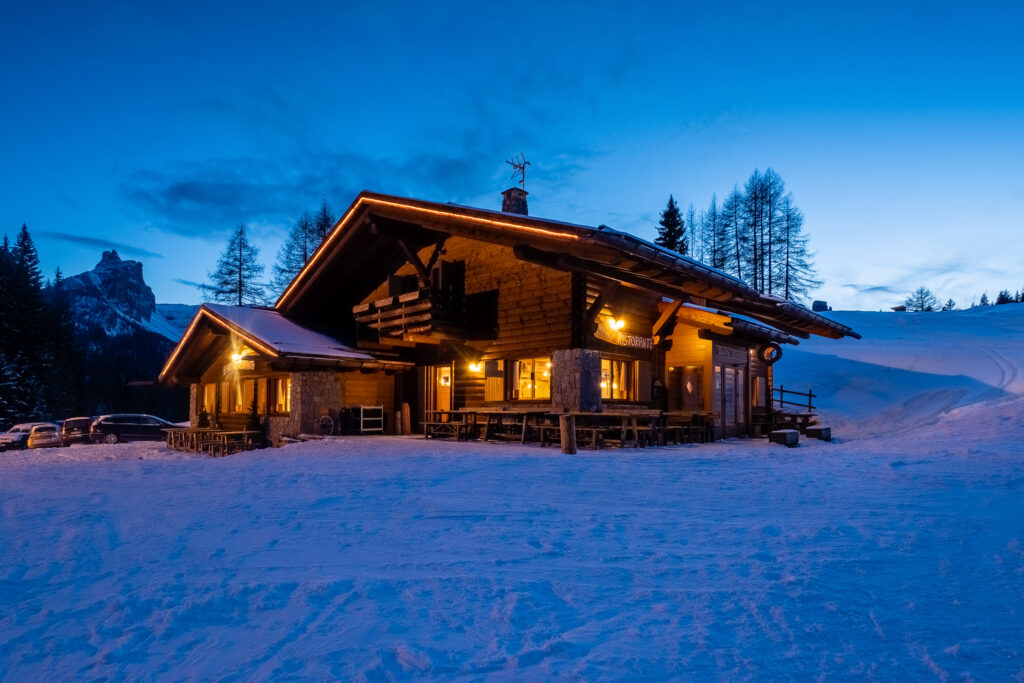
Which pass makes sense for your holiday?
If your week centres on Cortina, the local pass is the logical starting point for comparison. Beginners taking lessons on a small learning area should ask their school which ticket they actually need.
For the Sellaronda, you need the Dolomiti Superski pass, because the circuit crosses several ski regions.
If you plan only one day outside Cortina, compare the cost of local tickets plus a separate Dolomiti Superski day with a wider pass covering the whole stay. Consecutive-day tickets have their own validity rules, so ask the ticket office to price the complete itinerary before buying.
Prices vary by date, duration and age category. Also budget separately for services such as taxis and the Armentarola horse tow; a lift pass does not automatically cover every element of a ski excursion.
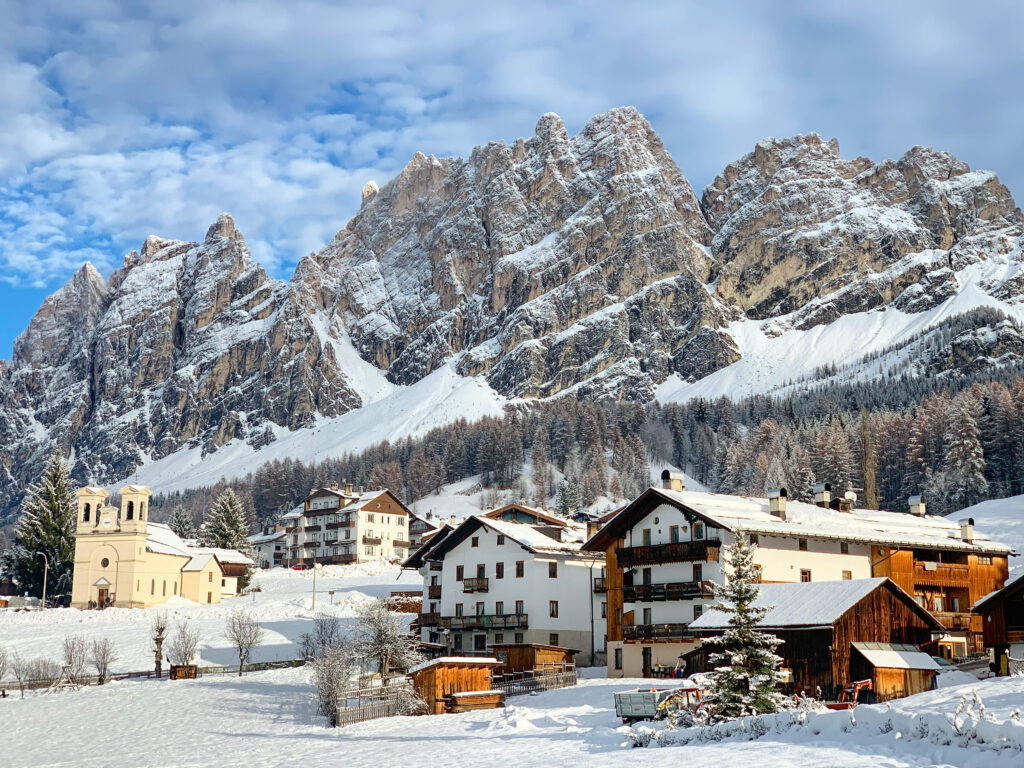
The Sellaronda from Cortina
The Sellaronda circles the Sella massif, linking Alta Badia, Val Gardena, Val di Fassa and Arabba over four Dolomite passes.
It makes a rewarding day trip from Cortina, but Cortina is outside the circuit. Your plan must include the journey to a starting point and the return afterwards.
Getting to the circuit
A straightforward option is a pre-booked road transfer to Corvara in Alta Badia, joining the circuit there and returning to Cortina by road after skiing.
Another possibility involves reaching Alta Badia via Lagazuoi and the Armentarola descent. That adds a substantial excursion before you join the circuit, together with additional connections. It is better planned with a local instructor who knows the timings than improvised as a first visit.
For most visitors wanting to complete the full Sellaronda comfortably, transferring directly to a circuit access point leaves more time for the tour itself.
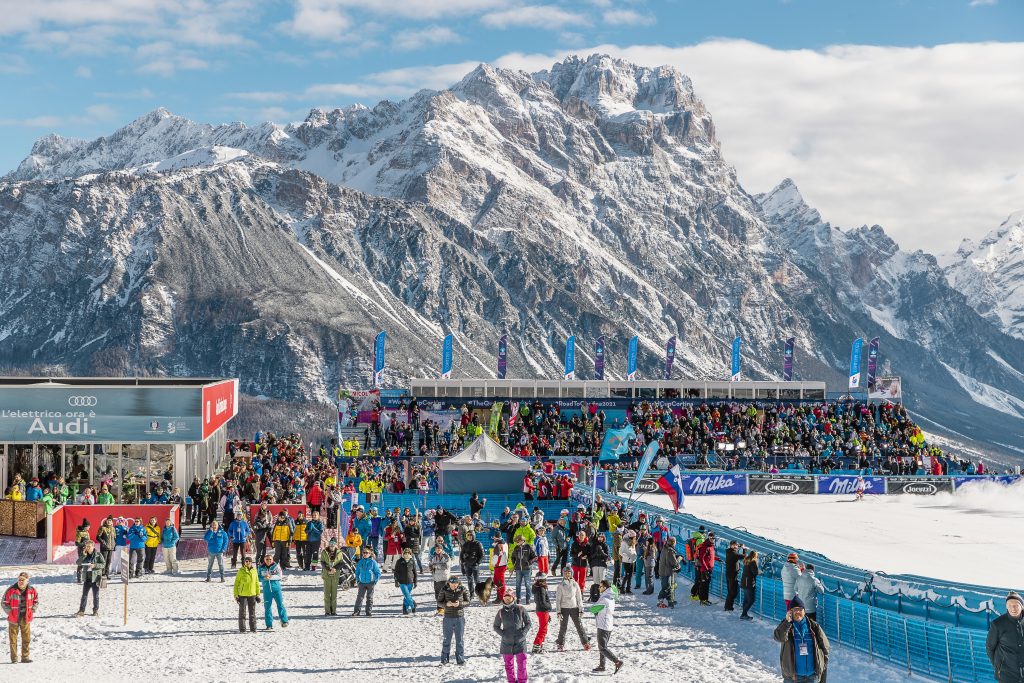
How long does the Sellaronda take?
Dolomiti Superski currently describes the circuit as approximately 44 kilometres overall: 23 kilometres of skiing and 21 kilometres travelled by lift. Figures vary between descriptions and routes, so the overall distance should not be mistaken for continuous downhill skiing.
Allow approximately six hours for the circuit, including lifts and breaks, with extra time if queues are substantial or your group skis slowly. Travel from and back to Cortina comes on top of that.
The official advice is to start before 10:00 and reach the final pass by 15:30 at the latest. Starting near lift opening gives you a more comfortable margin.
Clockwise or anticlockwise?
Both directions are signposted:
- Orange signs: clockwise.
- Green signs: anticlockwise.
They use different combinations of pistes and lifts, so the experiences differ. Choose one direction and follow its colour consistently. A local instructor can recommend the better option for your starting point, ability and the day’s conditions.
The Sellaronda suits confident intermediates with reasonable stamina. It is not a beginner itinerary: completing it requires sustained travel through unfamiliar terrain as well as managing lift times.
Arranging a taxi pickup
You can arrange to return to your starting point, or agree a different road-accessible pickup with your driver. Places on the circuit such as Corvara, Arabba, Selva or Canazei can provide possible collection options, depending on the itinerary and the operator.
Agree these details before departure:
- The exact meeting point and pickup time.
- Whether a different finishing village is included in the quoted price.
- How and when you must notify the driver of a change.
- What happens if a lift closure or delay prevents you reaching the planned stop.
A planned pickup in another valley can give you flexibility, but it is a transport arrangement rather than a guarantee that a taxi will be waiting wherever you finish.
For a first attempt from Cortina, a private instructor combined with pre-booked transport can simplify the day considerably. Check the circuit’s opening status that morning: strong winds or poor weather can interrupt the connections needed to complete the loop.
Ski and snowboard schools in Cortina
A lesson can help you find your feet in Cortina, whether you are learning from scratch, returning after a break or looking to improve on steeper terrain. An instructor can also help you explore the different sectors, choosing pistes that suit your ability and the day’s conditions.
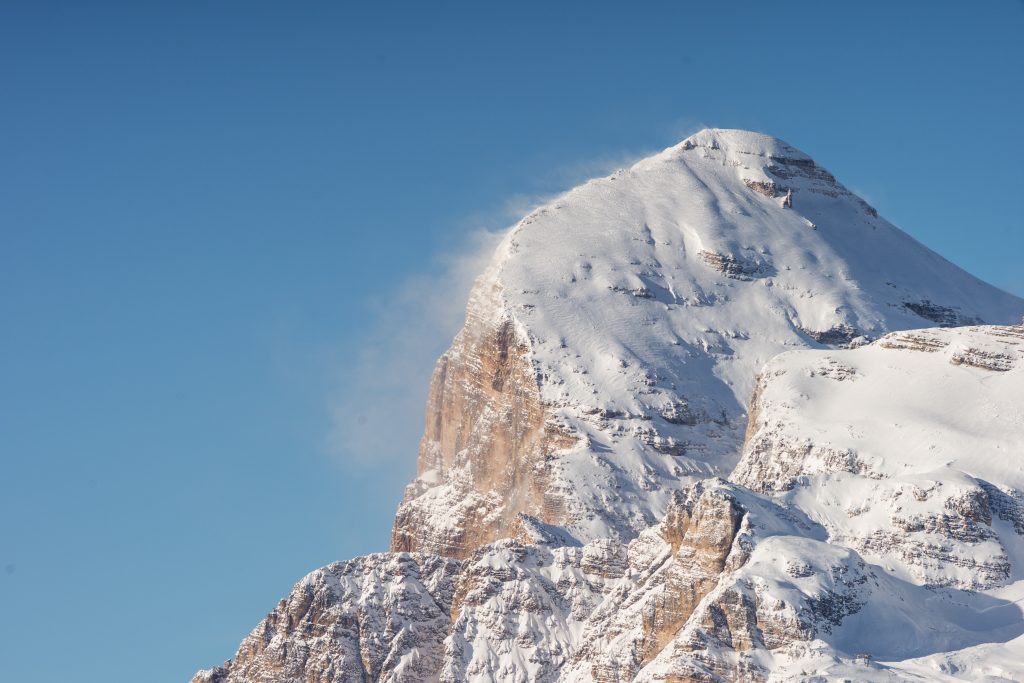
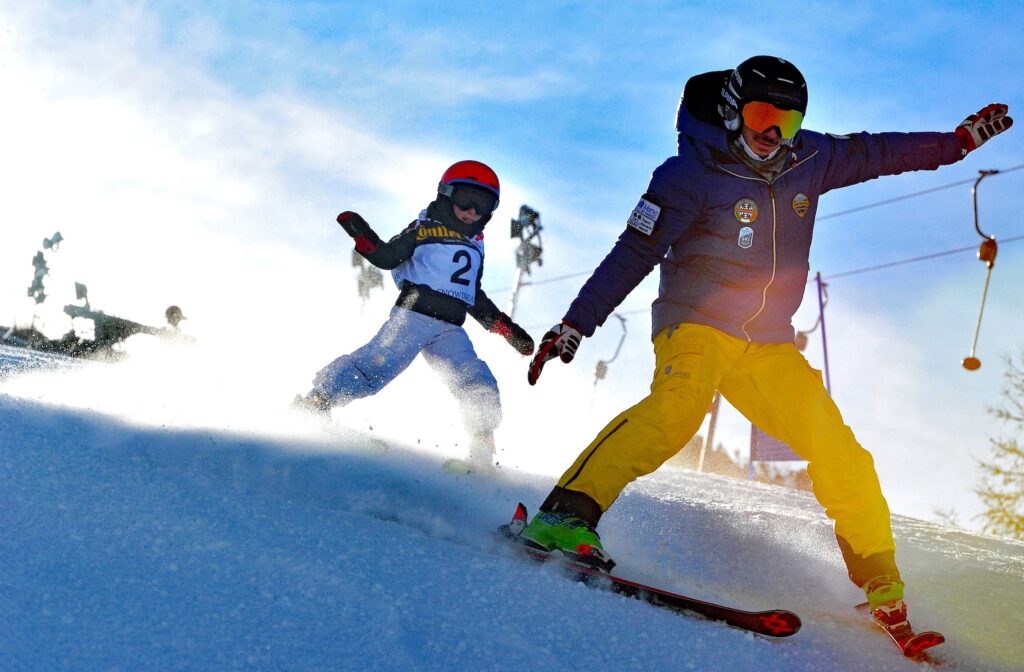
Snowdreamers: ski and snowboard lessons
Snowdreamers, directed by Davide Peterlin, offers private lessons and group courses in skiing and snowboarding for adults and children.
For beginners, lessons provide a structured introduction to the snow. More experienced skiers and snowboarders can book tuition to develop their technique or discuss a day exploring the wider ski area.
If you are considering the Sellaronda from Cortina, ask about an instructor-led day and the associated transport arrangements. Agree the itinerary, starting point and return plan before booking.
My thanks to Davide Peterlin of Snowdreamers for his help with the local information and practical planning behind this guide.
Other schools to consider
Scuola Sci Cortina offers ski and snowboard tuition, including private lessons and family options. Its published meeting-point information identifies different locations around Socrepes for children, adult groups and private lessons.
Scuola Sci Cristallo Cortina lists private ski and snowboard lessons, children’s and teenagers’ courses, ski tours and an instructor-with-transport option. The latter is worth discussing if you want help coordinating a day across different areas.
For dedicated snowboard tuition, Scuola Snowboard Cortina offers private lessons for beginners and more experienced riders, alongside group-course options.
What to check when booking lessons
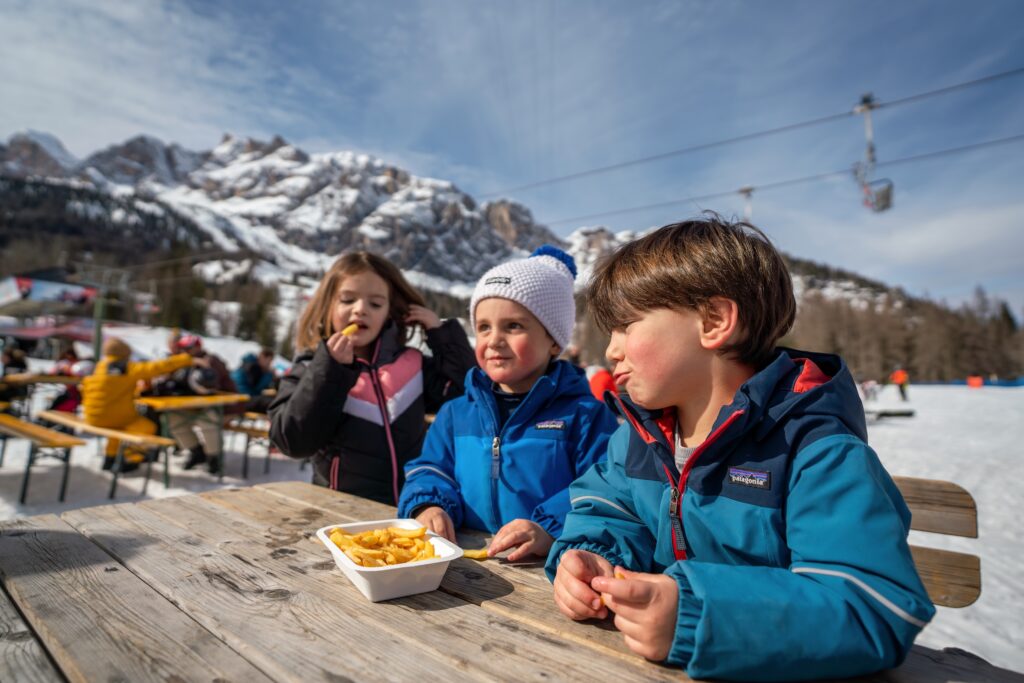
Give the school an accurate description of everyone’s ability, particularly when booking for a family. Someone comfortable on gentle blue pistes may need a different lesson from a companion confidently skiing reds.
Confirm:
- The teaching language and whether the lesson is private or shared.
- Children’s minimum ages, group sizes and lesson duration.
- The exact meeting point and how to reach it from your hotel.
- Whether equipment, lift passes or transport are included.
- Cancellation arrangements.
Cortina’s ski sectors are spread out, so confirm the meeting point before arranging your first morning’s transport. Collect rental equipment beforehand where possible, leaving time to check that boots fit comfortably.
Ski and snowboard rentals in Cortina
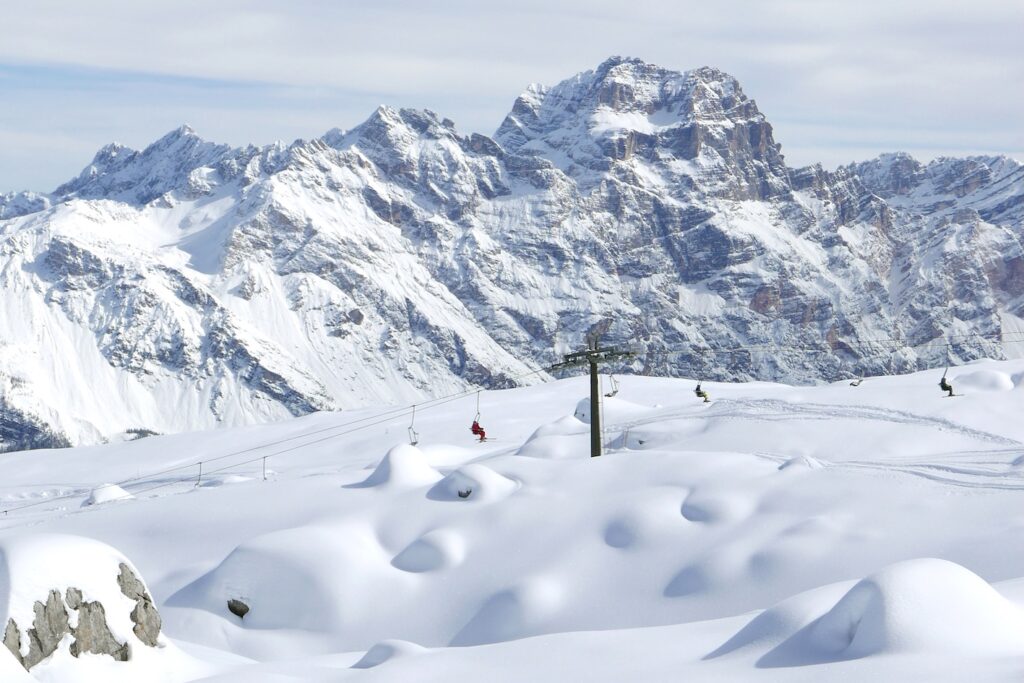
Choose your rental shop around your accommodation, lesson meeting point and intended ski area. In Cortina, convenient equipment storage can be as useful as the rental itself, particularly if it saves carrying skis and walking in boots across town.
Ski & Bike Rental – Jgor Ski & More
Located directly at the departure station of the Faloria cable car in central Cortina, Jgor Ski & More is one of the town’s largest ski and snowboard rental shops, offering quality equipment and professional assistance.
During summer, the shop also offers a large selection of e-bikes, mountain bikes and gravel bikes, with direct access to the beautiful Lunga Via delle Dolomiti cycling route.
Website: https://www.jgorskiandmore.com/
Snow Service: equipment rental in central Cortina
Snow Service offers ski and snowboard equipment, with rental locations in central Cortina. Its winter-focused Snow Service 1 shop is on Via Guglielmo Marconi.
It is an option for visitors staying centrally who want to collect equipment before travelling to their chosen ski sector. The business also offers cycling equipment during the warmer months; confirm the appropriate collection point for your booking.
Boarderline: a central option for skiers and snowboarders
Boarderline combines ski and snowboard rental with a technical equipment and clothing shop. Its central location, close to the Faloria departure area, makes it worth considering if you are staying nearby or planning to begin on that side of the valley.
Snowboarders can compare its board and boot selection, while skiers can also arrange equipment rental.
Socrepes Ski and Bike Center: rental beside the learning slopes
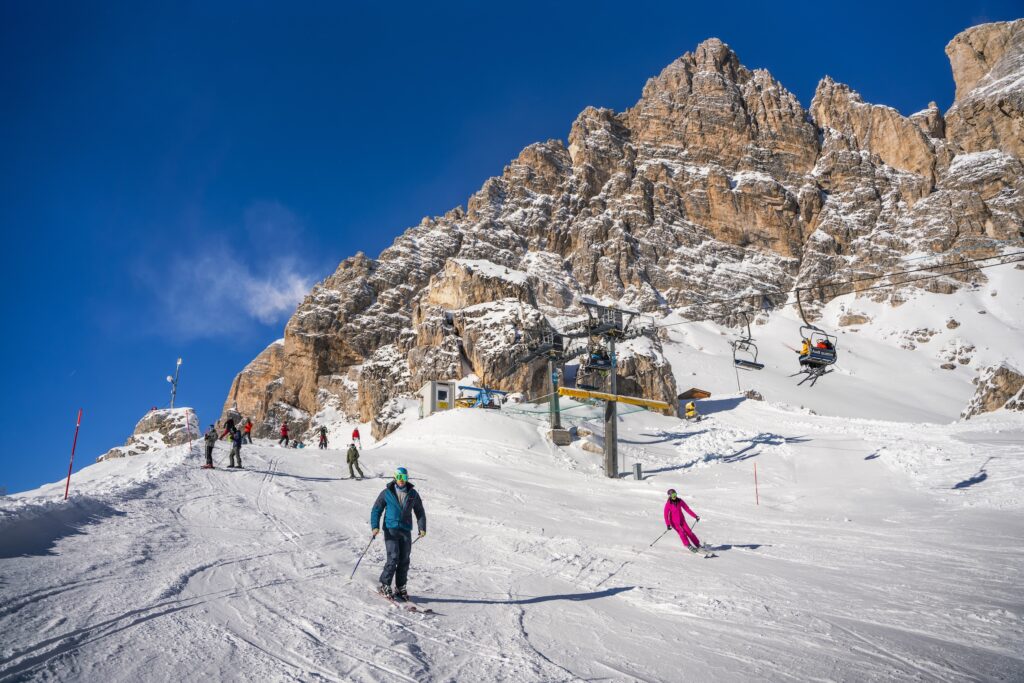
The Socrepes rental centre, at the base of the Tofana–Pocol area, is particularly practical for visitors taking lessons at Socrepes.
It offers ski and snowboard rental, a workshop and equipment storage in ventilated lockers. Keeping equipment here can simplify the morning for families learning on this side of Cortina.
In summer, the centre also provides bicycle rental, including options for e-bike and gravity riding.
Choosing your rental package
Book equipment suited to your ability and the terrain you intend to use. Allow time for boot fitting, especially for children and first-time skiers, and tell the staff if anything feels uncomfortable before leaving.
Compare the full package: skis or snowboard, boots, poles where needed, helmet and storage. Ask separately about equipment changes, damage or theft cover, and the final return time.
If you plan to use several mountain sectors, consider whether a central shop or slopeside storage will work better for the whole holiday.
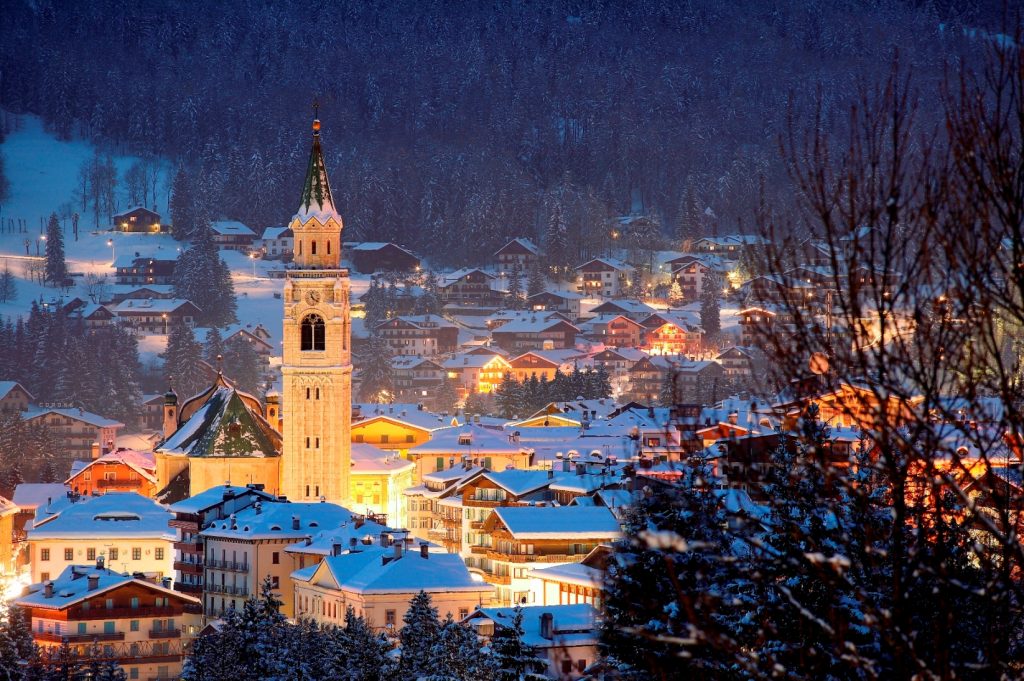
Beyond downhill skiing: rest days and holidays for non-skiers
Cortina works particularly well for groups with different interests. A day can include a mountain outing, a museum, a leisurely lunch or time in a spa, allowing skiing and non-skiing companions to enjoy the destination at their own pace.
Snowshoeing and winter walks
Snowshoeing offers a way to experience the winter landscape without downhill skis. Guided outings can introduce visitors to the forests and mountain scenery around Cortina, with routes chosen for the group’s fitness and experience.
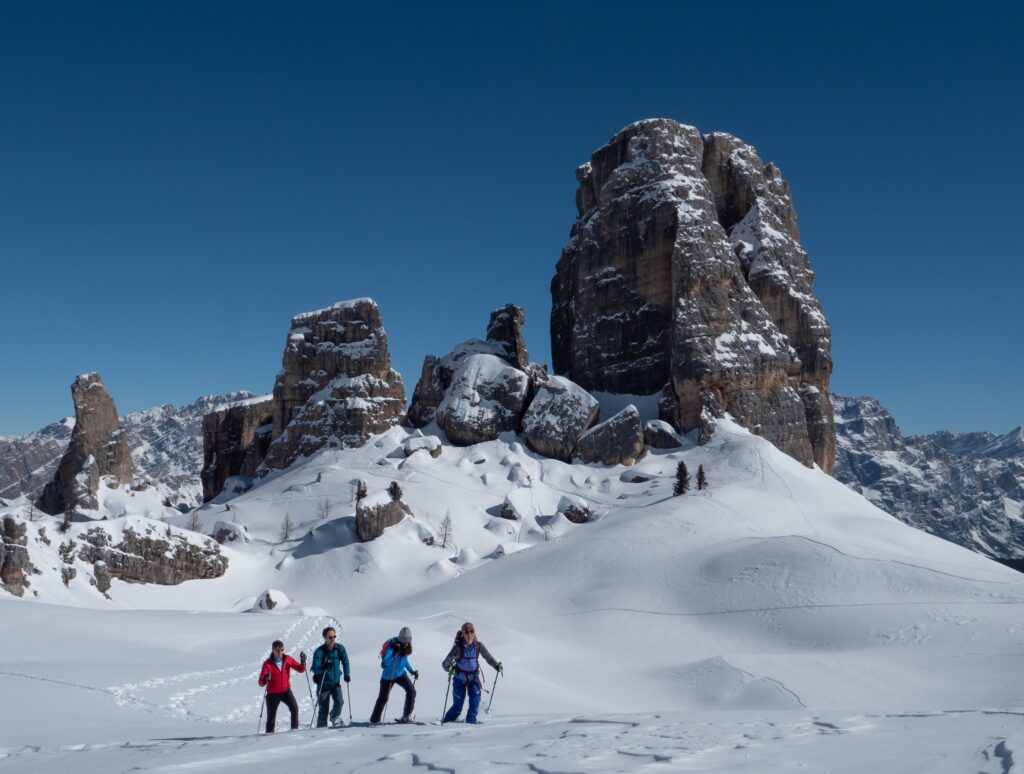
A snowshoe excursion can still be physically demanding. Discuss the distance, ascent and terrain before booking, especially if you want a gentle rest day.
For a simpler outing, ask the tourist office about maintained winter walking routes suitable for current conditions. Summer paths should not be assumed to remain suitable in winter, and walking on ski pistes is not an alternative to a designated pedestrian route.
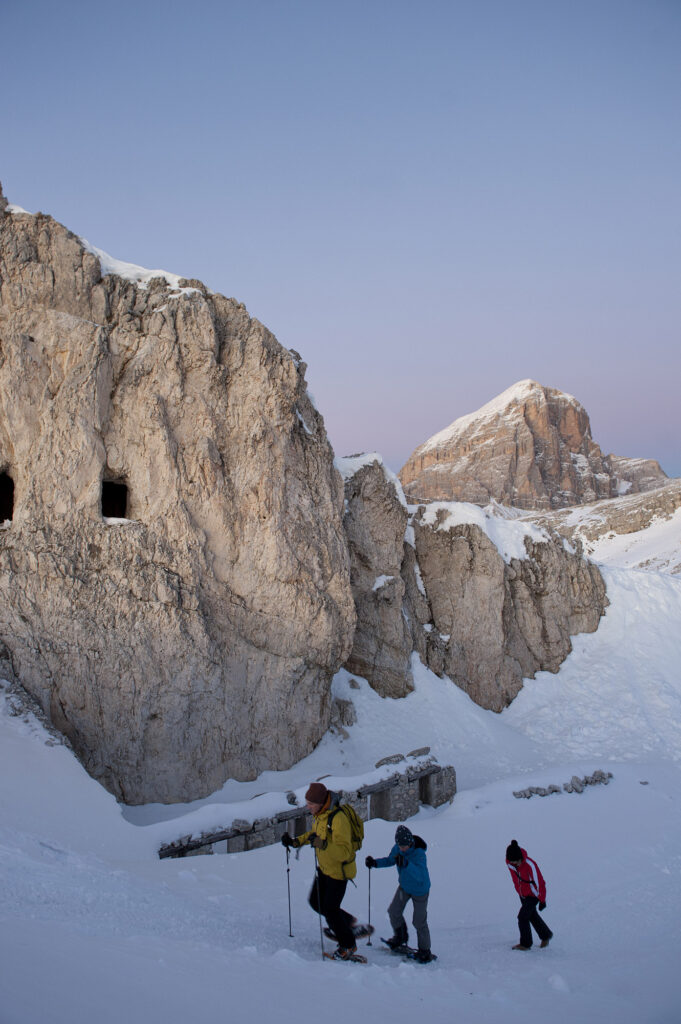
Try cross-country skiing
For anyone interested in a different snow sport, the Fiames Sport Nordic Centre has easier tracks suitable for beginners and children, with opportunities to learn classic or skating technique.
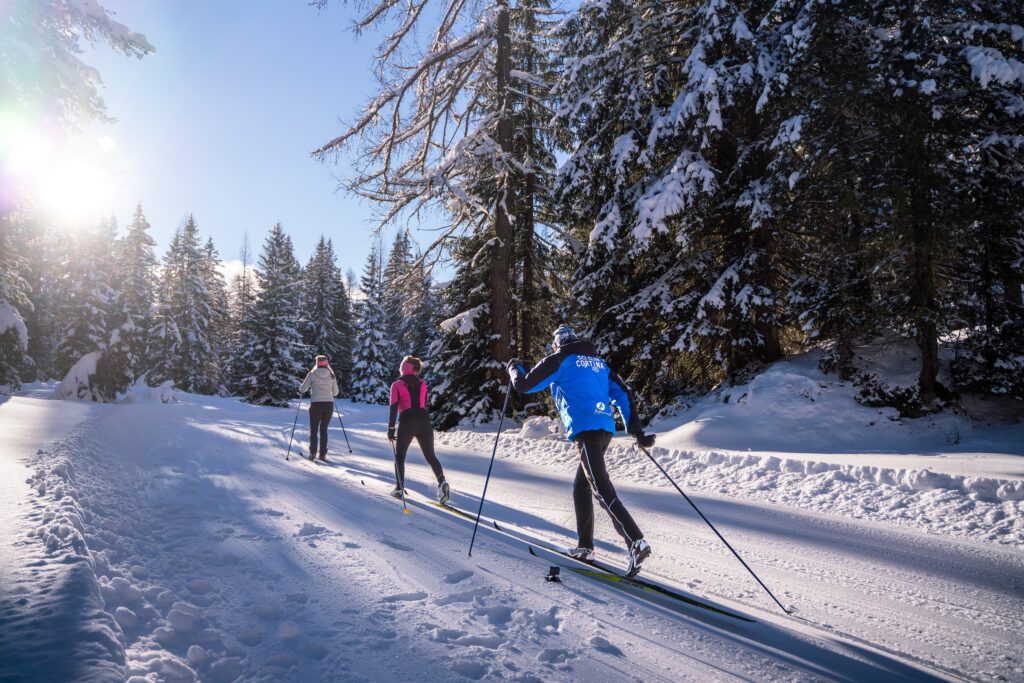
An introductory lesson is worthwhile, even for experienced downhill skiers: the equipment, balance and movement are different. Cross-country skiing is also a workout, so choose it as an alternative activity rather than assuming it will give tired legs a complete rest.
Enjoy the mountains without skiing
Selected lifts allow pedestrians to reach mountain viewpoints and refuges, making it possible for non-skiers to share some of the mountain experience.
Before choosing a lunch meeting point, confirm that the refuge is accessible to pedestrians from an operating lift. Ask about any walking required between the station and restaurant, the surface conditions and the final descent.
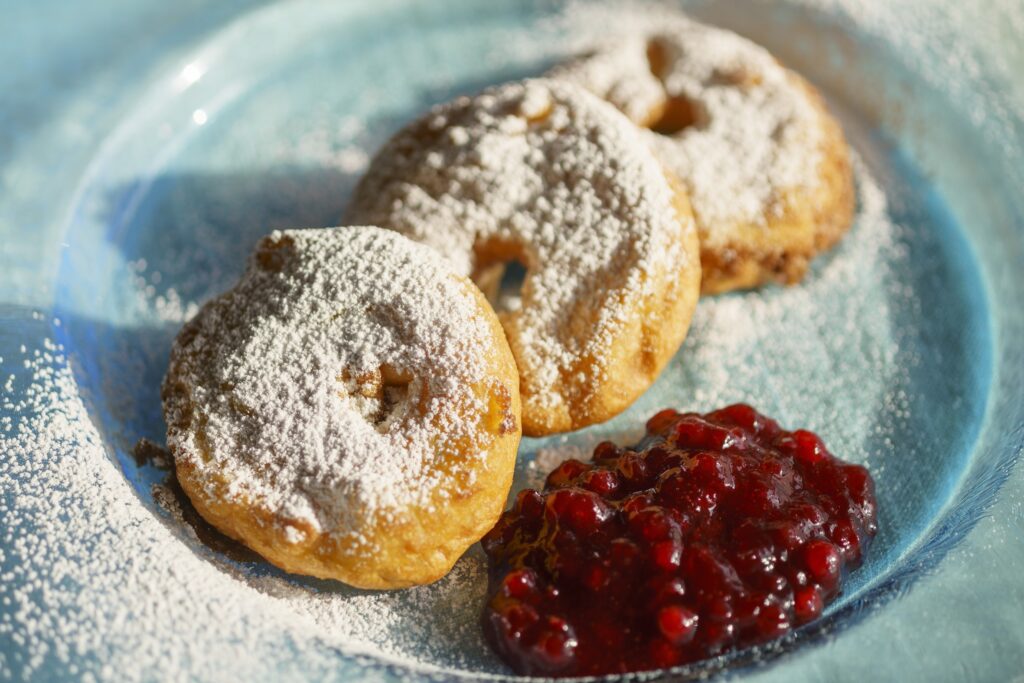
A refuge shown beside a piste on the ski map is not necessarily accessible to someone in ordinary winter boots. Likewise, an evening mountain dinner needs its own transport arrangements once daytime lifts have closed.
Private Experiences – Cortina DMC | Cortina Signature
For travellers looking to discover the Dolomites beyond traditional skiing, Cortina DMC creates personalised experiences throughout the year.
Activities include private mountain hut dinners, guided snowshoeing, Dolomites Ski Safaris, scenic helicopter flights, horse-drawn sleigh rides, exclusive mountain adventures and tailor-made summer experiences.
Through Cortina Signature, guests can enjoy a coordinated selection of local services, with a single point of contact for planning their holiday.
Website: https://www.cortina-dmc.com/
Museums: art, fossils and Ampezzo traditions
The Museums of the Regole d’Ampezzo offer three different ways to explore Cortina beyond its sporting identity.
The Mario Rimoldi Museum of Modern Art houses a significant collection of twentieth-century Italian art. It is an appealing option for an afternoon devoted to culture rather than sport.
The Rinaldo Zardini Palaeontological Museum explores the area’s ancient past through its fossil collection, adding another perspective to the mountains surrounding the town.
The Regole d’Ampezzo Ethnographic Museum, housed in a restored sawmill, introduces the community’s collective landownership traditions and relationship with the landscape.
Check individual opening days and current exhibitions when planning your visit, particularly outside peak season.
Ice skating and curling
Cortina’s ice-sport heritage offers another possible addition to a winter holiday. During preparation of this guide, Cortina Marketing indicated that public skating was planned for winter 2026/27.
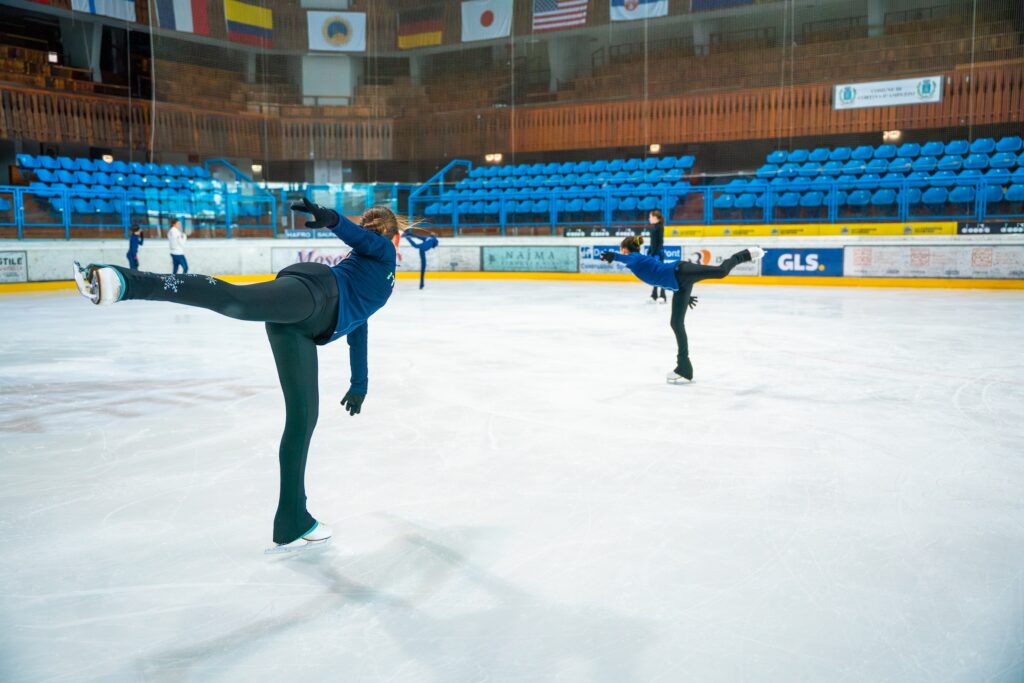
Confirm public sessions directly before visiting. Introductory curling experiences and visits to sporting venues also depend on availability, with competition and training schedules taking priority.
A slower day in town
Corso Italia provides an easy focus for a day combining shops, cafés and a relaxed lunch. You can also make time for a pastry or tea at Bar Pasticceria Lovat, Pasticceria Alverà or Embassy Bar Café.
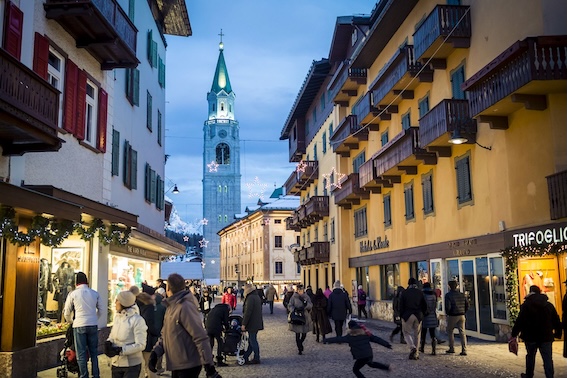
For non-skiers spending several days in Cortina, a central hotel can be particularly convenient, allowing independent outings while the rest of the group heads to the slopes.
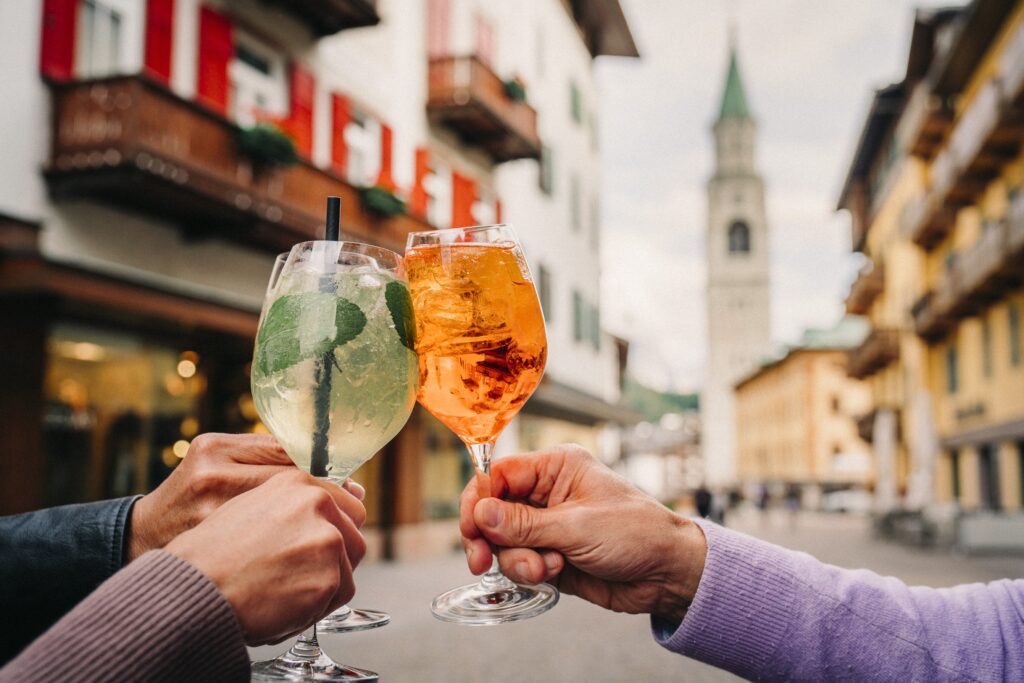
Spas you can visit without staying at the hotel
You do not necessarily need to book a luxury hotel room to enjoy a spa afternoon in Cortina. Several properties offer access or bookable experiences for outside guests.
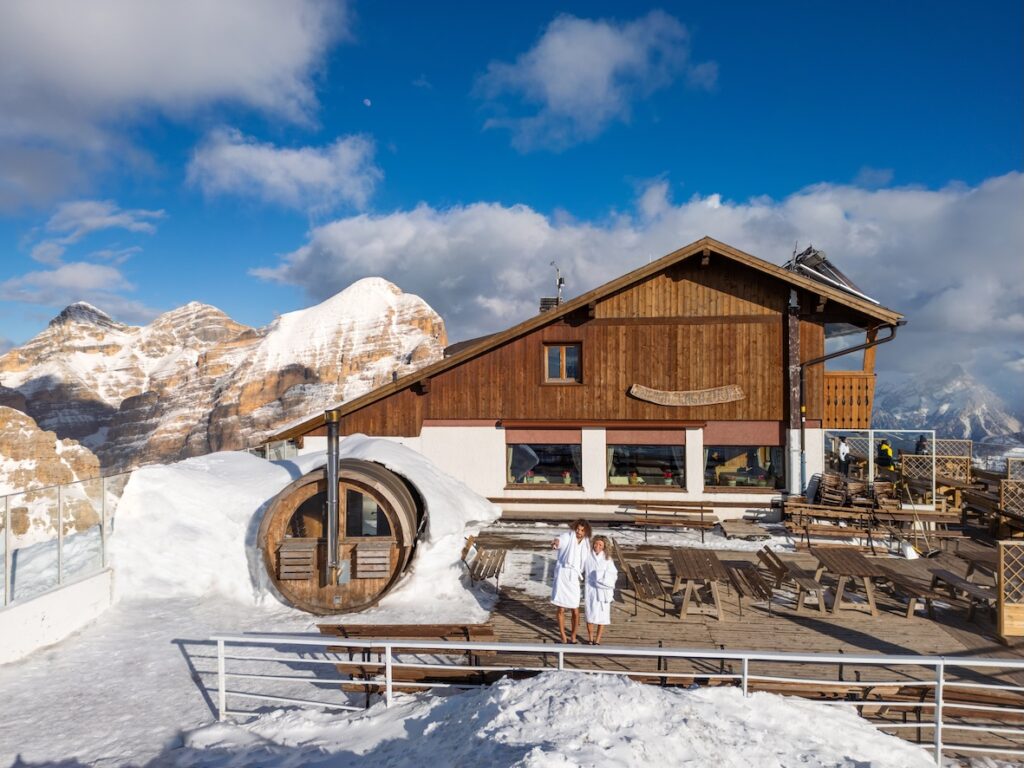
Reserve directly and confirm what your booking includes: pool access, sauna facilities, treatments and private experiences may be sold separately.
Faloria Mountain Spa Resort
Faloria explicitly welcomes external guests to its spa. Its wellness area extends over more than 1,000 square metres across two levels, with a semi-Olympic swimming pool, indoor–outdoor vitality pool, calidarium, sauna and treatment rooms.
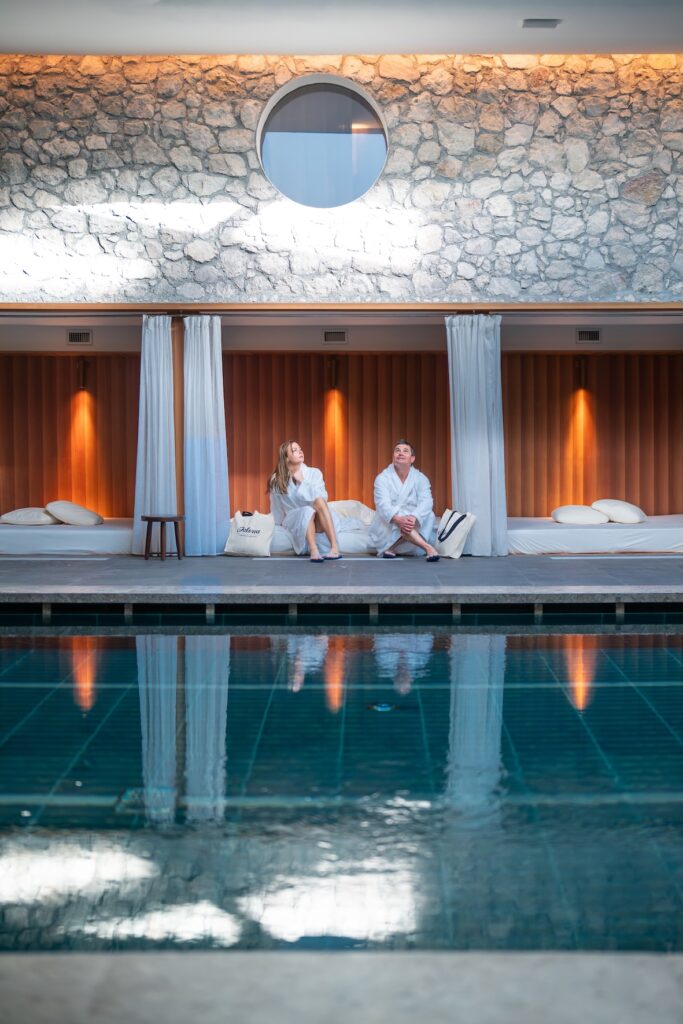
It is worth considering if swimming and a substantial wellness setting are priorities. Ask about the available time slots, current admission price and children’s access before booking.
HOTEL de LEN
HOTEL de LEN’s top-floor spa offers views across Cortina and the surrounding mountains. The hotel advertises bookable spa access and private wellness experiences, making it an option for visitors seeking a spa break close to the centre.
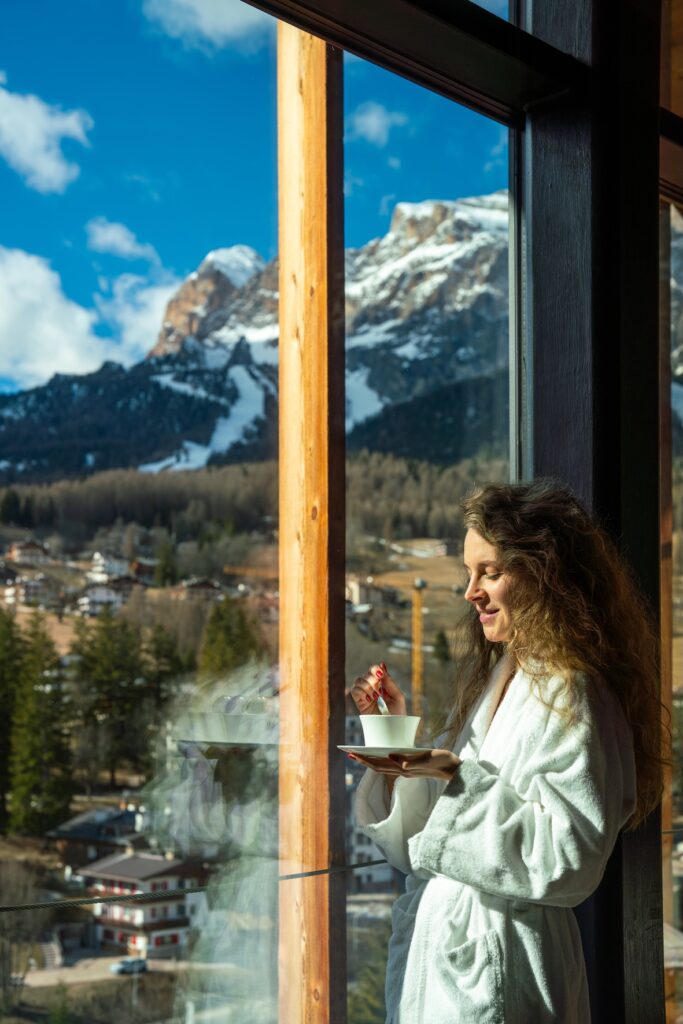
Reserve a time slot and confirm the current admission conditions and minimum age directly, particularly if you are travelling with teenagers.
Rosapetra Spa Resort
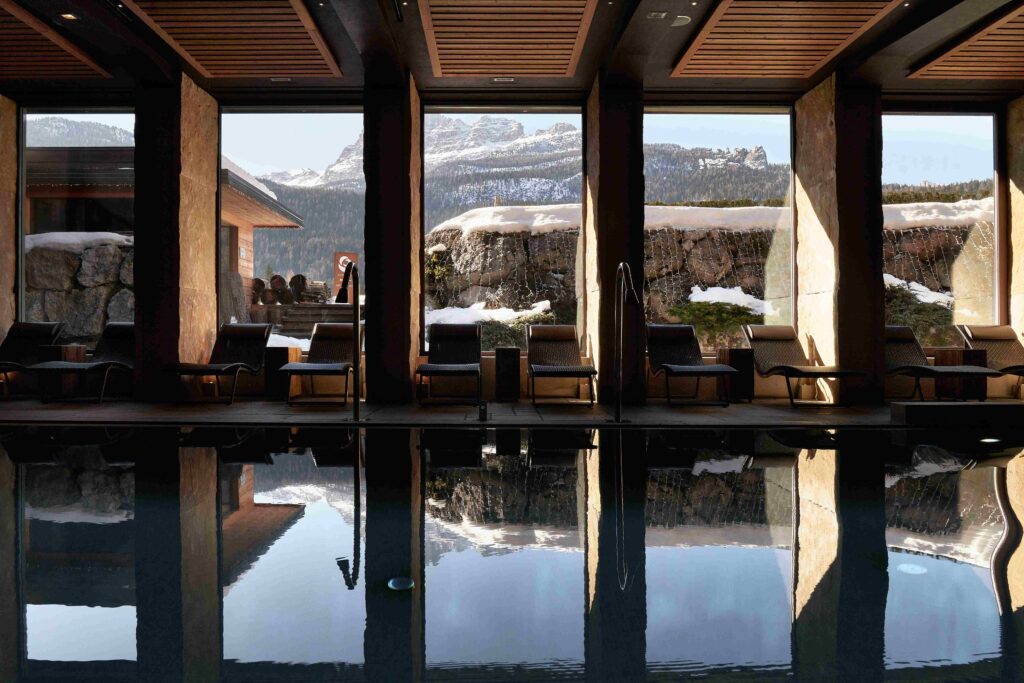
Rosapetra offers spa experiences for external visitors, including a published couples’ package combining wellness facilities with a massage.
Its pool, wellness spaces and wood-and-stone setting make it another option for a relaxing afternoon outside the town centre. Ask which day-spa or treatment packages are available on your dates, along with their duration and age restrictions.
Planning a day together
For a mixed group, a practical arrangement is to spend the morning separately, then meet for lunch somewhere everyone can reach comfortably. Alternatively, non-skiers can enjoy town or a spa appointment before joining the skiers for an afternoon drink.
Choose the meeting place around pedestrian access and transport, particularly if it is on the mountain.
Mountain lunches in Cortina
Lunch is worth making time for in Cortina. You can choose a refuge facing the Cinque Torri, a restaurant beneath the Tofane or a terrace overlooking the valley. Plan your stop around the sector you are skiing, particularly if you need connecting lifts to return.
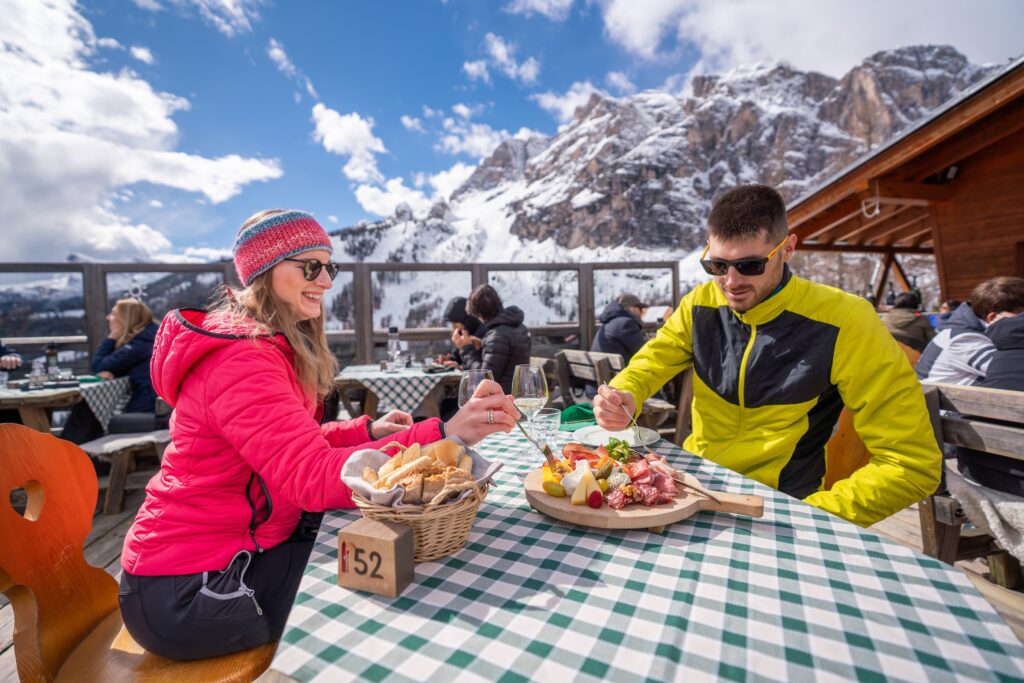
Rifugio Scoiattoli: lunch facing the Cinque Torri
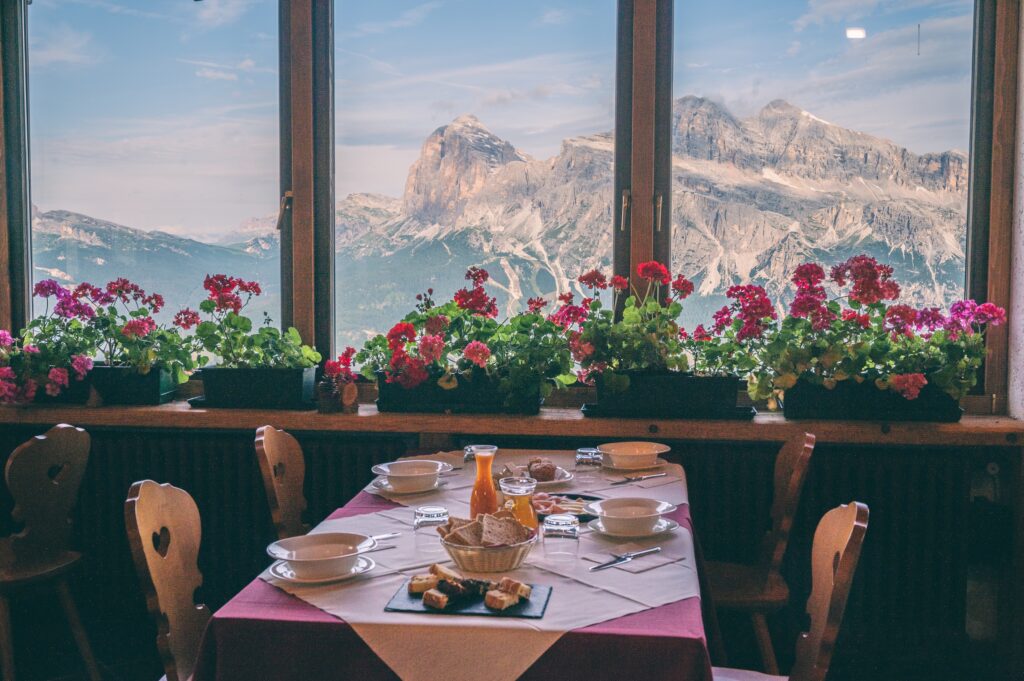
Rifugio Scoiattoli has a memorable position beside the Cinque Torri, with the rock towers dominating the view. It makes a natural lunch stop when skiing this sector, or a destination for a mountain outing when pedestrian lift access is operating.
I had lunch here during its October end-of-season celebration. The setting brings together several reasons to visit this part of Cortina: mountain scenery, refuge dining and the nearby First World War sites.
Scoiattoli and Rifugio Cinque Torri are separate establishments, so check the name when reserving.
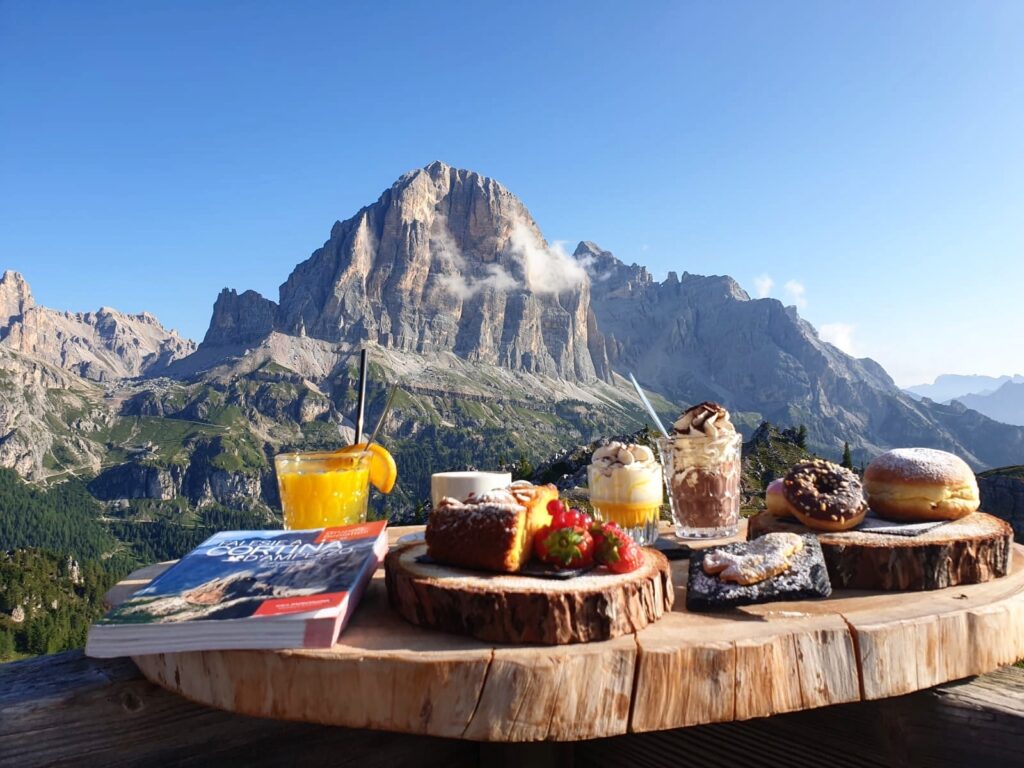
Rifugio Averau: a panoramic lunch above the ski slopes
Rifugio Averau is another option in the Cinque Torri–Averau area, with a panoramic terrace looking towards peaks including Croda da Lago, Pelmo and Civetta.
It is worth considering for a longer lunch during a day exploring this sector. Book ahead if a table here is important to your plans, and allow enough time afterwards for your return connections.
For non-skiers, confirm the winter access arrangements directly. A refuge that is straightforward to reach on skis may require different arrangements for pedestrians.

El Camineto: dining beneath the Tofane
El Camineto, in the Rumerlo area, has been part of Cortina’s restaurant scene since 1968. Its position beneath the Tofane makes it an option for a restaurant-focused lunch while spending the day on this side of the mountain.
It is also worth discussing as a meeting place for skiing and non-skiing companions, provided everyone has confirmed their access and transport.
El Camineto and Al Camin are different restaurants: the former is beneath the Tofane; the latter is in Alverà.
Masi Wine Bar al Druscié: wine and views above Cortina
At Col Druscié, Masi Wine Bar combines mountain dining with the wines of the Masi estate. It is reached using the first stage of Freccia nel Cielo, making it a useful possibility for a shared lunch between skiers and pedestrians when the lift is operating.
The views take in the surrounding peaks and celebrated Tofana pistes. If you are visiting without skis, confirm the pedestrian return ticket and last descent when booking.
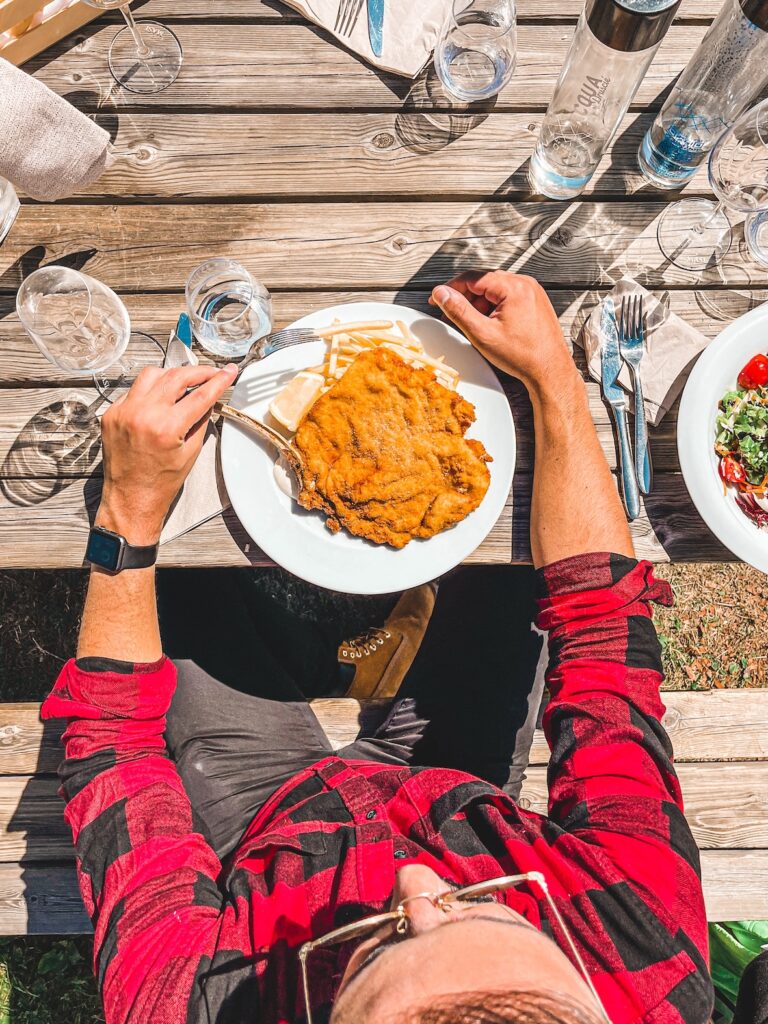
Ra Valles: an informal stop high on Tofana
For something more informal, the restaurant offering at Ra Valles includes pizza, first and main courses, burgers and quicker snacks.
It is an option for groups who want flexibility rather than a lengthy restaurant lunch, with choices ranging from a full meal to coffee and cake.
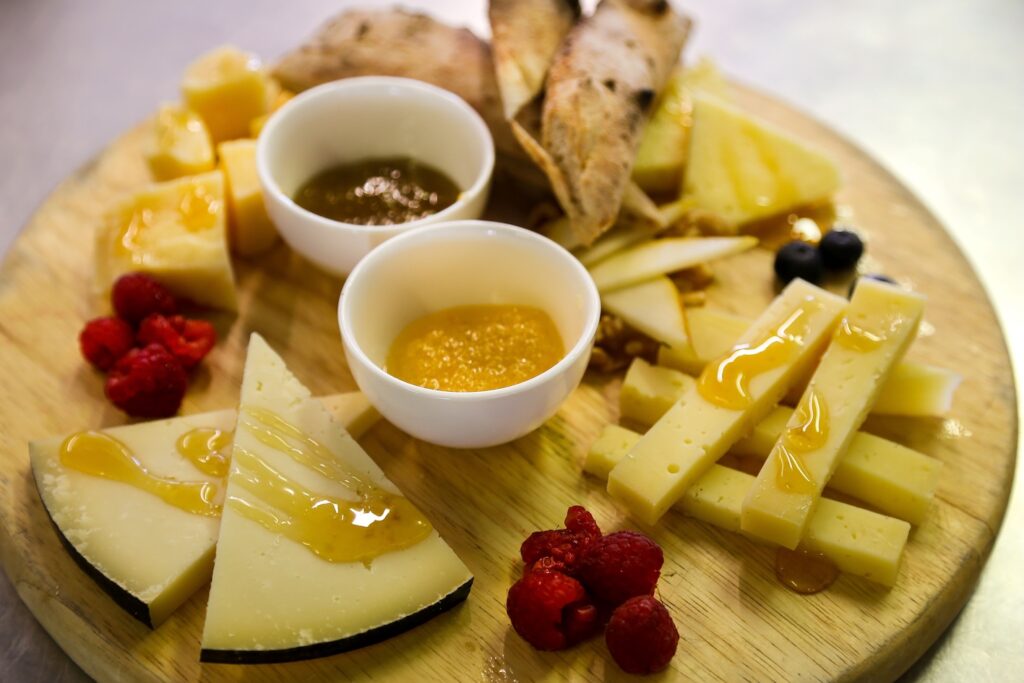
Booking a mountain lunch
Reserve popular restaurants in advance during busy weeks. Give the restaurant your group size and mention whether anyone is arriving without skis.
Check your return route before sitting down, especially when using Skyline or skiing across several sectors. For an evening mountain meal, ask specifically about transport: a dinner reservation does not include an automatic return after the daytime lifts close.
Après-ski, coffee and sweet treats
Cortina offers several ways to finish a ski day: music near the slopes, an aperitivo in town or a hot chocolate and pastry before returning to the hotel.
Chalet Tofane: après-ski at Socrepes
Chalet Tofane, at Socrepes, combines a restaurant, pizzeria and bar with an après-ski offering. It is a convenient place to investigate if you finish your day on the Tofana side and want music before heading back into town.
Check the current events programme rather than assuming a DJ set runs every afternoon. Special après-ski dates can also affect normal restaurant service.
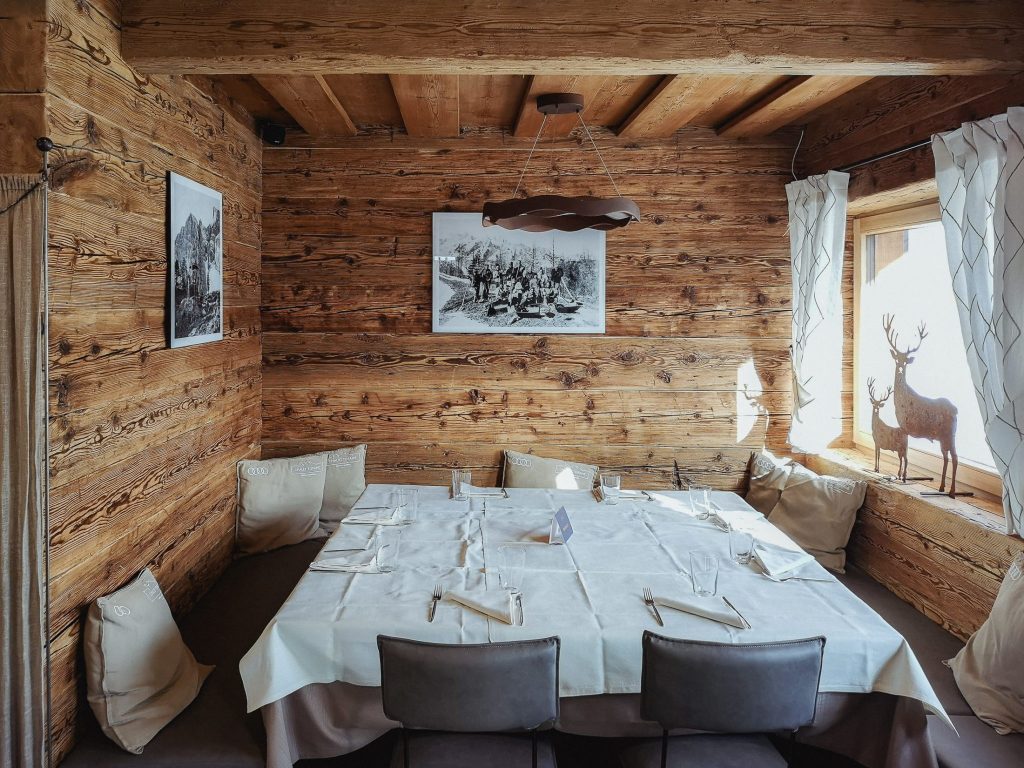
Janbo: a lively stop in central Cortina
Janbo is a central option for cocktails and a more energetic end to the afternoon. Its winter programme includes après-ski, themed evenings, DJ sets and live music.
It can work for groups who want to meet in town after skiing different sectors, with the possibility of staying later into the evening.
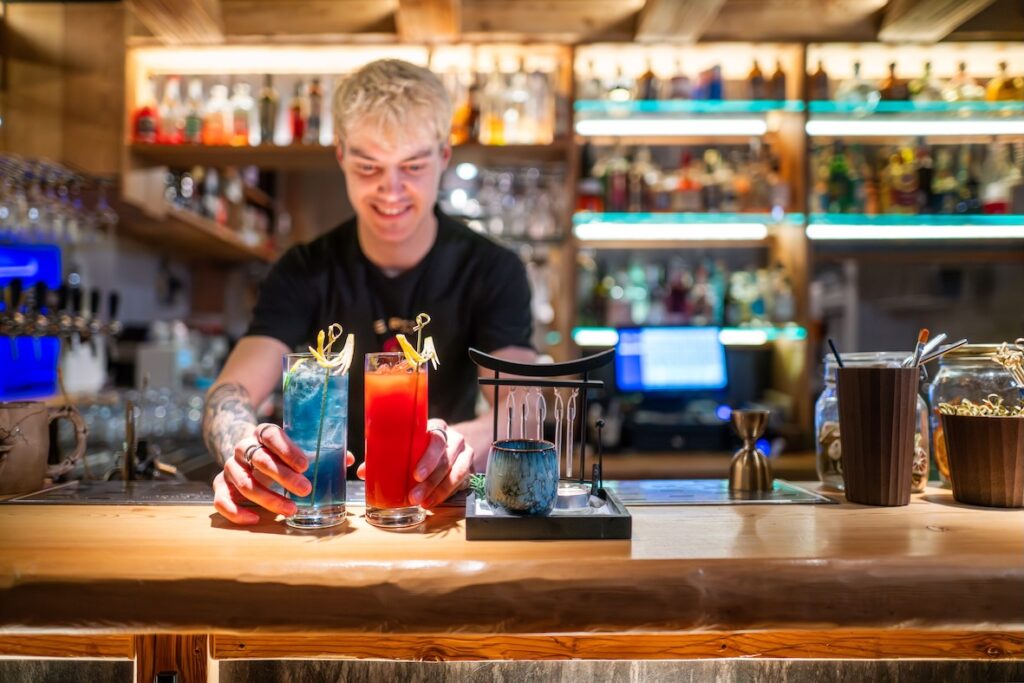
Bar Pasticceria Lovat: coffee, chocolate and pastries
Lovat has been part of Cortina since 1928. It is a place to keep in mind for coffee, hot chocolate, pastries or an afternoon pause during a walk through town.
Its pastry selection makes it an alternative to an alcoholic après-ski stop, particularly for families or anyone who would rather finish the day over something sweet.
Pasticceria Alverà: cakes and an afternoon treat
Pasticceria Alverà, in Piazza Pittori Fratelli Ghedina, offers breakfast, coffee, small pastries, individual desserts and cakes, alongside savoury options.
It is worth seeking out for a pastry-focused stop; its Sachertorte is among the specialities highlighted by the local tourism website. In summer, the offering also includes artisanal ice cream.
Embassy Bar Café: a sweet stop on Corso Italia
Embassy combines an artisanal pastry shop and bistro in central Cortina. Its Corso Italia location makes it convenient for a break while exploring the pedestrian shopping street.
Together with Lovat and Alverà, it provides another option for coffee, tea and something sweet—whether you have spent the morning skiing or enjoying town.
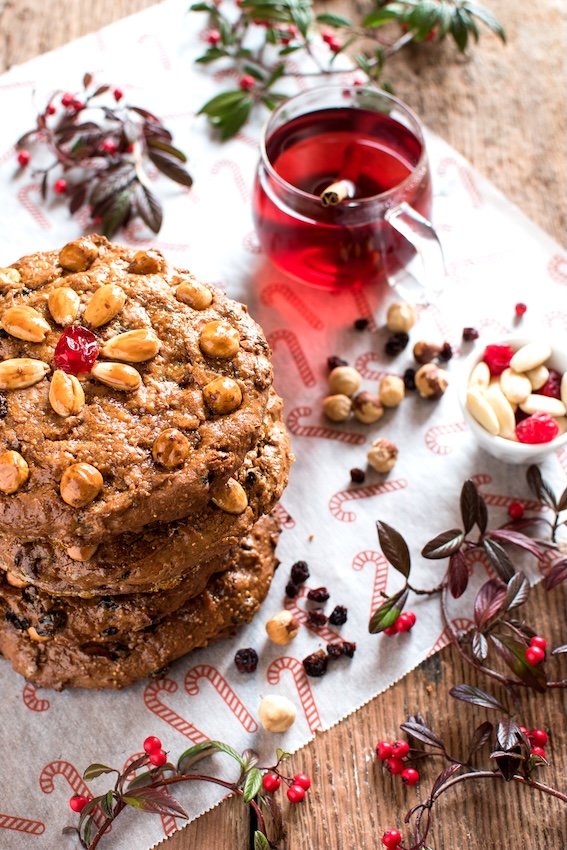
Dinner in Cortina: from Michelin-starred restaurants to pizza
Cortina’s dining extends from destination tasting experiences to regional cooking and straightforward pizzerias. Some notable restaurants sit outside the centre, so check the location as well as the menu before booking.
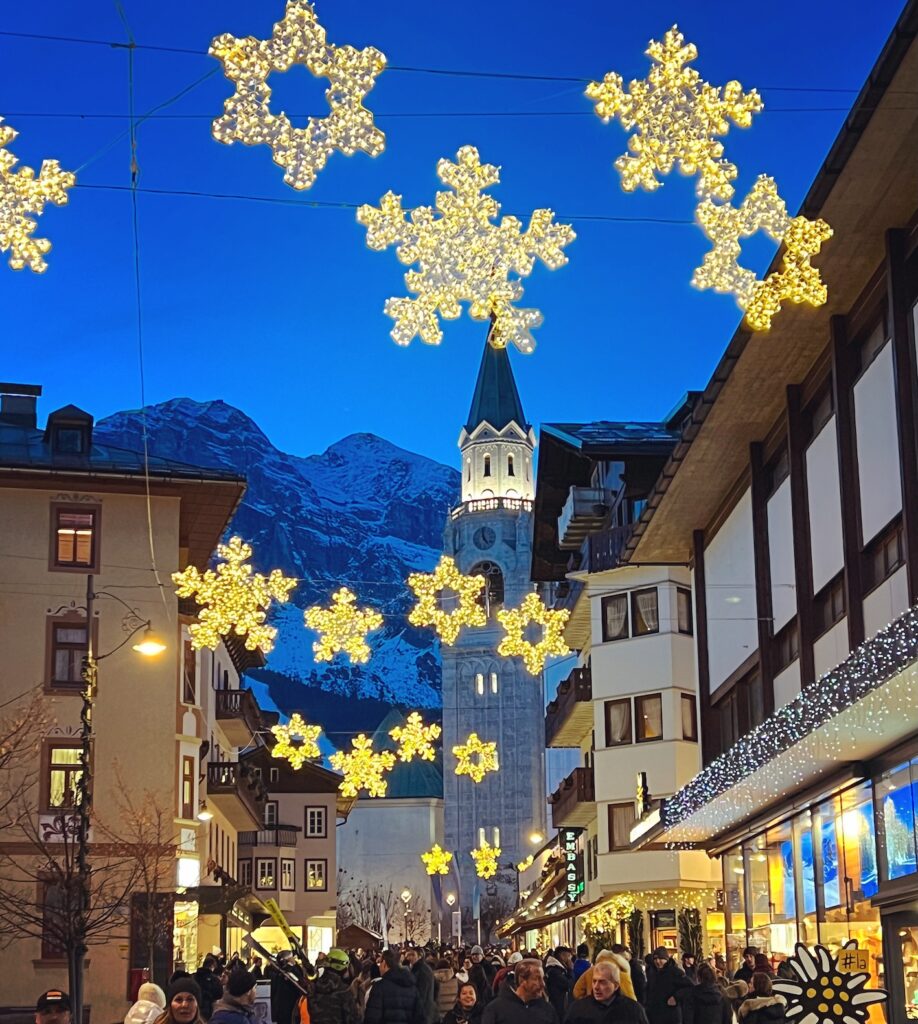
SanBrite: a Michelin-starred expression of the mountains
SanBrite, in Alverà, holds one Michelin star and offers chef Riccardo Gaspari’s interpretation of Ampezzo and Alpine cooking.
Its connection with the family farm is central to the experience. Farm-produced ingredients, including dairy products and meat, contribute to a kitchen shaped by the surrounding landscape, preservation techniques and efforts to reduce waste.
Consider it for an evening devoted to food rather than a quick dinner after skiing. Book as far ahead as possible once your travel dates are fixed, and discuss dietary requirements when reserving.
Tivoli: Michelin-starred dining overlooking Cortina
Tivoli, in Lacedel on the road towards Passo Falzarego, also holds one Michelin star. Chef Graziano Prest’s cooking ranges from mountain traditions to more contemporary dishes, including meat, fish and a vegetarian menu.
The restaurant has an extensive wine selection and views towards Cortina. If you would particularly like a window table, request one well in advance; Michelin specifically notes the popularity of these seats.
Its position outside the centre means you should arrange transport for the evening.
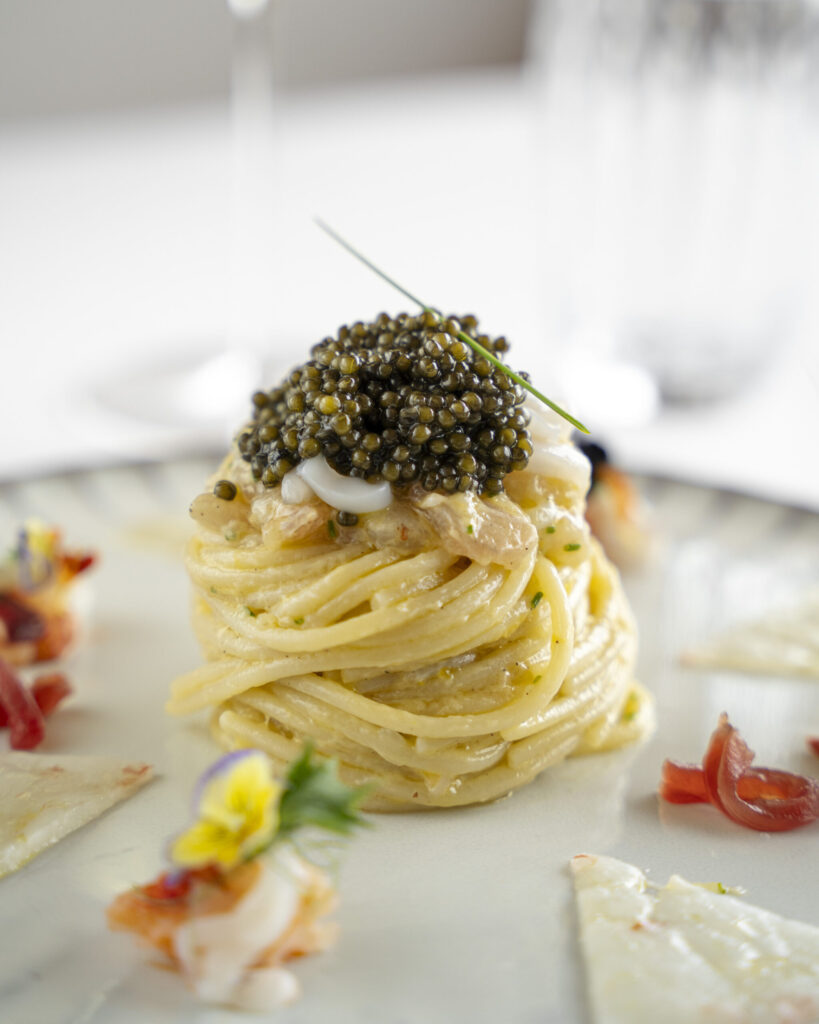
Al Camin: regional cooking in Alverà
Al Camin is included in the Michelin Guide and offers regional dishes with contemporary touches in a modern Alpine setting.
It provides another option for visitors interested in local cooking without choosing one of the starred restaurants. Check the evening service directly before building your plans around it, as published opening schedules can vary.
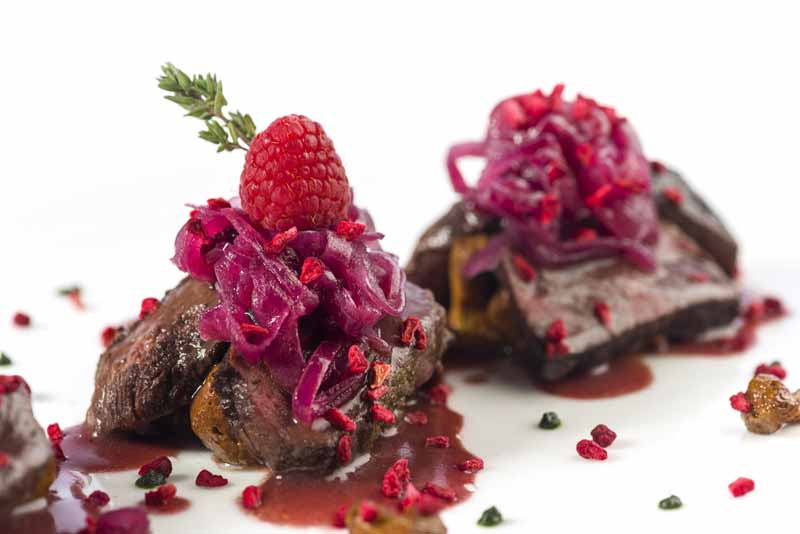
Il Vizietto di Cortina: a central restaurant option
Il Vizietto, on Corso Italia, is worth comparing if you want a restaurant dinner within the centre.
Its central location is convenient for combining a meal with an aperitivo or an evening walk. Consult the current menu and prices before booking: a central restaurant should not automatically be treated as a budget option.
Ristorante Pizzeria 5 Torri: a simpler family dinner
For a more straightforward meal, Ristorante Pizzeria 5 Torri, in Largo delle Poste, offers pizza and restaurant dishes close to Corso Italia.
It is a practical option for families and groups who want a less formal evening. Check the current menu when comparing costs, particularly if you are planning several meals out.
Despite the name, this restaurant is in town, rather than at the Cinque Torri mountain area.
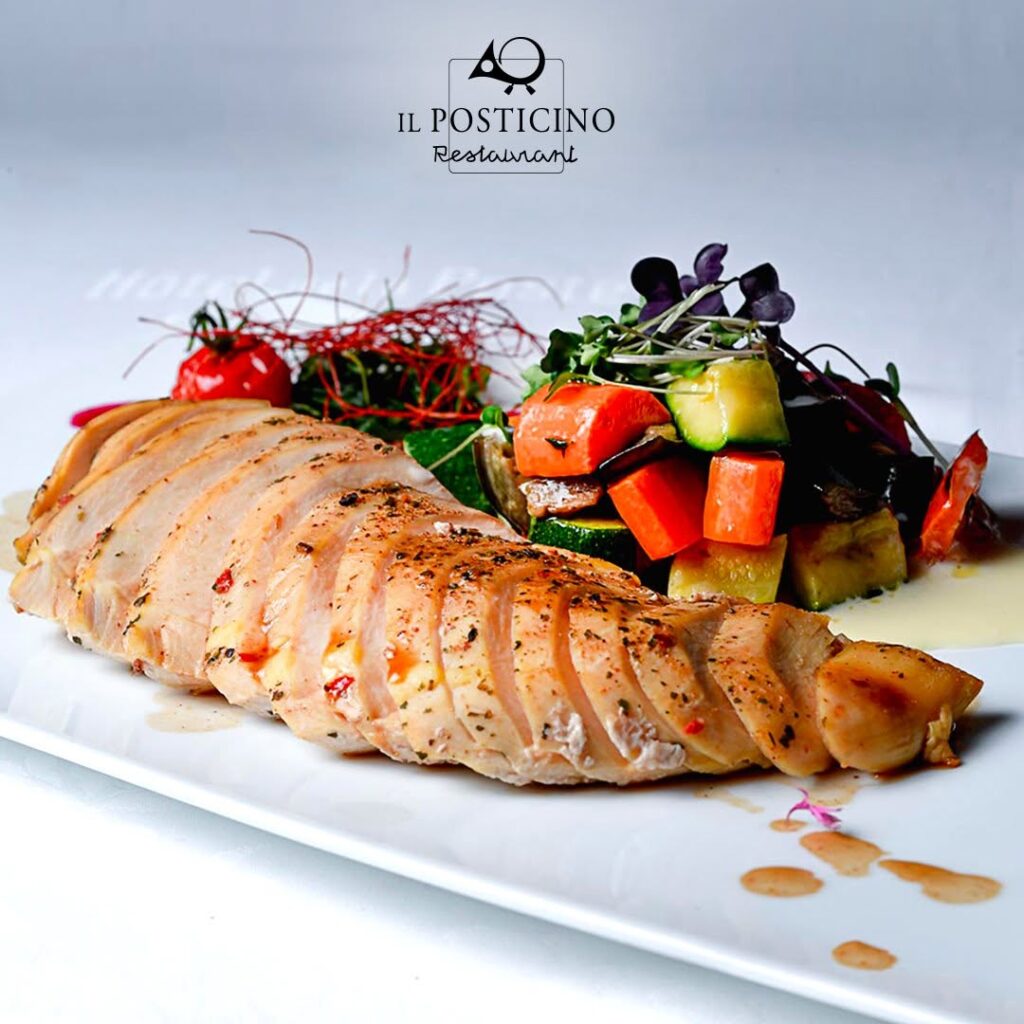
Il Posticino: dinner at Hotel de la Poste
Il Posticino, at Hotel de la Poste in Piazza Roma, offers another central option, with a menu spanning traditional dishes, meat, fish and gourmet pizza.
Its location also allows you to combine dinner with an aperitivo at the hotel’s bar.
Reserve the evenings that matter
For SanBrite, Tivoli or another restaurant central to your holiday, make the reservation when your dates are confirmed. Christmas, New Year and busy ski weeks warrant particular forward planning.
Check cancellation terms, dietary arrangements and the cost of tasting menus or wine pairings. For restaurants outside town, arrange the return journey as well as the outward taxi.
What to eat in Cortina: from mountain lunches to dinner in town
Cortina’s food reflects its Ampezzo roots and the meeting of Ladin, Tyrolean, Venetian and wider Italian traditions. Look beyond the familiar pasta and pizza options to discover dishes shaped by mountain farming, dairy production and the ingredients available through the seasons.
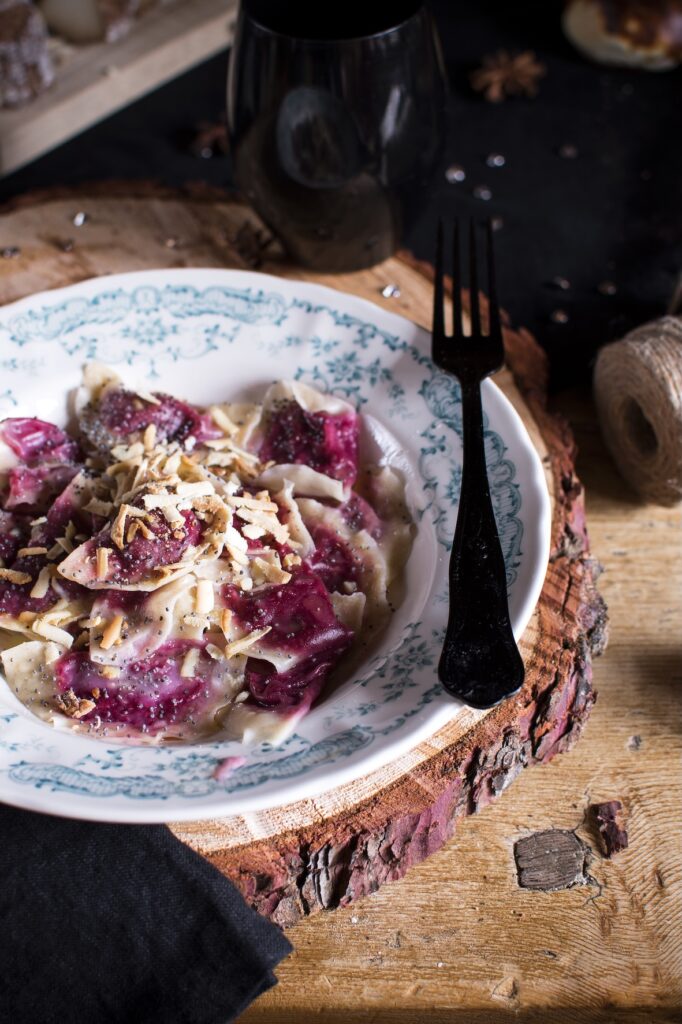
Casunziei all’Ampezzana
If you try one local speciality, make it casunziei: delicate, crescent-shaped filled pasta closely associated with the Ampezzo valley.
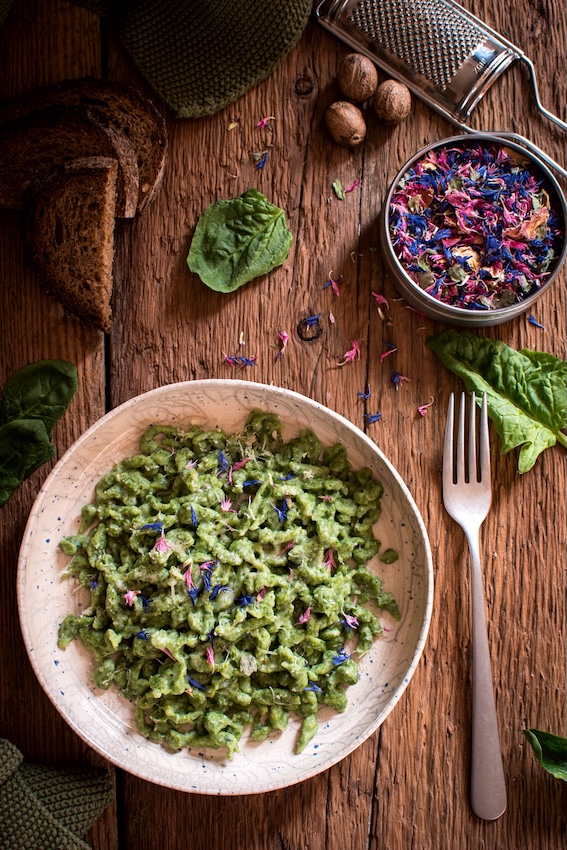
The best-known version has a beetroot filling, typically served with melted butter, poppy seeds and grated cheese. You may also find green versions filled with spinach or local herbs.
Casunziei make a good choice for either a refuge lunch or dinner in town. Preparations vary between kitchens, so trying them more than once need not mean ordering exactly the same dish.
Chenedi or canederli
Known locally as chenedi, these bread dumplings belong to the same Alpine tradition as Tyrolean Knödel. Versions include speck, cheese, spinach or herbs, served in broth or with a buttery dressing.
They are a satisfying choice after a morning outdoors. Cheese or spinach versions may suit vegetarian diners, but ask about the broth and other ingredients rather than assuming the whole dish is meat-free.
Spätzle, polenta and mountain soups
Spätzle, small soft dumplings often made with spinach, are another familiar presence on local menus.
For something more substantial, look for polenta with mushrooms, cheese or meat, depending on the restaurant and season. Barley, bean and vegetable soups offer another introduction to the region’s mountain cooking.
In autumn, mushrooms and game feature particularly strongly. Seasonal menus can be a useful guide to what the kitchen is preparing at that time of year.
Local cheeses and something sweet
Mountain cheeses are worth exploring, whether served on their own, incorporated into dumplings or paired with polenta. Ask which cheeses come from local producers: the answer can add another connection between your meal and the surrounding landscape.
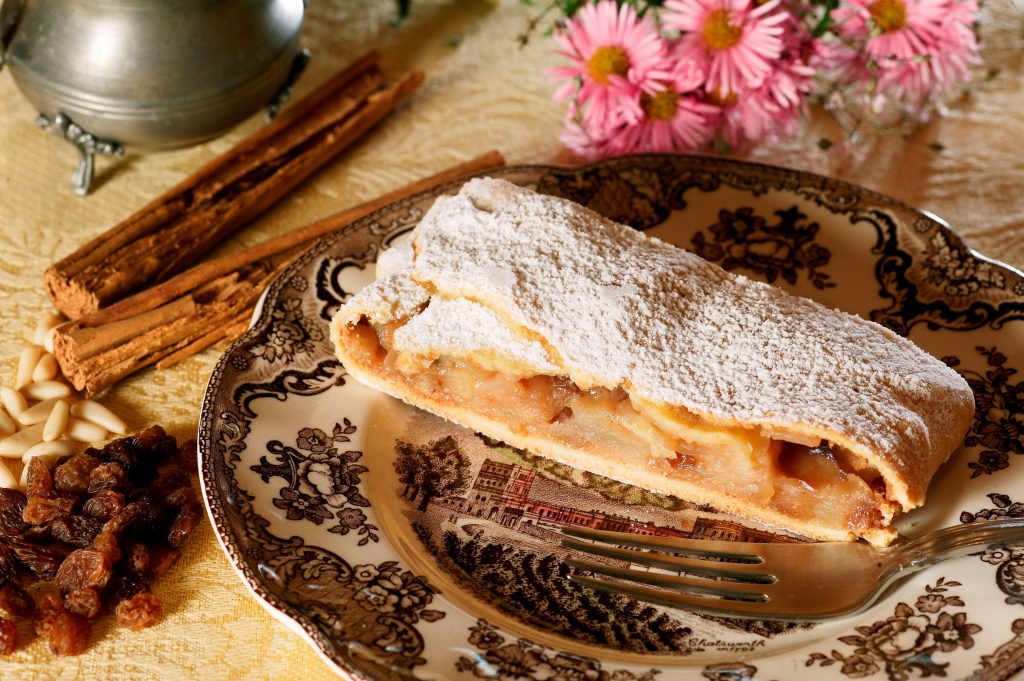
For dessert, apple strudel is a familiar choice across the Dolomites. You may also encounter traditional fried sweets such as fartaies, depending on the venue and season.
These dishes provide a starting point for reading menus throughout your stay. Refuge kitchens, traditional restaurants and contemporary chefs each interpret the mountain’s ingredients differently.
Bars and nightlife in Cortina
An evening in Cortina can begin with an aperitivo, continue over dinner and finish with cocktails or dancing. Choose your venue according to the atmosphere you want, and check event calendars for the dates of your stay.
Bar del Posta: a classic hotel-bar aperitivo
Bar del Posta, at Hotel de la Poste in Piazza Roma, is a longstanding part of Cortina’s social scene.
Its cocktail-bar setting makes it a choice for a pre-dinner drink or a more leisurely evening in the centre. It also pairs conveniently with dinner at Il Posticino.
Janbo: cocktails, DJs and live music
For a livelier evening, Janbo offers cocktails alongside DJ sets, live music and themed events.
It spans both après-ski and later nightlife, making it an option for groups who want their evening to develop without moving between several venues. Check the programme for specific nights.
Bilbò Club: a late-night option
Bilbò Club is one of Cortina’s established nightlife names. A December 2026 opening-weekend programme is advertised for the coming winter, making it a venue to check if dancing is part of your holiday plans.
Confirm opening nights, admission arrangements, table bookings and any dress requirements directly. A seasonal opening event should not be taken to mean the club operates every night throughout the winter.
Getting home after an evening out
If you are staying outside the centre, arrange your return before heading out. Hotel ski shuttles and daytime buses may finish well before restaurants and clubs close.
A central hotel makes evenings on foot easier; for properties in Pocol or Zuel, a pre-arranged taxi can simplify the night.
Cortina in summer
Summer opens up another side of Cortina, with walking trails, cycling routes, mountain refuges and climbing terrain replacing the winter focus on pistes. You can plan anything from a short outing followed by lunch to a demanding mountain day.
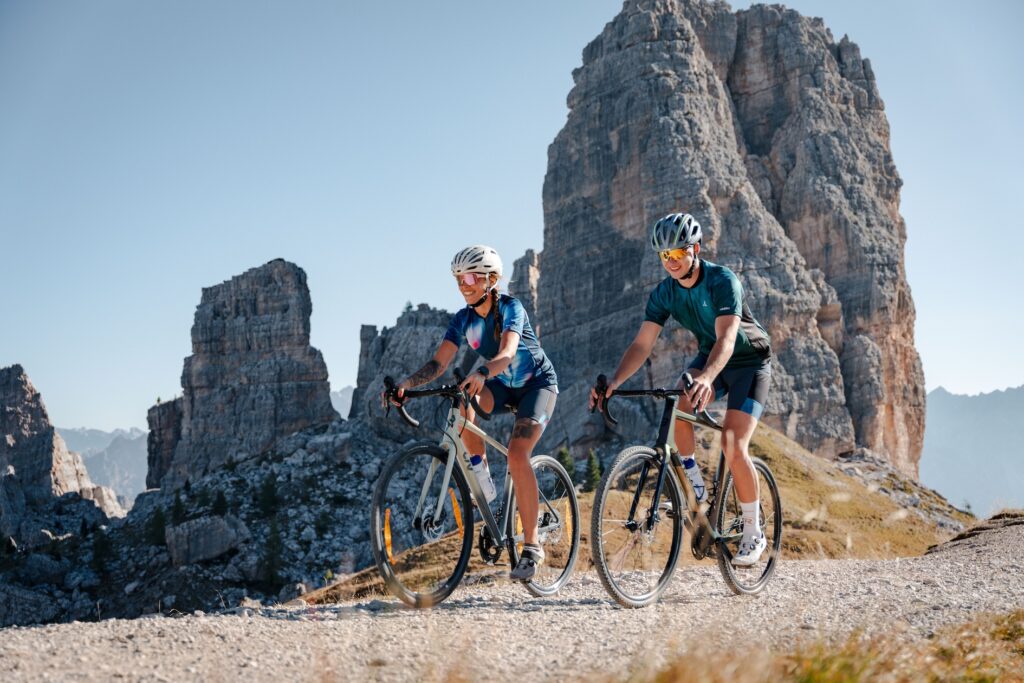
Choose activities by terrain and experience, as well as distance. A relatively short route can involve exposed sections, while a longer valley outing may be technically straightforward.
Hiking: from woodland walks to full mountain days
Cortina’s walking network includes forest paths, lakes, high passes and routes linking mountain refuges. Summer lifts can shorten an ascent, allowing more time at altitude, but check the complete itinerary—including the descent—before setting off.
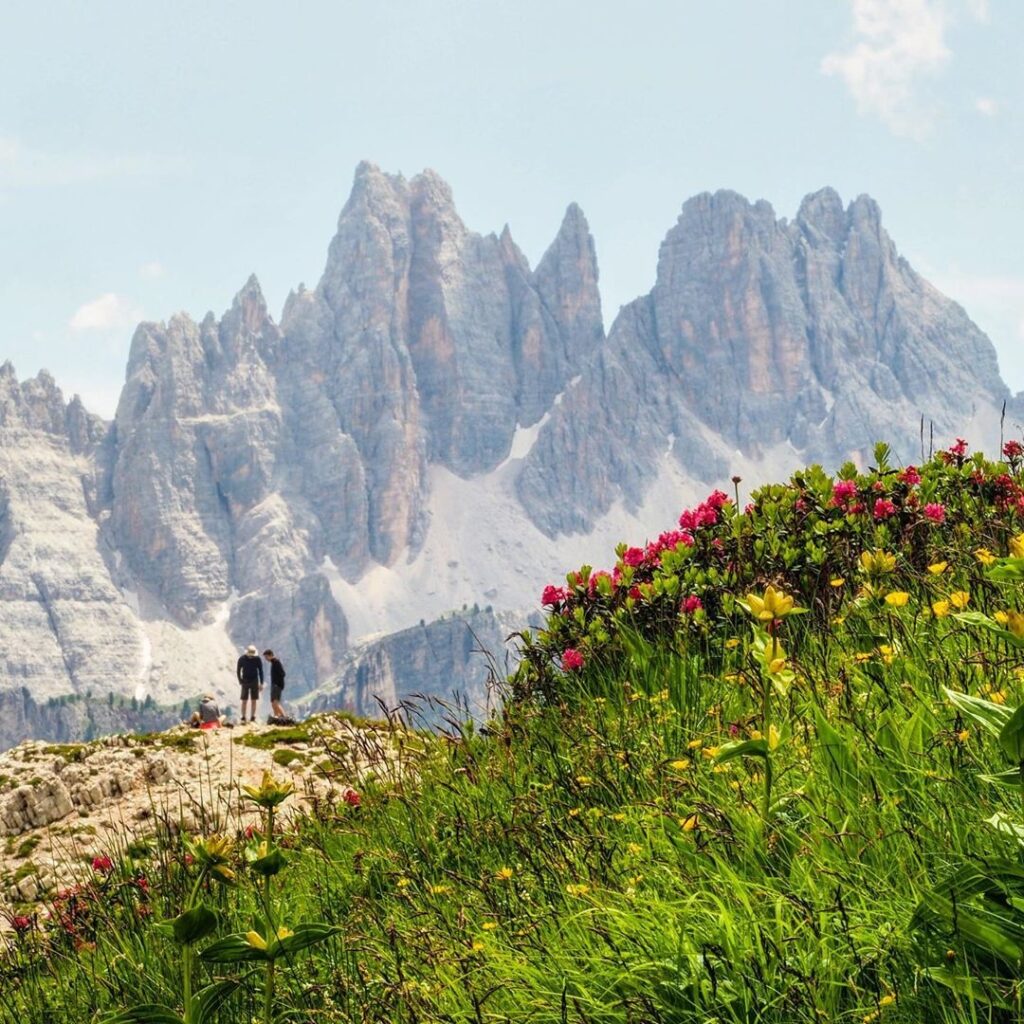
For a gentler day, explore suitable valley paths or choose a shorter lake outing. Lago Ghedina is one possibility, although the effort depends on your starting point: walking there from town is a different undertaking from arriving nearby by road.
Cinque Torri combines mountain scenery with restored First World War positions. When the chairlift is operating, it provides access for visitors who want a shorter outing around the towers and open-air museum, followed by lunch at a refuge. Individual paths still vary in gradient and footing.
For longer days, the Fanes and Ra Stua areas offer routes into the Natural Park of the Ampezzo Dolomites. Select a specific itinerary rather than treating either area as a single walk. In particular, outings continuing towards high lakes and refuges require more time and fitness than a short valley excursion.
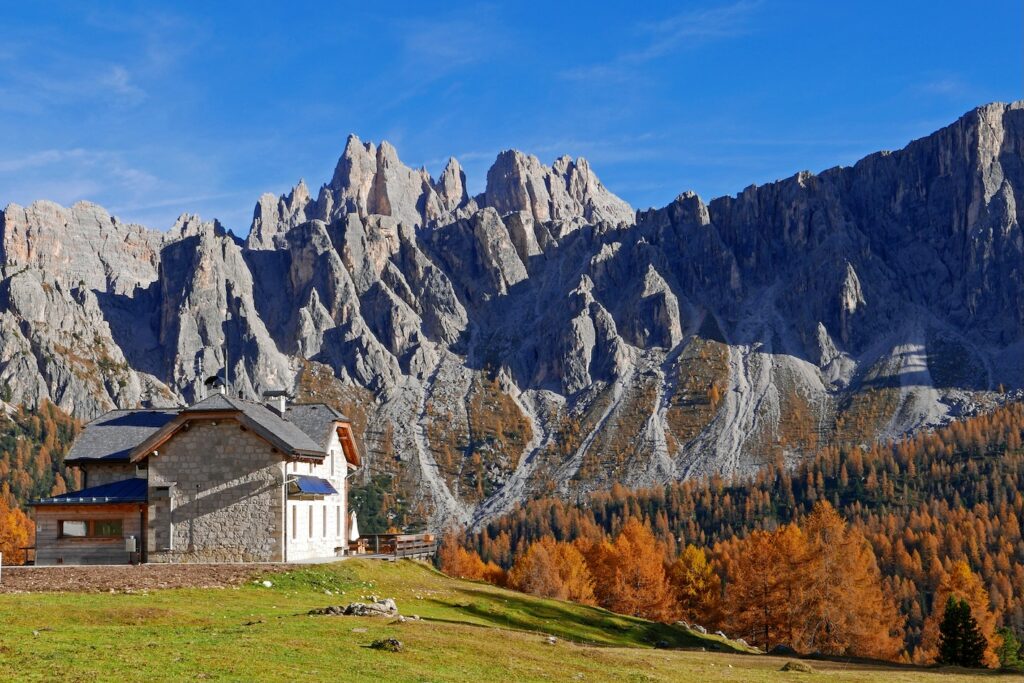
Lunga Via delle Dolomiti: cycling along the former railway
The Lunga Via delle Dolomiti follows the former railway corridor linking Calalzo di Cadore, Cortina and Dobbiaco. It offers a different cycling experience from the steep mountain passes and technical trails surrounding the valley.
From Cortina, choose a section south towards San Vito di Cadore or north towards Cimabanche, continuing farther only if it suits your group. The railway heritage generally provides more manageable gradients than the surrounding mountain roads, but the route is not entirely flat and surfaces vary.
You do not need to complete the whole route to enjoy it. A shorter return ride, with time for a stop, can work well for families and leisure cyclists.
For a one-way outing, book the return transport in advance and confirm that it carries bicycles. An e-bike can help with climbing, but its battery range and the rider’s handling skills still matter.
Mountain biking and Cortina Bike Park
Beyond the former railway route, Cortina offers mountain-bike itineraries involving forest roads, climbs and more technical descents. A local bike guide can help match a route to your experience and explain where riding is permitted.
Cortina Bike Park Dolomiti, on the Tofana side, provides dedicated gravity trails. This is a separate activity from leisure cycling: choose a suitable bike, protective equipment and a trail appropriate to your ability.
Check which lifts carry bicycles, the ticket required and the status of individual trails. Hiring an e-bike does not make a technical descent easier to ride.
Via ferratas: exploring the rock with a mountain guide
Via ferratas use fixed cables and other equipment to make progress through rocky mountain terrain possible. Cortina has routes ranging from shorter introductions to committing high-mountain itineraries.
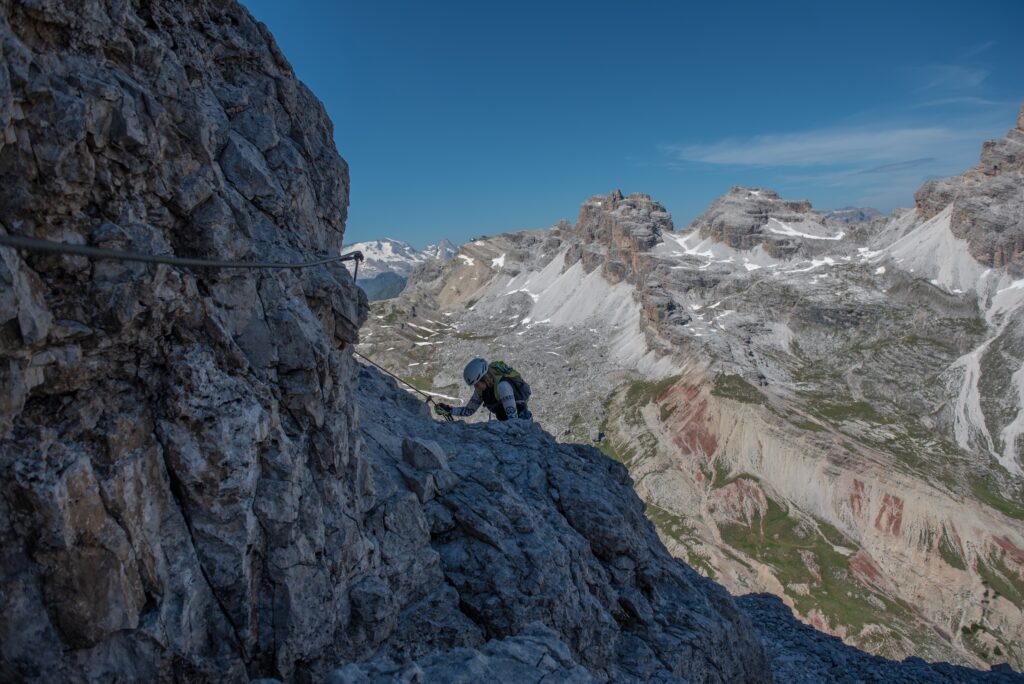
Ra Pegna, near the Tofana ski area, was developed as a relatively short introductory route. Nearby Ra Bujela offers another equipped climb, including suspended walkways. Their proximity does not make them interchangeable: a guide should assess which suits your group.
For a first experience, book a qualified mountain guide who can provide instruction and arrange the appropriate helmet, harness and via ferrata equipment. Tell the guide about your fitness, previous experience and comfort with heights.
Even an introductory via ferrata involves exposure and requires suitable conditions. More demanding routes should be chosen around the participants’ ability, the approach and descent, and the weather forecast.
Rafting: an excursion beyond Cortina
Rafting is available as a day excursion from Cortina, involving travel to another valley rather than an activity in the town itself.
One bookable example is Dolomite360’s family rafting and farm outing in the Aurina Valley, on the Aurino River in South Tyrol. The operator describes an introductory river section suitable for children from six, combined with a farm visit and local food, with private transfers from Cortina.
Water levels affect availability, particularly later in summer. Confirm the actual departure point, road-travel time, minimum age and swimming requirements before booking. For families wanting less time in a vehicle, compare the transfer with the time spent on the activity itself.
Day trips from Cortina
Cortina is a useful base for exploring the surrounding Dolomites, but its best-known destinations involve very different levels of effort. A lakeside visit, a four-hour mountain circuit and an exposed hiking route should not be planned as equivalent outings.
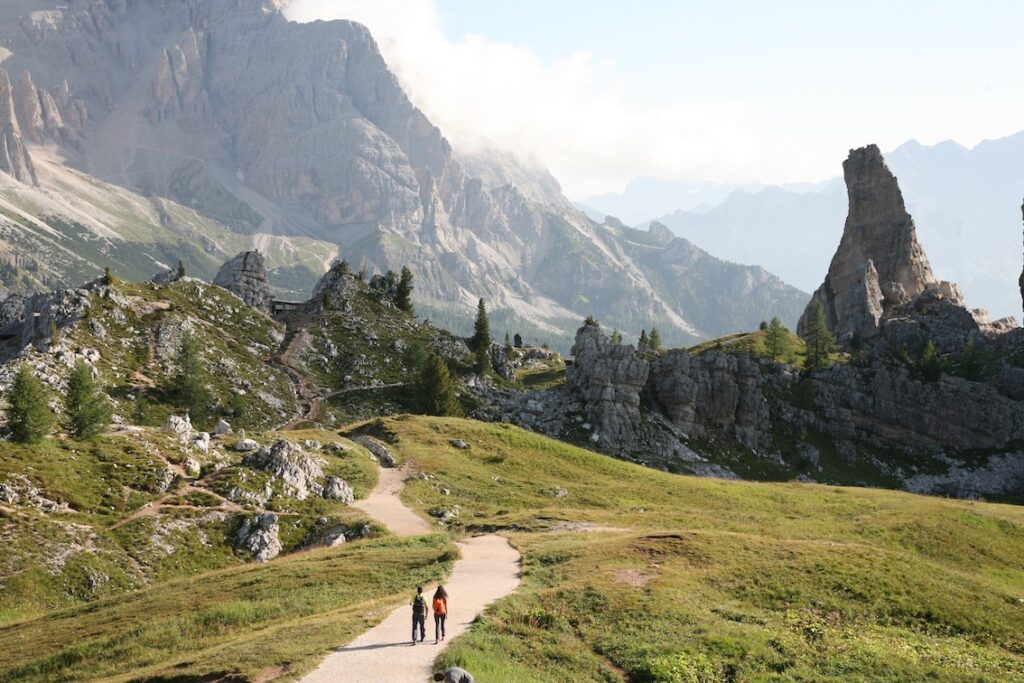
Tre Cime di Lavaredo: a classic mountain circuit
The Tre Cime di Lavaredo, or Drei Zinnen, are among the Dolomites’ most recognisable peaks. A common starting point is Rifugio Auronzo, reached by the seasonal mountain road or an operating shuttle service.
The classic circuit follows paths 101 and 105, with approximately four hours’ walking indicated by the local visitor information. Allow additional time for breaks, photographs and lunch.
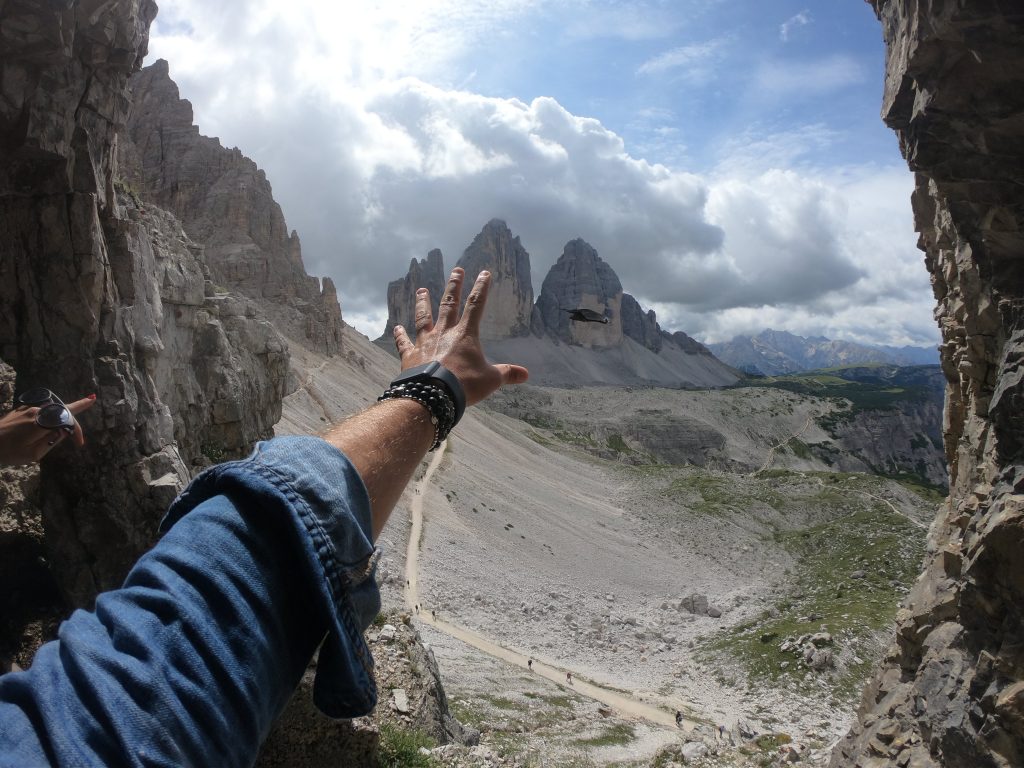
This is a proper mountain hike, with uneven ground, ascent and descent, and exposure to changing weather. A shorter out-and-back walk from Rifugio Auronzo may suit some visitors better, but choose the turnaround point before departure.
Access requires planning. In summer 2026, the toll road operated with a reservation system, while the Dobbiaco–Rifugio Auronzo shuttle also required advance booking. Check the arrangements for your travel year, including the return journey; future dates and conditions should not be assumed from the previous season.
Best for: walkers comfortable spending several hours on mountain paths.
Lago di Sorapis: beautiful, but an experienced-hiker route
The turquoise water of Lago di Sorapis makes it one of Cortina’s best-known excursions. Its popularity should not be mistaken for easy access.
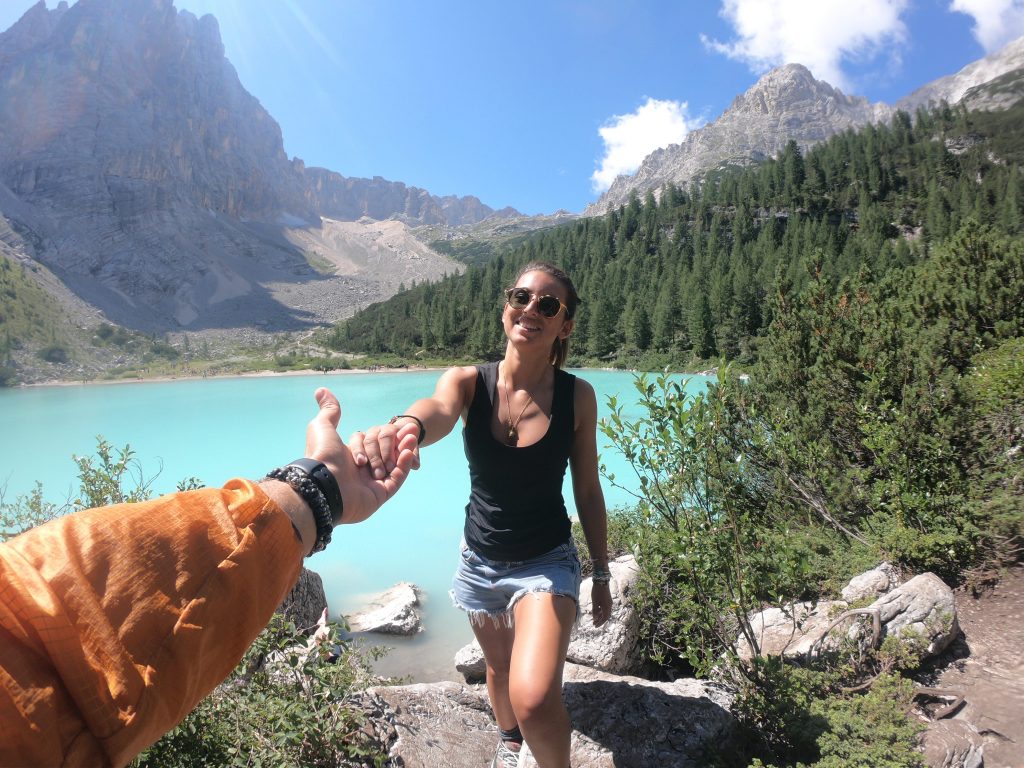
The usual route from Passo Tre Croci follows path 215. Cortina’s official description gives approximately 10.5 kilometres return, 434 metres of ascent and four hours, and classifies it as a route for experienced hikers.
It includes metal ladders and exposed ledges equipped with cables. These sections require sure-footedness and confidence with heights, particularly when passing other walkers. Rain, ice or lingering snow can substantially change the difficulty.
Allow more than the published walking time if you want breaks or expect congestion. For anyone uncomfortable with exposure, choose another lake rather than relying on the cables to compensate.
Best for: experienced, sure-footed hikers in suitable conditions.
Misurina: a gentler lakeside excursion
Lago di Misurina offers a more accessible way to enjoy the mountain setting without committing to a high-level hike. A lakeside visit can combine a short walk, photographs and lunch, with the length adjusted to your group.
It can also be paired with other stops in the area, provided you leave enough time for transport. Walking routes climbing away from the lake should be assessed separately from the lakeside outing.
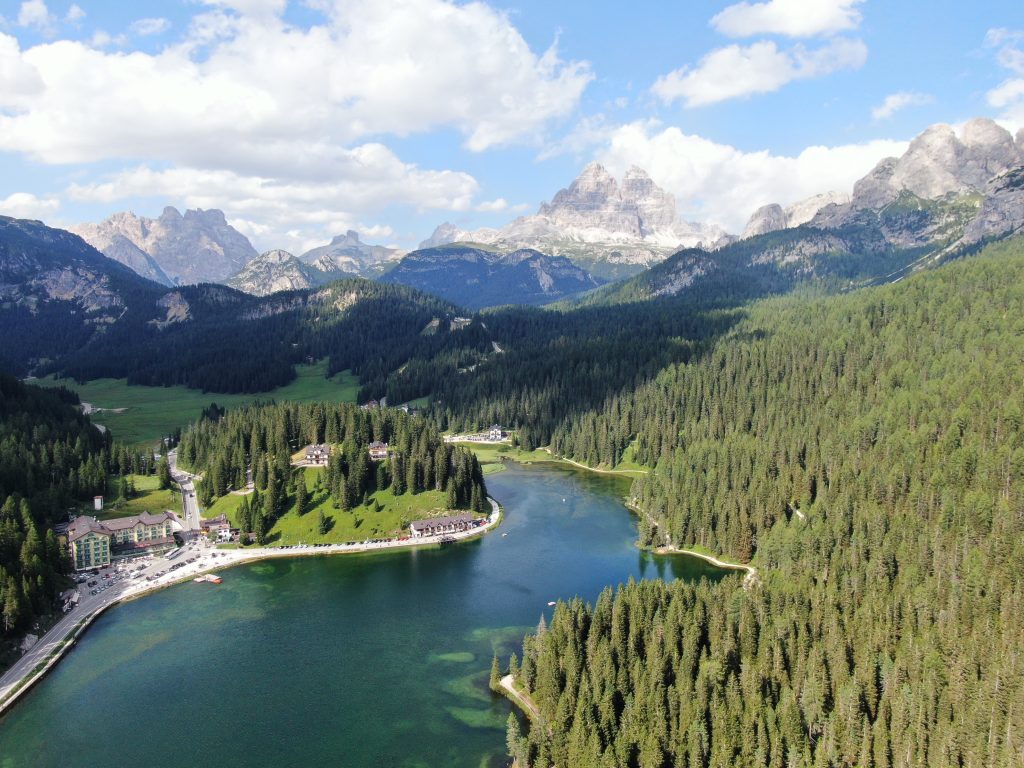
Best for: mixed-ability groups, families and visitors seeking a lighter day.
Cinque Torri: scenery, history and lunch
Cinque Torri works particularly well for a day combining a shorter mountain walk with the open-air First World War museum and a refuge meal.
When operating, the chairlift from Bai de Dones reduces the ascent. From the upper station, select a route suited to your group; exploring nearby positions is different from extending the walk towards Averau or higher terrain.
During my October visit, I combined time at Cinque Torri with lunch at Rifugio Scoiattoli—an appealing way to enjoy the area without making the day solely about distance.
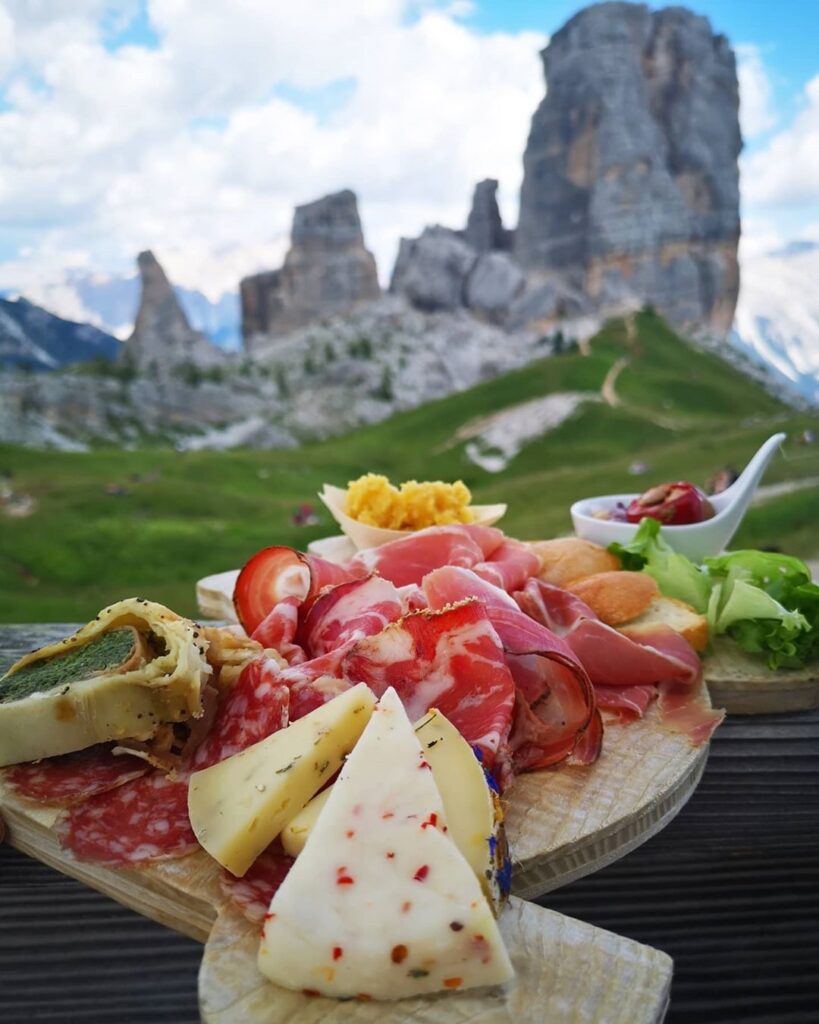
Best for: visitors wanting a flexible combination of scenery, walking and history.
Lagazuoi: a high-mountain viewpoint
When the cable car is operating, Lagazuoi offers access to an extensive mountain panorama without requiring the full ascent on foot.
You can keep the visit focused on the viewpoint and refuge, or plan a longer historical outing. The wartime tunnels and more demanding paths require separate consideration, appropriate equipment and confidence on the terrain.
Check the final cable-car descent before choosing a walk or settling in for lunch.
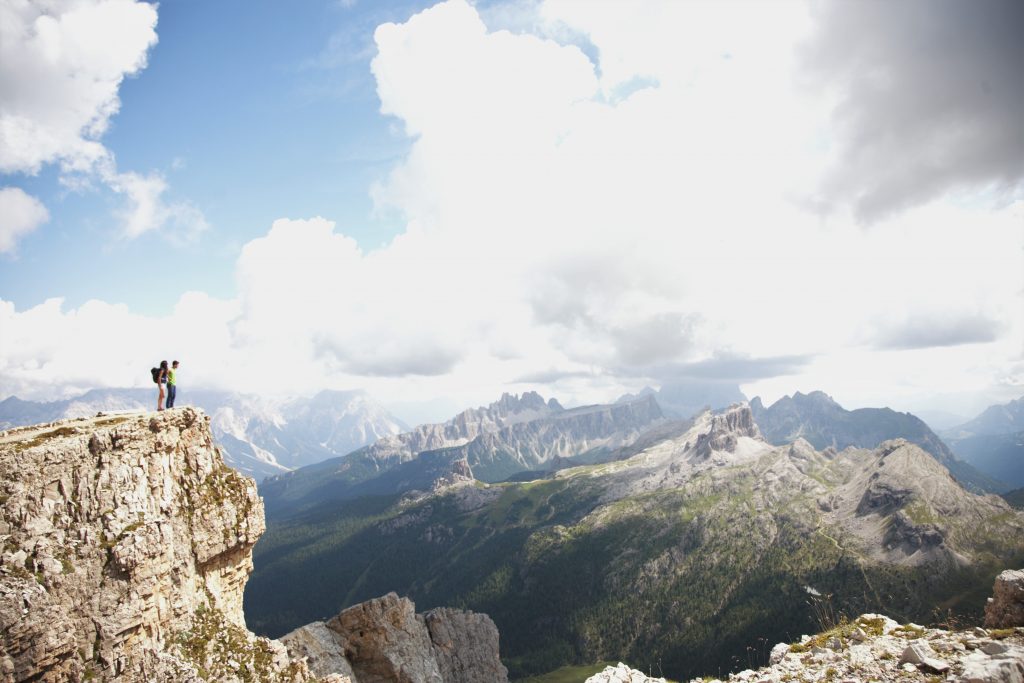
Best for: panoramic visits by lift, with more demanding extensions for suitably prepared walkers.
Autumn and spring in Cortina
Cortina has a long visitor season, but a town that remains open is not the same as a mountain network operating at full capacity. Hotels, lifts, refuges and buses follow separate calendars.
Autumn: foliage and a quieter pace
Autumn brings changing colours, cooler walking conditions and, later in the season, golden larches among the evergreen forests. It can be a rewarding time for photography, shorter walks and a holiday combining mountain scenery with restaurants and spa time.
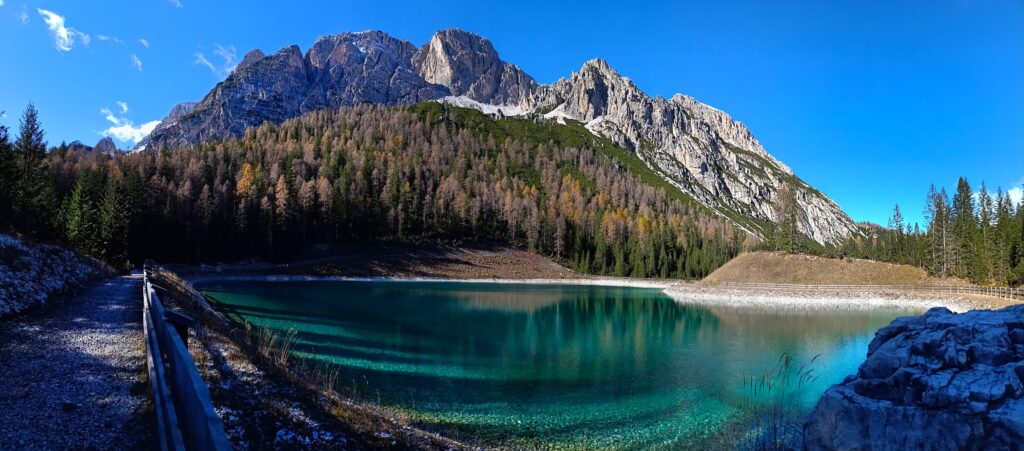
Early autumn generally offers more mountain services than the later weeks. Some lifts and refuges extend into October, but their closing dates differ and weather can bring snow to higher routes.
During my October visit, Eight Cortina, Rosapetra, Hotel Faloria, Hotel Tofana, Hotel de Len and Hotel des Alpes were open and busy, and I attended Rifugio Scoiattoli’s end-of-season celebration. Those experiences show what can be possible, while also illustrating why the exact dates matter: a refuge open one weekend may close immediately afterwards.
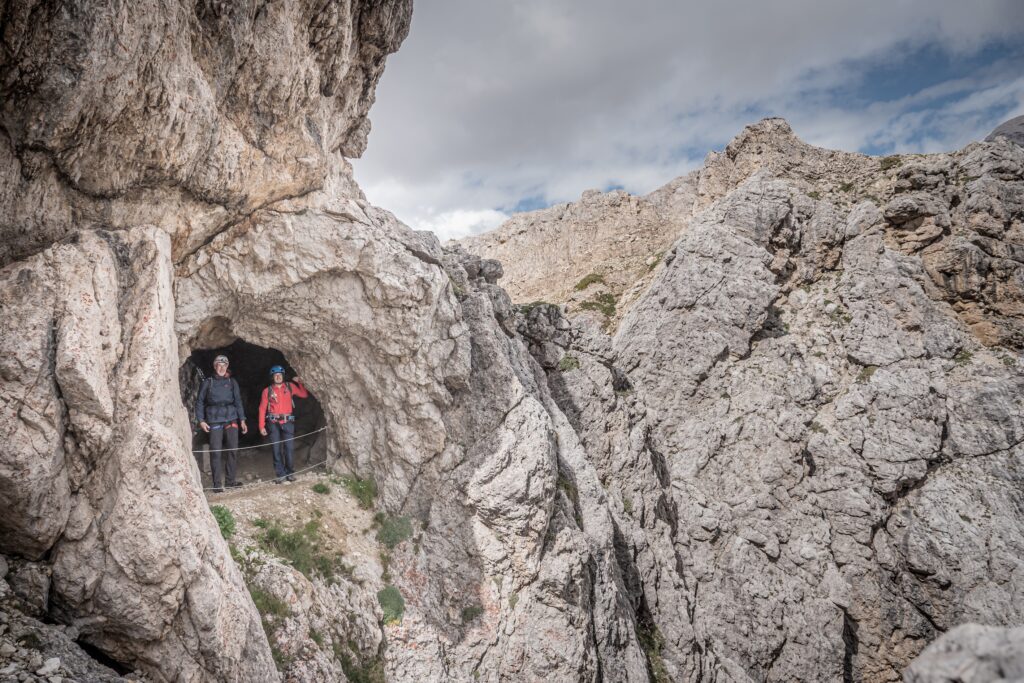
For a foliage trip, keep your itinerary flexible. Choose walks according to current conditions rather than expecting the full summer programme to continue.
Spring: late skiing and the return of the valley
Spring can offer two different experiences: skiing at altitude where lifts remain open, and the gradual return of walking and cycling lower down.
For a late-season ski trip, check the closing dates of the specific sector you intend to use. One area may continue operating after another has finished, and hotel or restaurant services may also change after the main winter holidays.
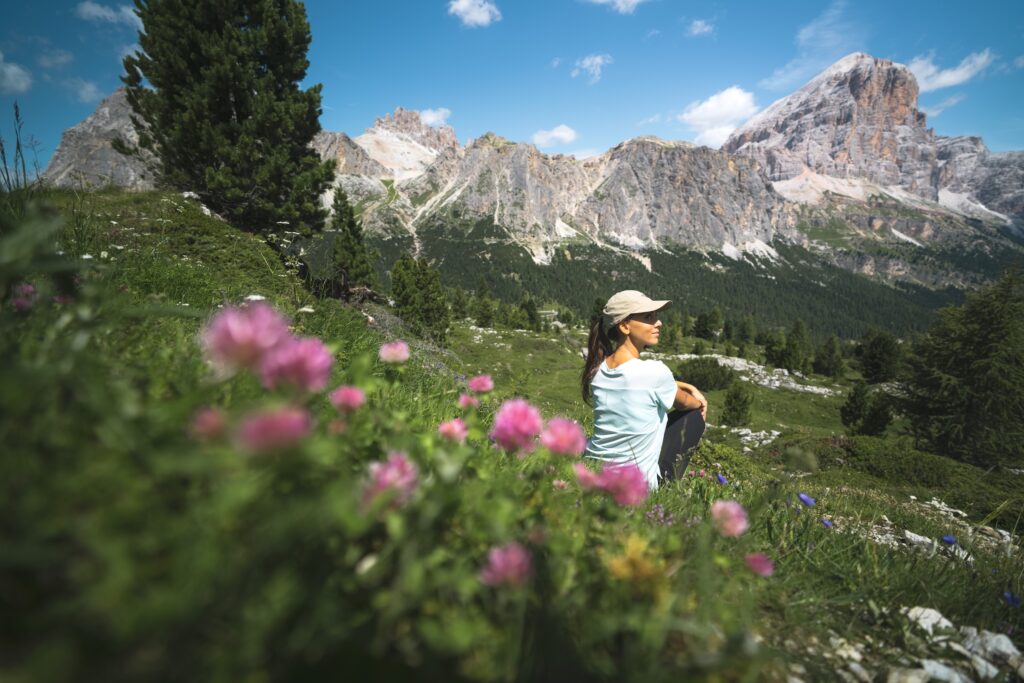
April and May should not automatically be treated as summer hiking months. Higher paths can retain substantial snow, while thawing ground, wet surfaces and closed refuges affect what is practical.
Lower-level walks, time in town and spa visits can provide a more flexible spring programme. Choose higher excursions only after obtaining current local advice.
Check the whole itinerary before booking
For an autumn or spring stay, confirm:
- Accommodation: whether your hotel is open and which facilities are operating.
- Lifts: the dates and hours of each lift needed for the outing.
- Refuges: kitchen service, closing days and overnight availability.
- Transport: seasonal bus services and private-transfer arrangements.
- Routes: current snow, ice and trail conditions.
A lift operating on one side of the valley does not guarantee that connecting lifts or a favourite refuge are also open. Build the trip around confirmed services, with alternative plans for changing weather.
Read More
- My Review of the Hotel des Alpes during my stay in Cortina.
- Paganella skiing: resort developments and ski-pass prices
- Ski resort investment: how mountain destinations are evolving
- Must-read guide to Pila in the Aosta Valley
- Courmayeur resort guide
Sources and acknowledgements
My thanks to Cortina Marketing and the local contacts who supplied practical information, and to the hotel teams who welcomed me during my October inspections. Davide Peterlin of Snowdreamers assisted with local ski planning. Personal observations in this guide relate to that visit.
Cortina d’Ampezzo: getting here and transport information
Fondazione Cortina: how to get there
Cortina Express: airport and railway connections
Cortina Express: current timetables
Italian State Archives: Ampezzo’s administrative history
Regole Ethnographic Museum: tourism
Cortina: First World War sites
Australian Olympic Committee: 1956 Games
Cortina: official accommodation directory
Cortina: skiing and snowboarding across the main sectors
ISTA: Socrepes facilities and beginner access
Faloria–Cristallo: winter access and mobility
Faloria–Cristallo: terrain and contrasting exposure
Cortina terrain and aspect review
Lagazuoi: Skyline and connections between sectors
Lagazuoi: Armentarola taxi and horse-tow services
Dolomiti Bus: ski-bus routes and timetables
Skipass Cortina: tickets and sales points
Dolomiti Superski: Sellaronda distance, directions, timings and required pass
Snowdreamers: official website
Veneto ski instructors’ register: director Davide Peterlin
Scuola Sci Cortina’s lesson meeting points
Scuola Sci Cristallo Cortina: lessons and services
Scuola Snowboard Cortina: private lessons
Scuola Snowboard Cortina’s course options
Museums of the Regole d’Ampezzo
Scoiattoli: location beside the Cinque Torri
Rifugio Averau: panoramic terrace
Freccia nel Cielo: mountain restaurants
ISTA: Chalet Tofane restaurant, pizzeria, bar and après-ski
Janbo: official tourism listing
Embassy: pastry shop and bistro
Michelin: Cortina’s one-star restaurants
Ristorante Pizzeria 5 Torri: official tourism listing
Bilbò Club: December 2026 opening programme
Cortina: walking among lakes and waterfalls
Italia.it: Lunga Via delle Dolomiti
ISTA: Cortina Bike Park Dolomiti
Dolomite360: family rafting and farm excursion
Tre Cime: access, shuttle reservations and walking information
Province of Bolzano: summer 2026 access arrangements
Cortina: Lago di Sorapis route, difficulty and timings
Cortina official guide: summer outings, lakes and lift-accessible viewpoints
Current lift status and operating calendars
Cadore regional food traditions
Boarderline ski and snowboard rental
Socrepes equipment rental and storage

Planning your next trip to the Italian Alps?
If you’re heading to the Aosta Valley, take a look at Il Cuore della Valdigne, our family-owned apartment in Morgex, available for rent when we’re not using it ourselves.
It’s an ideal base to:
- Ski in Courmayeur, La Thuile and Pila
- Enjoy the mountains in summer (hiking, biking, nature)
- Explore the Mont Blanc valley in a quieter, more authentic setting.
Check my Mountain Art on my Shop
You can go to my shop and see what have been inspiring me lately, lots mountain landscapes in soft pastels, and now in oils too. Go here to check my latest works!

Featured Image: The view of Cinque Torri in winter from Rifugio Scoiattoli. Credits: Giuseppe Ghedina. Cortina Marketing.


Discover more from The-Ski-Guru
Subscribe to get the latest posts sent to your email.
 Subscribe to The-Ski-Guru here.
You must be logged in to post a comment.