
The global ski industry is entering a new phase of infrastructure investment. Across the Alps and North America, ski resort investment is accelerating as operators modernise lifts, expand snowmaking systems and adopt new digital technologies.
While modernisation has always been part of the ski resort business model, the nature of investment is changing. Resorts are no longer investing solely to improve comfort or capacity. Increasingly, infrastructure spending is designed to manage a combination of risks: climate variability, visitor flow management, regulatory pressure and rising operating costs.
In France, where investment data is closely monitored through an industry barometer conducted by Montagne Leaders in partnership with Atout France and Domaines Skiables de France (DSF), ski areas invested €555 million in 2025, roughly 32% of pre-tax turnover. This level of reinvestment is significantly above the long-term average and illustrates the structural importance of infrastructure investment in mountain economies.
Across the Alpine region and North America, similar patterns are emerging.
Key Figures: Ski Resort Investment
• €555 million invested by French ski resorts in infrastructure in 2025 (Domaines Skiables de France sector barometer)
• Around 3,000 ski lifts operate across approximately 250 French ski areas, serving more than 5,700 km of slopes
• Snowmaking now covers roughly 40% of slopes in France, and 70–90% in parts of Austria and Italy
• The global ski industry records roughly 350–400 million skier visits annually, according to the International Report on Snow & Mountain Tourism
• Large ski lift investments often exceed €10–15 million per installation for modern detachable chairlifts or gondolas
Why Ski Resort Investment Is Increasing Worldwide
France provides the clearest annual investment benchmark. The €555 million invested in 2025 reflects continued capital expenditure across lifts, snowmaking systems, slope infrastructure and visitor facilities.
Elsewhere in Europe, investment data is more fragmented because many resorts operate within regional systems or consortia rather than single concession companies.
In Spain, ski areas reported approximately €66 million in planned investments for the 2025-2026 season, according to presentations by the Spanish ski area association ATUDEM and the national ski federation RFEDI.
Italy presents a different model again. Instead of national investment figures, large ski networks such as Dolomiti Superski report major coordinated upgrades across multiple lift operators. The Dolomites consortium has recorded investment cycles exceeding €200 million in recent years, reflecting continuous upgrades across its vast interconnected system.
North America operates under a more corporate model. Large groups such as Vail Resorts and Alterra Mountain Company invest across multi-resort networks as part of the Epic Pass and Ikon Pass strategies, focusing heavily on lift modernisation and digital visitor management.
These investment patterns illustrate how ski resorts are adapting their infrastructure to an increasingly complex operating environment.
Lift Modernisation and Capacity Management
Ski lifts remain the largest category of infrastructure spending in most resorts.
Across the Alps, operators are gradually replacing older fixed-grip chairlifts with detachable chairlifts and high-capacity gondolas capable of transporting significantly more passengers per hour.
A typical fixed chairlift built in the 1980s might transport 1,800–2,400 skiers per hour, while modern detachable lifts can exceed 3,600 passengers per hour. High-capacity gondolas in large resorts can reach 4,000 passengers per hour while significantly reducing travel time.
These upgrades are not only about comfort. They directly influence the flow of skiers across a resort, reducing queue times and increasing the number of runs visitors can complete in a day.
This “flow management” approach increasingly resembles the operational models used in urban transport systems and theme parks.
Snowmaking as Climate Infrastructure
A second major area of investment is snowmaking infrastructure.
Snowmaking is often misunderstood as an attempt to replace natural snow. In practice, most resorts use it strategically to secure key parts of the ski domain:
- beginner slopes
- connections between sectors
- return runs to the village
In France, approximately 40% of slopes are equipped with snowmaking, according to Domaines Skiables de France.
In the Austrian and Italian Alps, coverage can reach 70–90% of pistes, reflecting the importance of guaranteeing early-season openings for the Christmas and New Year holiday period.
Modern snowmaking systems increasingly rely on automated technologies that monitor temperature, humidity and snowpack conditions. These systems activate snow guns only when meteorological conditions are optimal, reducing both energy consumption and water use.
Water management has become a key political issue in many mountain regions. To address this, many resorts are constructing hill reservoirs, which store water during periods of natural availability and avoid withdrawals from rivers during winter.
These reservoirs can also serve multiple purposes, including summer recreation and emergency water reserves.
Digital Flow Management and the Rise of “Smart Resorts”
Beyond lifts and snowmaking, resorts are investing heavily in digital technologies designed to improve visitor flow and operational efficiency.
Modern ski areas now operate complex RFID ticketing systems, which allow operators to monitor skier movement across lift networks in real time.
These systems help resorts:
- analyse queue patterns
- optimise lift operations
- adjust staffing and maintenance schedules
- improve safety monitoring
Several technology providers, including companies such as Skidata and Axess, now offer integrated platforms combining ticketing, access control and visitor analytics.
At the guest level, mobile applications increasingly provide real-time lift wait times and resort conditions, allowing skiers to adjust their route across the mountain.
This invisible layer of digital infrastructure is becoming as important as the physical lift network itself.
The Dolomites: A Unique Infrastructure Model
One of the most striking examples of large-scale infrastructure coordination is Dolomiti Superski, one of the world’s largest ski networks.
Created in 1974, the system links twelve ski areas across South Tyrol, Trentino and Veneto, providing access to roughly 1,200 kilometres of slopes served by around 450 lifts.
Dolomiti Superski does not operate lifts directly. Instead, it coordinates dozens of independent lift companies under a shared ski pass system.
This structure allows coordinated investment across the network while preserving local ownership of individual lift operations.
A second major consortium in the region is Skirama Dolomiti Adamello-Brenta, which links eight resorts in Trentino under a common pass covering approximately 380 kilometres of slopes and around 150 lifts.
These large networks illustrate how collaboration between operators can create infrastructure systems comparable in scale to the largest ski destinations in North America.
Case Study: Aosta Valley
The Aosta Valley represents another distinctive Alpine model.
The region hosts several major lift operators, including:
- Cervino Ski Paradise (Cervinia–Zermatt)
- Monterosa Ski
- Courmayeur Mont Blanc
- La Thuile
- Pila
- Skyway Monte Bianco
These resorts operate at relatively high altitudes compared with many Alpine destinations, which provides some natural resilience to climate variability.
Recent investments in the region have focused on lift upgrades, snowmaking expansion and visitor infrastructure improvements.
Proposals for additional connectivity, such as the debated Aosta–Pila–Cogne cableway, illustrate how infrastructure planning increasingly overlaps with broader tourism mobility strategies.
→ Aosta–Pila–Cogne Cableway Debate
https://www.the-ski-guru.com/2026/01/22/aosta-backs-inter-valley-link-pila-cogne/
Case Study: Piemonte
Neighbouring Piemonte has a more fragmented ski structure, with roughly 45–50 ski areas and more than 1,000 kilometres of slopes.
The region’s flagship destination is the Via Lattea / Milky Way system centred on Sestriere and Sauze d’Oulx, one of the largest connected ski areas in Europe.
Unlike France’s large concession companies, many ski resorts in Piemonte rely on a mixed public-private investment model. Regional governments periodically provide funding to support infrastructure upgrades and safety improvements.
This model reflects the economic importance of ski tourism for many smaller mountain communities.
A Global Competition for Ski Experience
Ultimately, infrastructure investment is about maintaining competitiveness in a global ski market.
Large Alpine destinations such as the Three Valleys, Paradiski and Tignes–Val d’Isère compete directly with North American resorts such as Vail, Whistler Blackcomb and Park City.
In this context, ski lifts are no longer simply transport infrastructure. They form part of the visitor experience itself, shaping how skiers move across the mountain and how they perceive the value of a ski pass.
High-capacity lifts, reliable snow conditions and reduced waiting times all contribute to the perceived quality of a ski destination.
The Global Ski Market Context
To understand why resorts are investing so heavily in infrastructure, it is important to look at the broader scale of the global ski industry.
According to the International Report on Snow & Mountain Tourism by Laurent Vanat, the global ski market records approximately 350 to 400 million skier visits per year in an average winter season.
The largest ski markets include:
United States – around 60 million skier visits annually
France – about 54–55 million skier visits
Austria – around 50 million skier visits
Japan – roughly 30 million skier visits
Italy – around 28–30 million skier visits
Switzerland – around 23–25 million skier visits
These figures highlight the intense competition between Alpine destinations and large North American resorts.
At the same time, the number of ski areas worldwide has remained relatively stable for decades, with roughly 2,000 ski resorts operating globally. As a result, most growth in the industry now comes not from building entirely new resorts, but from modernising existing infrastructure and improving visitor experience.
This explains why infrastructure investment has become such a strategic priority. Resorts must continuously upgrade lifts, snowmaking systems and digital infrastructure in order to maintain competitiveness in a mature global tourism market.
Source: Laurent Vanat – International Report on Snow & Mountain Tourism
https://www.vanat.ch/RM-world-report.html
Conclusion
The €555 million invested by French ski areas in 2025 illustrates a broader transformation underway in the ski industry.
Infrastructure investment now serves as a form of multi-risk insurance for mountain economies.
Through modern lift systems, sophisticated snowmaking infrastructure and digital visitor management technologies, resorts are building the capacity to adapt to climate uncertainty, increasing visitor numbers and growing operational complexity.
This wave of ski resort investment reflects a deeper transformation of the mountain tourism economy.
In an increasingly competitive global market, this ability to anticipate and invest strategically may prove to be one of the most important factors shaping the future of the ski industry.
Further Reading:
• Milano-Cortina 2026 Transport and Infrastructure Guide
https://www.the-ski-guru.com/2026/02/06/milano-cortina-2026-travel-between-venues/
• Mountain Infrastructure Risk in the Alps
https://www.the-ski-guru.com/2026/03/01/mountain-infrastructure-risk-alps-pyrenees/
• Pila–Cogne Cableway Debate
https://www.the-ski-guru.com/2026/01/22/aosta-backs-inter-valley-link-pila-cogne/
Sources
France
Domaines Skiables de France – season statistics and sector reports
Atout France – Mountain tourism observatory and seasonal reports
France recorded 54.8 million skier visits in the 2024–2025 season, ranking second globally behind the United States.
France industry analysis
Montagne Leaders sector survey (investment barometer)
https://www.montagneleaders.fr/
Italy
ANEF represents roughly 300 companies operating around 1,700 lift installations across Italy.
Austria
Austrian Cable Car Association (WKO – Fachverband der Seilbahnen)
https://www.wko.at/oe/transport-verkehr/seilbahnen
The Austrian ropeway sector publishes reports on infrastructure investment, snowmaking and energy use across the country’s ski industry.
United States / Canada
National Ski Areas Association – U.S. Ski Industry Report
https://nsaa.org/research/
Spain
ATUDEM – Asociación Turística de Estaciones de Esquí y Montaña
https://atudem.es/RFEDI – Real Federación Española Deportes de Invierno
https://rfedi.es/
Switzerland
Swiss Cableways / Seilbahnen Schweiz
https://www.seilbahnen.org/
Industry data sources
International Report on Snow & Mountain Tourism (Laurent Vanat)
https://www.vanat.ch/RM-world-report.html
Technology / lift infrastructure
Doppelmayr ropeway technology
https://www.doppelmayr.com
The Austrian company Doppelmayr is the world’s largest manufacturer of ropeway systems, operating in more than 90 countries.
 Planning your next trip to the Italian Alps?
 Planning your next trip to the Italian Alps?
If you’re heading to the Aosta Valley, take a look at Il Cuore della Valdigne, our family-owned apartment in Morgex, available for rent when we’re not using it ourselves.
It’s an ideal base to:
- Ski in Courmayeur, La Thuile and Pila
- Enjoy the mountains in summer (hiking, biking, nature)
- Explore the Mont Blanc valley in a quieter, more authentic setting.
 Ski in Courmayeur,
 Enjoy the mountains in summer (hiking, biking, nature)
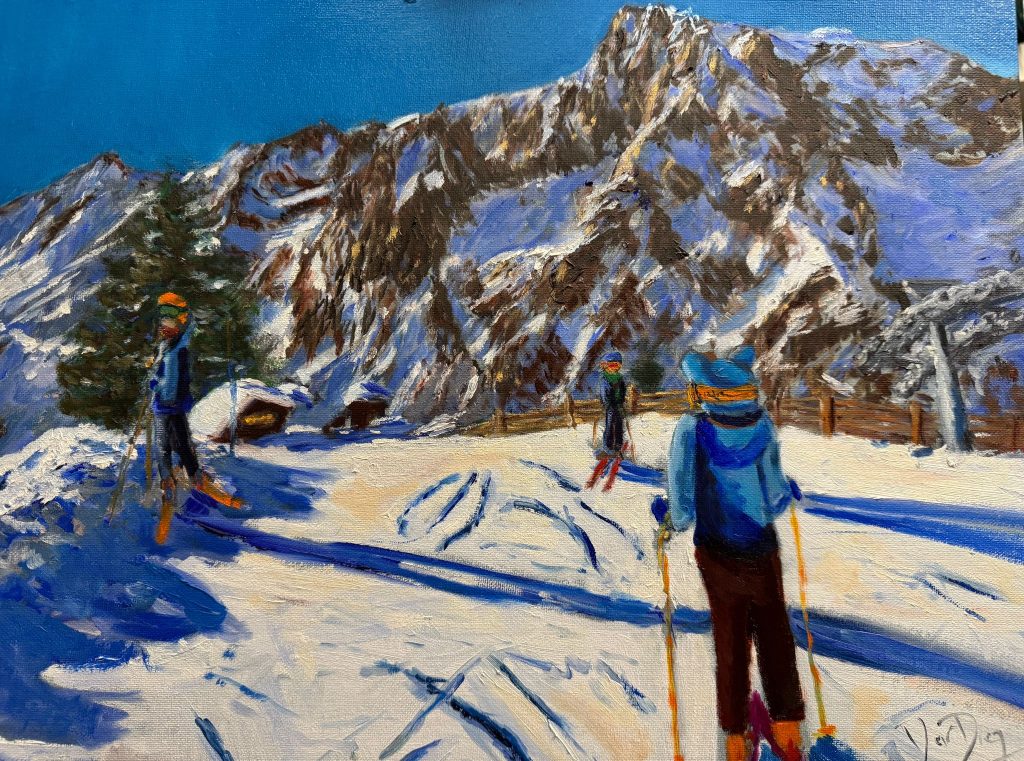
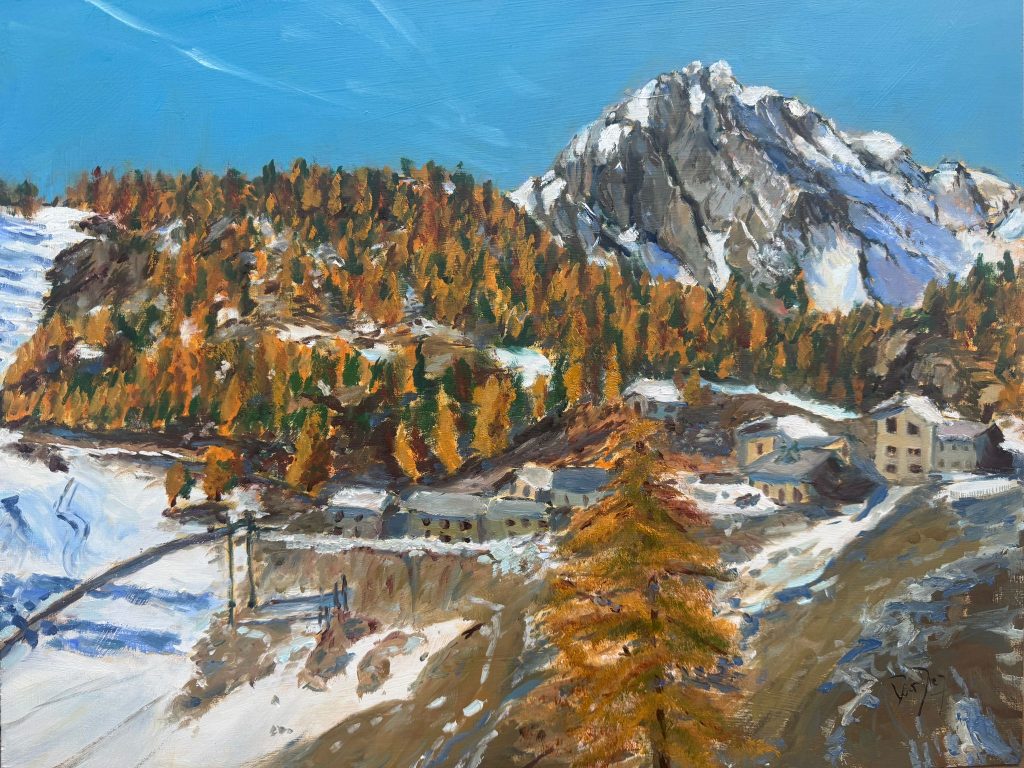
Check my Mountain Art on my Shop
You can go to my shop and see what have been inspiring me lately, lots mountain landscapes in soft pastels, and now in oils too. Go here to check my latest works!
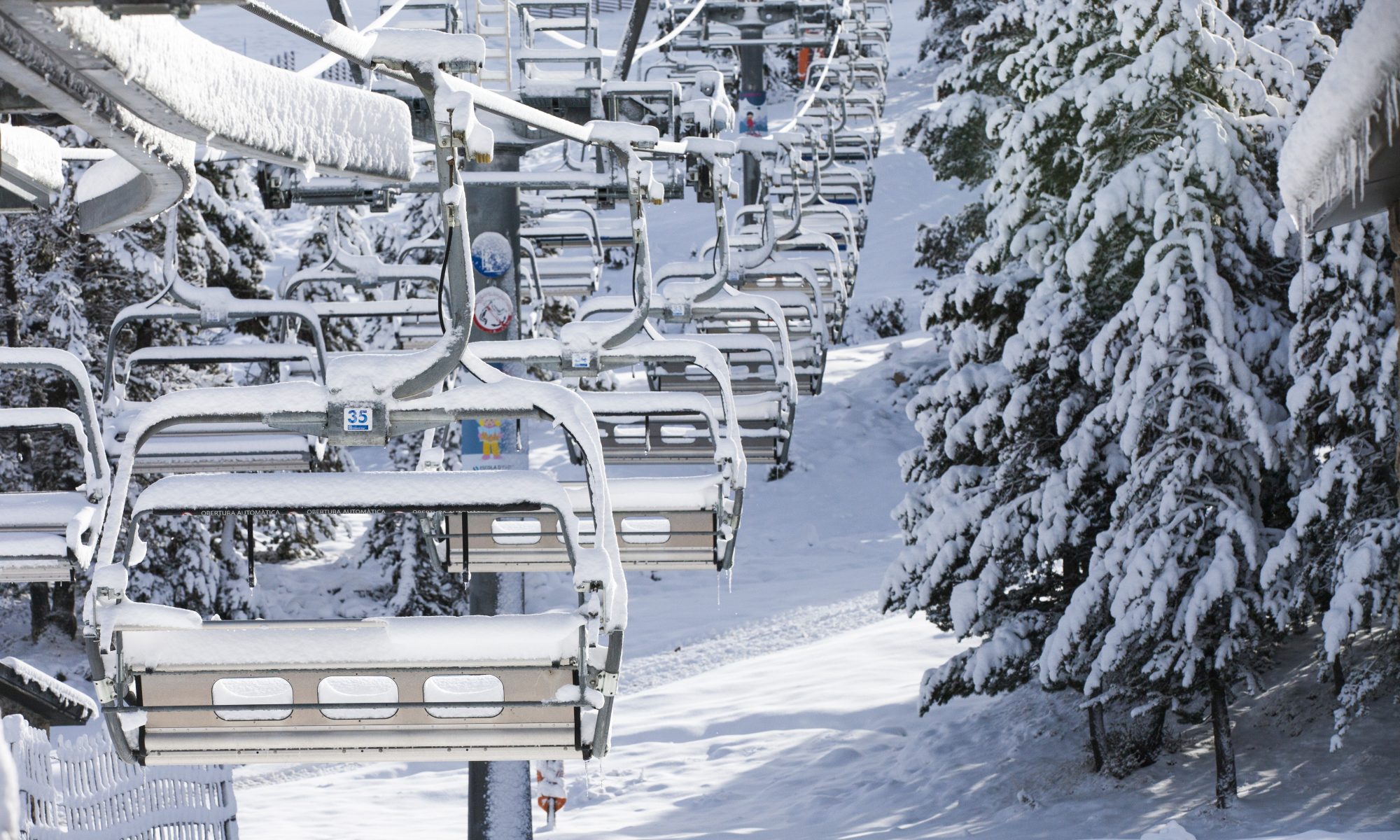
Featured Image: A chairlift in Grandvalira full of snow. Photo Grandvalira. Grandvalira, 🏔️ How Mega-Passes Like Epic, Ikon & Dolomiti Superski Influence Skipass Prices: Are They Driving Ski Holiday Inflation?


Discover more from The-Ski-Guru
Subscribe to get the latest posts sent to your email.
 Subscribe to The-Ski-Guru here.