

By The-Ski-Guru | March 2026
When the Paralympic Winter Games arrive in Italy, coverage will rightly focus on athletes and competition.
Yet in alpine terrain, another test unfolds quietly in parallel.
Hosting the Milano Cortina 2026 Winter Paralympics is not simply about staging races. It is a large-scale assessment of whether mountain infrastructure in the Alps — developed over decades around traditional ski tourism — can operate effectively, safely and inclusively under different mobility realities.
Unlike indoor arenas or urban venues, alpine resorts function within environmental constraints. Snow conditions evolve daily. Wind affects lift systems. Roads narrow under winter pressure. Vertical circulation is inherent, not optional.
Accessibility here is not a design layer added at the end. It interacts with terrain itself.
Where Alpine Design Meets Adaptive Sport
Many historic Alpine resorts were not conceived with adaptive flow as a structural principle. Lift embarkation points, slope transitions, and spectator areas evolved around conventional skier movement patterns.
Paralympic alpine disciplines alter that equation.
Sit-skis shift centre-of-gravity dynamics at the start gate. Standing classifications rely on stabilisation equipment that interacts differently with snow surfaces. Visually impaired athletes require coordinated guide systems that change spatial management on course.
These adaptations influence:
- Start ramp engineering
- Finish-area clearance zones
- Medical access positioning
- Course preparation standards
In host locations such as Cortina d’Ampezzo, where Olympic legacy intersects with contemporary redevelopment, the Paralympics require accessibility to move from peripheral consideration to operational core.
Snow as Infrastructure
In mountain sport, snow is infrastructure.
It is shaped by grooming, temperature gradients, solar exposure and wind loading. Its consistency influences edge grip, braking distance and stability.
For adaptive equipment — particularly sit-skis — surface irregularities can have amplified effects. Late-day rutting or uneven compression alters handling characteristics more significantly than in able-bodied alpine racing.
Maintaining uniformity across a course under competition pressure therefore becomes more than technical maintenance. It becomes an accessibility condition.
Snow preparation teams effectively become part of inclusive design.
Transport and Vertical Circulation Under Winter Stress
Alpine venues present logistical layers that urban hosts do not.
Accessible shuttle systems must operate in sub-zero temperatures. Pedestrian routes require constant ice management. Elevators in multi-level facilities become safety-critical infrastructure, not convenience features.
Add international spectators, adaptive athletes, equipment transport and compressed scheduling, and the margin for operational error narrows.
In mountainous environments, weather disruptions cascade. A wind hold on lifts affects athlete movement. Road congestion affects medical response timelines. Snow accumulation reshapes circulation flow — an issue already visible in the transport systems linking Milano–Cortina Olympic venues.
The Paralympics expose how resilient these systems truly are when accessibility is central rather than supplementary.
Emergency Planning in Inclusive Terrain
All winter mountain events carry inherent environmental risk, particularly during periods of widespread snow instability such as the February 2026 avalanche cycle across the Alps.
But inclusive design must also function under contingency.
Evacuation modelling must consider:
- Mobility-impaired spectators in elevated stands
- Athletes using equipment that cannot be removed quickly mid-slope
- Cold exposure risk during extended delays
- Medical extraction in weather-limited conditions
These are not dramatic hypotheticals. They are operational realities in alpine terrain.
If the Games proceed smoothly, much of this work will remain invisible — as it should.
But its complexity is significant.
Legacy: Structural Shift or Event Overlay?
The long-term significance of the Milano Cortina 2026 Winter Paralympics may lie beyond competition schedules.
Will lift adaptations remain in place?
Could accessible design standards influence future Alpine development?
And will adaptive skiing become more deeply embedded in resort planning and marketing models?
Or will many of the changes remain event-specific, efficient but temporary?
For mountain tourism, that distinction matters.
Inclusive infrastructure is not only a social commitment. It is an economic and strategic one.
Beyond Medals
When the Paralympics open in 2026, attention will naturally focus on performance.
Yet from an alpine systems perspective, the deeper question is structural:
Can mountain resorts — shaped by geography, climate variability and historical design — evolve toward accessibility as a permanent principle rather than a temporary accommodation?
In that sense, Milano–Cortina may serve as one of the clearest recent case studies in how modern Alpine infrastructure adapts under inclusive pressure.
And that may prove the more enduring legacy.
FAQ: Milano–Cortina 2026 Paralympics Infrastructure
Why are the Paralympics challenging for Alpine resorts?
Because mountain venues must adapt lifts, snow preparation, circulation routes and emergency systems to accommodate athletes and spectators with impaired mobility.
Will the Milano–Cortina 2026 Paralympics leave a legacy for adaptive skiing?
The long-term impact depends on whether accessibility upgrades remain in place after the Games and influence future resort infrastructure planning.
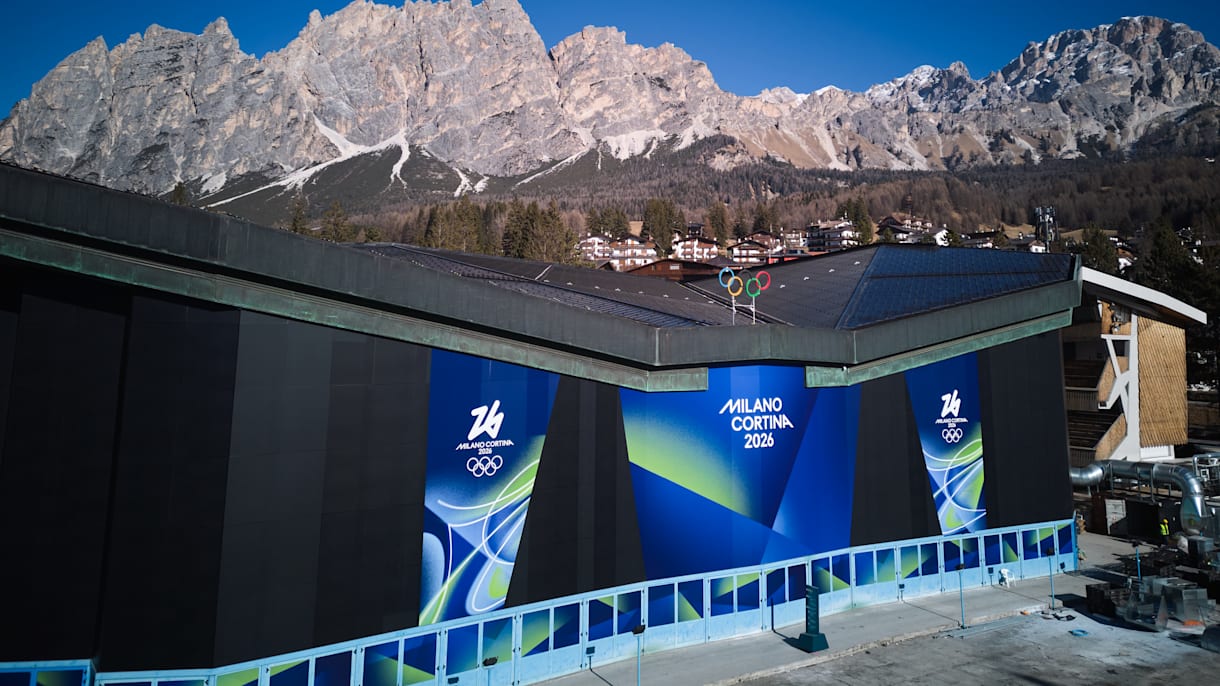
Featured Image: Milano Cortina Paralympics photo.


Discover more from The-Ski-Guru
Subscribe to get the latest posts sent to your email.
 Subscribe to The-Ski-Guru here.