


A series of avalanche incidents reported on 26 March 2026 across the French Alps, particularly in Haute Tarentaise, Maurienne and Vanoise, point to a renewed phase of instability driven by strong winds, very cold temperatures, and fresh snow accumulation.
According to field observations and local reporting including Le Dauphiné Libéré, current conditions are favouring the formation of wind slabs (plaques à vent) — one of the most dangerous and unpredictable avalanche problems in the Alps.
These types of conditions are typically reflected within the
👉 European avalanche danger scale (Levels 1–5 explained)
https://www.the-ski-guru.com/2026/03/14/european-avalanche-danger-scale-levels/
PIDA Operations in Tignes: Wind Slabs Forming Under Extreme Conditions
In Tignes (Col de la Leisse, above the Génépi piste), avalanche control teams carried out manual PIDA operations as activity resumed under severe weather conditions.
Reported observations included:
- Winds reaching 100 km/h
- Temperatures around -17°C
- Humidity levels of 86%
- Blowing snow forming deposits that do not bond well with the existing snowpack
These conditions are highly conducive to wind slab formation, particularly on lee slopes where transported snow accumulates.
👉 Avalanche Control on Ski Slopes: The System Behind “Safe In-Bounds Skiing”
https://www.the-ski-guru.com/2026/02/26/avalanche-control-open-pistes/
Three Ski Tourers Caught Near Refuge des Évettes
In the Haute Maurienne, near the Refuge des Évettes, a group of ski tourers triggered an avalanche during their descent, with three members caught in the slide.
The incident, reported by Le Dauphiné Libéré, reflects a classic post-storm hazard pattern:
“Recent snow combined with strong winds is transported and redeposited, creating unstable accumulations in more sheltered terrain.”
This type of scenario is frequently associated with Level 3 (Considerable) conditions, where most avalanche accidents occur.
👉 What Level 3 avalanche danger means
https://www.the-ski-guru.com/2026/01/19/avalanche-danger-level-3-explained/
Vanoise Near-Miss: Skier-Triggered Slab After Poor Spacing
In the Vanoise, in the Bosse du Dos Rond area (couloir de la Follie), two skiers triggered a slab avalanche while traversing a slope without maintaining adequate spacing.
Key characteristics of the avalanche:
- Release occurred around 20 metres above the skiers
- Crown depth: 20–35 cm
- Width: 40–50 metres
- Length: approximately 100 metres
Both skiers were partially buried (up to the waist) but were able to extricate themselves. No fatalities were reported.
This type of release is typical of wind slab conditions, where instability can be triggered from below or at a distance.
Early Signs of Instability Already Visible on 24 March
Signs of instability had already been observed two days earlier, on 24 March, indicating that this pattern was developing progressively.
Reported observations included:
- A skier-triggered slab near Aiguille Grive (north-west face)
- Smaller releases on west-facing slopes
- Additional avalanche activity in the Belledonne range (Grand Rocher sector)
These early signals are consistent with the gradual build-up of wind-loaded weak layers following snowfall events.
What Is Driving This Avalanche Pattern
The current situation across the French Alps reflects a classic and well-documented combination of factors:
- Fresh snowfall
- Very strong winds (up to 100 km/h)
- Cold surface temperatures preventing proper bonding
Together, these elements favour the formation of wind slabs, widely recognised as one of the most dangerous avalanche problems in the Alps.
👉 Why wind is one of the most dangerous avalanche triggers
https://www.the-ski-guru.com/2026/01/12/why-wind-is-one-of-the-most-dangerous-avalanche-triggers/
Strong winds rapidly transport snow and deposit it unevenly across slopes, creating unstable layers that can be triggered by a single skier.
In some Alpine situations, this process is further intensified by foehn winds — warm, dry downslope winds that can rapidly increase instability by redistributing snow and altering the snowpack structure.
👉 Foehn winds and avalanche risk in the Alps
https://www.the-ski-guru.com/2026/01/12/foehn-winds-avalanche-risk-alps/
👉 European avalanche danger scale (Levels 1–5 explained)
https://www.the-ski-guru.com/2026/03/14/european-avalanche-danger-scale-levels/
👉 What Level 4 avalanche danger means
https://www.the-ski-guru.com/2026/02/20/what-level-4-avalanche-danger-means/
👉 February 2026 avalanche cycle across the Alps
https://www.the-ski-guru.com/2026/02/24/february-2026-avalanche-cycle-alps/
Conclusion
The events reported across Tignes, Maurienne and Vanoise underline a key principle of avalanche safety in the Alps:
Risk often increases rapidly after storms, especially when strong winds redistribute snow.
Even relatively small slabs — such as those observed in recent days — can have serious consequences when terrain, exposure and group management factors combine.
Sources
- Le Dauphiné Libéré
https://c.ledauphine.com/faits-divers-justice/2026/03/26/une-nouvelle-avalanche-emporte-trois-skieurs-a-bonneval-sur-arc - data-avalanche.org
https://www.data-avalanche.org
 Planning your next trip to the Italian Alps?
 Planning your next trip to the Italian Alps?
If you’re heading to the Aosta Valley, take a look at Il Cuore della Valdigne, our family-owned apartment in Morgex, available for rent when we’re not using it ourselves.
It’s an ideal base to:
- Ski in Courmayeur, La Thuile and Pila
- Enjoy the mountains in summer (hiking, biking, nature)
- Explore the Mont Blanc valley in a quieter, more authentic setting.
 Ski in Courmayeur,
 Enjoy the mountains in summer (hiking, biking, nature)
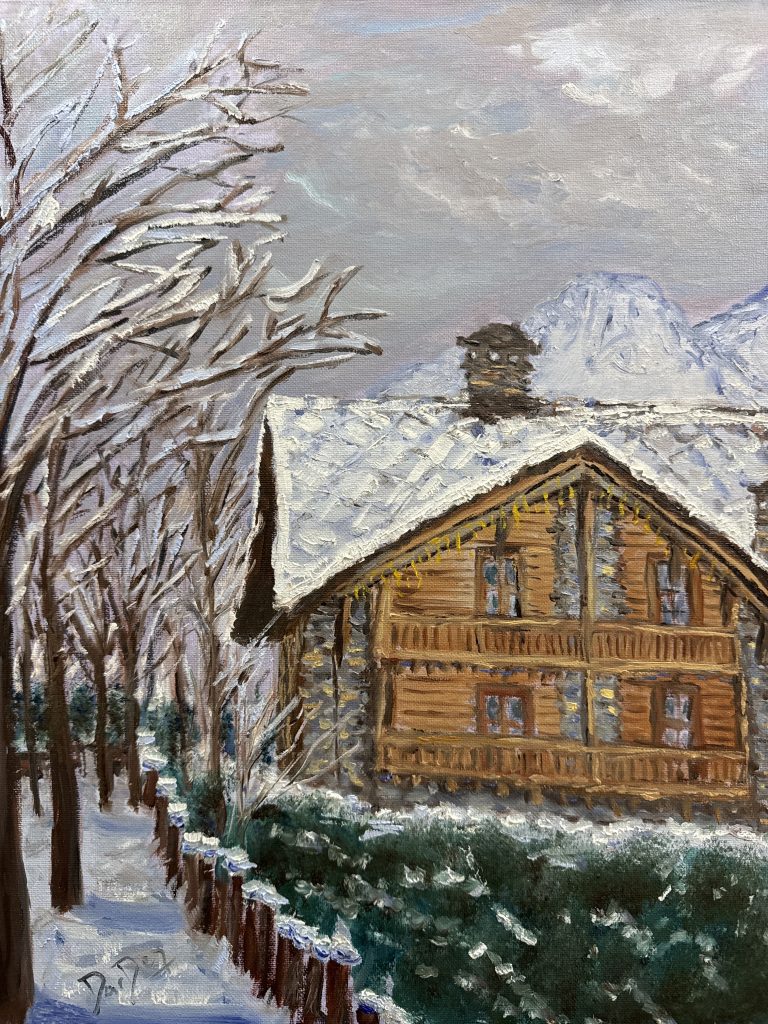
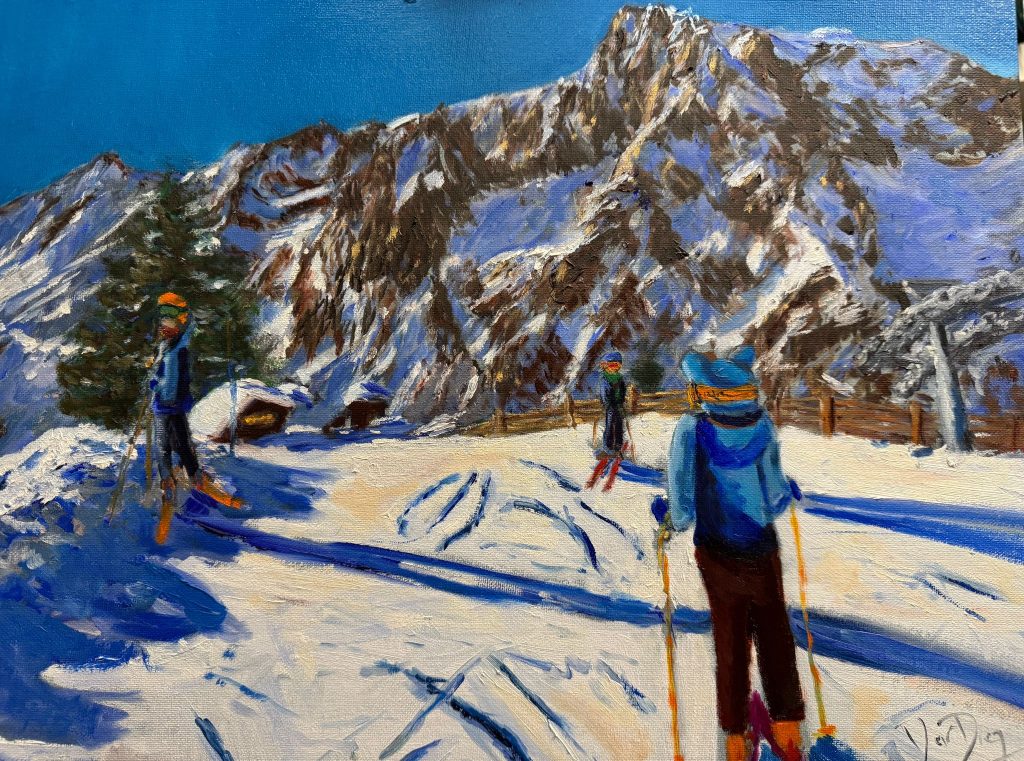
Check my Mountain Art on my Shop
You can go to my shop and see what have been inspiring me lately, lots mountain landscapes in soft pastels, and now in oils too. Go here to check my latest works!
Featured Image: A wind slab- photo: Avalanche.org.


Discover more from The-Ski-Guru
Subscribe to get the latest posts sent to your email.
 Subscribe to The-Ski-Guru here.