

Europe’s Summer 2026 Tourism Paradox: Record Demand, But a Weaker Season?
The European tourism sector is heading into the summer of 2026 with what appears, at first glance, to be a strong tailwind. Travel intent is at record levels, international demand remains resilient, and key destinations continue to attract global visitors. Yet beneath those headline figures, a more complex and uneven reality is emerging.
Early signals from Switzerland suggest that the season ahead may be far less robust than expected. According to Swissinfo, parts of the hotel sector are already reporting a slowdown in bookings, an increase in cancellations, and a shift towards last-minute reservations. The outlook has been described as “clearly clouded,” with operators pointing to geopolitical instability, particularly in the Middle East, as a factor disrupting travel flows and air connectivity.
This tension between strong demand and weakening booking quality is increasingly visible across Europe, and it reflects a broader structural shift in how travel demand is behaving in 2026.
High Demand, But Changing Behaviour
The headline figures remain positive. European travel sentiment is high, and the continent continues to benefit from its position as a safe and accessible destination. However, the nature of that demand is changing in ways that matter for operators.
Travellers are increasingly shortening their stays, reducing overall budgets, and delaying booking decisions. This last-minute behaviour introduces uncertainty for hotels and resorts that rely on forward visibility to manage pricing and staffing. It also creates a more volatile operating environment, particularly in destinations with a higher dependence on long-haul visitors.
This shift mirrors patterns already seen in the winter season, where strong overall skier numbers masked significant regional disparities and operational pressures. As explored in Global Skier Visits Hit Record 399 Million, demand can remain resilient at a macro level while still becoming more fragile at a local and operational level.
Switzerland and Austria: Exposure to Global Disruption
Switzerland provides one of the clearest early indicators of this dynamic. Its tourism sector is highly international, with a strong reliance on long-haul markets and air connectivity. When geopolitical tensions disrupt flight routes or alter traveller confidence, the impact is felt quickly.
Austria shares similar structural characteristics. While there is no single headline pointing to a difficult summer, its reliance on a mix of international and intra-European visitors makes it equally sensitive to shifts in travel patterns. In both countries, the challenge is not necessarily a collapse in demand, but a deterioration in its reliability and predictability.
This fits into a broader pattern seen across Alpine tourism, where external shocks—whether linked to transport, geopolitics, or climate—are increasingly shaping outcomes. The vulnerability of access and mobility is already evident in planning challenges such as those surrounding Milano-Cortina 2026: How to Travel Between Olympic Venues, where transport constraints become a critical factor under pressure.
France and Italy: Strong but Uneven
France and Italy continue to benefit from their scale and diversity. France, in particular, remains one of the world’s leading tourist destinations, with consistently strong visitor numbers and broad international appeal. However, even here, the picture is not uniform.
Domestic travellers are facing ongoing cost-of-living pressures, which is affecting spending patterns and travel frequency. Regional disparities are becoming more pronounced, with some areas performing strongly while others lag behind expectations. The result is a market that appears robust at the national level but increasingly uneven on the ground.
Italy shows a similar trend. Demand remains solid, especially in high-profile destinations, but operators are seeing greater price sensitivity and more selective booking behaviour. Travellers are still coming, but they are spending more carefully and making decisions later.
Spain and Andorra: Benefiting, But Not Immune
Spain presents one of the most interesting contrasts this summer. On one hand, it is benefiting from a redistribution of global travel flows. As some travellers avoid destinations affected by geopolitical tensions, Spain has seen increased interest as a stable alternative.
On the other hand, this does not automatically translate into stronger performance across the board. Growth is showing signs of slowing, and business expectations are becoming more cautious. Even in a “winner” market, the quality of demand is evolving in ways that challenge traditional models.
Andorra, with its strong reliance on regional visitors from Spain and France, may be less exposed to long-haul disruptions. However, it is more vulnerable to changes in consumer spending. If travellers shorten stays or reduce budgets, the impact is felt quickly in smaller, more concentrated markets.
A More Fragile Tourism Model
What is emerging across Europe is not a collapse in tourism demand, but a shift towards a more fragile and less predictable model. Demand remains high, but it is increasingly shaped by external factors and changing consumer behaviour.
This reflects a wider structural evolution already visible across mountain tourism, where climate variability, rising costs, and shifting demand patterns are forcing destinations to adapt. That longer-term pressure is explored in Snow Conditions in a Warming Alpine Climate, where changing conditions are not only affecting individual seasons, but the long-term viability of some destinations.
Conclusion: Strong Headlines, Weaker Reality
The summer of 2026 may still deliver strong overall numbers for European tourism. However, those figures are increasingly masking a more complex reality.
Behind the record demand lies a sector dealing with shorter stays, tighter budgets, last-minute bookings, and growing exposure to geopolitical disruption. Switzerland’s early warning signs are unlikely to be isolated. Instead, they may represent the leading edge of a broader shift affecting the entire European tourism landscape.
For destinations, operators, and policymakers, the challenge is no longer simply attracting visitors. It is managing a demand environment that is more volatile, less predictable, and increasingly shaped by forces beyond their control.
Sources
Swissinfo – Hotel sector expects difficult summer season
https://www.swissinfo.ch/eng/tourism-trends/hotel-sector-expects-difficult-summer-season/91304709
European Travel Commission – Summer 2026 travel sentiment
https://etc-corporate.org/news/european-travel-sentiment-reaches-record-high-for-summer-2026/
Reuters – Spain and Portugal tourism demand shifts
https://www.reuters.com/business/spain-portugal-flight-hotel-bookings-jump-tourists-avoid-middle-east-2026-04-15/
Reuters – Spain tourism slowdown expectations
https://www.reuters.com/markets/europe/spains-tourism-sector-expects-slowdown-summer-sales-2025-07-10/
Le Monde – France tourism performance
https://www.lemonde.fr/en/economy/article/2026/01/09/france-enjoys-another-banner-year-for-tourism-buoyed-by-campgrounds-and-international-visitors_6749233_19.html
Savills – European tourism outlook
https://www.savills.com/research_articles/255800/386301-0
 Planning your next trip to the Italian Alps?
 Planning your next trip to the Italian Alps?
If you’re heading to the Aosta Valley, take a look at Il Cuore della Valdigne, our family-owned apartment in Morgex, available for rent when we’re not using it ourselves.
It’s an ideal base to:
- Ski in Courmayeur, La Thuile and Pila
- Enjoy the mountains in summer (hiking, biking, nature)
- Explore the Mont Blanc valley in a quieter, more authentic setting.
 Ski in Courmayeur,
 Enjoy the mountains in summer (hiking, biking, nature)
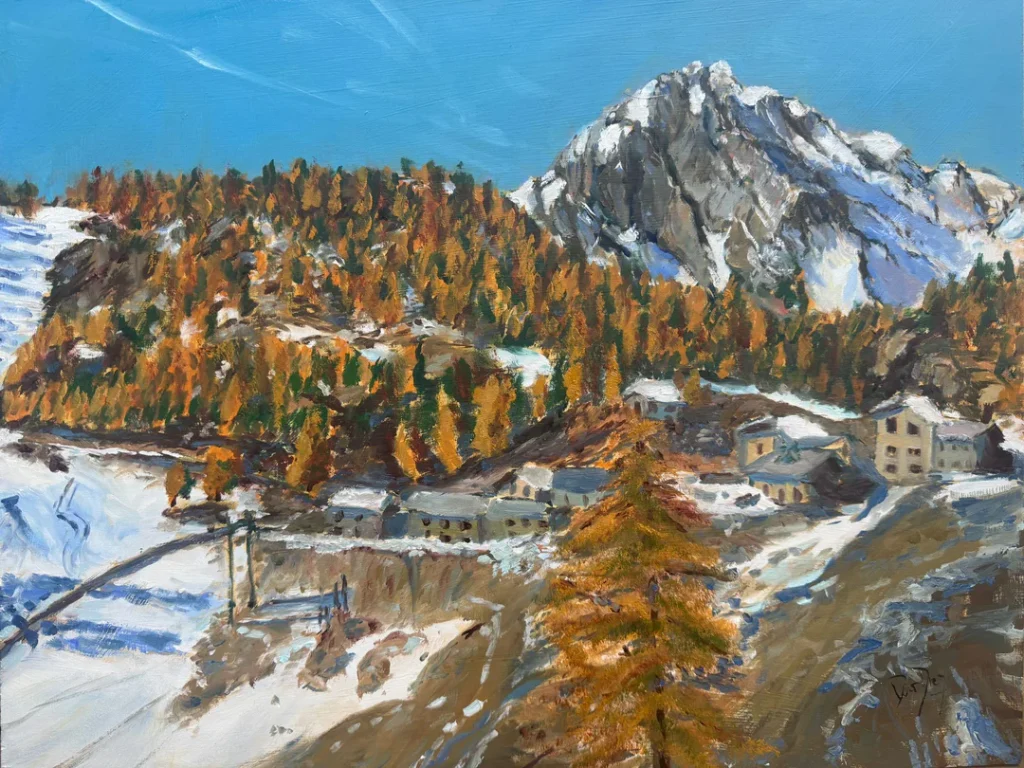
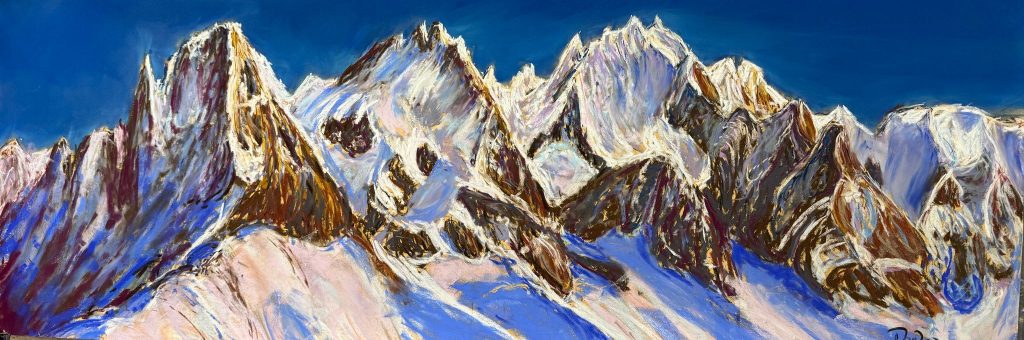
Check my Mountain Art on my Shop
You can go to my shop and see what have been inspiring me lately, lots mountain landscapes in soft pastels, and now in oils too. Go here to check my latest works!
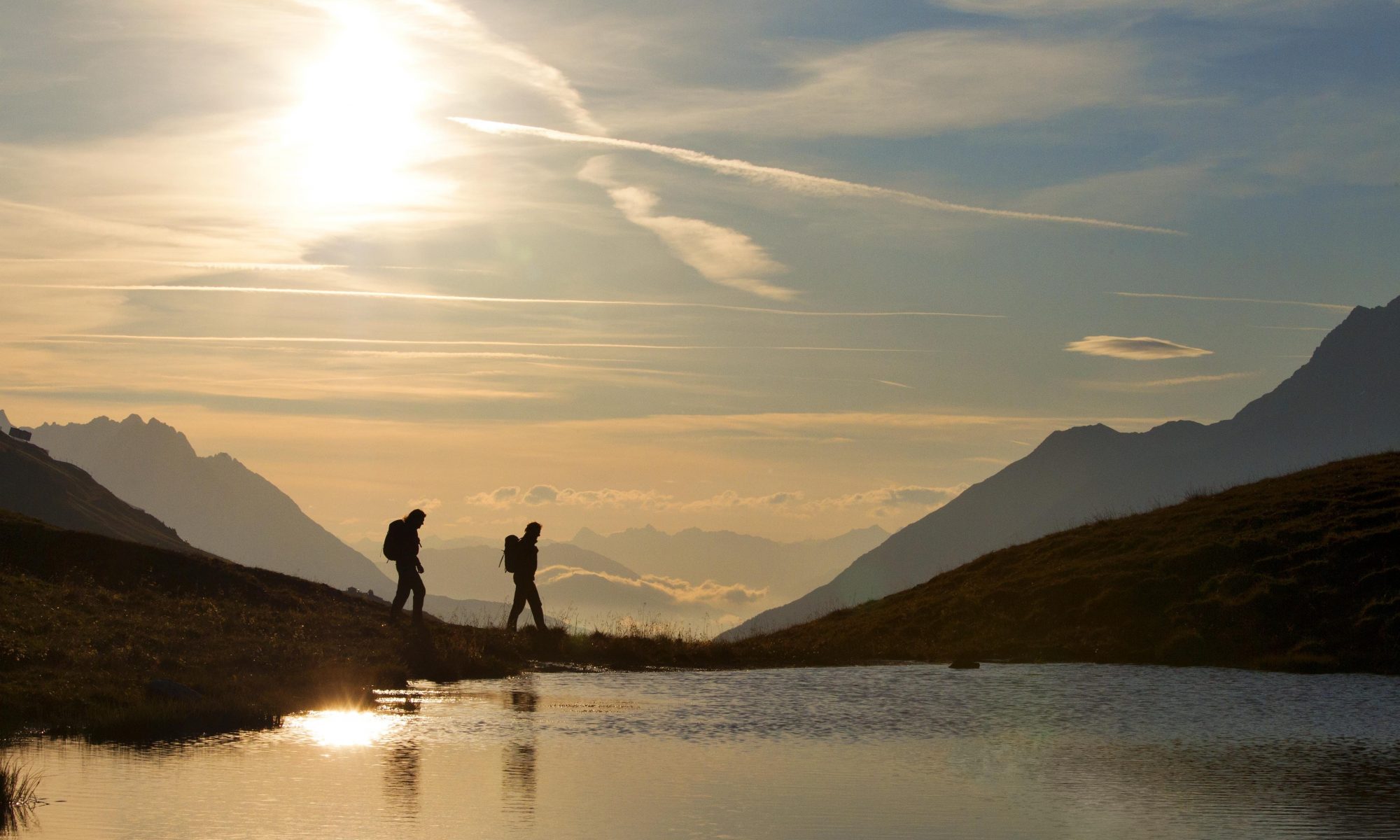
Featured Image: Hiking scene on Galzig near St. Anton, Lechtaler Alps, Tyrol, Austria. Photo: St Anton Tourism Office.


Discover more from The-Ski-Guru
Subscribe to get the latest posts sent to your email.
 Subscribe to The-Ski-Guru here.
You must be logged in to post a comment.