

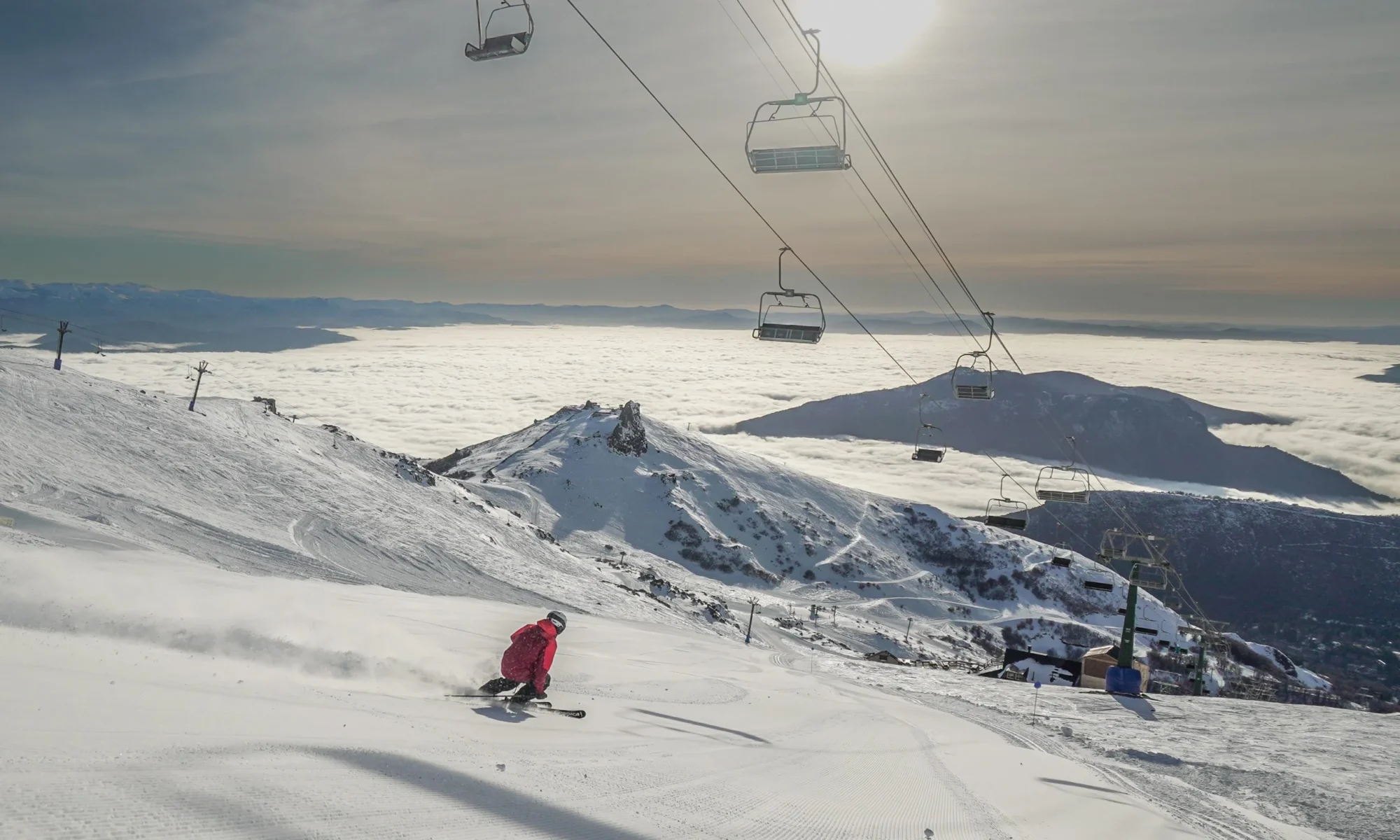
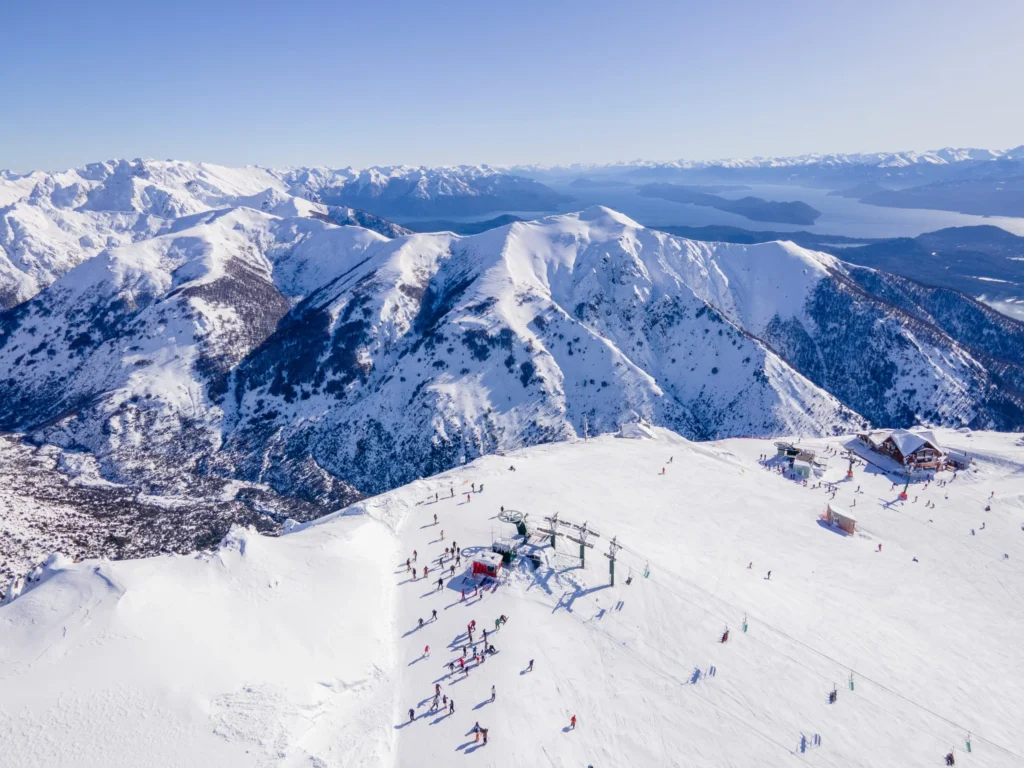
Bariloche is rapidly evolving into a year-round destination while remaining South America’s leading ski resort. Set on the shores of Lake Nahuel Huapi and surrounded by the Patagonian Andes, the city is home to Cerro Catedral, Argentina’s largest ski resort and one of the biggest in the Southern Hemisphere.
Every winter, thousands of Argentine, Brazilian, Chilean and international visitors head to Bariloche for its combination of skiing, spectacular scenery and alpine atmosphere.
Yet today, the city is pursuing a broader vision.
Rather than depending solely on winter, Bariloche is steadily evolving into a year-round mountain destination, combining skiing with hiking, trail running, mountain biking, lake activities, gastronomy, business events and international sporting competitions.
It is a strategy increasingly seen across mountain destinations worldwide. Resorts from the Alps to North America are investing in experiences that attract visitors throughout the year while strengthening winter operations through improved infrastructure and snowmaking.
Bariloche is following the same path.
Why Bariloche Is A Year-Round Destination
Located inside Nahuel Huapi National Park, Bariloche is often described as the gateway to Argentina’s Lake District and northern Patagonia.
Unlike many ski towns that were built primarily around a single mountain, Bariloche has developed into a fully-fledged tourism city with an international airport, hundreds of hotels, restaurants, chocolate shops, adventure operators and one of South America’s most diversified outdoor tourism economies.
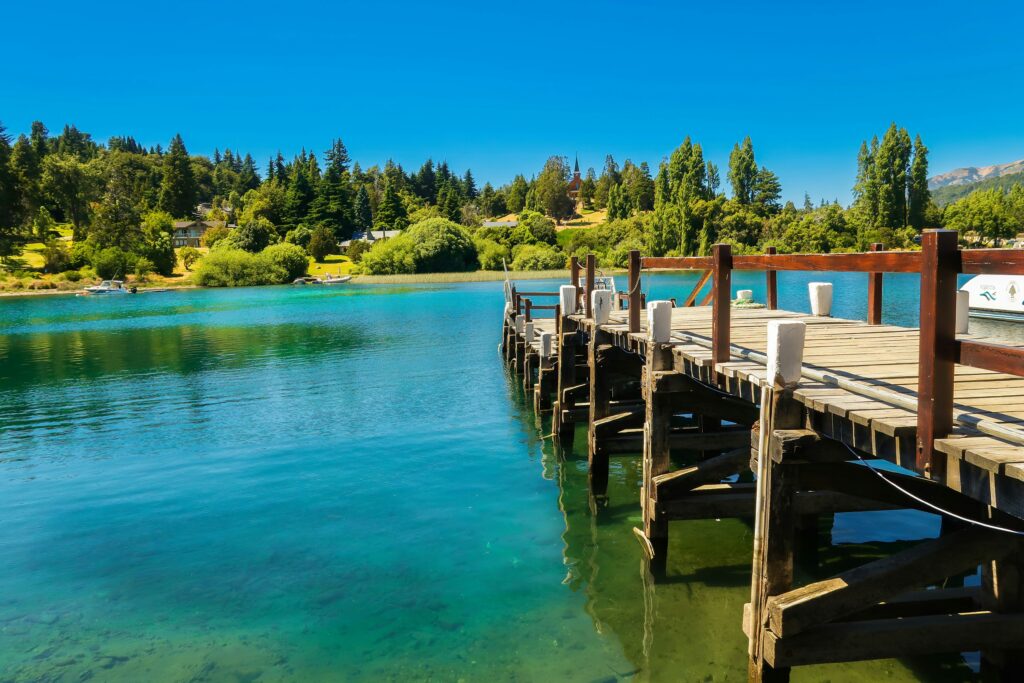
Its spectacular natural setting allows visitors to enjoy skiing during winter, while spring, summer and autumn bring hiking, mountain biking, kayaking, sailing, fishing, climbing and countless excursions across the surrounding lakes and mountains.
The famous Cruce Andino (Crossing of the Lakes) linking Argentina and Chile also departs from Bariloche, making it one of Patagonia’s classic travel experiences.
A City Built Around The Lake
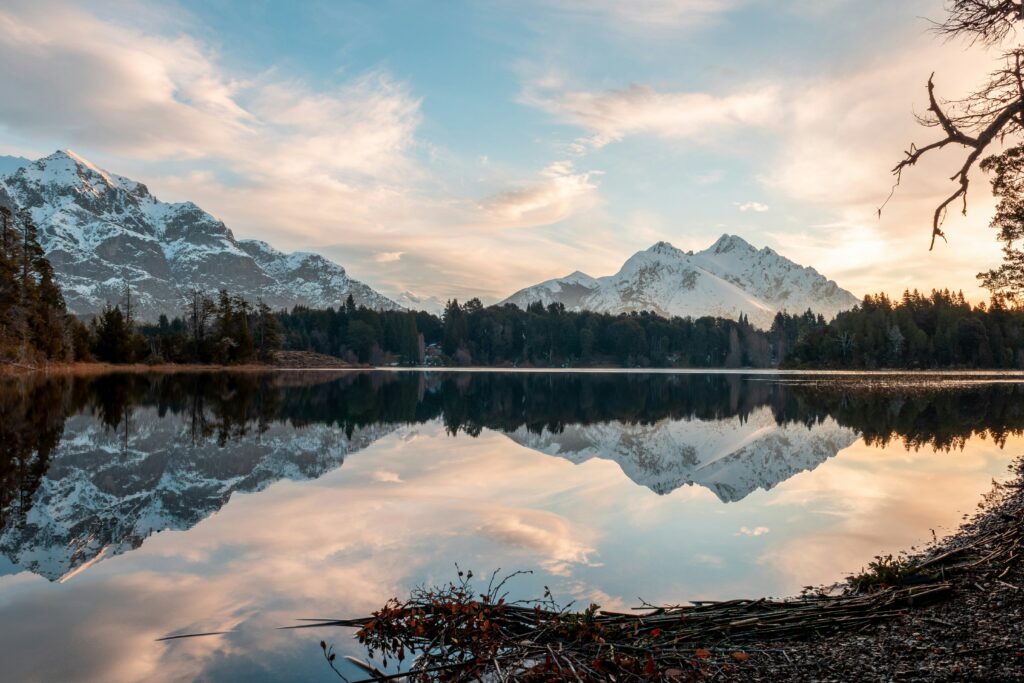
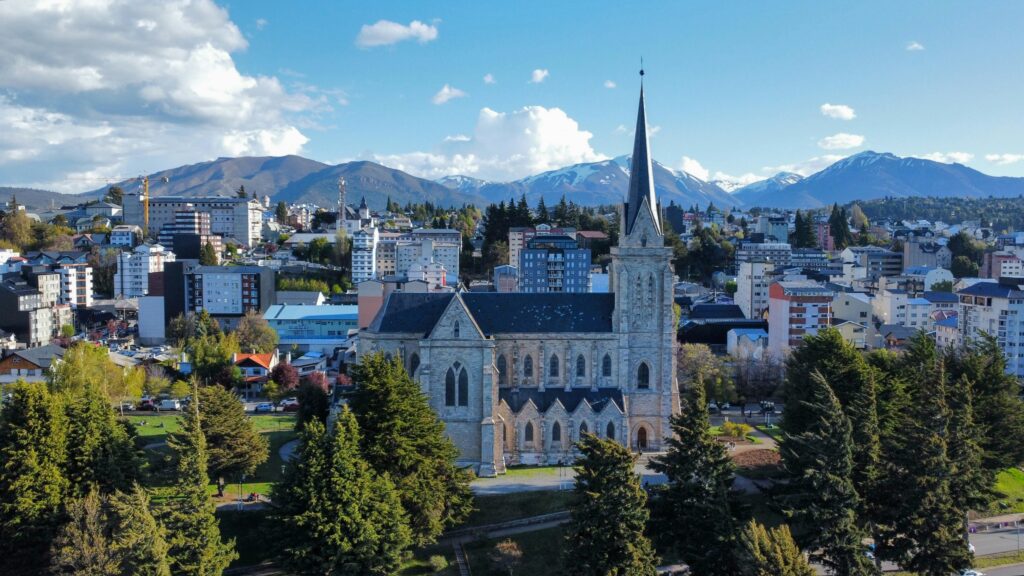
One of Bariloche’s defining characteristics is its unusual layout.
Rather than being concentrated around a compact historic centre, the city extends westwards for approximately 25 kilometres along Avenida Exequiel Bustillo, following the northern shoreline of Lake Nahuel Huapi.
This scenic lakeside road links many of Bariloche’s best-known hotels, beaches, viewpoints and restaurants before reaching the iconic Llao Llao Hotel & Resort at kilometre 25.
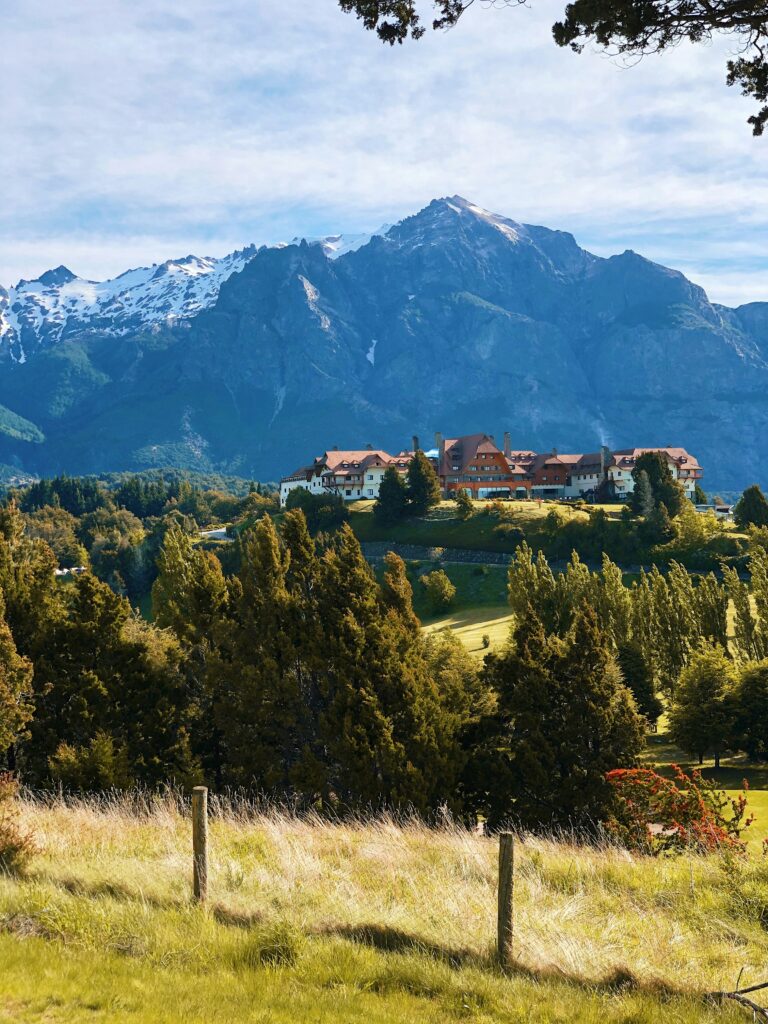
Around kilometre 11.3, a junction with Provincial Route 82 climbs south towards Villa Catedral, the mountain village at the base of Cerro Catedral and the gateway to Argentina’s largest ski area.
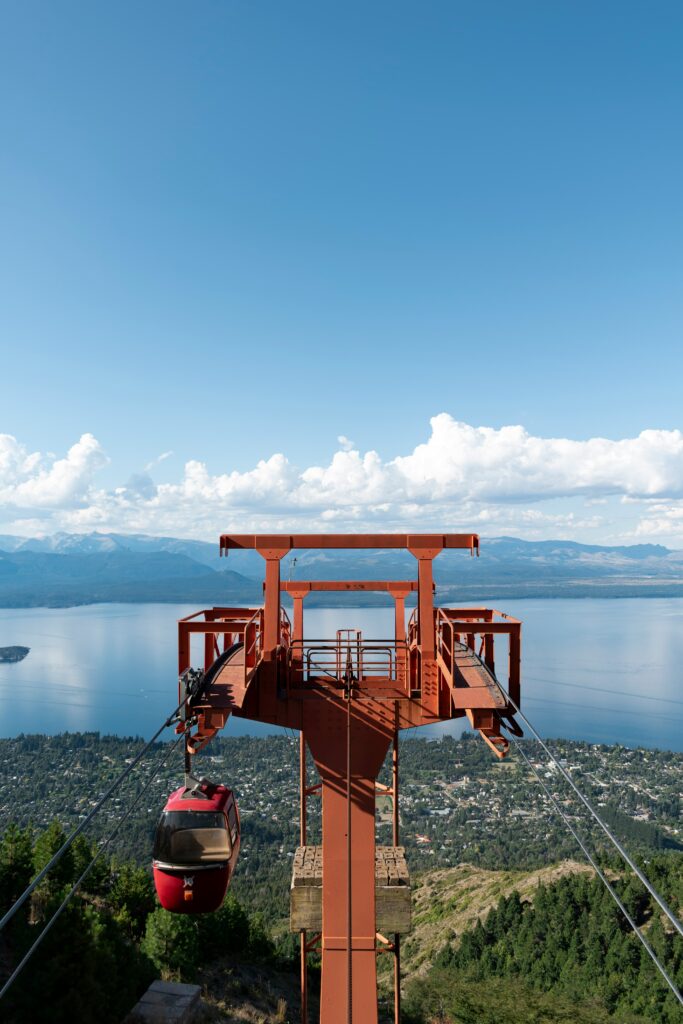
Continuing along Bustillo, visitors can also reach the cable car to Cerro Otto, one of the city’s classic panoramic attractions. While Cerro Otto offers snow activities during winter and spectacular views from its famous revolving café, it is primarily a sightseeing destination rather than a downhill ski resort.
Running higher up the mountainside is Avenida de los Pioneros, known locally as El Faldeo. Parallel to Bustillo, it has grown significantly over recent decades with boutique hotels, holiday homes and residential neighbourhoods overlooking the lake.
Together, these two corridors illustrate how Bariloche has evolved from a lakeside alpine town into one of South America’s largest and most diverse mountain tourism destinations.
Cerro Catedral Remains The Heart Of Winter
Despite the city’s increasing diversification, skiing remains at the centre of Bariloche’s tourism economy.
Cerro Catedral offers more than 120 kilometres of ski terrain served by one of the largest lift systems in South America, attracting everyone from beginners to expert skiers and snowboarders.
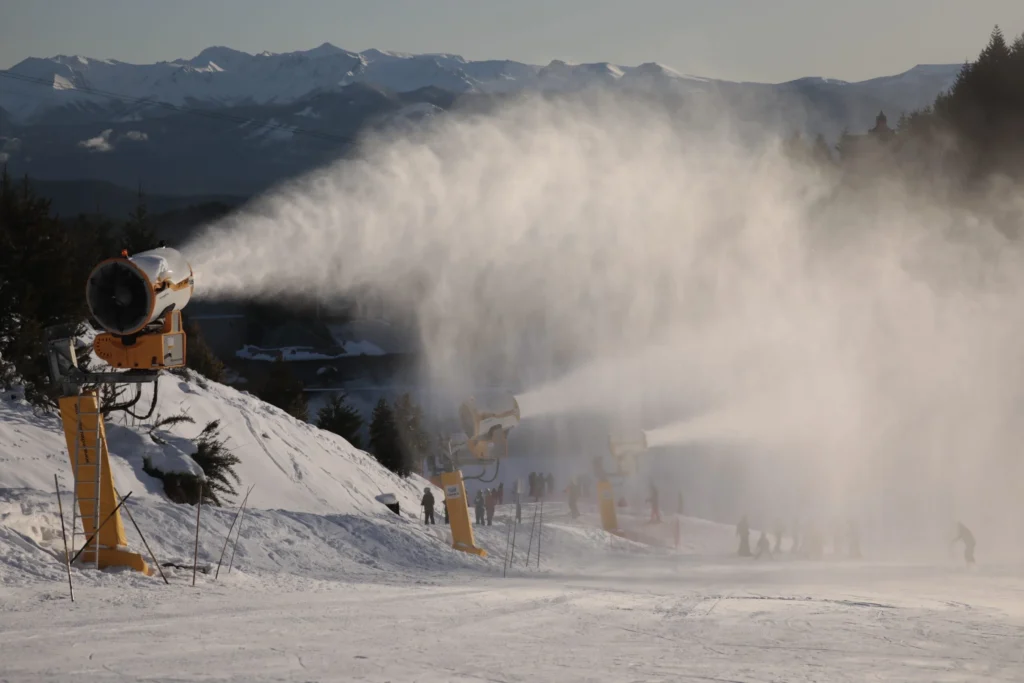
As preparations continue for the 2026 winter season, the resort has once again activated its snowmaking system whenever temperatures allow, reinforcing key areas before opening.
Like many leading ski resorts around the world, Cerro Catedral is increasingly relying on technical snow production to improve early-season reliability and maintain high-traffic pistes throughout the season.
Natural snowfall will always remain essential in Patagonia, but snowmaking has become an increasingly important operational tool as mountain destinations adapt to more variable winter weather.
Across Europe and North America, investment in snowmaking has become one of the most significant infrastructure trends in the ski industry over the past two decades. Patagonia is now following the same direction.
Importantly, snowmaking is not intended to replace natural snowfall. Instead, it creates a durable base on strategic slopes, improves connections between lifts and helps resorts deliver a more reliable experience during marginal snow conditions.
For destinations where winter tourism supports thousands of local jobs, improving operational resilience has become as important as expanding lift infrastructure.
How Bariloche Became A Year-Round Destination
At the same time, Bariloche is making a clear effort to ensure that visitors have reasons to travel outside the winter months.
Rather than relying exclusively on snow, local tourism organisations are promoting outdoor recreation, international sporting events, gastronomy, lake activities and business tourism throughout the year.
This approach mirrors the evolution of destinations such as Chamonix, Whistler, Queenstown and many Alpine resorts, where skiing remains fundamental but is now only one part of a much broader tourism economy.
For Bariloche, the objective is not to replace winter.
It is to make the city just as attractive during spring, summer and autumn as it already is when the ski lifts begin turning.
International Events Are Expanding Bariloche’s Global Profile
One of the clearest signs of Bariloche’s evolution is the growing importance of international events.
Among them, the arrival of Patagonia Bariloche by UTMB is particularly significant.
The UTMB World Series, inspired by the legendary Ultra-Trail du Mont-Blanc in Chamonix, has become one of the world’s most prestigious trail running circuits. By joining the series, Bariloche has placed itself alongside some of the most recognised mountain destinations on the planet.
The Patagonian event takes runners through spectacular landscapes including Cerro Catedral, Cerro Otto, Refugio Frey and sections of Nahuel Huapi National Park, showcasing scenery that many international visitors have never experienced before.
Beyond the sporting challenge itself, the event plays an important strategic role.
Held in November, it attracts thousands of athletes, families and spectators during a period that traditionally sits between the winter ski season and the peak summer holidays. Hotels, restaurants, guides and local businesses all benefit from increased visitor numbers during what was once considered part of the shoulder season.
For mountain destinations around the world, events have become an increasingly important way of extending tourism beyond winter, and Bariloche is following that successful model.
Business Tourism Adds Another Dimension
While skiing and outdoor recreation dominate Bariloche’s international image, business tourism has been part of the city’s economy for decades.
The combination of a major international airport, extensive hotel capacity and exceptional natural surroundings has long made Bariloche an attractive destination for conferences, incentive travel and corporate meetings.
Many of the city’s largest hotels, including the iconic Llao Llao Hotel & Resort, already offer conference and event facilities.
Rather than creating a new sector, tourism organisations such as EMPROTUR and the Bariloche Bureau are strengthening international promotion to increase meetings and events during the quieter months of the year.
For destinations that depend heavily on seasonal tourism, filling hotel rooms in April, May, September, October and November helps create a more stable local economy while making better use of existing tourism infrastructure.
A Strategy Shared By Mountain Destinations Worldwide
Bariloche’s evolution is not unique.
Across Europe and North America, many leading mountain destinations have adopted remarkably similar strategies over the past decade.
Resorts continue investing in lift infrastructure and snowmaking while simultaneously expanding hiking, mountain biking, trail running, gastronomy, wellness, cultural festivals and international sporting events.
Rather than replacing skiing, these activities complement it.
The objective is simple: reduce dependence on a single season while creating a more resilient mountain economy.
Bariloche’s combination of skiing, lakes, forests, national parks and outdoor recreation places it in a particularly strong position to follow this international trend.
Looking Ahead
Winter will always remain at the heart of Bariloche’s identity.
Cerro Catedral continues to be Argentina’s flagship ski resort and one of the largest winter sports destinations in the Southern Hemisphere.
However, the city’s future is increasingly being shaped by much more than skiing alone.
Investment in snowmaking is helping improve operational reliability during increasingly variable winters. International events such as Patagonia Bariloche by UTMB are attracting new audiences outside the traditional ski season. Outdoor recreation continues expanding across every season, while established business tourism provides another important source of year-round visitors.
Together, these initiatives demonstrate that Bariloche is not abandoning its winter heritage.
Instead, it is strengthening it while building a broader tourism economy capable of welcoming visitors throughout the year.
Like Chamonix, Whistler, Queenstown and many Alpine destinations before it, Bariloche is proving that the future of mountain tourism is no longer defined by one season alone.
Read More
If you enjoyed this article, you may also like:
- Climate & Snow Conditions
- Climate Change & Mountains
- Mountain Infrastructure Risk
- Ski Industry News
- What Is A Glacial Lake Outburst Flood?
- Why Ski Resorts Close Terrain After Heavy Snowfall
- Understanding Avalanche Danger Levels
- Avalanche Control On Ski Slopes
Sources
- Catedral Alta Patagonia – https://catedralaltapatagonia.com/
- Patagonia Bariloche by UTMB – https://bariloche.utmb.world/
- UTMB World Series – https://utmb.world/
- EMPROTUR Bariloche – https://barilocheturismo.gob.ar/
- Bariloche Bureau – https://barilocheturismo.gob.ar/es/turismo-corporativo
- Río Negro Tourism – https://turismo.rionegro.gov.ar/
- DailyWeb – https://dailyweb.com.ar/noticias/val/54816/anunciaron-nuevas-obras-y-servicios-en-san-carlos-de-bariloche.html
FAQ
Why is Bariloche considered Argentina’s top mountain destination?
Bariloche combines Argentina’s largest ski resort, Cerro Catedral, with Nahuel Huapi National Park, Lake Nahuel Huapi and year-round outdoor activities, making it the country’s leading mountain tourism destination.
What is Patagonia Bariloche by UTMB?
It is part of the UTMB World Series, bringing one of the world’s most prestigious trail running circuits to Patagonia and helping attract international visitors outside the winter season.
Does Cerro Catedral use snowmaking?
Yes. Cerro Catedral operates a snowmaking system that helps improve snow coverage on strategic pistes whenever temperatures are low enough, complementing natural snowfall.
Is Bariloche only worth visiting in winter?
No. Visitors come throughout the year for hiking, mountain biking, lake cruises, fishing, kayaking, gastronomy, conferences, scenic drives and adventure tourism.


Discover more from The-Ski-Guru
Subscribe to get the latest posts sent to your email.
 Subscribe to The-Ski-Guru here.
You must be logged in to post a comment.