

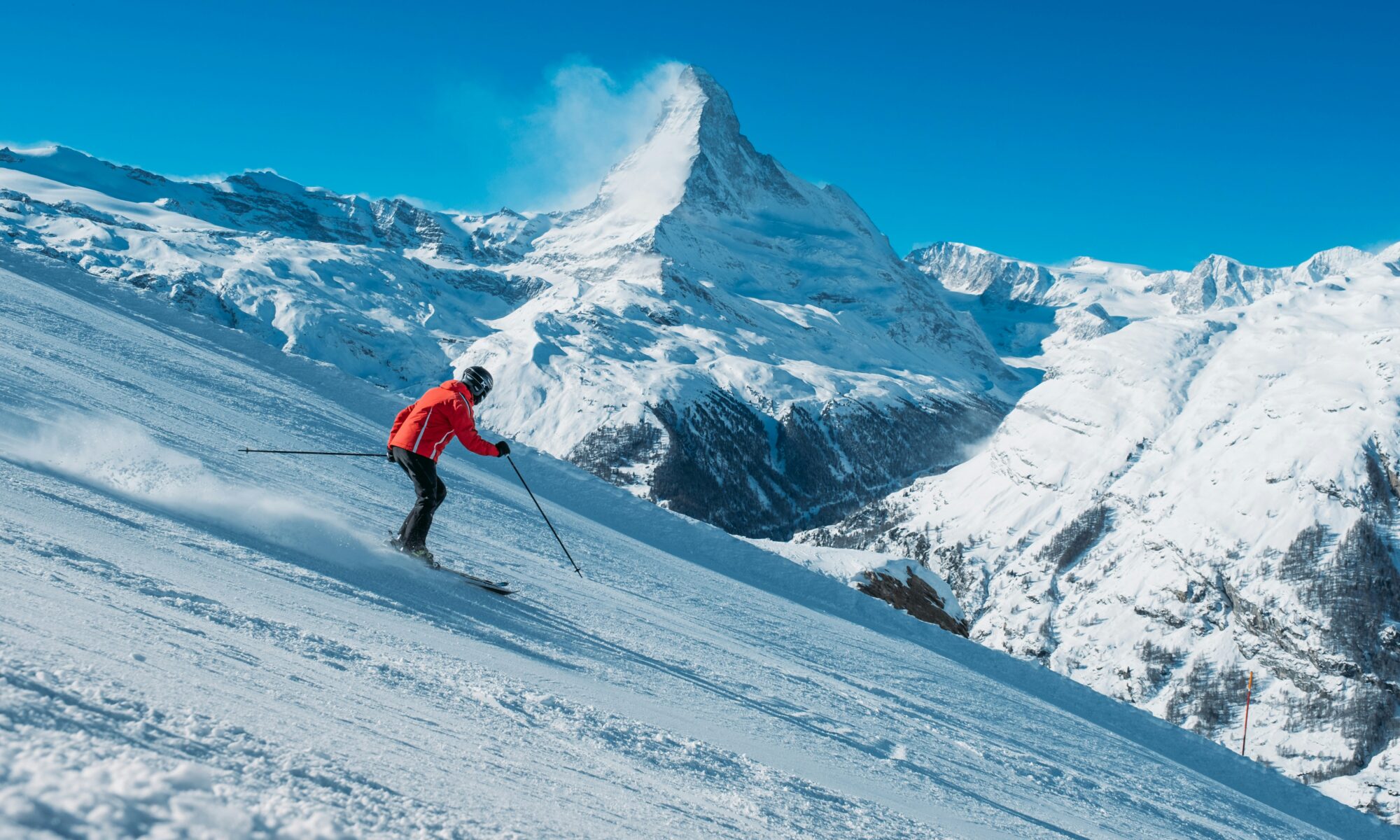
A fall on a marked ski run can leave you with more than an injury. Depending on where you are skiing, you may also receive bills for ski patrol, evacuation by sledge, a helicopter, an ambulance and medical treatment.
There is no single system across the Alps and Pyrenees. Nor does a country’s approach to summer mountain rescue necessarily tell you what happens on its winter pistes.
Our summer mountain rescue guide explains the hiking and mountaineering picture. This winter guide looks at the distinctions skiers and snowboarders need to understand.
Information checked on 4 November 2026. Prices are examples published by the named operators, not national tariffs. Insurance examples explain differences in cover; availability, eligibility and the contract supplied at purchase must be checked.
One accident can involve several separate services
Before comparing countries, separate these stages:
- Search and technical rescue: finding you and reaching you in difficult terrain.
- Piste evacuation: bringing you down by rescue sledge, snowmobile or another means.
- Medical transport: moving you by ambulance or helicopter to appropriate treatment.
- Healthcare: consultations, scans, surgery and hospital care.
- Repatriation: bringing you home when medically necessary.
A policy or public healthcare entitlement covering one stage does not automatically cover the rest.
France: piste rescue can be charged, including some off-piste terrain
France’s reputation for publicly funded mountain rescue needs an important winter qualification.
Municipalities organise rescue within ski areas and can recover the cost from those rescued. Tignes’ official explanation specifically includes both pistes and off-piste terrain accessible by gravity from the top of the lifts.
Consequently, leaving a marked run does not automatically put you into a free State rescue system.
Rescue undertaken by State services beyond the ski area generally follows the public rescue model. However, the organisation of the operation and any medical or onward transport charges still matter.
There is no single national piste rescue price. Municipalities set their own tariffs, which depend on location and resources.
As an illustration, Courchevel’s published 2025/26 schedule lists €232 at the snow front, €427 in a nearby zone, €629 in a distant zone and €1,090 for off-piste evacuation. It also lists helicopter time at €85 per minute and additional charges.
These are dated examples, not confirmed 2026/27 prices.
Insurance bought with a French ski pass
Participating resorts sell short-term snow-sports insurance. Carré Neige, for example, currently advertises €3.50 per day and includes accidents in the ski area, including off-piste terrain accessible from the lifts. Its published offer has a €50,000 overall ceiling and a €50 excess, subject to individual benefit limits. Proof of cover is needed for the advertised direct settlement of rescue costs.
Do not confuse it with the FFS Licence Carte Neige: the licence includes liability and legal recourse cover, while additional insurance options provide rescue and other benefits. FFS states that its supplementary cover can include off-piste skiing, subject to the chosen contract. Neither name means unrestricted cover for every mountain activity.
For details: Carré Neige terms and benefit table, territory and activity FAQ, FFS insurance options and covered activities.
Sources: Tignes municipality, Courchevel municipality, ANMSM legal guidance.
Italy: resort fees and regional helicopter rules are different questions
Italy cannot be reduced to one nationwide rescue tariff.
For mountain emergency operations, CNSAS explains that it works within the public emergency system. It does not itself decide or collect regional cost-sharing charges: those depend on regional or provincial rules and the relevant health authorities.
On the pistes, a resort may also charge for its own rescue service.
La Thuile currently publishes a €200 piste rescue fee, with additional costs when outside personnel or vehicles are required. Its website also makes clear that rescue on the French side of Espace San Bernardo is handled separately by La Rosière.
That is a useful reminder for cross-border skiing: a linked ski area does not have one rescue billing system.
Regional helicopter rules need separate attention. Trentino’s health authority, for example, publishes different charges for medically necessary missions, people recovered uninjured from a dangerous environment, and entirely inappropriate call-outs.
A further distinction concerns insurance. La Thuile reminds skiers of Italy’s third-party liability insurance requirement. Liability cover and cover for your own rescue are different benefits: check both.
Optional cover in the Aosta Valley
La Thuile and Pila offer Snowcare with the ski pass; Skilife also provides an insurance option for Teleskipass customers. La Thuile and Pila currently list €3.50 per adult per day and €1.50 for children under eight.
The Axeria Snowcare Platinum contract currently linked from the Valle d’Aosta document selector (October 2025 edition) lists Italian rescue limits of €275 by sledge and €5,000 by helicopter. It also contemplates injured off-piste skiers in Italy when the public emergency service, SSUEM, is requested and attends on a chargeable basis.
A valid pass and the required rescue intervention are essential. Gross negligence, breaches of law and avalanches are among the exclusions. This is not blanket cover for freeriding or every search without injury. Check the specific policy issued to you, particularly for older products or cross-border skiing.
For details: La Thuile insurance, Pila insurance, Teleskipass insurance and Valle d’Aosta policy documents.
Sources: CNSAS clarification, La Thuile slope rescue, Trentino helicopter rescue charges.
Austria: expect rescue charges unless suitable insurance responds
Austria is a country where skiers should pay particular attention to rescue cover.
The European Consumer Centre Austria explains that mountain accidents during leisure activities are an exception to the usual arrangements for medically necessary air transport. Public insurance may contribute in qualifying cases, but that does not mean it pays the full mountain rescue bill.
Piste services can have their own charges, too.
Sölden’s published information lists €250 for rescue and medical assistance by the piste rescue service without its slope rescue card. Red Cross transport and helicopter charges are additional.
Its optional card has defined conditions: it applies within the secured ski areas of Sölden and Gurgl during regular ski operations. Red Cross transport is excluded, while helicopter cover is subject to the stated subsidiary conditions.
This example shows why a local rescue product needs to be read carefully alongside a travel policy. It is not a substitute for checking medical treatment and repatriation cover.
Sölden currently prices its optional rescue card at €4 per person per ski day. Its geographical and operating-hour restrictions matter: a piste rescue card should not be treated as unrestricted backcountry insurance.
Another route is association-based rescue insurance. For example, Bergrettung Vorarlberg publishes search and ground/air rescue protection up to €25,000, including piste assistance; repatriation is excluded. These arrangements vary by organisation and are not a single Austrian national policy.
For details: Vorarlberg rescue insurance and conditions.
Sources: European Consumer Centre Austria, Sölden slope rescue card and charges.
Switzerland: the rescued person or their insurer normally pays
Rega states that the rescued person or their insurer generally pays for a mission.
Its published average for a Rega helicopter operation is around CHF4,500, excluding additional specialists such as mountain rescuers. Complex searches and avalanche operations can cost substantially more.
That average is an illustration, not a fixed Swiss helicopter tariff or a quote for an individual accident.
Rega patronage also needs a precise explanation. Rega can waive eligible uncovered costs under its patronage conditions, but it is not an insurance company and the contribution does not create a contractual entitlement equivalent to an insurance policy.
Visitors should check their own policy rather than applying Swiss residents’ health or accident insurance benefits to themselves.
Swiss ski-pass insurance: check which product you are buying
Some Swiss resorts sell cover alongside the pass. The distinction between a refund product and rescue insurance is crucial.
At Zermatt, ticket insurance is included with one-day and multi-day passes from winter 2026/27, but this concerns ticket refunds. Optional SnowAssist Plus, listed at CHF5 per day, adds benefits for accidents on the slopes, including search, rescue and ambulance/helicopter transport. Do not infer unrestricted off-piste cover from the product summary.
Another example is skiCare. Its linked contract provides up to CHF350 for resort rescue, CHF1,000 for ambulance transport and CHF2,000 for helicopter transport to a Swiss hospital. The combined ceiling for those benefits and emergency medical costs is CHF6,000.
The skiCare contract is subsidiary to existing insurance, applies to the pass-linked ski area and covers open slopes, including resort-authorised off-piste areas. General off-piste skiing and ski mountaineering are excluded; helicopter transport abroad is excluded. Claims must be notified within ten days. The linked PassProtect contract is a refund product, not equivalent rescue cover. The contract is more useful than the website’s loosely formatted product comparison.
For details: Zermatt insurance and linked conditions, skiCare information and skiCare/PassProtect contract.
Source: Rega patronage, invoices and rescue costs.
Germany: distinguish medical rescue from other mountain assistance
In Bavaria, mountain rescue services levy charges under the regional rescue framework.
Bergwacht Bayern explains that emergency operation fees are agreed with statutory health insurers. Special operations without a medical service follow a different charging arrangement.
The practical distinction is between an operation involving medical necessity and assistance such as a search or recovery from difficulty without an injury.
Bavaria’s rescue billing service advises people receiving a Bergwacht invoice to submit it to their insurer. Depending on the circumstances, including subsequent medical treatment, costs may be covered.
For visitors, the presence of a public rescue service is therefore not enough to establish who ultimately pays. Check mountain search and rescue benefits as well as healthcare entitlements.
German association insurance
DSV aktiv offers membership packages that include rescue costs, including helicopter operations. Benefits vary by package; some medical benefits are hospital daily allowances rather than comprehensive overseas medical expense cover. Check residence eligibility and the chosen package’s terms.
DAV membership includes its Alpine Safety Service, with search and rescue cover up to €50,000 for covered mountain emergencies. Listed activities include skiing, snowboarding and ski touring. Gross negligence and certain competitions are excluded, and other insurance benefits must be claimed first. Package holidays outside Europe have additional restrictions.
These are examples of membership-based cover, not insurance automatically included in a German lift pass.
For details: DSV packages and eligibility and DAV cover, exclusions and full conditions.
Sources: Bergwacht Bayern financing information, January 2026, Bavarian rescue billing FAQ.
Liechtenstein: Rescue Charges at Malbun Ski Resort
Malbun’s published terms state that rescue services are charged for personnel, equipment and third-party expenses.
Ambulance transport is invoiced separately, and third-party costs, including Rega, must be paid by the customer, who is responsible for claiming any reimbursement from their insurer.
The terms also specify that searches, rescues or restarting lifts after the final piste patrol or operating hours are at the responsible person’s expense.
Source: Bergbahnen Malbun terms, sections 4.1–4.2.
Slovenia: public mountain rescue and resort services need separate checks
Slovenia operates a public mountain rescue service through GRZS. Its official emergency guidance directs people to 112.
The country also regulates rescue provision on ski slopes separately, including the operator’s rescue planning and arrangements for handing patients over to medical services.
For a winter holiday, check the particular resort’s piste evacuation arrangements and your healthcare and insurance cover. A statement about public mountain rescue should not be expanded into a promise that every resort service, treatment or journey home is free.
Sources: Slovenian government: rescue organisations, GRZS emergency guidance, Slovenian government: ski slope safety.
Spain: public mountain rescue and resort charges are separate systems
Spain also needs more than a simple “free” or “paid” label.
Guardia Civil mountain rescue is described as a public, universal service without a rescue fee. Regional services can operate under different charging provisions.
In Catalonia, charges can be sought in defined circumstances involving matters such as inadequate equipment, a dangerous or prohibited area, or an objectively unjustified request. Recent reporting quoting the Bombers stresses that charging remains exceptional and that fear of a bill can lead people to delay calling.
Within ski resorts, separate rescue and medical charges can apply.
Candanchú’s published Ski Pirineos conditions explain that its optional product covers specified rescue and urgent medical services on open pistes. Without the relevant cover, or in excluded terrain such as closed pistes or off-piste areas, the casualty can be billed for the service provided.
Do not assume that the public mountain rescue model pays a resort clinic or piste evacuation bill.
Sources: Guardia Civil explanation reported by 20 Minutos, 3Cat reporting with Bombers comments, October 2026, Candanchú insurance conditions.
Andorra: resort insurance has defined boundaries
Grandvalira’s current pass information says insurance must be purchased before the pass is first used; it cannot be added afterwards. Its official 2026/27 contract includes piste rescue and specified medical benefits, with an emergency medical expenses ceiling of €3,000 and mountain search within the resort up to €9,000.
The contract names freeride and ski mountaineering among covered amateur activities within the resort and authorised by the relevant pass. Outside the ski area, an exception applies to activities organised by the resort with an accredited instructor or guide on specified routes. Closed areas and unauthorised out-of-hours activity are excluded.
Helicopter cover has its own condition concerning the lack of another available means of rescue transport. Benefits cease when the insured returns home or enters a healthcare facility in their country of residence. This is first emergency assistance, not comprehensive ongoing treatment cover.
These terms should not be generalised to every Andorran resort or independent backcountry outing.
For details: Grandvalira purchase requirements and official 2026/27 insurance contract.
Does GHIC or EHIC cover ski rescue?
The UK government’s winter sports guidance says an EHIC or GHIC is not a replacement for travel insurance. It does not cover private healthcare, mountain rescue in ski resorts or being flown home.
Eligible public healthcare is a separate matter, provided under the applicable arrangements. Do not treat a healthcare card as proof that a piste evacuation or helicopter invoice will be paid.
Source: UK government winter sports guidance.
What should you check before skiing?
Ask your insurer to confirm the benefits relevant to your trip:
- Piste rescue and evacuation, including helicopter use where necessary.
- Search and rescue when you are stranded or lost without an injury.
- Off-piste skiing, including any guide requirements or terrain restrictions.
- Ski touring, snowshoeing and other activities you intend to do.
- Medical treatment, ambulance transport and repatriation.
- Third-party liability.
- Limits, excesses, territorial conditions and exclusions.
If you buy cover with a lift pass, check when it begins, where it applies and whether it provides direct settlement or requires you to pay and claim.
For a cross-border ski area, check every country you plan to enter.
Location devices do not pay rescue bills
LifePass, available at La Thuile, combines a ski pass, location functions and an SOS button to alert patrol. The manufacturer explicitly says it is designed for resort and on-piste use, not off-piste use. It is a location aid, not an avalanche transceiver or an insurance policy.
For avalanche terrain, the separate companion-rescue equipment is a transceiver, probe and shovel, together with the knowledge to use them. RECCO reflectors are another distinct technology, used by professional rescuers; RECCO says they do not replace a transceiver.
For details: LifePass operating limits and RECCO’s explanation of the difference.
In an emergency, call promptly
If someone needs rescue, contact the resort patrol or emergency services promptly. Provide the piste name or number, nearby marker, location and the casualty’s condition.
Insurance enquiries should not delay a necessary emergency call.
Read More
- Who Pays for a Mountain Rescue in the Alps? Summer Guide
- Winter Tyres and Snow Chains in the Alps and Pyrenees
- Ski Slope Overcrowding and Safety
Scope and source notes
This guide covers the Alpine and Pyrenean countries listed above, not every ski destination worldwide. Resort products are examples, not recommendations or a complete insurance-market comparison. The contracts linked in each section give the full benefits, conditions and exclusions. Always use the version supplied with your purchase.
Slovenia’s official sources establish the public rescue structure and separate piste safety arrangements; they do not substantiate a universal promise that every service is free for every visitor. Accordingly, no such promise is made here.
Italian regional helicopter charges are described without a single national price. Older Aosta Valley reports contain figures that should not be reused as current tariffs without checking the applicable regional and healthcare-entitlement rules. French example tariffs are explicitly dated 2025/26.
Planning your next trip to the Italian Alps?
If you’re heading to the Aosta Valley, take a look at Il Cuore della Valdigne, our family-owned apartment in Morgex, available for rent when we’re not using it ourselves.
It’s an ideal base to:
- Ski in Courmayeur, La Thuile and Pila
- Enjoy the mountains in summer (hiking, biking, nature)
- Explore the Mont Blanc valley in a quieter, more authentic setting.
Check my Mountain Art on my Shop
You can go to my shop and see what have been inspiring me lately, lots mountain landscapes in soft pastels, and now in oils too. Go here to check my latest works!
Featured Image: Patrick Robert Doyle. Zermatt. Unsplash.


Discover more from The-Ski-Guru
Subscribe to get the latest posts sent to your email.
 Subscribe to The-Ski-Guru here.
You must be logged in to post a comment.