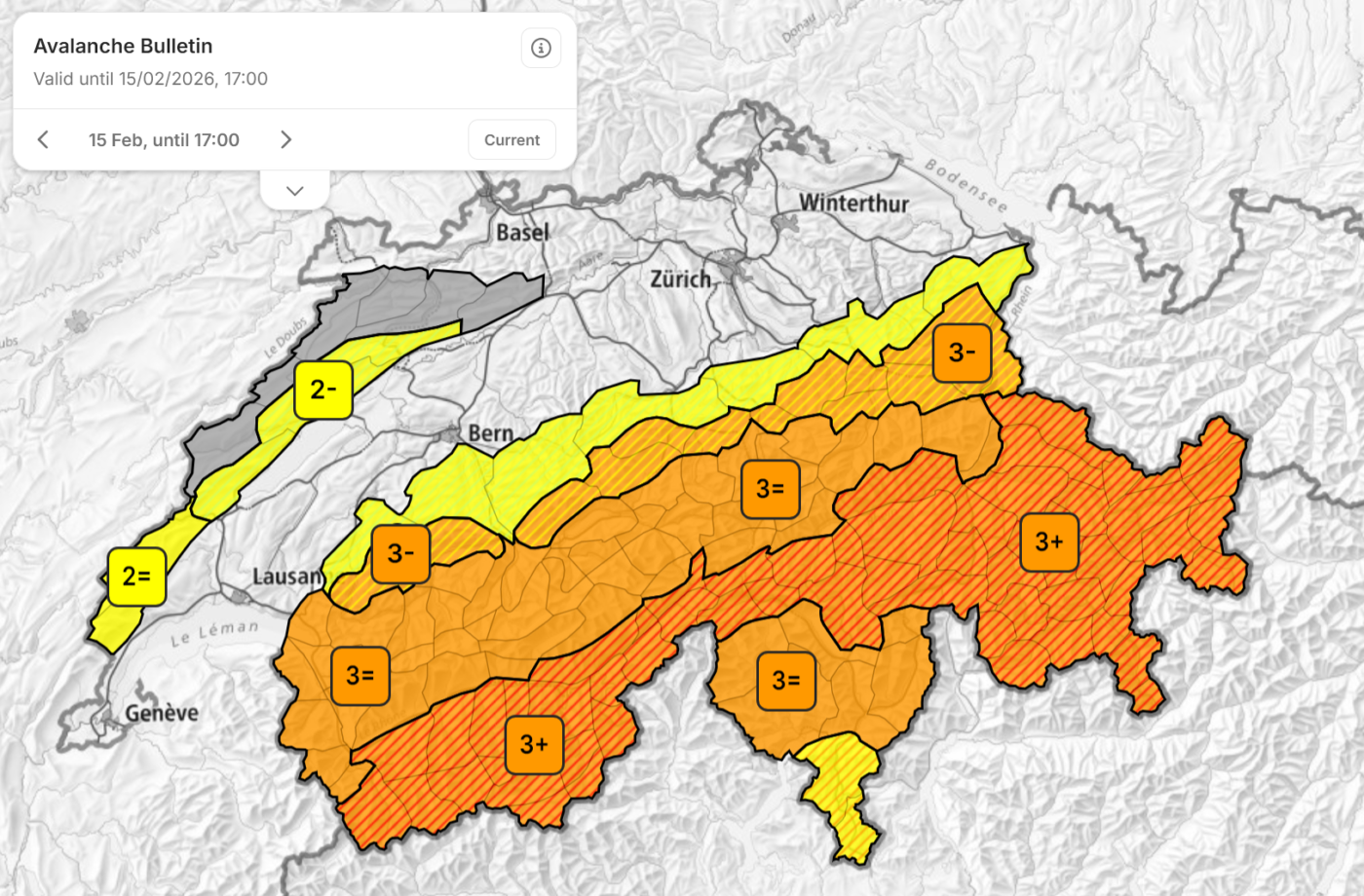
Switzerland has redesigned its avalanche bulletin for winter 2026/27, giving skiers more detailed regional information and an outlook extending to the day after tomorrow.
Announced by the WSL Institute for Snow and Avalanche Research SLF on 19 November, the changes should make it easier for visiting skiers to find the information relevant to their planned mountain day.
Map showing the redesigned Swiss avalanche bulletin and regional danger information. Credit: Kurt Winkler / SLF
More detail for your chosen region
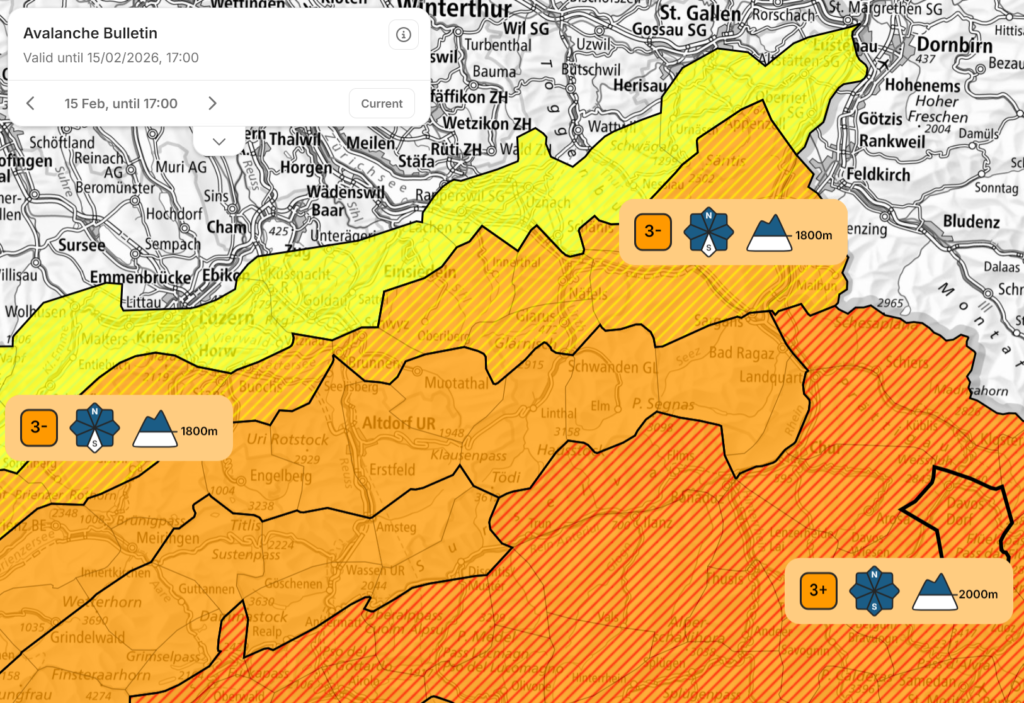
The bulletin now brings together avalanche danger, snowpack descriptions and weather information individually for Switzerland’s 149 warning regions.
Previously, the snowpack description covered the country as a whole. The new approach allows readers to focus on the area they intend to visit, with map layers highlighting affected elevations, slope aspects and avalanche problems.
The additional outlook also helps with advance planning, although forecasts should always be checked again before heading out.
A 72-year-old American skier has died after an avalanche swept him into a deep glacier crevasse at Austria’s Stubai Glacier on Saturday, 14 November 2026.
According to ORF Tirol, citing the emergency coordination centre, this was Austria’s first avalanche fatality of the current winter season.
Avalanche struck off-piste at Daunferner
The Tyrol Police statement places the accident at approximately 11:30am in the Daunferner sector, at around 2,970 metres.
A group of young winter sports enthusiasts witnessed a slab avalanche sweep a person into a glacier margin crevasse and raised the alarm.
A piste rescuer and an Alpine police officer reached the site and used an avalanche transceiver to locate the skier in the approximately 20-metre-deep crevasse. They freed him from the snow and began resuscitation, but he could not be revived.
Mountain rescuers recovered his body with support from the police helicopter. Police confirmed on Sunday that the victim was a 72-year-old US citizen.
A fall on a marked ski run can leave you with more than an injury. Depending on where you are skiing, you may also receive bills for ski patrol, evacuation by sledge, a helicopter, an ambulance and medical treatment.
There is no single system across the Alps and Pyrenees. Nor does a country’s approach to summer mountain rescue necessarily tell you what happens on its winter pistes.
Our summer mountain rescue guide explains the hiking and mountaineering picture. This winter guide looks at the distinctions skiers and snowboarders need to understand.
Information checked on 4 November 2026. Prices are examples published by the named operators, not national tariffs. Insurance examples explain differences in cover; availability, eligibility and the contract supplied at purchase must be checked.
A third skier has died following the avalanche in Val Veny, bringing the confirmed death toll to three.
Authorities have now identified the victims as:
Hugo Neuville, 31, of Chamonix
Quentin Philippe, 29, of Chamonix
Alexis Rassat, 35, of Chamonix
Rassat died on Monday at San Giovanni Bosco hospital in Turin after being critically injured. The three were described in local reporting as experienced freeriders familiar with the terrain.
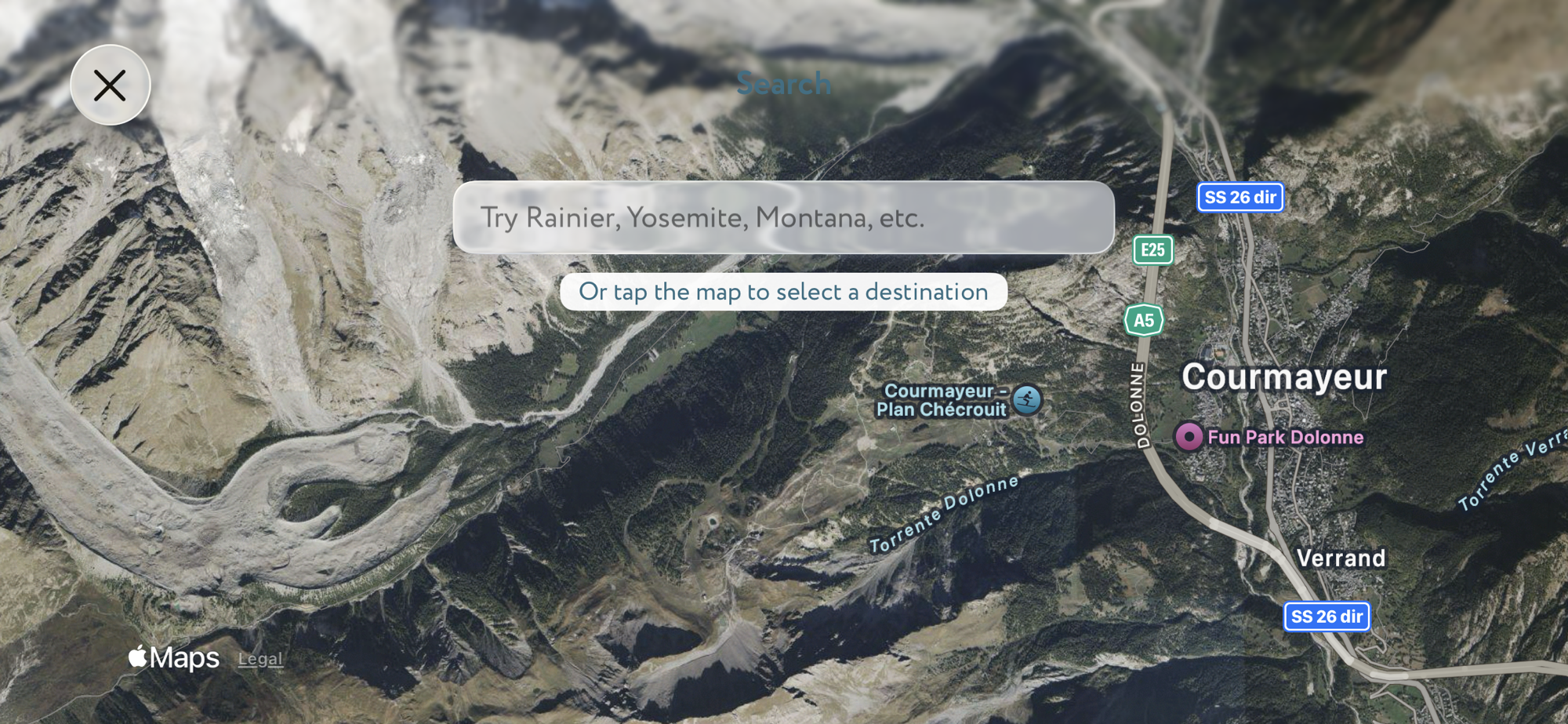
An avalanche occurred on the morning of Sunday, February 15, 2026, above Courmayeur, in the upper reaches of Val Veny, on the southern side of the Mont Blanc.
According to initial reporting by Corriere della Sera (Torino edition), several off-piste skiers were caught in a slide in the steep terrain known as the Canale del Ves, a well-known freeride couloir outside marked pistes.
At the time of publication, no fatalities or confirmed injury details have been officially released for this February 15 event. Rescue operations were still ongoing as regional authorities assessed the situation.
⸻
Rescue Response
The Soccorso Alpino Valdostano responded to the scene alongside emergency services.
The Canale del Ves lies outside controlled ski-area boundaries and requires full avalanche awareness and equipment. Helicopter access and avalanche safety protocols are standard in such terrain, though weather and snowpack conditions can complicate rescue efforts.
Further official updates are expected from regional authorities.
⸻
Terrain & Avalanche Context
Val Veny is a lateral valley southwest of Courmayeur, beneath the southern slopes of the Mont Blanc massif. The Canale del Ves is a steep alpine couloir that descends toward the valley floor and is popular with experienced freeriders.
This terrain is:
• Steep and exposed
• Frequently wind-loaded after storms
• Outside patrolled ski area limits
• Subject to avalanche hazard during unstable snowpack periods
Recent avalanche bulletins for the Aosta Valley indicated elevated avalanche danger around mid-February following heavy snowfall and wind transport at higher elevations.
Skiers venturing off-piste are responsible for assessing avalanche conditions, carrying rescue equipment (transceiver, probe, shovel), and making independent terrain decisions.
⸻
Confirmed Facts So Far
✔ Avalanche occurred on February 15, 2026
✔ Location: Val Veny above Courmayeur
✔ Off-piste terrain (Canale del Ves)
✔ Rescue operations launched
Not yet confirmed:
❌ Number of skiers involved
❌ Injury severity
❌ Fatalities
This article will be updated as soon as official information becomes available.
⸻
SEO FAQ
Where did the Courmayeur avalanche happen?
The avalanche occurred in Val Veny above Courmayeur, specifically in a steep off-piste couloir known as the Canale del Ves.
Were there fatalities in the February 15, 2026 Courmayeur avalanche?
As of the latest official reports, no fatalities or confirmed injury details have been released. Rescue operations were ongoing at the time of publication.
Is Canale del Ves inside the ski area?
No. The Canale del Ves is outside marked and controlled ski runs. It is considered off-piste terrain and carries inherent avalanche risk.
What was the avalanche danger level in the area?
Regional avalanche bulletins indicated elevated danger in the Aosta Valley around mid-February following recent snowfall and wind loading at higher elevations.
This article has been updated to reflect the confirmed death of a third skier.
If you’re heading to the Aosta Valley, take a look at Il Cuore della Valdigne, our family-owned apartment in Morgex, available for rent when we’re not using it ourselves.
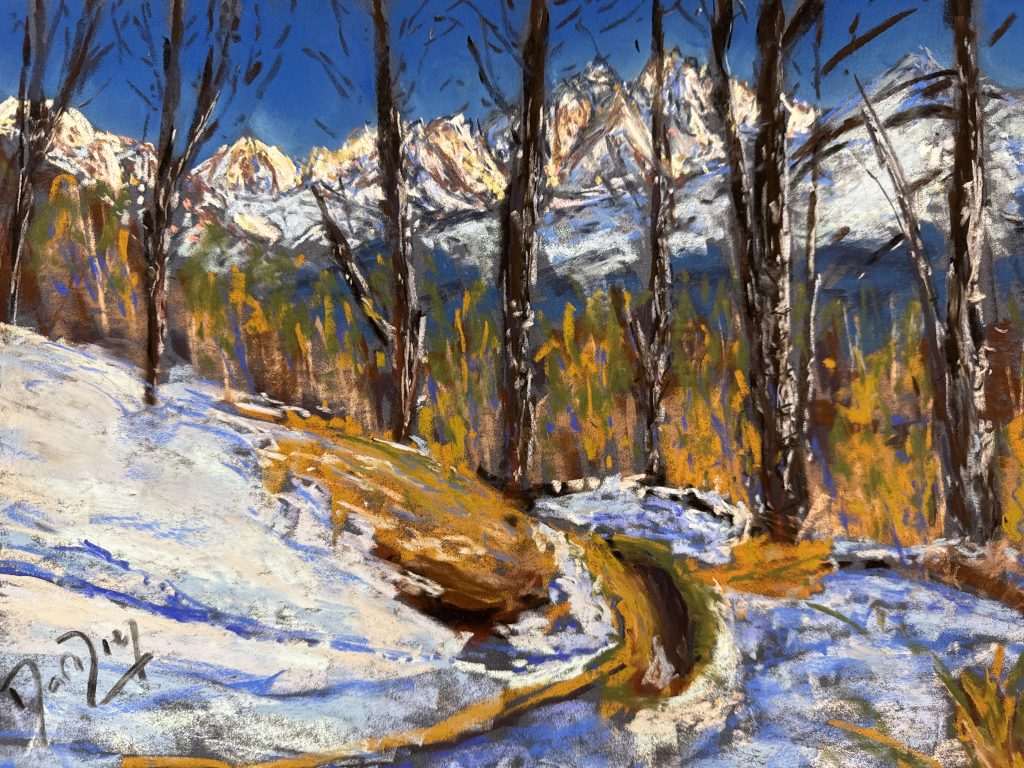
You can go to my shop and see what have been inspiring me lately, lots mountain landscapes in soft pastels, and now in oils too. Go here to check my latest works!
The View from the path from Challancin to Morge 1. Soft pastels on pastel paper (30 cm x 40 cm) Check my mountain art in my shop here.
The 2025–26 winter season has seen unusually unstable snowpacks across both the Alps and North America. Despite repeated avalanche warnings from ski patrols, mountain guides and rescue services, many skiers and snowboarders continue to go off-piste during high-risk periods — sometimes ignoring advice, challenging warnings, or reacting aggressively when asked to turn back.
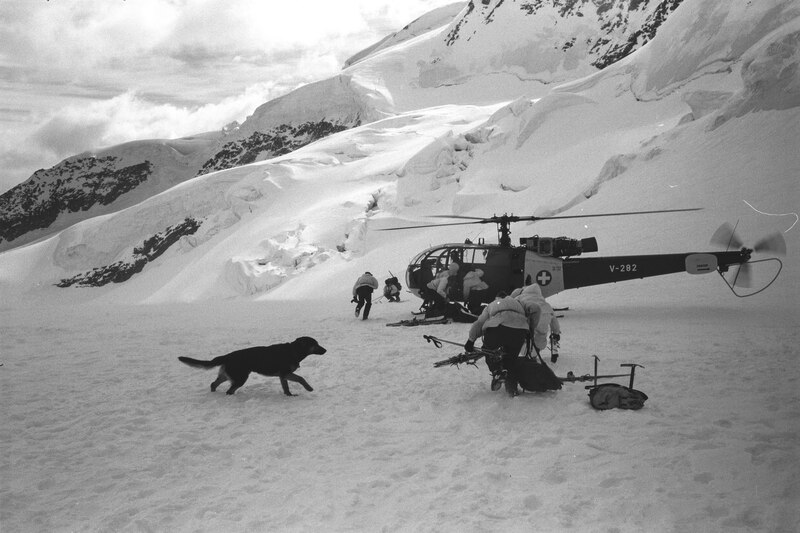
When accidents happen, the same professionals who tried to prevent these decisions are forced to carry out complex and dangerous rescue operations, often in extremely unstable terrain. Respecting avalanche bulletins and closures doesn’t just protect skiers — it protects the rescuers who put their lives at risk to save others.
Photo: Herbert Maeder. Wikipedia Commons. Marco e Rosa Hutte. 1974. Avalanche Warnings Ignored in the 2025–26 Ski Season: When Rescuers Risk Their Lives to Save Others.
A Season Marked by Persistent Avalanche Danger
This winter has been characterised by fragile snowpacks, with weak layers buried under fresh snowfall across large parts of the Alps and several mountain regions in North America. Avalanche danger ratings have repeatedly reached considerable or high levels, particularly after storms, wind events, or rapid temperature changes.
Before heading off-piste, ski touring, snowshoeing, or entering uncontrolled terrain, checking the avalanche bulletin is not optional — it is one of the most important safety steps you can take.
Yet many skiers and riders still look only at the danger number, without fully understanding how to use the rest of the information to plan a safe mountain day.
This guide explains how to read and apply avalanche bulletins properly, what they can (and cannot) tell you, and where to find the official avalanche forecasts across Europe.
What an Avalanche Bulletin Is — and What It Is Not
An avalanche bulletin (or avalanche forecast) is a regional risk assessment, based on:
Avalanche activity has remained elevated across several French Alpine massifs over the past 48 hours, with confirmed incidents, multiple rescue checks, and continued warnings from Météo-France.
Below is a clear roundup of what has happened, followed by current avalanche danger by massif and direct links to the official bulletins skiers should consult before heading into the mountains.
On Thursday 29 January, an off-piste avalanche occurred in the La Fée sector at Les Deux Alpes. A 59-year-old skier was recovered and taken to hospital in critical condition. Regional reporting indicates the skier suffered a cardiac arrest, was resuscitated on scene, and transferred to hospital in Grenoble.
The incident occurred mid-morning, around 2,500 m, in a well-known off-piste area frequently accessed from the ski domain.
For a practical explanation of how to apply avalanche bulletins in real conditions, this step-by-step guide is worth reading before heading out.
Les Deux Alpes, near to St Christoph-en-Oisans. Photo: Toa Heftiba/Unsplash. French Alps Avalanche Danger: 48-Hour Roundup & Current Risk by Massif.
Off-piste skiing and backcountry travel offer freedom, fresh snow and adventure — but they also expose skiers to the highest avalanche risk in the mountains.
Many avalanche accidents do not happen deep in remote terrain. They happen just outside marked pistes, in areas skiers believe are controlled, familiar or “not really off-piste”.
Understanding why these situations are dangerous is essential for anyone leaving groomed slopes.
What Does “Off-Piste” Really Mean?
Off-piste skiing refers to any terrain outside marked and controlled ski runs. This includes:
Slopes beside pistes
Short traverses between runs
Bowls accessed from lifts
Areas beyond boundary ropes
In most resorts, avalanche control is limited to marked pistes only. Once you leave them, you are responsible for your own safety — regardless of how close you remain to the ski area.
Dan Egan skiing in Big Sky, Montana. Photo courtesy: Dan Egan. Dan offers ski clinics to teach you how to take care of yourself in the backcountry. Check them at skiclinics.com. Off-Piste & Backcountry Risks: Avalanche Safety – Read Before Skiing Off-Piste.
Avalanche Awareness: What Every Skier Needs to Know
Avalanches are one of the most serious and misunderstood dangers in the mountains. Every winter, experienced skiers, snowboarders and mountaineers are caught — often in familiar terrain, sometimes close to marked pistes, and frequently during days that do not feel dangerous.
Avalanche awareness is not about fear. It is about understanding risk, recognising patterns, and making better decisions in winter mountain environments.
This guide explains the essentials every skier should know: how avalanches form, who is most at risk, why forecasts matter, and where accidents most often happen — with links to more in-depth resources throughout.
The pair slipped in icy conditions, skiing off-piste with another man.
Two Cambridge men have fallen hundreds of meters to their death in a skiing tragedy near Chamonix. The two, aged 26 were on holidays in the French resort of Chamonix-Mont-Blanc.
Two Cambridge men have died in a skiing tragedy in the French Alps.
The gondolas that go on top of the Mar de Glace, from Aiguille du Midi in France (Chamonix) to Punta Helbronner in Italy (Courmayeur)
Enjoyed this post? Get my latest ski guides, weather insights, resort updates and travel tips directly in your inbox. Subscribe to The-Ski-Guru here.
Manage Cookie Consent
To provide the best experiences, we use technologies like cookies to store and/or access device information. Consenting to these technologies will allow us to process data such as browsing behavior or unique IDs on this site. Not consenting or withdrawing consent, may adversely affect certain features and functions.
Functional
Always active
The technical storage or access is strictly necessary for the legitimate purpose of enabling the use of a specific service explicitly requested by the subscriber or user, or for the sole purpose of carrying out the transmission of a communication over an electronic communications network.
Preferences
The technical storage or access is necessary for the legitimate purpose of storing preferences that are not requested by the subscriber or user.
Statistics
The technical storage or access that is used exclusively for statistical purposes.The technical storage or access that is used exclusively for anonymous statistical purposes. Without a subpoena, voluntary compliance on the part of your Internet Service Provider, or additional records from a third party, information stored or retrieved for this purpose alone cannot usually be used to identify you.
Marketing
The technical storage or access is required to create user profiles to send advertising, or to track the user on a website or across several websites for similar marketing purposes.


 Planning your next trip to the Italian Alps?
 Ski in Courmayeur,
 Enjoy the mountains in summer (hiking, biking, nature)


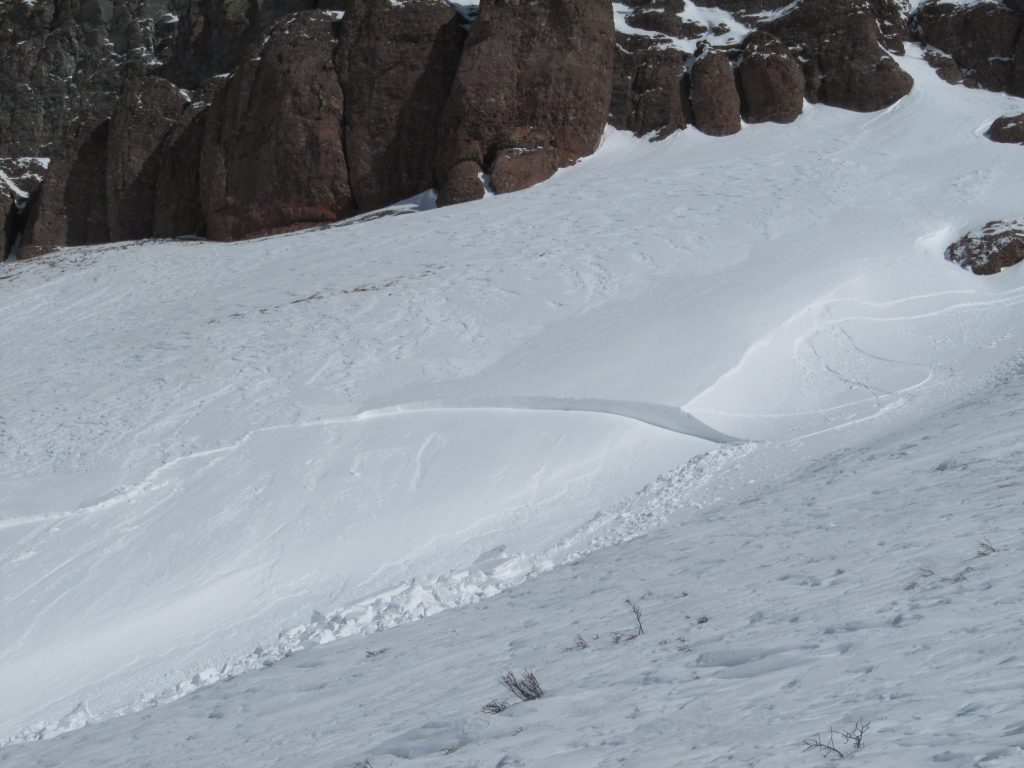 Windslab avalanche. Photo: Andrew Temple. Colorado Avalanche Information Center.


 Subscribe to The-Ski-Guru here.
You must be logged in to post a comment.