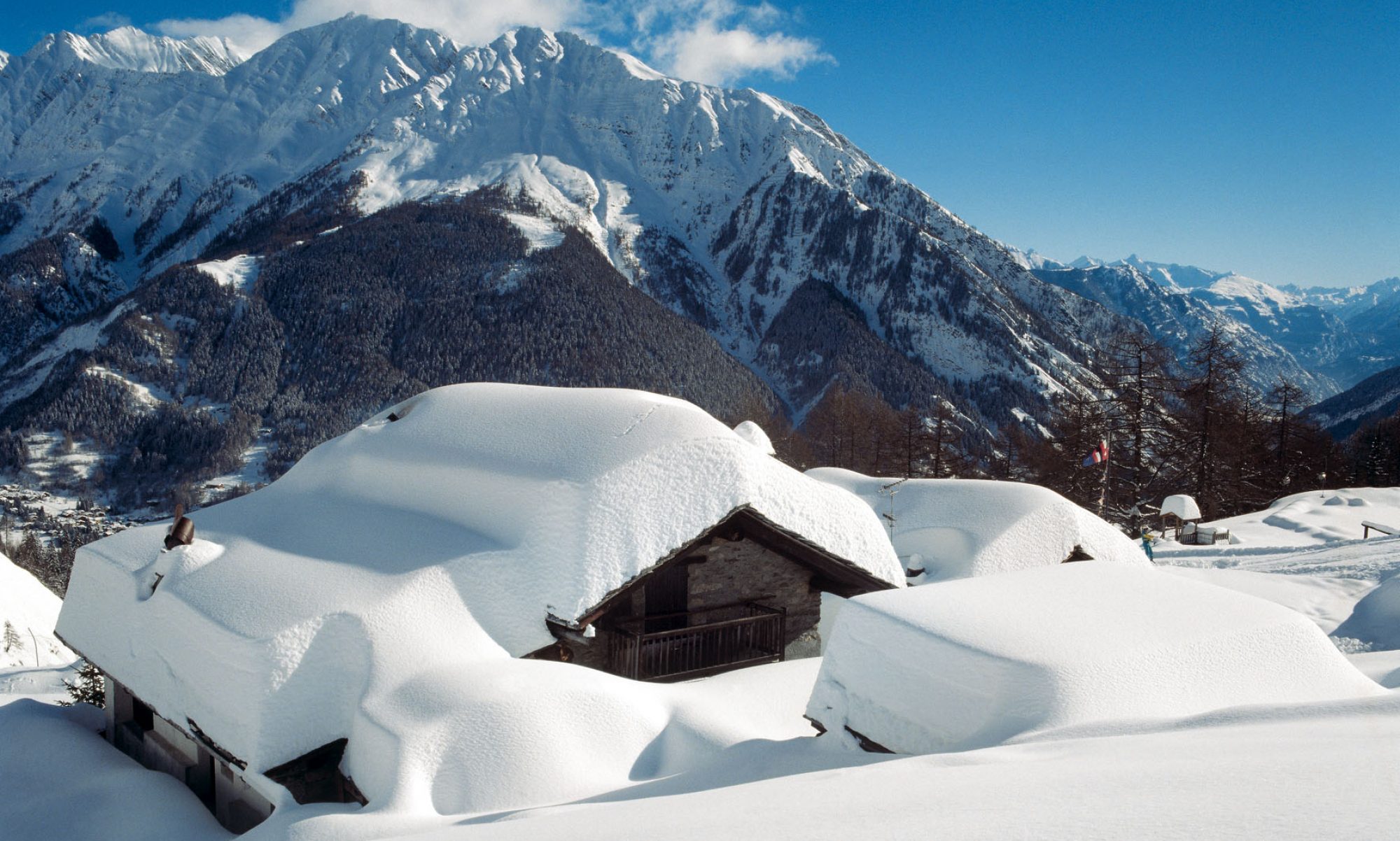


Late January – 1 February 2026
Over the past week, avalanche activity across the Alps has followed a clear and worrying pattern. From the Mont Blanc massif to the Queyras and across into the Swiss Valais, numerous skier-triggered and spontaneous avalanches point to a snowpack that remains structurally unstable, despite periods of fair weather and already-tracked slopes.
Rather than isolated incidents, the reports collected since late January describe reactive slabs, remote triggers, and persistent weak layers affecting a wide range of aspects and elevations.
Much of the recent instability is consistent with wind-loaded slabs and foehn-driven snow transport, which can rapidly overload weak layers and create large, reactive avalanche conditions.
This update summarises the most significant recent events and explains what they tell us about current conditions.
Widespread Instability: 1 February 2026 (France)
On Aiguille du Tacul (Mont Blanc massif), an avalanche was accidentally triggered by a skier. No one was caught, but the release occurred in a heavily skied, high-altitude zone — a reminder that frequent traffic does not equal stability.
In the Queyras, several incidents showed classic signs of a fragile snowpack:
- At Crête des Eysselière (Ceillac), a slab released remotely, around 50 metres from the ridge. The fracture reached 50–60 cm, and observers reported repeated whumphing sounds and cracks at every step — unmistakable indicators of a collapsing weak layer.
- On the Gardiole de l’Alp, multiple skier-triggered avalanches were reported, including simultaneous releases across several start zones and a cascade avalanche triggered remotely by a group of skiers, captured on video: .
These events strongly suggest wind slabs resting on poorly bonded layers, capable of propagating far beyond the initial point of disturbance.
Near Misses That Matter
Several incidents ended without injuries — but only just.
In the Bauges massif, near Pointe de Chaurionde, a skier triggered a slab just below the ridge. The avalanche reached 60–70 cm thickness in wind-loaded areas and funneled into the gully below. The skier escaped laterally.
In the Maurienne, at Crêt Lognan (Grand Coin), a skier was carried by a slab triggered just beneath the crest and was nearly buried. He escaped unharmed, losing only a ski.
In the Ubaye, near Vars Sainte-Catherine, three successive slabs were triggered during an ascent, releasing by propagation. No one was caught thanks to distance and terrain management.
These incidents are critical learning points: many of this season’s avalanches are survivable only because of terrain choice, spacing, or sheer luck.
Persistent Weak Layers and Fatal Consequences
On 31 January, a 33-year-old skier died in the east face of L’Arpelin (Cervières, Briançonnais) after being caught in an avalanche while skiing with a partner. This fatality highlights a recurring issue this winter: persistent weak layers buried deeper in the snowpack, still capable of failing days or weeks after snowfall.
Elsewhere in the Queyras, large spontaneous avalanches were observed on north-west aspects, including a release around Crête des Crousas measuring approximately 500 metres wide, as well as multiple slab avalanches in the Rochebrune sector. These were likely linked to weaknesses at the base of the snowpack following mid-week storm cycles.
Switzerland: A High-Risk January
In Switzerland, January 2026 has already been marked by multiple avalanche fatalities, particularly in the Valais. Recent confirmed cases include:
- A Swedish ski tourer killed in an avalanche at the end of January.
- Earlier fatal incidents near Chamoson, Ovronnaz, and the Oberalp Pass, involving experienced ski tourers.
Swiss authorities have repeatedly pointed to the same contributing factors seen in France: wind loading, persistent weak layers, and human-triggered avalanches in familiar terrain.
Sources include verified reports from data-avalanche.org and Swiss media such as Swissinfo.
What These Events Tell Us
Across regions, the message is consistent:
- Avalanches are being triggered from ridges, from below, and at a distance
- Tracks on a slope are not a sign of stability
- Weak layers remain active across multiple aspects and elevations
- Several incidents narrowly avoided serious consequences
This is not a short-term problem confined to a single snowfall. It is a structural snowpack issue.
⚠️ Avalanche Safety Reminder
Current Alpine Snowpack: Key Safety Points
• Treat whumphing, cracking, and remote triggers as non-negotiable red flags
• Avoid steep wind-loaded slopes, especially near ridgelines and convexities
• Do not rely on existing tracks as an indicator of stability
• Expect large propagation on persistent weak layers
• Adjust objectives conservatively and favour low-angle terrain
• Always consult official avalanche bulletins before heading outEven experienced skiers and ski tourers are being caught this season — familiarity with terrain does not reduce risk.
Looking for a regional overview?
Read the French Alps avalanche danger: 48-hour roundup by massif for the latest conditions and risk levels across different Alpine areas.
Avalanche Safety – Essential Reading Before Going Off-Piste
If recent avalanche reports have raised questions about conditions in the Alps, the following guides explain the key risk factors every off-piste skier should understand.
🧭 Avalanche Basics
🎿 Terrain & Decision-Making
🧰 Equipment & Preparation
🌬️ Weather & Snowpack Triggers
 Planning your next trip to the Italian Alps?
 Planning your next trip to the Italian Alps?
If you’re heading to the Aosta Valley, take a look at Il Cuore della Valdigne, our family-owned apartment in Morgex, available for rent when we’re not using it ourselves.
It’s an ideal base to:
 Ski in Courmayeur,
 Enjoy the mountains in summer (hiking, biking, nature)
Check my Mountain Art on my Shop
You can go to my shop and see what have been inspiring me lately, lots mountain landscapes in soft pastels, and now in oils too. Go here to check my latest works!
Featured Image: Windslab avalanche. Photo: Avalanche.org. Avalanche Activity in France & Switzerland: What the Snowpack Is Telling Us.


Discover more from The-Ski-Guru
Subscribe to get the latest posts sent to your email.
 Subscribe to The-Ski-Guru here.