Why Low Avalanche Danger Does Not Mean No Avalanche Risk

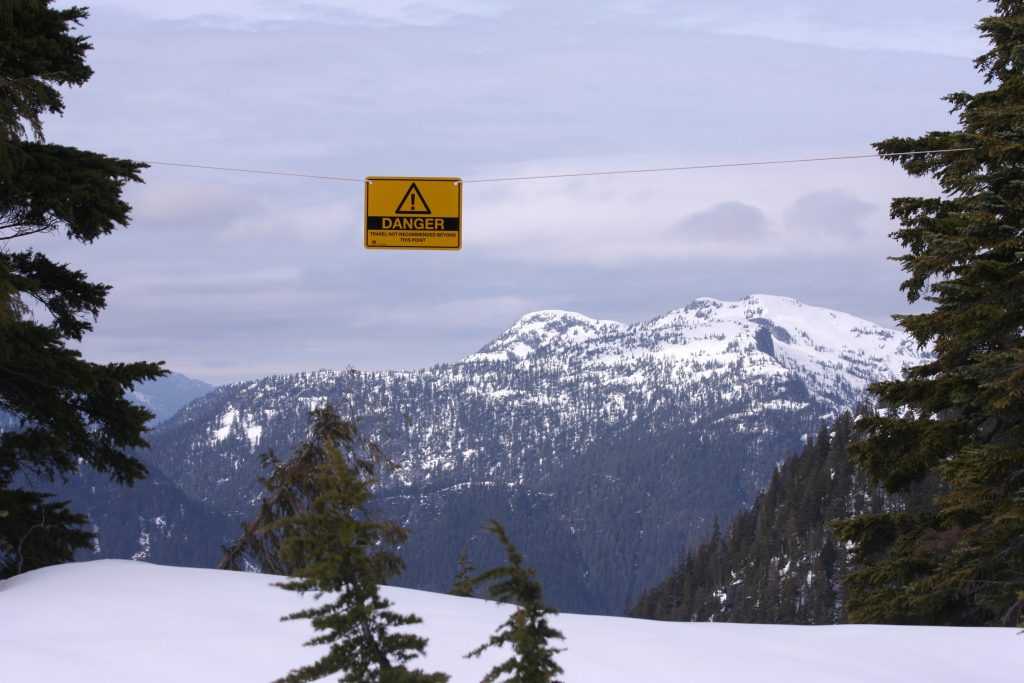
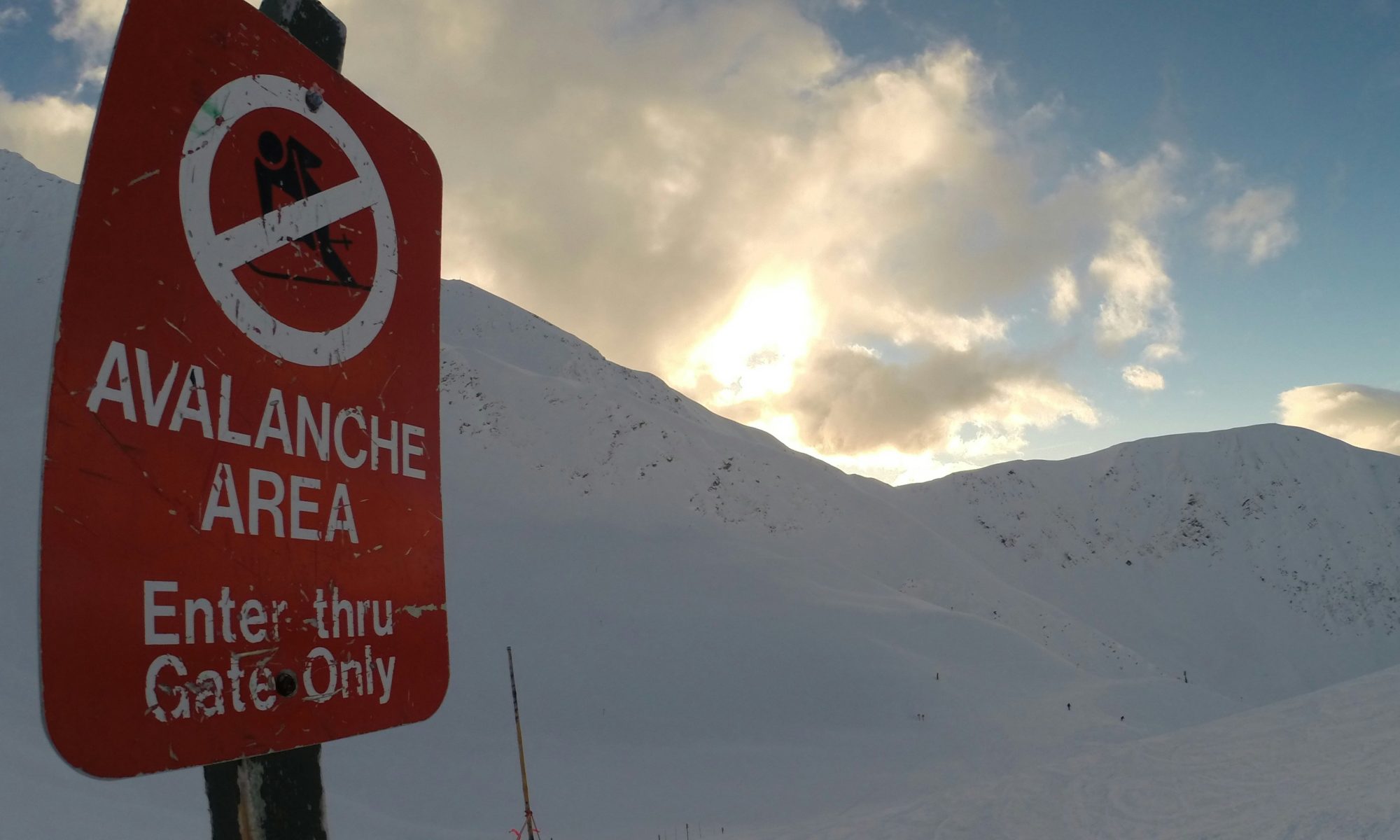
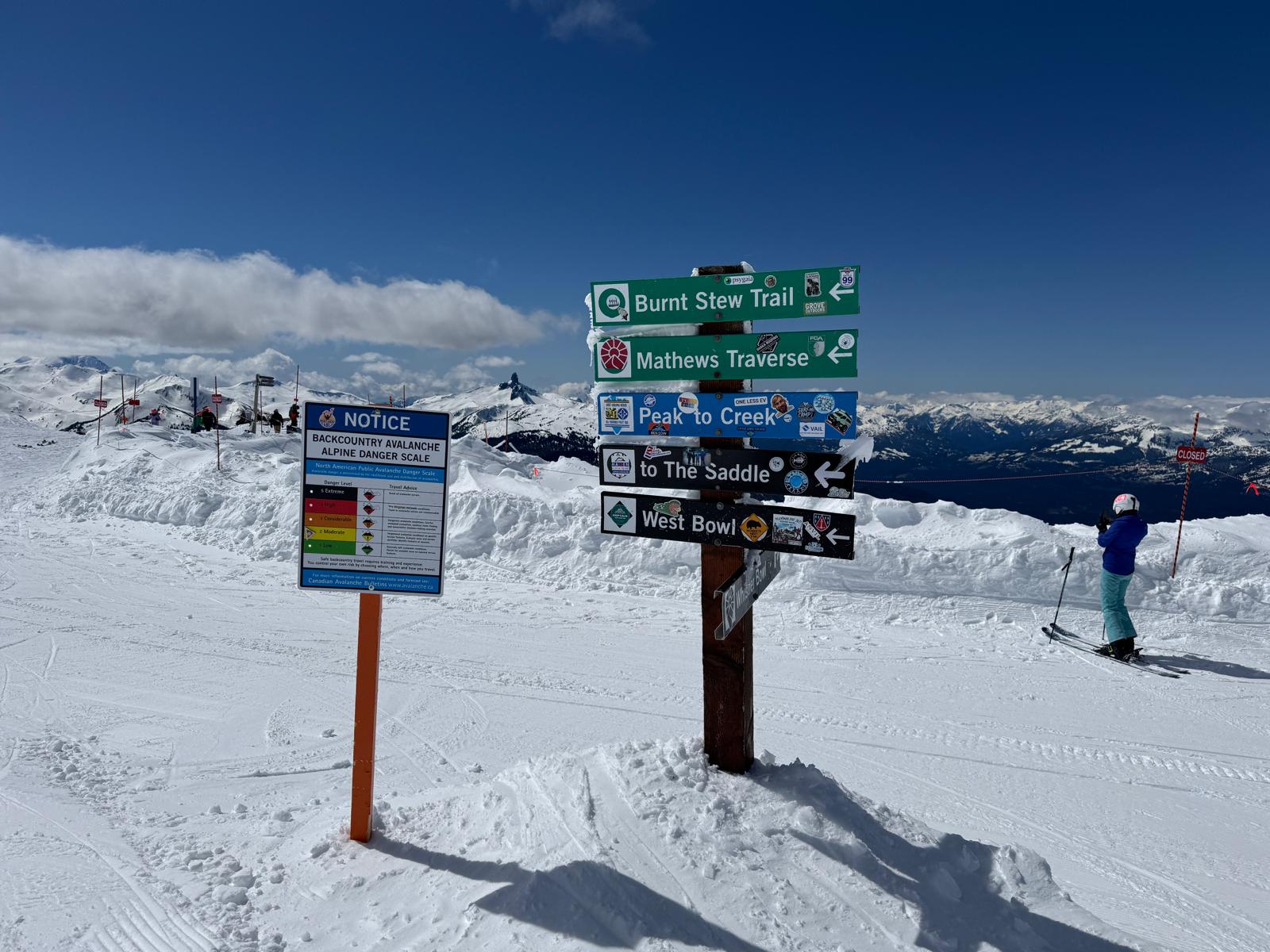
Avalanche posts on top of Whistler Mountain. Photo: The-Ski-Guru.

A Level 1 — Low avalanche danger rating does not mean the mountains are avalanche-free.

This is one of the most important — and most misunderstood — aspects of avalanche forecasting.

The European Avalanche Danger Scale describes the overall stability of the snowpack across a region. Even during Low danger conditions, isolated unstable slopes and specific avalanche problems may still exist.

Avalanche accidents can and do occur at Level 1.

Although the probability of triggering an avalanche is generally lower than during Moderate, Considerable, or High danger conditions, local terrain features can still create serious hazards.

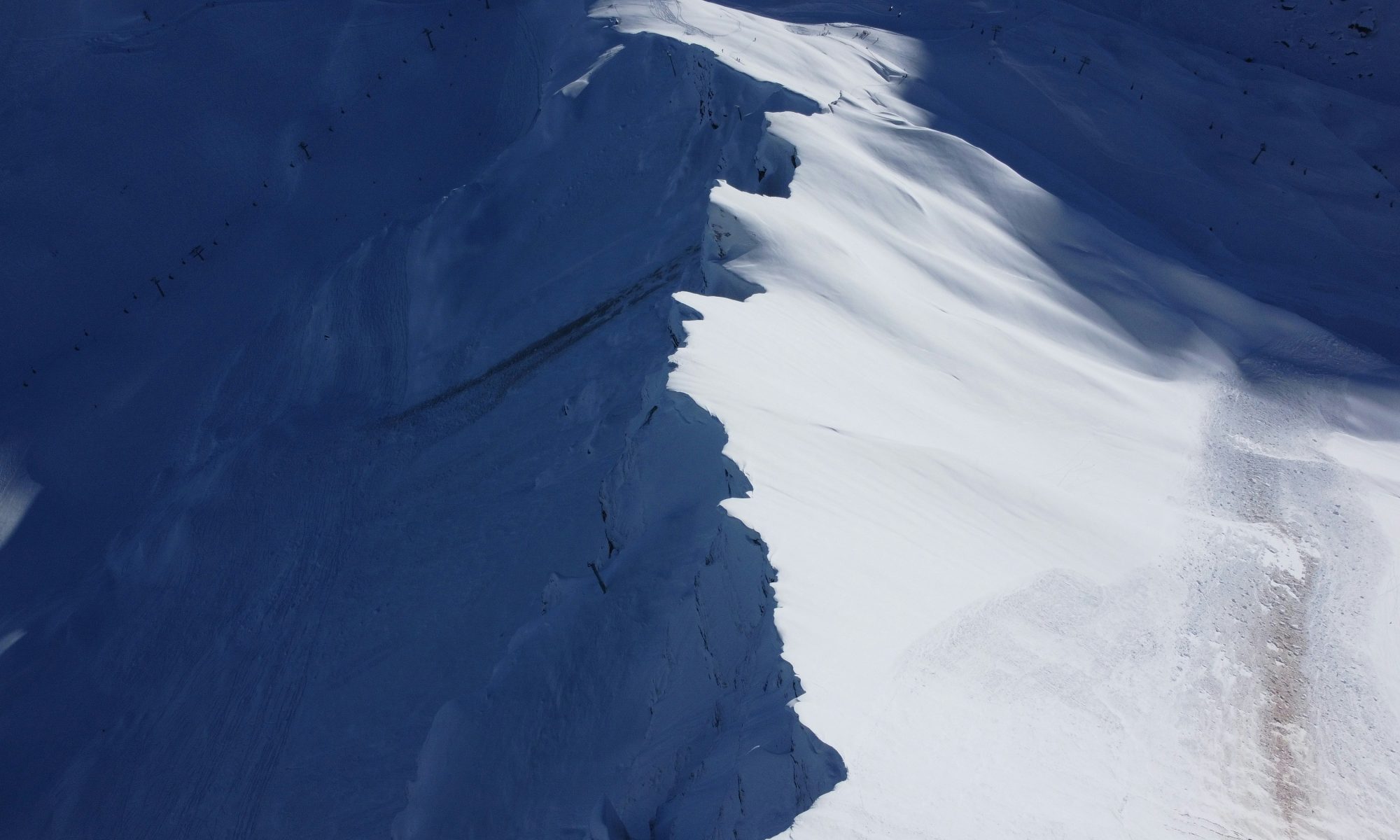
This is especially true in steep alpine terrain, heavily wind-loaded slopes, glacier entrances, terrain traps, or sectors affected by glide avalanches.

At Level 1, natural avalanches are generally unlikely and the snowpack is considered mostly stable.

However, “mostly stable” does not mean “completely stable.”

Continue reading “Why Low Avalanche Danger Does Not Mean No Avalanche Risk”

Why Avalanche Accidents Still Happen at Level 2 – Moderate

Avalanche Level 2 Photo: Avalanchegeeks.com

A Level 2 — Moderate avalanche danger rating is one of the most misunderstood conditions in the mountains.

For many recreational skiers and occasional ski tourers, a Level 2 bulletin can sound relatively reassuring. The word “moderate” often creates the impression that conditions are largely stable and that avalanche risk is limited.

In reality, many serious avalanche accidents still occur during Level 2 conditions.

Continue reading “Why Avalanche Accidents Still Happen at Level 2 – Moderate”

What Level 4 Avalanche Danger Means

Photo: Kokex 1213. Unsplash. Engelberg, Switzerland.

Level 4 avalanche danger is classified as “High” on the European Avalanche Danger Scale. It indicates a very unstable snowpack and a significant probability of both natural and human-triggered avalanches.

Level 4 is part of the European Avalanche Danger Scale used across the Alps, which helps skiers and mountaineers understand snow stability and avalanche risk.

When authorities issue Level 4, off-piste and backcountry travel become highly risky.

Many accidents occur during periods shaped by extreme weather in the Alps, particularly when conditions change rapidly.


The European Avalanche Danger Scale (1–5)

Avalanche danger in Europe is rated from 1 to 5:

1 – Low
2 – Moderate
3 – Considerable
4 – High
5 – Very High

Level 4 is the second-highest rating and represents serious instability.


Mont Seymour. Veronica Dudarev. Unsplash.

What Happens at Level 4?

Under Level 4 conditions:

  • Natural avalanches are likely
  • Human-triggered avalanches are very likely
  • Large avalanches may occur on many steep slopes
  • Weak layers in the snowpack are widespread
  • Wind loading often increases instability

Avalanches can occur even with minimal additional loading — meaning a single skier or snowboarder can trigger a slide.

Continue reading “What Level 4 Avalanche Danger Means”

French Alps avalanche incidents (Feb 5–7, 2026): what was reported across several massifs

Avalanche-Haute-Tarentaise-Sectuer-Tignes-Plan-du-Cheval-Photo: Cédric Perillat. data-avalanche.org.

Summary: Between February 5 and February 7, 2026, multiple avalanches were reported to Data-Avalanche across the French Alps, spanning the Queyras, Haute Maurienne/Thabor, Belledonne, Lauzière, Vanoise, Écrins, Oisans and Haute Tarentaise (Tignes). Two incidents were reported as fatal: two ski tourers died near Saint-Véran (Queyras), and one skier died after a long burial near Valfréjus.

This post compiles the available descriptions from Data-Avalanche and early local reporting. Details can evolve as official investigations and rescue services publish more information.

BERA Reference. Meteo France. savoie.gouv.fr. French Alps avalanche incidents (Feb 5–7, 2026): what was reported across several massifs.

Fatal incidents reported on Saturday, February 7, 2026

Queyras (Saint-Véran) – Tête de Longet: two ski tourers killed

Local media reported that an avalanche occurred on the north side of Tête de Longet above Saint-Véran (around 2,300m in initial reports). Two ski tourers died; two other members of the party were not injured, and searches continued until nightfall.

Continue reading “French Alps avalanche incidents (Feb 5–7, 2026): what was reported across several massifs”

How to Use Avalanche Bulletins to Plan Your Mountain Day (Step-by-Step)

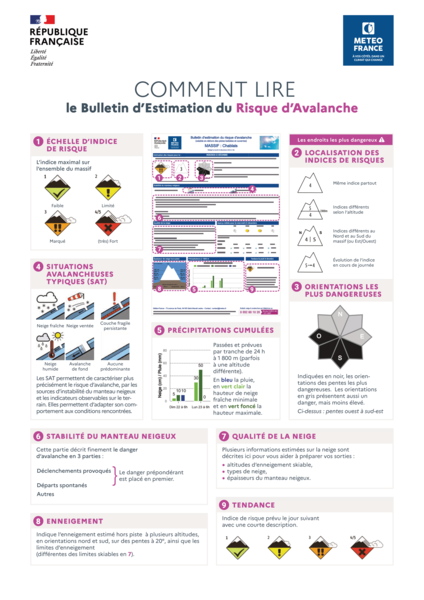
Aineva report on 3rd February of the avalanche risk at the Valdigne of Monte Bianco (the Valley of Monte Bianco). How to Use Avalanche Bulletins to Plan Your Mountain Day (Step-by-Step).

Before heading off-piste, ski touring, snowshoeing, or entering uncontrolled terrain, checking the avalanche bulletin is not optional — it is one of the most important safety steps you can take.

Yet many skiers and riders still look only at the danger number, without fully understanding how to use the rest of the information to plan a safe mountain day.

This guide explains how to read and apply avalanche bulletins properly, what they can (and cannot) tell you, and where to find the official avalanche forecasts across Europe.


What an Avalanche Bulletin Is — and What It Is Not

An avalanche bulletin (or avalanche forecast) is a regional risk assessment, based on:

Continue reading “How to Use Avalanche Bulletins to Plan Your Mountain Day (Step-by-Step)”

Avalanche Activity in France & Switzerland: What the Snowpack Is Telling Us

Windslab avalanche. Photo: Avalanche.org. Avalanche Activity in France & Switzerland: What the Snowpack Is Telling Us.

Late January – 1 February 2026

Over the past week, avalanche activity across the Alps has followed a clear and worrying pattern. From the Mont Blanc massif to the Queyras and across into the Swiss Valais, numerous skier-triggered and spontaneous avalanches point to a snowpack that remains structurally unstable, despite periods of fair weather and already-tracked slopes.

Rather than isolated incidents, the reports collected since late January describe reactive slabs, remote triggers, and persistent weak layers affecting a wide range of aspects and elevations.

Much of the recent instability is consistent with wind-loaded slabs and foehn-driven snow transport, which can rapidly overload weak layers and create large, reactive avalanche conditions.

Continue reading “Avalanche Activity in France & Switzerland: What the Snowpack Is Telling Us”

❗ Avalanche Danger Update: Current Conditions in the Alps & North America (January 2026)

Avalanche danger sign. Photo: Bruce Warrington- Unsplash. Avalanche Activity Across the Alps & Pyrenees: Widespread Instability Raises Concerns (11–12 January 2026).

Avalanche Danger Update January 2026 | Alps & North America

Avalanche danger remains elevated in several mountain regions at the start of January 2026. Recent incidents in the Alps and ongoing warnings across North America highlight a familiar — and dangerous — combination: new snow, strong winds, and unstable early-season snowpacks.

Whether you’re ski touring, snowboarding out of bounds, or travelling to mountain destinations, understanding current avalanche conditions — and checking official, local forecasts — is essential.

Continue reading “❗ Avalanche Danger Update: Current Conditions in the Alps & North America (January 2026)”