Sölden’s World Cup Opening Is a Month Away. Where Will the Snow Come From?

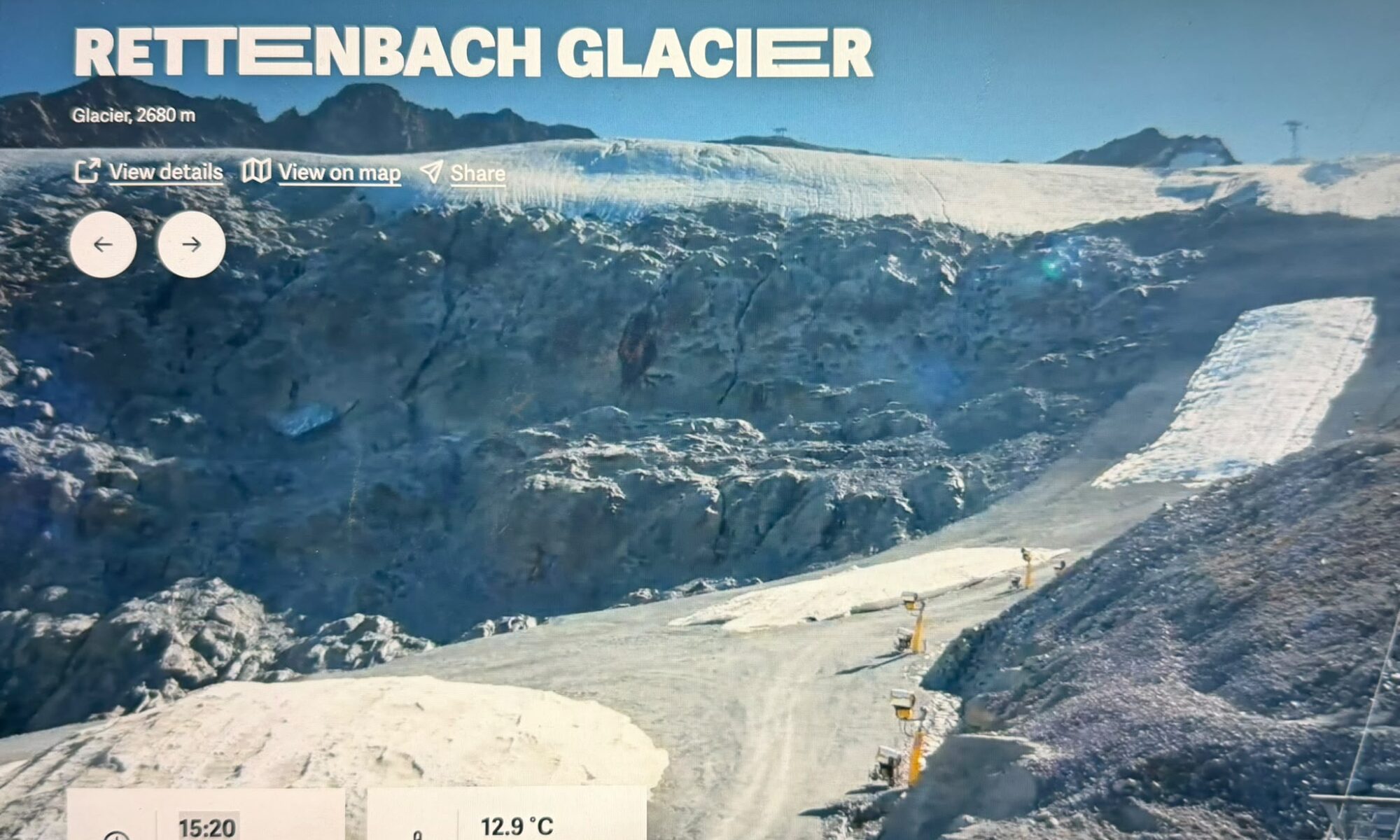
Rettenbach Glacier Webcam. 27 September 2026. Credit: Ötztal Sölden webcam.

The Rettenbach Glacier is scheduled to host the first Alpine Ski World Cup races of the 2026/27 season on 24 and 25 October. With little natural snow visible on the race slope in late September, preparations are drawing on snow stored from last winter.

Sölden has less than a month to prepare the Rettenbach Glacier for the opening races of the Alpine Ski World Cup season. The women’s giant slalom is scheduled for Saturday 24 October, followed by the men’s race on Sunday 25 October.

For now, the slope looks far more like late summer than winter. According to Austrian newspaper Tiroler Tageszeitung, snow is already being spread across its upper section, while three snow depots positioned along the steep race slope form part of the preparations. The newspaper reports that Sölden’s piste chief, Isidor Grüner, remains calm about the work ahead.

Continue reading “Sölden’s World Cup Opening Is a Month Away. Where Will the Snow Come From?”

Purgatory Targets November 20 Opening With $9 Ski Tickets and New Expert Terrain

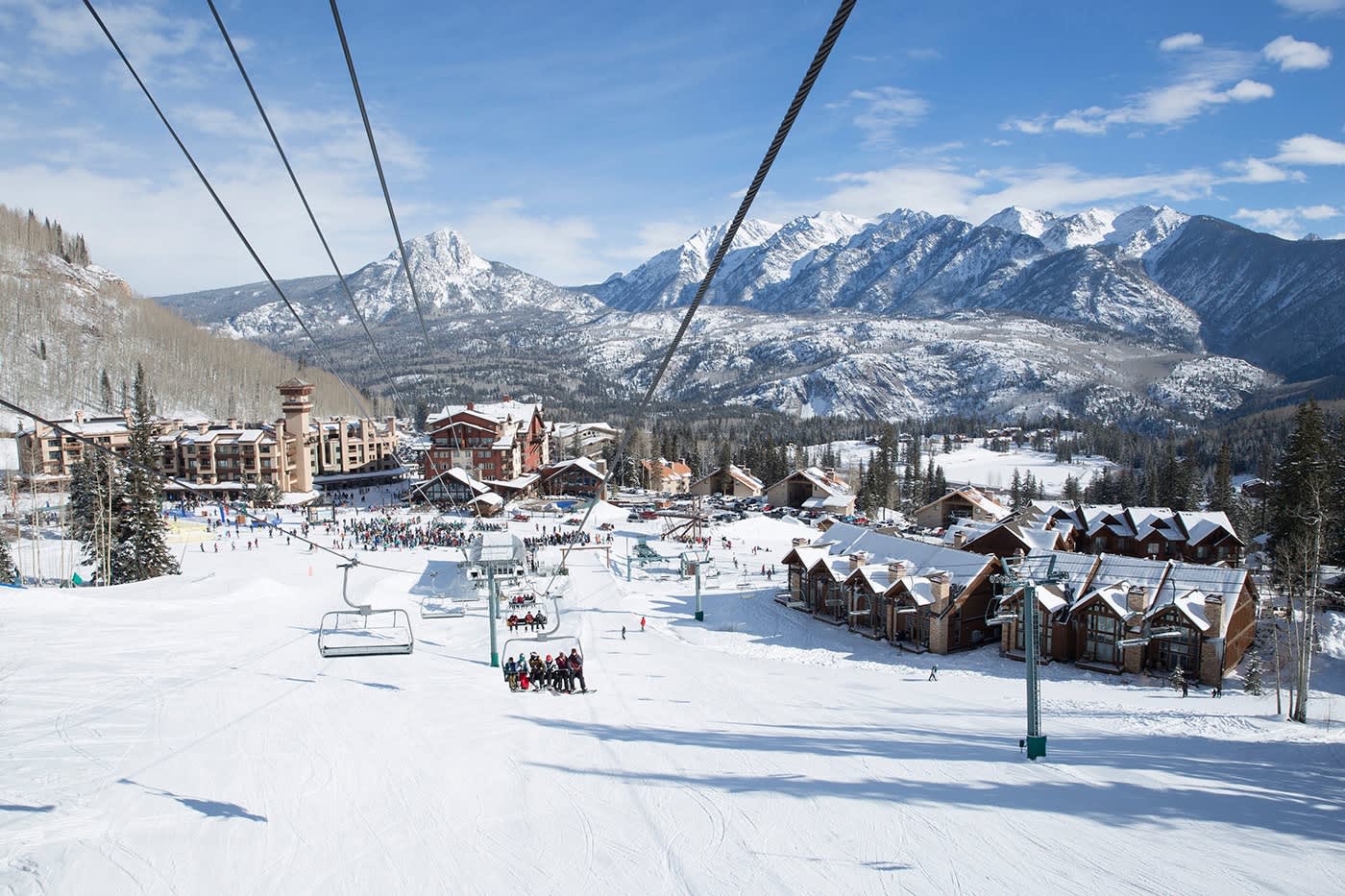
Purgatory Ski resort base. Photo credit: Purgatory Ski Resort.

The Colorado resort is advertising some unusually low advance ticket prices for 2026/27, while a delayed chairlift project is set to open new terrain.

Purgatory Resort, near Durango in southwestern Colorado, is targeting Friday, November 20, 2026, for the start of its ski season, weather permitting. Its other headline for winter 2026/27 is the price of a day on the mountain: advance lift tickets are currently advertised from USD 9 on selected dates.

The resort says tickets are priced below USD 50 on 95 days of the coming season. The USD 9 offer is also paired with USD 10 in Purgatory Cash on eligible dates marked in its online ticket calendar. Prices and availability can change, so anyone planning a visit should check their particular ski day before booking. The USD 9 figure is not a stated opening-day ticket price.

Continue reading “Purgatory Targets November 20 Opening With $9 Ski Tickets and New Expert Terrain”

Tour du Mont Blanc Moves to Rein In Overtourism as Visitor Numbers Soar

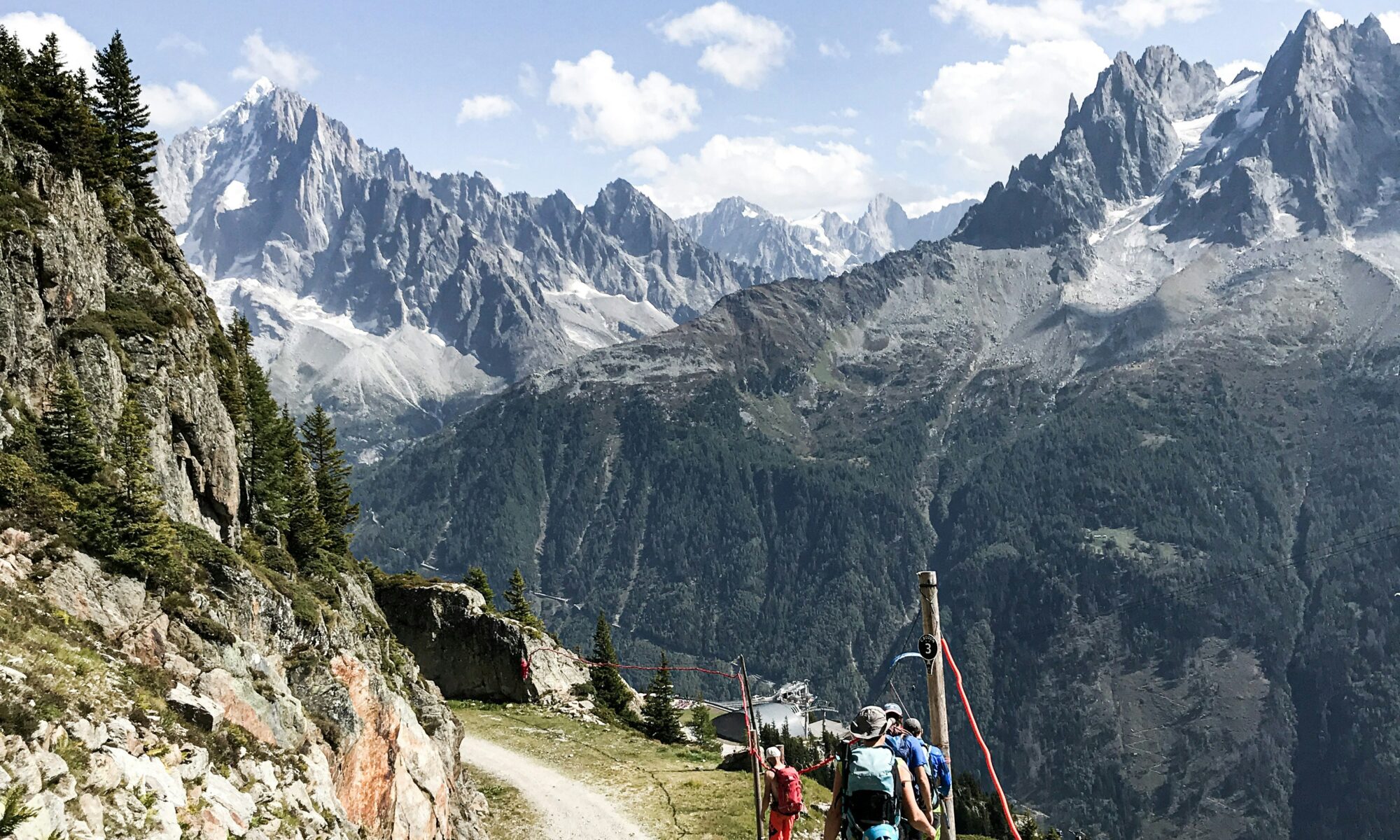
Chamonix Mont Blanc. Photo credit: Antoine de Barquin. Unsplash.

One of the Alps’ most famous long-distance hiking routes could face tighter controls from 2027, as local authorities and mountain professionals seek to curb wild camping, environmental damage and increasingly crowded trails.

The days of treating the Tour du Mont Blanc as an unrestricted hiking route may be coming to an end.

Local authorities and mountain professionals on the French side of the Mont Blanc massif have agreed on the principle of a new charter aimed at better managing one of Europe’s most popular long-distance treks, following another summer of exceptionally heavy use.

The Tour du Mont Blanc — generally known simply as the TMB — covers around 170 kilometres and approximately 10,000 metres of elevation gain as it circles the Mont Blanc massif through France, Italy and Switzerland.

The rapid increase is now raising concerns about erosion, biodiversity, sanitation, safety and the overall experience of walking one of the Alps’ classic routes.

“The open-bar approach is over”

Representatives of the seven French municipalities crossed by the TMB met in September alongside refuge and campsite operators, mountain guides, transport companies, environmental organisations and French state services.

Among the proposals being developed are the systematic reservation of recognised accommodation during the summer season and stronger restrictions on wild camping.

Jean-Marc Peillex, mayor of Saint-Gervais-les-Bains and president of the Communauté de Communes Pays du Mont-Blanc, told AFP that the aim was not to prohibit access to the mountains, but to organise it.

His description of the change was considerably more colourful: the “open-bar” approach, he said, was over.

Other measures being considered include improving authorised bivouac areas with basic facilities, limiting the size and weight of luggage transported between stages, reducing the movement of large suitcases by taxi and potentially establishing a “green brigade” to help enforce local regulations.

Quotas, however, are not currently part of the proposals.

Not all the new rules are decided yet

The direction is clear, but exactly how the system will work is still being negotiated.

The charter is being finalised, and there are differences among local authorities and tourism professionals over how far regulation should go.

One of the most significant ideas is that, from 2027, hikers completing the TMB could be required to have accommodation booked in advance.

But this should not yet be interpreted as a finalised three-country permit system for the entire Tour du Mont Blanc.

The route crosses France, Italy and Switzerland, making coordinated regulation significantly more complicated. Any comprehensive system would ultimately need to account for rules and authorities on all three sides of the massif.

Wild camping is already restricted in several areas

The changes would also build on restrictions that already exist.

Wild camping and bivouacking are not freely permitted everywhere along the Tour du Mont Blanc.

In parts of the French side, including protected areas of the Aiguilles Rouges massif, hikers must already reserve designated bivouac spaces. Vallorcine also prohibits wild camping across its municipal territory outside the specific rules governing nature reserves.

The proposed charter would therefore move towards a more consistent approach rather than introducing regulation from scratch.

A route struggling with its own success

The debate reflects a wider challenge facing the Alps.

Mountain destinations have spent decades encouraging summer tourism as a way of reducing their dependence on skiing and building a stronger year-round economy.

The success of routes such as the Tour du Mont Blanc shows how effective that strategy can be — but also where its limits may lie.

Heavy concentrations of hikers can damage vegetation, accelerate trail erosion and put pressure on water, sanitation and waste infrastructure. Local officials have also complained about inappropriate behaviour, including illegal camping and hikers leaving human waste in the landscape.

At the same time, the TMB has become an important source of summer income for refuges, hotels, restaurants, guides and communities along the route.

That makes the challenge less about keeping visitors away than deciding how many people fragile mountain environments can accommodate — and how those visitors should move through them.

Planning the Tour du Mont Blanc in 2027

For hikers already considering the Tour du Mont Blanc next summer, advance planning will become increasingly important regardless of what final form the new charter takes.

The official Tour du Mont Blanc accommodation platform says reservations for summer 2027 will open on 15 October 2026.

It already strongly recommends booking refuges ahead, warning that the most popular properties can fill several months in advance.

The final rules for 2027 are still taking shape.

But after a summer in which more than 90,000 people reportedly circled the Mont Blanc massif, the message from local authorities is becoming increasingly difficult to miss: one of the Alps’ most famous trails can no longer be managed as though its capacity were unlimited.

Read More

Sources

Record-Breaking El Niño Is Here — What Could It Mean for Europe’s 2026/27 Ski Winter?

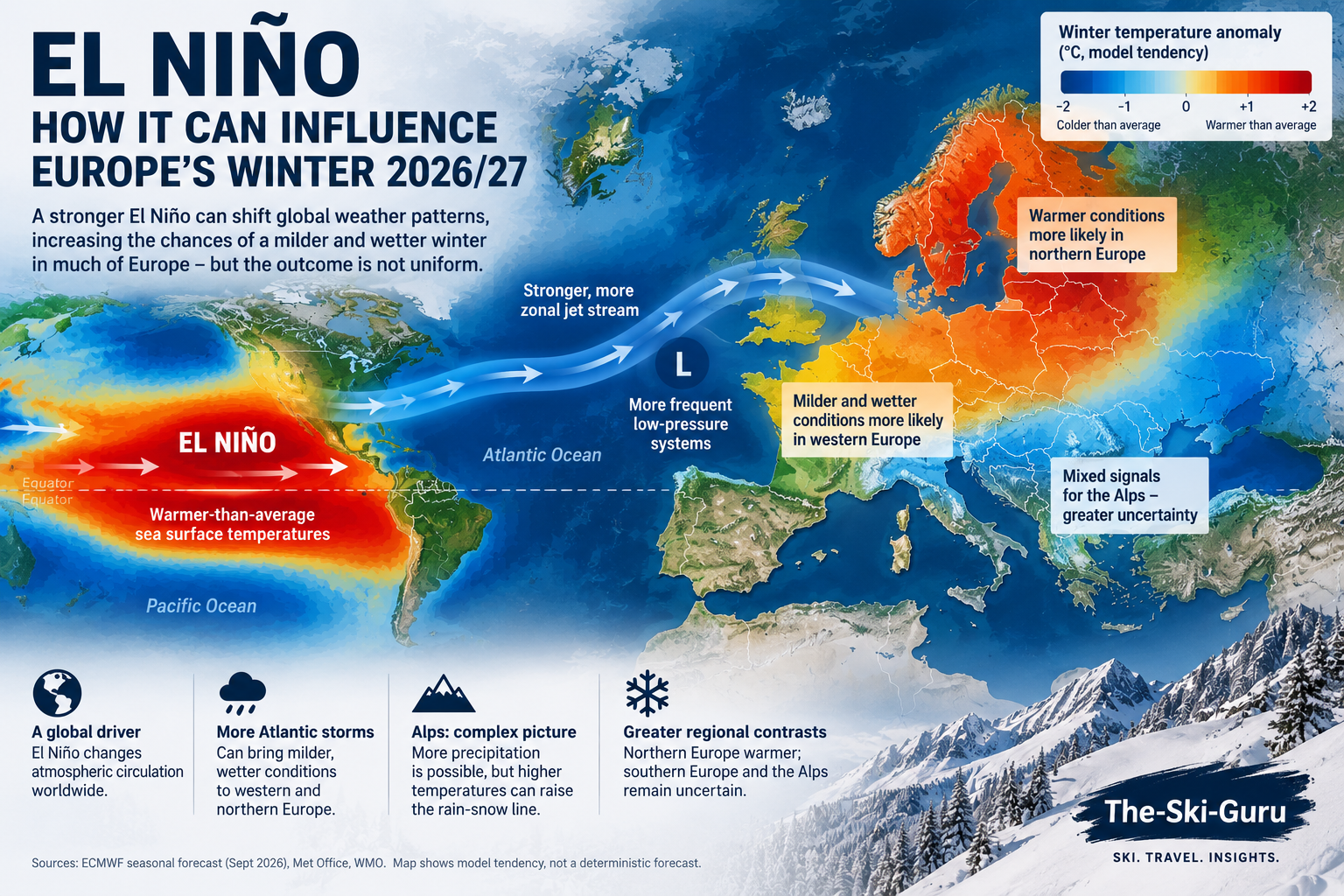
Illustration of how El Niño can influence European winter weather patterns. The impact on the Alps remains complex, with temperature, precipitation and storm tracks determining whether moisture falls as rain or snow. AI-generated illustration created for The-Ski-Guru. Not an official meteorological forecast map.

El Niño could influence Europe’s winter 2026/27. A record-breaking El Niño is building towards its winter peak, but despite dramatic headlines, it does not automatically mean a snowy — or snowless — winter for the Alps. Here is what the official forecasts actually tell us.

El Niño has officially entered record territory. When we first looked at what El Niño could mean for the 2026/27 ski season in August, the event was still developing. Since then, the signal has strengthened considerably.

On 22 September, the UK Met Office confirmed that sea-surface temperatures in the central equatorial Pacific have now surpassed those recorded during previous El Niño events, making the developing 2026 event the strongest in the observational record.

It is an extraordinary climate signal — and one arriving just as the Northern Hemisphere ski industry prepares for winter 2026/27.

But does a record El Niño mean a record ski season?

Not necessarily.

For Europe in particular, the relationship between El Niño and Alpine snowfall is considerably more complicated than some of the increasingly dramatic seasonal forecasts circulating online might suggest. Continue reading “Record-Breaking El Niño Is Here — What Could It Mean for Europe’s 2026/27 Ski Winter?”

Arapahoe Basin Turns 80 as Unlimited Ikon Access Tests Its Local Soul

Arapahoe Basin turns 80 years old. Logo copyright: Arapahoe Basin

Arapahoe Basin is celebrating its 80th anniversary with discounted tickets, free skiing for 80-year-olds and expanded Ikon access. But for a Colorado ski area that once left Epic Pass to control overcrowding, the return of unlimited multipass access raises a bigger question.

Arapahoe Basin will celebrate its 80th anniversary during the 2026/27 ski season while opening the mountain to unlimited access for both Ikon Pass and Ikon Base Pass holders.

The Colorado ski area is marking the milestone with $80 Wednesday lift tickets, free skiing for 80-year-olds on selected dates and a programme of anniversary events. Yet the most consequential change may not be part of the birthday celebrations.

For the first time, Ikon Base Pass holders will receive unlimited access to A-Basin throughout the 2026/27 season, following the introduction of unlimited access for full Ikon Pass holders in 2025/26.

That evolution is significant at a mountain which built part of its modern identity by walking away from Epic Pass after overcrowding began to affect the experience it wanted to offer.

Continue reading “Arapahoe Basin Turns 80 as Unlimited Ikon Access Tests Its Local Soul”

Plymouth Expands Adaptive Skiing After Instructors Complete Specialist Training

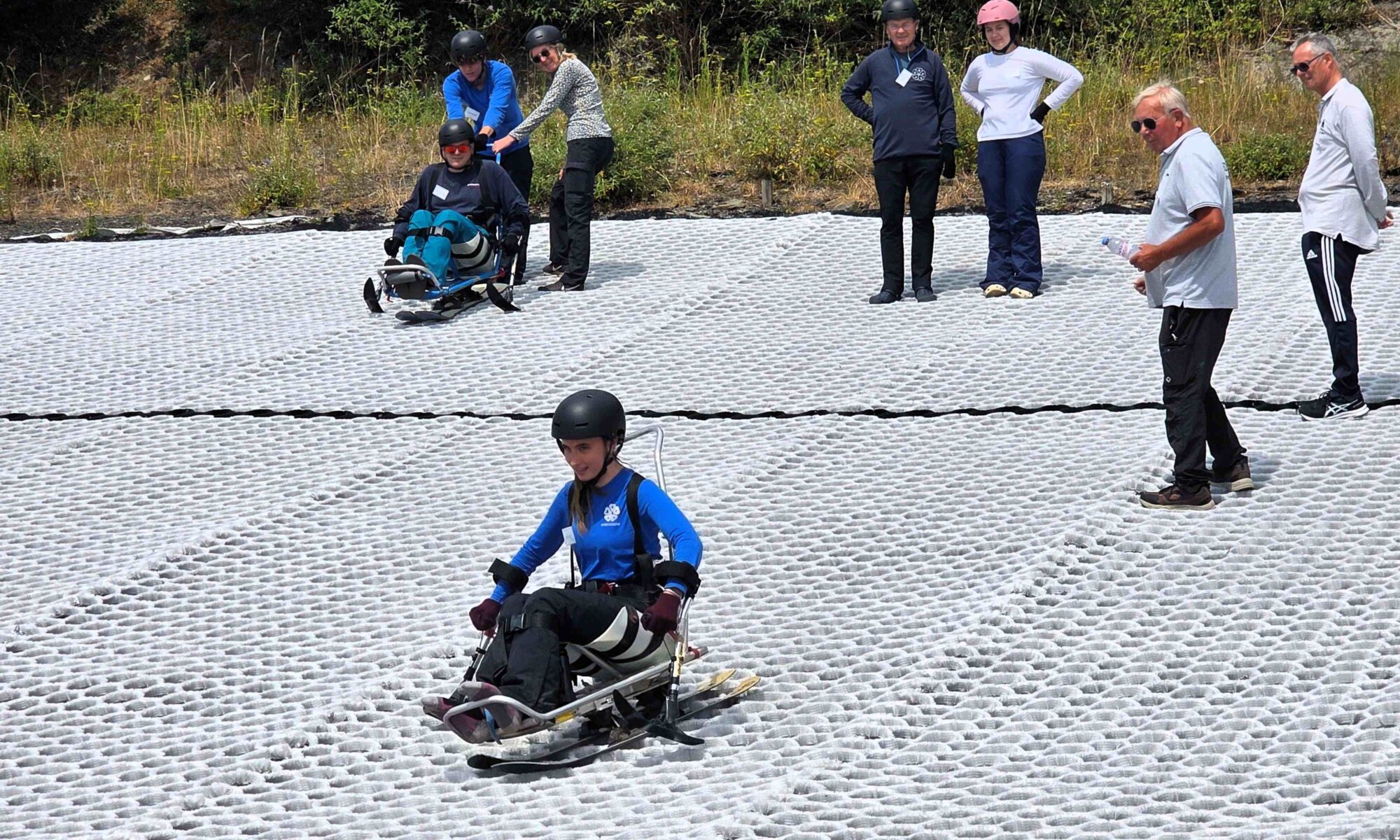
Instructors at Plymouth Snowsports Centre learn how to operate sit-skis during specialist training delivered by the Southern Ski Club for the Disabled. Credit: Southern Ski Club for the Disabled.

Twelve instructors at Plymouth Snowsports Centre have completed specialist disability-awareness training, allowing the year-round facility to offer a broader range of adaptive skiing sessions.

Adaptive skiing opportunities have expanded in southwest England after instructors at Plymouth Snowsports Centre completed an intensive training programme delivered by the Southern Ski Club for the Disabled.

Six trainers and a training administrator from the charity travelled from its base at Knockhatch Ski Centre in East Sussex to deliver the course. Twelve Plymouth instructors received 18 hours of training over two days, combining classroom work with practical sessions on the slope.

The programme covered visible, non-visible and multiple disabilities and included techniques for teaching people who are deaf, blind or visually impaired, deaf blind, amputees or neurodivergent.

Continue reading “Plymouth Expands Adaptive Skiing After Instructors Complete Specialist Training”

Battle for Vail Resorts Escalates as Oasis Nominates Four Directors

Photo: Colorado Sun. Who Keeps Ski Resorts Running? Labour, Housing, and Staffing Challenges in U.S. Mountain Towns.

Activist investor Oasis Management has nominated four candidates — including Olympic champion Picabo Street and former Disney CEO Robert Chapek — to Vail Resorts’ nine-member board, turning months of speculation over the company’s future into a potential battle over its direction.

The pressure surrounding Vail Resorts has moved into a new phase.

Vail Resorts confirmed on September 11 that shareholder Oasis Management had submitted four candidates for election to the company’s Board of Directors: former Disney CEO Robert A. Chapek, financier M. Ashton Hudson, Utah venture capitalist Bryce Roberts and Olympic ski champion Picabo Street.

The nominations were submitted on September 9 and 10, immediately before the company’s nomination window closed.

A fifth candidate, Gregory Syvert Meyer, separately nominated himself.

The move is significant because Oasis is not a minor shareholder. According to KPCW, citing its latest regulatory filings, the investment firm owns approximately 6.5% of Vail Resorts.

More importantly, Oasis has a reputation as an activist investor — and reports that it was considering a proxy battle at Vail Resorts had already emerged earlier this summer.

Four candidates for a nine-member board

Vail Resorts currently has a nine-member board, making the nomination of four directors potentially significant.

In its statement, however, Vail Resorts did not characterize the nominations as a proxy fight.

The company said it “prioritizes consistent engagement with shareholders” and reiterated that it was already conducting a search for new independent directors as part of an ongoing board refreshment process.

Oasis has also not yet formally declared an activist campaign through a Schedule 13D filing.

Continue reading “Battle for Vail Resorts Escalates as Oasis Nominates Four Directors”

Where to See the Alps’ Traditional Cow Parades in Autumn 2026

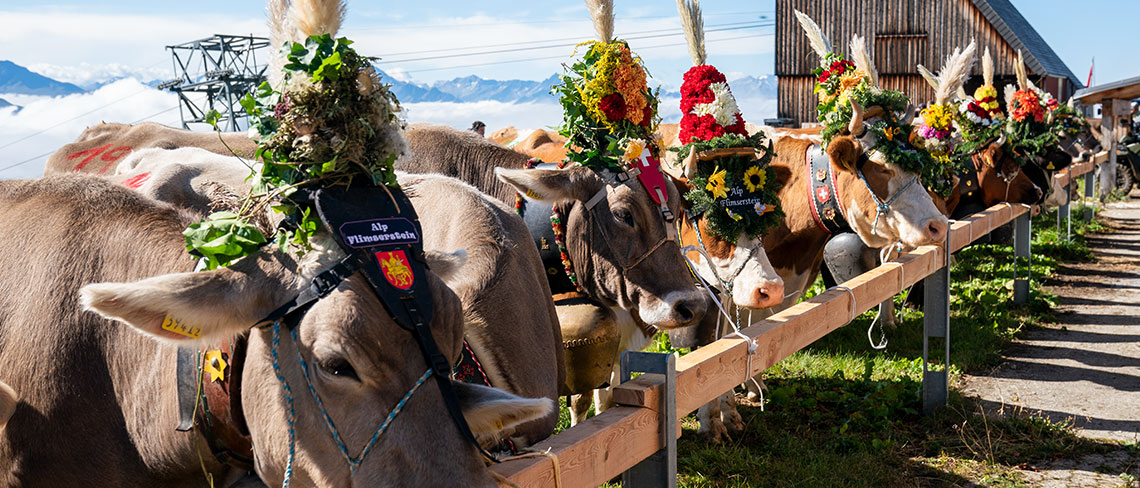
Laax Much Loved Descent of the Cows Festival Returns this September. Photo credit: Laax/Rooster PR

From the Dézarpa in Italy’s Aosta Valley to Switzerland’s Désalpe and Austria’s colourful Almabtrieb, September and October mark one of the Alps’ most atmospheric traditions: the return of cattle from their high summer pastures.

As summer draws to an end in the Alps, another season begins — announced not by ski lifts or the first snowfall, but by the sound of cowbells.

Across Italy, Switzerland, Austria and France, cattle that have spent the warmer months grazing on high-altitude pastures begin their journey back down to farms in the valleys.

The tradition has different names across the Alps. In the Aosta Valley it is known as the Dézarpa, or Devétéya around Cogne. In French-speaking Switzerland it is the Désalpe, while German-speaking regions use Alpabzug or Alpabfahrt. Across Austria and South Tyrol, visitors will hear Almabtrieb. In parts of the French Alps, the return of the herds is known as the descente des alpages or démontagnée.

Whatever the name, the principle is the same.

Continue reading “Where to See the Alps’ Traditional Cow Parades in Autumn 2026”

The Mega-Pass Wars Enter a New Phase: Ikon Expands, Epic Consolidates and Indy Goes Global

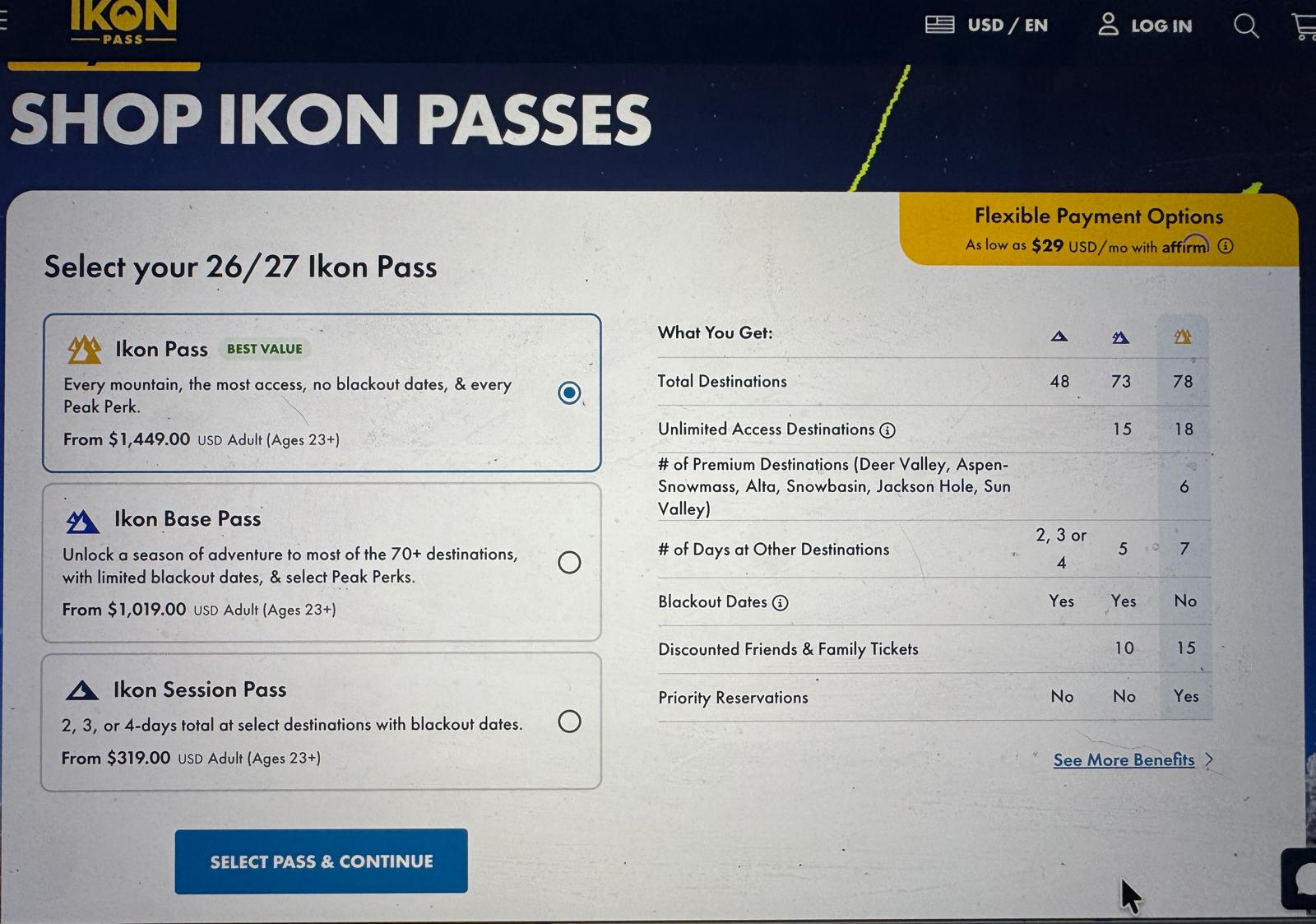
Ikon Pass sales platform. Credit: Alterramtnco.com

Ikon is pushing deeper into Asia, Indy Pass has grown beyond 300 resorts and a new Snow Pass has entered the market. Meanwhile, Epic is shifting its focus from expansion to guest experience. But across the Atlantic, Europe’s own multi-resort passes show that there is more than one way to build a ski empire.


The ski pass wars are no longer simply a battle between Epic and Ikon.

Ikon Pass has expanded its Asian footprint again for winter 2026/27, adding Madarao Mountain Resort in Japan and Beidahu and Lake Songhua in China.

On its own, that might look like another incremental expansion of an already enormous ski pass.

Look at what is happening across the wider market, however, and something more significant is emerging.

Ikon continues to build a worldwide collection of destination resorts. Epic, after years of acquisitions and international partnerships, is openly talking about improving what it already has. Indy Pass has assembled more than 300 mostly independent ski areas. Snow Pass has arrived as another lower-cost alternative.

And in Europe, regional passes such as Magic Pass, Ski amadé, Dolomiti Superski, the Valle d’Aosta regional pass and Mont Blanc Unlimited demonstrate yet another model: destinations cooperating across resorts, regions and even national borders without necessarily being owned by the same company.

The mega-pass may have won.

The next battle is over what kind of mega-pass skiers actually want.

Continue reading “The Mega-Pass Wars Enter a New Phase: Ikon Expands, Epic Consolidates and Indy Goes Global”

Action Outdoors Launches No-Frills Hakuba Ski Trip as Japan Targets a Broader UK Market

Hakuba Valley in Japan’s Northern Alps, where Action Outdoors will launch its first Japan ski programme in January 2027. Photo: Action Outdoors. Photographer: Matt Hall.

A new Hakuba package from £1,214 brings Action Outdoors’ shared-room, no-frills model to Japan—but international flights are not included.

Japan may rank high on British skiers’ bucket lists, but the destination is still commonly associated with expensive, long-haul ski holidays aimed at the luxury market. Action Outdoors is now testing whether a simpler, more social model can make skiing in Japan accessible to a broader group of travellers.

The UK operator is launching its first Japan programme for winter 2026/27, with two departures to Hakuba Valley in January and February 2027.

Prices start from £1,214 per person, based on four people sharing a room. The package includes one night in Tokyo, return Shinkansen train travel between Tokyo and Nagano, bus transfers to Hakuba, seven nights’ half-board accommodation, a six-day lift pass and six days of either instructed piste skiing or off-piste guiding.

International flights to Japan, lunches and transfers between Tokyo’s airports and the city are not included.

Continue reading “Action Outdoors Launches No-Frills Hakuba Ski Trip as Japan Targets a Broader UK Market”