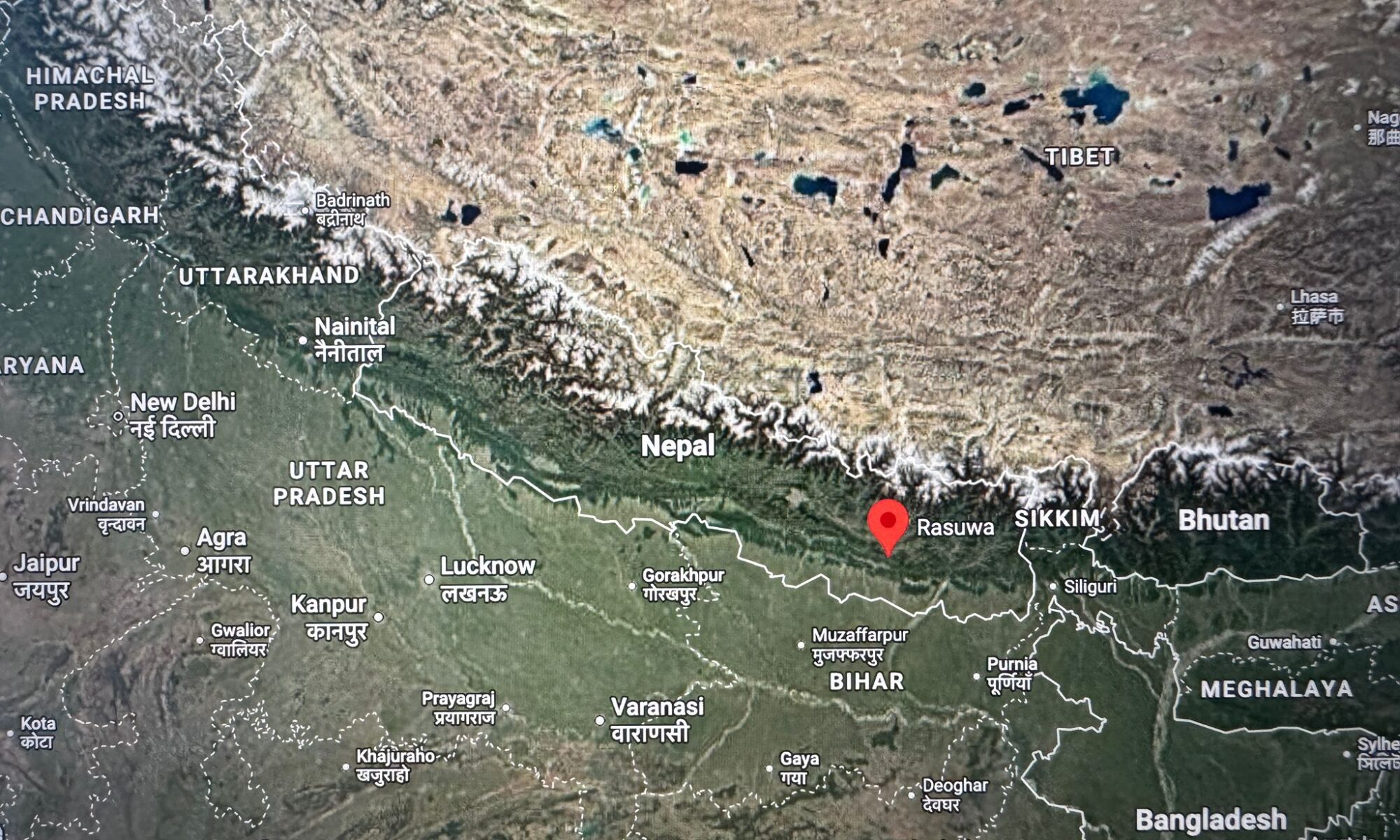
A catastrophic glacier-related collapse in the Himalayas has killed hundreds of people across Nepal and Tibet and left many more missing.
But beyond the shocking images and the rapidly evolving casualty figures lies a much bigger question for mountain regions around the world:
Could something similar happen in the Alps?
The answer is uncomfortable.
The precise sequence that produced the Nepal disaster is still being investigated. But glacier collapses, rock avalanches, sudden releases of glacial water, debris flows and naturally dammed lakes are not unique to the Himalayas. They are hazards that also exist in the Alps — and Alpine history provides some dramatic examples.
What can be very different is the ability to identify certain dangers in advance, monitor them and evacuate people before the mountain moves.
And even in the best-monitored Alpine countries, that warning cannot always be guaranteed.
Search efforts continue for 8 climbers missing in the Indian Himalayas, but hopes are fading after possible avalanche
Last Update
From CNN.com
A search team has spotted five bodies on an unnamed peak in the Indian Himalayas, where the eight climbers were believed to have gone missing a week ago.
Pithoragarh District Magistrate Vijay Kumar Jogdande said on Monday that the bodies seemed to be partially buried in an avalanche on the peak in different locations.
The analysis of some photographs taken by a helicopter that did an air survey of the area earlier today allowed to identify the bodies.
The operation has stopped by Monday afternoon local time for the day, Jogdande said. Now the authorities are figuring out how to recover the bodies.
On Sunday, helicopter teams saw signs of an avalanche on the peak where the group was thought to have been, according to two state officials. Also, on Monday, a helicopter made a recce of the area and the crew saw a backpack at an elevation of 5,000 meters.
Search efforts continue for 8 climbers missing in the Indian Himalayas, but hopes are fading after possible avalanche
Jogdande said that for sure the missing team has been caught by a “huge avalanche” and that the ‘chances of survival are almost zero now.”
The missing climbers — four Britons, two Americans, an Australian and their Indian liaison officer — went missing in the region of Nanda Devi East, one of the highest peaks in India at just over 7,400 meters (24,000 feet.)
According to group’s expedition company Facebook posts, the group was attempting to climb a previously unclimbed and unnamed peak of about 6,477 meters (21,250 feet)
Indian authorities said on Monday that the climbers had no permission to climb an unnamed peak. Jogdande added that if they had known that the eight climbers were planning on climbing the unnamed peak instead of Nanda Devi East, they “would not have given permission.”
He added that heavy rain and high winds in the area have been hampering the search efforts.
Eight climbers have been missing when climbing Nanda Devi, India’s second tallest mountain at 7,816 meters. The group was supposed to return on May 31, having departed on May 13.
India – Nanda Devi. Search efforts continue for 8 climbers missing in the Indian Himalayas, but hopes are fading after possible avalanche.
They were guided by British Mountain guide Martin Moran, owner of Scottish Moran Mountain tour company, who is an experienced mountain guide and has run numerous expeditions in the Indian Himalayas.
Search efforts started on Saturday, but bad weather conditions forced them to be called off during the evening hours. There are indications that an avalanche may have swept up the team.
The operation resumed on Sunday morning, with the Indian Air Force deploying two helicopters to aid in the search.
Enjoyed this post? Get my latest ski guides, weather insights, resort updates and travel tips directly in your inbox. Subscribe to The-Ski-Guru here.
Manage Cookie Consent
To provide the best experiences, we use technologies like cookies to store and/or access device information. Consenting to these technologies will allow us to process data such as browsing behavior or unique IDs on this site. Not consenting or withdrawing consent, may adversely affect certain features and functions.
Functional
Always active
The technical storage or access is strictly necessary for the legitimate purpose of enabling the use of a specific service explicitly requested by the subscriber or user, or for the sole purpose of carrying out the transmission of a communication over an electronic communications network.
Preferences
The technical storage or access is necessary for the legitimate purpose of storing preferences that are not requested by the subscriber or user.
Statistics
The technical storage or access that is used exclusively for statistical purposes.The technical storage or access that is used exclusively for anonymous statistical purposes. Without a subpoena, voluntary compliance on the part of your Internet Service Provider, or additional records from a third party, information stored or retrieved for this purpose alone cannot usually be used to identify you.
Marketing
The technical storage or access is required to create user profiles to send advertising, or to track the user on a website or across several websites for similar marketing purposes.




 Subscribe to The-Ski-Guru here.
You must be logged in to post a comment.