Cervino The One Cable Car Project Takes Another Step Forward

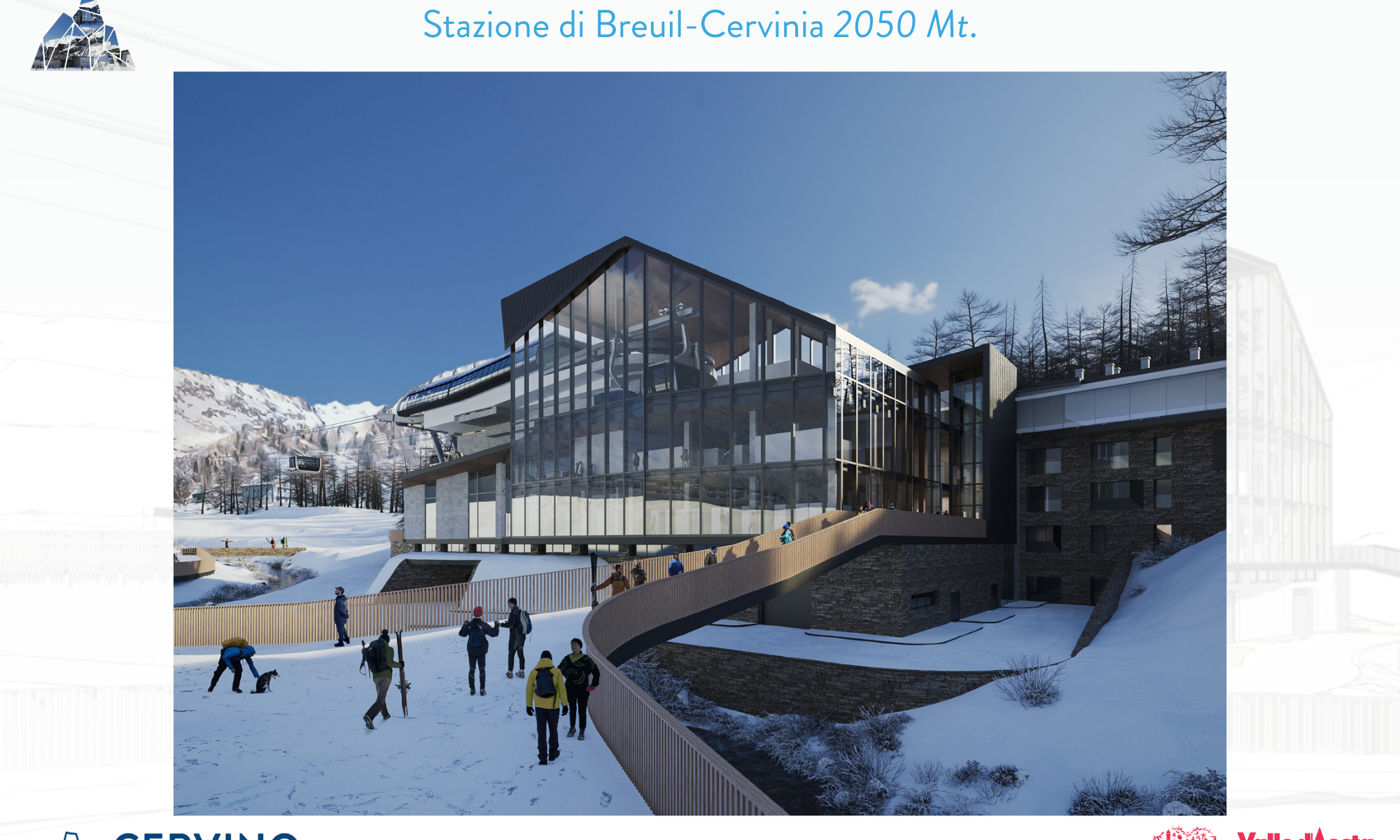
Rendering of the planned Cervino The One departure station in Breuil-Cervinia. New geological studies connected to the project have prompted a revision of the resort’s landslide and flood-risk maps. Credit: LEITNER/Cervino S.p.A.

Cervino The One, the planned cable car connection between Breuil-Cervinia, Plan Maison and Plateau Rosa, has passed another administrative milestone. Valtournenche’s municipal council has unanimously approved the text of an agreement covering the new lift system and protection works for the village.

The agreement brings together the Municipality of Valtournenche, the Aosta Valley regional government and Cervino SpA. Reported by local media on 17 November 2026, it sets out arrangements needed to deliver the project, including the use of municipal land.

For visitors, the announcement marks progress towards a future change in how they reach the upper mountain. The new system is currently expected to enter service in December 2029, barring unforeseen circumstances.

Continue reading “Cervino The One Cable Car Project Takes Another Step Forward”
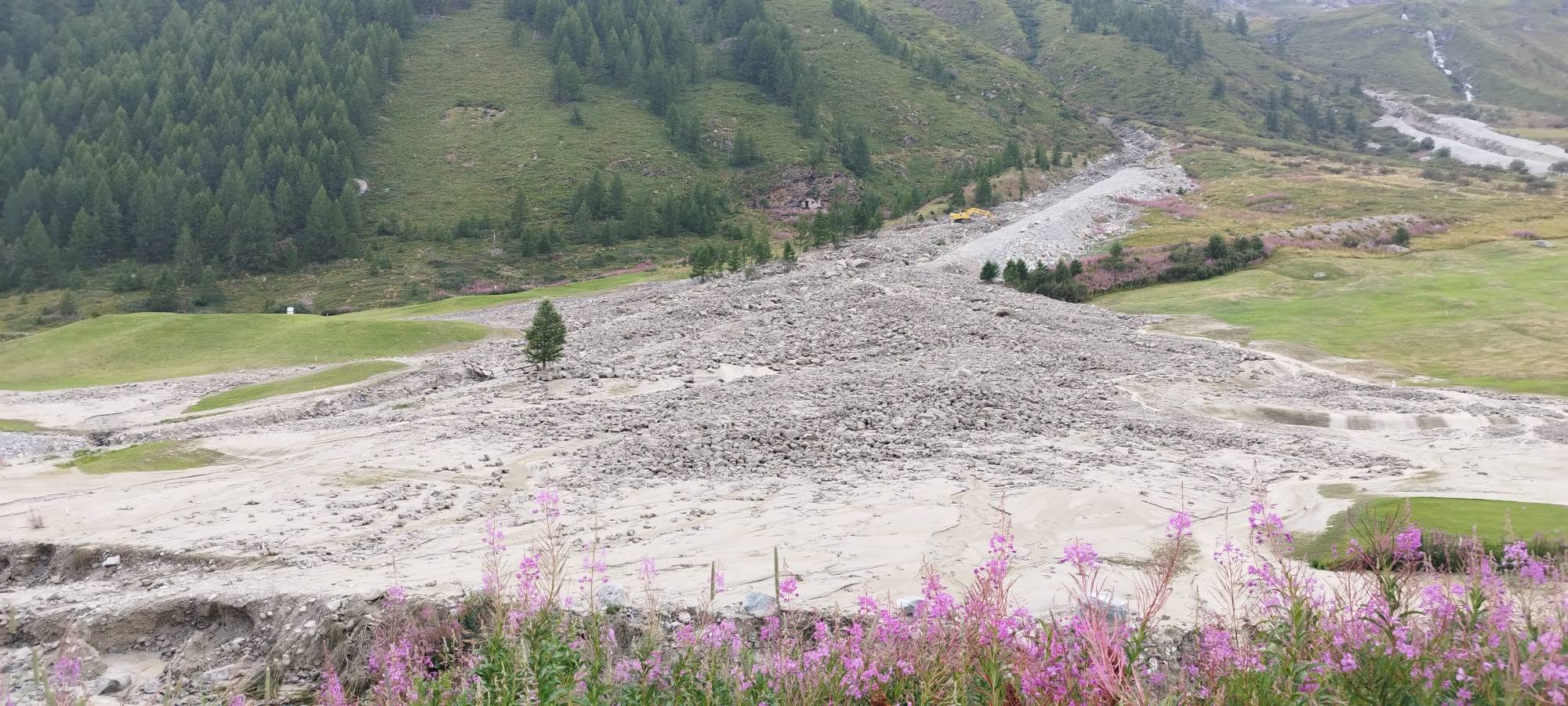
Cervinia Avoids Repeat of 2024 Flood Disaster After Violent Storm Triggers Mudflows

Mudslide in Cervinia. Photo: Franco Milanesi. Facebook.

A violent thunderstorm lasting barely 20 minutes sent torrents of water, mud and debris through Breuil-Cervinia on Monday afternoon, flooding parts of the resort and covering the golf course with sediment. Despite the dramatic scenes, authorities say the village itself escaped major damage thanks to flood protection measures introduced after the devastating 2024 disaster. 

The storm caused the Chérillon, Maberge and Avouil mountain streams to overflow after an intense cloudburst struck the upper Valtournenche valley. Large quantities of rocks, mud and debris were carried downstream, damaging two bridges on the golf course and depositing thick layers of sediment across several fairways. 

Continue reading “Cervinia Avoids Repeat of 2024 Flood Disaster After Violent Storm Triggers Mudflows”

Zermatt–Cervinia Summer Skiing to Close as Extreme Heat Damages Glacier Snow

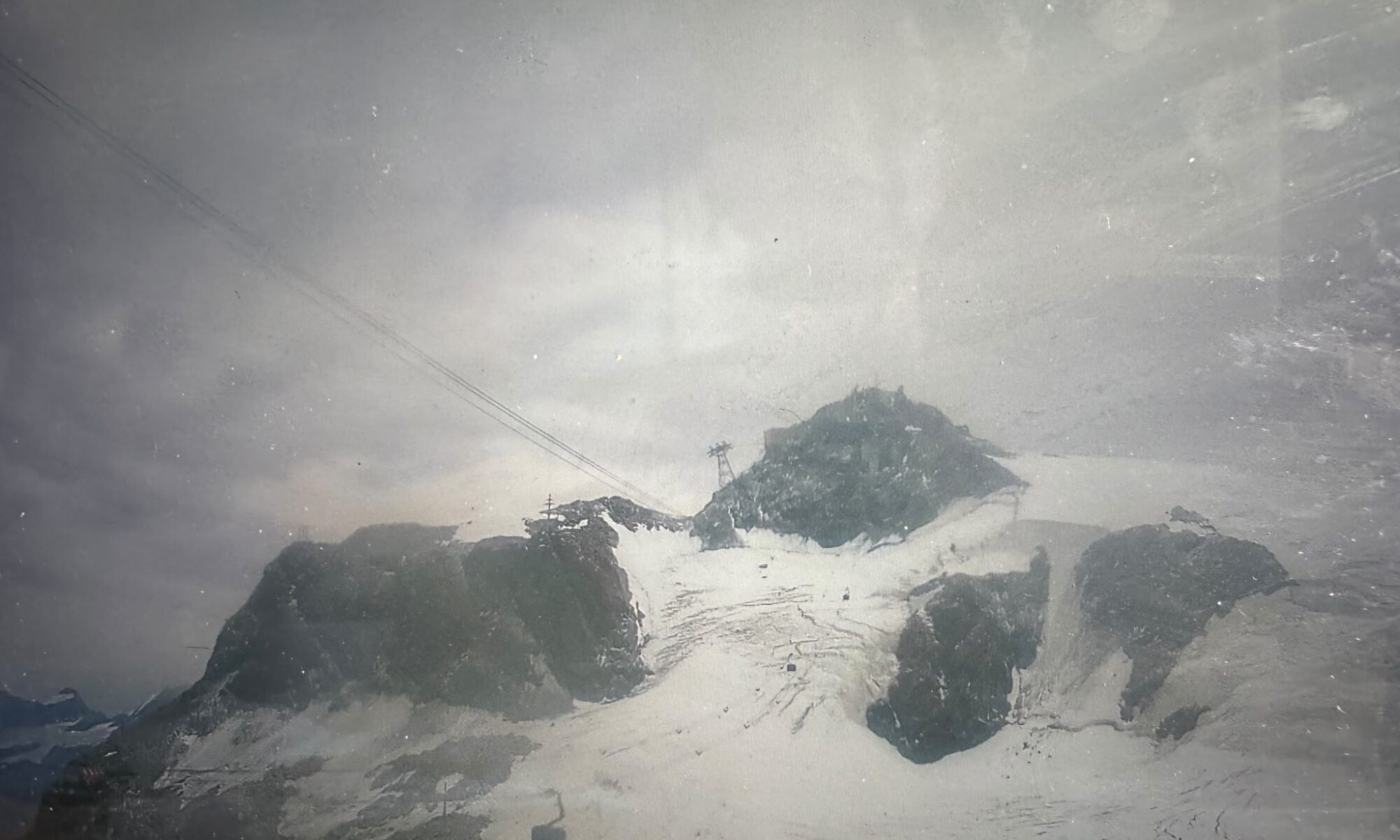
Plateau Rosa webcam. Cervino Ski Paradise. Today, 31 July, 2026

Summer skiing on the glacier shared by Zermatt and Cervinia will be suspended from August 1, 2026, after exceptionally high temperatures and a lack of snowfall left the pistes unsuitable for safe skiing.

Summer skiing in the Zermatt–Cervinia ski area will close temporarily from August 1, 2026, as unusually warm conditions continue to affect the glaciers surrounding the Matterhorn.

The operational decision was taken on the Swiss side of the ski area, where the summer pistes are located on the Theodul Glacier and around Plateau Rosa. However, the closure also directly affects Cervinia, which is connected to Zermatt and sells access to the same cross-border summer skiing product.

Continue reading “Zermatt–Cervinia Summer Skiing to Close as Extreme Heat Damages Glacier Snow”

The Alps Did Not Have a Snow-Rich Winter: Why 2026 Resembles 2022 for Glaciers

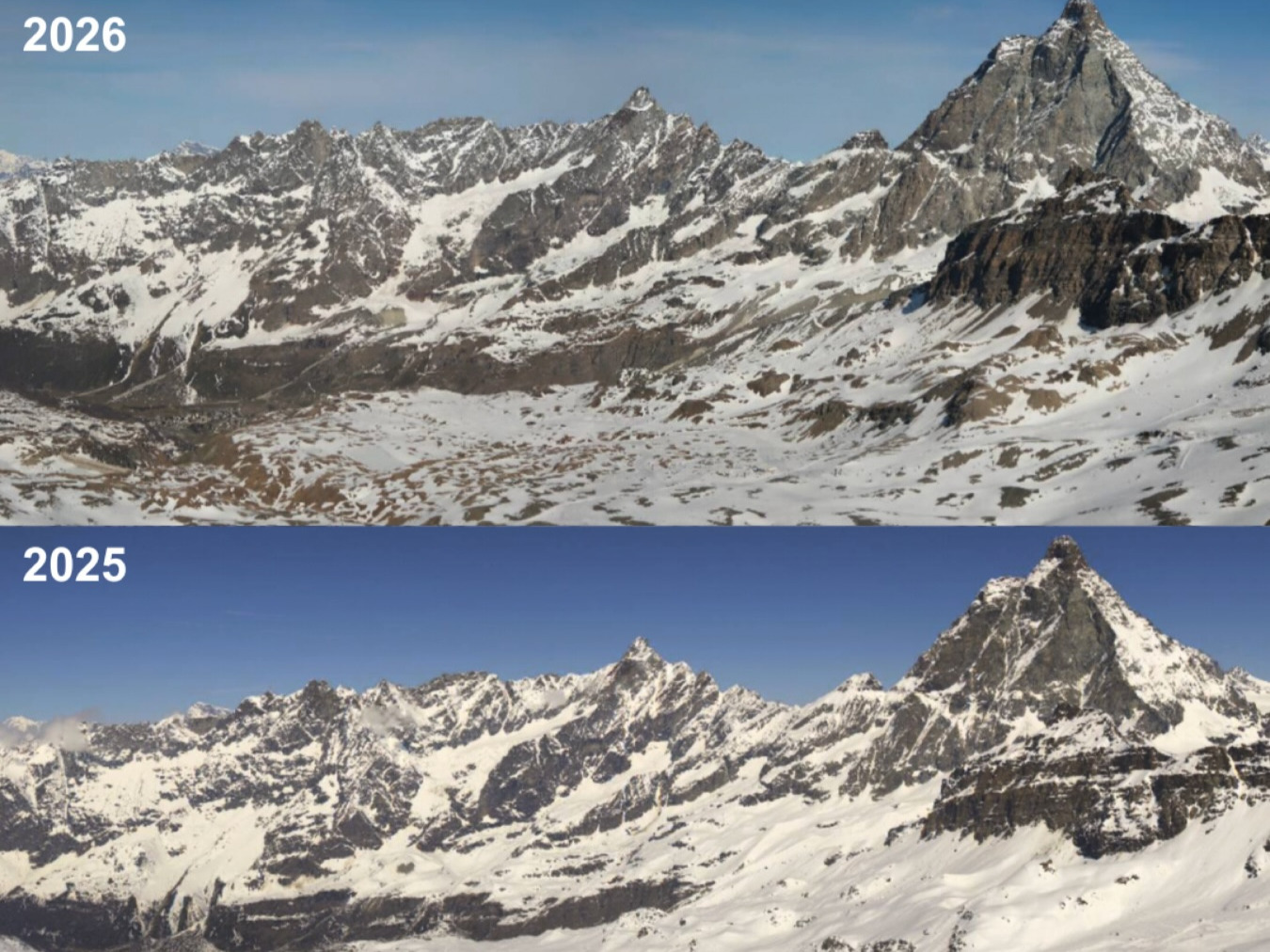
Snow comparisons Plateau Rosa 2025-26. Photo: Meteo Valle d'Aosta.

The idea that winter 2025/26 was “a good snow year” in the Alps does not hold up under closer analysis. While some regions experienced notable snowfall events, particularly in December, these were highly localised and have led to a broader misperception about conditions across the entire Alpine arc.

Data and observations from Meteo Valle d’Aosta highlight the issue clearly. Heavy early-season snowfall was largely confined to the Maritime and Ligurian Alps, a relatively small portion of the range. Outside these areas, including much of the north-western Alps and Valle d’Aosta, snowfall remained closer to average or slightly below through much of the early winter.

Crucially, what followed mattered more than what fell.

Continue reading “The Alps Did Not Have a Snow-Rich Winter: Why 2026 Resembles 2022 for Glaciers”

Saharan Dust Reaches the Alps as Freezing Levels Rise Above 3000 m

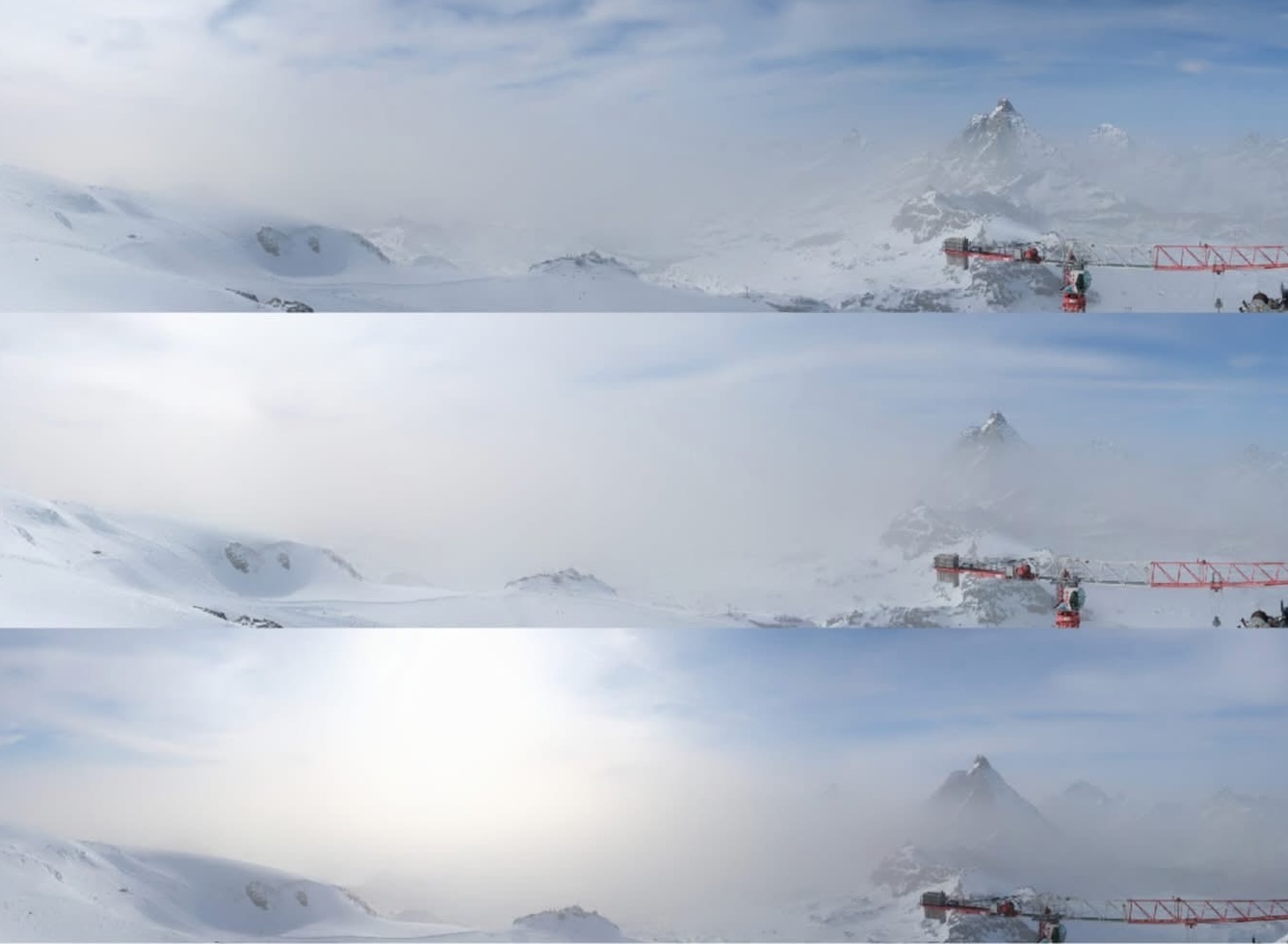
Saharan dust haze visible over the Alps at Piccolo Cervino above Cervinia

A hazy sky observed across parts of the Aosta Valley and the wider Alps in early March has an unusual origin: Saharan dust transported north across the Mediterranean.

Meteorological observations indicate that large quantities of fine sand particles from the Sahara Desert have been carried into Alpine air masses during a prolonged period of high pressure.

Similar Saharan dust events have been documented by atmospheric monitoring services across Europe, including observations from the Copernicus Atmosphere Monitoring Service, which regularly tracks large dust plumes transported from North Africa into the Mediterranean and Alpine regions. These atmospheric events can influence visibility, air quality and — when dust settles on snow surfaces — the evolution of the mountain snowpack.

The result has been a visible veil of haze in the atmosphere and dust deposition on snow surfaces at high altitude, something that can have important consequences for the evolution of the snowpack.

Webcam images from Piccolo Cervino (3883 m), above Breuil-Cervinia, show the progressive increase of dust suspended in the air during the day.

Meteorologists across the region also report exceptionally mild temperatures for the time of year, with freezing levels remaining unusually high for several consecutive days.

These episodes are part of a broader pattern of extreme weather in the Alps, affecting snow quality and melt rates.

Similar patterns are now visible beyond the Alps, where extreme heat has forced early resort closures in North America.

Continue reading “Saharan Dust Reaches the Alps as Freezing Levels Rise Above 3000 m”