

The question of whether lower-elevation ski resorts in the Alps can remain viable is no longer theoretical. It is already being tested in real time.
Following a winter that, despite perception, failed to deliver consistent snowpack across much of the range, the structural weaknesses of lower-altitude skiing are becoming harder to ignore. As explored in The Alps Did Not Have a Snow-Rich Winter: Why 2026 Resembles 2022 for Glaciers, the idea of a snow-rich season does not reflect the underlying reality of increasingly uneven snowfall and reduced snow retention.
What matters now is not just how much snow falls, but where—and how long it lasts.
The Altitude Problem Is Becoming Structural
For decades, ski resort viability in the Alps was closely tied to a relatively stable threshold. Resorts above roughly 1200 metres could expect reliable snow seasons, while those below faced more variability.
That line is shifting.
Today, consistent snow reliability is increasingly associated with elevations closer to 1500 to 1800 metres, and in some winters even higher. Below that range, resorts are becoming more dependent on increasingly narrow weather windows, where cold temperatures allow snowmaking to operate effectively.
This is where the challenge becomes structural rather than seasonal.
Resorts such as Kitzbühel or Saalbach-Hinterglemm remain among the most successful in the Alps, yet their base elevations place them squarely within this pressure zone. Their continued viability is increasingly tied not to natural snowfall, but to the ability to produce and maintain artificial snow under tightening climatic constraints.
Snowmaking: A Solution With Limits
Snowmaking has transformed the Alpine ski industry over the past three decades. In countries such as Austria, a large majority of slopes are now equipped with artificial snow systems. In Italy, particularly across the Dolomiti Superski, coverage reaches some of the highest levels in the world, supported by advanced infrastructure and companies such as TechnoAlpin based near Bolzano.
This has allowed many lower and mid-elevation resorts to maintain reliable pistes even in marginal winters.
But snowmaking is not a complete solution.
It depends on cold temperatures, often requiring sustained periods below freezing to operate efficiently. As winters warm, these windows are becoming shorter and less predictable. At the same time, the cost of producing artificial snow—driven by energy and water use—is rising, placing additional financial pressure on resorts already operating with tighter margins.
This dynamic is already visible in investment decisions, as explored in Chamonix Invests in Snowmaking at La Flégère — But for How Long?, where the question is no longer whether to invest in snowmaking, but whether that investment remains sustainable over time.
A Growing Divide Within the Alps
The result is not a uniform decline, but a growing divergence.
Higher-elevation resorts retain a structural advantage. Lower-elevation resorts, even well-established ones, are becoming increasingly exposed to climatic variability. In France, destinations such as Les Gets and Megève illustrate this challenge, combining strong brand recognition with greater sensitivity to temperature and snowfall fluctuations.
Across the Alps, the margin for error is shrinking. A winter with delayed cold temperatures, reduced snowfall, or early spring warming can significantly impact the season’s viability.
This is not just a weather issue. It is an operational and economic one.
As highlighted in Vail Resorts Visits Drop 14.9% — What It Reveals About Snow, Demand, and the Ski Industry Model, even large operators are increasingly exposed to variability in snow conditions, with direct consequences for visitor numbers and revenue.
The Shift Toward Four-Season Models
Faced with these pressures, many lower-elevation resorts are not simply trying to preserve the past. They are beginning to redefine their future.
The most visible response is the shift toward four-season tourism.
Resorts that were once heavily dependent on winter are investing in summer infrastructure, expanding activities such as mountain biking, hiking, trail running, and wellness tourism. In destinations like Les Gets, extensive bike park development has become a central part of the economic model. In Kitzbühel, golf, events, and year-round tourism play an increasingly important role alongside skiing.
Even in the Dolomites, where snowmaking remains highly effective, the region is actively positioning itself as a year-round destination, leveraging its landscape and infrastructure beyond winter.
This transition reflects a deeper shift.
Lower-elevation resorts are not necessarily disappearing. They are becoming something else.
A Transition With Uneven Outcomes
Yet this transformation is not guaranteed to succeed everywhere.
Summer tourism does not always generate the same level of revenue as winter skiing. Infrastructure designed for ski operations is not always easily adapted. Accessibility, landscape appeal, and international recognition all play a role in determining whether a resort can successfully reposition itself.
Some destinations will manage this transition effectively. Others may struggle.
What is becoming clear is that the future of lower-elevation resorts will not be defined by snow alone, but by their ability to diversify and adapt to a changing mountain environment.
The Real Question Facing the Alps
The debate is no longer about whether lower-elevation resorts can rely on natural snowfall.
It is increasingly about whether even snowmaking can sustain their current model in the long term.
And beyond that, whether the identity of these resorts—as ski destinations—will remain central, or become just one part of a broader tourism offering.
The Alps are not losing skiing. But they are changing.
And nowhere is that change more visible than at lower elevations.
Sources
International Ski and Snowboard Federation
https://www.fis-ski.com/inside-fis/news/2024-25/truths-and-myths-about-technical-snow-production
https://www.mdpi.com/2072-4292/18/3/491
https://www.statista.com/chart/35698/share-of-ski-area-covered-by-snowmaking/
European Environment Agency https://climate-adapt.eea.europa.eu/en/metadata/publications/climate-change-as-a-threat-to-tourism-in-the-alps
 Planning your next trip to the Italian Alps?
 Planning your next trip to the Italian Alps?
If you’re heading to the Aosta Valley, take a look at Il Cuore della Valdigne, our family-owned apartment in Morgex, available for rent when we’re not using it ourselves.
It’s an ideal base to:
 Ski in Courmayeur,
 Enjoy the mountains in summer (hiking, biking, nature)
Check my Mountain Art on my Shop
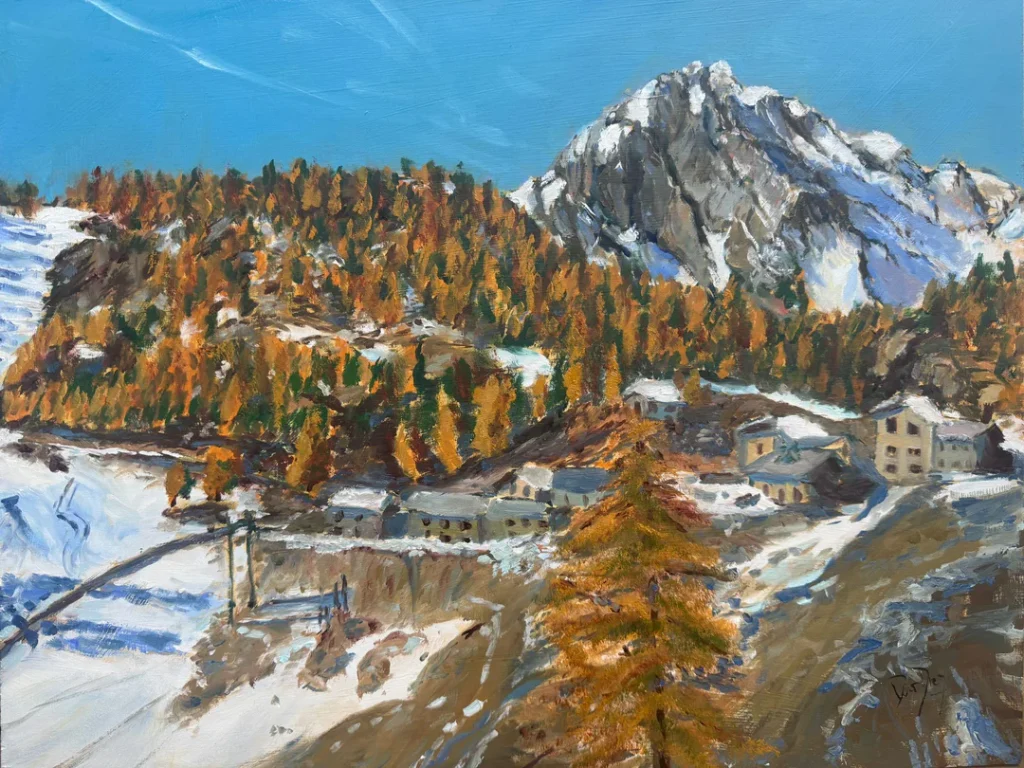
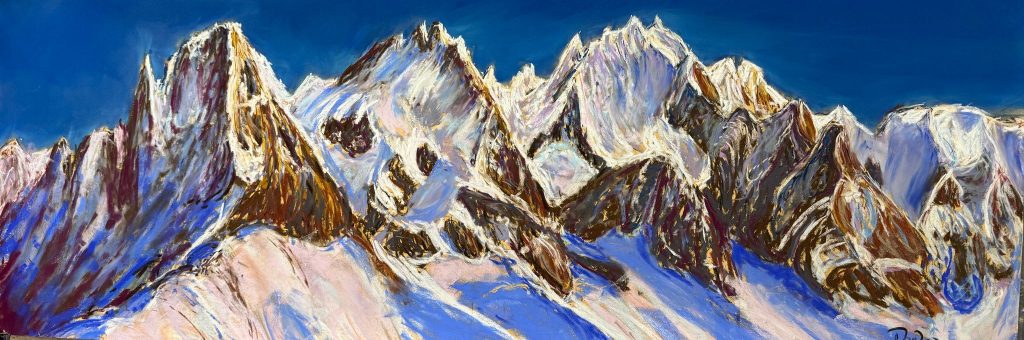
You can go to my shop and see what have been inspiring me lately, lots mountain landscapes in soft pastels, and now in oils too. Go here to check my latest works!
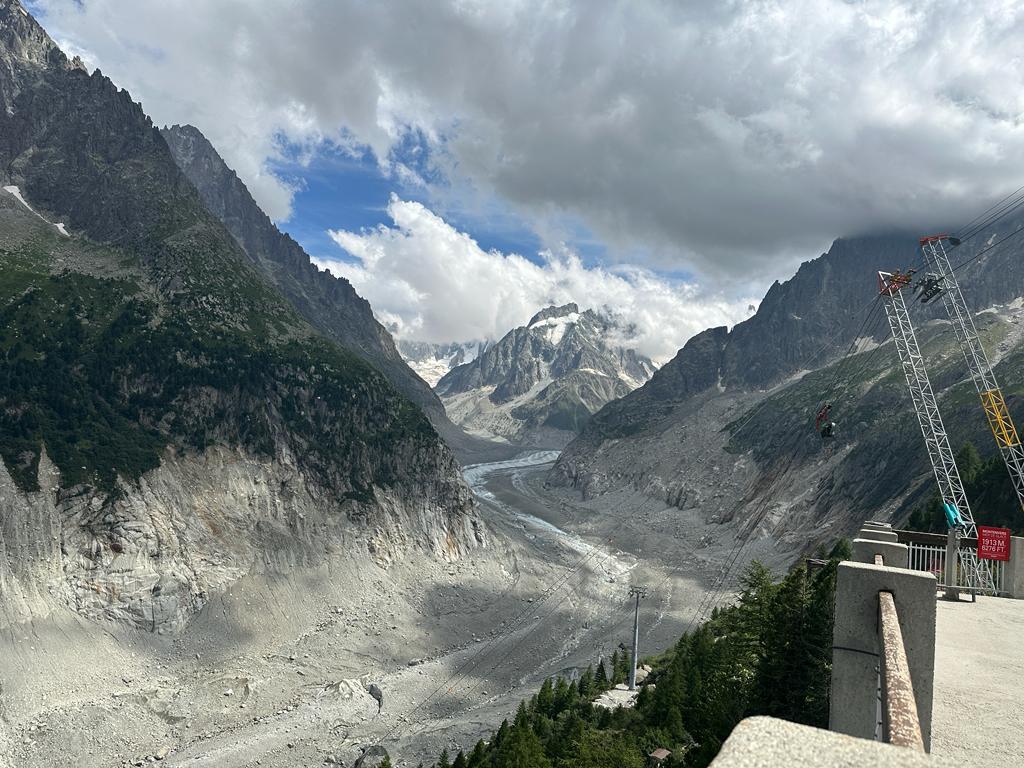
Featured Image: Resorts are adapting from depending only on snow-availability, to four seasons activities. Photo: Montenvers Glacier in Chamonix. The-Ski-Guru.


Discover more from The-Ski-Guru
Subscribe to get the latest posts sent to your email.
 Subscribe to The-Ski-Guru here.