

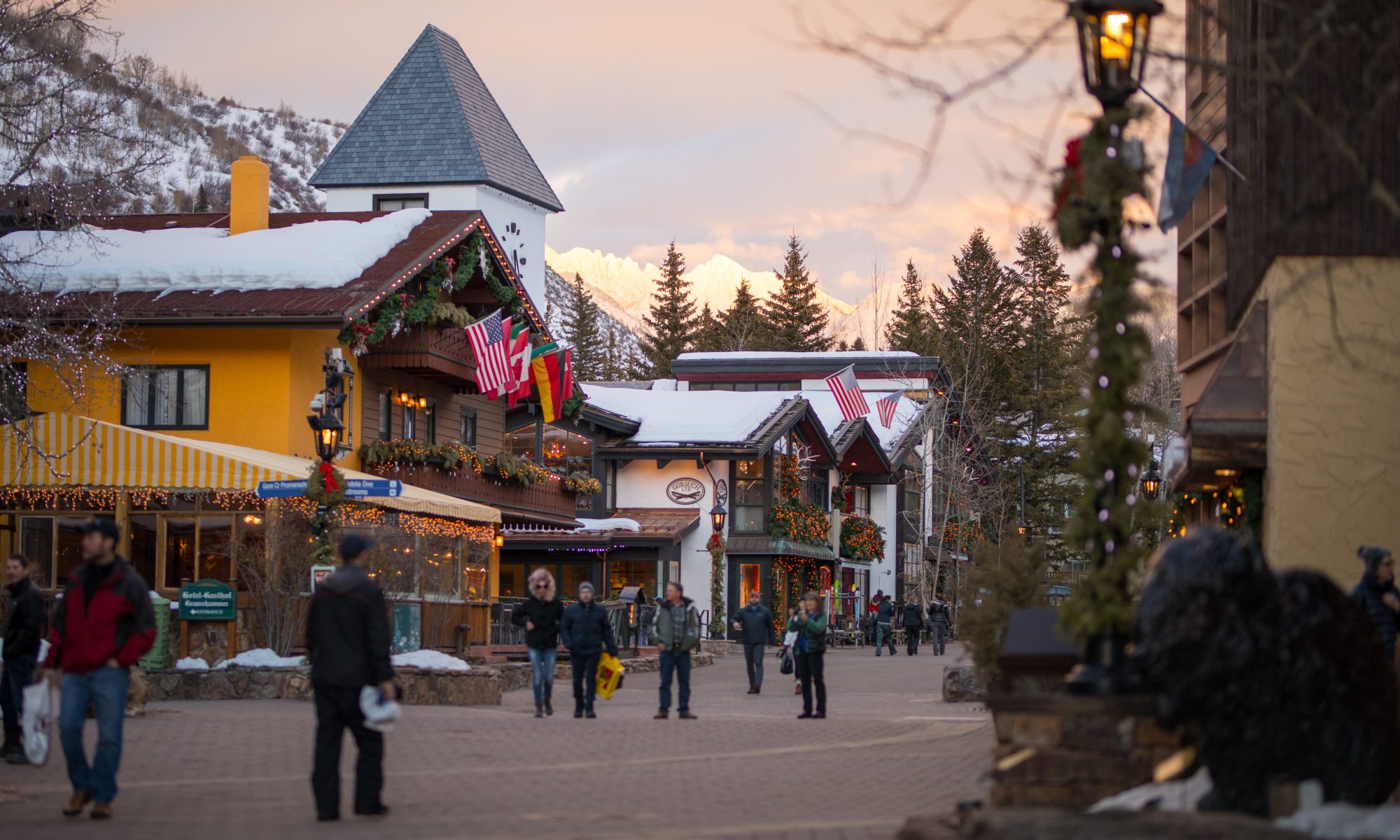
Skier visits across Vail Resorts properties are down sharply this season, with new data confirming a Vail Resorts visits drop of 14.9% year-to-date. The figures, released as part of the company’s latest season metrics, point to one of the most challenging winters in recent years — but the implications go beyond a single bad season.
At a time when global skier visits have just reached record levels, the contrast is striking. While demand for skiing remains resilient overall, the underlying conditions that support it are becoming increasingly unstable.
Vail Resorts visits drop reflects a difficult winter
The decline in visits is not anecdotal. It is confirmed in official reporting, with lift revenue down 5.6% and ski school, dining, and retail segments all showing significant declines.
The primary driver is consistent across reporting from Colorado Public Radio, SAM Magazine and Powder Magazine: weather.
Low snowfall, warm temperatures, and a difficult early season across key North American regions significantly reduced skier visits, particularly in the Rockies, where declines were most pronounced.
In Colorado, some regions recorded declines of up to 25%, underlining how uneven and locally severe the season has been. This is consistent with the pattern seen earlier in the winter, when low snowfall and early melt began to affect operations across parts of the state.
👉 Early Melt Forces Ski Resort Closures Across Colorado & Utah
This is not just a difficult season, but a highly uneven one, where conditions — and skier behaviour — vary sharply from one region to another.
The role of the Epic Pass
What makes this season particularly interesting is that revenue has not fallen in line with visits.
Despite the drop in skier numbers, the decline in overall lift revenue is comparatively smaller. This reflects the continued importance of the Epic Pass model, where a significant share of revenue is secured in advance of the season.
As highlighted in reporting by Powder Magazine, this model helps cushion poor winters, even when skier visits decline.
However, it also raises a more structural question. If visits decline while revenue remains relatively stable, it suggests that participation is becoming more variable, even if demand appears strong on paper.
A season shaped by volatility, not just poor snow
It would be easy to describe this as simply a bad winter. But that risks missing the deeper shift underway.
Across both North America and the Alps, recent seasons have shown increasing variability. Snowfall is becoming less consistent, with longer dry periods interrupted by short, intense storm cycles. Seasonal peaks are shifting, often concentrating in mid-winter rather than spring.
👉 Read More: Snow deficit across the Alps this April
This type of volatility is not just a meteorological detail. It directly affects how and when people ski, how resorts operate, and how reliable a season feels to consumers.
When weather begins to test the model
The current season highlights an important tension within the ski industry.
On one side, large operators have built resilient business models based on pre-sold passes, diversified revenue streams, and scale. On the other, the product itself — consistent winter conditions — is becoming less predictable.
At the same time, other operators are beginning to adapt more directly to this variability. Aspen Snowmass, for example, has introduced a more flexible pass structure this season.
Rather than relying solely on advance commitment, flexible models attempt to respond to increasingly weather-sensitive skier behaviour.
👉 how climate variability is reshaping Alpine winters
This is where seasons like 2025–26 become significant. They act as stress tests, revealing how the industry performs when conditions are not just poor, but inconsistent.
Beyond one season
There is no indication that demand for skiing is disappearing. On the contrary, global figures suggest continued interest and participation.
But what is changing is reliability.
A season that delivers consistent snow from December through April is no longer the norm. Instead, the pattern is increasingly defined by variability, with implications for everything from travel planning to infrastructure management.
👉 Mountain infrastructure risk in the Alps and Pyrenees
For large operators like Vail Resorts, this means adapting not just to warmer conditions, but to more unpredictable ones.
A signal, not an anomaly
The Vail Resorts visits drop of 14.9% should not be viewed in isolation. It is part of a broader pattern that is becoming visible across the ski industry.
Weather volatility is no longer a background factor. It is increasingly shaping outcomes, influencing both operational performance and skier behaviour.
For now, the industry’s business models are holding. But as variability increases, the gap between strong demand and inconsistent conditions may become one of the defining challenges of future winters.
Sources
Colorado Public Radio
https://www.cpr.org/2026/04/23/vail-resorts-visits-downhill-2026/
Powder Magazine
https://www.powder.com/news/vail-resorts-skier-visits-revenue-drop
SAM Magazine https://www.saminfo.com/news/sam-headline-news/vail-resorts-visits-revenue-and-pass-sales-down
 Planning your next trip to the Italian Alps?
 Planning your next trip to the Italian Alps?
If you’re heading to the Aosta Valley, take a look at Il Cuore della Valdigne, our family-owned apartment in Morgex, available for rent when we’re not using it ourselves.
It’s an ideal base to:
- Ski in Courmayeur, La Thuile and Pila
- Enjoy the mountains in summer (hiking, biking, nature)
- Explore the Mont Blanc valley in a quieter, more authentic setting.
 Ski in Courmayeur,
 Enjoy the mountains in summer (hiking, biking, nature)
Check my Mountain Art on my Shop
You can go to my shop and see what have been inspiring me lately, lots mountain landscapes in soft pastels, and now in oils too. Go here to check my latest works!
Featured Image: Vail’s iconic village with the Gore Range Mountains capturing the sunset in Vail, CO. Photo: Craig Orsini. Vail Resorts. The Must-Read Guide to Vail.


Discover more from The-Ski-Guru
Subscribe to get the latest posts sent to your email.
 Subscribe to The-Ski-Guru here.