

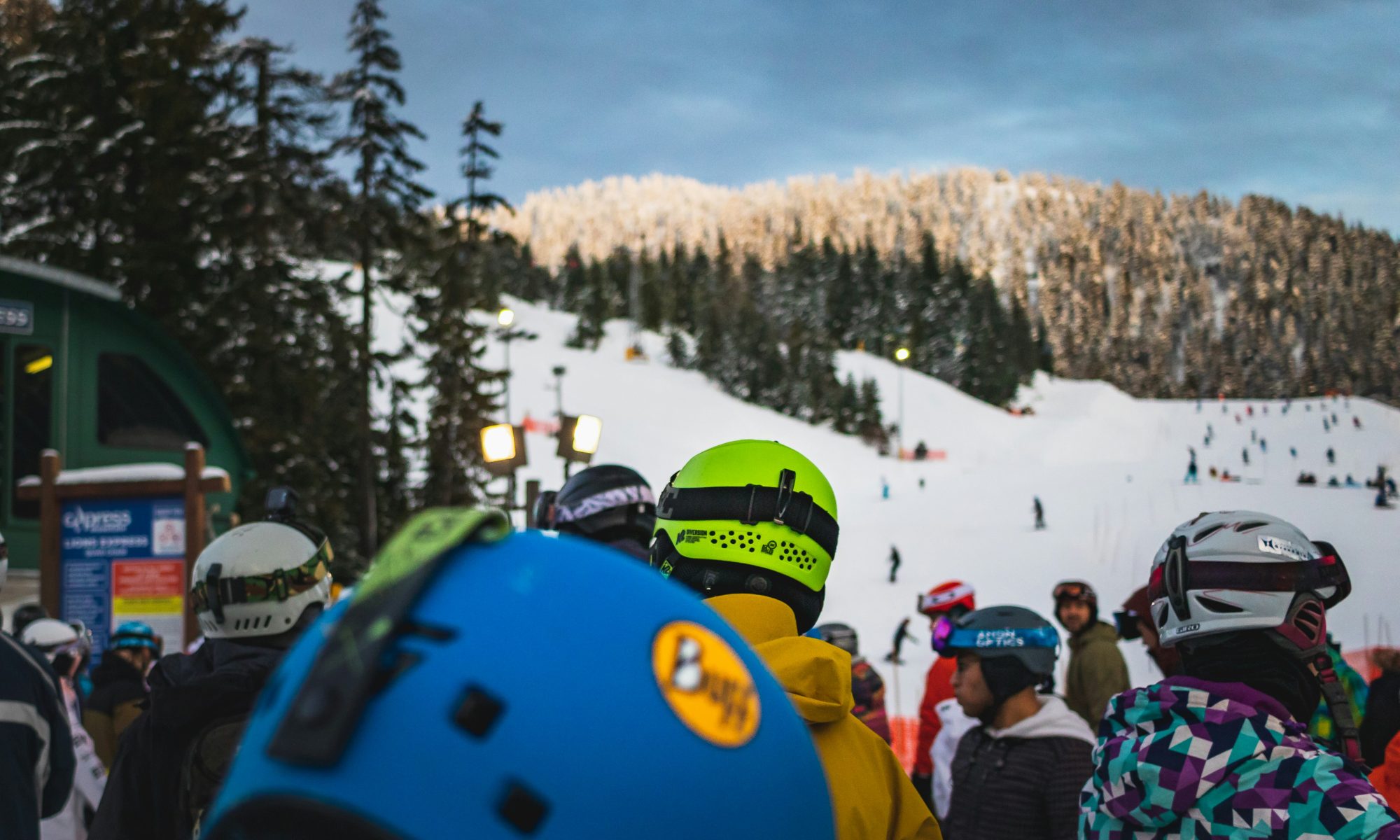
New safety data shows ski catastrophic injuries increased in the United States during the 2024–2025 winter season, prompting renewed discussion about skier behaviour, safety equipment, and the structural pressures facing modern ski areas.
But when these figures are compared with European injury statistics from France, Switzerland, Austria, and Italy, a more complex picture emerges.
Across the Alps, researchers and mountain medical organisations consistently highlight the same factors behind serious ski accidents: speed, collisions, terrain choices, crowding, and human behaviour — far more than helmet usage alone.
Key Ski Safety Statistics
Recent data from North America and Europe provides a clearer picture of the real risks on the slopes.
United States (NSAA)
- 63 catastrophic injuries in the 2024–2025 season
- 10-year average: 44 catastrophic injuries
- 61.6 million skier visits
- Injury rate: 1.02 catastrophic injuries per million skier visits
France (Médecins de Montagne)
- 136,700 ski and snowboard injuries in 2023–2024
- Injury rate: 2.6 injuries per 1,000 skier-days
Switzerland (BFU)
- Around 62,000 winter sports injuries annually
Austria (KFV)
- Approximately 30,000 hospital-treated winter sports injuries per year
Although measurement methods differ, the data consistently shows that serious ski accidents remain statistically rare — but not negligible — in modern ski tourism.
U.S. Ski Industry Data Shows Rise in Catastrophic Injuries
According to the National Ski Areas Association (NSAA), U.S. ski areas recorded 63 catastrophic injuries during the 2024–2025 season, compared with a 10-year average of 44.
These injuries include life-altering trauma such as:
- paralysis
- severe traumatic brain injury
- spinal cord injury
- limb loss
During the same season, U.S. ski resorts logged approximately 61.6 million skier visits, meaning catastrophic injuries occurred at a rate of roughly:
1.02 catastrophic injuries per million skier visits.
While still statistically rare, the figure represents one of the highest totals recorded in the past decade, drawing attention to evolving risk patterns on ski slopes.
France: Injury Numbers Are Much Higher — But Measured Differently
Direct comparison with Europe requires caution because injury reporting methods differ.
In France, the Médecins de Montagne accident observatory tracks all injuries treated by mountain doctors, not only catastrophic cases.
For the 2023–2024 winter season, the organisation recorded approximately:
136,700 ski and snowboard injuries
across French mountain resorts.
This corresponds to an injury rate of about:
2.6 injuries per 1,000 skier-days.
Most injuries involve knees, shoulders, wrists, or moderate trauma, and only a small percentage require hospital transfer.
You can read more about these figures in our previous analysis:
Mountain Doctors Publish Accident Figures
https://www.the-ski-guru.com/2025/02/28/mountain-doctors-publishes-accident-figures/
Swiss and Austrian Data Shows Similar Patterns
Safety organisations in Switzerland and Austria report broadly similar injury trends.
The Swiss Federal Bureau for Accident Prevention (BFU) estimates roughly:
62,000 winter sports injuries per year among Swiss residents while skiing or snowboarding.
The organisation calculates an injury rate close to:
3 injuries per 1,000 skier-days, similar to French figures.
In Austria, the KFV (Austrian Road Safety Board) estimates around:
30,000 hospital-treated winter sports injuries annually.
Across both countries, safety reports consistently identify the main contributing factors as:
- high speeds on groomed pistes
- skier-to-skier collisions
- loss of control
- terrain difficulty
- fatigue and poor decision-making
Helmet Laws Are Expanding Across Europe
Helmet usage has increased dramatically over the past two decades.
Many Alpine countries already require helmets for children and teenagers, and some are tightening legislation further.
In Italy, a major reform entered into force in July 2025, introducing mandatory helmet use for all skiers and snowboarders, regardless of age.
Our coverage of the reform explains the reasoning behind the law:
Italy Introduces Universal Helmet Law for Skiers
https://www.the-ski-guru.com/2026/02/14/italy-universal-helmet-law-iss-ski-risk-2026/
However, researchers stress that helmets alone cannot eliminate the most severe injuries.
According to the Italian Istituto Superiore di Sanità (ISS), accident severity is strongly influenced by:
- slope difficulty
- speed
- skier density
- snow conditions
- skier behaviour
The Growing Concern: Collisions and Crowded Slopes
One area receiving increasing attention in Europe is skier-to-skier collisions, particularly on wide intermediate pistes.
The French National Academy of Medicine has warned that serious collisions affect more than 1,000 people every year in Alpine ski areas, often occurring on easy slopes where skiers travel at very different speeds.
This trend links closely to another issue increasingly debated across the ski industry: piste overcrowding.
We analysed this dynamic in depth here:
Is Ski Slope Overcrowding Becoming a Safety Risk?
https://www.the-ski-guru.com/2026/01/06/ski-slope-overcrowding-safety/
Some resorts are already experimenting with operational solutions. In Italy, Madonna di Campiglio has introduced limits on the number of daily lift tickets sold in order to reduce congestion on slopes and lifts.
You can read more about that approach here:
Madonna di Campiglio Limiting Daily Ski Pass Sales
https://www.the-ski-guru.com/2025/12/29/madonna-di-campiglio-ski-pass-limit/
Behavioural Risk Factors Are Also Under Scrutiny
Another emerging safety concern is skiing under the influence of alcohol or drugs, particularly in major resort destinations.
French authorities have recently begun addressing the issue more directly.
Read more in our report:
Skiing Under the Influence: France Moves Toward Enforcement
https://www.the-ski-guru.com/2026/02/11/skiing-under-the-influence-france/
What the Data Really Suggests
Taken together, U.S. and European statistics highlight an important point:
Serious ski accidents are rarely the result of a single factor.
Instead, they typically arise from a combination of elements:
- high speeds
- collisions between skiers
- terrain selection
- fatigue or poor judgement
- slope crowding
- difficult snow conditions
Helmet use can reduce the risk of certain head injuries, but it cannot eliminate the forces involved in high-speed impacts or collisions.
A Changing Safety Debate in Modern Ski Resorts
As ski areas continue to attract larger and more international audiences, the conversation around slope safety is gradually evolving.
Industry observers are increasingly focusing on:
- skier density management
- slope design and flow
- behavioural enforcement
- education on risk awareness
Safety management on the mountain is also increasingly complex. Even highly controlled environments can still present risks, as demonstrated in cases where avalanches have reached open pistes despite mitigation work.
You can read more about that issue here:
Avalanche Control on Open Pistes: When Mitigation Isn’t Enough
https://www.the-ski-guru.com/2026/02/26/avalanche-control-open-pistes/
In other words, the future of ski safety may depend less on equipment alone and more on how resorts manage the increasingly complex dynamics of modern ski tourism.
Data compiled from official ski industry safety reports, mountain medical observatories, and Alpine accident-prevention agencies.
Ski Safety FAQ
How common are catastrophic ski injuries?
Catastrophic ski injuries are rare. In the United States, ski areas recorded about 63 catastrophic injuries during the 2024–2025 season, representing roughly 1 catastrophic injury per million skier visits.
What are the most common ski injuries?
Most ski injuries involve knees, shoulders, wrists, and lower legs. According to the French Médecins de Montagneobservatory, the majority of accidents involve falls rather than collisions.
Do helmets prevent serious ski injuries?
Helmets reduce the risk of some head injuries, but research shows that speed, collisions, and skier behaviour remain major factors in severe accidents.
Sources
United States – Ski Industry Safety Data
National Ski Areas Association (NSAA) – Catastrophic Injury Fact Sheet
https://nsaa.org/webdocs/Media_Public/IndustryStats/catastrophic_injury_fact_sheet_2024.pdfNational Ski Areas Association – Industry Statistics
https://www.nsaa.org/NSAA/Media/Industry_Stats.aspx
France – Ski Accident Observatory
Médecins de Montagne – Accidentologie des sports d’hiver (Mountain Doctors Accident Observatory)
https://www.medecinsdemontagne.comAnalysis of accident figures (The-Ski-Guru)
https://www.the-ski-guru.com/2025/02/28/mountain-doctors-publishes-accident-figures/
Switzerland – Ski Accident Prevention Data
Swiss Federal Bureau for Accident Prevention (BFU) – Winter Sports Safety Statistics
https://www.bfu.ch/en/services/statisticsBFU – Skiing and Snowboarding Safety Guidance
https://www.bfu.ch/en/services/prevention/skiing-and-snowboarding
Austria – Winter Sports Injury Data
KFV (Kuratorium für Verkehrssicherheit) – Austrian Accident Prevention Board
https://www.kfv.atAustrian Alpine Safety and Winter Sports Injury Statistics
https://www.kfv.at/themen/freizeit/wintersport
Research and Medical Analysis
Risk Factor Analysis of Ski and Snowboard Injuries (2025 study – PubMed)
https://pubmed.ncbi.nlm.nih.gov/39859099/
Related Articles on The-Ski-Guru
Italy Introduces Universal Helmet Law for Skiers
https://www.the-ski-guru.com/2026/02/14/italy-universal-helmet-law-iss-ski-risk-2026/Ski Slope Overcrowding and Safety Risk
https://www.the-ski-guru.com/2026/01/06/ski-slope-overcrowding-safety/Skiing Under the Influence – France Enforcement
https://www.the-ski-guru.com/2026/02/11/skiing-under-the-influence-france/Avalanche Control on Open Pistes
https://www.the-ski-guru.com/2026/02/26/avalanche-control-open-pistes/Madonna di Campiglio Limiting Daily Ski Pass Sales
https://www.the-ski-guru.com/2025/12/29/madonna-di-campiglio-ski-pass-limit/
 Planning your next trip to the Italian Alps?
 Planning your next trip to the Italian Alps?
If you’re heading to the Aosta Valley, take a look at Il Cuore della Valdigne, our family-owned apartment in Morgex, available for rent when we’re not using it ourselves.
It’s an ideal base to:
- Ski in Courmayeur, La Thuile and Pila
- Enjoy the mountains in summer (hiking, biking, nature)
- Explore the Mont Blanc valley in a quieter, more authentic setting.
 Ski in Courmayeur,
 Enjoy the mountains in summer (hiking, biking, nature)
Check my Mountain Art on my Shop
You can go to my shop and see what have been inspiring me lately, lots mountain landscapes in soft pastels, and now in oils too. Go here to check my latest works!
Featured Image: Growing skier numbers and high speeds on modern groomed pistes are increasingly cited as factors behind serious ski accidents.


Discover more from The-Ski-Guru
Subscribe to get the latest posts sent to your email.
 Subscribe to The-Ski-Guru here.