

The future of Alpine snow is increasingly being measured not just in snowfall, but in water.
A recent report highlighted by MeteoWeb suggests that Italy could lose up to 60% of its mountain water reserves by 2070, as warming temperatures reduce the snowpack that traditionally acts as a natural storage system. Across the Alps, this shift is already visible, with earlier melt cycles, reduced accumulation, and growing variability between regions. These trends are already being observed on the ground, as explored in our analysis of snow conditions in a warming Alpine climate.
Against that backdrop, investment decisions being made today by ski resorts take on a different meaning. They are no longer simply about improving infrastructure. They are about how long the current model can realistically be sustained.
La Flégère: A Case Study in Alpine Adaptation
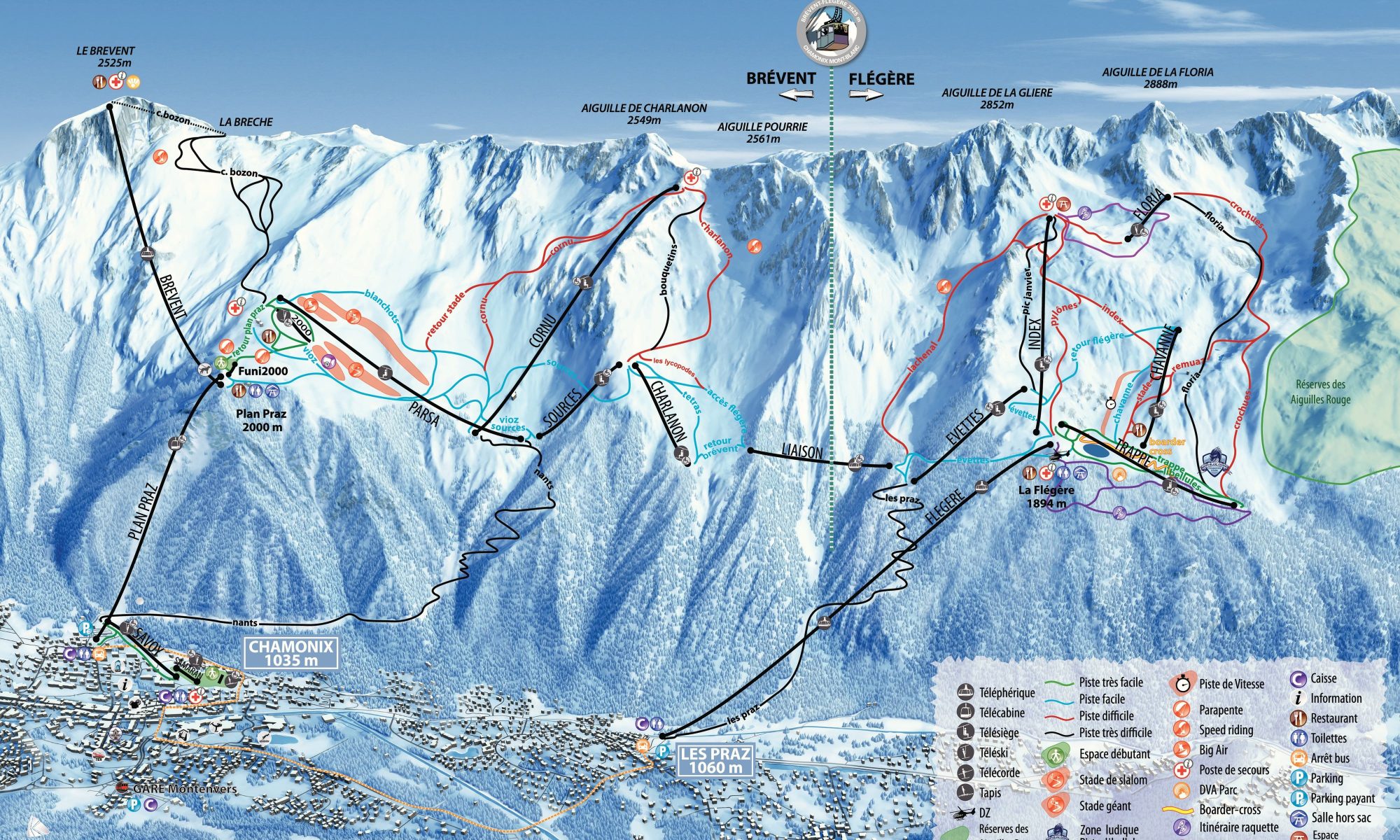
At La Flégère in the Chamonix valley, operated by Compagnie du Mont-Blanc, a significant redevelopment project is now underway.
Plans include the replacement of aging fixed-grip chairlifts with modern detachable six-seater lifts, increasing capacity and flow across key sectors of the ski area. Preliminary clearing works have already been approved by the local council and are expected to begin in May 2026, with lift upgrades scheduled for completion in 2027.
But the most striking element of the project is not the lifts. It is the scale of the snowmaking expansion.
Water capture capacity at Lachenal is set to increase tenfold, from 8 to 80 cubic metres per hour, supporting an annual production volume of around 45,000 cubic metres of artificial snow. Additional snowmaking infrastructure is planned on key pistes, including the Pylônes sector, reinforcing coverage in areas increasingly exposed to marginal conditions.
The rationale is explicit. Snowmaking is being positioned as a response to climate change.
The Limits of Snowmaking
The challenge is that the effectiveness of this response has well-defined limits.
Research across the Alps, including assessments by the European Environment Agency and the IPCC, indicates that below roughly 2,000 metres, snow reliability is expected to decline significantly in the coming decades. Beyond the middle of the century, even artificial snow production becomes increasingly constrained by temperature thresholds, water availability, and energy costs.
This places parts of La Flégère, which ranges between approximately 1,000 and 2,500 metres, directly within that transition zone. It also reinforces a broader pattern seen across the Alps, where climate pressure is increasingly intersecting with infrastructure decisions, as explored in our Mountain Infrastructure Risk in the Alps & Pyrenees analysis.
In practical terms, snowmaking can extend seasons and stabilise operations in the short to medium term. But it does not eliminate the underlying climatic trajectory.
Environmental Measures and Diversification Signals
The project does include an environmental framework, with long-term ecological monitoring, protection of wetland areas, and specific measures aimed at preserving vulnerable species such as the black grouse, whose conservation status in France remains fragile.
At the same time, there are indications of a broader shift in how the mountain is being used. Plans for an official bivouac area, with capacity for around fifty users and open year-round, suggest an acknowledgement that snow-based activity may not always define the sector’s future.
This combination of continued investment in ski infrastructure alongside diversification efforts reflects a pattern increasingly visible across the Alps.
A Broader Industry Question
The Compagnie du Mont-Blanc operates 65 lifts across the Chamonix valley, employs hundreds of seasonal staff, and serves over one million skier days annually. Its current investment programme also includes the ongoing reconstruction of Grands Montets, one of the most iconic high-altitude areas in the Alps.
These are not isolated upgrades. They are part of a broader strategic commitment.
The question is not whether investment is taking place. It is what that investment is designed to achieve.
Is it aimed at maintaining the existing ski model for as long as possible, using technology to compensate for changing conditions? Or is it part of a more gradual transition toward a different form of mountain tourism, less dependent on consistent snow cover?
In reality, both approaches are unfolding simultaneously.
The Direction of Travel
The contrast between long-term projections of declining snowpack and short-term increases in snowmaking capacity illustrates the complexity facing Alpine resorts.
Adaptation is not a single decision, but a sequence of choices made under uncertainty. The same tension is visible across recent seasons, where volatility in snow conditions has already begun to reshape operations and expectations, as seen in recent coverage of early melt forcing ski resort closures.
For now, resorts like La Flégère are investing to extend viability within the current system, while beginning to explore what comes next. Whether that balance holds beyond the coming decades will depend not only on technology, but on how quickly the physical limits of the mountain environment are reached.
Sources
Public consultation documents – La Flégère redevelopment
https://www.registre-numerique.fr/amenagement-domaine-flegere/voir?document2=205647
CNCE procedure file
https://www.cnce.fr/procedure/2842
Espace Mont-Blanc climate report
https://www.espace-mont-blanc.com/asset/rapportclimat.pdf
 Planning your next trip to the Italian Alps?
 Planning your next trip to the Italian Alps?
If you’re heading to the Aosta Valley, take a look at Il Cuore della Valdigne, our family-owned apartment in Morgex, available for rent when we’re not using it ourselves.
It’s an ideal base to:
 Ski in Courmayeur,
 Enjoy the mountains in summer (hiking, biking, nature)
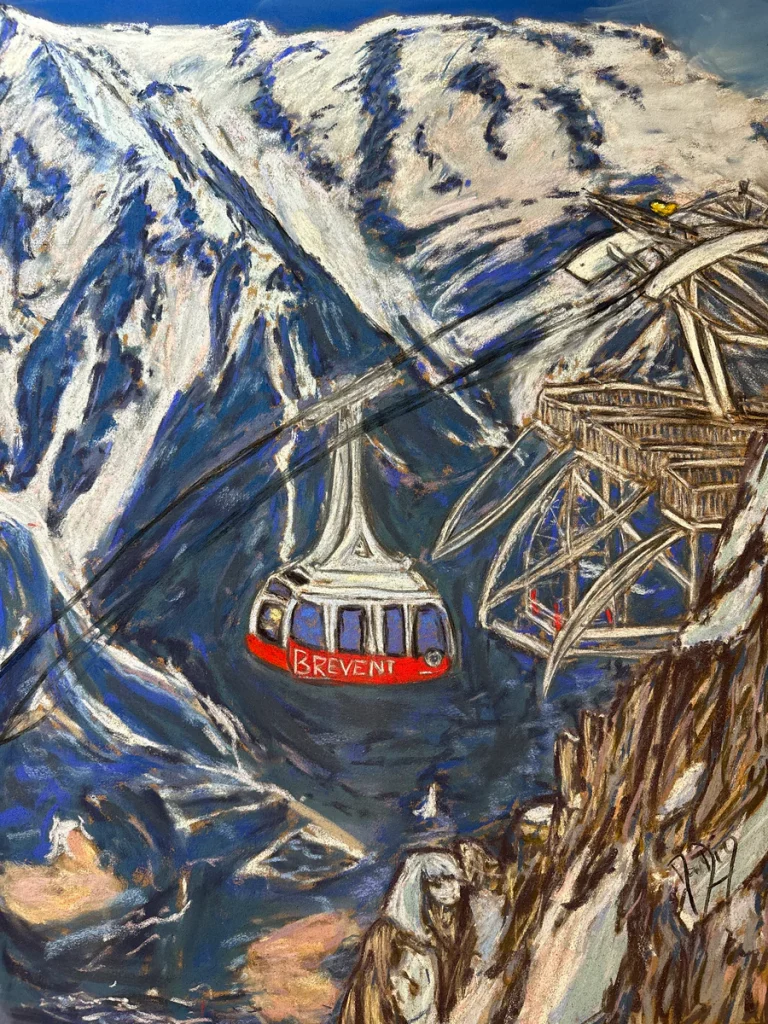
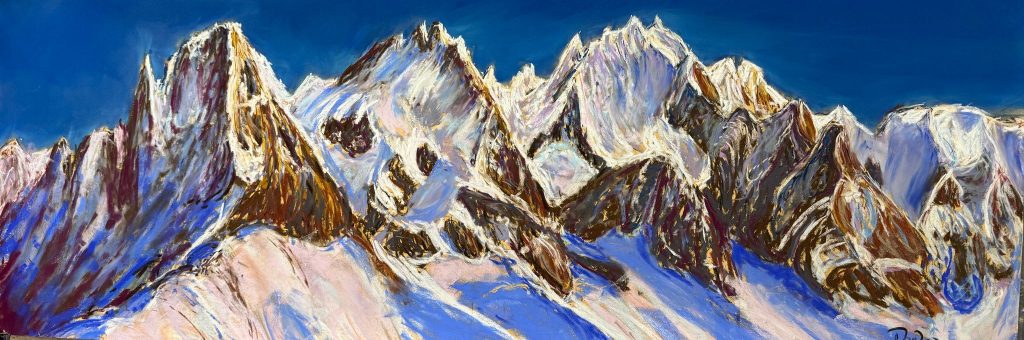
Check my Mountain Art on my Shop
You can go to my shop and see what have been inspiring me lately, lots mountain landscapes in soft pastels, and now in oils too. Go here to check my latest works!
Featured Image: Skimap- Le Brévent. Flégère. Chamonix. Compagnie du Mont Blanc.


Discover more from The-Ski-Guru
Subscribe to get the latest posts sent to your email.
 Subscribe to The-Ski-Guru here.
You must be logged in to post a comment.