

As climate pressures, rising infrastructure costs, labour shortages and industry consolidation reshape skiing on both sides of the Atlantic, an unexpected trend is emerging: communities, municipalities and cooperative groups are increasingly stepping in to save, buy or directly influence ski areas they see as essential to local survival.
What once looked like isolated rescue stories is beginning to resemble a wider structural shift in how smaller ski resorts survive.
The latest example comes from Canada, where the Sault Ste. Marie Economic Development Corporation in Ontario stepped in to purchase the historic Searchmont Resort. Local officials described the ski hill as a “vital community asset” tied not only to tourism, but also to jobs, economic development and the wider identity of the region. The acquisition followed years of operational struggles and municipal support aimed at keeping the mountain open.
The story reflects a growing idea emerging across mountain regions: ski hills are increasingly being viewed less as standalone private businesses and more as strategic community infrastructure.
A similar logic is now appearing in the United States.
In Colorado, the small mountain town of Nederland has been pursuing one of the most ambitious examples yet of municipal ski ownership through plans tied to the acquisition of Eldora Mountain Resort. Town leaders openly framed the mountain as essential regional infrastructure connected to jobs, transport, tourism and long-term economic resilience.
At the same time, alternative ownership models are gaining increasing attention in North America.
Mad River Glen remains perhaps the most famous example of skier-led ownership. In the 1990s, local skiers organised to save the Vermont mountain from closure, creating one of the first cooperative ownership models in the ski industry. Thousands of shareholders now collectively own the resort, helping preserve its independent identity outside the corporate mega-pass system.
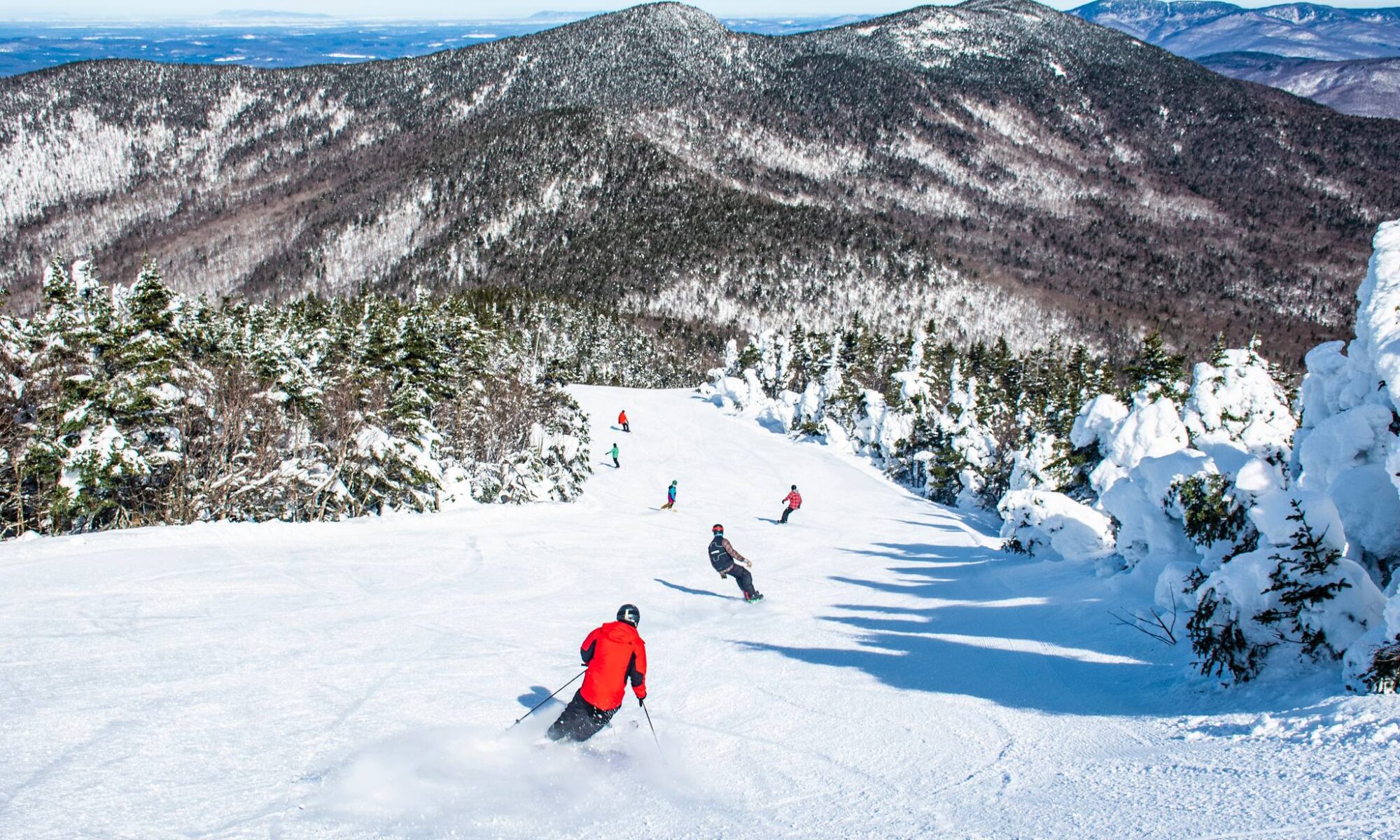
Meanwhile, Black Mountain in New Hampshire has become one of the most closely watched experiments in independent ski area survival. After facing closure, the mountain was rescued by Erik Mogensen, owner of Entabeni Systems and Indy Pass. The resort is now being positioned almost as a laboratory for alternative operating models aimed at helping independent ski areas survive outside large corporate groups.
Yet in many ways, the Alps have already operated under similar systems for decades.
Across France, Italy, Austria and Switzerland, ski resorts are often deeply intertwined with municipal politics, regional development strategies and public-private ownership structures. In many Alpine communities, ski lifts are not viewed purely as commercial assets but as tools for maintaining local economies, population stability and territorial attractiveness.
This is especially visible in France.
Many French ski areas operate through semi-public companies known as “Sociétés d’Économie Mixte” (SEM), where municipalities maintain ownership stakes or strong influence alongside private operators. In mountain regions heavily dependent on winter tourism, the maire — the mayor — often plays a far greater role in resort strategy than many North Americans realise.
In resorts across Savoie and Haute-Savoie, local political leaders frequently influence infrastructure expansion, snowmaking investments, transport planning, environmental approvals, housing policy and international destination promotion.
The mayor of a ski town is often not simply a local politician.
In many Alpine resorts, they effectively become ambassadors for the destination itself because the economic health of the town is directly tied to the performance of the ski area.
Even when large operators such as Compagnie des Alpes manage resorts like La Plagne, Les Arcs or Tignes, the municipalities themselves still retain enormous influence through concession agreements, development approvals and long-term planning.
Italy offers similar examples.
In the Aosta Valley, regional authorities have historically maintained deep involvement in ski infrastructure because winter tourism is considered strategically important for the wider mountain economy. Resorts such as Courmayeur, Cervinia and Pila have all developed within systems where public investment, regional planning and tourism promotion remain closely connected.
Pila is perhaps one of the clearest examples because the resort is directly linked to the city of Aosta by gondola, effectively making the ski area part of the valley’s wider transport and economic ecosystem. Investment decisions there are not only about skiing itself, but also about maintaining year-round attractiveness and economic activity for the entire region, something increasingly visible across the Alps in projects such as Courmayeur’s New Gondolas Signal a Deeper Shift in Alpine Ski Infrastructure.
In smaller French and Italian mountain communities, municipalities have sometimes continued supporting lower-elevation ski areas even when profitability became uncertain because local leaders feared the broader collapse of tourism businesses, second-home values and employment opportunities if skiing disappeared entirely.
This tension is becoming increasingly important as climate variability places greater pressure on lower and mid-elevation resorts, particularly after winters that highlighted concerns explored in Snow Conditions in a Warming Alpine Climate.
At the same time, many mountain communities are also trying to solve wider structural problems linked to tourism sustainability, staffing and local economies, including issues explored in Employee Housing Challenges in Ski Resorts.
The Alps are therefore not necessarily moving toward public involvement in skiing.
In many places, they never really left it.
What may now be changing is that North America is beginning to adopt some of the same logic long seen in Europe: ski resorts are increasingly being viewed not only as businesses, but as essential mountain infrastructure tied to community identity, regional economics and long-term territorial survival.
The future ski industry may increasingly split between large destination conglomerates and locally influenced community mountains where municipalities, residents and regional authorities play a far more active role in determining whether skiing survives — especially as industry consolidation and weaker winters continue reshaping the market, as discussed in Vail Resorts Visits Drop 14.9% — What It Reveals About Snow, Demand, and the Ski Industry Model.
Sources
- BayToday — https://www.baytoday.ca/local-news/sault-edc-purchases-ski-resort-20543
- SooToday — https://www.sootoday.com/local-news/searchmont-determined-to-find-its-footing-after-challenging-start-to-ski-season-11658694
- Colorado Sun — https://coloradosun.com/2026/02/06/303-ski-nederland-eldora/
- Mad River Glen — https://www.madriverglen.com/history/
- Wired — https://www.wired.com/story/can-tech-save-small-ski-resorts-entabeni-systems/
- Compagnie des Alpes — https://www.compagniedesalpes.com/en/group/
- Pila — https://www.pila.it/en/
- Courmayeur Mont Blanc — https://www.courmayeurmontblanc.it/en/
 Planning your next trip to the Italian Alps?
 Planning your next trip to the Italian Alps?
If you’re heading to the Aosta Valley, take a look at Il Cuore della Valdigne, our family-owned apartment in Morgex, available for rent when we’re not using it ourselves.
It’s an ideal base to:
- Ski in Courmayeur, La Thuile and Pila
- Enjoy the mountains in summer (hiking, biking, nature)
- Explore the Mont Blanc valley in a quieter, more authentic setting.
 Ski in Courmayeur,
 Enjoy the mountains in summer (hiking, biking, nature)
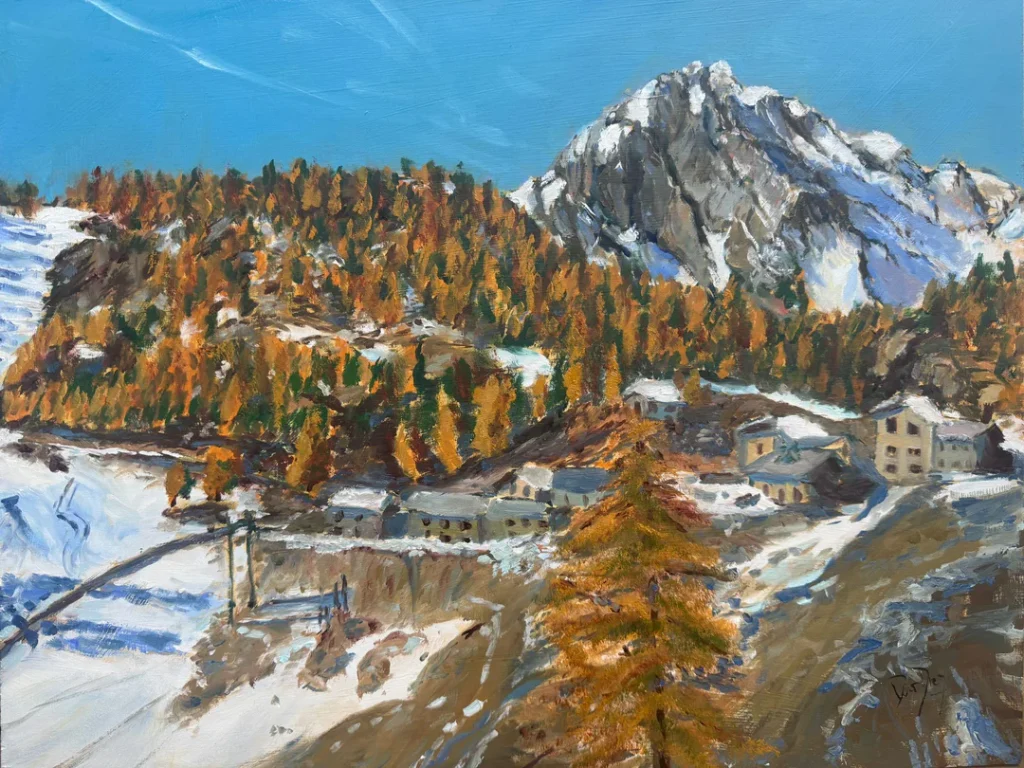
Check my Mountain Art on my Shop
You can go to my shop and see what have been inspiring me lately, lots mountain landscapes in soft pastels, and now in oils too. Go here to check my latest works!
Featured Image: Black Mountain, operated by Indy Pass. Photo: Indy Pass.


Discover more from The-Ski-Guru
Subscribe to get the latest posts sent to your email.
 Subscribe to The-Ski-Guru here.